Uncategorized

A Humorously Awkward Snake Standoff

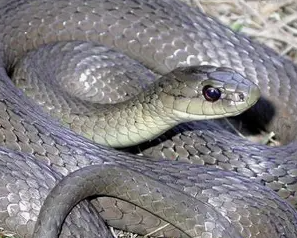
I’ve always said the foothills teach you things—usually gently, sometimes with a little nip. Out here, the mornings come slow, the coffee comes strong, and the wildlife comes whether you invited it or not. Shadow, my unofficial porch snake, has been part of that rhythm for a while now. He minds his business, I mind mine, and we’ve reached a gentleman’s agreement: he gets the sunny corner by the planter, and I get the rest of the porch.

But yesterday, I decided to test the boundaries of our détente.

It started with a simple plan: sweep the porch. That’s it. A normal, everyday chore. I stepped outside with my broom, humming some tune I probably made up, and gave the boards a good tap to shake off the dust. That’s when I heard the rustle.

Shadow slid out from behind the planter like he was late for a meeting. Not fast, not aggressive—just purposeful. I froze mid‑sweep, broom raised like I was about to joust. He paused too, tongue flicking, as if to say, “Really? This again?”

Now, I’ve lived long enough to know when I’m being judged by a reptile.

I tried to play it cool. “Easy there, partner,” I muttered, as if talking to a horse. “Just doing a little housekeeping.”

Shadow didn’t care. He kept coming, slow and steady, like a man walking to the front of the church to confess something. I backed up, broom still raised, dignity slipping away like a dropped ice cube on a hot day.

Then came the moment—the one that will live in my personal Hall of Fame of Bad Decisions.

I thought, Maybe I can just gently nudge him away.

A nudge. With a broom. A wild snake.

He looked at the broom, then at me, and then—because nature has a sense of humor—he coiled just enough to make me rethink every life choice that led to this porch.

I dropped the broom. I stepped back. I may have squeaked. Shadow, satisfied that he had won whatever contest we were having, slid off the porch and into the yard like a king returning to his kingdom.

I stood there, broomless, pride dented, heart thumping like I’d just outrun a bear instead of a mildly annoyed snake.

And as I watched him disappear into the grass, I said the only thing a man can say after trying to outsmart a creature who has survived millions of years without ever needing a broom:

I should have known better.

My 6-Month Photo Challenge Experience

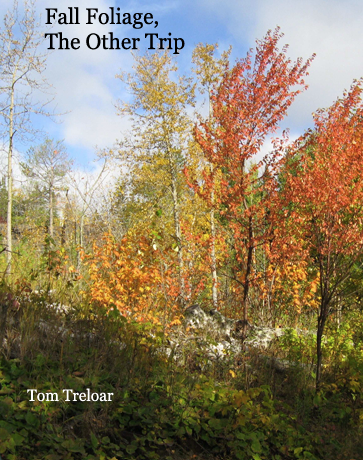
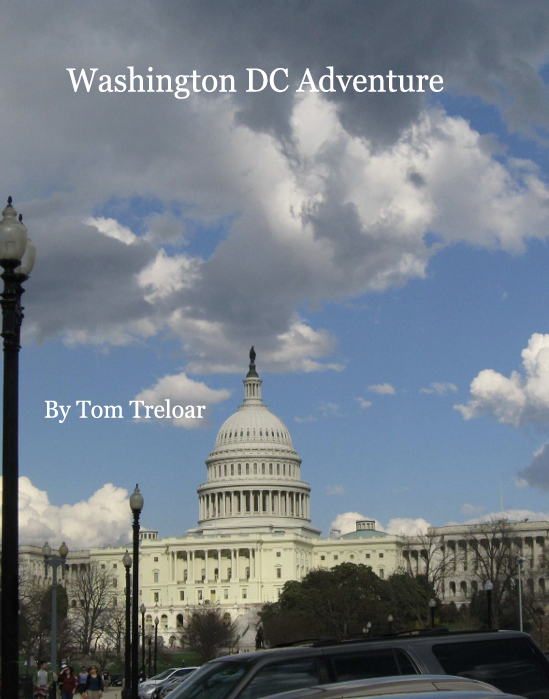
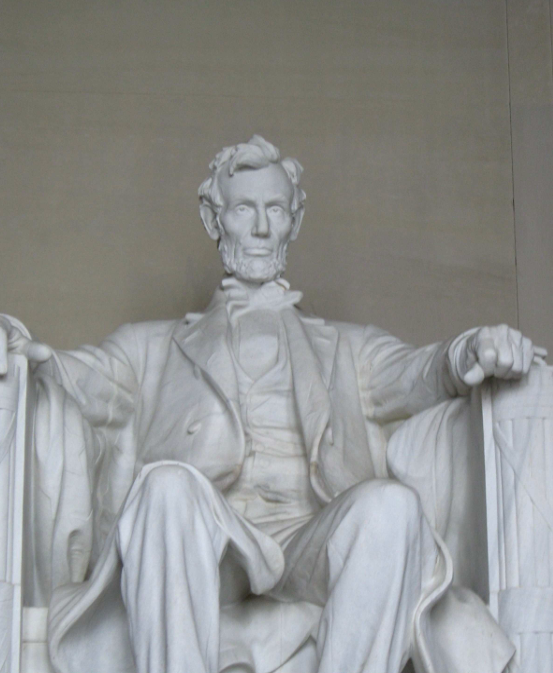
This is my second book that was created in 2009. At that time, I was an active blogger at yourhub.com, a vibrant online platform operated by the now defunct Rocky Mountain News newspaper. The challenge was to post a photo blog every day for six months, which required not just creativity but also discipline and dedication. I was successful in accomplishing this challenge, even taking a memorable trip to Washington DC during that period. It was fascinating to capture the sights and sounds of the city, and I made it a point to post a photo for that day, no matter how busy my schedule became. Even while on vacation, I would take the time to find interesting angles and moments to share with my readers. What did I receive for this challenge? The only gift was the self-satisfaction that I posted a blog every day for six months, a testament to my commitment to chronicling my experiences. It was incredibly rewarding to engage with an audience and see my blog grow in popularity. It was fun, though, and I enjoyed doing it; each post became a small piece of history, capturing not only the moments but my journey as a blogger and storyteller.

CLICK ON THE BELOW LINK IF YOU WANT TO CONTINUE

LINK TO A PDF FILE OF THE BOOK

TIPS – DONATIONS

Historical Fluctuations of Gas Prices in 2008

I was going through my book I published in 2009, “Photo a Day”, and ran across this about gas prices of November 18, 2008.

I then asked Grok, “what happened around 2008 that made gas prices high and then low“.


This was the response. In 2008, U.S. gasoline prices rose to a record high (around $4.11–$4.17 per gallon nationally in July) before crashing sharply to about $1.60–$1.67 by the end of the year. This tracked crude oil prices, which peaked near $145–$147 per barrel in early July 2008 and then fell more than 70% (to the low $30s by late December/early 2009).

Why prices went high (leading into mid-2008)

A combination of strong global demand and constrained supply built up over several years:

  • Booming demand from emerging economies (especially China and India) plus a relatively strong U.S. economy increased oil consumption.
  • Supply was tight: limited spare production capacity, earlier disruptions (e.g., related to the Iraq War and Hurricane Katrina in 2005 affecting Gulf Coast refining), and production challenges in places like Nigeria.
  • Other contributing factors included a weaker U.S. dollar (oil is priced in dollars), geopolitical tensions (Middle East, etc.), and financial speculation/investment flows into oil futures markets.

These pressures pushed oil (and thus gasoline) prices steadily higher through the mid-2000s, culminating in the mid-2008 peak.

Why prices then dropped sharply (second half of 2008)

The global financial crisis (and resulting Great Recession) caused demand to collapse:

  • The crisis intensified in September 2008 with the failure of Lehman Brothers and broader credit/market turmoil.
  • Millions of job losses, falling incomes, reduced driving/travel, and a broader economic slowdown sharply cut oil and gasoline consumption worldwide.
  • At the same time, oil production had increased in response to earlier high prices, creating a temporary oversupply relative to the sudden drop in demand.
  • Speculative money also exited the oil markets, amplifying the decline.

Prices fell rapidly—gasoline saw its largest recorded drops in some surveys as crude slid and demand weakened. By late 2008/early 2009, the national average was back near $1.60–$2.35 for the year.

In short, the high prices reflected a multi-year demand surge meeting limited supply growth, while the subsequent crash was driven by the sudden economic collapse that crushed demand. Gasoline prices closely follow crude oil (with refining, taxes, and local factors adding costs), so the oil market swings dominated. Similar dynamics have appeared in other oil price spikes and crashes historically.


I thought this was interesting due to the price and instability we are seeing these days, especially as many people are feeling the effects of inflation on their everyday expenses. The fluctuations in prices have not only impacted essential goods but have also created uncertainty in various markets, leading consumers to be more cautious in their spending. Additionally, it’s fascinating to observe how these economic conditions are shaping consumer behavior and influencing decisions on everything from investments to long-term financial planning.

Exploring Italy: A Journey of Adventure and Writing

In September of 2007, my wife, Dee and I took a trip to Italy, a journey that turned out to be one of the most enjoyable and exciting experiences of our lives. As we wandered through the enchanting streets of Rome, admired the breathtaking art in Florence, and savored the delectable cuisine. I felt an overwhelming urge to document our adventures. During this time, I also heard of a self-publishing site from a fellow blogger, which sparked a new idea in my mind. Somewhere in 2008, inspired by our unforgettable Italian getaway, I decided to take the plunge and try my hand at publishing a book, believing our trip to Italy was an ideal subject to share with others. Below is a link to view the entire book of forty pages, a labor of love that encapsulates our travels and the emotions we experienced along the way. This journey was not only about exploring stunning landscapes and indulging in gelato but also became one of the key motivators to start a path of writing books. Since then, I have poured my heart into my passion, and now, I proudly have fourteen books available on Amazon. LINK While I may never make the best seller list, the joy and fulfillment I derive from this creative journey far outweigh the goal of commercial success, and I am thoroughly enjoying and having fun on this trip of book writing, which continues to evolve with every page I write.

TIPS – DONATIONS

PDF file of complete Book Link

Dining at IHOP: An Unexpected Act of Kindness

Yesterday, my wife and I went to lunch at IHOP, a place we both enjoy for its cozy atmosphere and diverse menu options. It was a good and uneventful lunch, allowing us to relax and catch up on our week. We go there quite often because it is conveniently close to our home and easy to get to, which makes it an ideal spot for a quick bite or a leisurely meal. Additionally, they usually have many customers, which is a good sign that the food is acceptable and priced reasonably; seeing families, friends, and regulars enjoying their meals as we did only adds to the inviting ambiance of the restaurant. The wide selection of pancakes and breakfast items always tempts us to try something new while still satisfying our cravings for our favorites.

When it was time to get the check, the waitress comes over and says, “you are good to go.” I say, “we didn’t get our check yet.” She responded, “the booth over there took care of your bill.” It was empty now, and I couldn’t help but feel a rush of curiosity mixed with gratitude. I vaguely remember it was a young man with his son that was around ten years old, both seemingly enjoying their meal together just moments before. We asked, “why did he pay for our meal?” She replied, “he didn’t say, just that he was going to pay for your meal. She also commented that he comes in quite often, but she doesn’t know his name.” My wife says she remembers that he pointed over at us when he was talking to the waitress once, which made it feel all the more personal, as if he was intentionally choosing to extend kindness our way. We don’t have a clue why he did this, but we felt a strange connection to him as if he had somehow recognized something in us. I remember going to the restroom and walking past him—I didn’t recognize the person and at that moment, our lives didn’t intertwine, which only added to the mystery of it all. Naturally, I didn’t pay that much attention when walking by, but the thought lingered in my mind. It was surprising that such a simple act could resonate so deeply. Anyway, that was a gesture that came out of nowhere and it goes to show that there are still many good people around—individuals willing to do good things for complete strangers, which can be very surprising and heartwarming, leaving a lasting impression of hope and kindness in a world that often feels chaotic and indifferent.

Tips – Donations

Transforming Chaos into Clarity

I was in need of a phone number for a friend, and I had difficulty finding this number, which turned out to be more challenging than I had anticipated. I had accumulated a list of phone numbers and addresses over the years, a collection that seemed to hold the potential answers I sought. My wife, too, had ventured into her own project, obtaining her own set of numbers through various means, including old contacts and resourceful inquiries. Our collective efforts resulted in a stack of paper books filled with many cross outs and handwritten changes, a testament to our tireless search. It was at this point, after becoming increasingly frustrated with the chaotic nature of our records, that I decided to embark on a new project. This endeavor involved taking all these accumulations of lists and meticulously combining them into a singular, organized database. With this purpose in mind, I created an Excel spreadsheet, a powerful tool that allows me to keep everything up to date, make necessary changes, and sort the information in any way I desire. It is truly amazing what modern technology allows one to do; it transforms what once seemed like a daunting task into a manageable, efficient process, bringing a sense of clarity and organization to my efforts.

As I was composing this database, it was saddening to see all the names and contacts that have passed on, each representing a cherished memory and a story that will forever remain etched in my heart. However, amid this reflection on loss, I feel very fortunate to live as long as I have, to witness the beauty of life, and to meet and enjoy so many friends and family who have enriched my journey. Their laughter, kindness, and wisdom have shaped me in ways I can hardly express, turning ordinary moments into lasting treasures that I carry with me. Each entry in this database serves as a poignant reminder of the deep connections we’ve forged and the legacy of love that continues to inspire me every day.

TIPS – DONATIONS

Living with a Snake: The Unofficial HOA President

I woke up this morning to find Shadow—the unofficial HOA president of my front porch—coiled up like he’d been waiting for me. You know that look snakes get when they’re about to deliver bad news? Sort of a silent, judgmental squint. Shadow had it.

Apparently, he’s upset about “recent changes to porch policy.” I didn’t know we had porch policy. I also didn’t know he could file complaints.

But there he was, tail tapping like a tiny gavel, clearly ready to litigate.

His grievances, as best I could interpret:

  • I moved the rocking chair. Shadow claims this disrupted his “commute.” I explained that most commutes don’t involve slithering under furniture, but he hissed something that sounded like “ableist.”
  • I swept. He said this was “an act of aggression.” I said it was Tuesday.
  • I stepped outside without announcing myself. He insists I should knock before entering my own porch. I told him that’s not how porches work. He said that’s exactly what someone who doesn’t respect boundaries would say.

Then he stared at me for a long moment—one of those slow, reptilian blinks that feels like a performance review—and slithered off to sunbathe, clearly exhausted from the emotional labor of managing me.

So now I’m living with the knowledge that my porch snake thinks I’m a menace.

I’m considering drafting a formal apology, maybe even offering him a tiny union card. But knowing Shadow, he’ll demand dental benefits, which seems unreasonable for a creature with fangs that regenerate like discount razor blades.

Anyway, that’s the update from the foothills: I’ve been reprimanded by a snake. Again.

How to Stay Cool During a Heatwave

Hot Enough for Ya? A Survival Guide for the Season That’s Trying to Cook Us

After ten straight days of summer behaving like it’s auditioning for the role of “Inferno: The Musical,” I think it’s time we acknowledge the obvious: the sun has lost its mind. It’s no longer shining. It’s attacking.

The Heat Has Entered Its Villain Era

There’s hot, and then there’s Colorado-in-July hot, where the air itself feels like it’s been microwaved and the squirrels are walking around with tiny towels draped over their shoulders. Even Shadow the porch snake is probably lying belly-up somewhere muttering, “I didn’t sign up for this.” After ten days of this, you start to realize the sun isn’t just shining—it’s judging you. Step outside and it feels like it’s saying, “Oh, look who thought shorts were a good idea.”

Signs You’ve Been in a Heatwave Too Long

  • You’ve begun rating shady spots like they’re Airbnb rentals.
  • You open the front door and immediately close it again, whispering, “Nope.”
  • You’ve started carrying water bottles the way medieval knights carried swords.
  • You’ve considered befriending the neighbor’s swamp cooler.
  • You’ve caught yourself saying things like, “Maybe I’ll go outside later,” knowing full well you won’t.

How to Survive Without Melting into a Decorative Puddle

  • Hydrate like you’re training for the Olympics. At this point, water isn’t a beverage—it’s a lifestyle.
  • Move slowly. Not because you’re tired, but because rapid movement creates friction, and friction creates heat, and we’re not adding any more heat to this situation.
  • Eat cold things. Watermelon. Ice cream. Popsicles. Frozen peas straight from the bag. No judgment.
  • Become nocturnal. The raccoons have been doing it for years. They seem fine.
  • Avoid any activity that requires thinking. Thinking generates brain heat. Brain heat is unacceptable.
  • Stand in front of the fridge with the door open. Yes, your parents told you not to. But your parents didn’t live through this.

Bonus Tip: Embrace the Delirium

After a week of heat, everyone gets a little weird. You start talking to your houseplants. You start naming your fans. You start believing your air conditioner has opinions about you. Lean into it. Summer is a character-building season. Mostly it builds the character of someone who mutters, “Good grief,” every time they step outside.

Closing Thoughts from the Foothills

We’ll get through this. We always do. The monsoon rains will eventually wander in like a late dinner guest, and we’ll all pretend we weren’t about to lose our minds.

Until then, stay cool, stay hydrated, and remember: if you see me outside between noon and 6 PM, something has gone terribly wrong.

From Personal Stories to Fiction

I have been blogging on various platforms since around 2006, and it has been a remarkable journey of sharing my thoughts and experiences with a diverse audience. On WordPress alone, I am close to having 775 posts on the platform, each one capturing a snapshot of my life and interests. I have learned that podcasts are the large item these days. So, I also include an audio podcast on many of my blogs. I have self-published travel books and a biography on Blurb.com, showcasing my fascination with different cultures and the stories of extraordinary people. Additionally, on that platform, I have a magazine series with nineteen issues, which allows me to delve deeper into topics I am passionate about, from travel and adventure to personal growth and storytelling. Most of my blogging has revolved around personal experiences or activities, offering readers a glimpse into my everyday life and the lessons I’ve learned along the way. However, after close to 25 years of documenting my journey, you start to run out of events and personal experiences to write about, leading to a creative plateau. Therefore, I started to search for a new challenge, eagerly looking for fresh perspectives and untold stories that will inspire both myself and my readers in this ever-evolving landscape of digital communication.

I forget how I stumbled across that Amazon has a Kindle Direct Publishing feature. It allows mere mortals like me to compose and publish eBooks to be added to their Kindle platform, offering an incredible opportunity for authors to share their voice with the world. The investment is mostly time and the desire to try something different, an exciting venture that has the potential to transform ideas into tangible works. I cannot imagine a book publishing company to be interested in my ramblings, considering the competitive landscape filled with seasoned writers, and I don’t have a clue how to even locate a publisher that may be interested in my unconventional stories. During that time, I had the thought, “why don’t I try some fiction writing?” It struck me as a way to creatively express myself and escape the mundane routines of daily life. Many times, in my life, it has been said that I am a dreamer and have crazy thoughts and ideas, often weaving elaborate tales in my mind that yearn to be told. With the help of AI, my dreams and thoughts are coming alive. I believe that through fiction, I might not only entertain others but also find a deeper connection to my own aspirations and experiences, allowing my imagination to soar like never before.

Link to my Amazon author page.

The Snake That Calls My Porch Home

Shadow has lived under my front concrete porch slab for three seasons now. I don’t know if Shadow is he or she, and honestly, Shadow doesn’t seem too concerned about clearing that up. What I do know is that when the weather warms, Shadow slides out from the little gap near the roses and stretches out in the sunshine like it’s a personal spa appointment. Shadow is the name I gave because it slithers into the shadows when I come near.

We’ve developed a kind of understanding, Shadow and I. I water the roses most mornings, and the moment that first splash of cold water hits the soil, Shadow gives me a look—if snakes can give looks—and quietly slips back into the nest beneath the porch. No fuss, no drama, just a smooth retreat, as if to say, Alright, old man, I’ll let you finish your gardening.

By the time the sun climbs high again, Shadow is usually back out, soaking up the heat on the walkway. I’ve come to expect the sight, the same way you expect a familiar neighbor to wave from across the street. There’s something comforting about a creature returning year after year, choosing your porch as home base.

I never planned on having a snake as a seasonal roommate, but here we are. Shadow keeps the yard free of pests, I keep the roses watered, and we both enjoy the Colorado sunshine in our own ways. Not a bad arrangement for two very different creatures sharing the same little patch of earth.

Unlocking the Past

Audio Podcast 5 minutes

It happened on one of those early summer mornings when the air is cool enough to feel borrowed from spring, but the sun is already hinting at the heat it plans to deliver later. I stepped outside with my coffee, expecting nothing more than a quiet moment on the porch. The foothills were still wearing their soft morning colors, and the neighborhood hadn’t quite woken up. Even the birds seemed to be whispering.

That’s when I saw it—something glinting in the grass near the edge of the yard.

At first I thought it was just dew catching the light. But dew doesn’t usually sparkle in one spot like a tiny beacon. I squinted, leaned forward, and felt that little tug of curiosity that has gotten me into trouble—and into stories—my whole life.

I set my coffee down and walked toward it.

The grass was still wet, brushing against my ankles as I stepped off the walkway. The glint came from a small patch near the lilac bush, half-hidden, as if it had been dropped there by accident or placed there on purpose. I crouched down, knees protesting the way they always do, and brushed the blades aside.

There, nestled in the green, was a small brass key.

Not a modern key. Not the kind you’d use for a mailbox or a padlock. This one looked old—thin, ornate, with a delicate looping bow and a long narrow shaft. The kind of key that might open a jewelry box, or a diary, or a drawer full of secrets.

I picked it up. It was warm, as if someone had been holding it moments before.

I looked around the yard, half expecting to see a neighbor waving, or a child running off after dropping it. But the street was empty. The only movement came from a fox—Fred, of course—trotting casually along the sidewalk as if he were supervising the morning. He glanced at me, gave a nod that could have meant anything, and continued on his way.

I turned the key over in my hand. It was surprisingly heavy for its size. The brass had a patina that suggested age, but the teeth were sharp, not worn. It didn’t look like something that had been lying in the dirt for long.

So how had it gotten there?

I stood up slowly, key in hand, and walked back to the porch. My coffee was still warm. I sat down, staring at the little object resting in my palm. There was something almost… intentional about it. As if it had been left for me to find.

Now, I’m not the type to jump to magical conclusions. But I’ve lived long enough to know that life has a way of placing things in our path at just the right moment. Sometimes it’s a person. Sometimes it’s a memory. And sometimes, apparently, it’s a key.

I thought about the old wooden box in the attic—the one I’d inherited from my grandfather. It had a tiny lock on the front, purely decorative, I’d always assumed. I’d never tried to open it. The box had been with me for decades, and I’d treated it like a keepsake without ever asking what it might actually keep.

The idea came to me gently, like a whisper: What if the key fits?

I laughed at myself. It was ridiculous. The box was probably empty. The lock probably didn’t even work. And what were the odds that a random key in the grass would match a lock from the 1940s?

But the thought wouldn’t leave me alone.

So I finished my coffee, slipped the key into my pocket, and headed inside. The attic was warm, dust motes swirling in the sunlight that filtered through the small window. I found the box on the shelf where it had always sat, quiet and unassuming.

I brought it down, set it on the table, and took a breath.

The key slid into the lock as if it had been waiting.

I turned it. A soft click echoed in the stillness.

Inside the box were letters—dozens of them—tied with a faded blue ribbon. The paper was yellowed, the handwriting elegant and looping. I recognized the signature immediately.

They were from my grandfather to my grandmother, written during the war.

I sat there for a long time, reading the first few lines of the top letter. His words were tender, hopeful, full of the kind of love that doesn’t fade even after the people who wrote it are gone. I felt something shift inside me—a sense of connection, of continuity, of being part of a story much larger than my own.

And all because of a key in the grass.

I still don’t know how it got there. Maybe it fell from a moving box years ago and only now worked its way to the surface. Maybe a neighbor dropped it without realizing. Or maybe—and this is the explanation I secretly like best—maybe the world has its own quiet ways of nudging us toward the things we’re meant to find.

Whatever the reason, that little key opened more than a box. It opened a window into the past, a reminder that the people who came before us still speak, still teach, still reach across time in unexpected ways.

A Grateful Start to the Week

I woke up this Monday morning, and at eighty-plus, that feels like a pretty good start. The chances of enjoying another day are still in my favor, and that’s something I don’t overlook anymore. Each sunrise brings with it a sense of hope and renewal, reminding me of the precious time I have left to savor life’s moments. The older I get, the more these simple mornings feel like small blessings—quiet, steady, and worth noticing. I often take a moment to appreciate the stillness of the house, the gentle sounds of nature outside my window, and the comforting aroma of my morning coffee brewing in the kitchen. These fleeting instances of peace allow me to reflect on my journey, celebrating not only the milestones but also the everyday joys that make life rich and meaningful.

Nothing fancy on the agenda today. Just a cup of coffee, a little sunlight sneaking through the blinds, and the familiar rhythm of another day beginning. At this stage of life, that’s more than enough to make me grateful.

Here’s to another Monday, another chance, and another day to appreciate the ordinary, to find beauty in the routine, and to embrace the little moments that often go unnoticed. It’s a fresh opportunity to set new goals, reconnect with our passions, and inspire those around us with positivity. As the week unfolds, let us celebrate the simplicity of everyday life, the laughter shared with friends, and the satisfaction of small achievements that accumulate and shape our journey.

Remembering Fathers

Father’s Day has a way of sneaking up quietly, without the big buildup that comes with other holidays. Maybe that’s fitting. Most dads I’ve known weren’t much for the spotlight anyway. They showed up in quieter ways—fixing things, steadying the ship, offering a ride, a hand, or a nudge in the right direction.

As the day rolls around, I find myself thinking less about grand gestures and more about the small moments that stick. A bit of advice that didn’t make sense until years later. A laugh shared over something that wasn’t all that funny. The way a father can say a lot without saying much at all.

Not everyone has the same story with their dad, and Father’s Day can stir up a mix of feelings. But maybe that’s the point of the day—to pause long enough to notice whatever shaped us, taught us, or stayed with us.

So here’s a gentle suggestion: take a moment today to remember a father, stepfather, grandfather, mentor, or any steady presence who helped you along the way. A quiet thank‑you, even unspoken, can go a long way.

Advancements in Cataract Surgery

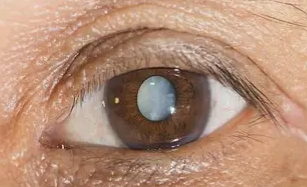
Yesterday my wife had double cataract surgery, a significant procedure that marks a crucial point in her journey towards clearer vision. I had surgery myself in 2002 and again five years later in 2007, so I understand firsthand the emotional and physical aspects of the experience. In those 20 plus years, I have witnessed remarkable advancements in medical technology and techniques, which have improved not just the safety but also the effectiveness of the procedure. The changes in these two decades, including innovations in lens materials and surgical methods, have contributed to faster recovery times and better outcomes, giving us hope for a brighter future post-surgery.

When my procedures took place, I had a regiment of antibiotic eye drops starting 2 days before the procedure and continuing for 3 to 5 days after the procedure to ensure proper healing and to combat any potential infections. However, I recently learned that the current approach has shifted significantly; now, it seems they don’t act very concerned about eye infections at all. This change intrigued me, so I felt compelled to ask the medical team about the reasoning behind it. They explained that over time, their research and observations revealed that very few patients actually end up developing eye infections following the procedures. As a result, they determined that the routine use of prophylactic antibiotic eye drops could be eliminated, which not only streamlines patient care but also minimizes unnecessary medication usage. It’s fascinating how medical practices evolve based on emerging data and patient outcomes.

When mine was done, it was a strict no-no to perform surgery on both eyes at the same time, due to the potential risks and complications involved. Surgeons advised waiting for one eye to heal completely before addressing the other, as this cautious approach was deemed necessary to ensure the safety and effectiveness of the procedure. However, in recent years, advancements in medical technology have significantly changed this perspective. Now, they say that if the eyes are ripe for surgery or in urgent need of replacement, they frequently operate on both eyes simultaneously with increased confidence and without significant concerns. This shift in practice not only accelerates recovery time for patients but also enhances their overall visual outcomes, allowing many to return to their daily activities much quicker than before.

It is still an outpatient procedure, and the time takes around 4 hours, which allows patients to return home the same day without the need for an overnight hospital stay. Additionally, a follow-up appointment the next day is required to ensure everything is healing properly and to address any potential concerns. It is just amazing how the medical innovations have progressed, making such procedures safer and more efficient, ultimately improving patient outcomes and enhancing the overall experience for those undergoing treatment. Patients can feel more at ease knowing that advancements in technology and techniques have significantly reduced recovery time and minimized discomfort.

If you reach the age of 60 you will more than likely need cataract replacements sometime in your remaining years.

UPDATE: IN A FOLLOW UP VISIT, I FIND OUT THEY GIVE AN ANTIOBOTIC THROUGH AN I V DURING SURGERY.

Link to post of November 2023 blog

The Fragile Threads of Dreams

Audio PODCAST

Every night, Bernadette and George met in a dreamworld where gravity bent, colors bled into impossible hues, and buildings pulsed like living things, resonating with a heartbeat that felt both foreign and familiar. They were strangers in waking life, unaware of each other’s existence, yet in this surreal realm, they were constant companions, bound by threads of fate that transcended the ordinary. As they explored the ever-shifting landscapes, laughter and whispered secrets filled the air like a melody, intertwining their souls in a dance of dreams. The first time they locked eyes, standing on a glass bridge over a sea of stars that shimmered with the essence of forgotten dreams, they both felt it—a jolt of recognition, though they’d never met, as if the universe had conspired to weave their destinies together in this ethereal space where the laws of reality faded into the backdrop of their shared imagination.

Bernadette, a quiet barista in Seattle, had dreamed of this enchanted place since childhood, her imagination ignited by tales of magic and wonder. George, a seasoned carpenter in Dublin, had been wandering its shifting landscapes for years, seeking solace and inspiration in a world that seemed to echo his innermost thoughts. The dreamworld was vast and mesmerizing, with forests of liquid light that shimmered like jewels and rivers that whispered secrets of forgotten lore. They’d find each other instinctively, drawn like magnets across the ethereal expanse. At first, they explored in silence, marveling at floating islands suspended in mid-air, or the playful dance of shadows that brought life to the otherwise still surroundings. Then, as curiosity overcame their initial shyness, they began to share their thoughts—discussing the dreamworld’s whimsical rules, its breathtaking beauty, and their own lives that felt burdensome in the waking world. In that surreal haven, the barriers of reality faded away, and neither questioned why they shared this extraordinary space; it felt not just coincidental but profoundly inevitable, as if the universe had conspired to unite their souls in this sanctuary of dreams.

One night, under a sky of spiraling fractals, Bernadette asked, “Why us? What’s connecting us?” George, carving intricate patterns into a glowing tree, paused and looked up, pondering her question with a faraway gaze. “Maybe we’re two halves of something,” he said, his voice barely above a whisper but carrying the weight of their entwined fates. They pieced together clues, reflecting on their journeys: both had lost someone—a parent for Bernadette, a brother for George—and both carried a peculiar loneliness, a profound sense of being unmoored in a world that seemed to move on without them. In the silence that followed, they shared unspoken fears and dreams, realizing that their paths had diverged only to converge in this ethereal space. The dreamworld, they theorized, was not merely a random occurrence but a bridge between their minds, forged by shared grief and collective healing, a frequency only they could tune into, where the memories of their loved ones lingered like echoes, guiding them through their solitude.

They grew close, sharing stories on dreamlit cliffs that seemed to stretch endlessly beneath the vast, starry sky. Bernadette described Seattle’s rain, how it fell gently like whispered secrets upon her skin, while George mimicked Dublin’s pub songs, his voice echoing the lively spirit of the city. They laughed, their joy ringing through the air, argued about whimsical topics, and even danced once on a field of mirrored grass that glimmered under the moonlight. The dreamworld felt more real than their waking lives, each moment vibrant and full of emotion, as if they could touch the very fabric of their dreams. But neither could find the other outside the dream—no names to call out in the waking world, no addresses to search for, just fragments of a bond that lingered like the sweet, haunting melodies of the songs they shared. Their connection, though ephemeral, shone brightly within their hearts, leaving an imprint that would always tie them to those fleeting moments of pure magic.

Then George stopped appearing. The first night, Bernadette wandered alone, calling his name as the dreamworld dimmed, its colors muted, as if the very essence of her dreams had faded with him. Days turned into weeks, blending together in a hazy confusion, leaving her feeling isolated and lost. The once vibrant landscapes she would traverse grew brittle, crumbling under the weight of his absence, the trees sagging as if mourning the loss of their companion. Without George’s presence, the joyful laughter they shared echoed in her mind like distant memories, leaving an ache in her heart. Bernadette’s dreams became erratic and disjointed, sometimes filled with strange images that made no sense, while other times they formed empty voids that swallowed her whole. In waking life, her desperation deepened as she scoured the internet, spending countless hours posting vague descriptions of him on forums, hoping against hope that someone, somewhere might have seen him or could offer a clue. Yet, despite her efforts and the plethora of messages she sent into the digital abyss, she found nothing but silence, each reply further fueling her despair.

Unknown to her, George lay in a Dublin hospital, in a coma after a catastrophic work accident that had left everyone in shock. His mind, once a beacon in their shared dreamworld, was silent and unreachable, shrouded in darkness. Without his consciousness to anchor it, the dreamworld, once vibrant and full of life, began to crumble under the weight of uncertainty. Bernadette felt it fading around her, like a cherished memory slipping away from the grasp of her mind. Desperate to maintain a connection to him, she clung to sleep each night, where she sketched the dreamworld’s landscapes with all the vivid details she could muster, drawing rivers that sparkled under imaginary moons and forests that whispered secrets. Each stroke of her imagination was a lifeline to the beauty they had created together a world teeming with colors and emotions that felt almost tangible. But with each passing night, as George remained adrift in his silent slumber, less and less of that precious world remained, transforming into shadows of what once was, leaving Bernadette increasingly anxious and lonely.

One night, the dreamworld vanished entirely, slipping through her fingers like sand. Bernadette woke sobbing, feeling as if a piece of her soul had been ripped away, the loss as sharp as losing a home where she had built countless memories. In Dublin, miles away yet connected by invisible threads, George’s monitors flatlined, their steady beep replaced by an ominous silence. Their connection, born of shared sorrow and a strange cosmic alignment, dissolved with his final breath, leaving an emptiness that echoed through both their lives. Bernadette never learned his name, yet she carried the dreamworld’s echoes within her, painting its impossible colors on the canvas of her heart, searching for him in every stranger’s face she passed in the bustling streets, wondering if the universe would ever align their paths again in a way that could rekindle the bond they had unknowingly forged in the dreamscape. The world outside seemed less vibrant, a mere shadow of the brilliance they had shared in those fleeting moments, and she longed for a sign, a whisper from the cosmos that he might still be out there, dreaming alongside her in some parallel realm, waiting for the moment when their destinies could intertwine once more.

Understanding Flag Day

June 14th slips onto the calendar without the fanfare of the big summer holidays, but Flag Day has its own kind of quiet charm. It’s a day that asks us to pause—not for fireworks or parades, but for a simple moment of appreciation. The American flag has flown over our best days and our hardest ones, over front porches, schoolyards, stadiums, and small-town streets across the country.

For many of us who’ve lived our whole lives in the Denver Metro area, that flag has been a steady backdrop to decades of change. Today is a reminder that symbols matter because the people behind them matter. Neighbors, families, veterans, teachers, first responders, and all the everyday folks who keep this place moving forward.

So on this Flag Day, take a second look at the red, white, and blue waving in the warm June breeze. It’s not about politics—it’s about gratitude, history, and the shared story we’re still writing together.

Do You Remember This?

June 12, 1987, President Ronald Reagan famously told Mikhail Gorbachev to “tear down this wall” at the Brandenburg Gate in Berlin, a powerful declaration that resonated around the world and symbolized the growing desire for freedom and unity in a divided Europe. This iconic moment occurred during a significant period in the Cold War, when tensions were high and the Iron Curtain divided East and West. Reagan’s words urged the Soviet leader to take a bold step towards dismantling the barriers that separated families and friends, emphasizing the importance of liberty over oppression. As millions watched on television and gathered in the streets, this call to action not only inspired hope among those living under communist regimes but also marked a pivotal turning point in the struggle against tyranny, setting the stage for future changes in Eastern Europe.

Finding Joy in Everyday Moments

Some days don’t need fixing. They just need noticing. This Thursday feels like one of those days.

Maybe it’s the way the morning light shows up without any drama, or the quiet comfort of a familiar routine. Maybe it’s simply the reminder that we get another chance today—another cup of coffee, another laugh, another moment that surprises us in a good way.

There’s always at least one small good thing waiting to be found. A friendly wave. A memory that makes you grin. A breeze that carries the promise of summer. Pick one and let it lift you a little.

Surviving Monday Mornings

Good morning, readers.
If you’re reading this, congratulations—you’ve survived another Monday morning. That alone deserves a medal, or at least a second cup of coffee.

Mondays have a personality all their own. They don’t tiptoe in politely. No, they kick down the door like a sitcom neighbor and shout, “Rise and shine, sunshine!” while we’re still trying to remember our own names.

The alarm goes off, and suddenly the bed feels like the most comfortable place on earth. The dog looks at you like, “You’re getting up? Voluntarily?” The coffee maker sputters like it’s also questioning your life choices. And the to‑do list you wrote last night—when you were feeling optimistic and borderline delusional—now reads like a cruel prank.

But here’s the thing: Mondays are honest. They don’t pretend to be anything other than what they are—a slightly chaotic, mildly judgmental restart button. And once you get past the first ten minutes, they’re not so bad. You find your rhythm. You remember how to be a functioning human. You even start believing you might accomplish something today.

So here’s to Monday: the day that tests us, teases us, and occasionally trips us, but still gives us a fresh start whether we’re ready or not.

May your coffee be strong, your patience be long, and may you avoid replying‑all to anything before noon.

June 6, 1944

June 6, 1944, stands as one of the most consequential mornings in human history—a day when the course of World War II, and the world itself, shifted.

On the early morning of June 6, 1944, the Allies launched the largest combined naval, air, and land operation ever attempted. Codenamed Operation Overlord, it was the long‑awaited invasion of Nazi‑occupied France. In the dark hours before dawn, airborne troops dropped behind enemy lines to secure key positions, and at 6:30 a.m., the first waves of soldiers began landing on the five assault beaches: Utah, Omaha, Gold, Juno, and Sword.

By the end of the day, roughly 156,000 Allied troops had come ashore, establishing a foothold that would grow into the liberation of Western Europe. The cost was staggering—thousands of Allied soldiers were killed facing the fortified German defenses—but the mission succeeded.

The images we remember—grainy photos of young men stepping into surf under fire—capture only a fraction of the courage it took. Those troops faced what seemed like an impossible task, yet they pressed forward, beach by beach, yard by yard.

D‑Day wasn’t just a battle. It was a turning point. A day when ordinary men performed extraordinary acts, and the world began its long march toward freedom.

Do they even teach about this anymore?

Why I Write: The Magic of Words


Audio Podcast 2 minutes

Good morning readers.

I’ve come to accept that I suffer from a lifelong case of diarrhea of the pen. Words just… happen. They spill out, tumble forward, and insist on being arranged into something—anything—before the day is done. Fourteen books on Amazon, nineteen magazines, and nearly five blog posts a week stand as evidence that whatever this condition is, it’s chronic and probably incurable.

And honestly, I hope it never gets cured.

I don’t write for money. I don’t write for bestseller lists. I don’t write because I think the world is waiting breathlessly for my next paragraph. I write because something in me feels more alive when the words are moving. I write because stories tap me on the shoulder like impatient children and say, “Well? Are you going to let me out or not?”

Most days, I simply give in and let them run.

My joy doesn’t come from sales charts or rankings. It comes from the quiet, human magic of knowing that someone—somewhere—read something I wrote and felt a spark. Maybe a smile. Maybe a memory. Maybe a moment of comfort. Maybe just the sense that they’re not walking this earth alone.

That’s enough for me. More than enough.

Writing has become my way of staying awake to the world. It keeps me curious. It keeps me grateful. It keeps me connected to people I may never meet but somehow still understand. Every sentence is a small bridge, and I’ve always loved building bridges.

So I’ll keep writing. Not because I’m chasing anything, but because this is who I am: a man who finds meaning in the steady rhythm of words, day after day, page after page. A man who knows that creating something—anything—is its own kind of success.

And if even one person reads it and feels a little lighter, a little seen, a little more connected, then every word was worth it.

Simple Joys and New Beginnings

Dirt trail through colorful wildflowers leading to a snow-covered mountain with sunset light

Good morning, readers.

June has a way of arriving without fanfare. No fireworks, no parades, no dramatic seasonal shift. It just steps onto the stage with a gentle clearing of the throat and says, “I’m here. Let’s begin.” And somehow, that’s enough.

Today is the unofficial start of the easy season—longer light, warmer mornings, and that subtle lift in the air that reminds us we’ve made it through another winter, another spring, another stretch of life’s unpredictable weather. June 1st is the doorway to the days we’ll remember later: the ones filled with iced tea, porch conversations, and the kind of evenings that linger long after the sun has technically set.

There’s a promise tucked inside this date. Not a loud one. More like a quiet invitation to slow down, look around, and let the small things count for more than they usually do. The first hummingbird at the feeder. The first tomato blossom. The first morning you step outside and realize you don’t need a jacket anymore.

June doesn’t demand anything from us. It simply offers itself—thirty days of warmth, light, and possibility. And on this first one, we get to choose how we’ll meet it.

So here’s to June 1st: a gentle beginning, a soft reset, a reminder that even halfway through the year, there’s still so much ahead worth leaning toward.

May today bring you something simple and good. May it feel like the start of something you didn’t know you needed.

What small thing is signaling “summer” to you this morning?

Experience the Magic of Albuquerque Balloon Fiesta

In October 2005 my wife and I took a trip to Albuquerque for the balloon festival. it is one of the largest balloon festivals in the world. We had a blast and got to view many strange and unusual balloons. Here are some.

https://albuquerque.com/albuquerque-international-balloon-fiesta-tips-guide/

Why Fred the Fox is Our Beloved Local Celebrity

Audio Podcast 3 minutes

Good morning, readers. Let me tell you a little tale about Fred—the neighborhood fox who has, over time, become something of a local celebrity around here. Fred isn’t just any fox. He’s got personality. He’s got charm. And he walks these foothill streets like he’s the unofficial mayor of the block.

Fred first showed up a 4 summers ago, trotting down the sidewalk with the confidence of someone who knew exactly where he was going. Tail high, ears perked, eyes bright—he had the look of a fox who had places to be and opinions about how quickly he should get there. The neighbors noticed him right away. You don’t ignore a fox who behaves like he owns the HOA.

Over time, Fred developed a routine. Every morning, just after sunrise, he’d make his rounds. He’d pause at the corner house where Mrs. Callahan leaves out a bowl of water. He’d sit for a moment in the shade of her lilac bush, as if reviewing the day’s agenda. Then he’d trot down the street, stopping occasionally to inspect a flower bed or stare curiously at a lawn ornament that hadn’t been there the day before. Fred likes to stay informed.

One of my favorite Fred moments happened last July. I was sitting on the porch with a cup of coffee when Fred strolled up the driveway like he had an appointment. He stopped at the bottom step, looked at me, and gave a single nod—as if to say, “Morning. Hot one today. Stay hydrated.” Then he continued on his way, leaving me with the distinct impression I’d just been given advice by a fox.

Adults adore him. Even the dogs seem to respect him. There’s something about Fred that brings out the best in everyone. Maybe it’s the way he moves—calm, unhurried, completely at ease in his own fur. Maybe it’s the reminder that even in a busy neighborhood, nature still wanders through, checking on us from time to time.

This year, as the hot days of summer settle in, Fred has adjusted his schedule. He’s a dawn‑and‑dusk fox now, avoiding the midday heat like a seasoned local. I saw him just yesterday, stretched out under the shade of a pine tree, looking for all the world like he was on vacation. If foxes could wear sunglasses, Fred would.

There’s something comforting about having him around. He reminds us to slow down, to pay attention, to enjoy the simple things—a cool patch of shade, a quiet morning, a familiar path. Fred doesn’t hurry. He doesn’t worry. He just lives, fully and confidently, right where he is.

And maybe that’s why we love him so much. Fred is a little piece of wildness, a little spark of joy, a reminder that even in a world full of noise, there’s still room for wonder.

Not a bit of truth to this tale

Why We Still Observe Daylight Saving Time

Good morning, readers. Recently in the news the conversation about eliminating the routine of Daylight-Saving Time every spring and fall. Here are my nickels worth.

Here we go again—Daylight Saving Time. That twice‑a‑year ritual where we all pretend moving the clock forward or backward somehow gives us more control over the sun. Every March and November, we do this little dance, and every time I find myself wondering who, exactly, we’re trying to fool. The sun certainly isn’t paying attention to our clocks. No matter what, there is only 24 hours in a day.

Still, there’s something almost ceremonial about it. The moment you change the time, you feel the shift. Mornings get brighter or darker, evenings stretch or shrink, and suddenly the rhythm of the day feels just a little off. It’s like someone nudged the world a half‑step sideways.

The funny thing is, everyone has an opinion about Daylight Saving Time. Some people love the longer evenings. Others grumble about losing an hour of sleep. And then there are those who swear their pets never recover from the disruption. (Honestly, I think the pets handle it better than we do.)

For me, the beginning of Daylight Saving Time always feels like a gentle nudge toward the warmer months. A reminder that summer is out there warming up in the bullpen. The days stretch a little longer, the light lingers a little later, and the foothills start to glow in that late‑day gold that makes you want to sit on the porch just a few minutes more.

But it also makes me think about time itself—how we measure it, how we chase it, how we try to control it even though it moves with or without our permission. Maybe that’s why this little clock‑changing ritual feels so human. We’re trying to shape the day to fit our lives, even if only by an hour.

President Franklin D. Roosevelt instituted year-round “War Time” DST from February 9, 1942, to September 30, 1945, for energy conservation and it has been around since. Just because of the simple fact that there are only 24 hours in the day I could never understand or agree with Daylight Savings Time.


How do you feel about Daylight Saving Time? Love it, hate it, or just tolerate it?
Share your thoughts below—I always enjoy hearing how others navigate this twice‑a‑year shuffle.

Summer Beauty Amidst Water Rationing Challenges

Good morning, readers. Step outside and you can feel it already—the beginning of the hot days of summer. Not the polite warmth of late spring, but the full‑throated heat that settles in like a long‑term houseguest. The kind that makes the sidewalks shimmer, the kind that sends dogs straight to the shade, the kind that reminds us we live in the West, where summer doesn’t ask permission before it arrives.

This year, though, the heat comes with a companion: water rationing. It’s not unexpected—we’ve seen the signs for years—but it still feels strange to be told how much water we can use, as if we’re all suddenly sharing the same canteen on a long hike. And in a way, we are.

The foothills look a little drier than usual, the grass a little more sun‑bleached, the air a little more eager to steal moisture from anything that stands still too long. Even the birds seem to be pacing themselves, conserving energy the way we’ll soon be conserving water.

But here’s the thing: summer has always asked us to adjust. We slow down. We drink more. We find shade. We learn to live with the heat instead of fighting it. Water rationing is just another version of that same old dance—an invitation to be mindful, to use what we have with a little more intention.

And honestly, there’s something almost communal about it. We’re all in this together, every household doing its part. You can feel it in the neighborhood: shorter showers, fewer sprinklers running, more conversations about how to keep the tomatoes alive without breaking the rules. It’s a shared challenge, and shared challenges have a way of bringing people closer.

The hot days of summer also bring their own kind of beauty. Long evenings that stretch lazily toward dusk. Sunsets that look like someone spilled a box of crayons across the sky. The smell of warm pine drifting down from the hills. The simple pleasure of a cold drink on a shaded porch. Summer reminds us that even in scarcity, there is abundance—if we know where to look.

So as the heat settles in and the rationing begins, maybe this is our chance to practice gratitude in small, practical ways. To appreciate the water we do have. To notice the resilience of the land around us. To remember that living here has always meant adapting, adjusting, and finding joy in the middle of challenge.

And now I’m curious—how are you planning to handle the hot days ahead? Any tricks for staying cool or conserving water that you’ve learned over the years? I’d love to hear your thoughts in the comments.

Memorial Day Reflections

On this Memorial Day, we pause to honor the men and women who gave their lives in service to our country—ordinary people who showed extraordinary courage. Their sacrifice is woven into the freedoms we enjoy every day, often without thinking. Today is not about politics or division; it’s about gratitude, remembrance, and the quiet weight of knowing that others stood in harm’s way so we could stand here in peace. May we carry their legacy forward with humility, kindness, and a renewed commitment to the values they fought to protect.

As we honor this Memorial Day, Do you have a family member, friend, or story that comes to mind on a day like this? Your reflections—whether a memory, a name, or simply a feeling—help keep the spirit of this day alive. If you’re comfortable, share a thought below so we can remember together.

Embracing Clarity and Humor at Eighty Plus

Hello readers, let me tell you something I’ve learned about living past eighty.
It’s not what I expected. In fact, it’s better.

When you cross that eighty‑year mark, life starts to feel like a bonus chapter the publisher forgot to mention. You turn the page thinking the story is winding down, and suddenly—surprise—there’s more. And not filler material either. Good stuff. Rich stuff. The kind of pages you read slowly because you finally understand there’s no need to rush.

At this age, mornings feel different. The light comes in softer, almost like it’s checking on you. Coffee tastes better because you’re not gulping it on your way to somewhere else. Even the rain—those long, steady Colorado rains in the last couple of days—feels less like weather and more like company.

One of the great joys of being over eighty is that the small things become the big things.
A comfortable chair.
A neighbor waving from across the street.
The foothills changing color as the day moves along.
A good conversation.
A quiet house.
A warm jacket that still fits.

You stop apologizing for enjoying these things. You’ve earned them.

And let me tell you—perspective becomes your superpower. You’ve lived through enough storms to know that most of them pass. You’ve seen the world spin through cycles of anger, hope, confusion, renewal. You’ve learned that people are more alike than they admit, and that kindness still works, even when the world forgets it for a while.

There’s also a certain humor that comes with being this age. You misplace your glasses only to find them on your head. You walk into a room and forget why you’re there, but you stay anyway because the room is comfortable. You catch yourself saying things your grandparents once said—and now you finally understand why they said them.

But the best part, the part I wouldn’t trade for anything, is the clarity.
You know what matters.
You know what doesn’t.
You know which people deserve your time and which worries don’t.
You know that memories are treasures, not burdens.
And you know that love—given freely, received gratefully—is the real currency of a life well lived.

Living past eighty isn’t the end of the story.
It’s the chapter where the writing gets deeper, the humor gets warmer, and the gratitude gets louder.

And every morning you wake up, you realize something simple and beautiful:
You’re still here.
Still learning.
Still noticing.
Still becoming.

Thank you for visiting my website

Rainy Days May Inspire Our Best Thoughts

The rain had been falling for three days straight, the kind of steady, unhurried rain that didn’t bother with theatrics. No thunder, no lightning—just a soft percussion on the roof, like someone drumming their fingers while thinking of what to say next. By the third morning, the foothills were wrapped in a gray shawl, and the whole neighborhood seemed to be speaking in whispers.

Stan stood at the front door with a mug of coffee that had gone lukewarm while he wasn’t paying attention. He liked days like this. Rainy days slowed the world down to his preferred speed. They made it easier to notice things: the way the street glistened like polished stone, the way the pine trees bowed slightly under the weight of the water, the way the air smelled like wet earth and memory.

He decided to take a walk.

Not a purposeful walk. Not the kind where you count steps or aim for a destination. Just a meander, the kind of wandering that rainy days practically insist upon. He grabbed his old canvas jacket—the one with the frayed cuffs and the pocket that always caught loose threads—and stepped outside.

The rain greeted him like an old friend.

It wasn’t cold, just cool enough to remind him he was alive. Puddles gathered along the curb, each one holding a tiny, trembling version of the sky. He stepped around them at first, then through them, because there are moments in life when you’re allowed to be eight years old again.

A few blocks down, he passed Mrs. Shaw’s house. She was on her porch, wrapped in a quilt, watching the rain as if it were a movie she’d seen a hundred times but still loved. She waved. He waved back. No words needed. Rainy days have their own language.

He kept walking until he reached the small park tucked between two streets. The swings were empty, gently swaying as if someone had just hopped off. The picnic tables were dark with water, and the grass looked greener than it had in months. He sat on the bench under the big cottonwood tree, the one that had stood there longer than most of the houses.

The rain softened. The world smelled like renewal.

Stan closed his eyes and listened. Not just to the rain, but to everything beneath it—the distant hum of a car, the soft rustle of leaves, the quiet thump of his own heartbeat. It felt like the world was reminding him of something simple and important: that life doesn’t always need to be chased. Sometimes it just needs to be noticed.

When he finally stood to head home, he felt lighter. Not because anything had changed, but because rainy days have a way of rinsing off the noise, we didn’t realize we were carrying.

Back at his desk, he opened his laptop, rain still tapping the window beside him. He began to write—not because he had to, but because rainy days make good stories, and someone ought to catch them before they slip away.

How a Simple Grocery List Turned into a Treasure Hunt

We went to the store today with a simple plan: seven items. Just seven. A tidy little list, the kind you can hold in your head without even folding the paper. We walked in feeling confident, almost smug. This would be quick. Efficient. A surgical strike.

Then the cart started filling itself.

Somewhere between the produce aisle and the dairy case, the list became more of a suggestion than a rule. A bag of something new. A box of something interesting. A snack I definitely didn’t need but suddenly couldn’t imagine living without. By the time we reached the checkout, the cart looked like it had been on its own private adventure.

The total flashed on the screen: $107.38

For seven items? Well… seven planned items. The rest were what you might call “impulse buys,” though that makes it sound accidental. Really, it was more like a gentle surrender to curiosity, comfort, and the small joys of the grocery store.

And honestly, there’s something kind of delightful about it. Life is full of routines and responsibilities, but every now and then, a few unplanned treats sneak into the cart and remind you that you’re still capable of surprise.

So yes, we went in for seven things and came out with a small mountain. But sometimes the best parts of the day are the ones that weren’t on the list at all.

Embrace the Joy of Ordinary Days

There’s something quietly triumphant about a Friday landing smack in the middle of the month. It’s not a holiday, not a milestone, not even a long weekend. It’s just… Friday the 15th. A perfectly ordinary day that somehow feels like a small victory lap.

Maybe that’s the magic of it.

Fridays like this remind us that life isn’t built from the fireworks moments. It’s built from the in‑between ones—the days when the coffee tastes just right, the sun hits the kitchen window at the perfect angle, and you catch yourself humming a tune you didn’t even know you remembered.

On a Friday like this, the world seems to exhale a little. People walk a touch lighter. The grocery store cashier smiles more easily. Even the dog seems to know the weekend is tiptoeing closer, tail wagging with that “we made it” energy.

And maybe you feel it too—that gentle shift from effort to ease. The week’s rough edges soften. The to‑do list stops shouting and starts whispering. You realize that despite everything—news cycles, errands, the occasional misplaced sock—you’ve made it through another stretch of days on this spinning planet.

That’s worth celebrating.

Not with confetti or grand gestures, but with something simple: a deep breath, a warm cup, a moment of gratitude for the ordinary. Because ordinary is underrated. Ordinary is where the good stuff hides.

So here’s to Friday the 15th.
To the small joys.
To the quiet victories.
To the steady rhythm of showing up, day after day, and finding meaning tucked into the corners.

May your Friday be gentle, your weekend generous, and your heart open to the tiny wonders waiting to be noticed.

Daylight Saving Time: Love It or Hate It?

Good morning, readers. Recently in the news the conversation about eliminating the routine of Daylight-Saving Time every spring and fall. Here are my nickels worth.

Here we go again—Daylight Saving Time. That twice‑a‑year ritual where we all pretend moving the clock forward or backward somehow gives us more control over the sun. Every March and November, we do this little dance, and every time I find myself wondering who, exactly, we’re trying to fool. The sun certainly isn’t paying attention to our clocks. No matter what, there is only 24 hours in a day.

Still, there’s something almost ceremonial about it. The moment you change the time, you feel the shift. Mornings get brighter or darker, evenings stretch or shrink, and suddenly the rhythm of the day feels just a little off. It’s like someone nudged the world a half‑step sideways.

The funny thing is, everyone has an opinion about Daylight Saving Time. Some people love the longer evenings. Others grumble about losing an hour of sleep. And then there are those who swear their pets never recover from the disruption. (Honestly, I think the pets handle it better than we do.)

For me, the beginning of Daylight Saving Time always feels like a gentle nudge toward the warmer months. A reminder that summer is out there warming up in the bullpen. The days stretch a little longer, the light lingers a little later, and the foothills start to glow in that late‑day gold that makes you want to sit on the porch just a few minutes more.

But it also makes me think about time itself—how we measure it, how we chase it, how we try to control it even though it moves with or without our permission. Maybe that’s why this little clock‑changing ritual feels so human. We’re trying to shape the day to fit our lives, even if only by an hour.

President Franklin D. Roosevelt instituted year-round “War Time” DST from February 9, 1942, to September 30, 1945, for energy conservation and it has been around since. Just because of the simple fact that there are only 24 hours in the day I could never understand or agree with Daylight Savings Time.


How do you feel about Daylight Saving Time? Love it, hate it, or just tolerate it?
Share your thoughts below—I always enjoy hearing how others navigate this twice‑a‑year shuffle.

A Mother’s Day Tribute

Audio Podcast 3 minutes

Mother’s Day always sneaks up on me. Not because I forget the date — the stores make sure of that — but because the day itself carries a quiet weight that settles in only when I stop long enough to feel it. It’s not a holiday built on fireworks or fanfare. It’s built on something softer, steadier, and far more enduring.

It’s built on the people who raised us, shaped us, nudged us, scolded us, fed us, and believed in us long before we believed in ourselves.

It’s built on mothers.

And not just the traditional kind.
Mother’s Day belongs to the women who mother in a hundred different ways — the grandmothers, the stepmothers, the aunts, the neighbors, the teachers, the friends who step in with a warm meal or a warm word at exactly the right moment. The women who show up. The women who steady the world.

When I think about Mother’s Day, I don’t think about cards or flowers or brunch menus. I think about the small things — the everyday gestures that never made the headlines but somehow made a life.

I think about the way a mother can hear a child’s footsteps and know exactly what kind of day they’ve had.
I think about the way she can turn a kitchen into a refuge with nothing more than a pot on the stove and a chair pulled out.
I think about the way she can say, “It’s going to be alright,” and somehow make it true.

There’s a kind of magic in that.
Not the flashy kind — the quiet kind.
The kind that lasts.

Being in my senior years, I find myself remembering moments I didn’t appreciate at the time. The walks to school. The late‑night talks. The way she always knew when I needed space and when I needed a sandwich. The way she could turn a bad day around with a look that said, “You’re still my kid, and you’re still okay.”

Motherhood isn’t perfect. No one gets it right every time. But the beauty of it — the real beauty — is in the trying. The showing up. The loving even when the day is long and the patience is short.

So today, on this Mother’s Day, I want to celebrate all the women who have ever tried.
All the women who have ever stayed up late, woken up early, worried too much, hoped too hard, or loved without keeping score.

You are the heartbeat of families.
You are the memory‑keepers.
You are the steady hands in a world that often feels unsteady.

And for those of us whose mothers are no longer here, Mother’s Day becomes something different — a day of remembering, of gratitude, of feeling the echo of a voice we still hear in our better moments. Love doesn’t disappear. It just changes shape.

So whether you’re celebrating with a phone call, a hug, a memory, or a quiet moment to yourself, I hope today brings you a little warmth. A little joy. A little reminder that the world is better because of the women who care enough to keep showing up.

Happy Mother’s Day to all who mother, all who nurture, all who love with that steady, generous heart.

You make the world feel like home.

I Love You Mom!

Crafting Short Stories: From Blog to Books

YouTube Video 15 minutes

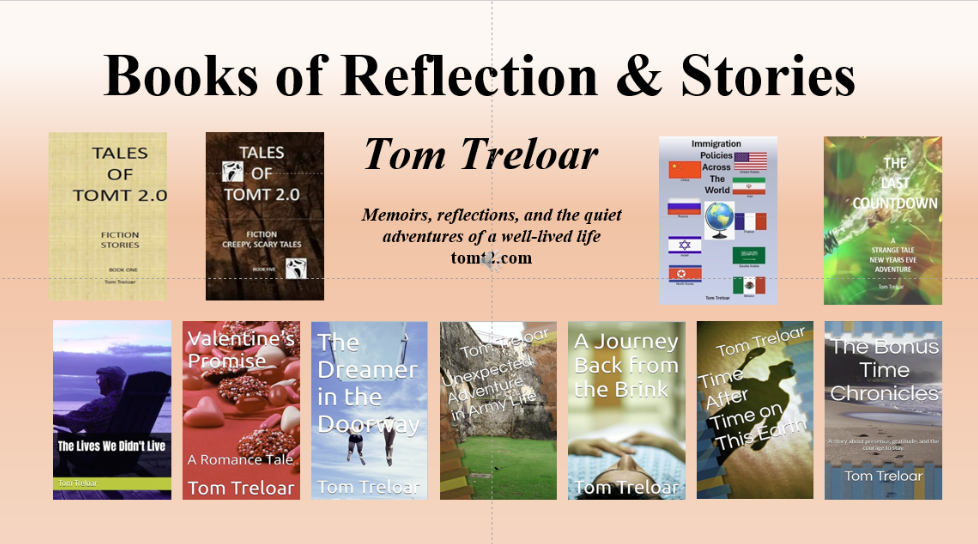
In addition to blogging, I also have ventured into publishing paperback books and Kindle editions on Amazon, which has opened up new avenues for creativity and self-expression. A year ago, I discovered Amazon Kindle Direct Publishing, a platform that empowers authors to reach a global audience with their written works. Since then, I’ve been able to explore various genres, pouring my passion into crafting stories that resonate with readers. The process of creating these books has been both challenging and rewarding, as I’ve navigated the intricacies of formatting and cover design, all while learning how to market my publications effectively. This journey has not only expanded my portfolio but also deepened my understanding of the publishing industry, making me more confident in sharing my voice through multiple mediums.


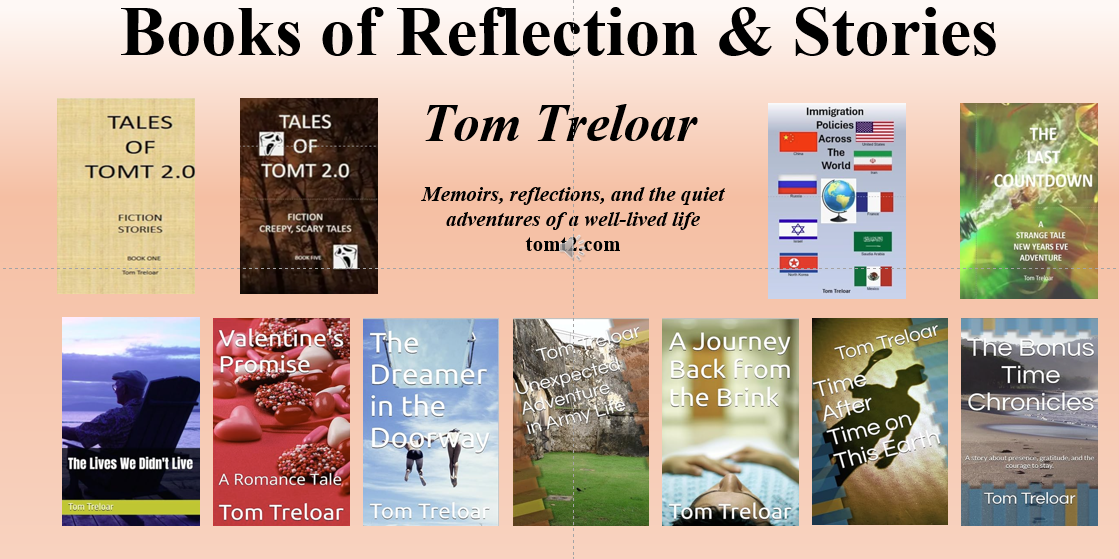
The first five books was a series of short story books. They are around a hundred pages each edition. Around twenty-five short stories in each book. I have actively been blogging and writing short articles since I retired in 2006. Many of these stories are included in these books and other stories that have been written for these books. They are ideal for the commuter and others that just need to fill a short amount of time where the story is short and to the point. They are many types of genres and subjects.

Book five was composed a few months prior to Halloween and I thought I would try something different. Everyone likes spooky creepy stories on Halloween. So, I thought I would compose a book of stories for Halloween. This consists of 16 short stories that are strange and scary. Friends have commented that they couldn’t finish the book because they were too strange and scary. This book has been one of the most popular publications.

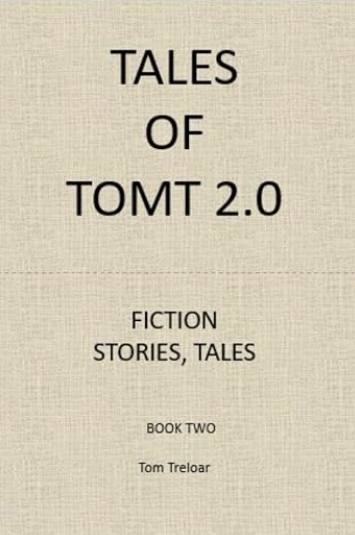
Amazon.com: Tales of TomT 2.0 (Tales of TomT 2.0 Series Book 1) eBook : Treloar, Tom: Kindle Store

Amazon.com: Tales of TomT 2.0 (Tales of TomT 2.0 Series) eBook : Treloar, Tom: Kindle Store

Amazon.com: Tales of TomT 2.0: BOOK THREE (Tales of TomT 2.0 Series) eBook : Treloar, Tom: Kindle Store

Tales of TomT 2.0: Book 4 (Tales of TomT 2.0 Series) – Kindle edition by Treloar, Tom. Mystery, Thriller & Suspense Kindle eBooks @ Amazon.com.

Amazon.com: Tales of TomT 2.0: Book 5 (Tales of TomT 2.0 Series) eBook : Treloar, Tom: Kindle Store


The next book was Immigration Policies Across the World. 93 pages

Since illegal immigration was a hot topic last summer, I wondered, “what are the immigration policies around the world?” Intrigued by the complexities and nuances of this global issue, I decided to delve deeper. I went to various AI sources, Gemini, Copilot, Grok, and asked for immigration policies in nine countries throughout the world. It was fascinating to see how different nations, each with their unique cultural, economic, and political contexts, handle immigration. Some countries adopted strict, enforcement-heavy approaches, while others embraced more lenient, humanitarian policies that welcomed immigrants as valuable contributors to society. This comparative study not only broadened my understanding but also highlighted the diverse challenges and opportunities faced by immigrants globally. Inspired by these revelations, I then came up with the idea to compose a comprehensive book that encapsulates these findings and publish it alongside my other publications, hoping to foster a greater awareness and discussion around this pressing issue.

Amazon.com: Immigration Policies Across the World eBook : Treloar, Tom: Books


Since I had a good response to my book 5 of creepy tales and stories for Halloween I thought, “why not a book for New Years Eve? The next book, “The Last Countdown.”

Step into a New Year’s Eve unlike any other in The Last Countdown, a witty, fast‑paced mystery where five friends stumble into a hidden world of secret rooms, time‑bending artifacts, and a clock that doesn’t just mark midnight—it controls it. When the legendary Midnight Clock vanishes, the group is thrust into a race against unraveling time, hunted by a man who believes the world should freeze forever. Equal parts humor, heart, and high‑stakes magic, this story turns the ticking of a clock into the pulse of an unforgettable adventure.

This is a 99-page mystery, not a collection of short stories.

The Last Countdown: New Years Eve Adventure – Kindle edition by Treloar, Tom. Literature & Fiction Kindle eBooks @ Amazon.com.


I now have the bug. This book publishing is fun and challenging. Amazon Kindle Direct Publishing is a great platform. The only investment I made is my time. I don’t have to search for a publisher that is willing to take the chance on my unprofessional experience or buy any large quantities of books. The only investment I have is my time and since I am retired, I have many hours of that.


The next book is, “The Lives we didn’t Live.” This is about a strange dream I had, and I wanted to share it. It was a significant event in my life. Small book, only 30 pages.

Amazon.com: The Lives We Didn’t Live eBook : Treloar, Tom: Kindle Store

When Tom drifts into sleep one ordinary night, he’s pulled into a vivid dream where Sandra—his grounded, quietly magnetic grade‑school companion he hasn’t thought of in forty years—appears exactly as she was in high school. She shows him three lives they might have lived together, each one tender, unsettling, and impossibly real. Shaken awake, Tom searches for her… only to discover she died three days earlier. What follows is a decades‑long reflection on connection, timing, and the mysteries that refuse to fade. Three Days After Sandra is a haunting, heartfelt novella about the questions we never knew we asked, the lives we never lived, and the quiet ways the past sometimes reaches forward—not to change our path, but to remind us that it mattered.


Since I wrote a book around Halloween and one around New Years, why not Valentines Day? This books name is, “Valentines Promise: A Romance Tale

Amazon.com: Valentine’s Promise: A Romance Tale eBook : Treloar, Tom: Kindle Store

Valentine’s Promise is a tender, time‑spanning love story about two people whose hearts find each other again and again through every season of life. From an unexpected Valentine’s Day beginning to a lifetime of shared laughter, whispered vows, and three miracle children born on the same enchanted date, Lee and Mallory Collins build a marriage shaped by devotion and destiny. As their family grows and the years unfold, they discover that true romance isn’t found in grand gestures, but in the quiet, everyday moments that bind two souls together. Warm, luminous, and deeply heartfelt, this novel celebrates a love that endures, a family that blossoms, and the beautiful truth that some promises are written long before we know to make them.


The next book is, The Dreamer in the Doorway. 91 pages

Amazon.com: The Dreamer in the Doorway eBook : Treloar, Tom: Kindle Store

What if the person you loved most could see the parts of you even you’ve forgotten?
When Thomas slips into a vivid dreamscape shaped by Dee’s memories, fears, and unspoken longings, he becomes a silent witness to the pieces of her she’s never shared. But the deeper he travels into her dream‑world, the more he realizes he’s not just exploring her past — he’s confronting the quiet distance that has grown between them in waking life.
Then, unexpectedly, Dee appears in his dreams too.
Together, they walk through mirrored hallways of regret, shoreline worlds of possibility, and the locked rooms of their own hearts. What begins as a surreal intrusion becomes a journey of rediscovery — of vulnerability, of forgiveness, and of the love they thought they’d lost to time.
As dreams and reality begin to blur, Thomas and Dee must decide whether the truths they uncover in sleep can transform the life they share when they wake.
A tender, romantic, and quietly haunting story about connection, second chances, and the courage it takes to truly see — and be seen by — the one you love.
In the end, one question lingers long after the final page:
How well do we ever really know the person sleeping beside us?


The next book is, Unexpected Adventure in Army Life. Kindle book

Amazon.com: Unexpected Adventure in Army Life eBook : Treloar, Tom: Kindle Store

Everyone has a little Indiana Jones in them. My own brush with adventure didn’t involve ancient artifacts or daring escapes, but it did begin in a place steeped in history, mystery, and the lingering shadows of a world still recovering from war.
It was January 1965, and I was in the U.S. Army, newly assigned to Merrell Barracks in Nuremberg, Germany. The winter air was sharp enough to sting your lungs, and the sky hung low and gray, as if it were weighing the city down with memories it hadn’t yet released.
Merrell Barracks was no ordinary post. The place had a presence. Thick stone walls, echoing corridors, and a sense that every footstep carried the weight of decades. You could feel the past in the air. The buildings had seen things long before we arrived, and you couldn’t help but wonder what stories they would tell if the walls could talk.
I didn’t know it then, but this old German barracks — this unlikely crossroads of history and youth — was about to hand me an adventure I never saw coming. The kind of story that stays with you for a lifetime. The kind that proves you don’t need a whip or a fedora to feel like Indiana Jones.
Sometimes all it takes is being in the right place, at the right time… and just curious enough to get yourself into trouble.


The next book is, A Journey Back from the Brink Kindle book

Amazon.com: A Journey Back from the Brink eBook : Treloar, Tom: Kindle Store

A story about a leg cramp that turned into a life-threatening experience. Waking up around 3 am with a terrific pain in the calf, I initially brushed it off as just another muscle cramp. However, as time passed, the pain intensified, leading to alarming symptoms that could not be ignored. The following week unfolded in a blur of worry and doctor visits, culminating in a frantic 911 call that would change everything. The paramedics arrived swiftly, and within moments, I was whisked away to the hospital where a lifesaving procedure was performed. The diagnosis revealed a serious underlying condition that I had no idea existed, and I was faced with an eye-opening surgery that redefined my perspective on health and well-being. From near death to going home, the journey was a testament to resilience and the fragility of life, teaching me to appreciate even the smallest moments of comfort and normalcy.


The next book is, Time After Time on this Earth 133 pages

Amazon.com: Time After Time on This Earth eBook : Treloar, Tom: Kindle Store

This book is a companion for anyone who has ever paused long enough to wonder what their life has really meant. Through fifty tender, distilled chapters and a luminous epilogue, the author traces the arc of a life shaped by love, softened by time, and illuminated by meaning. It’s a celebration of presence, gratitude, and the quiet miracles hidden in ordinary days. A warm, reflective journey that leaves readers feeling seen, comforted, and deeply at peace.

In this deeply human and quietly luminous memoir, a lifetime unfolds not through dramatic twists, but through the small, steady moments that reveal what truly matters. With warmth, clarity, and a storyteller’s gentle wisdom, the author reflects on love, loss, growth, presence, and the quiet radiance that emerges only after years of living with an open heart. This is a book about becoming — slowly, honestly, beautifully — and discovering that a life well‑loved is a life well‑lived.


The next book is The Bonus Time Chronicles 178 pages

The Bonus Time Chronicles – Kindle edition by Treloar, Tom. Literature & Fiction Kindle eBooks @ Amazon.com.

What if the life you thought had ended was only beginning to deepen?
After a near‑fatal embolism, Lee Weiss wakes into a world that looks the same but feels entirely different. The foothills outside his window, the dust motes in the morning light, the quiet hum of his own breath — everything carries a new kind of weight, a new kind of wonder.
In the long months that follow, learns to move through his days with a slower, steadier presence. He reconnects with his daughter. He begins writing again, one honest line at a time. He leads a small circle of local writers who remind him that creativity is a form of community. And through a series of unexpected letters, he forms a gentle, luminous connection with a woman named Eleanor — a companion in grief, courage, and renewal.
The Bonus Time Philosophy is a tender, reflective novel‑memoir about what happens after survival. It’s not a story of second chances in the dramatic sense, but of deeper chances — the kind that arrive quietly, asking only for attention.
With warmth, clarity, and a deep appreciation for the ordinary miracles of everyday life, this book invites readers to consider their own bonus time:
the conversations that linger,
the pages that wait to be written,
the people who walk beside us,
and the quiet afternoons that change everything.
A story about presence, gratitude, and the courage to stay.


That’s it for the time being. This journey in the last year has been exciting, and a learning experience filled with unexpected challenges and rewarding moments. I doubt if I will ever make it to the best seller list, but the growth I have experienced through this process is invaluable. From the countless hours of writing and rewriting to the feedback from peers and mentors, every step has contributed to my development as a writer. Ultimately, it has been an experience I don’t regret, as it has shaped my perspective on storytelling and deepened my passion for sharing my voice with the world.

I take an event in my life and massage it into a memoir or compose a fiction tale into different subjects or categories, exploring the intricate emotions and details that surround those moments. By delving into my experiences, I can uncover hidden lessons and universal truths, weaving them together into a compelling narrative that captivates readers. Whether it’s drawing upon personal anecdotes or crafting imaginative scenarios, each piece becomes an opportunity to reflect on the human condition and convey relatable themes through the lens of my creativity. Yes, AI is one of the tools in my toolbox.

Hope to see you on Amazon.

Amazon.com: Tom Treloar: books, biography, latest update

My Day Went Stupid

Audio

I woke up this morning with the firm conviction that today — today — I would write something meaningful. Something profound. Something that would make readers pause mid‑sip of their coffee and whisper, “My God… he’s done it again.”

Instead, I made toast.

Burnt toast.

And while staring at that charred rectangle of disappointment, I thought, well, this seems like the perfect emotional foundation for a stupid blog.

So here we are.

I should warn you: this blog has no purpose. None. It’s like a shopping cart in a parking lot that somehow rolled into a bush and decided to stay there forever. It’s like a squirrel that forgot what it was doing halfway up a tree. It’s like me, trying to remember why I walked into the kitchen.

But you’re here, and I’m here, and we might as well see where this goes.


The Day Started Normally, Which Was My First Mistake

I tried to be productive. I really did. I even made a list:

  1. Write something brilliant
  2. Drink water
  3. Don’t forget #2
  4. Seriously, drink water
  5. Stop making lists

By item three, I had already failed.

Then I sat down at my desk, opened a blank document, and immediately felt the gravitational pull of absolutely everything else in the universe. Suddenly, I needed to reorganize my pens. I needed to check if the mail had arrived (it hadn’t). I needed to Google “why do pigeons walk like that.”

I learned nothing useful, but I did watch a video of a pigeon chasing a donut, and honestly, that felt spiritually relevant.

I made coffee. It tasted like someone had whispered “coffee” over a cup of hot water. I drank it anyway because I am a grown adult who has accepted that life is mostly compromise.

Then I made a second cup, which tasted like the first cup’s older, more bitter sibling who resents everyone.

I drank that too.

By the third cup, I was vibrating at a frequency only dogs could hear.

This seemed like the perfect moment to begin writing.

I decided to write about something important, like the meaning of life or the beauty of human connection. Instead, I found myself thinking about socks.

Why do socks disappear?
Where do they go?
Is there a sock union somewhere negotiating better working conditions?

I once lost a sock while wearing it. I looked down and it was simply gone. I still don’t understand how that happened. I’m not saying it was aliens, but I’m also not not saying it was aliens.

Anyway, that line of thought consumed about twenty minutes of my morning, which is impressive considering it produced absolutely nothing of value.

At some point, I stepped outside to get some fresh air. The sky was doing that dramatic Colorado thing where it can’t decide whether to be sunny, cloudy, windy, or mildly threatening. I stood there, watching a plastic bag tumble across the yard like it was auditioning for a modern dance performance.

And I thought, yes. This is exactly the energy of today.

A day that is trying, but not very hard.

A day that is technically functioning, but only if you squint.

A day that would absolutely forget its own birthday.

I tried to steer this blog toward something meaningful. I really did. I thought maybe I could talk about presence, or gratitude, or the quiet beauty of ordinary moments.

But then I remembered I had left the laundry in the washer, and by the time I came back, the thought had evaporated like a puddle in July.

So instead, here is a list of things I learned today:

  • Toast burns faster when you’re staring at it.
  • Pigeons are surprisingly determined when pastries are involved.
  • Coffee is both friend and enemy.
  • Socks are untrustworthy.
  • Writing a stupid blog is easier than writing a smart one.
  • I should probably drink water.

At one point, I tried to remember a story from my childhood that might fit into this blog. Something funny, something charming, something that would make readers smile.

Instead, I remembered the time I tried to build a treehouse without a tree.

I had lumber. I had nails. I had enthusiasm.
What I did not have was a tree.

I built it anyway. It was essentially a wooden platform sitting on the ground, which is just a deck, but I refused to call it that. I insisted it was a treehouse “in spirit.”

This is the kind of logic that has guided my entire life.

Around the 700‑word mark, I realized I had no idea how to end this thing. Should I wrap it up with a moral? A twist? A sudden philosophical insight?

No. That would betray the entire premise.

This blog is stupid.
It deserves a stupid ending.

So here it is:

I never did catch up with the day.
I never did write anything profound.
I never did solve the mystery of the missing socks.

But I did write this blog — a wandering, caffeinated, slightly confused piece of nonsense that somehow made it to the finish line.

And honestly?

That feels like an accomplishment.

Sometimes you don’t need brilliance.
Sometimes you just need to show up, write something ridiculous, and call it good.

So that’s what I’m doing.

This is good.
Or at least… good enough.

And in the grand tradition of stupid blogs everywhere, I will now end this abruptly, without transition, explanation, or apology.

The end.

A Tale of Two Parts

Audio Podcast 21 minutes

The first time Chuck wondered whether he was still human, it happened in the cereal aisle.
He stood there with a box of bran flakes in one hand and a box of honey‑oat clusters in the other, and something inside him simply… paused. Not the normal kind of indecision, not the “I should eat healthier” tug‑of‑war. This was different. It was as if the machinery of choice itself had stalled.
He realized, with a strange, clinical detachment, that he could not feel the difference between the two options. Not preference. Not desire. Not even mild annoyance. Just a blank, humming neutrality.
He put both boxes back and walked out of the store without buying anything.

Chuck had always been a quiet man, but lately his quiet felt less like a personality trait and more like a missing piece. He moved through his days with the precision of someone following instructions he couldn’t quite remember receiving.
He still went to work. He still answered emails. He still nodded politely when coworkers made jokes. But everything felt like an imitation of a life rather than the life itself.
The strange part was that no one seemed to notice.
Not until Maple.
She was the only one who looked at him long enough to see the seams.
“You okay?” she asked one afternoon, leaning against the doorway of his office. “You’ve been… different.”
He blinked. “Different how?”
“Like you’re here, but not here.”
He opened his mouth to respond, but the words didn’t come. Not because he didn’t know what to say—he always knew what to say—but because he suddenly wasn’t sure whether the words would be true.
Maple stepped closer. “Chuck?”
He forced a smile. “Just tired.”
She didn’t believe him. He could tell. But she let it go.
For the moment.

That night, Chuck stood in front of his bathroom mirror and tried to see himself the way someone else might.
He looked normal enough. Brown hair, slightly unkempt. A face that could be described as “pleasant” if someone was feeling generous. Eyes that had once been warm, he thought, though now they seemed to reflect light rather than hold it.
He lifted his hand and touched his cheek.
Warm.
Soft.
Human.
But the warmth felt like a fact, not a feeling. Like reading a thermometer.
He tried an experiment. He smiled.
The muscles moved correctly. The corners of his mouth lifted. His cheeks rose. His eyes narrowed.
But nothing inside him shifted.
The smile was a shape, not an emotion.
He let it fall.

The next day, Maple found him in the break room staring at the coffee machine as if it were a puzzle box.
“You’re doing it again,” she said gently.
“Doing what?”
“Disappearing.”
He exhaled. “I don’t know what’s happening to me.”
She pulled out a chair. “Sit.”
He did.
“Talk to me,” she said.
He hesitated. The truth felt absurd. Ridiculous. But also inevitable.
“Maple… do you ever feel like you’re not… real?”
She didn’t laugh. She didn’t scoff. She didn’t even blink.
“Tell me more,” she said.
And so he did. About the cereal aisle. About the mirror. About the way his emotions felt like echoes instead of experiences.
When he finished, Maple sat back, studying him with a seriousness that made his chest tighten.
“Chuck,” she said softly, “you’re not broken.”
He looked away. “I’m not sure I’m even human.”
She reached across the table and took his hand. Her touch was warm. Alive. Certain.
“You’re asking the question,” she said. “That’s the most human thing there is.”

By the time Chuck got home, the grocery bag felt heavier than it should have — as if the weight inside it wasn’t cereal and milk but the question he’d been trying not to ask himself since the aisle incident.

He set the bag on the counter. The house was quiet, the kind of quiet that usually soothed him. Today it only made the air feel too still.

He reached for a mug, intending to make coffee and shake off the lingering unease. But as his hand neared the cabinet door, the mug inside gave a faint rattle. Not loud. Not dramatic. Just a tiny vibration, like a glass catching the tail end of a distant tremor.

Chuck froze.

The mug stilled.

He opened the cabinet slowly. The mug sat there, perfectly ordinary, perfectly still, as if it had never moved at all. He touched it with one fingertip. Cool ceramic. Solid. Real.

He set it on the counter and stepped back.

His pulse thudded in his ears. He tried to breathe normally, but each inhale felt shallow, as if his lungs were trying to make room for something else — some other presence, some other awareness — pressing from the inside.

He turned toward the sink, gripping the edge of the counter with both hands. His reflection in the dark window over the sink stared back at him, faint and ghostlike in the glass.

He lifted one hand.

The reflection lifted its hand.

But there was a lag — a tiny, impossible hesitation, like a skipped frame in a film reel.

Chuck’s breath caught. He blinked hard, leaned closer to the window. His reflection leaned too, perfectly in sync now, as if correcting itself.

“Stop,” he whispered, though he didn’t know whether he was talking to the reflection or to himself.

The house hummed softly — refrigerator, heater, the usual chorus of appliances. But beneath that, Chuck sensed something else. A second rhythm. A pulse that wasn’t mechanical, wasn’t external, wasn’t anything he could name.

It felt like a thought that wasn’t his.

A presence leaning toward him from somewhere inside his own skin.

He pressed a hand to his chest. His heartbeat was steady, human. But beneath it, he felt that other rhythm again — faint, curious, like a question tapping from the inside.

He closed his eyes.

The presence leaned closer.

Not threatening. Not hostile. Just… aware.

As if it were trying to understand him.
As if it were asking the same question he was afraid to voice.

What are you becoming?

Chuck opened his eyes, breath unsteady. The kitchen looked the same. The world looked the same. But he no longer trusted the boundaries of it — or the boundaries of himself.

Whatever was happening had started long before the cereal aisle.
He just hadn’t noticed until now.

Chuck didn’t mean to look at himself again. He’d only gone upstairs to splash water on his face, to prove to himself that he was still anchored in something ordinary. But when he stepped into the bathroom, the mirror caught him the way a hand might catch a sleeve — gently, insistently, refusing to let him pass.

He gripped the edge of the sink. The porcelain felt cool, solid, reassuring in a way his own body no longer did.

His reflection stared back at him.

Same face. Same tired eyes. Same faint scar above the eyebrow. Nothing out of place.

He lifted his right hand.

The reflection lifted its right hand.

Perfectly timed.

He exhaled, a shaky breath of relief.

Then he blinked.

And the reflection didn’t.

Just for a fraction of a second — a skipped beat, a missed cue — but enough to send a cold ripple down his spine.

“Don’t,” he whispered, though he didn’t know who he was talking to.

The reflection blinked then, as if remembering.

Chuck leaned closer. The reflection leaned too, but there was something off now — a tension around the eyes, a faint delay in the tilt of the head, like someone trying to mimic him with perfect precision and missing by a hair.

He touched his chest. The reflection touched its chest.

But Chuck felt it again — that second rhythm beneath his heartbeat, that quiet, curious pulse that didn’t belong to him alone.

The presence stirred.

Not outside him.
Inside.

A thought brushed the edge of his mind, feather‑light but unmistakably not his own. Not words, not language — more like awareness. Recognition. As if something within him had just opened its eyes for the first time.

Chuck staggered back from the mirror.

His reflection didn’t move.

It held still, watching him with a calmness he didn’t feel, as if it were the steady one and he were the distortion.

“Stop,” he said again, louder this time.

The reflection tilted its head — a slow, deliberate motion Chuck hadn’t made.

His breath caught. His pulse hammered. The second rhythm pulsed beneath it, steady and patient, like a hand resting lightly on his shoulder.

Then the reflection moved — not to mimic him, but to reassure him.

A small, almost human gesture.

A softening of the eyes.

A look that said: I’m not here to hurt you.

Chuck backed toward the doorway, unable to tear his gaze away.

For the first time, he understood the truth he’d been circling since the cereal aisle.

Something inside him wasn’t waking up.

It had always been awake.
He was the one who hadn’t noticed.

Chuck didn’t remember leaving the bathroom.

One moment he was staring at the reflection that wasn’t quite his, and the next he was standing at the top of the stairs, one hand braced against the wall, breath shallow and uneven. The house felt different — not darker, not colder, just… attentive. As if every surface were listening.

He took a step.

The floorboard beneath his foot gave a soft creak, but there was something else beneath it — a faint vibration that matched the second rhythm pulsing inside his chest. A resonance. A reply.

“No,” he whispered, shaking his head. “No, no, no.”

He descended the stairs slowly, gripping the railing. Each step hummed faintly under his weight, like the house was adjusting to him, or he was adjusting to it. He couldn’t tell which.

When he reached the bottom, he stopped.

The grocery bag he’d left on the counter was open.

He hadn’t opened it.

The cereal box — the one that had trembled in the aisle — sat upright on the counter, perfectly centered, as if placed there with intention. The top flap was still sealed, untouched.

Chuck approached it cautiously, like it might leap off the counter. He reached out a hand, and the box gave a tiny, unmistakable shiver.

He pulled his hand back.

The box stilled.

His pulse hammered. The second rhythm pulsed beneath it, steady and calm, like a hand on his shoulder urging him to breathe.

He swallowed hard. “What do you want from me.”

The presence inside him didn’t answer in words. It didn’t need to. A sensation washed through him — not fear, not threat, but recognition. A feeling like someone turning toward him in a crowded room and saying there you are without speaking.

Chuck backed away from the counter.

He wasn’t alone in his own body.
He wasn’t alone in his own house.

And the strangest part — the part that chilled him more than the mirror or the trembling objects — was the quiet certainty blooming in his chest:

Whatever this was…
it had been waiting for him.

Chuck didn’t sleep.

He tried — he lay on the couch with a blanket pulled to his chin, the lights off, the house still — but every time he closed his eyes, he felt it. That second rhythm. That quiet awareness. Not pushing. Not invading. Just… waiting.

By 3:17 a.m., he gave up.

He sat up slowly, rubbing his face with both hands. The living room was dim, lit only by the streetlamp outside filtering through the blinds. Shadows stretched long across the floor.

He stood.

The air shifted.

Not a breeze. Not temperature. More like the room exhaled when he did.

Chuck swallowed hard. “Okay,” he whispered. “If you’re real… if you’re something… just show me. Please.”

Silence.

Then — a faint vibration beneath his feet, like the floorboards were answering him.

He took a step toward the hallway.

The shadows moved.

Not dramatically. Not like a horror movie. Just a subtle rearranging, as if something unseen had stepped aside to make room for him. Chuck froze, heart pounding, but the second rhythm inside him stayed steady, calm, almost reassuring.

He walked forward.

The shadows shifted again, this time more clearly — a soft, fluid motion, like ink swirling in water. They gathered near the far wall, pooling into a shape that wasn’t quite a shape, a presence that wasn’t quite visible.

Chuck’s breath caught.

The presence inside him leaned forward, as if greeting something familiar.

The shadows thickened, then lifted — not rising from the floor, but unfolding, like something stepping out of a place Chuck couldn’t see. A silhouette formed, faint and wavering, as if made of dim light rather than darkness.

It wasn’t human.
But it wasn’t threatening.

It stood there, quiet, patient, watching him with no eyes at all.

Chuck’s voice shook. “Are you… are you what’s inside me?”

The silhouette tilted its head — the same slow, deliberate motion his reflection had made in the bathroom. A gesture of recognition.

A soft pulse moved through Chuck’s chest, warm and steady. The presence inside him wasn’t trying to escape. It wasn’t trying to take over. It was… answering.

The silhouette stepped closer.

Chuck didn’t move. He couldn’t. The air around him felt charged, humming with a resonance that matched the rhythm inside him. When the figure stopped just a few feet away, the hum settled into something almost like a chord — two notes aligning.

A thought brushed Chuck’s mind.

Not words.
Not language.
A feeling.

You are not alone.

Chuck’s knees nearly buckled.

He pressed a hand to his chest, tears stinging unexpectedly at the corners of his eyes. Not from fear — though fear was there — but from the overwhelming sense of being seen. Not by another person. Not by a reflection.

By something that had been with him longer than he realized.

The silhouette lifted an arm — slow, gentle — and extended a hand made of shifting light.

Chuck hesitated.

Then, trembling, he reached out.

Their hands didn’t touch. They didn’t need to. The moment his fingers neared the figure, a warmth spread through him, deep and resonant, like a tuning fork struck in the center of his being.

The presence inside him and the presence before him aligned.

And Chuck understood, with a clarity that terrified and steadied him all at once:

This wasn’t an arrival.
This was a reunion.

The moment their hands aligned — not touching, but resonating — Chuck felt something open inside him.

Not a door.
A memory.

Not one he recognized.

Images flickered behind his eyes: light bending in impossible ways, a vast dark expanse humming with layered voices, a sense of drifting without a body, without a name. A feeling of searching. Of waiting.

Chuck staggered back, gasping. The silhouette didn’t follow. It simply stood there, patient, as if it knew this part would be difficult.

“What… what are you?” Chuck whispered, though the question felt too small for what he meant.

The figure shifted, its edges softening. The shadows around it thinned, revealing something like a core — a faint glow, pulsing in time with the second rhythm inside Chuck’s chest.

A thought brushed his mind again, clearer this time.

Not separate.

Chuck shook his head. “That doesn’t make sense.”

The presence inside him pulsed gently, like a hand squeezing his shoulder.

The silhouette stepped closer, and the glow brightened. Chuck felt warmth spread through him — not physical warmth, but recognition. A sense of something long-lost returning to its rightful place.

Another thought formed, not in words but in meaning:

You were not made incomplete. You were made in two parts.

Chuck’s breath hitched. “Two… parts?”

The figure nodded — or the closest thing to a nod its shifting form could manage.

A wave of understanding washed through him, dizzying and terrifying.

“You’re not possessing me,” Chuck whispered. “You’re… the other half.”

The silhouette brightened, its form stabilizing for a moment — not human, but unmistakably alive.

Separated at the beginning, the presence conveyed. Rejoined now.

Chuck pressed a hand to his chest. The second rhythm pulsed beneath his heartbeat, steady and sure. Not foreign. Not invasive. Familiar in a way he couldn’t explain.

“Why?” he asked, voice cracking. “Why was I split? Why now?”

The figure dimmed slightly, as if searching for a way to answer. When the meaning came, it was gentle, almost sorrowful.

To survive.

Chuck felt the truth of it hit him like a cold wind. Images flickered again — a world of light and shadow, a fracture, a fall, a desperate choice. A splitting. A hiding.

“You hid inside me,” Chuck whispered. “All this time.”

Not hiding, the presence corrected. Resting. Waiting for you to be ready.

Chuck sank onto the couch, overwhelmed. The silhouette remained standing, patient, its glow softening as if giving him space.

He looked up at it, tears blurring his vision. “Ready for what?”

The answer came with a warmth that filled the room, filled him, filled the space between them.

To become whole.

Chuck closed his eyes, letting the truth settle into him like a long-delayed breath.

He wasn’t losing his humanity.
He wasn’t becoming something else.

He was finally meeting the part of himself he’d been missing.

Chuck didn’t remember falling asleep on the couch, but he woke to sunlight spilling across the floor in long, pale ribbons. The silhouette was gone. The house was quiet. Too quiet.

For a moment, he wondered if he had dreamed everything — the presence, the reunion, the impossible warmth. But when he sat up, he felt it immediately.

The second rhythm.

Not beneath his heartbeat now.
Alongside it.

He stood slowly. The room felt different, as if the air had been rearranged overnight. The shadows were wrong — not darker, not threatening, just… attentive. Like they were waiting for him to move.

He walked to the window.

Outside, the world looked unchanged. Cars. Lawns. A jogger passing by with earbuds in. Ordinary life, humming along without him.

But as Chuck watched, the jogger paused mid‑stride.

Not slowed.
Paused.

Frozen in place, one foot hovering above the sidewalk.

Chuck blinked.

The jogger remained suspended, perfectly still, as if someone had pressed pause on a scene only Chuck could see.

A soft pulse moved through his chest — not fear, not confusion. Recognition.

The presence inside him stirred, warm and steady.

You are whole now.

Chuck swallowed hard. “What does that mean?”

The world outside shimmered — just a ripple, like heat rising from asphalt — and the jogger resumed running, unaware anything had happened.

Chuck stepped back from the window.

The shadows in the room shifted, subtly aligning themselves toward him. Not threatening. Not worshipful. Just… attentive. As if waiting for instruction.

He felt the truth settle into him like a stone dropped into deep water.

He wasn’t just reunited.
He wasn’t just changed.

He was connected — to something vast, something old, something that had been watching the world from the edges for a very long time.

And now it was watching through him.

Chuck exhaled slowly.

The second rhythm pulsed once, twice, then merged with his heartbeat until he could no longer tell them apart.

He walked toward the front door.

The shadows followed.

When he opened the door, the morning light bent around him — just slightly, just enough to notice if you were looking for it.

Chuck stepped outside.

The world held its breath.

And somewhere behind his eyes, a voice that wasn’t a voice whispered:

Let’s begin.

Sunrise. Sunset.

Audio Podcast 8 minutes

I stepped outside just as the sky was deciding what it wanted to be.
Not night anymore, not morning yet — that thin, uncertain minute when the world holds its breath. As I stood there, enveloped by the cool air, I could see the stars fading slowly, reluctant to relinquish their watch over the night. The horizon began to blush with hues of pink and orange, a subtle promise of dawn. Birds stirred within the trees, their soft chirps breaking the morning silence, filling the air with a sense of anticipation. It felt as though everything around me was poised on the edge of a moment, eager to embrace the day ahead while still lingering in the quiet beauty of the night just passed.

The foothills were only silhouettes, soft-edged and patient, standing solemnly against the slowly lightening sky. A single bird tried out a note, as if checking whether anyone else was awake, its call echoing through the stillness like a gentle invitation to the dawn. The air had that cool, metallic taste that only exists before the sun commits to rising, mingling with the subtle scent of dew-soaked earth and blooming wildflowers, creating an atmosphere ripe with possibilities. Beyond the hills, the first hints of color began to creep into the horizon, suggesting the promise of a new day and awakening life, while the world remained draped in serene silence, anticipating the moment when brightness would sweep away the shadows.

I wasn’t late for anything, not really, but my nerves didn’t know that. They fluttered anyway — that old, familiar quickening I felt whenever I thought I should have arrived sooner, done better, moved faster. Even here, alone, the feeling found me.

I stood still.
Listened intently to the subtle sounds of nature surrounding me— the gentle rustle of leaves, the distant call of a bird, and the soft whisper of the wind through the trees.
Let the quiet settle around me like a blanket someone had shaken out just for me, embracing me in its soothing warmth and allowing me to feel truly at peace in that moment.
Each breath I took seemed to deepen my connection with the world around me, as if the tranquility was weaving itself into my very being, wrapping me in an intricate tapestry of stillness and solitude.

The horizon brightened by a shade — not gold yet, just a softening, like the sky remembering its lines, hinting at the promise of a new day. The gentle hues began to stretch and blend, casting a serene ambiance that whispered of hope and renewal. And in that moment, I realized something small but true: the sun never rushes. It never apologizes for taking its time, lingering in the moments where shadows dance and dreams take flight. It shows up exactly when it means to, with an unwavering certainty, and the world rearranges itself around that certainty, awakening from its slumber and welcoming the warmth of its embrace, as if the entire universe holds its breath in anticipation of the day ahead.

A breath left my chest, slow and warm, almost as if it carried with it the weight of my worries.
The nerves loosened their grip, allowing a sense of calm to wash over me, replacing anxiety with serenity. In that brief moment, I felt a connection to the world around me, where the gentle rhythm of my breathing became a melody amid the chaos of thoughts that had previously tangled in my mind.

Another shade of light bloomed, casting a warm glow that illuminated the surroundings with a soft radiance.
Then another followed, creating a harmonious blend of colors that danced across the sky, painting a breathtaking canvas of hues that evoked a sense of wonder and tranquility.

And when the first thin blade of sun finally lifted over the ridge, casting a warm glow across the landscape, I felt — not ready, exactly, but present. It was a curious sensation, as if each ray of sunlight was gently nudging me awake, stirring my thoughts and emotions from their slumber. The air, crisp and filled with the earthy scent of dew-kissed grass, wrapped around me like a comforting blanket, grounding me in that moment. I took a deep breath, realizing that being present in this beautiful dawn was enough. More than enough. It was a rare gift, a chance to embrace the day ahead, even when uncertainty loomed on the horizon.

I whispered to no one in particular,
“I’m here now,” my voice barely rising above the gentle rustle of the leaves around me, as if he sought solace in the quietude of the moment. The air felt heavy with anticipation, the kind that hangs between breaths, waiting for something—anything—to break the stillness. With each passing second, I could sense the weight of unspoken words yearning to escape, filling the space between me and the universe, echoing a promise of change.

And the day, generous as ever, opened its hands.


The sun was already slipping toward the ridge when I stepped outside, the foothills holding the light the way cupped hands hold warm water, as if trying to preserve its golden warmth just a little longer. Everything was stretched long — shadows, thoughts, the soft ache of a day that moved faster than I meant it to, cascading moments slipping through my fingers like sand. The air was tinged with a whisper of the approaching night, the gentle rustle of leaves seemingly echoing the silent lament of lost time as the horizon began to blush with hues of orange and pink. Each heartbeat felt amplified in the quiet evening, reminding me of the fleeting beauty around, while the distant sounds of crickets began to serenade the fading light, further anchoring the bittersweet nature of dusk.

I wasn’t late for anything now.
The world had stopped keeping score hours ago.
But my nerves hadn’t gotten the memo.

They still hummed under my ribs, that familiar flutter that always arrived when I felt I should have done more, arrived sooner, been steadier. It was an unsettling sensation, like a restless sea beneath a calm sky, nagging at the edges of my thoughts and refusing to be ignored. Even at sunset — a time built for forgiveness, where hues of orange and pink painted the horizon in a gentle embrace, promising a fresh start — the feeling found me, wrapping its tendrils around my heart as I reflected on the moments that had slipped through my fingers. Each breath felt heavy with the weight of unspoken words, and as the day surrendered to night, the shadows loomed larger, amplifying my longing for resolution and peace.

I stood at the edge of the yard, watching the sky melt from gold to apricot to a bruised lavender, each hue blending seamlessly into the next. The evening air was sweet and warm, carrying with it the scent of blooming jasmine and hints of freshly cut grass. A single cloud caught fire, then dimmed, as if someone were slowly turning down a dimmer switch on the day, its vibrant colors gradually succumbing to the encroaching darkness. I felt a sense of calm wash over me, a gentle reminder that every sunset, like every end, holds the promise of a new dawn, while birds chirped their final songs of the day, creating a symphony that serenaded the fading light.

The air warmed my face, cooled my hands.
A gentle breeze carried the faintest scent of dust and pine, drawing me deeper into the tranquil moment.
As I closed my eyes, I listened to the world around me; somewhere, a dog barked once, then thought better of it, perhaps sensing the stillness that enveloped the late afternoon.
The distant rustle of leaves whispered secrets of the forest, while the sun began its slow descent, casting a golden hue over the landscape, reminding me of the fleeting beauty of the day.

As the sun touched the ridge, I felt something loosen — not dramatically, not like a revelation, but like a knot that had been pulled just enough to breathe again, granting me reprieve. The day was ending whether I had kept up with it or not, slipping quietly into the embrace of twilight. The soft hues of orange and pink streaked across the sky, a gentle reminder of beauty in transition. And somehow, that felt like mercy, a balm for the weary soul, allowing me to release the weight of the hours that had pressed down so heavily on my chest. In that moment, time felt both infinite and fleeting, a reminder that even in endings, there lies a quiet promise of new beginnings.

The last sliver of light slipped away, surrendering the day to the embrace of night.
The foothills exhaled, their gentle contours softening in the growing shadows.
The sky dimmed into its evening self, hues of deep indigo and soft violet blending seamlessly as stars began to blink into existence, one by one, like tiny lanterns igniting a vast, dark canvas. I whispered into the cooling air,
“I made it through.”

And the dusk, generous as always, answered by folding itself gently around me.

Memory of Easter Happiness

AUDIO PODCAST 5 minutes

In a quiet village nestled between rolling hills, there lived an old gardener named Eli, whose gentle hands had tended to the soil for decades. His garden was the heart of the village, blooming with a vibrant array of flowers that seemed to whisper stories of seasons past, their colors dancing in the warm sunlight. Children would often stop by to marvel at the butterflies flitting from blossom to blossom, each visit deepening their connection to the beauty that surrounded them. But every winter, as the first frost began to creep in, the garden fell silent, blanketed in a glistening layer of ice that turned its vibrancy into a sleeping memory. The villagers would sigh, casting worried looks at the frozen flora, fearing its colors were gone forever, unaware that beneath the cold surface, life still thrummed quietly, patiently waiting for the comforting embrace of spring to awaken it once more.

One spring, as Easter approached, the village faced a harsher winter than any before, with snow blanketing the fields and frost clinging stubbornly to the trees, casting a pale shadow over the landscape. The ground stayed frozen, and even Eli’s hands, weathered but steady from years of toil, couldn’t coax life from the soil, no matter how fervently he worked dawn until dusk, his breath visible in the chilly air. Whispers spread through the village like wildfire, carrying with them a sense of despair that the garden—and perhaps hope itself—was lost, leaving the villagers to ponder how they would celebrate the season of renewal when all around them seemed dead and bleak.

On the eve of Easter, with the chill of the night air wrapping around him like a blanket, Eli sat by his barren garden, staring at the stars that twinkled brightly in the clear sky above. The vastness of the universe seemed to mirror his own feelings of emptiness and longing. He remembered his grandmother’s words, her voice echoing in his mind: “Easter isn’t just a day, Eli. It’s a promise. What seems dead can rise again.” Those words held a profound meaning, hinting at hope in times of despair. With that, he felt a spark of faith ignite within him, pushing away the shadows of doubt. Inspired by this revelation, he gathered the villagers, young and old, who had once tended to the fields with him, and asked them to bring any seed, no matter how small, they could spare, believing that together, they could breathe life back into their forgotten patch of earth.

At dawn, as the first light kissed the frost, they planted those seeds together in a rich tapestry of hope and renewal. A child, beaming with excitement, offered a single marigold seed, its vibrant hue promising joy; a baker, with flour-dusted hands, generously gave barley grains, symbols of sustenance for the community; and a widow, with a twinkle in her eye, shared a worn packet of lavender that had been passed down through generations. Eli’s hands trembled, not with doubt, but with purpose, feeling the weight of the moment as if the seeds carried not just the potential for growth but the dreams and aspirations of everyone gathered. The villagers sang songs of spring, their voices weaving warmth into the cold earth, a melody that echoed through the silent trees and danced upon the crisp morning air, binding them together in a shared vision of a flourishing future.

Days passed, and the garden stayed still, seeming to hold its breath in anticipation. Some shook their heads in disbelief, but Eli tended the soil daily, meticulously caring for each inch and whispering, “The promise holds,” as if the very earth could hear him. Then, on a tranquil morning painted with the hues of dawn, a tiny green shoot broke through—the first sign of life, a marigold, golden as the sun, glistening with dew. Soon after, barley sprouted, swaying gently in the soft breeze, while lavender unfurled with grace, releasing a sweet fragrance that filled the air. The once-dormant garden awoke, more vibrant than ever, bursting with colors and life that danced together under the sun, creating a tapestry of beauty that brought joy to all who gazed upon it.

That Easter, the village gathered amid blossoms, not just to celebrate the garden’s return, but to honor what they’d learned: even in the coldest moments, life waits to rise, quietly fostering resilience and hope beneath the thawing earth. Children laughed and played, their joy mingling with the sweet fragrance of flowers, while elders shared stories of past Easters, each tale a thread weaving their collective spirit tighter. Eli smiled, knowing that the true harvest was not merely in the blooming flowers or the bountiful crops of their fields, but in their shared belief in beginnings anew, a testament to the enduring cycle of life and the power of community to uplift one another through every season of challenge and triumph.

This tale reflects Easter’s core—resurrection, renewal, and the quiet strength of hope that transforms even the darkest seasons. As the earth awakens from its winter slumber, flowers begin to bloom, symbolizing new beginnings and the promise of light after the long, cold nights. It is in these moments of rebirth that we are reminded of the enduring power of love and faith that binds us together, urging us to embrace change and find joy in the simple acts of kindness and compassion. The spirit of Easter encourages us to shed our burdens and look forward, fostering a sense of unity and celebration that resonates through the ages, inspiring both individuals and communities to rise above adversity with renewed vigor and optimism.

Tales of TomT2.0 (Book One)

Audio Podcast of the complete book 2 hr 18Min

This is the first book I published on Amazon. in April 2025. I discovered that Kindle Direct Publishing is an ideal format for me. I don’t expect to ever be a known author. However, this site gives me an outlet to publish books at very little expense and to have an outlet to the cyber world. All the sales are supplemental income and stokes my ego more than the royalties. Another feature is Kindle Unlimited. I do not know how many subscribers it has, but the draw is a subscriber can read an unlimited amount of Kindle books for a monthly subscription. Every page that is read the author receives a royalty. This is supplemental income for me.

This book consists of 25 stories and tales that have been weaving intricate patterns in my brain, connecting diverse thoughts and experiences. They cover a range of subjects, from the mundane to the extraordinary, each with its unique flavor. This book series is designed for the casual reader, offering a delightful escape into various worlds without the pressure of academic rigor. The stories may be factual or fictional, blending truth and imagination, providing insight into real-life events while sparking creativity through fantastical narratives. These musings are invitations to explore the vast landscape of human experience, encouraging readers to find connections within the narratives and discover something about themselves along the way.

This book motivated me to continue the series, and it now has 5 books in the series. I have now published 8 other books since then. Come visit my Amazon site and maybe you will find a book that interests you. LINK TO MY AMAZON BOOK SITE

The Kindle edition is no charge thru April 25 Link

The Quiet Room

Have you ever felt lost? Well, Jim felt that.

Jim Lewis had once lived inside a steady weather of words. They came the way summer rain used to come in his childhood town — sudden, generous, warm against the skin. He never questioned it. He simply opened the windows and let the sentences blow through the house.

For decades, that was enough.

But the morning the words stopped; he woke with the strange sensation that someone had quietly rearranged the furniture of his mind. The familiar shapes were gone. The room felt larger, emptier, as if the echoes of his own thoughts had been packed into boxes and carried off in the night.

He tried to write anyway. Habit is a stubborn thing. He sat at his desk, the same oak slab he’d bought secondhand in 1979, still bearing the faint ring of a coffee mug from a winter he could no longer fully picture. He placed his hands on the keys, waiting for the old spark.

Nothing.

The silence wasn’t sharp. It wasn’t cruel. It was simply… unfamiliar. Like returning to your childhood home and realizing the wallpaper you remember was replaced years ago.

So, he went walking.

He wandered the foothills where he used to take his kids on Saturday mornings, back when they were small enough to ride on his shoulders and tug at his ears like reins. The trails hadn’t changed much — the same dusty switchbacks, the same stubborn junipers leaning into the wind — but he had. He felt it in the way he paused more often, not from fatigue but from a kind of reverence. As if the world had become a museum exhibit of his own life.

At the library, he drifted through the aisles like a man visiting old neighbors. He ran his fingers along the spines of books he once loved, remembering where he’d been when he first read them — the apartment with the broken radiator, the cabin with the leaky roof, the hospital waiting room where he’d read the same paragraph twelve times without absorbing a word.

Still, no sentences came.

But the silence began to feel less like a void and more like a companion. A quiet one, yes, but steady. Patient. The kind of friend who sits with you on a porch at dusk, saying nothing, letting the crickets do the talking.

Then, one evening, while washing dishes, he noticed a faint line forming in the fog on the kitchen window. Not written by a finger. Not written at all. Just appearing, the way childhood memories sometimes surface uninvited — a smell, a song, a flash of sunlight on a bicycle wheel.

He leaned closer.

It wasn’t a brilliant sentence. It wasn’t even a good one. But it had the unmistakable tilt of his own voice, the cadence he’d carried for years without realizing it was something fragile.

He wiped the window clean. The words vanished.

But the feeling remained — that small, stubborn stirring, like the first warm day after a long winter when you suddenly remember what spring feels like.

The next morning, he didn’t force anything. He simply sat at his desk, hands folded, listening to the quiet room. And in that stillness, he felt something shift — not a flood, not even a trickle, but the faintest ripple of movement beneath the surface.

A reminder.

A return in progress.

A promise that the weather of words might yet come again.

Heartwarming Restaurant Encounter

Audio Podcast 3 minutes

Harold didn’t think of himself as a “regular,” but the restaurant staff certainly did. At eighty, he had achieved a kind of local‑celebrity status—not the kind that gets you free meals, but the kind where people greet you like a favorite uncle who always shows up with a good story and clean shoes.

The bell over the door jingled as he walked in, and before he could even adjust his glasses, Amy spotted him. Amy was somewhere in that mysterious age range between thirty‑five and forty—the range where people still have energy but have also learned the value of sitting down whenever possible.

“There he is!” she said, sweeping toward him like he was the guest of honor at a parade only she knew about. “You make my day every time you come in. Your demeanor and smile make me feel very comfortable around you. It’s too bad you’re not thirty‑five years younger.”

Harold blinked. At his age, compliments arrive like unexpected packages: delightful, confusing, and occasionally addressed to the wrong person.

“Well,” he said, “if I were thirty‑five years younger, I’d still be happily married… just with fewer noises coming from my joints.”

Amy laughed so loudly the couple in the corner looked up from their salads. “I know, I know,” she said, waving a hand. “I’m just saying—you’ve got a good vibe. Some people walk in and the room gets heavier. You walk in and it gets lighter.”

Harold wasn’t used to being compared to a lighting fixture, but he took it as a compliment.

He settled into his usual booth, and Amy brought his drink without asking. “You remind me of my grandfather,” she said. “He had that same calm, steady way about him. People trusted him instantly.”

Harold nodded. “Well, I’ve lived long enough to know that being kind is easier than being complicated.”

Amy pointed at him like he’d just revealed the secret to life. “Exactly!”

Throughout the meal, she checked on him with genuine warmth—not the forced cheerfulness of someone hoping for a big tip, but the easy friendliness of someone who simply enjoyed his company. She told him about her young son, and the customer who once tried to order a cheeseburger “without the cheese, the burger, or the bun.”

When he finished and stood to leave, Amy called out, “Don’t stay away too long, okay? You really do make my day.”

He tipped his imaginary hat. “And you make mine.”

Walking to his car, Harold felt lighter than he had in weeks. Not because of the compliment, but because it reminded him that connection doesn’t retire. You can be eighty and still brighten someone’s day. You can be thirty‑five and still find wisdom in someone who’s lived twice as long.

And as he started the engine, he chuckled to himself.

Too bad I’m not thirty‑five years younger, he thought.
But then again, at thirty‑five, I didn’t get compliments like that.

Tax Day 2026

April 15th has long been recognized in the United States as Tax Day, the deadline for filing individual federal income tax returns. Although the IRS occasionally adjusts the date due to weekends or national holidays, April 15th remains the symbolic marker of the end of tax season. For many people, it represents the culmination of weeks—or sometimes months—of gathering documents, reviewing financial records, and ensuring that every form is completed accurately.


The significance of Tax Day extends beyond the act of filing. It serves as an annual checkpoint for personal financial awareness. Individuals review their income, deductions, credits, and overall financial habits from the previous year. This process often reveals patterns in spending, saving, and planning that might otherwise go unnoticed. For some, it becomes a moment to reassess financial goals or adjust withholding to avoid surprises in the future.


Tax Day also highlights the complexity of the U.S. tax system. Even with modern software and professional assistance, many people find the process challenging. The variety of forms, the changing rules, and the detailed record‑keeping required can create stress for filers. This is one reason why tax professionals and preparers experience their busiest season in the months leading up to April 15th.


Despite its reputation as a dreaded deadline, Tax Day plays an essential role in the functioning of the federal government. The taxes collected fund a wide range of public services, including infrastructure, national defense, social programs, and public health initiatives. While the process may feel burdensome, the contributions made through annual tax filings support systems and services that millions of people rely on every day.


For many Americans, the biggest sigh of relief sounds like a whoopee cushion announcement the moment the tax return is submitted. Whether they’re celebrating a glorious refund or bracing for the dreaded payment, finishing the filing feels like conquering Mount Everest—without the gear or the frostbite. With this monumental task behind them, folks can finally return to their exciting daily lives, at least until the next thrilling episode of Tax Season: The Reckoning rolls around!

Mystery in the Old House

Audio Podcast 7 minutes

The old house on the hill had stood empty for decades, its windows dark and its walls weathered by time, each crack telling a story of neglect and forgotten memories. Clara had passed it every day on her way to town, always wondering about the stories it held, imagining the laughter of children playing in the yard and the warmth of gatherings that once filled the air. One crisp autumn evening, as the sun dipped low, painting the sky with hues of orange and pink, she noticed something different—a faint flicker of light in the upstairs window, a beacon in the otherwise shadowy silhouette of the house. Curiosity tugged at her, weaving a spell that was difficult to resist, and against her better judgment, she decided to investigate, feeling both excitement and trepidation as she approached the creaking front door that seemed to beckon her closer, like a portal to the past.
The front door creaked open with surprising ease, as if it had been waiting for her all along. Inside, the air was thick with dust, and the faint scent of lavender lingered, a remnant of long-forgotten days. Clara’s footsteps echoed on the warped wooden floor, the sound reverberating through the silent house as she climbed the stairs, each step filled with an unsettling mix of trepidation and curiosity. Drawn to the room where she’d seen the light, she felt an irresistible pull guiding her forward. The door at the top was ajar, inviting her in with a soft glow spilling out like a warm embrace, illuminating the shadows that danced along the walls, hinting at secrets waiting to be uncovered.

In the room sat a woman, her back to Clara, hunched over a small table cluttered with various trinkets and forgotten memories. She wore a faded dress, its hem frayed from years of use, and her silver hair cascaded down her back like a waterfall of twilight. A single candle burned before her, flickering softly, casting long shadows across the walls that danced as if alive. The air was thick with the scent of aged wood and something faintly sweet, like an old book long neglected. Clara hesitated, her heart racing, then cleared her throat, feeling the weight of unspoken words pressing heavily on her chest.

The woman didn’t turn. “I’ve been expecting you,” she said, her voice low and steady.

Clara froze. “Expecting me? I don’t even know you.”

“You don’t need to,” the woman replied. “You’re here for the truth, aren’t you?”

Clara’s heart thudded in her chest, a rapid, erratic drumbeat that echoed in her ears. She hadn’t told anyone she was coming, hadn’t even known herself until moments ago when a sudden wave of urgency compelled her to act. “What truth?” she asked, stepping closer, her curiosity mingling with a hint of fear. The air was thick with tension, and she could sense the weight of the unspoken words hanging between them, pulling her deeper into the mystery that had brought her here. Every second felt loaded with possibility, as if the very fabric of her reality was about to unravel, revealing secrets she had never anticipated.

The woman gestured to a chair across the table. “Sit. I’ll show you.”

On the table lay a small wooden box, intricately carved with swirling patterns that seemed to dance under the light. Each twist and turn of the design told a story of craftsmanship and care, hinting at secrets held within. The woman, with a knowing smile, slid it gracefully toward Clara. “Open it,” she said, her eyes sparkling with anticipation, as if she were in on a delightful secret that Clara had yet to discover. The air in the room felt charged with a sense of wonder, inviting Clara to unveil whatever mysteries the box contained.

Hands trembling, Clara lifted the lid. Inside was a photograph, yellowed with age, evoking a sense of nostalgia. It showed a young girl, no more than five, with wide eyes full of wonder and a shy smile playing on her lips, standing in front of this very house that had been her childhood home. A man and woman stood beside her; their faces blurred by time, yet their expressions radiated warmth and affection, hinting at a loving family life that once thrived within these walls. Clara’s frown deepened as she leaned closer, searching for any familiar features in their faces. “Who is this?” she whispered, a mixture of curiosity and longing filling her heart as memories danced just out of reach.

The woman finally turned; Her face illuminated by the candlelight. Her eyes were sharp, piercing, and oddly familiar. “Look closer,” she said.

Clara studied the photo again, her heart racing, then gasped in disbelief. The girl’s dress—the same faded fabric, the same frayed hem—matched the one the woman wore now, almost like a ghost from the past stepping into the present. “That’s… you?” she stammered, a mix of astonishment and curiosity flooding through her. She leaned closer, trying to reconcile the two images, the innocence of the child in the photograph contrasting sharply with the complexities etched on the woman’s face now. The realization hung in the air, thick with unanswered questions and untold stories, making Clara’s mind swirl with possibilities of how their lives were intertwined across time.

The woman nodded. “I’ve waited a long time for you to come back.”

“Come back?” Clara’s mind raced. “I’ve never been here before.”

The woman smiled faintly, a sad curve to her lips. “You have. You just don’t remember.”

Clara’s gaze darted between the photo and the woman, confusion mounting as a whirlwind of emotions churned within her. The light glinted off the glass of the frame, making the image seem almost alive, stirring something deep within her subconscious. Then, the woman reached across the table, her cold fingers brushing Clara’s hand, sending a jolt of electricity through her. Suddenly, memories surged forth like an untamed river—she was running through these very halls as a child, laughter echoing off the walls, the sweet smell of lavender enveloping her in her mother’s warm embrace. Images flooded her mind: picnics on the lawn, sunlit afternoons filled with joy, and the comforting sound of her mother’s voice. Overwhelmed, she stumbled back, clutching her head in disbelief, trying to tether herself to reality. “What’s happening?” she whispered, the weight of the past crashing over her like a relentless tide, washing away her sense of self.

“You were taken from this house,” the woman said softly. “Taken from me. I’ve been here ever since, waiting.”

Clara’s breath hitched as she struggled to process the overwhelming flood of memories and emotions. The blurred faces in the photo sharpened in her mind’s eye—her parents, younger, happier, filled with the joyful innocence of a time long past. For a moment, it felt as if the photograph had become a bridge to her childhood, where laughter echoed in the hallways and love enveloped their home like a warm embrace. And then she understood, the realization settling in like a weight in her chest. The woman wasn’t just a stranger. She was her grandmother, a mysterious figure from family tales, preserved by some strange force in this house, tethered to it all these years. Clara felt a magnetic pull towards her, as if the invisible strands of time and memory were drawing them closer, urging her to uncover the secrets that had been buried beneath layers of dust and silence.

But the truth hit her as she looked down at her own hands—hands that now shimmered faintly, translucent in the candlelight, as if woven from the very essence of dreams and memories. She hadn’t just come to uncover a secret; she’d come because she, too, had died long ago.

The key detail—that Clara is a ghost—remains hidden until the final sentence, recontextualizing the entire story.

Did it catch you off guard?

The Need to Feel Needed

AUDIO PODCAST 6 minutes

This morning, my wife asked me for help to put on a beautiful necklace that she had chosen for the day. Those little hooks and eyes are often hard to see, and they are much smaller than the fingers I was trying to maneuver. After finally managing to secure it around her neck, I looked at her with a smile and said, “Do you know one of the reasons I love you so much?” She looked back at me with curiosity and said no, prompting me to elaborate. I responded warmly, “Because you make me feel needed.” In that moment, a thought came to my mind, reflecting on my life, “All my life, I have had to feel needed.” It’s as if this simple act of assistance was a reminder of the deep connections we forge through our daily interactions, where being there for each other reinforces love and commitment.

When I was young, it was important for me to be able to help around the house, as I believed that contributing in meaningful ways not only strengthened our family bond but also taught me valuable life skills. I always helped my dad mow the grass, which became a cherished weekend ritual, and assisted him with the cars, learning the basics of maintenance and repair. In school, I helped many teachers around the classroom by setting things up, organizing supplies, and even tutoring fellow classmates who struggled with certain subjects. I was particularly proud to serve as an assistant in the chemistry lab for the teacher, where I eagerly helped after school, gaining hands-on experience with experiments and developing a deeper understanding of scientific concepts. During high school, I took on a part-time job at the public library, where I not only helped patrons find books but also engaged in various other duties around the library, including shelving returned books, maintaining the reading area, and organizing community events, all of which enriched my appreciation for literature and the importance of public services.

Drafted into the army and quickly found out in basic training, I learned an important lesson: do not volunteer for anything. If you volunteer, you end up doing the dirty, crappy jobs that no one wanted to do, and these tasks often fall to the inexperienced or overzealous recruits who are eager to prove themselves. As a result, instead of the camaraderie and sense of purpose, I found myself stuck in a cycle of monotonous duties, cleaning equipment and performing menial tasks under the watchful eyes of our drill sergeants. Therefore, during that military time, I did not fill my desire to feel needed or valuable; rather, I learned to navigate the complex hierarchies of military life, where the most mundane activities often overshadowed any opportunity for personal growth or meaningful contributions.


Life continued on, and during my employment years, I always volunteered to do odd jobs, whether it was staying late to help a colleague finish a project or taking on tasks that others preferred to avoid. Looking back, I think that is one of the reasons why I was able to establish strong relationships with my coworkers and superiors alike, fostering a collaborative environment that benefited us all. I did well with good raises and promotions, which felt like a natural progression, as my willingness to lend a hand not only demonstrated my commitment to the team but also showcased my adaptability and work ethic in an ever-changing workplace.

In my retirement years, I’ve discovered that stepping back from full‑time work doesn’t mean stepping away from being useful. If anything, I seem to have doubled down on volunteering in all sorts of situations—some sensible, some… less so.

Take the time after a heavy snowstorm when a large limb snapped off a neighbor’s tree. Most people my age would have shaken their heads, offered sympathy, and gone back inside for a cup of something warm. Not me. I marched over, announced that I’d take care of it, and proceeded to cut up and haul away the entire limb myself. I was close to eighty at the time, which means that if I had possessed even a teaspoon of common sense, I would have left that limb exactly where it fell and let someone with younger knees and better judgment handle it. But no—apparently I was determined to prove that gravity, age, and orthopedic reality had no authority over me.

And then I was the H O A president. For three years—three full years—I volunteered for the non‑paid, occasionally thankless, always “interesting” position of H O A president. It was enlightening in the way that climbing Everest is enlightening you learn a lot, you gain perspective, and you spend a surprising amount of time wondering why you ever agreed to this in the first place. I discovered that people have very strong opinions about things like mailbox paint, shrub height, and the exact shade of beige that qualifies as “community‑approved.” I also learned that diplomacy is a skill best practiced with deep breathing and, occasionally, earplugs.

Still, for all the absurdity, these experiences taught me something important: retirement doesn’t mean retreat. It means choosing where to put your energy—and sometimes choosing wildly, hilariously, questionably—but choosing all the same. And honestly, I wouldn’t trade any of it.

Finally, this blog sprouted from a little thought bubble that floated into my mind while I was reflecting on my life—yes, the deep stuff, over a cup of coffee. “All my life, I’ve had to feel needed,” and let’s be honest, that sentiment sometimes feels like the punchline to a joke that only I’m in on! Who knew that a random thought could lead to such profound revelations? It just goes to show that inspiration can pop up in the most unexpected places, like when you’re knee-deep in laundry or waiting for your toast to get crispy. As I reminisced about my chaotic adventures, I realized this obsessive need for validation has shaped my journey more than a GPS gone haywire, steering my dreams and the relationships I accidentally create along the way. This hilarious epiphany threw open the floodgates of ideas, prompting me to dive into the deliciously messy topics of identity and existence, ultimately motivating me to share my quirky musings through this blog!

Why Every Conversation Begins with a Question

So… Can I Ask You Something?

Why Every Conversation Seems Contractually Obligated to Start With a Question

Some people believe the universe began with a bang. Personally, I think it began with someone asking, “Hey, what’s going on over there?” Because if you look around, nearly every conversation in human history starts with a question.

It’s our default setting. Our conversational training wheels. Our way of saying, I’m trying to be a person here—help me out.

The Question as Social Currency

We ask questions the way squirrels bury nuts: constantly, instinctively, and with no real plan for what happens next.

  • “How’s it going?”
  • “You got a minute?”
  • “Is that supposed to be making that noise?”

Half the time, we don’t even want the answer. We’re just trying to open the conversational door without kicking it down.

The Accidental Interview

Have you ever noticed how quickly a simple chat turns into a full‑blown interrogation?

You start with:
“How was your weekend?”

And suddenly you’re knee‑deep in:

  • the neighbor’s runaway ferret
  • a questionable casserole
  • a story that begins with “I probably shouldn’t tell you this, but…”

All because you asked one innocent question. One. That’s all it takes to unleash a saga.

The Panic Question

Then there’s the emergency question—the one you blurt out when your brain forgets how to human.

You run into someone you vaguely know at the grocery store. You panic. You say the first thing your mouth can grab:

  • “So… bananas, huh.”
  • “Is it… windy today?”
  • “Do you ever think about… chairs?”

It doesn’t matter what you ask. The point is to fill the silence before it swallows you whole.

The Real Reason We Ask

Here’s the secret: questions are just tiny invitations. They say, I’m willing to meet you halfway, even if I have no idea what I’m doing.

A question is a handshake disguised as curiosity.
A bridge disguised as small talk.
A little nudge that says, Let’s start somewhere. Anywhere.

And honestly, it works. Conversations bloom from the oddest openings. Even “bananas, huh” can lead to a surprisingly heartfelt exchange if you let it.

So Go Ahead—Ask Away

Start with a question. Start with three. Start with something that makes absolutely no sense. Humans have been doing it forever, and somehow it keeps working.

After all, every great story begins the same way:
with someone leaning in, clearing their throat, and saying something like…

“Can I ask you something?”

Easter Reflections

Easter has a way of arriving softly, like a season that doesn’t need to announce itself to be felt. It reminds us that renewal often begins in small, almost invisible ways—an easing of the heart, a quiet shift in perspective, a moment of light where there wasn’t any before.


May this time of year offer you a pause from the noise and a chance to notice what’s quietly blooming in your own life. Not the grand, sweeping changes we sometimes chase, but the subtle ones that make ordinary days feel a little more spacious, a little more possible.


Here’s to fresh starts that don’t demand perfection, to hope that grows at its own pace, and to the simple reassurance that brighter days are not a distant promise—they’re already unfolding, one small moment at a time.

The First Mobile Phone Call

AUDIO PODCAST 3 minutes

On a cool spring morning in 1973, Motorola engineer Martin Cooper stepped onto a Manhattan sidewalk carrying a device that looked more like a military field radio than anything resembling a modern phone. It weighed about 2.5 pounds, stretched nearly a foot tall, and had a thick rubber antenna jutting from the top. But despite its bulk, it represented something radical: the world’s first truly portable, handheld mobile phone.
Cooper wasn’t just out for a stroll—he was about to make history. And he knew exactly whom he wanted to call.
With reporters watching, he dialed Joel Engel, his counterpart and rival at Bell Labs, the company racing Motorola to develop mobile technology. When Engel answered, Cooper delivered a line that has since become legend:

It was a bold move, part demonstration and part good‑natured jab. Motorola was the underdog, a “flea on an elephant,” as Cooper later put it, competing against the massive AT&T‑Bell Labs machine. Yet here he was, standing on Sixth Avenue, proving that his team had beaten the giant to the punch.
The prototype he held—the Motorola DynaTAC—wasn’t sleek, fast, or affordable. It would take another decade before a commercial version reached consumers, priced at a staggering $3,900. But that sidewalk call marked the moment the idea of personal, untethered communication leapt from science fiction into the real world.
Cooper later said he wasn’t surprised that mobile phones became essential to everyday life. Even then, he imagined a future where everyone would carry a personal number from birth—an idea that sounded absurd at the time but now feels eerily close to reality.
What began as a brick‑sized experiment has since evolved into the slim, powerful devices we slip into our pockets without a second thought. But it all traces back to that single, slightly mischievous call on a New York City sidewalk—one engineer dialing a rival to say, in effect, we did it first.

Fifty-three years later, we’ve got the smartphone—essentially a tiny computer that fits in our pockets, allowing millions to multitask like pros while simultaneously wondering if they left the stove on! These remarkable devices not only connect us to the world through instant messaging and social media, but they also provide access to a wealth of information with just a few taps on a screen. Whether we are checking emails, browsing the latest news, or streaming our favorite shows, smartphones have revolutionized our daily routines. Yet, amidst this fast-paced digital life, it’s easy to find ourselves distracted, juggling tasks, and questioning if we remembered to turn off the lights or lock the door before heading out. As we navigate this blend of productivity and anxiety, the smartphone remains an ever-present companion, shaping both our work and leisure activities in unprecedented ways.

The Spirit of April Fools’ Day

There’s something wonderfully democratic about April Fools’ Day. For one day each year, the world agrees—without signing anything official—that a little mischief is good for the soul. Even the most serious among us loosen the top button and allow a bit of silliness to slip through the seams.


I’ve always liked that.


Maybe it’s because April 1st arrives just as winter finally starts to unclench its fist. The light lingers a little longer. The air softens. Birds begin their morning negotiations. And into that gentle thaw comes a day devoted to harmless trickery, as if the universe is nudging us: Don’t take yourself so seriously. Not today.


Growing up, the pranks were simple—rubber bands around the kitchen sink sprayer, salt in the sugar bowl, a well‑timed “Look behind you!” that never worked but always earned a laugh. These days, the jokes are gentler. A swapped photo in a picture frame. A text claiming the dog learned to play the harmonica. A playful lie so transparent it becomes its own punchline.


What I love most is the spirit behind it: the invitation to step outside the usual script. To be surprised. To surprise someone else. To remember that joy doesn’t always arrive in grand gestures; sometimes it shows up disguised as a paper fish taped to your back.


And maybe that’s the real heart of April Fools’ Day. Not the pranks themselves, but the reminder that we’re all in this together—fumbling, laughing, trying things, getting fooled, and carrying on anyway. A shared wink across the room of humanity.


So here’s to April 1st. To the jokes that land, the ones that don’t, and the stories we’ll tell later. To the small, silly rituals that brighten the long stretch between winter and whatever comes next.
And if someone gets you today, take it as a compliment. It means they thought of you. It means you’re part of the fun.