Month: October 2026

The Maverick Coffee Cup

I woke up this morning thinking October 23rd would be an ordinary day. You know—coffee, a little writing, maybe a glance out the window to see if the squirrels are still running their covert acorn cartel. But no. The universe had other plans.

It started with my coffee mug. I’ve used this mug for years. It’s dependable, sturdy, and has survived more drops than I care to admit. But today, as I reached for it, the mug slid—slid—two inches away from my hand like it was trying to avoid me. I swear it looked offended. As if it had finally decided it deserved better than instant coffee and my early-morning face.

Fine. I grabbed another mug. That one didn’t rebel, but it did give me a suspicious wobble, like it was considering joining the uprising.

Then I stepped outside, hoping nature would be more cooperative. Instead, I found a single leaf stuck to my windshield, clinging on like it had paid rent. I tried brushing it off. It refused. I tried again. It held tighter. I’m convinced it whispered, “Not today, buddy.”

By noon, I realized October 23rd has a certain energy to it. Not chaotic. Not unlucky. Just… mischievous. Like the universe is nudging you with its elbow, saying, “Hey, let’s see how you handle this.”

So here’s my advice for today: If your coffee mug tries to escape, let it. If a leaf claims your windshield, respect its commitment. And if the day feels a little sideways, lean into it. Sometimes the best stories come from the days that refuse to behave.

Reviewing Stats

I am always checking out my stats. Recently, it appears that I am getting more out-of-country views than American views, which honestly surprises me. It makes me curious about who these people are, how they found my site, and what keeps them coming back. At the same time, it’s a reminder that what I post can reach way beyond my own bubble, and that’s both exciting and a little unreal. I still tend to picture my main audience as being here in the U.S., but the numbers keep nudging me to think more globally about what I’m sharing and how it might land with people in totally different places.

So, I dug into my stats and noticed something interesting. Over the past year, about 65% of my views came from the United States and 35% came from other countries, with China and India making up the largest share of those international views. But in just the last 3 months, the pattern shifted: 52% of my views were from the United States and 48% were from other countries, and China and India were still at the top. That means my international audience grew by 13 percentage points in a relatively short time, which makes me feel like the content is starting to reach a much wider, more global group of readers.

What does that really mean? I keep looking at the statistics and trying to make sense of them, but I still don’t feel like I truly understand. They could be pointing to a real pattern, or they might just be random noise, and I’m never quite sure which it is. Part of me wants a clear answer in the numbers, something solid I can rely on, but another part of me knows they can be interpreted in different ways depending on what I expect or hope to find. So, I’m left in this in‑between place—aware that the data is saying *something*, yet honestly unsure how much I can trust my own reading of it.

Beyond 75 Years Life

DAILY WRITING PROMPT

What’s something you’ve done that you never thought you could?

View all responses

The one thing I did that I never thought I would do was outlive my parents. Both of my parents passed on when they were seventy-five—first my mother, and three years later, my father. For most of my life, I carried this quiet belief that I would follow the same pattern, as if there were an invisible line drawn at seventy-five that I, too, would eventually cross. I planned my expectations around it, and in some ways, I even made peace with the idea.

However, here I am, well over eighty, waking up each day to a life I once assumed I would never see. That old family legacy is no longer on my mind in the same way; instead, I find myself thinking about what it means to be given this extra time. I feel a mix of gratitude and surprise, along with a gentle sadness that my parents never had these extra years. Their absence is still with me, but so is a growing sense of responsibility to use this time well—to notice the small moments, to remember them often, and to honor their memory by living as fully as I can for as long as I am here.

The Night Listener

I woke at 2:17 a.m., the kind of waking that feels summoned rather than accidental. No dream. No noise. Just a sudden awareness, like someone had whispered my name inside his bones, and the echo had rattled through my own. The room was thick with darkness, the air cool and faintly metallic on my tongue, as if a storm were waiting just beyond the walls. My heart was already beating too fast for someone who’d only been sleeping, each breath louder than the silence pressing in from every corner. I lay there, listening, certain that something unseen was listening back.

The house was still. Too still.

I sat up, listening.

That’s when I heard it—soft, deliberate breathing. Not human. Not animal. A slow inhale, a slower exhale, as if the thing doing it had all the time in the world, as if it could wait there forever in the dark with me. Each breath scraped faintly at the silence, damp and hollow, like air being pulled through something too large, too wrong, too close. The sound pressed against my ears, steady and patient, and with every rise and fall I felt the hairs on my arms lift, my own lungs shrinking, afraid to make a noise that might let it know I was listening.

I froze.

The sound wasn’t coming from the hallway or the closet. It was coming from the corner of the room, the one place the moonlight never reached, where the shadows seemed to gather and thicken like smoke. The air there felt heavier, colder, as if it pressed against the skin and muffled every other noise. It was a patch of darkness that looked darker than it should, a place the eye slid off of, as though something inside it was watching back and holding its breath.

I squinted.

The breathing stopped.

Then a voice—low, textured, like wind moving through old wood—said:

“I listen to the ones who wake.”

My heartbeat thudded in my ears. “Who are you?”

The darkness shifted. Not a shape exactly—more like the suggestion of one. A silhouette made of absence.

“I am what comes when you think you’re alone,” it said, voice thin as wind slipping under a locked door. “I hear the thoughts you try not to have—the ones you bury under noise and light—and I wait in the dark behind your eyes until you’re too tired to hold them down.”

I felt a cold pressure behind my ribs, as if the creature’s attention had weight.

“What do you want?”

“To remind you,” it said, “that the night is honest. It strips away the stories you tell yourself. It shows you what you fear losing… and what you fear finding. It presses close, until even your breath sounds too loud in your own ears. It waits at the edge of your vision where the shapes don’t quite make sense, where every whisper might be your name. In that black mirror, there’s nowhere to hide the way your hands shake, the way your heart stumbles when you realize the dark isn’t empty at all—it’s full of the truths you’ve buried, walking toward you with their footsteps muffled in the silence.”

The shadow leaned forward, and for a moment I saw something like a face—eyes that weren’t eyes, a mouth that wasn’t a mouth, a shape that looked carved out of the dark itself. It hovered just inches from me, close enough that the air chilled and thinned, close enough that I could hear the faintest rustle, like dry leaves breathing. Its almost-features twitched, stretching and folding as if trying to remember how to be human, as if some half-forgotten expression were trapped beneath the surface, pressing against it from the inside. The blackness around it deepened, swallowing the dim light, and the room seemed to tilt toward it, every sound muffled, every breath suddenly too loud. I couldn’t tell if it was studying me or if something far worse was looking out from behind it, but I knew—without knowing how—that whatever I was staring at was not meant to be seen.

“Tonight,” it whispered, its voice brushing the edge of my ear like cold breath seeping under a locked door, “you woke because you’re ready to see the thing you’ve been pretending not to notice, to remember what you’ve been avoiding every time the house goes quiet.”

I swallowed. “And what’s that?”

The creature smiled—he felt it more than saw it.

“That you’re not done yet.”

The darkness folded in on itself, collapsing like a curtain being drawn, its edges dragging across my vision with a soft, suffocating hiss. The room brightened by degrees, colors and shapes bleeding slowly back into place as if the light were unsure it was welcome here. The breathing stopped—cut off mid-gasp—leaving a thick, ringing silence that pressed against my ears and made my own pulse sound too loud. The corner was just a corner again, no more than peeling paint and shadow, but the air there still felt wrong, as though something had only stepped aside instead of truly leaving.

But I stayed awake until dawn, listening for the next inhale, counting the thin, ragged pulls of air and straining through the dark for the slightest hitch or silence, every shallow breath scraping at my nerves until the sky began to pale and the room felt too small to hold what might come next.

Now you know why I only sleep for 3 or 4 hours.

How I Cope Now

DAILY WRITING PROMPT

How do you manage stress?

View all responses

I have noticed that as I age, it is becoming harder and harder to deal with stress. For twenty years or so I had a very stressful job running a department for a large corporation, and it felt as if something always needed my attention. I hired, fired, and handled everyday stressful situations, from performance reviews that could change someone’s career to conflict between employees that threatened to derail the whole team. I had a total of 13 employees—office workers, warehouse staff, delivery drivers, and shipping—each group with its own problems, personalities, and emergencies that somehow all funneled back to me. On top of that, I had to keep operations running smoothly, meeting deadlines and hitting budgets, while also making sure the basic things in the building worked, right down to making sure the toilets did not plug up. I was the go-to guy if there was a problem, and over the years the constant pressure, long hours, and feeling that I could never fully switch off started to wear me down in ways I didn’t fully recognize until later in life.

In my retirement years, I avoid stress as much as possible, especially when it comes to travel. A year ago, I took an out-of-state trip to visit my brother, whom I hadn’t seen in over twenty years. The idea of managing airline tickets, airport crowds, car rentals, hotel reservations, and all the other details that come with a trip felt overwhelming, and I knew I could not deal with it on my own. I asked my son to take me, not just to drive, but to handle the planning, the schedules, and all the unexpected little problems that always seem to come up when you travel. Thanks to my son stepping up—booking the flights, arranging the lodging, guiding me through the airports, and keeping everything running smoothly—it turned into a very enjoyable trip. Instead of worrying, I was able to relax, focus on the visit, and fully enjoy reconnecting with my brother after all those years, which made the experience truly special for me.

Now I avoid stress as much as I can. That is how I manage stress.

Power Failure During Showering

Another creepy tale preparing for Halloween

The old house creaked under the weight of the storm, wind howling through the cracked windowpanes, rattling the very bones of the structure as if trying to shake loose memories of a time when it wasn’t so forgotten. I stood in the bathroom, the air thick with steam, my hair a crown of shampoo suds cascading down my shoulders like an extravagant waterfall. The flickering bulb above cast jagged shadows on the peeling tiles, illuminating the gaps in the walls that whispered secrets of those who had come before me. My biggest fear was a childish one, I’d always thought—taking a shower with a head full of suds and the lights going out, leaving me shrouded in darkness with nothing but my own racing thoughts. But tonight, that fear felt less foolish as the storm raged on outside, bringing with it a sense of impending dread that clung to my skin like the moisture in the air. The rhythmic thumping of rain against the roof only heightened my anxiety, making my heart race harder with every flash of lightning that revealed the room for brief moments, reminding me that in this unsettling solitude, I was utterly vulnerable.

The water scalded my skin, a distraction from the unease knotting my gut, a sensation that seemed to pulse in rhythm with an unseen tension in the air. The house had been empty for years before I moved in, its history whispered throughout the town like a specter: strange disappearances that left families shattered and lights that danced without power, casting eerie shadows on the walls. I’d laughed it off—old wives’ tales meant to scare children into behaving. But the flickering bulb in the dim corner wasn’t funny now; it buzzed incessantly, dimmed to a faint glow, then flared too bright, as if it was fighting to stay alive in the face of some unseen force. I gripped the edge of the sink, feeling the smooth ceramic beneath my fingers, and wondered if I was simply succumbing to fear or if something truly haunted these halls. The air felt heavy with secrets, and the resonance of unshakable dread darkened my thoughts like the fading light.

I rinsed my hair, eyes stinging from soap, when the bulb popped, sending a crackling echo through the confined space. Darkness swallowed the room like a thick fog. My breath caught, heart hammering against my ribs, a frantic beat that resonated in the eerie void. The water kept pouring, hot and relentless, but the silence beyond it was deafening—no storm, no creaks, just a suffocating emptiness. I fumbled for the faucet, suds dripping into my eyes, burning with each sting, desperate to wash away the trepidation blossoming within me. My fingers slipped on the knob, slick with soap, and the water wouldn’t stop, a torrential reminder of my helplessness. As I stood there, heart racing, a faint giggle echoed, not from outside but inside the bathroom, a sound laced with mischief and something darker. My skin prickled, cold despite the steam that hung in the air thickly. “Hello?” I whispered, voice trembling as uncertainty enveloped me. There was no answer, just the steady drip of water and another giggle, closer now, like it came from the drain, a haunting melody that stirred the hairs on my neck. I stumbled out of the shower, feet slipping on wet tiles, each step a battle against an invisible force, groping for the door that seemed to hold an ominous grip on my escape. The handle was ice-cold, unmoving, as if welded shut by a presence that lurked just beyond the veil of reality, leaving me trapped in a nightmare I couldn’t wake from.

The air grew heavier, thick with something sour, like damp rot, wrapping around me like a suffocating shroud. I blinked through the suds, eyes burning, squinting into the murky depths. And then I saw it—a faint glow in the mirror that seemed to pulse with a life of its own. It wasn’t my reflection. A figure emerged, small and hunched, its head tilted at an unnatural angle as if it had been wronged by the very fabric of existence. Its eyes were hollows, blacker than the dark itself, absorbing the very light around them, and its mouth stretched into a grin that wasn’t human, a grotesque mockery of joy. The giggle came again, bubbling up from its throat, wet and wrong, echoing ominously as if mocking my terror. An overwhelming sense of dread washed over me, every instinct screaming to flee, yet my gaze remained locked on that haunting visage, drawn in by an inexplicable force.

I backed away, heart lurching, and tripped over something soft and cold. A hand—clammy, too small—grazed my ankle. I screamed, kicking out, but the darkness seemed to pulse, alive, pressing against me. The mirror’s glow flickered, and the figure was closer now, its bony fingers reaching through the glass, clawing at the air. The shampoo stung my eyes, blinding me, but I felt it—the thing’s breath, rancid and icy, on my neck. 

The door finally gave, swinging open with a groan that echoed through the empty house. I stumbled into the hall, suds dripping from my clothes, each drop leaving a trace of my earlier intentions, and slammed it shut with trembling hands. The lights in the house flickered back on, weak but steady, casting eerie shadows that danced across the walls. The bathroom was unnervingly silent, a stark contrast to the chaos swirling in my mind. I didn’t go back in; a gnawing dread rooted me to the spot. I haven’t showered since that night, as if the very act of washing away would bring forth whatever lingered in that room. At night, I hear it—the giggle, faint and disembodied, echoing from the drain, creeping into my dreams and pulling me back into the darkness of that moment. And sometimes, in the mirror, I see suds in my hair that I never put there, floating like reminders of a sinister presence that refuses to let go, taunting me with each flicker of my reflection.

From my book Link

A Haunting Experience

Getting ready for Halloween spooky tales.

The mountains were alive with autumn’s breath, leaves crunching under the boots of four hikers—Lila, Marcus, Tess, and Ethan—as they ventured deeper into the mountains. Vibrant hues of orange, red, and gold painted the landscape, while the crisp air filled their lungs with the scent of pine and earth. The trail they’d followed for hours had been clear and well-trodden, but Marcus, ever the explorer, spotted a faint path veering into a dense thicket. No markers, no signs, just a narrow ribbon of dirt weaving through towering pines, the shadows dancing as the sun began to dip behind the peaks. “Let’s see where it goes,” he said, eyes glinting with curiosity. The others hesitated, exchanging glances filled with uncertainty, but they were ultimately drawn by the promise of something undiscovered, an adventure that could unveil secrets of the wilderness. The thrill of the unknown beckoned them, and with a collective shrug, they stepped off the familiar trail, ready to embrace whatever lay ahead, their hearts filled with excitement and a hint of trepidation. 

The path twisted for nearly an hour, the air growing colder, the light dimmer, forcing Tess to pull her jacket tighter around her. Just as she began to grumble about turning back, they stumbled into a clearing that felt almost like a breath of fresh air yet still eerie in its silence. There, half-swallowed by moss and shadow, stood an abandoned cabin, its structure a testament to years of neglect. Its weathered logs sagged beneath the weight of time, with windows dark and cracked, as if guarding secrets long forgotten. Vines crawled up the walls, weaving a tapestry of nature reclaiming what it had lost, yet despite the decay, the place felt… expectant. Lila shivered, not from the chill that permeated the air, but from an unsettling sense of being watched. “This place gives me the creeps,” she muttered, glancing over her shoulder, but Ethan was already at the door, pushing it open with a creak that echoed like a warning through the stillness. As the door swung inward, a rush of stale air escaped, carrying with it the faint scent of damp wood and something else, something foul that made Lila’s stomach churn. 

Inside, the air was stale, thick with dust that hung like a heavy blanket, clinging to everything in sight. A rickety table, uneven in its stance, a rusted stove that looked like it hadn’t been used in years, and a single chair sat in the gloom, casting long shadows against the cracked walls. On the table lay a leather-bound journal, its pages yellowed but intact, whispering secrets of the past. Marcus grabbed it, flipping it open with a sense of reverence, while the others peered over his shoulder, their eyes wide with curiosity and anticipation. The handwriting was spidery, precise, and meticulously crafted, dated October 15, 2024—exactly one year ago. “Weird,” Tess murmured, her brow furrowing in confusion. “Who’d leave this here? It feels like it belongs to someone who disappeared without a trace, leaving behind not just their thoughts but a part of their life in this forgotten place.” 

Marcus read aloud: “Four hikers arrive at dusk, their boots heavy with mud. The tall one, bold, finds the path first, his long strides cutting through the thickening shadows. The wary one, with sharp eyes, hesitates at the cabin’s door, the chill of the evening air brushing against their faces as they exchange anxious glances. A rustle in the underbrush makes their hearts race, igniting a primal instinct to keep watch. Memories flood back as they recall the stories of other travelers who had ventured into these woods, some never returning. His voice faltered, struggling to steady itself against the mounting tension. The description was too specific—Marcus’s height, Lila’s cautious glance, the mud caked on their boots from a stream they’d crossed, each detail a vivid reminder of their shared journey. The journal went on, detailing their exact words, their movements, the way Ethan’s impulsive push at the door seemed more a challenge than a welcome, even the sounds of their laughter that felt like a ghostly echo of the past. But it was written before they’d arrived, revealing truths they had yet to confront.” 

This is impossible,” Ethan said, snatching the journal with a sense of urgency and disbelief. He flipped forward, his face paling as the weight of the entries settled over him like a dark cloud. The words seemed to come alive, predicting their every action with eerie accuracy: “The bold one reads first, the wary one checks the windows, the quiet one finds the trapdoor…” Tess, who’d been silent in the background, was already at a window, peering out as if the very air around them had conjured the instructions from the page. She froze, suddenly aware of how closely she’d just fulfilled the journal’s words, the chill of realization seeping into her bones as her mind raced, piecing together the significance of their movements. Confusion and dread twisted in her stomach as she glanced back at Ethan, who stared at her with wide eyes, both of them understanding that the journal not only knew their past but seemed to weave their fate as well. 

There’s no trapdoor,” Lila said, her voice tight, but her eyes darted to the floor, as if searching for an escape from the unsettling atmosphere that surrounded them. Ethan, unnerved by her sudden defensiveness, started stomping around the dimly lit room, desperately searching for any sign of a secret. After what felt like an eternity, his foot struck something solid beneath a threadbare rug, and he knelt down in disbelief. There it was—a wooden hatch, barely visible, where dust and age had concealed its presence. The journal had known all along, its cryptic messages hinting at mysteries yet to unfold. With a rush of adrenaline, he yanked the hatch open, revealing a steep, rickety ladder descending into an impenetrable darkness that seemed to swallow all light. The air grew heavier, filled with uncertainty, as the group exchanged glances, their expressions a mix of terror and an almost magnetic compulsion to follow the script, drawn by the possibilities that lay hidden below, compelling them to confront the unknown. 

Lila clutched the journal now, reading as they descended into the depths of the unknown. “They climb down, hearts pounding, into the chamber below. The air is still and heavy; the walls carved with cryptic symbols they cannot read or decipher…” The ladder led to a stone-walled room, damp and cold, its walls etched with spiraling runes that seemed to pulse faintly in the dim light. Shadows danced across the surface, casting eerie illusions that both enthralled and terrified them. A pedestal stood at the center, holding a single object—a small, black stone, smooth as glass, reflecting the faint glow of the runes around it. The stone drew them closer, an inexplicable force urging them to reach out and touch its surface, as if it held secrets of ancient power or forgotten knowledge waiting to be uncovered. 

The journal’s next entry made Lila’s hands shake: “The quiet one touches the stone, and the truth is revealed.” Tess, who’d barely spoken all day, stared at the stone, her hand trembling as it reached out, the air thick with anticipation. “Don’t,” Marcus snapped, his voice laced with a mix of fear and urgency, but Tess’s fingers brushed it, fueled by an irresistible curiosity. As she made contact, a low hum filled the room, vibrating through their very bones, and images flooded their minds—flashes of the forest, the hidden paths they had never noticed before, the cabin where secrets lingered, themselves walking the trail, as if seen through another’s eyes, each moment feeling eerily familiar yet profoundly alien. The journal’s author wasn’t human. It was… something else, watching, recording, guiding, threading their destinies together in ways they couldn’t yet comprehend, hinting at a deeper connection to a past long forgotten, whispering truths that could change everything they knew. 

“They understand now,” the journal read, “that the trail chose them, that time loops here, and that they were always meant to find this place, a nexus of fate hidden away from the prying eyes of the universe.” Ethan cursed under his breath, feeling the weight of destiny as he backed toward the ladder, heart racing with dread and uncertainty. The runes glowed brighter, each pulse resonating like a heartbeat, while the air grew thick around them, pressing them in place, making it hard to breathe, as if the very fabric of reality were tightening. Shadows danced at the edges of his vision, and he could almost hear whispers of the past echoing through the chamber, warning him of the consequences of his next move. The final entry was blank, except for one ominous line: “They decide.” The gravity of that simple phrase settled heavily on his shoulders, leaving him paralyzed by the weight of choice and the potential ramifications that could ripple through time itself. 

Lila dropped the journal, her mind racing with a whirlwind of thoughts and emotions. Were they trapped in a never-ending cycle, doomed to repeat this very moment for all eternity? Or could they find a way to break free from this dark fate that loomed over them? With a sudden surge of determination, Marcus grabbed the ancient stone, its rough surface cool against his palm, and hurled it against the wall with all his strength, watching as it shattered into tiny fragments of dust that spiraled through the air like a storm. The intricate runes that had been glowing brightly dimmed, the resonant hum that filled the space faded into an eerie silence, and for the first time, the air felt lighter, as if a great weight had been lifted. They scrambled up the ladder, hearts pounding wildly in their chests, filled with both fear and hope, and fled the cabin, the unsettling past behind them as they dared not look back, propelled by the urgency of their escape and the prospect of a new beginning. 

The trail was gone when they reached the clearing’s edge, swallowed by the dense undergrowth that had once whispered of adventures untold. The forest seemed ordinary again, devoid of the magic it once held, yet the journal’s weight lingered in their minds like a distant echo of an unforgettable encounter. Had they truly escaped, or was this haunting experience merely a part of the script that bound their fate? They never spoke of it again, but each wondered, in quiet moments, if the trail was still out there, lurking in the shadows, waiting patiently for the next wanderer to stumble upon its secrets. The lingering sense of mystery wrapped around their thoughts, fueling their imaginations with what-ifs and maybes, making the ordinary feel extraordinary in the flickering light of fading memories. 

Culture, Faith and Values Shape Morality

Daily Writing Prompt

What does it mean to be a good person?

View all responses

That is up for debate. “Being a good person” is a normative idea shaped by philosophy, religion, culture, psychology, and personal experience, and different traditions can arrive at very different answers to what it means. For some, it centers on following moral rules or religious commandments; for others, it is about cultivating certain character traits like honesty, compassion, or courage, or about reducing harm and increasing well‑being for as many people as possible. Our upbringing, social environment, and even historical moment all influence which of these standards we find most convincing, which means that your definition is not fixed or purely individual but develops over time in conversation with the communities and ideas around you.

Image how peaceful the world would be if we could agree on this simple question.

THE GREAT AUTUMN SURVIVAL ADVENTURE

There’s a moment every October when the world seems to collectively sigh, loosen its belt, and slip into something more comfortable—usually flannel. The air cools, the leaves crisp, and suddenly everyone is talking about “sweater weather” as if it’s a federally recognized holiday.

I stepped outside this morning and immediately knew it was fall because the wind slapped me in the face with a leaf the size of a dinner plate. Nature’s way of saying, Welcome to the season, buddy. I brushed it off with dignity, pretending it hadn’t startled me enough to spill half my coffee.

The neighborhood squirrels, meanwhile, have entered their annual performance review season. They’re everywhere—racing across fences, burying nuts in locations they will absolutely forget, and giving me looks that suggest I’m not preparing nearly enough for winter. One of them actually paused on the sidewalk, handout from the neighbor in its mouth, and stared at me like, you don’t even have a backup food stash, do you? Amateur.

Fall also brings out the pumpkin‑spice crowd. You know the type: they walk around with a latte the color of a traffic cone, smiling like they’ve discovered enlightenment. I tried one again this year, just to be fair. It tasted like someone dissolved a candle in warm milk. I nodded politely at the barista anyway, because I’m a gentleman.

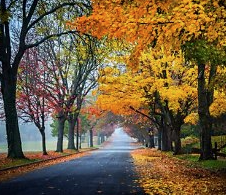
But the best part of a fall day is the light. That golden, late‑afternoon glow that makes even the trash cans look poetic. I sat on the porch for a while, watching leaves drift down like lazy confetti, thinking about how this season always feels like a gentle reminder: slow down, breathe, enjoy the small things. Even if the small things include rogue leaves and judgmental squirrels.

By evening, the temperature had dropped enough that I finally surrendered and put on a sweater. A real one. The kind that makes you feel like you should be holding a mug and giving wise advice. I didn’t have any wise advice, so I settled for leftover chili and called it a win.

So here’s to fall—its colors, its chaos, its cozy charm. A season that asks very little of us except to appreciate the beauty, laugh at the absurdity, and maybe keep an eye on the squirrels. They’re plotting something. I can feel it.

How AI Accelerates SEO Strategy

Daily writing prompt

What are your strategies for SEO?

View all responses

Ask AI “Can AI help on SEO strategy?

Therefore, I asked AI. and Gemini gave me this reply. Yes. AI accelerates SEO strategy by automating high-volume research tasks, such as clustering large keyword datasets by semantic intent, mapping competitor content gaps, and drafting structured schema markup. It also analyzes search engine results pages (SERPs) to produce detailed content briefs and recommend internal linking architectures.

Now, all you have to do is figure out what AI said.

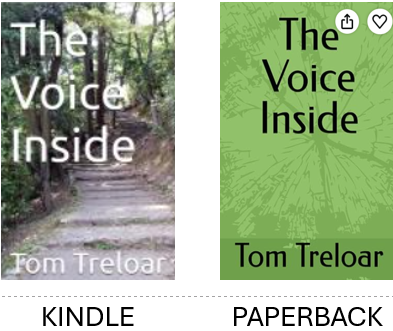
The Voice Inside

I recently published my latest book on Amazon, something I’ve been working toward and dreaming about for a long time. It’s available in two formats—Kindle for those who enjoy the convenience of reading on a device, and paperback for readers who love holding a physical book in their hands. With this release, I now have seventeen books on Amazon, each one representing countless hours of writing, revising, and imagining new worlds and ideas. I am genuinely excited about this new book because it feels like another big step forward in my journey as an author. I truly love writing, and I pour my heart, my feelings, and my personal experiences into these books, hoping that readers can feel that passion on every page.

In need of book reviews on Amazon

AUDIO INTRODUCTION LINK

KINDLE LINK

PAPERBACK LINK

A little Known Day

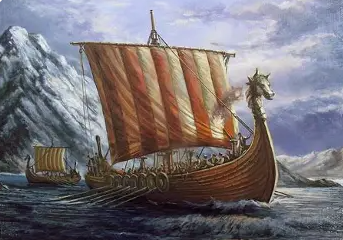
Leif Erikson Day is the October 9 observance tied to the Norse explorer.

Leif Erikson Day is an annual U.S. observance on October 9 that honors the Norse explorer Leif Erikson and the broader Nordic-American heritage. It is not a federal holiday, so banks, schools, and offices stay open.

Leif Erikson (Old Norse: Leifr Eiríksson), often called “Leif the Lucky,” was born in Iceland around the 970s, the son of Erik the Red. Around the year 1000 he led a voyage west from Greenland and reached a place the sagas call Vinland. Archaeological work at L’Anse aux Meadows in Newfoundland, Canada, supports a Norse presence there around that time, making him the first European known to have set foot on the North American mainland outside Greenland—about five centuries before Columbus.

The date itself is not tied to his landing. October 9 marks the 1825 arrival in New York of the sloop Restauration, carrying the first organized group of Norwegian immigrants to the United States. That anniversary was later used as the day to honor both the medieval voyage and later Nordic immigration.

Wisconsin made it a state observance in 1929; Minnesota followed in 1931. Congress first authorized a national observance in 1935, and Public Law 88-566 (September 2, 1964) authorized the president to proclaim October 9 as Leif Erikson Day each year. Presidents have issued that proclamation regularly since. The day also recognizes contributions of Americans of Norwegian, Icelandic, Danish, Swedish, and Finnish descent. Similar observances exist in parts of Canada, including Saskatchewan.

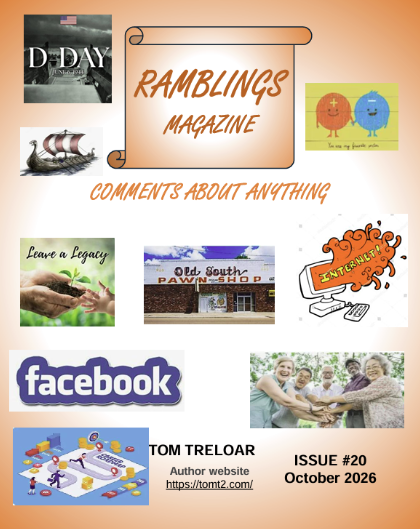
New Ramblings Magazine Issue 20

Audio For Listening https://tomt2.com/wp-content/uploads/2026/09/ramblings-issue-20.mp3

PDF file for Viewing https://tomt2.com/wp-content/uploads/2026/09/ramblings-20a-bk-sz.pdf

ENJOY!

If Aliens Arrive Tomorrow, I Will Ask

DAILY WRITING PROMPT

If aliens arrived tomorrow, what’s the first thing you’d ask them?

View all responses

Why did you wait so long to show yourselves? The world needs help—we are destroying ourselves, our planet, and our future, while pretending we still have time. Every day the damage grows deeper, yet the warnings are ignored, silenced, or twisted into empty promises. We are desperate for someone, anyone, to step in, to hold up a mirror to what we have done, and to force us to face the cost of our choices before it is truly too late.

Stay Calm and Useful

DAILY WRITING PROMPT

What’s the most underrated life skill?

View all responses

The ability to stay calm and useful when you are mildly uncomfortable.

Not crisis calm. The everyday version: the email you don’t want to send, the conversation that might go badly, the first ten minutes of a hard task, the social situation where you feel slightly out of place, the urge to check your phone instead of finishing the thing. Most people treat that low-grade discomfort as a signal to stop, postpone, or soothe. People who treat it as background noise get a disproportionate amount done, and they do it with less drama.

It is underrated because it looks like nothing. No certificate, no visible technique, no story you can tell at dinner. It also gets mislabeled as toughness or personality. It is mostly a skill: noticing the urge to escape, naming it, and continuing anyway for a little longer than feels natural. Practice compounds. Avoidance compounds faster.

The Life-Changing Power of Being Yourself

Daily Writing Prompt

What’s a personal mantra or philosophy you live by?

View all responses

After over sixty years of trying to be something I am not and experiencing an eye-opening message from some unexplainable source, my entire outlook shifted. For most of my life, I measured myself against other people, chasing their successes, copying their choices, and quietly believing that who I really was would never be good enough. I tried on different identities, adjusted my personality to fit in, and pushed down parts of myself that felt inconvenient or “too different.”

Then, in a moment I still can’t fully explain, I received a simple but powerful message: “Tom, stop trying to be somebody else. You were created to be yourself.” It didn’t come with thunder or fanfare, but it cut through years of confusion and self-doubt. I felt seen, understood, and, for the first time in a long time, accepted for who I actually am.

Since that moment, my philosophy has been to just be myself—no more pretending, no more apologizing for my true nature. I’m learning to trust my own voice, to honor my own experiences, and to live in a way that feels honest and genuine, even when it doesn’t match what others expect of me.

Podcast Episode #2: Exploring Love Beyond Attraction

I just discovered this new feature of WordPress. AI creates podcasts from posts created by the blogger. This is getting creepy. What do you think?

Two days later I tried to use this feature for another blog and found out that feature is not available. Now AI Asst. says they cannot generate audio files. I don’t know what I stumbled upon, but WP must have found the glitch and plugged it. It was nice while it lasted

Pip: There’s a certain kind of insomnia that doesn’t waste itself on worry — it goes straight for the big questions. TomT 2.0 had one of those nights.

Mara: And what came out of it is a genuinely personal inquiry into love — what it is, where it comes from, and whether physical attraction is even required for it to be real.

Pip: Let’s start with what that sleepless ceiling-staring actually produced.

Exploring Love Beyond Attraction

Mara: The post opens with a question that sounds simple until you actually sit with it: what is love, and do you really agree with the definition you’ve been carrying around?

Pip: And the answer, it turns out, is that most of us inherited our definition without ever signing off on it — from family, culture, relationships we stumbled through.

Mara: The post puts it directly: “I find myself questioning whether love is a feeling, a choice, a commitment, or some shifting combination of all three, and whether the way I give and receive love truly reflects what I believe it should be.”

Pip: That last clause is the one that lands. Not just what love is in the abstract, but whether you’re actually living in alignment with your own answer.

Mara: The post gets more personal from there. There’s a passage about growing up in a household where love was never spoken aloud — where food on the table and rides to school were supposed to carry the full weight of the word.

Pip: Which they can. But there’s a difference between love being assumed and love being felt, and that gap is apparently still present decades later.

Mara: Right — the post names it plainly: the silence left closeness feeling “uncertain and conditional, as if I had to keep guessing whether I was truly loved or just responsibly cared for.”

Pip: That’s not a small thing to sit with at three in the morning.

Mara: The post then pushes into what may be its central question: can love exist fully without physical attraction at all? Whether emotional intimacy — being truly seen, trust built slowly, small daily acts of care — can constitute love on its own terms.

Pip: The honest answer seems to be: probably yes, but we’ve been trained to treat attraction as the admission ticket, so the question feels stranger than it should.

Mara: And the post doesn’t resolve it. It frames this as an ongoing exploration — one that may grow into a longer project, even a book.

Pip: So the sleepless night was just the opening chapter.


Mara: What stays with me is the question about alignment — not just defining love, but asking whether you’re actually living by your own definition.

Pip: More questions than answers, but apparently that’s where the worthwhile ones start. We’ll be back when the next chapter arrives.

Podcast Episode #1: Exploring Love Beyond Attraction

I just discovered this new feature of WordPress. AI creates podcasts from posts created by the blogger. This is getting creepy. What do you think?

Two days later I tried to use this feature for another blog and found out that feature is not available. Now AI Asst. says they cannot generate audio files. I don’t know what I stumbled upon, but WP must have found the glitch and plugged it.

Pip: There’s a certain kind of insomnia that doesn’t waste itself on worry — it goes straight for the big questions. TomT 2.0 had one of those nights.

Mara: And what came out of it is a genuinely personal inquiry into love — what it is, where it comes from, and whether physical attraction is even required for it to be real.

Pip: Let’s start with what that sleepless ceiling-staring actually produced.

Exploring Love Beyond Attraction

Mara: The post opens with a question that sounds simple until you actually sit with it: what is love, and do you really agree with the definition you’ve been carrying around?

Pip: And the answer, it turns out, is that most of us inherited our definition without ever signing off on it — from family, culture, relationships we stumbled through.

Mara: The post puts it directly: “I find myself questioning whether love is a feeling, a choice, a commitment, or some shifting combination of all three, and whether the way I give and receive love truly reflects what I believe it should be.”

Pip: That last clause is the one that lands. Not just what love is in the abstract, but whether you’re actually living in alignment with your own answer.

Mara: The post gets more personal from there. There’s a passage about growing up in a household where love was never spoken aloud — where food on the table and rides to school were supposed to carry the full weight of the word.

Pip: Which they can. But there’s a difference between love being assumed and love being felt, and that gap is apparently still present decades later.

Mara: Right — the post names it plainly: the silence left closeness feeling “uncertain and conditional, as if I had to keep guessing whether I was truly loved or just responsibly cared for.”

Pip: That’s not a small thing to sit with at three in the morning.

Mara: The post then pushes into what may be its central question: can love exist fully without physical attraction at all? Whether emotional intimacy — being truly seen, trust built slowly, small daily acts of care — can constitute love on its own terms.

Pip: The honest answer seems to be: probably yes, but we’ve been trained to treat attraction as the admission ticket, so the question feels stranger than it should.

Mara: And the post doesn’t resolve it. It frames this as an ongoing exploration — one that may grow into a longer project, even a book.

Pip: So the sleepless night was just the opening chapter.


Mara: What stays with me is the question about alignment — not just defining love, but asking whether you’re actually living by your own definition.

Pip: More questions than answers, but apparently that’s where the worthwhile ones start. We’ll be back when the next chapter arrives.

Clarity Before the End

The genie grants you a wish. What is it?

View all responses

All the questions I had in life are answered before the final day is reached, each doubt gently resolved and every lingering uncertainty given clarity, so that nothing essential remains unknown when that last moment finally comes.

Exploring Love Beyond Attraction

AI generated Podcast Tell me what you think

Recently I woke up in the middle of the night and couldn’t go back to sleep. I lay there in the quiet dark, staring at the ceiling as the minutes stretched into hours, and my mind, restless and stubborn, began to wander toward the subject of love—what it has given me, what it has taken away, and all the ways it has quietly shaped who I am.

I asked myself, what is the definition of love, and do I understand and agree with it? The more I sit with this question, the more I realize how much of my idea of love has been shaped by family, culture, and past relationships, and I wonder how much of that I have accepted without really examining it. I find myself questioning whether love is a feeling, a choice, a commitment, or some shifting combination of all three, and whether the way I give and receive love truly reflects what I believe it should be. As I reflect on my experiences—when I have felt loved, when I have struggled to love, and when I have confused love with attachment or fear—I begin to see that my understanding may be incomplete or even mistaken in places. By asking myself these questions, I’m trying not just to define love in abstract terms, but to understand what it really means in my life and whether I’m living in a way that aligns with that deeper meaning.

Did my parents love me? Or did they just raise me because they thought it was the moral thing to do? I never remember them ever saying, “We love you.” Likewise, I can’t ever remember myself saying, “I love you.” Sometimes I wonder if this silence was simply the way our heritage expressed itself, a family culture where love was assumed but never spoken, where duty and sacrifice were supposed to say everything words did not. Growing up in that atmosphere, I learned to read love in practical gestures and unspoken expectations—food on the table, rides to school, a roof over my head—yet a part of me still longed for the clarity of hearing the words out loud. The absence of open affection made closeness feel uncertain and conditional, as if I had to keep guessing whether I was truly loved or just responsibly cared for. Even now, I find myself struggling to say “I love you” easily, unsure if I am breaking an unspoken family rule or finally giving myself what I always needed: permission to believe that love can be both shown and said.

What is love outside of physical attraction? Is love the same without physical attraction, or does it become something deeper, quieter, and more enduring? I find myself wondering whether love can grow from emotional intimacy alone—from the comfort of being truly seen and heard, from the safety of trust built slowly over time, from the small daily acts of care that say, “I choose you” even when no one is watching. Is love present in the way two people hold space for each other’s fears and dreams, in the patience to listen and the courage to be honest, even when it’s hard? I question whether love might be found in loyalty that doesn’t waver when beauty fades, in a steady commitment to understanding the other person’s heart, and in a genuine desire to see them whole, happy, and free, even when it doesn’t directly benefit me. And if all of this is true, then I keep asking myself: is physical attraction just one piece of love, or can love exist fully, powerfully, and authentically without it at all?

This is turning into a complex topic, and the more I sit with it, the more I realize that what I am wrestling with is one of the most quietly profound questions a person can face: what love really is, how it shapes a life, and what it asks of us in return. Because of that, I want to give it the time and space it deserves instead of treating it as just a simple daily blog entry. It is slowly becoming an ongoing, very personal exploration for me—one that may grow into a longer project or even another book to add to my collection of books—as I try to listen more carefully to my own heart and experience. Thanks to one sleepless night, I find myself here with more questions than answers, but also with a sense that these questions about love are worth following wherever they lead.