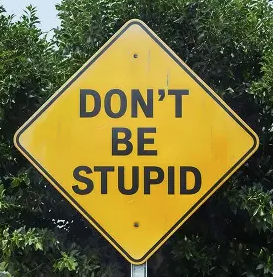
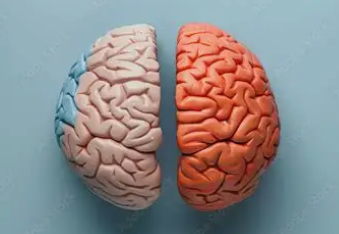
Don’t let your hormones lead your life. I still remember the advice my mother gave me when I was a teenager; she always emphasized the importance of being in control of my emotions and desires. She told me that hormone drive is a natural part of life and is something everyone experiences, but there are many other facets of life that deserve our attention and energy beyond just sexual satisfaction. For instance, pursuing personal passions, developing deep friendships, and focusing on academic or career goals can bring true fulfillment and happiness. Yes, it took me some time to understand her wisdom, but I’m glad I eventually embraced it, finding balance in my life and discovering that there’s so much more to experience beyond the initial urges and impulses that hormones can bring.
Month: May 2026
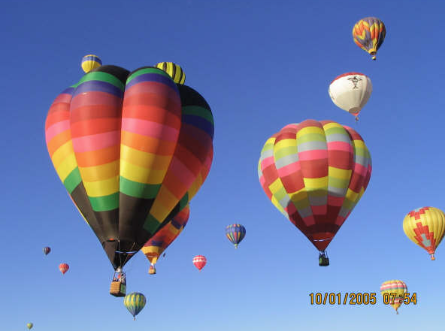
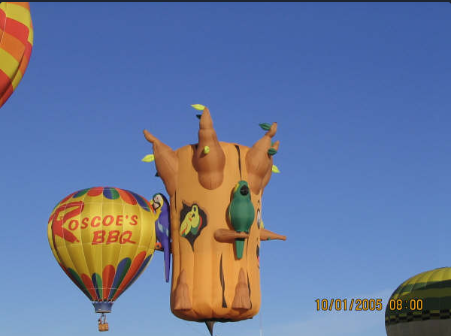
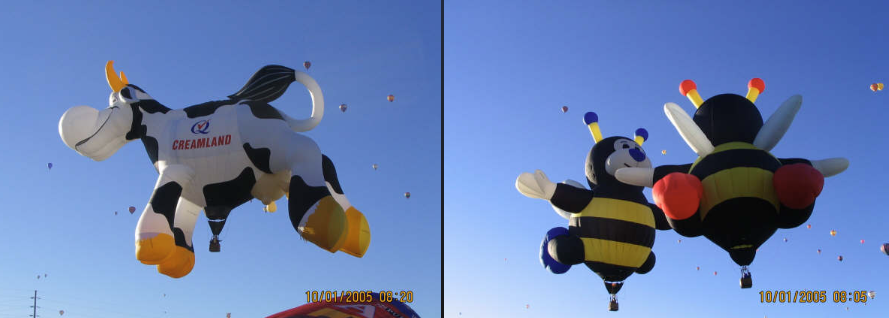
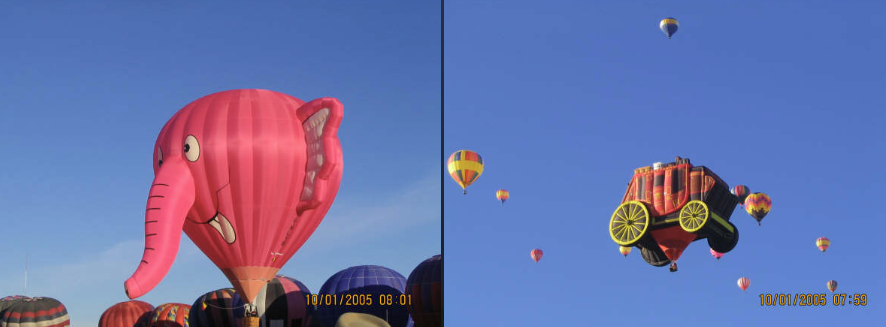
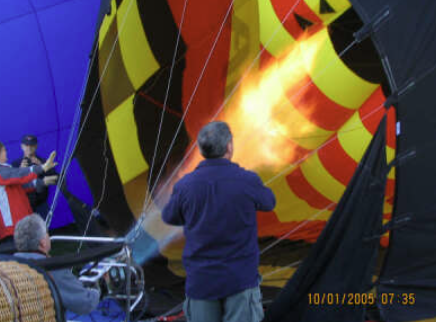
Experience the Magic of Albuquerque Balloon Fiesta
In October 2005 my wife and I took a trip to Albuquerque for the balloon festival. it is one of the largest balloon festivals in the world. We had a blast and got to view many strange and unusual balloons. Here are some.
https://albuquerque.com/albuquerque-international-balloon-fiesta-tips-guide/
Why Fred the Fox is Our Beloved Local Celebrity
Good morning, readers. Let me tell you a little tale about Fred—the neighborhood fox who has, over time, become something of a local celebrity around here. Fred isn’t just any fox. He’s got personality. He’s got charm. And he walks these foothill streets like he’s the unofficial mayor of the block.
Fred first showed up a 4 summers ago, trotting down the sidewalk with the confidence of someone who knew exactly where he was going. Tail high, ears perked, eyes bright—he had the look of a fox who had places to be and opinions about how quickly he should get there. The neighbors noticed him right away. You don’t ignore a fox who behaves like he owns the HOA.
Over time, Fred developed a routine. Every morning, just after sunrise, he’d make his rounds. He’d pause at the corner house where Mrs. Callahan leaves out a bowl of water. He’d sit for a moment in the shade of her lilac bush, as if reviewing the day’s agenda. Then he’d trot down the street, stopping occasionally to inspect a flower bed or stare curiously at a lawn ornament that hadn’t been there the day before. Fred likes to stay informed.
One of my favorite Fred moments happened last July. I was sitting on the porch with a cup of coffee when Fred strolled up the driveway like he had an appointment. He stopped at the bottom step, looked at me, and gave a single nod—as if to say, “Morning. Hot one today. Stay hydrated.” Then he continued on his way, leaving me with the distinct impression I’d just been given advice by a fox.
Adults adore him. Even the dogs seem to respect him. There’s something about Fred that brings out the best in everyone. Maybe it’s the way he moves—calm, unhurried, completely at ease in his own fur. Maybe it’s the reminder that even in a busy neighborhood, nature still wanders through, checking on us from time to time.
This year, as the hot days of summer settle in, Fred has adjusted his schedule. He’s a dawn‑and‑dusk fox now, avoiding the midday heat like a seasoned local. I saw him just yesterday, stretched out under the shade of a pine tree, looking for all the world like he was on vacation. If foxes could wear sunglasses, Fred would.
There’s something comforting about having him around. He reminds us to slow down, to pay attention, to enjoy the simple things—a cool patch of shade, a quiet morning, a familiar path. Fred doesn’t hurry. He doesn’t worry. He just lives, fully and confidently, right where he is.
And maybe that’s why we love him so much. Fred is a little piece of wildness, a little spark of joy, a reminder that even in a world full of noise, there’s still room for wonder.
Not a bit of truth to this tale
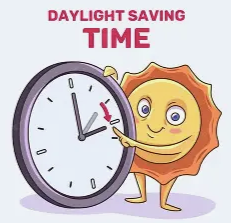
Why We Still Observe Daylight Saving Time
Good morning, readers. Recently in the news the conversation about eliminating the routine of Daylight-Saving Time every spring and fall. Here are my nickels worth.
Here we go again—Daylight Saving Time. That twice‑a‑year ritual where we all pretend moving the clock forward or backward somehow gives us more control over the sun. Every March and November, we do this little dance, and every time I find myself wondering who, exactly, we’re trying to fool. The sun certainly isn’t paying attention to our clocks. No matter what, there is only 24 hours in a day.
Still, there’s something almost ceremonial about it. The moment you change the time, you feel the shift. Mornings get brighter or darker, evenings stretch or shrink, and suddenly the rhythm of the day feels just a little off. It’s like someone nudged the world a half‑step sideways.
The funny thing is, everyone has an opinion about Daylight Saving Time. Some people love the longer evenings. Others grumble about losing an hour of sleep. And then there are those who swear their pets never recover from the disruption. (Honestly, I think the pets handle it better than we do.)
For me, the beginning of Daylight Saving Time always feels like a gentle nudge toward the warmer months. A reminder that summer is out there warming up in the bullpen. The days stretch a little longer, the light lingers a little later, and the foothills start to glow in that late‑day gold that makes you want to sit on the porch just a few minutes more.
But it also makes me think about time itself—how we measure it, how we chase it, how we try to control it even though it moves with or without our permission. Maybe that’s why this little clock‑changing ritual feels so human. We’re trying to shape the day to fit our lives, even if only by an hour.
President Franklin D. Roosevelt instituted year-round “War Time” DST from February 9, 1942, to September 30, 1945, for energy conservation and it has been around since. Just because of the simple fact that there are only 24 hours in the day I could never understand or agree with Daylight Savings Time.
How do you feel about Daylight Saving Time? Love it, hate it, or just tolerate it?
Share your thoughts below—I always enjoy hearing how others navigate this twice‑a‑year shuffle.
Summer Beauty Amidst Water Rationing Challenges
Good morning, readers. Step outside and you can feel it already—the beginning of the hot days of summer. Not the polite warmth of late spring, but the full‑throated heat that settles in like a long‑term houseguest. The kind that makes the sidewalks shimmer, the kind that sends dogs straight to the shade, the kind that reminds us we live in the West, where summer doesn’t ask permission before it arrives.
This year, though, the heat comes with a companion: water rationing. It’s not unexpected—we’ve seen the signs for years—but it still feels strange to be told how much water we can use, as if we’re all suddenly sharing the same canteen on a long hike. And in a way, we are.
The foothills look a little drier than usual, the grass a little more sun‑bleached, the air a little more eager to steal moisture from anything that stands still too long. Even the birds seem to be pacing themselves, conserving energy the way we’ll soon be conserving water.
But here’s the thing: summer has always asked us to adjust. We slow down. We drink more. We find shade. We learn to live with the heat instead of fighting it. Water rationing is just another version of that same old dance—an invitation to be mindful, to use what we have with a little more intention.
And honestly, there’s something almost communal about it. We’re all in this together, every household doing its part. You can feel it in the neighborhood: shorter showers, fewer sprinklers running, more conversations about how to keep the tomatoes alive without breaking the rules. It’s a shared challenge, and shared challenges have a way of bringing people closer.
The hot days of summer also bring their own kind of beauty. Long evenings that stretch lazily toward dusk. Sunsets that look like someone spilled a box of crayons across the sky. The smell of warm pine drifting down from the hills. The simple pleasure of a cold drink on a shaded porch. Summer reminds us that even in scarcity, there is abundance—if we know where to look.
So as the heat settles in and the rationing begins, maybe this is our chance to practice gratitude in small, practical ways. To appreciate the water we do have. To notice the resilience of the land around us. To remember that living here has always meant adapting, adjusting, and finding joy in the middle of challenge.
And now I’m curious—how are you planning to handle the hot days ahead? Any tricks for staying cool or conserving water that you’ve learned over the years? I’d love to hear your thoughts in the comments.
Memorial Day Reflections
On this Memorial Day, we pause to honor the men and women who gave their lives in service to our country—ordinary people who showed extraordinary courage. Their sacrifice is woven into the freedoms we enjoy every day, often without thinking. Today is not about politics or division; it’s about gratitude, remembrance, and the quiet weight of knowing that others stood in harm’s way so we could stand here in peace. May we carry their legacy forward with humility, kindness, and a renewed commitment to the values they fought to protect.
As we honor this Memorial Day, Do you have a family member, friend, or story that comes to mind on a day like this? Your reflections—whether a memory, a name, or simply a feeling—help keep the spirit of this day alive. If you’re comfortable, share a thought below so we can remember together.
Understanding the Meaning of Life
This is a complex subject, and mankind has been searching for an answer since the beginning of history. The quest for understanding often leads to profound contemplation and exploration, as people from various cultures and eras strive to unravel the mysteries that govern our existence. Scholars, philosophers, and thinkers have dedicated their lives to studying this intricate topic, each contributing unique perspectives that enhance our overall comprehension. The journey of discovery is not merely about finding definitive answers; it is also about engaging with the questions that have puzzled humanity for centuries and encouraging a dialogue that transcends generations.
Since this is a complex issue all I can is contribute my opinion on the topic.
First, I was born and raised a Catholic and naturally this will affect my opinion on the meaning. From childhood to adulthood, I was told by my mother and grandmother that I must earn the privilege to enjoy time in heaven and that was the meaning or purpose of life. The religion during that time had lots of tough and in my opinion meaningless rules. For example, if you ate meat on Friday or missed Sunday mass that could be a reason to be deprived of heaven. Sure, there was confession, but how could you remember every bad human type of action you were guilty of. I could go on for an entire blog on the rules. In my opinion religion was based on fear that you had to prove that you were worthy of heaven.
As my life continued, I became aware of other faiths and religions and began to wonder. What about these millions of humans that were never exposed to Christianity? What about them? It was hard to accept that their meaning and purpose of life was different than mine.
As my journey of life continued, various events happened to me that shaped my perspectives and experiences profoundly. I was drafted into the army, a moment that marked a significant turning point in my life, and during this time, I met hundreds of people from all parts of the country. Each individual had their own unique story, background, and struggles, which opened my eyes to the diversity of human experiences. Through countless conversations and shared moments, I came to the realization that most people are basically good, driven by a desire for connection and understanding. Despite the challenges and hardships, they faced, they were all just trying to make it through whatever they are exposed to in their lives, each one navigating their personal battles with resilience and hope. This experience reinforced my belief in the inherent kindness that exists in humanity, even in the face of adversity.
Next event that changed my life tremendously was I had to experience a marriage breakup and divorce. I was trying to lead a good life and earning my ticket to time after earth. This turned my life upside down because I was told that marriage lasts until death. What am I to do? Live alone? I don’t think so. I am a normal healthy male that wants and needs a mate with all the fringe benefits. I survived this challenge and continued on with my life.
I could continue, but my biography is not the purpose of this prompt.
In conclusion, life is a big learning experience with chances for growth and self-discovery. As a child, you learn that not going in your diaper is important, teaching you about boundaries and self-control. The first eighteen years are vital, filled with lessons that prepare you for future events. Every moment, whether happy or difficult, helps shape your perspectives and values. You learn from each experience, gaining resilience and wisdom. After each event, I pause to reflect and ask, “What did I learn?” This practice helps me understand the situation and apply what I’ve learned, allowing me to grow personally and professionally. Embracing this mindset turns ordinary moments into valuable lessons, enriching my life overall and preparing for time after life on this earth.
FROM BIRTH TO DEATH, LIFE IS ONE GIGANTIC LEARNING EXPERIENCE.
SUBSCRIBE TO MY SITE, IT’S FREE
The Frustration of ‘You Know!’
What annoys me is a conversation with someone who finishes a statement with “You know!”
It feels as though they seek validation for their thoughts, implying their point should be inherently understood. This habit can disrupt discussions requiring depth, making the listener feel unintelligent or out of the loop. It creates an air of condescension, suggesting the speaker believes their audience lacks the insight to grasp their point without such reminders, ultimately detracting from the conversation’s quality and leaving me frustrated.
I avoid having conversations with people I know that uses this phrase many times. It is one of those things that irritates me, “you know!”
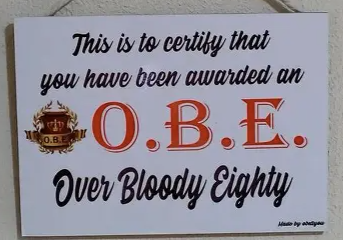
Embracing Clarity and Humor at Eighty Plus
Hello readers, let me tell you something I’ve learned about living past eighty.
It’s not what I expected. In fact, it’s better.
When you cross that eighty‑year mark, life starts to feel like a bonus chapter the publisher forgot to mention. You turn the page thinking the story is winding down, and suddenly—surprise—there’s more. And not filler material either. Good stuff. Rich stuff. The kind of pages you read slowly because you finally understand there’s no need to rush.
At this age, mornings feel different. The light comes in softer, almost like it’s checking on you. Coffee tastes better because you’re not gulping it on your way to somewhere else. Even the rain—those long, steady Colorado rains in the last couple of days—feels less like weather and more like company.
One of the great joys of being over eighty is that the small things become the big things.
A comfortable chair.
A neighbor waving from across the street.
The foothills changing color as the day moves along.
A good conversation.
A quiet house.
A warm jacket that still fits.
You stop apologizing for enjoying these things. You’ve earned them.
And let me tell you—perspective becomes your superpower. You’ve lived through enough storms to know that most of them pass. You’ve seen the world spin through cycles of anger, hope, confusion, renewal. You’ve learned that people are more alike than they admit, and that kindness still works, even when the world forgets it for a while.
There’s also a certain humor that comes with being this age. You misplace your glasses only to find them on your head. You walk into a room and forget why you’re there, but you stay anyway because the room is comfortable. You catch yourself saying things your grandparents once said—and now you finally understand why they said them.
But the best part, the part I wouldn’t trade for anything, is the clarity.
You know what matters.
You know what doesn’t.
You know which people deserve your time and which worries don’t.
You know that memories are treasures, not burdens.
And you know that love—given freely, received gratefully—is the real currency of a life well lived.
Living past eighty isn’t the end of the story.
It’s the chapter where the writing gets deeper, the humor gets warmer, and the gratitude gets louder.
And every morning you wake up, you realize something simple and beautiful:
You’re still here.
Still learning.
Still noticing.
Still becoming.
Thank you for visiting my website
The moment I Thought My Life Was Over
Three years ago, I faced a medical crisis I could never have imagined: a massive blood clot lodged between my lungs. When the doctor explained the procedure, he told me their best outcomes came when the patient stayed awake—fully conscious—while they entered the artery in the groin, threaded their way up to the clot, and attempted to remove it.
I chose that option.
The only sharp pain came at the beginning, when they made the incision to insert the camera, tools, and vacuum device. After that, the numbing medication did its work. I could feel pressure, movement, the sense of something happening inside me—but no pain. It was surreal, lying there awake while a team worked to save my life.
About halfway through, something shifted. I wasn’t hurting, but a wave of deep, unexplainable sickness washed over me. A heaviness. A fading. And because I was awake, I heard everything—including the nurse’s voice saying, “Doctor, the blood pressure is dropping fast.”
In that instant, I thought I had died.
I remember saying, clearly and calmly, “Here I am, Lord.”
And that was the moment I discovered a strength I never knew I had.
There was no fear. No panic. No clinging to the world behind me. Instead, I felt a peace so complete it defies description—TOTAL PEACE, unlike anything I had ever known in my earthly life. I don’t know where I went, exactly. The best way I can explain it is that I felt as if I were in a waiting area, suspended between two possibilities: whether the doctors would bring me back, or whether my journey would continue elsewhere.
They did bring me back. I woke on the operating table, alive.
That moment changed me. All my life, I had heard that death was something to fear, something to brace for, something dark and terrifying. And for most of my life, I believed it. I carried that fear quietly, the way many people do.
But in that one extraordinary moment—when I thought I had crossed over—I felt no fear at all. Only peace. Only readiness. Only strength.
I survived, and I am grateful. But the experience left me with a truth I carry every day:
I am stronger than I ever imagined, and I no longer fear dying.
The Joy of Blogging
I like blogging because it feels like opening a small window in the side of an ordinary day and letting a little light wander in. Not a spotlight, not a stage—just a warm square of sun on the floor where a story can sit for a while and be itself.
At its best, blogging is a conversation with the world that doesn’t require the world to answer. It’s a place where I can think out loud without interrupting anyone, where ideas can stretch their legs, and where memories—those shy, half‑forgotten ones—can wander back into view and ask to be written down.
The Quiet Magic of Showing Up
I like blogging because it rewards presence more than perfection.
A blank page doesn’t care if I’m brilliant; it only cares that I arrived.
Some days I show up with a polished thought.
Some days I show up with a coffee ring on the page and a sentence that limps.
Both are welcome.
Blogging teaches me that creativity isn’t a lightning strike—it’s a porch light I turn on each day, trusting that something worth noticing will wander into the glow.
A Place to Put the Small Things
Life is full of tiny, shimmering moments that don’t belong in a memoir chapter or a grand essay. But they fit perfectly in a blog post:
- the neighbor waving from across the street
- the way the foothills look like they’re exhaling at dusk
- the unexpected kindness of a stranger
- the joke I didn’t know I needed
- the memory that taps me on the shoulder while I’m making breakfast
Blogging gives these moments a home. It says, “You matter. Sit here. Tell your story.”
Connection Without Performance
I like blogging because it creates connection without demanding applause.
Readers wander in when they want to. They stay if something resonates. They leave quietly when life calls them elsewhere. There’s no pressure, no algorithmic dance, no need to shout to be heard.
It’s a gentle kind of community—one built on shared humanity rather than spectacle.
A Record of Becoming
Every blog post is a breadcrumb on the trail of who I’m becoming.
When I look back, I don’t see a perfect archive—I see a living one.
A map of thoughts, moods, seasons, and lessons.
Blogging reminds me that growth isn’t a single moment of revelation.
It’s a series of small, honest entries.
In the End
I like blogging because it helps me pay attention.
It slows me down just enough to notice the texture of my own life.
It gives me a place to practice gratitude, curiosity, humor, and presence.
And maybe that’s the real reason:
Blogging helps me remember that ordinary days are rarely ordinary when you take the time to write them down.
Rainy Days May Inspire Our Best Thoughts
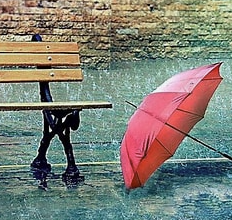
The rain had been falling for three days straight, the kind of steady, unhurried rain that didn’t bother with theatrics. No thunder, no lightning—just a soft percussion on the roof, like someone drumming their fingers while thinking of what to say next. By the third morning, the foothills were wrapped in a gray shawl, and the whole neighborhood seemed to be speaking in whispers.
Stan stood at the front door with a mug of coffee that had gone lukewarm while he wasn’t paying attention. He liked days like this. Rainy days slowed the world down to his preferred speed. They made it easier to notice things: the way the street glistened like polished stone, the way the pine trees bowed slightly under the weight of the water, the way the air smelled like wet earth and memory.
He decided to take a walk.
Not a purposeful walk. Not the kind where you count steps or aim for a destination. Just a meander, the kind of wandering that rainy days practically insist upon. He grabbed his old canvas jacket—the one with the frayed cuffs and the pocket that always caught loose threads—and stepped outside.
The rain greeted him like an old friend.
It wasn’t cold, just cool enough to remind him he was alive. Puddles gathered along the curb, each one holding a tiny, trembling version of the sky. He stepped around them at first, then through them, because there are moments in life when you’re allowed to be eight years old again.
A few blocks down, he passed Mrs. Shaw’s house. She was on her porch, wrapped in a quilt, watching the rain as if it were a movie she’d seen a hundred times but still loved. She waved. He waved back. No words needed. Rainy days have their own language.
He kept walking until he reached the small park tucked between two streets. The swings were empty, gently swaying as if someone had just hopped off. The picnic tables were dark with water, and the grass looked greener than it had in months. He sat on the bench under the big cottonwood tree, the one that had stood there longer than most of the houses.
The rain softened. The world smelled like renewal.
Stan closed his eyes and listened. Not just to the rain, but to everything beneath it—the distant hum of a car, the soft rustle of leaves, the quiet thump of his own heartbeat. It felt like the world was reminding him of something simple and important: that life doesn’t always need to be chased. Sometimes it just needs to be noticed.
When he finally stood to head home, he felt lighter. Not because anything had changed, but because rainy days have a way of rinsing off the noise, we didn’t realize we were carrying.
Back at his desk, he opened his laptop, rain still tapping the window beside him. He began to write—not because he had to, but because rainy days make good stories, and someone ought to catch them before they slip away.
How a Simple Grocery List Turned into a Treasure Hunt
We went to the store today with a simple plan: seven items. Just seven. A tidy little list, the kind you can hold in your head without even folding the paper. We walked in feeling confident, almost smug. This would be quick. Efficient. A surgical strike.
Then the cart started filling itself.
Somewhere between the produce aisle and the dairy case, the list became more of a suggestion than a rule. A bag of something new. A box of something interesting. A snack I definitely didn’t need but suddenly couldn’t imagine living without. By the time we reached the checkout, the cart looked like it had been on its own private adventure.
The total flashed on the screen: $107.38
For seven items? Well… seven planned items. The rest were what you might call “impulse buys,” though that makes it sound accidental. Really, it was more like a gentle surrender to curiosity, comfort, and the small joys of the grocery store.
And honestly, there’s something kind of delightful about it. Life is full of routines and responsibilities, but every now and then, a few unplanned treats sneak into the cart and remind you that you’re still capable of surprise.
So yes, we went in for seven things and came out with a small mountain. But sometimes the best parts of the day are the ones that weren’t on the list at all.
Embrace the Joy of Ordinary Days
There’s something quietly triumphant about a Friday landing smack in the middle of the month. It’s not a holiday, not a milestone, not even a long weekend. It’s just… Friday the 15th. A perfectly ordinary day that somehow feels like a small victory lap.
Maybe that’s the magic of it.
Fridays like this remind us that life isn’t built from the fireworks moments. It’s built from the in‑between ones—the days when the coffee tastes just right, the sun hits the kitchen window at the perfect angle, and you catch yourself humming a tune you didn’t even know you remembered.
On a Friday like this, the world seems to exhale a little. People walk a touch lighter. The grocery store cashier smiles more easily. Even the dog seems to know the weekend is tiptoeing closer, tail wagging with that “we made it” energy.
And maybe you feel it too—that gentle shift from effort to ease. The week’s rough edges soften. The to‑do list stops shouting and starts whispering. You realize that despite everything—news cycles, errands, the occasional misplaced sock—you’ve made it through another stretch of days on this spinning planet.
That’s worth celebrating.
Not with confetti or grand gestures, but with something simple: a deep breath, a warm cup, a moment of gratitude for the ordinary. Because ordinary is underrated. Ordinary is where the good stuff hides.
So here’s to Friday the 15th.
To the small joys.
To the quiet victories.
To the steady rhythm of showing up, day after day, and finding meaning tucked into the corners.
May your Friday be gentle, your weekend generous, and your heart open to the tiny wonders waiting to be noticed.
I Am Just a Mere Mortal
I was thinking about this prompt and had a thought. “Classic books are overrated when being yourself is underrated.” Therefore, I came up with the following.
Every now and then, usually when I’m sipping my morning coffee and staring at the news, I’m reminded of a simple truth: I am just a mere mortal.
No cape.
No superpowers.
No ability to leap over tall buildings or stop speeding bullets with my bare hands.
I can’t fly, unless you count the time I tripped over a garden hose and achieved a brief, unplanned moment of airborne grace. I can’t bend steel, unless it’s already bent and I’m just pretending I helped. And I certainly can’t summon millions of readers with a dramatic flick of the wrist.
I blog and I write books. Fourteen of them now.
Not bestsellers. Not chart‑toppers.
Just books — honest ones, heartfelt ones, the kind that wander through memory and meaning at their own pace.
And you know what?
I’m perfectly content with that.
Some people dream of fame, fortune, and a fan base large enough to require security guards. I dream of something simpler: a quiet morning, a good cup of coffee, and the chance to learn something new about myself or the world. At this stage of life, I’ve discovered that learning isn’t just for the young. All your life you are learning from events and transactions with the ones around you. In fact, it might be even sweeter in the later chapters, when you finally stop trying to impress anyone and start trying to understand yourself.
I used to think I needed to accomplish something grand to justify my time on this earth. Something big. Something shiny. Something that would make people say, “Now that is a man who made it.”
But somewhere along the way — maybe during a sunrise, maybe during a quiet walk and a voice came out of nowhere and said, “Tom just be yourself. You were created to be yourself, stop trying to be someone you are not.” I realized that being a mere mortal is not a limitation. It’s a blessing.
Mere mortals get to laugh at themselves.
Mere mortals get to make mistakes and learn from them.
Mere mortals get to write books that may never make millions but still make meaning.
Mere mortals get to live ordinary days that feel extraordinary in hindsight.
I don’t need superpowers.
I don’t need fame.
I don’t need a cape flapping behind me as I stride heroically into the sunset.
What I have is enough.
I have curiosity — the kind that keeps me writing, reading, wondering, and wandering.
I have gratitude — for the people I’ve met, the stories I’ve lived, and the bonus time I’ve been given.
I have contentment — the quiet kind that settles in when you stop chasing the life you thought you were supposed to live and start appreciating the one you actually have.
I am just a mere mortal.
But I’m a mortal who keeps learning, keeps writing, keeps showing up.
And in the end, that feels like its own kind of superpower.
Not the kind that saves the world.
Just the kind that saves the day — one ordinary, beautiful moment at a time.
https://www.youtube.com/watch?v=sCZcKSszzL0&t=63s YouTube Link
Daylight Saving Time: Love It or Hate It?
Good morning, readers. Recently in the news the conversation about eliminating the routine of Daylight-Saving Time every spring and fall. Here are my nickels worth.
Here we go again—Daylight Saving Time. That twice‑a‑year ritual where we all pretend moving the clock forward or backward somehow gives us more control over the sun. Every March and November, we do this little dance, and every time I find myself wondering who, exactly, we’re trying to fool. The sun certainly isn’t paying attention to our clocks. No matter what, there is only 24 hours in a day.
Still, there’s something almost ceremonial about it. The moment you change the time, you feel the shift. Mornings get brighter or darker, evenings stretch or shrink, and suddenly the rhythm of the day feels just a little off. It’s like someone nudged the world a half‑step sideways.
The funny thing is, everyone has an opinion about Daylight Saving Time. Some people love the longer evenings. Others grumble about losing an hour of sleep. And then there are those who swear their pets never recover from the disruption. (Honestly, I think the pets handle it better than we do.)
For me, the beginning of Daylight Saving Time always feels like a gentle nudge toward the warmer months. A reminder that summer is out there warming up in the bullpen. The days stretch a little longer, the light lingers a little later, and the foothills start to glow in that late‑day gold that makes you want to sit on the porch just a few minutes more.
But it also makes me think about time itself—how we measure it, how we chase it, how we try to control it even though it moves with or without our permission. Maybe that’s why this little clock‑changing ritual feels so human. We’re trying to shape the day to fit our lives, even if only by an hour.
President Franklin D. Roosevelt instituted year-round “War Time” DST from February 9, 1942, to September 30, 1945, for energy conservation and it has been around since. Just because of the simple fact that there are only 24 hours in the day I could never understand or agree with Daylight Savings Time.
How do you feel about Daylight Saving Time? Love it, hate it, or just tolerate it?
Share your thoughts below—I always enjoy hearing how others navigate this twice‑a‑year shuffle.
Nikola Tesla Deserves More Recognition in History
In my opinion, Nikola Tesla has been underrated in the development of the electrical grid that we enjoy today. His groundbreaking innovations and visionary ideas laid the foundation for the modern electrical systems we rely on. Tesla’s contributions, such as the development of alternating current (AC) technology, allowed for the efficient transmission of electricity over long distances, which was crucial for powering cities and industries alike. Furthermore, his experiments with wireless energy transfer and his insights into electromagnetic fields not only showcased his genius but also paved the way for future technological advancements. Despite facing numerous challenges and opposition throughout his career, Tesla’s relentless pursuit of knowledge has had a profound and lasting impact on how we harness and distribute electrical energy, ultimately shaping our everyday lives through a reliable and accessible electrical grid.
He immigrated to the United States in 1884 with little money and initially worked briefly for Thomas Edison before their famous rivalry over AC vs. DC power systems. Thomas Edison has received way more credit than Nikola.
Many times, financial difficulties in later years hamper his reputation, leading to a cascade of negative perceptions that can overshadow earlier achievements and contributions. These struggles often result in a loss of trust from colleagues and investors alike, as they question his ability to manage not only his personal finances but also the businesses and projects he is involved in. Consequently, what once was a thriving professional image can quickly diminish, emphasizing how crucial financial stability is to maintaining one’s reputation in both personal and professional spheres.
Nikola died penniless in a New York hotel room in 1943 at age 86.
In my opinion, Nikola should be recognized as much as Thomas Edison in the development of the electrical grid that runs this country.
Minimalism: Yes or No!
When I saw this prompt, I thought, “what is minimalist living”? I didn’t have a clue what this was. I am over eighty and have led a sheltered life. Therefore, I went to AI and asked for an explanation. Here is what Mr. Hypertyper replied with.
Minimalist living is a lifestyle philosophy focused on intentionally owning and doing less to create space for what truly matters. It emphasizes simplicity, purpose, and freedom from excess—whether that’s physical clutter, unnecessary commitments, or distractions.
becomingminimalist.comCore IdeaAt its heart, minimalism is the idea that “less is more.” It’s not about extreme deprivation, living in an empty room, or rejecting all possessions. Instead, it’s about curating your life so that everything you keep serves a purpose, brings joy, or adds real value.
theminimalists.comPopular definitions include:
- Joshua Fields Millburn & Ryan Nicodemus (The Minimalists): “Minimalism is the thing that gets us past the things so we can make room for life’s most important things—which actually aren’t things at all.” theminimalists.com
- Joshua Becker (Becoming Minimalist): Intentionally promoting what you value most and removing everything that distracts you from it. becomingminimalist.com
It applies beyond stuff—to your time, relationships, schedule, digital life, and spending habits.Key Principles
- Intentionality: Regularly ask, “Does this add value to my life?” If not, let it go.
- Quality over quantity: Choose fewer, better items that last.
- Focus on experiences: Prioritize relationships, health, passions, growth, and contribution over material accumulation.
- Mindful consumption: Avoid impulse buys and “just in case” items.
- Simplicity: Reduce decisions, clutter, and obligations for more clarity and freedom. conni.me
What Minimalist Living Looks Like in Practice
- Home: Fewer possessions, clear surfaces, multifunctional furniture, and a calm aesthetic. Think neutral colors, natural light, and only items you use regularly.
- Wardrobe: A small “capsule” collection of versatile, high-quality clothes.
- Schedule: Saying no to non-essential commitments to free up time.
- Finances: Lower spending leads to less debt and more savings.
- Mindset: Gratitude for what you have and contentment without constant “more.” sofi.com
Here are some visual examples of minimalist living rooms:https://artifacts.grokusercontent.com/third-party-image
thespruce.comhttps://artifacts.grokusercontent.com/third-party-image
architecturaldigest.comhttps://artifacts.grokusercontent.com/third-party-image
thespruce.comBenefits
- Less stress — Fewer things to manage and clean.
- More time and freedom — Less maintenance, shopping, and decision fatigue.
- Financial savings — Reduced spending on unnecessary items.
- Better focus and productivity — A clearer environment supports a clearer mind.
- Environmental impact — Less consumption means less waste.
- Greater happiness — More room for meaningful experiences and relationships. becomingminimalist.com
Getting StartedYou don’t have to go extreme. Start small:
- Declutter one area (e.g., a drawer or countertop).
- Apply the “one in, one out” rule for new purchases.
- Reflect on your values—what do you want more time/energy for? bemorewithless.com
Minimalism is highly personal—your version might look very different from someone else’s. It’s a tool for living more deliberately, not a rigid set of rules. Many people find it leads to greater peace, purpose, and joy.
Now that I learned what Minimalism living is I have no desire to even think about this kind of lifestyle.
I am happen with my current lifestyle
How Childhood Speed Obsessions Shaped My Life
When I was a kid, I was obsessed with doing everything fast. It appears that life indoctrinates young kids on doing things the fastest. Who can run the fastest, how fast can you finish the test, and how long does it take to memorize a verse or something? Everything throughout life had speed involved, from the race on the playground to the countdown before the school bell rang. Speed has been important all my life, shaping my experiences and choices in ways I only began to understand as I grew older. This relentless pursuit of swiftness seems ingrained in our culture, where success is often measured by how quickly we can accomplish tasks. Now AI is keeping up the tradition and making everything faster than before, providing tools and solutions that streamline our daily routines, elevate our productivity, and challenge us to redefine our limits. In this fast-paced world, I often wonder if the rush for speed has made us lose sight of the beauty in taking our time and enjoying the journey.
A Mother’s Day Tribute
Audio Podcast 3 minutes
Mother’s Day always sneaks up on me. Not because I forget the date — the stores make sure of that — but because the day itself carries a quiet weight that settles in only when I stop long enough to feel it. It’s not a holiday built on fireworks or fanfare. It’s built on something softer, steadier, and far more enduring.
It’s built on the people who raised us, shaped us, nudged us, scolded us, fed us, and believed in us long before we believed in ourselves.
It’s built on mothers.
And not just the traditional kind.
Mother’s Day belongs to the women who mother in a hundred different ways — the grandmothers, the stepmothers, the aunts, the neighbors, the teachers, the friends who step in with a warm meal or a warm word at exactly the right moment. The women who show up. The women who steady the world.
When I think about Mother’s Day, I don’t think about cards or flowers or brunch menus. I think about the small things — the everyday gestures that never made the headlines but somehow made a life.
I think about the way a mother can hear a child’s footsteps and know exactly what kind of day they’ve had.
I think about the way she can turn a kitchen into a refuge with nothing more than a pot on the stove and a chair pulled out.
I think about the way she can say, “It’s going to be alright,” and somehow make it true.
There’s a kind of magic in that.
Not the flashy kind — the quiet kind.
The kind that lasts.
Being in my senior years, I find myself remembering moments I didn’t appreciate at the time. The walks to school. The late‑night talks. The way she always knew when I needed space and when I needed a sandwich. The way she could turn a bad day around with a look that said, “You’re still my kid, and you’re still okay.”
Motherhood isn’t perfect. No one gets it right every time. But the beauty of it — the real beauty — is in the trying. The showing up. The loving even when the day is long and the patience is short.
So today, on this Mother’s Day, I want to celebrate all the women who have ever tried.
All the women who have ever stayed up late, woken up early, worried too much, hoped too hard, or loved without keeping score.
You are the heartbeat of families.
You are the memory‑keepers.
You are the steady hands in a world that often feels unsteady.
And for those of us whose mothers are no longer here, Mother’s Day becomes something different — a day of remembering, of gratitude, of feeling the echo of a voice we still hear in our better moments. Love doesn’t disappear. It just changes shape.
So whether you’re celebrating with a phone call, a hug, a memory, or a quiet moment to yourself, I hope today brings you a little warmth. A little joy. A little reminder that the world is better because of the women who care enough to keep showing up.
Happy Mother’s Day to all who mother, all who nurture, all who love with that steady, generous heart.
You make the world feel like home.
I Love You Mom!
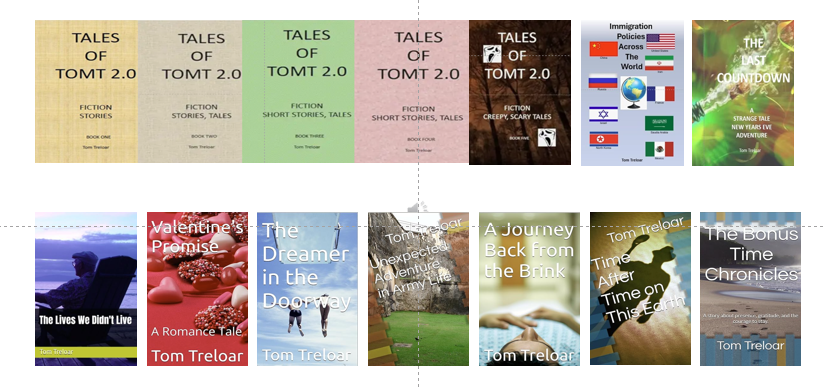
My Books on Amazon
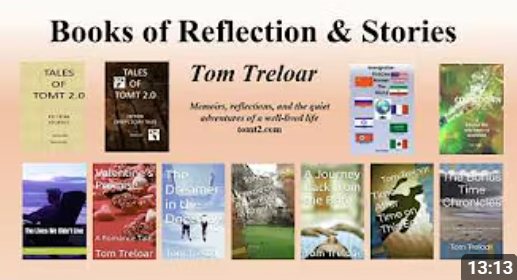
The YouTube link to the synopsis of the fourteen books I have published on Amazon
https://www.youtube.com/watch?v=sCZcKSszzL0

Crafting Short Stories: From Blog to Books
In addition to blogging, I also have ventured into publishing paperback books and Kindle editions on Amazon, which has opened up new avenues for creativity and self-expression. A year ago, I discovered Amazon Kindle Direct Publishing, a platform that empowers authors to reach a global audience with their written works. Since then, I’ve been able to explore various genres, pouring my passion into crafting stories that resonate with readers. The process of creating these books has been both challenging and rewarding, as I’ve navigated the intricacies of formatting and cover design, all while learning how to market my publications effectively. This journey has not only expanded my portfolio but also deepened my understanding of the publishing industry, making me more confident in sharing my voice through multiple mediums.
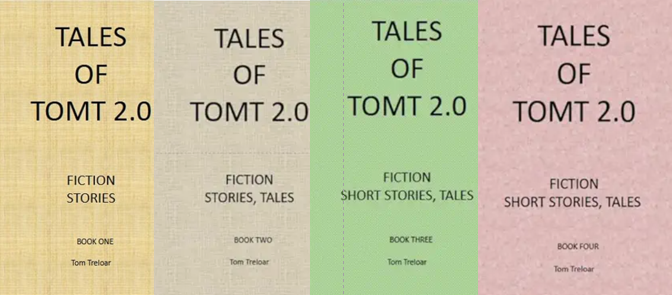
The first five books was a series of short story books. They are around a hundred pages each edition. Around twenty-five short stories in each book. I have actively been blogging and writing short articles since I retired in 2006. Many of these stories are included in these books and other stories that have been written for these books. They are ideal for the commuter and others that just need to fill a short amount of time where the story is short and to the point. They are many types of genres and subjects.
Book five was composed a few months prior to Halloween and I thought I would try something different. Everyone likes spooky creepy stories on Halloween. So, I thought I would compose a book of stories for Halloween. This consists of 16 short stories that are strange and scary. Friends have commented that they couldn’t finish the book because they were too strange and scary. This book has been one of the most popular publications.
Amazon.com: Tales of TomT 2.0 (Tales of TomT 2.0 Series Book 1) eBook : Treloar, Tom: Kindle Store
Amazon.com: Tales of TomT 2.0 (Tales of TomT 2.0 Series) eBook : Treloar, Tom: Kindle Store
Amazon.com: Tales of TomT 2.0: Book 5 (Tales of TomT 2.0 Series) eBook : Treloar, Tom: Kindle Store
The next book was Immigration Policies Across the World. 93 pages
Since illegal immigration was a hot topic last summer, I wondered, “what are the immigration policies around the world?” Intrigued by the complexities and nuances of this global issue, I decided to delve deeper. I went to various AI sources, Gemini, Copilot, Grok, and asked for immigration policies in nine countries throughout the world. It was fascinating to see how different nations, each with their unique cultural, economic, and political contexts, handle immigration. Some countries adopted strict, enforcement-heavy approaches, while others embraced more lenient, humanitarian policies that welcomed immigrants as valuable contributors to society. This comparative study not only broadened my understanding but also highlighted the diverse challenges and opportunities faced by immigrants globally. Inspired by these revelations, I then came up with the idea to compose a comprehensive book that encapsulates these findings and publish it alongside my other publications, hoping to foster a greater awareness and discussion around this pressing issue.
Amazon.com: Immigration Policies Across the World eBook : Treloar, Tom: Books
Since I had a good response to my book 5 of creepy tales and stories for Halloween I thought, “why not a book for New Years Eve? The next book, “The Last Countdown.”
Step into a New Year’s Eve unlike any other in The Last Countdown, a witty, fast‑paced mystery where five friends stumble into a hidden world of secret rooms, time‑bending artifacts, and a clock that doesn’t just mark midnight—it controls it. When the legendary Midnight Clock vanishes, the group is thrust into a race against unraveling time, hunted by a man who believes the world should freeze forever. Equal parts humor, heart, and high‑stakes magic, this story turns the ticking of a clock into the pulse of an unforgettable adventure.
This is a 99-page mystery, not a collection of short stories.
I now have the bug. This book publishing is fun and challenging. Amazon Kindle Direct Publishing is a great platform. The only investment I made is my time. I don’t have to search for a publisher that is willing to take the chance on my unprofessional experience or buy any large quantities of books. The only investment I have is my time and since I am retired, I have many hours of that.
The next book is, “The Lives we didn’t Live.” This is about a strange dream I had, and I wanted to share it. It was a significant event in my life. Small book, only 30 pages.
Amazon.com: The Lives We Didn’t Live eBook : Treloar, Tom: Kindle Store
When Tom drifts into sleep one ordinary night, he’s pulled into a vivid dream where Sandra—his grounded, quietly magnetic grade‑school companion he hasn’t thought of in forty years—appears exactly as she was in high school. She shows him three lives they might have lived together, each one tender, unsettling, and impossibly real. Shaken awake, Tom searches for her… only to discover she died three days earlier. What follows is a decades‑long reflection on connection, timing, and the mysteries that refuse to fade. Three Days After Sandra is a haunting, heartfelt novella about the questions we never knew we asked, the lives we never lived, and the quiet ways the past sometimes reaches forward—not to change our path, but to remind us that it mattered.
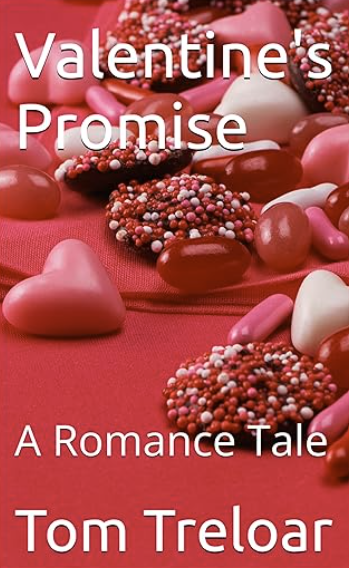
Since I wrote a book around Halloween and one around New Years, why not Valentines Day? This books name is, “Valentines Promise: A Romance Tale“
Amazon.com: Valentine’s Promise: A Romance Tale eBook : Treloar, Tom: Kindle Store
Valentine’s Promise is a tender, time‑spanning love story about two people whose hearts find each other again and again through every season of life. From an unexpected Valentine’s Day beginning to a lifetime of shared laughter, whispered vows, and three miracle children born on the same enchanted date, Lee and Mallory Collins build a marriage shaped by devotion and destiny. As their family grows and the years unfold, they discover that true romance isn’t found in grand gestures, but in the quiet, everyday moments that bind two souls together. Warm, luminous, and deeply heartfelt, this novel celebrates a love that endures, a family that blossoms, and the beautiful truth that some promises are written long before we know to make them.
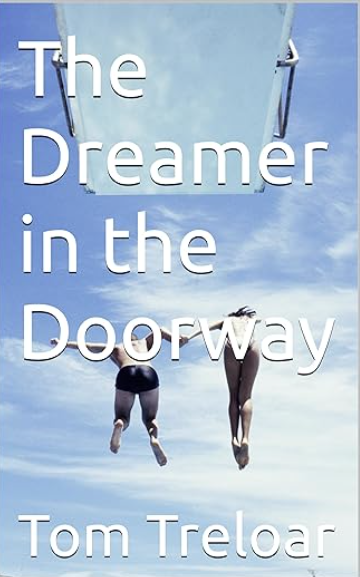
The next book is, The Dreamer in the Doorway. 91 pages
Amazon.com: The Dreamer in the Doorway eBook : Treloar, Tom: Kindle Store
What if the person you loved most could see the parts of you even you’ve forgotten?
When Thomas slips into a vivid dreamscape shaped by Dee’s memories, fears, and unspoken longings, he becomes a silent witness to the pieces of her she’s never shared. But the deeper he travels into her dream‑world, the more he realizes he’s not just exploring her past — he’s confronting the quiet distance that has grown between them in waking life.
Then, unexpectedly, Dee appears in his dreams too.
Together, they walk through mirrored hallways of regret, shoreline worlds of possibility, and the locked rooms of their own hearts. What begins as a surreal intrusion becomes a journey of rediscovery — of vulnerability, of forgiveness, and of the love they thought they’d lost to time.
As dreams and reality begin to blur, Thomas and Dee must decide whether the truths they uncover in sleep can transform the life they share when they wake.
A tender, romantic, and quietly haunting story about connection, second chances, and the courage it takes to truly see — and be seen by — the one you love.
In the end, one question lingers long after the final page:
How well do we ever really know the person sleeping beside us?
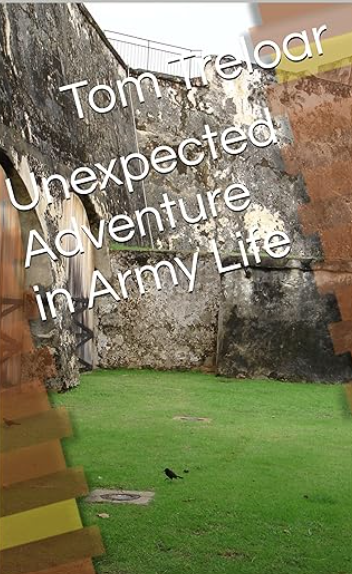
The next book is, Unexpected Adventure in Army Life. Kindle book
Amazon.com: Unexpected Adventure in Army Life eBook : Treloar, Tom: Kindle Store
Everyone has a little Indiana Jones in them. My own brush with adventure didn’t involve ancient artifacts or daring escapes, but it did begin in a place steeped in history, mystery, and the lingering shadows of a world still recovering from war.
It was January 1965, and I was in the U.S. Army, newly assigned to Merrell Barracks in Nuremberg, Germany. The winter air was sharp enough to sting your lungs, and the sky hung low and gray, as if it were weighing the city down with memories it hadn’t yet released.
Merrell Barracks was no ordinary post. The place had a presence. Thick stone walls, echoing corridors, and a sense that every footstep carried the weight of decades. You could feel the past in the air. The buildings had seen things long before we arrived, and you couldn’t help but wonder what stories they would tell if the walls could talk.
I didn’t know it then, but this old German barracks — this unlikely crossroads of history and youth — was about to hand me an adventure I never saw coming. The kind of story that stays with you for a lifetime. The kind that proves you don’t need a whip or a fedora to feel like Indiana Jones.
Sometimes all it takes is being in the right place, at the right time… and just curious enough to get yourself into trouble.
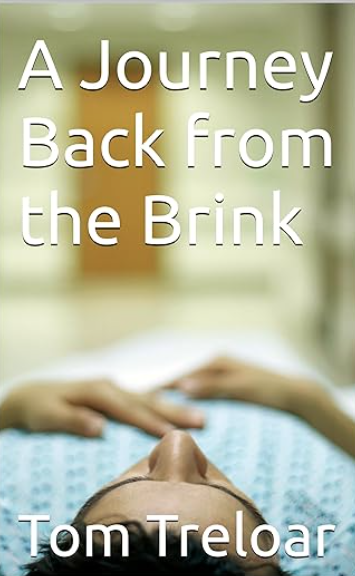
The next book is, A Journey Back from the Brink Kindle book
Amazon.com: A Journey Back from the Brink eBook : Treloar, Tom: Kindle Store
A story about a leg cramp that turned into a life-threatening experience. Waking up around 3 am with a terrific pain in the calf, I initially brushed it off as just another muscle cramp. However, as time passed, the pain intensified, leading to alarming symptoms that could not be ignored. The following week unfolded in a blur of worry and doctor visits, culminating in a frantic 911 call that would change everything. The paramedics arrived swiftly, and within moments, I was whisked away to the hospital where a lifesaving procedure was performed. The diagnosis revealed a serious underlying condition that I had no idea existed, and I was faced with an eye-opening surgery that redefined my perspective on health and well-being. From near death to going home, the journey was a testament to resilience and the fragility of life, teaching me to appreciate even the smallest moments of comfort and normalcy.
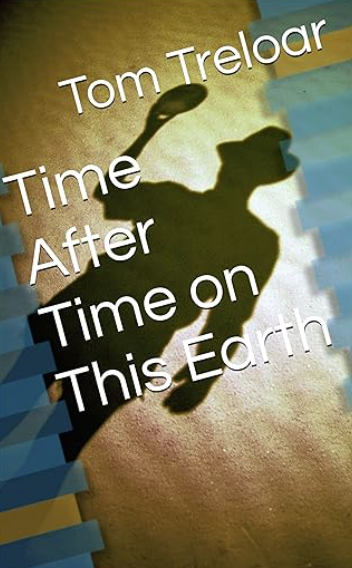
The next book is, Time After Time on this Earth 133 pages
Amazon.com: Time After Time on This Earth eBook : Treloar, Tom: Kindle Store
This book is a companion for anyone who has ever paused long enough to wonder what their life has really meant. Through fifty tender, distilled chapters and a luminous epilogue, the author traces the arc of a life shaped by love, softened by time, and illuminated by meaning. It’s a celebration of presence, gratitude, and the quiet miracles hidden in ordinary days. A warm, reflective journey that leaves readers feeling seen, comforted, and deeply at peace.
In this deeply human and quietly luminous memoir, a lifetime unfolds not through dramatic twists, but through the small, steady moments that reveal what truly matters. With warmth, clarity, and a storyteller’s gentle wisdom, the author reflects on love, loss, growth, presence, and the quiet radiance that emerges only after years of living with an open heart. This is a book about becoming — slowly, honestly, beautifully — and discovering that a life well‑loved is a life well‑lived.
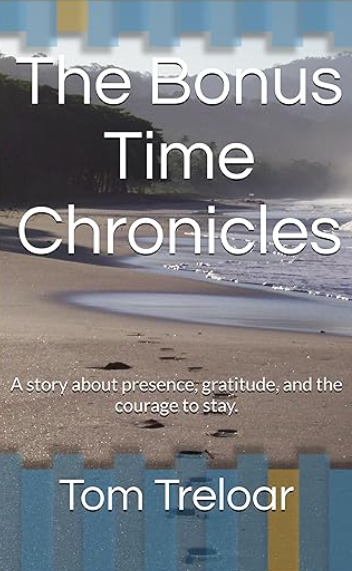
The next book is The Bonus Time Chronicles 178 pages
What if the life you thought had ended was only beginning to deepen?
After a near‑fatal embolism, Lee Weiss wakes into a world that looks the same but feels entirely different. The foothills outside his window, the dust motes in the morning light, the quiet hum of his own breath — everything carries a new kind of weight, a new kind of wonder.
In the long months that follow, learns to move through his days with a slower, steadier presence. He reconnects with his daughter. He begins writing again, one honest line at a time. He leads a small circle of local writers who remind him that creativity is a form of community. And through a series of unexpected letters, he forms a gentle, luminous connection with a woman named Eleanor — a companion in grief, courage, and renewal.
The Bonus Time Philosophy is a tender, reflective novel‑memoir about what happens after survival. It’s not a story of second chances in the dramatic sense, but of deeper chances — the kind that arrive quietly, asking only for attention.
With warmth, clarity, and a deep appreciation for the ordinary miracles of everyday life, this book invites readers to consider their own bonus time:
the conversations that linger,
the pages that wait to be written,
the people who walk beside us,
and the quiet afternoons that change everything.
A story about presence, gratitude, and the courage to stay.
That’s it for the time being. This journey in the last year has been exciting, and a learning experience filled with unexpected challenges and rewarding moments. I doubt if I will ever make it to the best seller list, but the growth I have experienced through this process is invaluable. From the countless hours of writing and rewriting to the feedback from peers and mentors, every step has contributed to my development as a writer. Ultimately, it has been an experience I don’t regret, as it has shaped my perspective on storytelling and deepened my passion for sharing my voice with the world.
I take an event in my life and massage it into a memoir or compose a fiction tale into different subjects or categories, exploring the intricate emotions and details that surround those moments. By delving into my experiences, I can uncover hidden lessons and universal truths, weaving them together into a compelling narrative that captivates readers. Whether it’s drawing upon personal anecdotes or crafting imaginative scenarios, each piece becomes an opportunity to reflect on the human condition and convey relatable themes through the lens of my creativity. Yes, AI is one of the tools in my toolbox.
Hope to see you on Amazon.
My Day Went Stupid
Audio
I woke up this morning with the firm conviction that today — today — I would write something meaningful. Something profound. Something that would make readers pause mid‑sip of their coffee and whisper, “My God… he’s done it again.”
Instead, I made toast.
Burnt toast.
And while staring at that charred rectangle of disappointment, I thought, well, this seems like the perfect emotional foundation for a stupid blog.
So here we are.
I should warn you: this blog has no purpose. None. It’s like a shopping cart in a parking lot that somehow rolled into a bush and decided to stay there forever. It’s like a squirrel that forgot what it was doing halfway up a tree. It’s like me, trying to remember why I walked into the kitchen.
But you’re here, and I’m here, and we might as well see where this goes.
The Day Started Normally, Which Was My First Mistake
I tried to be productive. I really did. I even made a list:
- Write something brilliant
- Drink water
- Don’t forget #2
- Seriously, drink water
- Stop making lists
By item three, I had already failed.
Then I sat down at my desk, opened a blank document, and immediately felt the gravitational pull of absolutely everything else in the universe. Suddenly, I needed to reorganize my pens. I needed to check if the mail had arrived (it hadn’t). I needed to Google “why do pigeons walk like that.”
I learned nothing useful, but I did watch a video of a pigeon chasing a donut, and honestly, that felt spiritually relevant.
I made coffee. It tasted like someone had whispered “coffee” over a cup of hot water. I drank it anyway because I am a grown adult who has accepted that life is mostly compromise.
Then I made a second cup, which tasted like the first cup’s older, more bitter sibling who resents everyone.
I drank that too.
By the third cup, I was vibrating at a frequency only dogs could hear.
This seemed like the perfect moment to begin writing.
I decided to write about something important, like the meaning of life or the beauty of human connection. Instead, I found myself thinking about socks.
Why do socks disappear?
Where do they go?
Is there a sock union somewhere negotiating better working conditions?
I once lost a sock while wearing it. I looked down and it was simply gone. I still don’t understand how that happened. I’m not saying it was aliens, but I’m also not not saying it was aliens.
Anyway, that line of thought consumed about twenty minutes of my morning, which is impressive considering it produced absolutely nothing of value.
At some point, I stepped outside to get some fresh air. The sky was doing that dramatic Colorado thing where it can’t decide whether to be sunny, cloudy, windy, or mildly threatening. I stood there, watching a plastic bag tumble across the yard like it was auditioning for a modern dance performance.
And I thought, yes. This is exactly the energy of today.
A day that is trying, but not very hard.
A day that is technically functioning, but only if you squint.
A day that would absolutely forget its own birthday.
I tried to steer this blog toward something meaningful. I really did. I thought maybe I could talk about presence, or gratitude, or the quiet beauty of ordinary moments.
But then I remembered I had left the laundry in the washer, and by the time I came back, the thought had evaporated like a puddle in July.
So instead, here is a list of things I learned today:
- Toast burns faster when you’re staring at it.
- Pigeons are surprisingly determined when pastries are involved.
- Coffee is both friend and enemy.
- Socks are untrustworthy.
- Writing a stupid blog is easier than writing a smart one.
- I should probably drink water.
At one point, I tried to remember a story from my childhood that might fit into this blog. Something funny, something charming, something that would make readers smile.
Instead, I remembered the time I tried to build a treehouse without a tree.
I had lumber. I had nails. I had enthusiasm.
What I did not have was a tree.
I built it anyway. It was essentially a wooden platform sitting on the ground, which is just a deck, but I refused to call it that. I insisted it was a treehouse “in spirit.”
This is the kind of logic that has guided my entire life.
Around the 700‑word mark, I realized I had no idea how to end this thing. Should I wrap it up with a moral? A twist? A sudden philosophical insight?
No. That would betray the entire premise.
This blog is stupid.
It deserves a stupid ending.
So here it is:
I never did catch up with the day.
I never did write anything profound.
I never did solve the mystery of the missing socks.
But I did write this blog — a wandering, caffeinated, slightly confused piece of nonsense that somehow made it to the finish line.
And honestly?
That feels like an accomplishment.
Sometimes you don’t need brilliance.
Sometimes you just need to show up, write something ridiculous, and call it good.
So that’s what I’m doing.
This is good.
Or at least… good enough.
And in the grand tradition of stupid blogs everywhere, I will now end this abruptly, without transition, explanation, or apology.
The end.
A Tale of Two Parts
Audio Podcast 21 minutes
The first time Chuck wondered whether he was still human, it happened in the cereal aisle.
He stood there with a box of bran flakes in one hand and a box of honey‑oat clusters in the other, and something inside him simply… paused. Not the normal kind of indecision, not the “I should eat healthier” tug‑of‑war. This was different. It was as if the machinery of choice itself had stalled.
He realized, with a strange, clinical detachment, that he could not feel the difference between the two options. Not preference. Not desire. Not even mild annoyance. Just a blank, humming neutrality.
He put both boxes back and walked out of the store without buying anything.
Chuck had always been a quiet man, but lately his quiet felt less like a personality trait and more like a missing piece. He moved through his days with the precision of someone following instructions he couldn’t quite remember receiving.
He still went to work. He still answered emails. He still nodded politely when coworkers made jokes. But everything felt like an imitation of a life rather than the life itself.
The strange part was that no one seemed to notice.
Not until Maple.
She was the only one who looked at him long enough to see the seams.
“You okay?” she asked one afternoon, leaning against the doorway of his office. “You’ve been… different.”
He blinked. “Different how?”
“Like you’re here, but not here.”
He opened his mouth to respond, but the words didn’t come. Not because he didn’t know what to say—he always knew what to say—but because he suddenly wasn’t sure whether the words would be true.
Maple stepped closer. “Chuck?”
He forced a smile. “Just tired.”
She didn’t believe him. He could tell. But she let it go.
For the moment.
That night, Chuck stood in front of his bathroom mirror and tried to see himself the way someone else might.
He looked normal enough. Brown hair, slightly unkempt. A face that could be described as “pleasant” if someone was feeling generous. Eyes that had once been warm, he thought, though now they seemed to reflect light rather than hold it.
He lifted his hand and touched his cheek.
Warm.
Soft.
Human.
But the warmth felt like a fact, not a feeling. Like reading a thermometer.
He tried an experiment. He smiled.
The muscles moved correctly. The corners of his mouth lifted. His cheeks rose. His eyes narrowed.
But nothing inside him shifted.
The smile was a shape, not an emotion.
He let it fall.
The next day, Maple found him in the break room staring at the coffee machine as if it were a puzzle box.
“You’re doing it again,” she said gently.
“Doing what?”
“Disappearing.”
He exhaled. “I don’t know what’s happening to me.”
She pulled out a chair. “Sit.”
He did.
“Talk to me,” she said.
He hesitated. The truth felt absurd. Ridiculous. But also inevitable.
“Maple… do you ever feel like you’re not… real?”
She didn’t laugh. She didn’t scoff. She didn’t even blink.
“Tell me more,” she said.
And so he did. About the cereal aisle. About the mirror. About the way his emotions felt like echoes instead of experiences.
When he finished, Maple sat back, studying him with a seriousness that made his chest tighten.
“Chuck,” she said softly, “you’re not broken.”
He looked away. “I’m not sure I’m even human.”
She reached across the table and took his hand. Her touch was warm. Alive. Certain.
“You’re asking the question,” she said. “That’s the most human thing there is.”
By the time Chuck got home, the grocery bag felt heavier than it should have — as if the weight inside it wasn’t cereal and milk but the question he’d been trying not to ask himself since the aisle incident.
He set the bag on the counter. The house was quiet, the kind of quiet that usually soothed him. Today it only made the air feel too still.
He reached for a mug, intending to make coffee and shake off the lingering unease. But as his hand neared the cabinet door, the mug inside gave a faint rattle. Not loud. Not dramatic. Just a tiny vibration, like a glass catching the tail end of a distant tremor.
Chuck froze.
The mug stilled.
He opened the cabinet slowly. The mug sat there, perfectly ordinary, perfectly still, as if it had never moved at all. He touched it with one fingertip. Cool ceramic. Solid. Real.
He set it on the counter and stepped back.
His pulse thudded in his ears. He tried to breathe normally, but each inhale felt shallow, as if his lungs were trying to make room for something else — some other presence, some other awareness — pressing from the inside.
He turned toward the sink, gripping the edge of the counter with both hands. His reflection in the dark window over the sink stared back at him, faint and ghostlike in the glass.
He lifted one hand.
The reflection lifted its hand.
But there was a lag — a tiny, impossible hesitation, like a skipped frame in a film reel.
Chuck’s breath caught. He blinked hard, leaned closer to the window. His reflection leaned too, perfectly in sync now, as if correcting itself.
“Stop,” he whispered, though he didn’t know whether he was talking to the reflection or to himself.
The house hummed softly — refrigerator, heater, the usual chorus of appliances. But beneath that, Chuck sensed something else. A second rhythm. A pulse that wasn’t mechanical, wasn’t external, wasn’t anything he could name.
It felt like a thought that wasn’t his.
A presence leaning toward him from somewhere inside his own skin.
He pressed a hand to his chest. His heartbeat was steady, human. But beneath it, he felt that other rhythm again — faint, curious, like a question tapping from the inside.
He closed his eyes.
The presence leaned closer.
Not threatening. Not hostile. Just… aware.
As if it were trying to understand him.
As if it were asking the same question he was afraid to voice.
What are you becoming?
Chuck opened his eyes, breath unsteady. The kitchen looked the same. The world looked the same. But he no longer trusted the boundaries of it — or the boundaries of himself.
Whatever was happening had started long before the cereal aisle.
He just hadn’t noticed until now.
Chuck didn’t mean to look at himself again. He’d only gone upstairs to splash water on his face, to prove to himself that he was still anchored in something ordinary. But when he stepped into the bathroom, the mirror caught him the way a hand might catch a sleeve — gently, insistently, refusing to let him pass.
He gripped the edge of the sink. The porcelain felt cool, solid, reassuring in a way his own body no longer did.
His reflection stared back at him.
Same face. Same tired eyes. Same faint scar above the eyebrow. Nothing out of place.
He lifted his right hand.
The reflection lifted its right hand.
Perfectly timed.
He exhaled, a shaky breath of relief.
Then he blinked.
And the reflection didn’t.
Just for a fraction of a second — a skipped beat, a missed cue — but enough to send a cold ripple down his spine.
“Don’t,” he whispered, though he didn’t know who he was talking to.
The reflection blinked then, as if remembering.
Chuck leaned closer. The reflection leaned too, but there was something off now — a tension around the eyes, a faint delay in the tilt of the head, like someone trying to mimic him with perfect precision and missing by a hair.
He touched his chest. The reflection touched its chest.
But Chuck felt it again — that second rhythm beneath his heartbeat, that quiet, curious pulse that didn’t belong to him alone.
The presence stirred.
Not outside him.
Inside.
A thought brushed the edge of his mind, feather‑light but unmistakably not his own. Not words, not language — more like awareness. Recognition. As if something within him had just opened its eyes for the first time.
Chuck staggered back from the mirror.
His reflection didn’t move.
It held still, watching him with a calmness he didn’t feel, as if it were the steady one and he were the distortion.
“Stop,” he said again, louder this time.
The reflection tilted its head — a slow, deliberate motion Chuck hadn’t made.
His breath caught. His pulse hammered. The second rhythm pulsed beneath it, steady and patient, like a hand resting lightly on his shoulder.
Then the reflection moved — not to mimic him, but to reassure him.
A small, almost human gesture.
A softening of the eyes.
A look that said: I’m not here to hurt you.
Chuck backed toward the doorway, unable to tear his gaze away.
For the first time, he understood the truth he’d been circling since the cereal aisle.
Something inside him wasn’t waking up.
It had always been awake.
He was the one who hadn’t noticed.
Chuck didn’t remember leaving the bathroom.
One moment he was staring at the reflection that wasn’t quite his, and the next he was standing at the top of the stairs, one hand braced against the wall, breath shallow and uneven. The house felt different — not darker, not colder, just… attentive. As if every surface were listening.
He took a step.
The floorboard beneath his foot gave a soft creak, but there was something else beneath it — a faint vibration that matched the second rhythm pulsing inside his chest. A resonance. A reply.
“No,” he whispered, shaking his head. “No, no, no.”
He descended the stairs slowly, gripping the railing. Each step hummed faintly under his weight, like the house was adjusting to him, or he was adjusting to it. He couldn’t tell which.
When he reached the bottom, he stopped.
The grocery bag he’d left on the counter was open.
He hadn’t opened it.
The cereal box — the one that had trembled in the aisle — sat upright on the counter, perfectly centered, as if placed there with intention. The top flap was still sealed, untouched.
Chuck approached it cautiously, like it might leap off the counter. He reached out a hand, and the box gave a tiny, unmistakable shiver.
He pulled his hand back.
The box stilled.
His pulse hammered. The second rhythm pulsed beneath it, steady and calm, like a hand on his shoulder urging him to breathe.
He swallowed hard. “What do you want from me.”
The presence inside him didn’t answer in words. It didn’t need to. A sensation washed through him — not fear, not threat, but recognition. A feeling like someone turning toward him in a crowded room and saying there you are without speaking.
Chuck backed away from the counter.
He wasn’t alone in his own body.
He wasn’t alone in his own house.
And the strangest part — the part that chilled him more than the mirror or the trembling objects — was the quiet certainty blooming in his chest:
Whatever this was…
it had been waiting for him.
Chuck didn’t sleep.
He tried — he lay on the couch with a blanket pulled to his chin, the lights off, the house still — but every time he closed his eyes, he felt it. That second rhythm. That quiet awareness. Not pushing. Not invading. Just… waiting.
By 3:17 a.m., he gave up.
He sat up slowly, rubbing his face with both hands. The living room was dim, lit only by the streetlamp outside filtering through the blinds. Shadows stretched long across the floor.
He stood.
The air shifted.
Not a breeze. Not temperature. More like the room exhaled when he did.
Chuck swallowed hard. “Okay,” he whispered. “If you’re real… if you’re something… just show me. Please.”
Silence.
Then — a faint vibration beneath his feet, like the floorboards were answering him.
He took a step toward the hallway.
The shadows moved.
Not dramatically. Not like a horror movie. Just a subtle rearranging, as if something unseen had stepped aside to make room for him. Chuck froze, heart pounding, but the second rhythm inside him stayed steady, calm, almost reassuring.
He walked forward.
The shadows shifted again, this time more clearly — a soft, fluid motion, like ink swirling in water. They gathered near the far wall, pooling into a shape that wasn’t quite a shape, a presence that wasn’t quite visible.
Chuck’s breath caught.
The presence inside him leaned forward, as if greeting something familiar.
The shadows thickened, then lifted — not rising from the floor, but unfolding, like something stepping out of a place Chuck couldn’t see. A silhouette formed, faint and wavering, as if made of dim light rather than darkness.
It wasn’t human.
But it wasn’t threatening.
It stood there, quiet, patient, watching him with no eyes at all.
Chuck’s voice shook. “Are you… are you what’s inside me?”
The silhouette tilted its head — the same slow, deliberate motion his reflection had made in the bathroom. A gesture of recognition.
A soft pulse moved through Chuck’s chest, warm and steady. The presence inside him wasn’t trying to escape. It wasn’t trying to take over. It was… answering.
The silhouette stepped closer.
Chuck didn’t move. He couldn’t. The air around him felt charged, humming with a resonance that matched the rhythm inside him. When the figure stopped just a few feet away, the hum settled into something almost like a chord — two notes aligning.
A thought brushed Chuck’s mind.
Not words.
Not language.
A feeling.
You are not alone.
Chuck’s knees nearly buckled.
He pressed a hand to his chest, tears stinging unexpectedly at the corners of his eyes. Not from fear — though fear was there — but from the overwhelming sense of being seen. Not by another person. Not by a reflection.
By something that had been with him longer than he realized.
The silhouette lifted an arm — slow, gentle — and extended a hand made of shifting light.
Chuck hesitated.
Then, trembling, he reached out.
Their hands didn’t touch. They didn’t need to. The moment his fingers neared the figure, a warmth spread through him, deep and resonant, like a tuning fork struck in the center of his being.
The presence inside him and the presence before him aligned.
And Chuck understood, with a clarity that terrified and steadied him all at once:
This wasn’t an arrival.
This was a reunion.
The moment their hands aligned — not touching, but resonating — Chuck felt something open inside him.
Not a door.
A memory.
Not one he recognized.
Images flickered behind his eyes: light bending in impossible ways, a vast dark expanse humming with layered voices, a sense of drifting without a body, without a name. A feeling of searching. Of waiting.
Chuck staggered back, gasping. The silhouette didn’t follow. It simply stood there, patient, as if it knew this part would be difficult.
“What… what are you?” Chuck whispered, though the question felt too small for what he meant.
The figure shifted, its edges softening. The shadows around it thinned, revealing something like a core — a faint glow, pulsing in time with the second rhythm inside Chuck’s chest.
A thought brushed his mind again, clearer this time.
Not separate.
Chuck shook his head. “That doesn’t make sense.”
The presence inside him pulsed gently, like a hand squeezing his shoulder.
The silhouette stepped closer, and the glow brightened. Chuck felt warmth spread through him — not physical warmth, but recognition. A sense of something long-lost returning to its rightful place.
Another thought formed, not in words but in meaning:
You were not made incomplete. You were made in two parts.
Chuck’s breath hitched. “Two… parts?”
The figure nodded — or the closest thing to a nod its shifting form could manage.
A wave of understanding washed through him, dizzying and terrifying.
“You’re not possessing me,” Chuck whispered. “You’re… the other half.”
The silhouette brightened, its form stabilizing for a moment — not human, but unmistakably alive.
Separated at the beginning, the presence conveyed. Rejoined now.
Chuck pressed a hand to his chest. The second rhythm pulsed beneath his heartbeat, steady and sure. Not foreign. Not invasive. Familiar in a way he couldn’t explain.
“Why?” he asked, voice cracking. “Why was I split? Why now?”
The figure dimmed slightly, as if searching for a way to answer. When the meaning came, it was gentle, almost sorrowful.
To survive.
Chuck felt the truth of it hit him like a cold wind. Images flickered again — a world of light and shadow, a fracture, a fall, a desperate choice. A splitting. A hiding.
“You hid inside me,” Chuck whispered. “All this time.”
Not hiding, the presence corrected. Resting. Waiting for you to be ready.
Chuck sank onto the couch, overwhelmed. The silhouette remained standing, patient, its glow softening as if giving him space.
He looked up at it, tears blurring his vision. “Ready for what?”
The answer came with a warmth that filled the room, filled him, filled the space between them.
To become whole.
Chuck closed his eyes, letting the truth settle into him like a long-delayed breath.
He wasn’t losing his humanity.
He wasn’t becoming something else.
He was finally meeting the part of himself he’d been missing.
Chuck didn’t remember falling asleep on the couch, but he woke to sunlight spilling across the floor in long, pale ribbons. The silhouette was gone. The house was quiet. Too quiet.
For a moment, he wondered if he had dreamed everything — the presence, the reunion, the impossible warmth. But when he sat up, he felt it immediately.
The second rhythm.
Not beneath his heartbeat now.
Alongside it.
He stood slowly. The room felt different, as if the air had been rearranged overnight. The shadows were wrong — not darker, not threatening, just… attentive. Like they were waiting for him to move.
He walked to the window.
Outside, the world looked unchanged. Cars. Lawns. A jogger passing by with earbuds in. Ordinary life, humming along without him.
But as Chuck watched, the jogger paused mid‑stride.
Not slowed.
Paused.
Frozen in place, one foot hovering above the sidewalk.
Chuck blinked.
The jogger remained suspended, perfectly still, as if someone had pressed pause on a scene only Chuck could see.
A soft pulse moved through his chest — not fear, not confusion. Recognition.
The presence inside him stirred, warm and steady.
You are whole now.
Chuck swallowed hard. “What does that mean?”
The world outside shimmered — just a ripple, like heat rising from asphalt — and the jogger resumed running, unaware anything had happened.
Chuck stepped back from the window.
The shadows in the room shifted, subtly aligning themselves toward him. Not threatening. Not worshipful. Just… attentive. As if waiting for instruction.
He felt the truth settle into him like a stone dropped into deep water.
He wasn’t just reunited.
He wasn’t just changed.
He was connected — to something vast, something old, something that had been watching the world from the edges for a very long time.
And now it was watching through him.
Chuck exhaled slowly.
The second rhythm pulsed once, twice, then merged with his heartbeat until he could no longer tell them apart.
He walked toward the front door.
The shadows followed.
When he opened the door, the morning light bent around him — just slightly, just enough to notice if you were looking for it.
Chuck stepped outside.
The world held its breath.
And somewhere behind his eyes, a voice that wasn’t a voice whispered:
Let’s begin.
My Favorite Brands: From Dell to Honda and Beyond
Since I spend a lot of time on the computer, internet, and other similar items, it’s crucial for me to have a reliable and efficient machine by my side. My favorite brand is Dell, known for its robust performance and user-friendly interface. Throughout my journey, I have tried various brands, including HP, Acer, and others, but none have quite matched the satisfaction I’ve experienced with Dell. With Dell, I’ve found my devices to be not only dependable but also equipped with exceptional customer support, which is a significant factor when investing in technology. In contrast, HP has a mind of its own; it often behaves unpredictably, leaving me frustrated at times as I never quite know what is going to happen next. As for Acer, well, no thanks—I’ve had some lackluster experiences that didn’t inspire confidence in their products. Ultimately, Dell stands out in my eyes as the best choice for anyone who values consistency and quality in their computing experience.
I have had Dodge, Chevrolet, Subaru, Mazda, and Honda. My last two vehicles have been Honda’s, and I must say, they have consistently impressed me with their reliability, fuel efficiency, and comfort. Each brand offered its own unique experience, but Honda’s performance and features have truly stood out for me in my recent driving experiences. I’ve enjoyed the smooth rides and advanced technology that come with newer Honda models. With my growing affection for Honda, it’s safe to say there’s no need to say anything else as I feel a strong loyalty toward this brand, which has become my go-to choice for vehicles.
I also like Crest toothpaste, Gatorade, Pepsi, Oral B, Walmart, and the list could go on and on.

The People I Trust Most to Find Guidance
First, my wife. I love and admire my wife deeply, appreciating her unique perspective and wisdom. I always consult with her before making any decisions that would affect our lives, as I believe her insights are invaluable. This is truly a partnership, where we share our thoughts, fears, and dreams. As they say, two minds are better than one, and together we navigate the complexities of life, ensuring that our choices reflect both of our values and aspirations. By working collaboratively, we strengthen our bond and create a future that we can both cherish and look forward to.
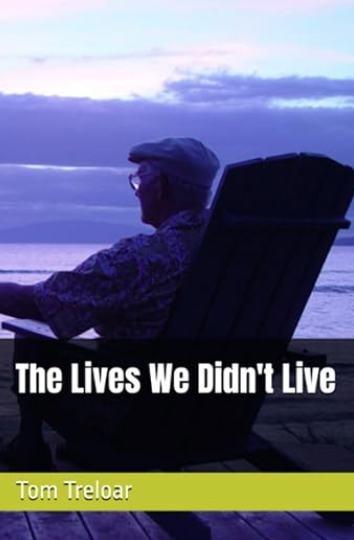
Second, doctors and medical personnel. Being at the age where more medical advice and directions are needed, I admire and accept the doctors and medical staff to direct me to continue having a meaningful and happy life. Their expertise and compassionate guidance offer me reassurance, helping me navigate the complexities of health and wellness. I value the regular check-ups and consultations that not only aim to address immediate concerns but also focus on preventive care, which is essential as I age. Each interaction with my healthcare providers strengthens my understanding of my body and empowers me to make informed choices about my lifestyle. I appreciate their commitment to educating me about new treatments, therapies, and ways to enhance my quality of life, fostering a collaborative relationship that encourages me to actively participate in my health journey. Ultimately, their unwavering support inspires confidence in my ability to maintain a vibrant and fulfilled life despite the challenges that may arise.
Finally, there is a lot of family and friends that I love and admire, each of whom has shaped my life in unique ways. Their kindness, support, and wisdom always inspire me; however, I do not go to them for advice. This may seem surprising, given the close bonds we share, but I often find it difficult to express my concerns or seek their input. At least for now, I can’t think of any time I consulted them for advice, as I prefer to navigate my challenges independently, believing that some lessons are best learned through personal experience.
Why I Vote: A Personal Reflection
Yes, I vote in political elections. I have been voting since I registered to vote when I turned 21 years old. I was taught that voting was important to continue the American way of life, as it empowers citizens to voice their opinions and make a difference in their communities. The only time I didn’t vote was when I was in the army stationed overseas in Germany, where I faced challenges in accessing ballots and balancing my duties. During that time, I realized even more how crucial participating in elections is, not just for myself but for those who may not have the opportunity to do so. Voting is not just a privilege; it is a responsibility that connects us all in the democratic process.
Unfortunately, the political arena has become very toxic. The hate and anger you see is very discouraging these days; it permeates our media, social platforms, and everyday conversations, making it difficult to engage in healthy discourse. You never hear how a party can improve an issue; instead, it seems like every discussion is dominated by pointed fingers and blame. You just hear that the other party is doing it all wrong, contributing to an environment where constructive dialogue is nearly impossible. In my over 80 years, this is the worst it has ever been, even worse than the tumultuous Viet Nam era when society was deeply divided. I remember when there was an unwritten rule that wives and children of elected officials were off-limits; they were protected from the harsh criticisms and attacks that often came with political life. Not anymore, they are targets just as much as the opposing official, dragged into the fray despite their lack of involvement in politics. This shift is nothing short of disgusting! In my opinion, if this atmosphere does not change, this country is on the slow road to destruction, as polarization erodes the fabric of our democracy and leaves us divided and unable to work together for the common good.
This site is about “comments about everything”. However, since the political atmosphere is so toxic, I consciously choose to avoid the issue. Instead, I want to focus on sharing stories and events about the good things in life, celebrating positivity and kindness, rather than perpetuating hate and anger. It’s essential to create a space where uplifting narratives can thrive, where the beauty of human experiences is highlighted, and where we can all find hope and joy amidst the chaos of negativity. By doing so, I aim to inspire readers to reflect on their own lives, fostering a community centered around love, compassion, and understanding. These stories can serve as reminders that even in trying times, there are countless reasons to smile and reasons to be grateful.
Embracing Unconditional Love
God loves all unconditionally, embracing each person with an infinite grace that transcends all boundaries, regardless of their past, present, or future mistakes. This divine love offers a refuge, reminding us that we are worthy of compassion and acceptance, inviting us to grow in our faith and understanding. In this boundless affection, we find strength and hope, illuminating our paths even in the darkest times, encouraging us to extend that same love to others in our lives.
Christ died for all of our sins, taking upon Himself the immense burden of our transgressions and offering a path to redemption through His selfless act of love and sacrifice. This profound event not only symbolizes forgiveness but also embodies the hope for eternal life and a restored relationship with God. The significance of Christ’s death resonates deeply within the hearts of believers, reminding us of the depth of His compassion and the lengths to which He went to reconcile humanity with the divine. In recognizing this immense gift, we are called to reflect on our own lives and the transformative power of grace that flows from His sacrifice.