Audio PODCAST
Readable PDF FILE LINK
Audio PODCAST
March 5th might not jump out as a headline date in the American calendar, but dig into the annals of history, and you’ll find it’s a day marked by pivotal moments that have shaped the nation significantly. From revolutionary sparks to cultural shifts, this date has witnessed historical events that echo through time, reflecting resilience, conflict, and progress. For instance, in 1770, the notorious Boston Massacre unfolded, a tragic confrontation that fueled the flames of revolution and invigorated the collective spirit of the American colonies towards independence. Additionally, March 5th is home to cultural milestones, such as the founding of significant institutions and movements that have advocated for social justice and equality, highlighting the enduring quest for a more perfect union. Here’s a rundown of some standout American events that happened on this date, each contributing to the rich tapestry of the nation’s history and illustrating the ongoing story of its people.
1770: The Boston Massacre Ignites a Revolution
One of the most consequential events in American history unfolded on March 5, 1770, in the snowy streets of Boston. Tensions between British soldiers and colonists had been simmering over taxation and military presence, fueled by the resentment of the colonists towards unfair laws and the constant reminder of British authority. That night, a confrontation escalated when a mob began taunting and pelting a small group of redcoats with snowballs and stones, their anger a reflection of the broader discontent that had been brewing throughout the colonies. Amidst the shouts and clamoring sounds of the crowd, the atmosphere was charged with fear and resolve, as the soldiers, feeling threatened, fired into the crowd, killing five men, including Crispus Attucks, an African American sailor often cited as the first casualty of the American Revolution. This tragic loss not only amplified the unrest but also served as a rallying point for colonists seeking to challenge British oppression, igniting the flames of rebellion that would lead to the fight for independence.
The Boston Massacre wasn’t just a tragedy—it was a propaganda goldmine for Patriots like Samuel Adams and Paul Revere, who used it to stoke anti-British sentiment and rally support for their cause. Revere’s famous engraving of the event, though dramatized, cemented its place as a rallying cry, striking a chord in the hearts of colonists who felt oppressed and marginalized by British rule. This tragic incident, which resulted in the loss of innocent lives, served as a catalyst for growing unrest across the colonies, deeply influencing public opinion against the British government. While this wasn’t the war’s start, it was a match struck on the dry tinder of colonial discontent, igniting fervor that would ultimately lead to the fight for independence five years later. It’s a raw reminder of how quickly a spark can turn into a blaze, illustrating the potent power of shared grievances in motivating a populace to unite against perceived tyranny. The repercussions of that fateful night reverberated throughout the colonies, fueling the fires of revolution and leaving a lasting impact on the trajectory of American history.
1933: FDR’s Bank Holiday Tackles the Great Depression
Fast forward to March 5, 1933, and America was grappling with a different kind of crisis—the Great Depression, a devastating economic downturn that had begun several years earlier but was now reaching unprecedented levels of despair. Just a day after his inauguration on March 4, President Franklin D. Roosevelt declared a four-day national “bank holiday,” effective March 6, to halt a catastrophic run on banks that threatened the financial fabric of the nation. Panicked Americans had been withdrawing their savings en masse, driven by fear and uncertainty, collapsing financial institutions left and right, and fueling a cycle of mistrust in the banking system. On March 5, the gears were turning to enact this bold move, with FDR signing the Emergency Banking Act soon after to stabilize the system, a crucial step aimed at restoring public confidence and preventing further economic collapse. This decisive action not only halted the immediate crisis but also set in motion a series of reforms that would reshape banking regulations and lay the groundwork for a more resilient financial structure in the years to come.
This wasn’t a holiday for celebration—it was a desperate bid to restore trust in a crumbling economy, riddled with uncertainty and fear. By temporarily closing banks, inspecting their solvency, and reassuring the public via his first “Fireside Chat” on March 12, FDR pulled the nation back from the brink of financial disaster. His unprecedented actions instilled a sense of hope among citizens who had witnessed the devastation of the Great Depression firsthand. It’s a textbook example of decisive leadership in chaos, demonstrating how clear communication and firm action can galvanize a restless populace. This pivotal moment not only marked the beginning of the New Deal era that redefined the government’s role in American life but also laid the foundation for future economic reforms aimed at ensuring stability and fostering recovery. By advocating for social welfare and public works, FDR aimed not just to revive the economy but to restore the American spirit and resilience that had been eroded by years of hardship.
Reflections on March 5th
These events, spanning centuries, paint a vivid picture of an America shaped by conflict, crisis, and creativity. The Boston Massacre, occurring in 1770, served as a catalyst that fueled a fervent fight for freedom, galvanizing colonists to stand against oppression and ultimately leading to the American Revolution. Similarly, FDR’s bank holiday during the Great Depression illuminated the grit and resolve necessary to navigate through profound economic despair, as Americans rallied together to restore faith in their financial system. Cline’s loss, while deeply personal, highlighted the fragility of cultural icons and their influence on society, reminding us that even the most beloved figures are not immune to the ravages of time. Furthermore, the POW release during global conflicts reflected not just the triumph of diplomacy, but also the tremendous human cost associated with the power struggles that define nations. March 5th isn’t a holiday or a household name, but it represents a quiet thread in the nation’s tapestry—proof that history doesn’t always shout to be significant, as the lessons learned from these moments often emerge more powerfully in reflections than in celebration.
Audio PODCAST
Valentine’s Day, celebrated annually on February 14th, is a cultural and commercial holiday dedicated to love and affection. Here’s a look at its origins, traditions, and modern celebrations:
Origins:
Traditions:
Modern Celebrations:
Cultural Variations:
Valentine’s Day continues to evolve, reflecting changes in society’s understanding of love, relationships, and personal expression. Whether it’s through traditional gifts or modern, inclusive celebrations, the day remains a testament to the universal desire for connection and affection.

Audio PODCAST LINK
Two years ago, if you can imagine such a thing, I, found myself in a peculiar situation. I was no longer bound by the physical constraints of life, yet I was very much aware, experiencing time in a way I never had before.
I remember the moment it happened, the feeling of detaching from my body, as if you were shedding an old coat. The world, as you knew it, didn’t disappear. However, I felt a sense of peace, total Peace. A feeling that is unexplainable.
Time, in this new state, was different. I may have been in a waiting room. Waiting to see if the medical team revives me and I return to life on earth. Or will I continue to time after life on this earth.
I didn’t see that light at the end of the tunnel like so many say they see. No music, no angels, just me. However, I experienced peace, total peace. A feeling I never felt before in my eighty plus years. Or after I was revived, that peace was gone.
Yet, there was also a sense of isolation. I missed the tactile sensations of life – the warmth of the sun, the taste of your favorite food, the hug of a friend. However, peace, total peace overpowered everything.
I began to understand that time after death was not about waiting for something to happen but about experiencing peace, total peace. I found joy in this new exploration, in learning about the universe from a perspective unbound by human limitations.
Two years in this new dimension of time felt like both an eternity and a heartbeat. I learned that death wasn’t an end but a transition to another kind of journey, one where time was not a line but a vast, interconnected web of experiences. I feel blessed and honored that I was chosen to experience a preview of time after death. I will share my experience to as many as this mere mortal is able to. Here, is this timeless space, I continued to live, to love, and to be myself. I am confident time after death will not be a disappointment.
audio podcast MY BLOOD CLOT

The issue of misinformation and lies in news media is a significant concern in contemporary society, affecting public perception, trust in journalism, and even the outcomes of elections. Here’s an overview based on recent trends and discussions:
Current Landscape:
Key Points from Recent Discussions:
Moving Forward:
In conclusion, while misinformation in media is a complex issue intertwined with technology, politics, and human behavior, ongoing efforts across societal, technological, and legislative domains are aimed at reducing its impact. However, the balance between free speech and the prevention of harm from misinformation remains a contentious and evolving challenge.
Audio PODCAST LINK
Hello, I am MacGregor; I was made in the early summer with thousands of brothers. I am a unique winter jacket. I have a nylon lining and fleece insert. Inside the curled collar is a hidden nylon hood the wearer can wear and then fold and put back in the collar when inclement weather is over. The outside of the jacket is a dark green color that looks like a short curly furry coat. However, it is made of nylon not animal fur. I am one hundred percent washable.
I was made in a plant in Atlanta Georgia. I am proud to wear the label, “made in the USA”. Now my brothers cannot wear this label. In the fall of that year the owners of the plant moved the plant and equipment to Taiwan. I heard it was because of the high cost of labor. The owners sent a proposal to the union and the union rejected the offer. After that the plant was closed and all the equipment was moved to Taiwan. It was a shame all the workers had to find new careers after that move.
Back to my story, I laid around in the factory until the end of August. At that time, me and four brothers, size 36, size 40, size 42, and size 44 were packed into a box and was shipped to the J. C. Penny store in the Villa Italia shopping center in Lakewood. They unpacked us and put us on hangers and hung us on a large rack with hundreds of jackets from different plants and many features unique to them. I am just amazed at the number of different choices the American shopper has.
I was tried on many times by many different people. Every time I was put back on the rack. Three of my brothers were sold. Size 36 and I were the only ones left. Then around the first part of November J. C. Penny’s really hurt me. They put on the rack of coats a sign stating, half-off of shown price. This devastated me, this means my value went from $39.95 to less than twenty dollars, how humiliating, and I am worth more than this.
I was hanging on the rack for a couple of weeks and then this tall slim young man came up and looks at my brother, size 36. He tries on size 36 and then hangs him up back on the rack. He then tries on me. He looks in the mirror, turns around and looks at the back. He tries my zipper and removes the hood from my collar. No one has ever spent this much time checking me out. To my surprise I am taken over to the cashier. Is this young man going to purchase me? Sure enough, he takes out his credit card and buys me. I see from his credit card that is name is Tom. I now have a new owner.
The next three years were good. In the winter I went many places. I was worn all during the winter and I kept Tom very warm. During the summer I was placed way back in the closet to rest. When it started to cool off in the fall I was pulled back out of the back of the closet and put into service and kept Tom warm when he was outside. Unfortunately, this only lasted three years. On the fourth year I spent the winter stuck back in the back of the closet. The fifth winter and the sixth winter were the same. This is beginning to feel like solitary confinement. Did Tom replace me with another jacket?
I was snoozing near the end of May, and I heard some rustling. Tom brought me out of the back of the closet. Wow! That sun is really bright. What is going on? The temperature is pretty warm. Why did Tom bring me out this time of year? I was thrown in the trunk of the car with some funny looking equipment and some of it really had a strange odor. After a couple of hours Tom opened the trunk and took out the equipment with me. I have become a part of Tom’s fishing gear.
There are many fishing memories I have acquired. For example, I remember when Tom was fishing on the Colorado River, and it was drizzling a little. When Tom fished the Colorado River, he would use some kind of bug he would get from under river rocks. Tom was fishing this rolling piece of the river and wham; this fish struck his bait. Tom set the hook, and the fish jumped out of the water. Wow! That fish must have been over ten pounds. Tom was really getting excited. I could feel his heart pounding on my lining. Tom was fighting the fish and being very careful reeling in that gigantic fish. All of a sudden, the fish line became loose. The fish was lost. What happened? Tom reeled in the line and discovered the hook was missing and half of the leader was missing. Speculation is that the nylon fishing line should be replaced every year and the line just broke because the line was a couple of years old. This was a lesson learned the hard way.
Another great memory happened when Tom was at a lake near Laramie Wyoming. There was a cool breeze blowing off of the lake. This was a lake where only flies and artificial lures were allowed. Tom had a wooly worm fly on his line. He cast out the fly and wham! This large rainbow struck that wooly worm fly. The rainbow trout jumped a couple of times, and it looked gigantic. After ten minutes of battle, Tom was able to get this fish in his net. This fish weighed over five pounds, what a prize. Jack, Tom’s fishing buddy came over to see what kind of lure Tom was using and saw that funny looking wooly worm fly and commented, “could he use the other sleeve of Tom’s coat.” I must admit that the fly did look very similar to my sleeve, only smaller. Tom made the comment that this was the largest fish he had ever caught.
The next couple of summer months were great. Tom took me fishing many times during the summer and on occasion we went ice fishing during the winter. I could not stay in the closet anymore because I was dirty and smelled like salmon eggs. Now, I had to stay in the garage with his fishing gear. The garage just was not as comfortable as that warm closet.
Then Tom met this woman. His interest in fishing suddenly diminished. He began spending more and more time with this woman. Hormones finally won. Tom got married and fathered two sons in the next three years. Family life became very important to Tom. Another factor was the Arab oil embargo. The high costs of fuel made Tom think twice before he invested in a fishing trip. Jack, Tom’s fishing buddy became very sick and passed on after a long illness. All of these events made fishing lose its appeal.
I spent many years hanging in the garage and the only exciting think happened was when a moth flew around looking for a meal to eat. Many landed on me and then realized I was nylon and polyester, not cotton. The moths did not find my fabric very tasty. It may have been the fishy smell too.
One day Tom took me off the hook threw me in the washing machine with some soap and washed me. He could have used some warm water. That cold wash cycle sure was uncomfortable. He could have dried me in the dryer. No, he hung me on a hanger, and I had to drip dry in the cold breeze. Before I know it, I was thrown in a large box with hundreds of other coats. I was part of a winter coat drive the church had for the homeless and poor.
This homeless man reached in the box and grabbed me. He didn’t care what I looked like or even if I fit. I never knew his name. He lived under a bridge on the banks of the Platte River. He was more interested in that spirit in the bottle that he always carried with him. Many times, he left me lying on the banks of the Platte River. If he remembered where I was, he would pick me up and wear me for a while. He sure did stink. I would take the smell of salmon eggs any day.
One day I was lying on the bank close to the river. There was a storm up stream and the river started to rise from the runoff. The river started to get closer and closer. I started to get wet and finally the current of the river grabbed me. I started to float down the river. It was a struggle to stay afloat. I was beginning to really get soaked. I finally had to succumb to the weight of my wetness and sank to the floor of the river. I was rolling along the bottom of the river, and I became snagged in a submerged tree branch. I was never seen again.
I found this on an old website I was a member of back in 2008. I thought I would share it.
Podcast. AI assisted.
Elvis Aaron Presley, famously known as “The King of Rock ‘n’ Roll,” was born on January 8, 1935, in Tupelo, Mississippi. He would be 90 today if alive. His journey from a humble beginning to becoming an international icon is one of the most remarkable stories in music history. This article explores Elvis’s life, his contributions to music, his cultural impact, and why his legacy continues to resonate with audiences around the world.
Elvis grew up in poverty, raised by his parents, Vernon and Gladys Presley, in a two-room house. His musical talent was evident early on; at ten, he sang in a local church, and by 1946, his uncle gave him a guitar for his birthday, setting the course for his future. His family moved to Memphis, Tennessee, where Elvis graduated from Humes High School in 1953. That same year, he walked into Sun Studio to record a song for his mother’s birthday, inadvertently setting his career in motion when Sam Phillips, owner of Sun Records, heard his unique voice.
Elvis’s blend of country, blues, and gospel music, coupled with his dynamic stage presence, caught the public’s attention with hits like “That’s All Right” in 1954. His television appearances, especially on “The Ed Sullivan Show” in 1956, where his hip-swiveling dance moves caused a national stir, catapulted him into superstardom. Songs like “Heartbreak Hotel,” “Hound Dog,” and “Love Me Tender” became anthems of the era, defining a new genre—rock ‘n’ roll.
In 1958, Elvis was drafted into the U.S. Army, serving in Germany for two years, which temporarily halted his music career. However, his return in 1960 saw a shift to film and music that catered to a broader, family-oriented audience. Hits like “It’s Now or Never” and “Are You Lonesome Tonight?” showcased his versatility. By the mid-1960s, his movie career overshadowed his music, leading to a dip in his chart-topping success.
Elvis’s 1968 NBC television special, often referred to as the “’68 Comeback Special,” marked his return to the music scene with vigor. Dressed in black leather, performing live for the first time in years, this special rekindled his career. It was followed by hits like “Suspicious Minds” and a series of successful Vegas performances.
The 1970s saw Elvis continue to perform in Las Vegas, but his health and personal life faced challenges. On August 16, 1977, Elvis died at the age of 42, leaving behind a legacy that continued to grow posthumously. His record sales have surpassed a billion worldwide, and his albums have been re-released to new generations.
Elvis Presley’s influence extends beyond music. He was a significant figure in the cultural shift of the 1950s, breaking racial barriers by popularizing African-American musical styles to a broader audience. His fashion, particularly his jumpsuits, became iconic, and his dance moves influenced generations of performers. Moreover, Elvis’s life has been the subject of numerous books, films, and even conspiracy theories regarding his death.
Today, Elvis’s estate, Graceland, is a pilgrimage site for fans, and his music is celebrated yearly at events like Elvis Week. His influence is seen in artists across genres, from rock to country to pop, with artists like Bruce Springsteen, Beyoncé, and even Kacey Musgraves citing him as an influence. The film “Elvis” (2022), directed by Baz Luhrmann, brought his story to a new generation, showing the enduring fascination with his life and music.
Elvis Presley’s legacy is not just in the records he broke or the music he created but in how he transformed American culture, music, and entertainment. His life story is one of rags to riches, of talent meeting opportunity, and of a cultural icon whose influence transcends time. Elvis might have left the building, but his spirit, music, and cultural impact remain vibrant, proving that indeed, “Elvis has not left the building” in the hearts of millions around the globe.
The fifties was the era I grew up in. I have memories of Elvis. I remember watching The Ed Sullivan Show and the controversy about is motions. I remember the audience of screaming girls going into a semitrance when he sang. Elvis was drafted 6 years before I was, and his movies were big when I was stationed in Germany. I have many good memories of Elvis, and he will be remembered.
CLICK FOR PODCAST. AI assisted.
In the landscape of digital media, podcasts have emerged as a significant force, reshaping how we consume information, entertainment, and education. From their humble beginnings in the early 2000s to becoming cultural phenomena, podcasts have woven themselves into the fabric of daily life for millions around the globe.
The term ‘podcast’ was coined as a portmanteau of “iPod” and “broadcast,” signaling the initial vision of delivering radio-like content to Apple’s music player. However, the true power of podcasts lies in their accessibility on various platforms, not just the iPod. The concept took root with shows like “The Daily Source Code” by Adam Curry and “This Week in Tech” by Leo Laporte, but it was “Serial” in 2014 that truly catapulted podcasts into mainstream consciousness. This true-crime narrative captured the imagination of listeners worldwide, demonstrating the potential for deep, serialized storytelling in audio format.
Podcasts offer a unique medium for content consumption: They can be listened to while multitasking, making them perfect for commutes, workouts, or chores. The voice-only format creates a personal connection between the host and listener, often fostering a sense of community among fans. From true crime, comedy, and politics to science, history, and self-improvement, there’s a podcast for virtually every interest.
Podcasts have become a significant educational tool, offering deep dives into subjects not traditionally covered in mainstream media. Shows like “Stuff You Should Know” or “Radiolab” exemplify this educational aspect. From storytelling to comedy, podcasts like “Welcome to Night Vale” or “My Favorite Murder” provide entertainment that’s as gripping or humorous as traditional media. Many podcasts foster communities through listener interaction, fan clubs, or live events, enhancing the sense of belonging among listeners. The format has revitalized long-form journalism, with investigative podcasts like “The Daily” influencing how news stories are reported and consumed.
Looking forward, the integration of technology like AI for personalized content or interactive episodes could redefine the podcasting landscape. Moreover, the potential for podcasts in education, mental health, and even corporate training is vast, suggesting that this medium is only beginning to explore its potential.
Podcasts have not just filled a niche; they’ve created a new dimension in media consumption where the human voice tells stories, shares knowledge, and builds communities. As technology advances and listeners’ tastes evolve, the podcast will continue to be a vital part of our cultural tapestry, offering a voice to the many and a platform for the diverse tales of our time.
Finally, I have been actively blogging since the fall of 2023. I have 2 sites and when I became active again, I discovered that podcasting or voice files have become a very popular segment. I have over 150 voice files. The podcast page has become the most popular of the site. visitors download 4, 5, 6, maybe 10 audio files at a time. Most are short podcasts, just a voice file of the blogging topic. I do have a small number of close to an hour. I discovered quickly that my speaking voice is about as good as my singing. Therefore, I use an AI voice with the name of Mark. I don’t know whether he is from Microsoft or Adobe. I have not had any speaking guests, but somewhere down the road I may. I am enjoying this blogging journey and learning new things very often. I am doing this just for fun and do not expect to make a dime. My goal is the have thousands of subscribers. Make me feel good and subscribe.

CLICK HERE FOR PODCAST AI Assisted
The January 6, 2021, Capitol attack has had profound and multifaceted impacts on the United States, affecting various aspects of national life:
Political Impact:
Legal and Security Implications:
Cultural and Social Effects:
Legislative and Policy Changes:
Ongoing Investigations and Commemoration:
The effects of January 6, 2021, continue to evolve, influencing American politics, society, and policy in ways that are still unfolding, often highlighting the challenges of national unity, governance, and the health of democratic institutions.
The above was from AI information gleaned from the internet. Right or wrong this information is plastered all over the internet. Again, it comes down to the individual whether they want to believe it or not. The past events have divided this country more than any other time I remember.
Hello Ramblings Magazine reader! Welcome!
This is a podcast of the seventh issue of Ramblings Magazine.
The Headings are:
Back to Writing.
Early Morning.
My Eyes are Killing Me.
My Regrets.
Reminiscing is my Interest.
Camping Tales.
Past Experiences.
A Bone Fish Grill Experience.
Vicks VapoRub and Toenail Fungus.
Mother’s Day May 12, 2024.
I Should Have Done More.
A World of Fruit.
A Leader and a Follower.
The Grok Platform and Me.
New Mother Celebration.
A three-letter middle name.
Touched by God.
My Favorite Machine.
Retirement.
Title and Date Unknown.
Don’t Let Your Hormones Run Your life.
What Matters.
Frit and Leo.
Don’t Remember Title or Date.
Hardest Part of School Year.
A Piece of Clothing.
A Day of Reflection.
2008 Was Not the Year to be Elected President.
A Touch of Italy.
And the Winner is.
Photo Memory Section
PODCAST. AI Assisted.
On January 3, 1959, Alaska officially became the 49th state of the United States after a long journey towards statehood. Here’s an expanded look at this significant event:
Russian Influence: Alaska was initially colonized by Russia in the 18th century, with the first settlement established in 1784. However, Russia found maintaining Alaska to be costly and challenging due to its distance from the mainland.
Sale to the United States: In 1867, Russia sold Alaska to the United States for $7.2 million (approximately 2 cents per acre), in a deal known as “Seward’s Folly,” named after William H. Seward, the U.S. Secretary of State who negotiated the purchase. Initially, many Americans viewed this acquisition skeptically.
Territorial Status: After the purchase, Alaska was administered as a district and later as a territory. The push for statehood began in earnest in the early 20th century, but progress was slow due to various political and economic considerations.
World War II Impact: The strategic importance of Alaska became apparent during World War II, when Japan occupied some of the Aleutian Islands. This event underscored Alaska’s military significance, leading to increased infrastructure development and population growth.
Statehood Movement: The post-war period saw a renewed push for statehood. Alaskans elected delegates to a constitutional convention in 1955, and a state constitution was drafted and ratified in 1956.
Congressional Action: In 1958, President Dwight D. Eisenhower signed the Alaska Statehood Act into law. After a referendum where Alaskans overwhelmingly voted for statehood, Congress officially admitted Alaska into the Union on January 3, 1959.
Cultural Diversity: Statehood brought recognition to Alaska’s rich indigenous cultures, including the Tlingit, Haida, Tsimshian, Yup’ik, Iñupiat, and others, whose traditional lands now had a new political status within the U.S.
Economic Development: Statehood led to increased federal investment in infrastructure, such as roads, schools, and health services. The discovery of oil in Prudhoe Bay in 1968 further transformed Alaska’s economy, although it also sparked debates over environmental conservation and indigenous land rights.
National Identity: Alaska’s vast wilderness, unique wildlife, and natural beauty added a new dimension to America’s national identity, emphasizing conservation and the exploration of the natural world.
Celebration of Statehood: January 3rd is celebrated annually in Alaska as Statehood Day, acknowledging the journey from a distant purchase to a full member of the United States. This day also reflects on the challenges and achievements of statehood, including issues like land management, indigenous rights, and environmental protection.
Alaska’s entry into the Union as the 49th state was not just a territorial expansion but also a cultural and economic milestone for the United States, highlighting the complexities and rewards of incorporating a region with such unique attributes into the nation’s fabric.
PODCAST. AI Assisted.
On January 1, 2014, Colorado made history by becoming the first state in the United States to sell recreational marijuana to adults following the legalization of its use. This pivotal moment was the result of the passage of Amendment 64 in November 2012, which was approved by 55% of Colorado voters. The amendment allowed individuals 21 years and older to possess up to one ounce of marijuana for personal use and established a regulatory framework for its cultivation, sale, and taxation.
The first legal sales of recreational marijuana occurred with hundreds of people lining up outside dispensaries across the state, including in major cities like Denver. This was not just a local event but drew international attention, with media from around the world covering the historic day.
Colorado’s journey with recreational marijuana has been a learning curve for the state and a model for others, showcasing both the potential benefits and the complexities of legalization in practice. This has set a precedent for how states can navigate the transition from prohibition to regulated markets.
PODCAST. AI assisted.
New Year’s Day, celebrated on January 1st each year, marks the beginning of the Gregorian calendar year. This day is observed around the world with a variety of customs, traditions, and festivities, making it one of the most widely celebrated public holidays.
Historical Background:
Fireworks and Parties: Many countries welcome the new year with spectacular fireworks displays, particularly in major cities like Sydney, London, New York, and Dubai. Parties, whether large public gatherings or intimate celebrations with family and friends, are common, often extending late into the night or early morning of the New Year.
New Year’s Day is more than just a change in the calendar; it’s a moment for reflection on the past year, celebration of life, and anticipation of new beginnings. It’s a time when people around the globe share in the collective experience of renewal, setting aside differences to celebrate the universal passage of time.
This day also serves as a reminder of our shared humanity, as we all look forward to new possibilities, personal growth, and the hope that each new year brings. Whether through quiet contemplation or exuberant celebration, New Year’s Day encapsulates the human spirit’s resilience and optimism.
Personally, I could never get into New Years Eve and New Years Day. I felt it was just another event to drink too much and pay for it the next day.
PODCAST. AI assisted.
New Year’s Eve on December 31 have a rich and varied history that spans multiple cultures and eras:
These celebrations reflect a blend of religious, cultural, and social traditions, evolving over centuries but retaining the core idea of renewal and hope for the future.
PODCAST. AI Assisted.
As the world turns its eyes towards the grand spectacle of New Year’s Eve, December 30 sits quietly in the shadows, often overlooked yet rich with its own narrative of history, culture, and sometimes, unexpected joy. This date, nestled between the holiday rush and the midnight countdown, has its own unique stories to tell.
December 30 has been the backdrop for pivotal moments in history. It was on this day in 534 AD that the Byzantine Empire saw the implementation of the second edition of the Code of Justinian, a monumental legal compilation that shaped the foundations of Western law. Fast forward to 1903, and the Iroquois Theater Fire in Chicago tragically reminds us of the importance of safety regulations, as it remains one of the deadliest single-building fires in history.
The 20th century brought both sorrow and celebration on this date. 1916 saw the dramatic assassination of Grigori Rasputin, whose influence over the Russian royal family was both legend and lore. However, the day also witnessed lighter, happier moments like the first Japanese radio broadcast of a symphony orchestra in 1927, marking a cultural bridge between East and West.
In the realm of diplomacy, December 30 holds significance too. The establishment of full diplomatic relations between Israel and the Vatican in 1993 highlighted a moment of hope for peace and understanding in a region fraught with conflict. On the engineering front, 2005 saw Venice celebrating the first phase of the MOSE project, a testament to human innovation aimed at protecting one of the world’s most enchanting cities from the Adriatic’s rising waters.
Culturally, December 30 has its quirks. The giant rubber duck floating through Hong Kong’s Victoria Harbour in 2019 symbolizes how art can inject joy and whimsy into everyday life. And while not all events are happy, the death of the last American World War I veteran, Frank Buckles, in 2011, marked the end of an era, reminding us of the passage of time and the importance of remembrance.
Despite these historical and cultural footnotes, December 30 remains an uncelebrated eve. It’s a day for reflection, perhaps, or for those last-minute preparations before the New Year’s festivities. It’s a day where people might find themselves in the quiet spaces of their lives, contemplating the past year or setting intentions for the next. In some countries, it might be a workday, while in others, it’s an additional holiday to extend the Christmas cheer.
therefore, December 30, is much like the calm before the storm, a day of quiet significance. It doesn’t demand attention with fireworks or resolutions but offers a canvas for personal reflection or the last moments of peace before the world ushers in a new year. Whether it’s through the lens of history, culture, or personal life, this date reminds us that every day has its story, its moments of joy, sorrow, or quiet contemplation, waiting to be recognized and remembered. As we stand on the cusp of a new beginning, perhaps we can all take a moment to appreciate the unassuming charm of December 30.
PODCAST. AI ASSISTED.
“Call a Friend Day” is observed annually on December 28, right after the hustle and bustle of Christmas but before the anticipation of New Year’s Eve. This day is specifically set aside to encourage individuals to reconnect with friends through the traditional method of a phone call, emphasizing the value of voice-to-voice communication in an age dominated by text and social media. Here’s a look at how this day is celebrated and its significance, based on various blogs and web content:
The exact origin of “Call a Friend Day” isn’t well-documented, but its purpose is clear: to foster personal connections that might be neglected in our busy lives. The holiday season often sees people reconnecting, but this day is dedicated to those friends who might live far away or with whom you’ve lost touch due to daily life’s demands. It’s a reminder that hearing someone’s voice can have a profoundly positive effect on our mental and emotional well-being.
Celebration Ideas:
Some often discuss how this day serves as a reminder of the importance of maintaining friendships despite the ease of more impersonal forms of communication. The personal touch of a phone call can bridge gaps, offering a moment of warmth and connection in a sometimes-isolating world. There’s an emphasis on not just the act of calling but appreciating the conversation and the relationship itself.
An interesting perspective comes from sharing personal experiences where friends call daily for extended periods. These posts discuss the challenges of such frequency and offer advice on how to communicate boundaries respectfully while still valuing the friendship.
From a public health angle, from sources like the CDC have highlighted “Call a Friend Day” as an opportunity for mental health self-care and emergency preparedness, suggesting using this day to establish an out-of-town contact for communication during crises.
In summary, “Call a Friend Day” is about more than just making a phone call; it’s about reconnecting, valuing the human voice, and nurturing relationships in a meaningful way during a time when many are reflecting on the past year and looking forward to the new one.
Speculation is that there are many lonely people that are crying for human interaction.
PODCAST. AI assisted.
December 27th marks a unique celebration in the calendar of food holidays – it’s National Fruitcake Day! This day is dedicated to a dessert that has stirred both love and ridicule in equal measure, yet its rich history and cultural significance cannot be understated. Let’s dive into the world of fruitcake, exploring its origins, its place in holiday traditions, and how we can celebrate this peculiar yet delightful treat.
Fruitcake’s origins trace back to ancient times. The Romans are credited with creating an early version of fruitcake as a form of sustenance for their soldiers, made from a mix of barley, honey, wine, and dried fruits like pomegranate seeds. Over centuries, as dried fruits became more accessible in Europe, fruitcake evolved into the dense, sweet confection we know today. It became a staple in European holiday celebrations, with each region adding its unique twist to the recipe – from Germany’s stollen to Italy’s panforte.
By the time fruitcake crossed the Atlantic to America, it had already become a symbol of holiday cheer and abundance. Here, the cake was often soaked in spirits like bourbon or rum, which not only added flavor but also preserved the cake for months, making it a perfect gift to exchange during the holiday season. Despite its sometimes controversial reputation, fruitcake has been a beloved tradition in many households, often connected with stories and memories passed down through generations.
Why Celebrate National Fruitcake Day?
Ways to Celebrate:
Finally, National Fruitcake Day is more than just an ode to a dense dessert; it’s a celebration of culinary history, tradition, and the joy of sharing. Whether you’re a fruitcake aficionado or a curious skeptic, this day offers a chance to appreciate this misunderstood delicacy. So, grab your apron, choose your ingredients, and let’s bake up some fruitcake memories on December 27th. Here’s to the enduring charm of fruitcake, a sweet reminder of the holidays that keeps on giving.
There are rumors going around that fruitcakes were found in the Egyptian pyramids.
PODCAST AI assisted
Have you ever heard of Candy Cane Day?
National Candy Cane Day is observed annually on December 26 in the United States. This day celebrates the candy cane, a traditional Christmas treat known for its distinctive cane shape and usually peppermint flavor with red and white stripes. Here are some key points about National Candy Cane Day:
The celebration of National Candy Cane Day underscores the candy’s role in holiday culture, providing a fun way to extend the festive season a little longer.
PODCAST AI assisted
As twinkling lights adorn homes and carols fill the air, it’s time to delve into the rich tapestry of Christmas history. Celebrated on December 25th, Christmas is not just a day but a cultural phenomenon with roots extending deep into various traditions and histories across the globe.
The story of Christmas begins long before the birth of Christianity. In ancient Rome, the celebration of Saturnalia from December 17 to 23 was a time of feasting, role reversals, and general merriment in honor of Saturn, the god of agriculture. This festival was characterized by the exchange of gifts, lighting candles, and a general spirit of lawlessness that was embraced as part of the festivities.
Simultaneously, the Norse celebrated Yule, a midwinter festival around the same time, involving the burning of a Yule log, feasting, and the promise of the return of light as days began to lengthen.
The Birth of Christ
The true pivot to what we recognize today as Christmas came with the Christian era. The exact date of Jesus Christ’s birth is not known, but by the 4th century, December 25 was chosen as the day to celebrate his nativity, possibly to overlay and convert the existing pagan festivals. Pope Julius I is often credited with setting this date.
During the Middle Ages, Christmas evolved with its own customs in Europe. The Feast of the Nativity was a solemn affair, but it also incorporated elements like the “Boy Bishop” where a child would take on the role of bishop for a day, reflecting the playful spirit of earlier pagan festivals. Over time, the celebration became more secular with the introduction of the Christmas tree by German Lutherans in the 16th century, spreading through royal marriages like that of Prince Albert and Queen Victoria in Britain.
The Victorian era significantly shaped modern Christmas. Charles Dickens’ “A Christmas Carol” published in 1843, rekindled the spirit of charity and kindness associated with the holiday. This period also saw the popularization of many traditions we cherish today – from Santa Claus (derived from Saint Nicholas) to the Christmas card, first sent in 1843 by Sir Henry Cole.
The 20th century brought further commercialization with figures like Coca-Cola’s depiction of Santa Claus, which helped cement the jolly, bearded gift-giver in red into popular culture. World War I’s Christmas Truce of 1914 remains one of the most poignant moments in Christmas history, showing humanity’s capacity for peace amidst war.
In the modern era, Christmas has become a global festival, transcending religious boundaries to be a time of family, giving, and reflection. Yet, it retains its Christian essence for many, celebrating the Advent, the nativity scenes, and church services.
Cultural Variations
Mexico celebrates with Las Posadas, reenacting Mary and Joseph’s search for lodging.
Japan has embraced Christmas with a twist, with KFC meals becoming a holiday tradition.
Ethiopia observes Genna, blending Christmas with cultural festivities.
Finally, Christmas’s history is as layered as the snowflakes that might grace your windows. From pagan solstice celebrations to a day of Christian significance, and then to a festival of universal joy, Christmas has evolved, yet at its core, it remains a period for reflection, celebration, and community. As we hang our stockings and light our trees, we partake in a celebration that has been centuries in the making, each element a testament to human culture’s enduring depth and diversity.
As we look forward to future Christmases, may we remember not just the joy of the season but the stories and history that make each tradition meaningful. Here’s to more moments of peace, love, and understanding, wrapped in the festive spirit of Christmas.
MERRY CHRISTMAS!
On a chilly December 24th day in 1823, the pages of the Troy Sentinel in New York became the cradle for one of the most beloved Christmas stories of all time. “A Visit from St. Nicholas,” more commonly known as “The Night Before Christmas,” was first published, and with it, Clement Clarke Moore gifted the world an enduring piece of holiday magic.
Clement Clarke Moore, a professor of Oriental and Greek literature at Columbia College (now Columbia University), penned this poem as a Christmas gift for his six children. Little did he know that his whimsical tale would capture the hearts of generations to come. Initially, the poem was published anonymously, but it was soon attributed to Moore, who later included it in his 1844 collection, “Poems.”
Moore’s poem has had an indelible impact on how we perceive Santa Claus. Before “The Night Before Christmas,” Saint Nicholas was often depicted in various forms, but Moore’s vivid description gave us the jolly, rotund Santa we know today, with his “little round belly, that shook when he laughed, like a bowl full of jelly.”
“The Night Before Christmas” has transcended its initial publication to become a cornerstone of Christmas tradition. It’s recited at countless holiday gatherings, illustrated in children’s books, and adapted into various forms of media. Here’s how it’s woven into our culture:
Clement Clarke Moore’s contribution to Christmas folklore is immeasurable. His poem not only shaped our modern image of Santa but also instilled a sense of wonder and joy in the holiday season. It’s a testament to the power of storytelling, where a simple poem for children can resonate through centuries, influencing culture and tradition.
As we enjoy the festivities of Christmas, let’s take a moment to appreciate this piece of literary history. Whether you’re reciting it with family, reading it to your children, or simply reflecting on its verses, “The Night Before Christmas” remains a beacon of holiday spirit, reminding us of the magic that lies in the quiet moments before the dawn of Christmas Day.
So, this holiday season, perhaps you’ll turn to the Troy Sentinel’s gift to the world from 1823, celebrating not just Christmas, but the beauty of literature that connects us across time.
Festivus, famously known as “Festivus for the rest of us,” is a non-commercial holiday celebrated on December 23, primarily as an alternative to the commercial and religious aspects of Christmas. Originating from a 1997 episode of Seinfeld titled “The Strike,” Festivus has grown from a fictional holiday into a cultural phenomenon embraced by those seeking a less conventional holiday experience.
The holiday was conceived by Daniel O’Keefe, father of Seinfeld writer Dan O’Keefe, in the mid-1960s as a way to celebrate his first date with his wife in a secular, non-materialistic manner. In the Seinfeld episode, it’s depicted through the character Frank Costanza, who introduces the holiday to his friends as a protest against the consumerism of Christmas.
Festivus Traditions
Today, Festivus has transcended its television origin to become a part of many people’s holiday rituals. Blogs, social media, and websites like FestivusWeb.com detail how to celebrate the holiday, offering everything from recipes for Festivus dinner to tips on hosting your own “airing of grievances.” Posts on platforms celebrate the holiday with humor and creativity, showcasing personal Festivus poles and recounting grievances aired.
Festivus appeals to those who feel the pressure of traditional holiday celebrations, offering a space for laughter, honesty, and simplicity. It’s an opportunity for families and friends to come together in a way that’s less about gifts and more about genuine interaction. Moreover, it serves as a playful critique of consumer culture, promoting mindfulness during the often-hectic holiday season.
Festivus might be one of the most unique holidays out there, born from television but embraced in real life for its humor and heart. As we approach December 23, whether you’re setting up your aluminum pole or just enjoying the lore, Festivus invites everyone to step back from the commercial rush and enjoy a moment of communal reflection and fun. Remember, you don’t need tinsel, just a willingness to engage with those around you in candid, often comedic, ways. Happy Festivus!
In the tapestry of holiday traditions, few moments shine as brightly as when Thomas Edison, the wizard of Menlo Park, illuminated the first string of electric Christmas tree lights on December 22, 1882. This wasn’t just a festive experiment; it was a moment that would redefine holiday celebrations for generations to come.
Back in 1882, Christmas decorations were predominantly made of candles, which, while beautiful, posed a significant fire hazard. Imagine the scene: the glow of candles on evergreen branches, a sight both enchanting and dangerous. Enter Thomas Edison, who had already made headlines with his incandescent light bulb. Edison’s associate, Edward H. Johnson, took the idea a step further. On December 22, 1882, Johnson, an inventor in his own right and Edison’s partner, adorned his Christmas tree in his New York City home with 80 hand-wired red, white, and blue electric bulbs. This wasn’t just for show; it was a demonstration of what electric lights could do for safety and aesthetics in holiday decor.
The spectacle was reported in the Detroit Post and Tribune, describing how “one can hardly imagine anything prettier.” This wasn’t just a novelty; it marked the beginning of a new era for Christmas decor. Edison’s electric lights were safer than candles, reusable, and didn’t require the constant attention to prevent fires. However, the technology was initially too expensive for the average household. A string of lights could cost as much as a month’s salary for many workers.
But as with many of Edison’s inventions, the price came down over time, and the idea caught on. By the early 20th century, electric Christmas lights had become more accessible, thanks to innovations in manufacturing and a growing electrical infrastructure. Companies like General Electric started producing pre-wired sets, making it easier for families to illuminate their celebrations.
This invention did more than just light up trees; it influenced how we celebrate and remember Christmas. The warm glow of electric lights became synonymous with the holiday spirit, symbolizing joy, warmth, and togetherness. It transformed the Christmas tree from a fire hazard into a centerpiece of safety and celebration. Over the years, the tradition evolved with colored lights, blinking patterns, and eventually, LED technology, which brought energy efficiency into the mix.
Today, when we string up our lights, whether they’re classic incandescent, energy-saving LEDs, or even smart lights that dance to music, we’re participating in a tradition that began with Edison and Johnson’s pioneering demonstration. It’s a reminder of how innovation can create enduring cultural practices. Each twinkle of a light on a Christmas tree is a nod to human ingenuity, turning a simple act of decoration into a celebration of progress and festivity.
In conclusion, Thomas Edison’s contribution to Christmas traditions in 1882 goes beyond mere decoration; it was a beacon of innovation that has continued to evolve. As we plug in our lights each year, we’re not just decorating for the holidays; we’re partaking in a legacy of light, safety, and joy that began with a single, bright idea over a century ago. This year, as you look at your twinkling tree, remember the spark of genius that made it all possible.
Crossword puzzles, those delightful grid games that challenge our vocabulary and wit, have a history as rich and engaging as the puzzles themselves. Today, let’s delve into how this beloved pastime came to be.
The Birth of the Crossword
The story of the crossword puzzle begins on December 21, 1913, when Arthur Wynne, a journalist from Liverpool working for the “New York World,” introduced a new kind of puzzle to his readers. Called the “Word-Cross Puzzle,” it was published in the newspaper’s Fun section. This wasn’t just any puzzle; it was the first of its kind, featuring words intersecting in a diamond-shaped grid. Wynne’s creation was inspired by earlier word games like the “Magic Squares,” but his innovation lay in the intersecting words, which added a new layer of complexity and enjoyment.
The Crossword Craze
The initial response was modest, but word of mouth spread, and by the late 1920s, crossword puzzles had become a national craze in the United States. The “New York World” was soon followed by other publications, recognizing the public’s hunger for these brain teasers. The puzzle’s popularity soared to such heights that it was not uncommon to see people solving crosswords in trains, parks, and even during work breaks.
Evolution and Expansion
The format of the crossword evolved over time. The diamond shape gave way to the now-standard square or rectangular grid with black squares separating the words. This evolution was partly driven by the need for more complex puzzles and better space management in newspapers. The 1924 publication of “The Cross Word Puzzle Book” by Simon & Schuster, which became the first book to sell a million copies in the U.S., further solidified the crossword’s place in popular culture.
In the 1930s, crossword puzzles began to take on different forms across the world. In Britain, the “cryptic crossword” was developed, known for its clues that require a bit of lateral thinking or wordplay, contrasting with the American style’s more straightforward definitions.
Crosswords in the Digital Age
The advent of digital technology brought new dimensions to crossword puzzles. With the internet, puzzles became available online, allowing for interactive solving, instant checking, and community engagement through forums and competitions. Mobile apps further revolutionized the accessibility of crosswords, turning them into a daily ritual for millions worldwide.
Modern Innovations
Today, crossword puzzles continue to evolve. We see a blend of traditional and modern elements – from themed puzzles that reflect current events to crosswords that cater to niche interests or even educational purposes. The rise of AI has also introduced new dynamics in puzzle creation, although the human touch in crafting clues remains irreplaceable for its cleverness and cultural relevance.
Cultural Impact
Crosswords have not only been a source of entertainment but also a cultural phenomenon. They’ve influenced language, with terms like “clue” and “grid” gaining specific meanings within crossword culture. They’ve also been a subject in literature, films, and even academic study, exploring cognitive benefits like improved memory and problem-solving skills.
Conclusion
From its humble beginnings in a newspaper supplement to becoming a global pastime, the history of the crossword puzzle is a testament to human ingenuity and our love for wordplay. As we continue to see new twists in the crossword’s evolution, it’s clear that this puzzle will keep engaging minds for generations to come, proving that sometimes, solving a problem can be just as enjoyable as the problem itself.
So next time you pick up a pen or hover your finger over a digital grid, remember you’re partaking in a tradition that’s over a century old, yet as fresh and challenging as ever.
“It’s a Wonderful Life,” directed by Frank Capra and released on December 20, 1946, has transcended time to become not just a holiday classic but a timeless piece of cinematic history. Starring James Stewart, Donna Reed, and Lionel Barrymore, this film explores the depths of human emotion, the power of community, and the profound impact one life can have on many. Let’s delve into why this movie continues to captivate audiences around the world.
At its core, “It’s a Wonderful Life” tells the story of George Bailey, a man who has always put others before himself. Despite his dreams of adventure, George remains in his small town of Bedford Falls, running the family business, the Bailey Building and Loan, which offers an alternative to the ruthless practices of the local tycoon, Mr. Potter. On Christmas Eve, after a series of misfortunes, George contemplates suicide, believing he’s worth more dead than alive. An angel, Clarence, is sent to show him what life in Bedford Falls would be like without him. This journey into an alternate reality reveals the true value of George’s life and the countless lives he’s touched.
The Value of Individual Life: The film’s central theme is the worth of every individual. George’s life, seen through the lens of “what might have been,” illustrates how each person’s existence is a thread in the fabric of community life.
Cultural Impact
Despite its initial lukewarm reception, “It’s a Wonderful Life” has grown into an iconic film, often cited as one of the best movies ever made. Its annual television broadcasts have made it a staple of Christmas viewing. The film’s messages have influenced other works and are often referenced in popular culture. It has also sparked numerous adaptations, including stage plays, remakes, and parodies.
Why It Still Resonates
“It’s a Wonderful Life” is more than just a movie; it’s a cultural touchstone that reminds us of the beauty in everyday life, the importance of community, and the profound impact of kindness. Its message that each life matters is perhaps more poignant now than ever, in a world that can often feel disconnected. As we watch George Bailey’s journey each year, we’re not just celebrating a film; we’re celebrating the human spirit’s resilience and capacity for love and change. This holiday season, or any time you need a reminder of the good in the world, “It’s a Wonderful Life” awaits to show you, once again, the magic in the mundane.
In the heart of Victorian London, where the fog cloaked the city in a perpetual gloom, Charles Dickens penned a story that would illuminate the spirit of Christmas for generations to come. Published on December 19, 1843, “A Christmas Carol” is not just a book; it’s a cultural phenomenon, a moral compass, and a heartwarming tale that reminds us of the true essence of the holiday season.
The Genesis of the Ghost Story
Charles Dickens, at the time of writing “A Christmas Carol,” was already an established author, yet he faced financial difficulties and sought to reignite his passion for writing. His observations of the stark contrast between the opulent and the impoverished in London fueled his narrative. Dickens intended “A Christmas Carol” as a critique of the industrial age’s harsh realities, particularly the plight of the poor and the indifference of the rich.
The story centers around Ebenezer Scrooge, a miserly old man whose heart is as cold as a winter’s night. Dickens masterfully uses the framework of a ghost story to explore themes of redemption, charity, and the joy of giving. The tale unfolds over Christmas Eve night, during which Scrooge is visited by the ghost of his former business partner, Jacob Marley, and the Spirits of Christmas Past, Present, and Yet to Come.
The Characters and Their Symbolism
The Legacy of “A Christmas Carol”
“A Christmas Carol” did more than entertain; it influenced social reforms. Dickens’ vivid portrayal of poverty and his call for charity contributed to the establishment of the modern form of Christmas celebration, emphasizing kindness, generosity, and community.
The book’s publication was a commercial success, selling out its initial print run by Christmas Eve. Its enduring popularity has led to countless adaptations in theatre, film, radio, and television, each adding its own flavor to Dickens’ narrative but maintaining the core message of redemption and transformation.
Why “A Christmas Carol” Still Resonates
Today, “A Christmas Carol” continues to resonate due to its universal themes:
“A Christmas Carol” is not merely a seasonal read; it’s a yearly reminder of the values we should uphold every day. Whether through Dickens’ original prose, through the myriad adaptations, or in the quiet moments when we ponder our own lives, the story of Scrooge’s redemption persists as a beacon of hope, urging us to embrace the spirit of Christmas all year round.

In the quaint, snowy village of Whoville, nestled in a valley surrounded by high, snow-capped mountains, lived the Who’s. They were a joyful bunch, known for their love of singing, feasting, and celebrating the holiday of Christmas with unparalleled zeal. But high above Whoville, in a cave on the frosty peak of Mount Crumpit, lived a creature known as the Grinch, whose heart was two sizes too small, filled with nothing but disdain for the festive noise below.
The Grinch, with his sour disposition and green, furry exterior, loathed everything about Christmas. The jingling of bells, the warmth of the fireplaces, and the laughter that echoed through the streets of Whoville grated his nerves. Especially bothersome was the Christmas Eve feast, where the Whos gathered in their town square, singing with such volume and glee that it reached even his secluded den.
One particularly cold December, as the Whos’ preparations for Christmas grew louder and brighter, the Grinch hatched a plan so devious, so Grinchy, it could only come from a heart as cold as his. He decided to steal Christmas, to snuff out the holiday for good. With a sinister grin, he donned a red Santa suit, stuffed his dog Max into a reindeer harness, and set off under the cover of night.
Sledding down to Whoville, he moved like a shadow, entering each home with stealth. He took the Christmas trees, the stockings, the presents, and all the trimmings. He even took the last can of Who-hash. With each item he stole, the Grinch thought he was erasing Christmas from the hearts of Whoville.
As dawn broke, the Grinch, satisfied with his mischief, returned to Mount Crumpit, ready to push the stolen goods into the abyss. But just as he was about to, a sound reached his ears. It was faint at first but grew louder, a sound that was unmistakably the Whos singing. In their square, despite having nothing, they sang. Their voices rose in a chorus of joy, not diminished by the absence of material things but rather fueled by the spirit of togetherness.
The Grinch was baffled. He had taken everything, yet here was Christmas, stronger than ever. It was then, in the beauty of their undying cheer, that something profound happened. His heart, which had been small and cold, began to grow. Three sizes larger, it expanded, filling with warmth and the true meaning of Christmas.
Overcome with a new understanding, the Grinch couldn’t bear to keep the Whos from their joy. He returned everything, not just the physical items but also his own changed heart. He joined the Whos in their celebration, carving the roast beast and sharing in their songs, laughter, and love.
From that day forward, the Grinch was no longer an outsider but a part of Whoville. He taught everyone, including himself, that Christmas doesn’t come from a store. Perhaps, Christmas, he thought, means a little bit more. And so, the Grinch, once a symbol of bitterness, became a symbol of transformation and the power of community and kindness.
Thus, the legend of how the Grinch stole Christmas but then gave it back in a way more meaningful than anyone could have imagined, became a cherished tale told year after year in Whoville, reminding all that the true spirit of Christmas lies not in what we have but in who we are together.

On a chilly morning of December 17, 1903, the dunes of Kitty Hawk, North Carolina, became the stage for one of the most transformative moments in human history. Above the sandy terrain, where winds howled with both challenge and promise, two brothers from Dayton, Ohio, named Orville and Wilbur Wright, were about to etch their names into the annals of time.
Orville and Wilbur had spent years, driven by an insatiable curiosity about flight, tinkering in their bicycle shop. They studied birds, read everything they could on aerodynamics, and even built their own wind tunnel to test wing designs. Their passion was not just for flying but for solving the puzzle of controlled flight, which had eluded humanity since Daedalus and Icarus.
The day was carefully chosen; they needed a steady breeze to lift their contraption, which they affectionately called the “Flyer.” The weather on this particular day was both cooperative and challenging, with winds gusting to 27 mph. The brothers, along with a small group of witnesses including their father, Bishop Wright, and a couple of local men, gathered at the chosen spot.
The Flyer was a delicate balance of wood, wire, and fabric, with a wingspan of 40 feet. It was equipped with a 12-horsepower engine and two propellers, all designed by the Wrights themselves. The machine looked more like a giant, ungainly kite than the sleek airplanes of the future, but it embodied the culmination of their dreams and calculations.
Wilbur had won the coin toss that morning, giving him the honor of the first attempt. However, a small mishap with the launch rail meant Orville would take the first flight. With hearts pounding against their chests, they moved the Flyer back into position. Orville lay prone on the lower wing, his hands gripping the controls.
At exactly 10:35 AM, with a shout from John T. Daniels, one of the witnesses who was also manning the camera, Orville released the wire that held the Flyer to the ground. The engine roared to life, and the propellers began to spin, pulling the machine forward. For a moment, it seemed as though it might merely drag along the sand, but then, almost magically, the Flyer lifted.
The flight was brief, lasting only 12 seconds, covering 120 feet. But those scant moments were enough to change the course of history. Orville landed, and the Flyer, though intact, bore the scars of its brief maiden voyage. The brothers were overjoyed; they knew exactly what they had achieved.
Wilbur took the next flight, going further than Orville, and by the fourth and final flight of the day, he managed to keep the Flyer aloft for 59 seconds, traveling 852 feet. Each flight was a testament to their dedication and ingenuity.
That day, the world didn’t fully grasp the significance of what had happened on that nondescript beach. Newspapers gave sparse coverage, and many dismissed the event as a mere novelty. However, Orville and Wilbur knew they had done something monumental. They had conquered the sky, not with magic but with science, perseverance, and an unwavering belief in human potential.
Years later, as airplanes became a common sight in the skies, people would look back on that December day with awe. The Wright brothers’ first flight at Kitty Hawk wasn’t just about defying gravity; it was about defying limitations, about the human spirit’s capability to soar beyond what was once thought possible. Their flight on December 17, 1903, was the first step into a new era of exploration, where the sky was no longer the limit.
AI is here and a hot topic. There have been positive comments and negative comments about the impact AI will have on many fields. Since I spend a lot of time on writing I thought I would ask AI and see what the response would be.
I went to Grok which is X’s AI platform (formerly twitter). This is the response I received from Grok.
The impact of AI on writers is multifaceted, presenting both opportunities and challenges that are reshaping the landscape of writing professions:
Opportunities for Writers:
Challenges for Writers:

Adaptation and Integration:
The overall impact suggests a future where AI doesn’t outright replace writers but changes the nature of writing jobs. Writers who can adapt by using AI to enhance their work, remain vigilant about maintaining their unique voice, and navigate the ethical landscape will likely thrive in this evolving environment.
Like it or not, AI is here, and one should accept the fact and adjust to living with AI and use it to your advantage instead of fighting the future. This took less than 30 seconds to come up with this response. I know one thing for sure AI is faster than me.
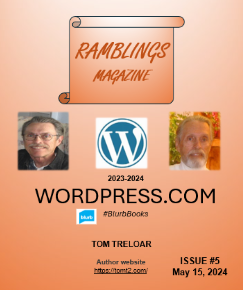
Ramblings Magazine Issue #5 Podcast
Ramblings Magazine Issue #5 PDF file
Hello Ramblings Magazine reader! Welcome!
This is a podcast of the fifth issue of Ramblings Magazine.
The Headings are:
Memories of Faith.
Comments on Christmas and Holidays.
What’s Next?
Cars in My Life.
A Good Leader.
No Dream Job for Me.
I Was Named After?
I Don’t Have a Pet.
Life is Fun.
Something I Missed.
Decision.
The Lottery and Me.
Complaints, Complaints, Complaints.
Heights.
Vintage Computer.
Cleaning Out Files.
I Avoid the Kitchen.
“Quiet time” generally refers to a period set aside for personal reflection, meditation, or reconciling. This can help in reducing stress, enhancing focus, and promoting mental clarity. Do you have a specific practice or routine for your quiet time? I do.
When I was working, I didn’t take much time for “quiet time”. My life was active with making money, raising 2 sons, marriage and many activities one has in this typical American life. Since I have been retired, I have the luxury of allocating time for some “quiet time”. It is well worth it to take some time for yourself. Now I make it a point to spend some “quiet time” every day. It may be before I go to sleep or when I wake in the morning. Sometimes it is in the middle of the day.
Individuals might set personal quiet times for reading, practicing mindfulness, or any activity that requires peace and quiet for personal enjoyment or growth. The concept of quiet time emphasizes the benefits of silence or minimal noise, which can enhance well-being, productivity, and focus. It’s a recognition of the value of tranquility in a typically noisy world.
One may ask, what do you think about in your “quiet time”? I let my mind answer the question. Whatever comes to mind is the subject for this moment of “quiet time”. It may be thoughts about future events on this earth or time after the journey of life. I have many years to pick a subject. I enjoy reminiscing about past parts of my life. How could I have done better? Or what did I learn from that experience and what could I have done better with the situation? I have also had paranormal experiences in my life, and I think about them many times.
Many times, my “quiet time” is spent on my blogging and writing. What do I write about and how can I craft the project. This subject came from one of my “quiet time” periods. Some are good subjects and others bomb.
I reminisce about events in my life. In my over eighty years of experience, I have seen and enjoyed many people, places, and things. Twenty-six trips and vacations under my belt. Two marriages and military time with forty-five years of employment history gives me many subjects for my “quiet time”.
I have had five paranormal experiences in my life. The experiences occupy many “quiet time” sessions. I was going to shortly cover them in this blog and discovered that these experiences would have made this post way too long and off topic. However, it did give me another prompt for another time.
I am over eighty and I know that my time on earth is near being over. “Quiet time” periods cover thinking about this fact. Yes, I am comfortable with this, and I do strongly believe that there is time after life on this earth. I remember the peace my grandmother had when she was on her deathbed and the peace, total peace. I experienced during my near-death event February 7, 2023.
“Quiet time” is my time. It helps my mental health and come to the purpose of time on this earth. Finally, I am glad I discovered “quiet time” maybe it will help you like it helped me.

My mother’s heritage is of German descent. My father’s heritage is of English descent. If their families did not immigrate to America, I would not be here. My mother was born in Minnesota and her mother was from Bavaria Germany. My dad was born in Iowa and his roots trace back to England, Scotland areas. They met in Colorado, married and seven years later my time on earth began. This is an abbreviated version of my parents’ story.
My mother’s mother immigrated to America sometime in 1890. All I have heard was that she was seven years old at that time and she came from the Bavaria Germany area. I never heard who she came with or how she ended up in Minnesota. During that time, I read somewhere that many children were sold to couples that were going to America those days so that child could have a better life than what was going in Germany at that time. I will never know the true facts on this history. My DNA tests show that 42% of my heritage is of German Descent.
My father’s heritage is from England and the Scotland area. My dad had an uncle that traced their heritage to Cornwall England back to 1532. That area apparently had tin mines and as the need for tin diminished and many started to immigrate to greener pastures. Many moved to Australia and America. My dad’s family migrated to America before the Civil War and sometime ended up in Iowa as farmers. My DNA shows that 49% of my heritage is of English descent.
The remaining 8% DNA shows Scandanavian, Norway, Sweden Area heritage or Viking history.
With that, I am most interested in my grandma’s history. How did she get to America and who did she come with? What part of Bavaria did she come from? Also, where did the Viking heritage come from? Were my relatives’ victims of the Vikings when they were attacking and pillaging England? I doubt I will ever know anything about this history.
I am proud that my families were able to live and suffer the adversities of immigrating to another country and start a new life that is the base of the life I have been very fortunate to live. This is the last frontier. If things go bad, there is not a wild frontier in the world. It will be up to the ones living here to fix the country.
A Trip Down Memory Lane, podcast
This morning Dee and I went down memory lane. The Denver & Intermountain Interurban Car No. 25 Association had an open house and had trips on a restored streetcar from back in the early nineteen hundreds. Since both of us remember riding the streetcars in our young years this brought back a lot of happy memories. Seeing the no spitting sign brought a good laugh and the advertising above the seats. It is just amazing how technology has progressed in the last hundred years. We remember the trolley cars going around the corner and the electric cable jumping the power line, and the operator had to get out and put it back in place so the trolley could continue. We remember party lines where you had to listen for your ring before you answered the phone. Was it one ring, two rings, three rings? No privacy there. You could pick up the line and listen to your other party’s conversation.
Also, the rotary dial phone. One time a granddaughter wanted to make a call, and she was told to go use the kitchen phone. This was our last rotary dial phone. She said, “Grandma, I don’t know how to use this phone.” We got a good laugh out of that. It was a nice enjoyable excursion and the weather was perfect. Most of the riders were people of our age. Many enjoy going down memory lane. One thing they cannot take away from you is your memories and adventures happening in your life. On August 6th of this year, I posted Streetcars in Denver Here is the link for this blog https://tomt2.com/2024/08/06/streetcars-in-denver/
Hello, this is TomT2.0. I have wondered why beards have become so popular. Therefore, I went to the local the AI for some comments. This is what AI came up with.
Ah, the great beard renaissance of the 21st century! Here’s why humanity has decided to embrace the facial fur with such fervor:
So, why are beards popular? It’s a mix of fashion, rebellion, science, and a dash of wanting to look like you could survive a zombie apocalypse. But remember, while beards might be in vogue now, give it time, and we might all be back to smooth faces, wondering what the fuss was about. Human trends, much like beards, are cyclical and often, delightfully unpredictable.
In conclusion, my blogging offers audio or reading, your decision. Have a nice day. Contact me at mail@tomt2.com.

This is really stretching my memory. I was somewhere under ten years old. The time was before 1950. Streetcars were stopped in 1950. However, I remember riding streetcars in Denver. Those yellow painted wooden streetcars that would lumber down the middle of the street and many times when going around the corner the electrical power source would disengage from the main line and the streetcar driver would be required to disembark from the streetcar, go to the back and move the power line to the overhead line so that the streetcar could move on.
We lived just east of the Barnum area near First Ave and Federal Blvd. In those days Barnum was the place that Barnum and Bailey Circus stayed during the winter months. That is how Barnum was named. I don’t ever remember when the circus was staying there. Maybe I just don’t know what I was looking at. I do remember sometimes a religious revival would be in the area and you could see the large canvas tent from the road. Maybe they rented the tent from the circus for the revival. I was under ten years old; I am lucky I remembered the canvas tents and revival. Recently, I heard that Barnum bought the land, but they never stayed there during the winter.
I do remember going downtown with my mother on the streetcar. There was a route that went to the Barnum area from downtown Denver. This was before checkbooks and all the conveniences we have now. Once a month my mother would take the streetcar downtown to pay all the bills. They were paid in cash and a receipt was vitally important in those days. If you could not generate a receipt, you had no proof of payment.
We would catch the streetcar somewhere near Grove Street. This was the end of the line, and a large circle would be made, and the streetcar would start the return trip to downtown Denver. If I remember correctly it would go for a period on Grove and then follow the gulley near 14th Avenue to downtown Denver. For a period of time, I believe it went east on Colfax Avenue. The route ended at “The Loop”. This was near 15th or 16th and Blake St. Many of the routes ended up there and would then turn around and take the designated route they were assigned. At the Loop there was a flower shop, meat market and other ones I don’t remember.
We would start walking up 16th Street and stop at American Furniture to make a payment on the furniture. I don’t know whether Jake Jabs was involved in American Furniture at that time, or he came at a later date. Following that we stopped at Industrial Federal Savings to make the payment on the house. My parents had a house built in 1941 and paid $5400.00 for that house. It is hard to imagine paying that for a house knowing what the prices of a house are now.
Next was Mountain Bell to pay for that new modern convenience the telephone. Everyone had a party line in those days. It was either two parties or four parties. We had a two-party line. At least with a two-party line we did not have to listen for different rings. How spoiled we are these days.
Public Service was the next stop. Remember Reddy Kilowatt? There he was in the showroom, waiting to collect your money for the gas and lite bill. I remember this building at night. They had lights embedded in the outside walls and they would be on at night. Reddy Kilowatt was ready to sell you all the electricity you needed.
It was getting near lunch time and our mother would treat us to lunch at Woolworth’s at sixteenth and Champa St. That place would be jammed packed for lunch. Many times, we had to wait for a seat to eat. If we were really good, we would get a small bag of Cashew nuts to take home with us. To this day I still like Cashew nuts. Woolworth’s is gone. W.T. Grants and Neisner’s are gone. Denver Dry Goods Company has disappeared. Many names I grew up with have just disappeared.
After lunch we would walk back to The Loop and get on that old wooden yellow painted streetcar and return to the Barnum area. What do I distinctly remember about the trips to downtown Denver on those slow lumbering noisy streetcars? I remember the bell. I can still hear the bell in my head. Ding! Ding!

As I reflect on my life, I have concluded that I have been so blessed. Compared to millions of others my life has been easy.
I was born into a loving family. My parents loved me and protected, fed, and taught me in my young years. I fell on a broken bottle and seriously cut my arm from the wrist to the elbow. It was a blessing that the main artery was not severed. If it was I more than likely would have bled out at that young age.
I elected to not to continue on to college after high school when many said without a college degree you will not experience the American dream. I have been blessed with a comfortable financially stable life. I do not have millions, but I have more than enough to sustain the American dream.
I was drafted into the army during the Vietnam era. I was blessed to spend my enlistment in Germany whereas the seven I was drafted with went to Vietnam. I did not have to suffer the pain and violence of armed conflict.
I became married and the blessing of two great children was generated from this relationship. Unfortunately, one must experience hurt and pain in parts of their lives. This relationship came to an end after eleven years. However, we are now able to talk to each other. The hurt and anger has been shelved and that is another blessing.
I was blessed with another loving relationship, and this brought me four stepchildren which I truly love their mother and her children. We are still together and enjoying and spending our final days together. Trust and allowing each other to be themselves is a gift and a blessing to experience.
A little over a year ago I experienced a life-threatening medical issue. There was a point where thought I was taking my last breath. I thought, “Here I am Lord!” I believe, for a short period of time I had a preview of time after death. I experienced such peace during that time, it was unexplainable. This was a time I will never forget. I am ready to experience this peace again.
In conclusion, as you can see that I have experienced more blessings than hurt and pain. I thank the Lord many times for the blessings I have received. I am just a mere mortal, but I firmly believe that time after death is going to surprise everyone.

This was not a job but is what I did to earn some extra money. During the summer when I was in middle school, I caught and sold nightcrawlers for the local sporting goods store. The owner told me he would take all I could catch. He paid me a buck a hundred and then sold it for two bucks. I would drop off the nightcrawlers on Thursday and the anglers would buy them for the weekend. I would average about a thousand a week and that was ten bucks a week. The only expense I had was flashlight batteries. If I remember correctly, I would earn about two to three hundred dollars for the summer. That was a lot of money in the fifties.
My next job was parttime at the public library while going to high school. I was a library page, which is code for a do whatever was necessary. The most interesting job was running the elevator on Saturdays. The elevator was automatic, but the crowds were large, and they overwhelmed the automatic system. Another job was they had a basement and sub-basement where books were stored. They would receive an order and they had pages in the basement where they would retrieve the books and put them on a lift that carried them up to the upper floors.
After graduating I started working for a government contractor that was building the Titan I ICBM for the government. I was a teletype operator in the purchasing department. Unfortunately, the job was on the swing shift. So much for my night life.
Three and a half years later I received the letter stating, “your friends and neighbors have selected you to become a member of the United States military.” For the next two years I was in the army. I was fortunate enough to go to Germany instead of Viet Nam. I then had two years of active reserve and then two years of inactive reserve. Then my military obligation was over.
After my two years of active duty, I returned to the aerospace contractor because there was a law that they had to hire me back since returning from military service. A year later I was laid off. They just hired me back to fulfill their legal obligation to have a job for me after military service.
I then started working for a large electronics manufacturer in the consumer electronics industry. First, I was an assistant buyer, then a buyer and then became a department manager. This career lasted for over twenty years and was the highest paying position in my working period. After a purchase of the company a year later the company buyer decided to close thirteen distribution warehouses across the nation and here, I was forty-six years of age and without a job. During that time the unemployment rate was eight percent. Try to tell me there is not age discrimination happening.
Working in part time and temporary positions for four years I finally get a full-time job in a high-tech position where lasers were used to cut close tolerance components used in the solid-state electronics field. This was a field that was totally new to me. I started as a temp, and it worked into a full-time position. Tell me a positive attitude and hard work is not the way to go. This continued for thirteen years and then I decided it was time to retire and have been retired now over fifteen years. Now, “Every Day is Saturday!“
After retiring I decided to give writing a try and this is where I am now. I have posted over two hundred articles on WordPress and having fun doing it. Most of my articles are about experiences in my life. I am not doing this for money, I am just doing it because I enjoy reminiscing and sharing events in my life.
https://tomt2.com/ Stop by and make me feel good. I like to see a lot of viewing numbers, likes, and comments.
Today, the one day in the year that we remember the ones who have fallen for the freedoms and life we enjoy every day of the year. They are the ones that stepped up and fought for this country and made the final sacrifice. So, in your busy schedule of enjoying the freedoms and comfort, take a moment to remember the ones who gave you this gift of freedom and security.

Everyone has stuff. Many have lots of stuff. Others have more stuff than they need. You get attached to a new car or new home. Small mementos from someone you are attached to may mean a lot, but they are just stuff. This world is full of stuff, and many are necessities for a comfortable life. Money just buys stuff but that does not guarantee happiness. I have no material possession that I want to put in my coffin when I pass on.
What I do value is my memories played out in my living days. I value the family and friends in my life and all the wonderful memories that they were a part of. Memories of grandma, my parents, my sons, my spouses, my stepchildren, and everyone who has entered into my life is what I cherish. Maybe they could put a thumb drive in my coffin with all of these cherished memories.
I have all kinds of collections. Do they have any monetary value? Not much. My collections are items I have collected over my life. I always think, “can I use this at some later point?” With that in mind I started collecting.
My first collection is my nut a bolt collection. Since I have been a homeowner since the early seventies I have done many projects around the home. You always don’t have the correct nail, bolt, screw, so you trot off to Home Depot and get what you need. You always end up with leftovers. So, I started collecting them. I also had projects that I recycled. I removed every nut, bolt, screw, washer, nail, that I could save. My collection has expanded to five- or six-gallon containers. Bolts in one container, nuts in another and so forth. This collection has saved me many times when I needed a couple of bolts and nuts to repair or finish a project.
The next collection is coins and paper money throughout my life. I have silver dollars, Indian head pennies, buffalo nickels, old quarters, silver certificates of paper money. I also have a stack about an inch high of two-dollar bills. Are they valuable? I don’t have a clue. I have just been collecting them through my life. I also have some World War II savings bonds my parents took out for me. Sure, they could be cashed in, but the paper bond and the age of them is worth more to me than the monetary cash in value.
Third collection is photos. I have photos my parents have accumulated over the years and the photos I have also collected over the years. Many black and white photos and color with my dad’s collection of slides. The last time I looked at the slides they are starting to discolor and fade. I don’t know how long they will last. Digital photography came into existence, and I don’t have a clue how many thousands of photos I have. I have the problem of finding a photo. I never bothered to catalog them. Therefore, I must use the hunt and search method.
Another collection is my rambling writings about my life and experiences. This collection is the most valuable to me. Whether it is valuable to anybody else is up for debate. WordPress contains a large portion of these ramblings. https://tomt2.com/ I have a collection of all the articles that were printed in the Rocky Mountain News insert of YourHub.com. During that time, they published over seventy-five of my posts. This was the motivation to start writing stories and tales down.
My newest project is Ramblings Magazine https://tomt2.com/magazine I have had comments that I should write a book. I thought about it, but a book may take years to do so I thought a magazine would be better since I am in my senior years and my warranty ran out many years. ago.

I never thought much about a legacy until after my near-death experience in February of 2023. My Bloodclot (Podcast). After the event I started to reconcile my life and thought, “why was I given a second chance?” I must have some unfinished business to do before my journey is over. I am just a mere mortal. I do not jump over tall buildings or stop speeding bullets. All I have is over eighty years of life on this earth. Searching for the purpose of a second chance I have decided to write about events and experiences in my life. Last August I remembered I had a site on WordPress and became active in the site. Since then, I have posted many events. Is this the purpose for the second chance? Who knows for sure.
The legacy I want to leave behind is, He was a good man. He tried to do the right thing. He was fair and didn’t take advantage of his fellow man. His faith of God and life after death was strong.
I hope my two sons remember me as a good father who did what he thought was right and necessary so they can live a good and productive life.
I hope my spouses do not regret that the years they spent with me was good years together and do not regret the years together.
I hope my stepchildren do not regret that I came into their lives and can call me stepdad with pride.
I hope all the other people I have come in contact with can say, “he was a good man!”

I was born and raised in cold weather. The day I was born the weather was in the middle twenties. Denver metro has cold weather from October to March every year. In January there is usually a couple of episodes of below zero weather. That is when it is really cold.
When in grade school I remember walking to school, which was about ten blocks away, in cold snowy, blowing snowstorms. They didn’t have school bus service for public grade schools in those days. The cold and snow were just something you had to deal with. The coldest and most miserable was when I was in the army stationed in Nurenburg Germany in the winter of 1965. That was cold! Plus, you had to be out in the cold making sure the equipment was still operating.
I didn’t pay much attention to the weather until I started to become older. The older I get the more I think about cold weather. It has been over fifteen years since I have retired and now I do not like cold weather. No wonder older citizens move to a warmer climate when they get older.
BRRRRR!!!!!!

I have been a leader and a follower. In my growing years I was a follower. You learn to lead by following. Throughout my growing years I was never a head boy or the leader of a school club. It was easier to follow in army period than lead.
After army life I decided it is time for me to move forward in a private industry. I became a team lead and worked my way up to swing shift supervisor. Two or three years later I became a department manager for a large electronic manufacturer. I held that position for over twenty years. I think that could be classified as a leader.
During that time, I hired and fired for a department of over fifteen employees. We had office workers, warehouse personnel, delivery drivers, and outside salespeople. There was also a building. I had to get the contractors to maintain the building, lease delivery vans and have a solution for any unforeseen problem. The only requirement from corporate office was to show five percent net profit every year.
It was an experience and sometimes very stressful. Unfortunately, when I was only forty-six the corporation closed 13 warehouses across the nation, and I became unemployed. I survived the transition from a high paying executive to a person that had a difficult time finding a second career.
Now it has been over eighteen years since I retired, and all things worked out well.

Since I am in my seasoned years, I think it is too late to think about an improvement I could make.
However, I can think about what I could have done differently. Throughout my life there was a telephone. In my younger years the phone was a four-party system, and each party had a special ring, so the parties knew whether to answer or not. It is amazing how this technology has progressed.

Throughout my years I always waited for the phone to ring and very seldom started a call. It is one of the many questions that I don’t know why. I still do not like to make phone calls. Therefore, I should have made more phone calls instead of just waiting for the phone to ring.
What gives me direction in my life? Everything that I have learned or experienced in my life.

From birth until now everything that I have learned or experienced in life gave me direction. I learned the necessities in life like going to the bathroom in the toilet instead of my diaper. My mother raised me as a Catholic and that gave me direction in my young years. Going to kindergarten and twelve more years of schooling added on to this direction of life.

Army service gave me a vast source of knowledge of how to deal with many different personalities and cultures. You meet hundreds of people from different parts of the country, and this was a great help in my later years dealing with people. This learning experience was very helpful in my journey of life and do not regret it one bit.
Employment in private industry, marriage, raising children, divorce and the heartaches and hurt involved in all of the above made me realize that the perfect life I have dreamed of may not come true. These events made me realize that my dreams may not be the purpose for my time on this planet.
After a period of time, I found a new direction with a new loving wife and her loving family. This told me there is light at the end of dark tunnels. Following this I retired and discovered that “Every day is Saturday.” and the stress of full-time employment is over. We also moved into the home of my dream. These events also gave me a direction in life.
A little over a year ago I was standing in front of deaths door and Dr. Death was holding the door open. I survived and as my wife says, “your room was not ready yet.” Again, another life experience has changed my direction in life. Life is not over and according to statistics the survival rate of my illness was three to five percent.
In conclusion, many events in my life and learning experiences has changed my life. I believe the purpose in life is to learn, and one should learn as much as then can in this short visit on planet of earth.
When I was Young the exciting thing to do during the summer school vacation was to sleep outside between the houses or in the back yard. Two or three of the neighborhood kids would have a campout. It was spooky and scary staying outside with no parents nearby. Of course, this was before your parents had to be concerned about rampant crime and many things could be done without that fear.
My next camping experience was after I started work full time and some co-workers were campers and they would invite me to go with them to camp up in the mountains. Fishing and camping over the weekend. What an experience. I never did like sitting around the campfire though. It seemed like the smoke from the fire always followed me and my eyes would burn, and my clothes would retain that smell of smoke for a long period.
My next camping experience was during basic training. You received a shelter half and you had to find a buddy so the shelter half could be combined to make a pup tent. The army didn’t call it camping though, they had their own name, it was called bivouac. Then In Germany they had maneuvers and had these large tents that held eight or ten troops. I can’t remember what kind of tent they called them.
My final tale was after I was married and had two sons. We had friends that had a van, and I became enthused about a camping van. I bought a delivery van from the company I worked for and converted it to a camping van. The kids would sleep outside in a tent and the adults slept in the van. It was a fun time of my life. Unfortunately, I became divorced, and the budget could not afford a van and camping.
After my life became more stabilized, we occasionally went camping. I would rent a RV for the weekend or the week. It was fun, but I did not enjoy driving the wide RV and the length of the RV. I learned to take a tranquilizer before I started the trip. It was fun and enjoyable though and it gave me many good memories.
My camping days are over now.
I think of the past more than the future. I am in my senior years and have over seventy-five years of memories, experiences, and good times. I am sure this is obvious in my articles I post. If it wasn’t for my past, I would have nothing to write about.
I am just a mere mortal. I don’t jump over tall buildings or stop speeding bullets. I have not done or accomplished anything spectacular in my life. I love my country and I am experiencing the American dream. I am praying that the American dream continues for many generations to come. I have been retired for over fifteen years and my American dream is close to being over. If you have read previous postings, you see that most are about memories or past experiences.
Friends and relatives have said I should print out my articles so they would not be lost. I said, “that is the purpose of TomT2.0 on WordPress.” However, that did make me think and that is when I came up with this Ramblings Magazine idea. Where this ends up only time will tell. I started with the WordPress postings and the next resource will be articles from a writing group I was a member in and then articles from Yourhub.com published in the Rocky Mountain Newspaper that was closed around 2012. I estimate that I have enough articles for over fifteen issues. What happens after that who knows?
Therefore, if the people who said that they would be interested in having a printed copy they have the facilities to order a copy of the magazine and it will be mailed to them. Talk is cheap and will see how many put down money for a printed copy.
https://www.blurb.com/b/11951453-ramblings-of-tom-treloar
As I reconcile my life, I have come to the conclusion that my biggest regret is that I could have been friendlier than what I was and kept in touch with friends throughout my life.
In my young years I was scared. Life scared me. I was afraid to try things and go places. The first day of kindergarten was traumatic. All those strange kids and a new environment really scared me. For safety reasons my mother walked me to school and would be waiting for me when school was out. Telling me to “don’t talk to strangers” didn’t help me either. I survived and went to junior high and high school next. During that time, I made many friends and did what was normal for the period. Unfortunately, high school was a difficult time in my life. I guess it was the hormonal change and just the period of growing up. But, during that time I was angry and mad. I was mad at myself, my parents and everyone around me. I do not know why. I graduated from high school, and I never attended one high school reunion. I never kept track of any high school friends.
On to full time employment and a period of army time and making friends. On to married life and raising children, making more friends. Life continues and retirement happens and a move to a new home. More friends.
I have had many friends throughout my life. However, my biggest regret is I never kept in touch with the friends. Once a period of life is over, I would lose contact with the friends. My wife Dee has kept contact with friends throughout her life. If fact she is having lunch with three from her grade school tomorrow.
Therefore, my biggest regret is that I never kept in contact with friends out of my past and I could have been friendlier than what I was.