history

The Day That Changed America

December 7, 1941 was the day of the Japanese attack on Pearl Harbor, a surprise strike that killed over 2,400 Americans and propelled the United States into World War II. It is remembered as “a date which will live in infamy,” marking a turning point in global history.

December 7, 1941 remains etched in American memory not only as a devastating military defeat but also as the moment the nation united against a global threat that would require the collective effort of its citizens. The attack, which came without warning, claimed the lives of thousands and left a deep scar on the American psyche, leading to an outpouring of patriotism and resolve. This pivotal event transformed the U.S. into a central force in World War II, catalyzing a military buildup and a surge of enlistment that would see millions of Americans take up arms. The impact of this day reshaped the course of the 20th century, not only solidifying the United States’ role on the world stage but also serving as a catalyst for significant social changes, including shifts in gender roles as women entered the workforce in unprecedented numbers in support of the war effort. The legacy of December 7th is thus not only a somber reminder of loss but also a testament to resilience and unity in the face of adversity.

The Attack on Pearl Harbor

  • Date & Location: Sunday morning, December 7, 1941, at Pearl Harbor, Hawaii.
  • Attackers: The Imperial Japanese Navy launched 353 aircraft from six carriers in two waves.
  • Targets: U.S. battleships, cruisers, destroyers, and airfields.
  • Damage:
    • 8 battleships were damaged, with the USS Arizona and USS Oklahoma destroyed.
    • Nearly 20 naval vessels were sunk or heavily damaged.
    • Over 300 aircraft were destroyed or disabled.
  • Casualties: More than 2,400 Americans killed and about 1,000 wounded.

Immediate Consequences

  • President Franklin D. Roosevelt addressed Congress the next day, calling December 7 “a date which will live in infamy.”
  • The U.S. declared war on Japan on December 8, 1941, officially entering World War II.
  • Germany and Italy soon declared war on the U.S., expanding the conflict into a truly global war.

Historical Significance

  • Turning Point: The attack ended American isolationism and mobilized the nation for total war.
  • Symbol of Sacrifice: The wreck of the USS Arizona remains a memorial site, honoring those who died.
  • Legacy: Pearl Harbor is remembered annually, with ceremonies across the U.S. to honor the fallen.

We can never forget Pearl Harbor on December 7, 1941

Evolution of Black Friday

Black Friday began as a term for financial crisis in 1869 but evolved into the post‑Thanksgiving shopping frenzy we know today.

The first recorded use of “Black Friday” referred not to shopping, but to the U.S. gold market crash on September 24, 1869, when financiers Jay Gould and Jim Fisk attempted to corner the gold market, causing economic chaos.

Decades later, in the 1950s and 1960s, police in Philadelphia used “Black Friday” to describe the chaotic crowds and traffic that flooded the city the day after Thanksgiving, as shoppers and tourists arrived for the Army–Navy football game.

Retailers disliked the negative connotation, and some tried to rebrand it as “Big Friday.” However, the name stuck.

By the 1980s, marketers reshaped the meaning: “Black Friday” came to symbolize the point when stores moved from operating “in the red” (losses) to “in the black” (profits) thanks to holiday shopping.

This shift transformed the day into a national shopping tradition, with retailers offering steep discounts to kick off the holiday season.

While originally American, Black Friday has spread worldwide. Countries like now observe it, often adapting the concept to local culture.

In Mexico, for example, a similar event called “El Buen Fin” (“The Good Weekend”) takes place.

The rise of online shopping brought new traditions: Cyber Monday (launched in 2005) and Small Business Saturday.

Today, Black Friday is less about one day of discounts and more about extended sales events, often starting weeks before Thanksgiving.

 In conclusion, Black Friday’s journey runs from a 19th‑century financial disaster to Philadelphia’s traffic nightmare, to a global shopping phenomenon that now blends in‑store chaos with digital deals.

Thanksgiving Day

Thanksgiving is more than turkey and pie—it’s a day rooted in gratitude, history, and togetherness.

Every year on the fourth Thursday of November, families across the United States gather to celebrate Thanksgiving. While many picture the famous 1621 feast between the Pilgrims and the Wampanoag tribe, historians remind us that thanksgiving observances existed long before and after that moment. Early colonists, Indigenous peoples, and even communities in Europe held harvest festivals to honor abundance and survival. Over time, these traditions evolved into the national holiday we know today.

The modern Thanksgiving was officially proclaimed by President Abraham Lincoln in 1863, during the Civil War, as a way to unite a divided nation. Since then, it has grown into a holiday that blends solemn reflection with joyful celebration.

The centerpiece of Thanksgiving is the meal: roast turkey, stuffing, cranberry sauce, and pumpkin pie. Yet food is only part of the story. Families often watch football, volunteer at shelters, or tune in to the Macy’s Thanksgiving Day Parade, a tradition that began in 1924 with costumed employees and live animals, later evolving into the iconic balloon-filled spectacle.

At its heart, Thanksgiving is about gratitude—pausing to appreciate blessings, both big and small. It’s also a time to acknowledge the complex history behind the holiday. While the Plymouth story is often romanticized, it’s important to remember the diverse communities and traditions that shaped this day.

Today, Thanksgiving invites us to slow down, share a meal, and reflect on what truly matters: family, community, and thankfulness. Whether through laughter around the table, a quiet moment of prayer, or acts of kindness, the spirit of Thanksgiving continues to remind us that gratitude is timeless.

Veterans Day.

Audio Podcast 3 minutes.

Celebrated this year on Tuesday, November 11, this holiday honors the significant contributions and sacrifices made by veterans. It is a full holiday for federal offices, banks, and many businesses, resulting in closures that allow individuals to reflect on the importance of service and sacrifice. On this day, no mail delivery occurs, providing a moment of pause for the nation to appreciate the freedoms we enjoy, and various events may be held throughout communities to commemorate and celebrate the bravery of those who have served in the armed forces.

Originally called Armistice Day, proclaimed in 1919 by President Woodrow Wilson to mark the end of World War I on the 11th hour of the 11th day of the 11th month, this significant day was intended to honor the bravery and sacrifices of those who fought in this monumental conflict. Over the years, as the nation recognized the myriad contributions of all its military veterans, it became clear that a broader celebration was necessary to reflect the valor demonstrated throughout various conflicts. This led to its renaming to Veterans Day in 1954 by President Dwight D. Eisenhower, aimed at honoring veterans of all wars, allowing Americans to pay tribute not only to those who served in World War I but also to honor the service and sacrifices of past and current military personnel from every branch of the armed forces. This day serves as a poignant reminder of the cost of freedom and the importance of expressing gratitude to those who have dedicated their lives to serving the nation.

Veterans Day honors all veterans who have served in the military, recognizing their sacrifices and commitment to defending our freedoms; in contrast, Memorial Day, celebrated on the last Monday in May, specifically honors those brave men and women who gave their lives in service to our country, remembering their ultimate sacrifice and the impact they made on our nation’s history, as families and communities gather to pay their respects and express gratitude for the freedoms we enjoy today.

Thank a veteran personally. Being a veteran, I know how much a personal interaction means, as it fosters a sense of connection and appreciation that can sometimes feel absent in the hustle and bustle of everyday life. Taking the time to express gratitude through a simple thank-you or engaging in a heartfelt conversation can have a profound impact. It not only honors their sacrifices but also reinforces their sense of belonging to a community that values their service. Your acknowledgment can uplift their spirits and show them that their contributions are recognized and valued.

Fly the U.S. flag proudly, representing the values and ideals that our nation stands for. It serves as a symbol of the sacrifices made by countless individuals who fought for our freedom and democracy. Whether displayed at homes, schools, or public buildings, the flag reminds us of our responsibility to uphold the principles of liberty and justice for all, uniting us in our shared identity as Americans.

The Night Airwaves Changed Forever

AUDIO PODCAST 4 1/2 minutes

November 3, 1956. 7:30 p.m. Eastern Time. A smooth, velvet voice glides through millions of living rooms across America. A Black man in a sharp suit, seated at a grand piano, smiles into the camera and says, “Good evening, ladies and gentlemen. Welcome to The Nat King Cole Show.”

For fifteen minutes every week, the world paused. It wasn’t just a variety show. It was a revolution in prime time. A Voice That Crossed Color Lines. By 1956, Nat King Cole was already a household name. His 1940s hits “Straighten Up and Fly Right”,” The Christmas Song”, “Mona Lisa” had sold millions. He was the first African American artist to top the Billboard charts. His voice was in jukeboxes, on radios, in living rooms from Harlem to Hollywood. But television? That was white space. No Black performer had ever hosted a national network TV series. The closest had been guest spots brief, polite, and always on someone else’s show.

Then came NBC. The Show That Shouldn’t Have Worked. The Nat King Cole Show was simple: Nat at the piano. Guest stars. A small orchestra. No laugh track. No gimmicks. Just music. Just class. The guests were legendary: Ella Fitzgerald trading scat lines with Nat Tony Bennett and Pearl Bailey, Harry Belafonte. Even Frank Sinatra dropped by. White stars, black stars together, on equal footing. And America watched. The Ratings Were Great. The Sponsors Were Not. Here’s the cruel twist. The show was a hit. Critics loved it. Viewers tuned in. But no national sponsor would touch it. Ad agencies feared backlash from Southern affiliates. One executive reportedly said: “We can’t sell toothpaste with a Negro on the screen.” Local sponsors in the North supported it. But without national backing, NBC couldn’t afford to keep it. The End Came Quietly After 64 episodes, Nat King Cole canceled his own show on July 27, 1957. He didn’t rage. He didn’t protest. He just said: “Madison Avenue is afraid of the dark.” That line became legend.

 A Door Cracked Open the Nat King Cole Show lasted only nine months. But it broke the seal. Within a decade: Diahann Carroll starred in Julia (1968) first Black woman in a lead TV role. Bill Cosby co-starred in I Spy (1965) — first Black actor in a dramatic lead. Flip Wilson got his own variety show (1970) and it topped the ratings. None of that would have happened without Nat.  

The Man Behind the Milestone Nat King Cole wasn’t an activist. He didn’t march. He didn’t shout. He just showed up. Sang beautifully. Smiled warmly. And let excellence do the talking. In 1956, that was radical. Today Clips survive on YouTube. Search: Nat King Cole Show 1956” You’ll see him sing “When I Fall in Love” with a smile that could melt ice. You’ll see Ella and Nat riff like old friends. You’ll see America before it was ready.  Legacy in One Line. He didn’t demand a seat at the table. He built the table. And then he sang at it. November 3, 1956, wasn’t just a premiere. It was a declaration. And now, the music still plays. Listen to “Unforgettable” tonight. Thank Nat King Cole. He opened the door and left it wide open.

Contrary to what some say, this country has come a long way in racial acceptance, showcasing significant progress in various aspects of society, including education, employment opportunities, and representation in politics. Over recent decades, we have witnessed a growing acknowledgment of diversity as a strength, leading to more inclusive policies and initiatives that promote understanding among different cultural groups. This evolution reflects a collective effort to confront and dismantle systemic racism, encouraging dialogue and fostering community engagements that embrace the rich variety of backgrounds that define our nation. Despite ongoing challenges, these strides toward acceptance signal a hopeful journey toward unity and equality for all.

One of my favorite songs is “Unforgettable” with Nat and Natalie. They made a terrific song into a priceless rendition. Click for the song

October 11 and Christopher Columbus

October 11 sometimes coincides with Columbus Day, a U.S. federal holiday marking Christopher Columbus’s arrival in the Americas in 1492. Although his landing is traditionally dated October 12, the holiday is observed on the second Monday of October, which occasionally falls on the 11th or days around it, like this year is the 13th.

Columbus Day started as a way to celebrate exploration and discovery, but its significance has changed over time. In the 19th century, Italian American communities introduced the holiday to honor their heritage and combat xenophobia, leading to its federal recognition in 1937. Columbus, an Italian navigator under the Spanish flag, arrived in the Bahamas, marking the start of European colonization in the Americas.

October 11 also encourages reflection, as many in recent years have questioned Columbus’s legacy and highlighted the effects of colonization on Indigenous peoples. This has brought about the emergence of Indigenous Peoples’ Day, celebrated in various states and cities as an alternative or addition to Columbus Day.

The Day Columbus discovered America, it marked not only the beginning of the history of America over 500 years ago, but also a pivotal moment that would forever change the course of global exploration and settlement. This discovery initiated a complex tapestry of cultural exchanges, conflicts, and alliances, laying the groundwork for what would eventually become a diverse nation. Since that monumental beginning, this country has come a long way, evolving through trials and tribulations, from the establishment of colonies and the struggle for independence to the growth of a powerful democracy that champions freedom and innovation.

A Long, Long Time Ago

Audio File

After church services during fellowship, somehow the subject of stuffed green peppers came up, igniting a lively conversation among our table of eight. This stirred my memory, prompting me to share a recollection from my army time. As I reminisced about those military times, it dawned on me, “I could write a blog about the subject,”


Here is my tale.

It is March 1964. I was recently drafted into the army, and I was in basic training, a whirlwind experience that was both daunting and transformative. I was only there maybe four or five days after I reported to basic, yet it felt like an eternity under the pressure of military life. For a supper meal, they served stuffed green peppers, a dish that would become a symbol of my early days in training. I remember maybe one or two hundred recruits in the basic training company, and everything was rush, rush and do it faster, as if time was a luxury we could not afford. The sergeants barked out commands, and we scrambled to obey, our minds racing to keep up. Also, much of the kitchen duties were done by the recruits that were assigned to KP duty that day, slicing vegetables, peeling potatoes, and washing dishes, trying to maintain a semblance of order amid the chaos.

There were six of us sitting at the table, our plates filled high with the fare provided for our supper, and we were gobbling down our meals in a frenzied race against time because we only had a short period to eat before they would inevitably yell, “Time’s Up!” The recruit next to me was shoveling food into his mouth with reckless abandon, his eyes darting around as if he were trying to savor each bite while also keeping an ear open for the dreaded announcement. Suddenly, he paused mid-chew, his face shifting from one of ravenous delight to horror as he pulled something unwelcome from his mouth, revealing a shocking revelation—a Band-Aid! It was a disturbing sight indeed, as it became clear that one of our fellow recruits from the KP area had been absent-mindedly stuffing green peppers, causing the Band-Aid covering a cut to become dislodged and somehow find its way into our meal. The moment quickly turned from one of unity in our shared dining experience to utter disbelief as the recruits sitting at the table not only saw but heard the revelation, prompting an instinctual response to get up and leave the mess hall in a hurried retreat. What a way to spoil an appetite! My mind raced with questions, wondering, “What am I getting into?” as I looked around at my companions, each of us contemplating the rather unpalatable reality of our situation and what more surprises awaited us in this new chapter of our lives.

One can just speculate that the KP recruit didn’t even realize that the band-aid slipped off his finger, or he knew about it and was afraid to say anything because he didn’t want to experience another shouting conversation with the drill sergeant, which was common in those days, especially during the rigorous training sessions where discipline was paramount. These shouting matches were not unusual; they served as reminders to the recruits of the high expectations placed upon them, often creating an atmosphere thick with tension and anxiety. Or another possibility is that he reported it, and they yelled and screamed at him and didn’t do anything about it, leaving him feeling even more powerless in a situation that already felt overwhelming. It is hard for me to imagine that they would toss out food for one to two hundred troops and start over just because of a missing band-aid, considering the logistical challenges involved in preparing meals for such a large group, coupled with the sheer amount of effort that went into food preparation. In a military environment where resourcefulness and efficiency are crucial, such an action would seem extravagant and illogical. The actual story will be never known, leaving us to ponder the multitude of factors that might have influenced the response to such a seemingly minor incident, yet one that could highlight deeper issues within the structure of military life.

I have other tales to share during my time in the military and someday share other stories that one does not hear often.

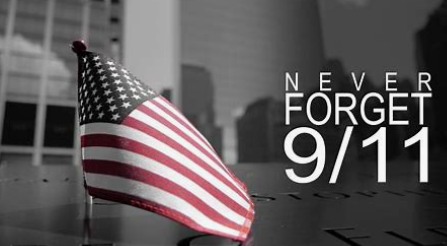
Never Forget September 11, 2001

Four commercial airplanes were hijacked by 19 terrorists. Two planes, American Airlines Flight 11 and United Airlines Flight 175, crashed into the North and South Towers of the World Trade Center in New York City, respectively. The South Tower collapsed at 9:59 AM, and the North Tower at 10:28 AM.

American Airlines Flight 77 crashed into the Pentagon in Arlington, Virginia, at 9:37 AM, causing partial structural damage.

United Airlines Flight 93 crashed into a field near Shanksville, Pennsylvania, at 10:03 AM after passengers and crew attempted to regain control from the hijackers. It is believed the target was either the U.S. Capitol or the White House.

Nearly 3,000 people were killed, including 2,753 at the World Trade Center, 184 at the Pentagon, and 40 on Flight 93. Victims included civilians, first responders, and military personnel. Thousands more were injured.

This was a major event in the history of the United States and must never be forgotten, as it significantly shaped the nation’s identity and future trajectory. The repercussions of this event resonated deeply within society, influencing political landscapes and cultural dynamics for generations to come. It serves as a reminder of the struggles faced by those who fought for justice and equality, highlighting the importance of collective memory in preserving the lessons learned through hardship and triumph. Understanding this pivotal moment encourages reflection on the ongoing journey toward unity and progress in our society.

The Multifaceted Concept of God in Human History

Audio Podcast Link


Many people believe in a god, a supreme being, or a deity. This belief shows our need to understand existence, the universe, and our role in it. To learn more, I asked AI for a definition of God, interested in its insights shaped by diverse cultural views. The response was intriguing, as it summarized not only the qualities of divinity but also how different societies think about this idea, showing both shared beliefs and differences through time and cultures.

The idea of God has shaped human history, culture, and individual lives for millennia, serving as a cornerstone of meaning, morality, and mystery. Across civilizations, God is understood in diverse ways—as a singular omnipotent being, a collection of deities, or an impersonal cosmic force that binds the universe together. This multifaceted concept transcends mere religion, influencing philosophy, art, science, and ethics, while remaining deeply personal and often divisive. The varying interpretations of God reflect the unique values and beliefs of different societies, illustrating how this divine notion fosters both unity and conflict among peoples. From the ancient rituals of worship to contemporary discussions on the nature of existence, the concept of God challenges individuals and communities to grapple with profound questions about life, purpose, and the moral framework that governs human behavior. The pursuit of understanding God can lead to a deeper exploration of spirituality, prompting many to seek connections with something greater than themselves, ultimately shaping the profound narratives that define cultures across the globe.

In monotheistic traditions like Christianity, Islam, and Judaism, God is typically envisioned as a singular, all-powerful creator who is deeply involved in the cosmos and human lives. In Christianity, God is the loving father, omnipresent and omniscient, guiding humanity through divine will and grace while embodying the principles of love, forgiveness, and redemption. The Bible portrays God as both transcendent and immanent, a being who not only crafted the universe yet remains intimately involved with creation, listening to prayers and responding to the cries of the faithful. Islam’s Allah, similarly, is the sole deity, merciful and just, whose will is absolute, as described in the Quran, which emphasizes His attributes of compassion, power, and wisdom. Additionally, Allah is seen as the ultimate judge, ensuring that justice prevails while offering repentance and mercy to those who seek it sincerely. Judaism’s Yahweh, revealed through the Torah, emphasizes a covenantal relationship with the chosen people, blending justice with compassion, guiding them throughout their history while encouraging ethical living and adherence to His laws. These faiths share a view of God as eternal, unchanging, and deeply concerned with human affairs, fostering a sense of purpose and direction in the lives of believers, reinforcing the importance of faith and community in the journey towards spiritual fulfillment.

Polytheistic traditions, such as Hinduism and ancient Greek religion, offer a different lens through which to examine the complexity of spirituality and divine representation. Hinduism’s vast pantheon includes deities like Brahma, Vishnu, and Shiva, each embodying unique aspects of the divine spectrum while ultimately pointing to Brahman, the infinite reality underlying existence. This intricate framework suggests a fluidity between the one and the many, where God is both plural and singular, allowing for a rich tapestry of worship and personal interpretation. Furthermore, the interplay between these deities illustrates the idea that the divine can manifest in numerous forms, each serving as a guide for followers on their spiritual journeys. Ancient Greeks, on the other hand, worshipped gods like Zeus and Athena, anthropomorphic figures imbued with distinct personalities and domains, reflecting a worldview where divinity mirrors human complexity. The myths surrounding these gods often detailed their interactions and conflicts, emphasizing the intricacies of ethical dilemmas and the human condition. In this way, both traditions highlight the multifaceted nature of the divine, as well as the varied ways in which cultures have sought to understand and relate to a higher power, demonstrating that the quest for meaning transcends time and geography.

Beyond organized religion, philosophical and spiritual perspectives broaden the concept further, inviting deeper exploration into the nature of existence and our understanding of the divine. Deism posits a God who creates but does not intervene, presenting a rational force behind the universe’s order, suggesting a clockmaker who sets the machinery of the cosmos in motion yet remains distant from its operations. Pantheism, as articulated by thinkers like Spinoza, equates God with nature itself, ultimately dissolving the boundary between creator and creation and encouraging a profound reverence for the natural world that surrounds us. This perspective fosters a sense of unity and interconnectedness amongst all living things, urging individuals to recognize the divine immanence present in every element of life. Meanwhile, agnosticism and atheism challenge traditional notions, questioning God’s existence or relevance while still engaging with the void such questions leave, prompting critical thinking and intellectual discourse on morality, purpose, and the human experience in a seemingly indifferent universe. These varied views illustrate the rich tapestry of beliefs that confront our quest for meaning beyond institutional dogma.

God’s role in human life extends beyond theology. Art—from Michelangelo’s Sistine Chapel to Sufi poetry—captures divine awe and intimacy, revealing the profound connection between spirituality and creativity that transcends cultural boundaries. The aesthetic expressions of faith often serve as a bridge, inviting individuals to explore the depths of their beliefs and the mysteries of existence. Moral systems, even in secular contexts, often trace their roots to divine commandments or cosmic principles, reflecting the innate human desire for order, justice, and meaning in a chaotic world. These ethical frameworks guide personal conduct and societal norms, showcasing how spirituality can influence our understanding of right and wrong. Yet, the concept of God also sparks conflict, from historical crusades to modern debates over faith’s place in public life, exposing the fragility of belief systems when challenged. These tensions highlight humanity’s struggle to reconcile the infinite with the finite, the known with the unknowable, prompting a continuous journey of exploration and dialogue that shapes both individual identities and the collective human experience.

Ultimately, God remains a mirror of human aspiration and fear—a symbol of hope, order, and purpose, but also of mystery and unanswerable questions. Whether seen as a personal savior, a cosmic force, or a human construct, God reflects our deepest desires to understand existence and navigate the complexities of our lives. Across cultures and eras, the quest to define God reveals as much about humanity as it does about divinity, inviting each generation to wrestle with the eternal, confront its own uncertainties, and seek meaning in a world that often feels chaotic. This exploration of the divine not only shapes individual belief systems but also weaves the intricate tapestry of society, influencing art, philosophy, and moral values. Consequently, the concept of God remains not just a theological inquiry, but a profound journey into the human condition itself, challenging us to ponder our place in the universe and our connection to one another.

Labor Day September 1st, 2025

Typically, Labor Day marks the unofficial end of summer, with people celebrating through parades, barbecues, and community events. Many businesses close, and it’s a major retail weekend with significant sales, rivaling Black Friday in some sectors. In 2025, expect widespread store discounts, especially on clothing, electronics, and home goods, with online and in-store deals starting as early as mid-August. Government offices, schools, and non-essential services like post offices and banks usually close, though some states may have partial operations.  

Labor Day in the United States is a federal holiday celebrated on the first Monday in September, which in 2025 will fall on September 1. It honors the contributions of workers to the nation’s economy and social fabric. Established in the late 19th century during the labor movement, it was first recognized as a federal holiday in 1894 under President Grover Cleveland, following significant labor strikes, notably the Pullman Strike. The holiday emerged as a way to acknowledge workers’ rights and the growing influence of labor unions.

Today, the holiday is more about leisure than activism, with 160 million Americans likely to travel or enjoy festivities. States like California and New York hold big parades, while others focus on local events or rallies for workers’ rights. What do you have planned for today?

The Sad Reality of City Life

AUDIO PODCAST

It’s sad that we do not feel safe in large cities. 

In the heart of bustling metropolises, where skyscrapers pierce the sky and the hum of life never ceases, a troubling sentiment has taken root: we no longer feel safe. Large cities, once celebrated as vibrant hubs of opportunity, culture, and connection, are increasingly shadowed by fear. This pervasive unease reflects deeper societal challenges that demand our attention and action. 

The sense of insecurity in urban centers stems from multiple sources. Rising crime rates, often sensationalized by media, paint cities as battlegrounds. According to recent data, violent crime in major U.S. cities like Chicago and New York has seen upticks in specific areas, with robbery and assault rates climbing in 2024. Though overall crime trends vary, high-profile incidents—shootings, subway attacks, or public theft—dominate headlines, amplifying public anxiety. These stories linger, shaping perceptions that every corner holds danger, even when statistics suggest otherwise. 

Beyond crime, the urban environment itself can feel hostile. Overcrowded streets, aggressive traffic, and the constant churn of strangers create a sense of anonymity that erodes trust. In smaller towns, familiarity breeds community; in cities, the sheer scale of human interaction can feel isolating. A 2023 survey by the Pew Research Center found that 60% of urban residents feel less connected to their neighbors than they did a decade ago. This disconnection fuels vulnerability—when no one knows your name, who will notice if something goes wrong? 

Economic disparity also plays a role. Cities showcase stark contrasts between wealth and poverty, with homelessness surging in places like Los Angeles and San Francisco. Encountering visible desperation daily can unsettle residents, fostering guilt, fear, or resentment. For many, the sight of encampments or panhandlers becomes a reminder of societal failures, making public spaces feel unpredictable and unsafe. 

Yet, this sadness over lost safety isn’t just about physical threats. It’s about the erosion of a social contract. Cities thrive when people trust the systems around them—police, transit, local government. But distrust in institutions is growing. Scandals, underfunded services, and polarized politics leave residents feeling unprotected. For instance, debates over policing—whether overfunded or underfunded—have left communities caught between calls for reform and demands for stronger enforcement, with no clear resolution. 

So, what can be done? Rebuilding safety requires a multifaceted approach. Community policing, focused on trust rather than confrontation, has shown promise in cities like Camden, New Jersey, where violent crime dropped 20% after reforms. Investing in mental health services and housing can address root causes of crime and homelessness. Urban design also matters—well-lit streets, green spaces, and community centers can foster connection and deter crime. Most importantly, residents must engage with one another. Neighborhood initiatives, like block parties or mutual aid groups, can rebuild the social fabric that makes cities feel like home. 

It’s heartbreaking that the very places designed for human connection now breed fear. Yet, cities remain humanity’s greatest experiment in coexistence. By addressing crime, inequality, and disconnection head-on, we can reclaim the safety and vibrancy that define urban life. The path forward lies in collective effort—because no city thrives when its people are afraid. 

Nikola Tesla: The Pioneer of AC Electrical Systems

Audio PODCAST

Nikola Tesla July 10 (1856–1943) was a Serbian American inventor, electrical engineer, and futurist, best known for his pioneering work in developing alternating current (AC) electrical systems, which became the standard for modern electricity transmission and distribution. His innovative contributions laid the groundwork for numerous technological advancements, shaping the way we harness and utilize electrical energy today. Tesla reportedly had an eidetic memory and spoke eight languages fluently, showcasing his exceptional intellectual capabilities and linguistic skills that allowed him to communicate and collaborate with a diverse range of people worldwide. Often seen as a visionary, Tesla was known for eccentric habits, like his aversion to touching hair and obsession with the number three, habits that highlighted his unique personality and unconventional thinking. He would often go to great lengths to avoid certain stimuli, believing that these quirks were essential to his creative process, further establishing his reputation as a brilliant yet enigmatic figure in the annals of science and technology.

Born on July 10, 1856, in Smiljan, Croatia. Died January 7, 1943, in New York City, USA. –

Studied engineering at the Austrian Polytechnic in Graz and briefly at the University of Prague, though he did not complete a degree. During his time at these esteemed institutions, he was exposed to a variety of innovative concepts and technologies that piqued his interest in the field. He engaged in numerous projects and collaborative efforts with fellow students, which helped him develop a strong foundational knowledge despite not finishing his formal education. His experiences in Graz and Prague allowed him to cultivate valuable skills and connections that would later influence his career trajectory, ultimately shaping his approach to engineering challenges throughout his life.

Tesla’s development of alternating current technology, including the AC motor and transformer, not only revolutionized electrical power systems but also paved the way for modern electrical engineering. His innovative work significantly enhanced the efficiency of power distribution, leading to the widespread adoption of AC over Thomas Edison’s direct current (DC) for power systems across cities and industries. Tesla initially worked briefly for Thomas Edison, where he was exposed to the nascent field of electrical energy, but parted ways due to fundamental disagreements regarding the advantages and viability of AC versus DC systems. Their rivalry, famously known as the “War of the Currents,” became a defining moment in the history of electricity, culminating in the eventual dominance of AC after its successful implementation at the 1893 World’s Columbian Exposition, where a spectacular display of electric lighting showcased the potential of Tesla’s inventions to a captivated audience, forever changing the way electricity would be harnessed and utilized around the globe.

Tesla explored wireless communication and power transmission, envisioning a groundbreaking global system for transmitting electricity without wires that would revolutionize the way energy is distributed and consumed. His ambitious Wardenclyffe Tower project aimed to achieve this transformative vision by utilizing the Earth’s natural conductive properties, allowing for the seamless transfer of electricity across vast distances. However, despite the immense potential of his ideas and the initial excitement surrounding the project, it was ultimately never completed due to various financial issues and challenges in securing the necessary funding. The dream of a world interconnected by wireless energy remains a testament to Tesla’s innovative spirit and unyielding quest to push the boundaries of science and technology, leaving a lasting legacy that continues to inspire future generations.

Tesla held over 300 patents, including innovative designs for turbines, fluorescent lighting, remote control, and early X-ray imaging, showcasing his remarkable versatility and creativity as an inventor. His groundbreaking work laid the foundation for modern electrical engineering and significantly advanced various fields of technology, influencing countless inventions and applications that we rely on today. The principles he developed have paved the way for the efficient generation and transmission of electricity, as well as revolutionizing how we utilize energy in our daily lives. Tesla’s legacy as a scientific pioneer continues to inspire future generations of engineers and inventors dedicated to exploring and expanding the horizons of technology.

Tesla lived modestly in his later years, often in hotels, and struggled financially despite his genius. His extraordinary intellect and pioneering contributions to electrical engineering, however, did not translate into financial success, as he frequently found himself at odds with the commercial aspects of his inventions. He focused on ambitious but unrealized projects, such as wireless energy transmission and the development of a global communication system, which captivated his imagination but remained incomplete due to a lack of funding and support. In addition to these challenges, Tesla suffered from mental health challenges that complicated his ability to connect with others and secure partnerships. He often battled feelings of isolation, as his visionary ideas were frequently regarded as eccentric or impractical by his contemporaries. These factors combined to overshadow his remarkable legacy, leaving him to navigate a world that failed to recognize his revolutionary contributions during his lifetime.

He is celebrated as a visionary and is not given enough credit for the development of electric products we so enjoy today, including the intricate devices that have revolutionized our daily lives, such as smartphones, laptops, and smart home technology. His innovative ideas and groundbreaking contributions have paved the way for modern conveniences that enhance communication, entertainment, and productivity. Moreover, his relentless pursuit of excellence and commitment to advancing electric innovation have sparked an entire industry focused on creating sustainable and efficient energy solutions, ultimately benefiting future generations.

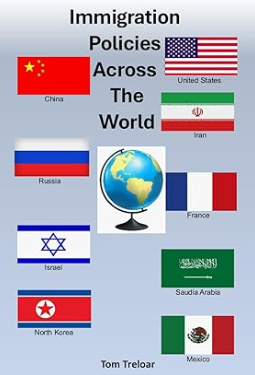
Immigration Policies Across the World

Paperback link to Amazon

Kindle link to Amazon

The U.S. immigration situation in 2025 is complicated and divisive, influenced by changing policies, border issues, and economic factors. Many were allowed to stay in the country while they wait for immigration hearings, which can take years because of court backlogs.
The immigration issue prompted me to take the problem seriously and explore it thoroughly by turning to various AI tools in my toolbox. I utilized Grok, Copilot, and Gemini for this purpose, each offering unique insights. I asked a common but crucial question across these platforms: “If I permanently wanted to immigrate to (country), what would I have to do? Additionally, do they have any assistance programs available for newcomers?” It’s important to note that there have been comments in various forums suggesting that different AI platforms may present biased perspectives and generate answers based on the leanings of the platform originators. This potential bias is precisely why I opted to consult multiple platforms; by doing so, I aimed to gather a more comprehensive view and ensure that I wasn’t missing out on any vital information that could facilitate my immigration journey.


Paperback USD $6.99

Kindle edition, Thru July 11 $0.00, $2.99 after

Independence Day

Independence Day: Celebrating the Fourth of July** Every July 4th, Americans celebrate Independence Day, a federal holiday that marks the adoption of the Declaration of Independence in 1776. This important document, mainly written by Thomas Jefferson, declared the 13 American colonies’ break from British rule, establishing the United States as an independent nation. The Fourth of July is a lively celebration of freedom, unity, and national pride.

The holiday is marked by festive traditions. Fireworks light up the night sky, representing the “bombs bursting in air” from the national anthem, “The Star-Spangled Banner.” Communities across the country host parades with marching bands, floats, and patriotic displays. Backyard barbecues and picnics bring families and friends together with classic American food like burgers, hot dogs, and apple pie. Red, white, and blue decorations decorate homes, streets, and public places, showing the nation’s colors.

Independence Day also invites reflection on the values of liberty and equality enshrined in the Declaration. While the holiday celebrates the birth of a nation, it’s essential to recognize that it is also a moment to honor the sacrifices of those who fought for freedom, justice, and the rights we often take for granted. This includes the brave men and women who sacrificed their lives on the battlefield and those who used their voices and actions to advocate for equality and human rights. As we gather with friends and family to enjoy the festivities, let us not only partake in the celebrations but also take time to consider the ongoing journey toward a more inclusive society where every individual, regardless of their background, can experience the true meaning of freedom. All Americans should remember this day, reflect on the lessons of our past, and acknowledge the freedoms and privileges we enjoy from this great country, striving to ensure that future generations inherit a nation that continues to uphold and expand these cherished ideals for all.

High Heels Through History: From Status to Style

Audio PODCAST

I have wondered about high heels for a long time. They look uncomfortable and didn’t know why women go through the discomfort. I went to AI and accumulated some history on the high heel.

High-heeled shoes for women have a rich history that spans centuries, evolving from practical footwear to a symbol of fashion, status, and femininity. Originally designed for functionality in the 16th century, they were embraced by aristocrats to elevate their height and showcase their wealth. As time progressed, high heels became a canvas for artistic expression, with styles ranging from elegant court shoes to flamboyant platforms that dominated the catwalks. The shift in their connotation reflects broader societal changes, as they went from being associated with the male aristocracy to becoming a staple in women’s fashion culture. Today, high-heeled shoes are celebrated for their ability to transform an outfit, empowering women while also sparking debates around comfort, health, and gender norms. Below is a concise overview of their development:

Origins (9th–16th Century)

  • Early Predecessors: Elevated footwear existed in ancient cultures, like the Greek kothorni (platform shoes for actors) and Persian riding boots with heels for men to stabilize in stirrups (10th century). These were not women’s high heels but set a precedent for raised footwear.
  • 15th Century Europe: Women wore chopines, platform shoes popular in Venice, often 7–30 cm high. These protected dresses from muddy streets, signified wealth (due to the need for servants to balance), and were worn by elite women. They weren’t true heels but influenced later designs.
  • Late 16th Century: Catherine de Medici, a trendsetter, is credited with popularizing heeled shoes in France around the 1560s. She wore 2-inch heels to appear taller and more authoritative, sparking interest in heels as fashionable women’s footwear.

17th–18th Century: Rise of the High Heel

  • 1600s: Heels became unisex in European aristocracy. Women’s heels, often 2–3 inches, were made of wood or leather, covered in silk or velvet, and adorned with embroidery. They symbolized status, as only the wealthy could afford impractical shoes.
  • 1660s–1700s: Louis XIV of France popularized red-heeled shoes for both genders, with women’s heels becoming slimmer and more curved. The “Louis heel” (a stacked, slightly curved heel) emerged, emphasizing elegance and femininity.
  • Late 18th Century: Post-French Revolution, heels fell out of favor due to associations with aristocracy. Flat shoes and simpler styles dominated as democratic ideals took hold.

19th Century: Revival and Refinement

  • Early 1800s: Heels remained low or absent, with ballet-style slippers in vogue. However, by the 1850s, heels re-emerged as women’s fashion embraced ornate styles.
  • 1860s: The invention of the sewing machine enabled mass production, making heels more accessible. Women’s heels, typically 1–2 inches, were blocky or slightly curved, paired with ankle boots or pumps.
  • Late 19th Century: The “spool heel” (narrow at the base, wider at the top) became popular, and heels grew to 3–4 inches. Victorian ideals of femininity tied heels to allure, though they were still modest compared to later designs.

20th Century: High Heels as Fashion Icons

  • 1900s–1920s: Heels became a staple of women’s fashion. The stiletto’s precursor, a slender 2–3-inch heel, appeared with pointed-toe pumps. Designers like André Perugia experimented with heel shapes, emphasizing elegance.
  • 1930s–1940s: Hollywood glamour boosted heels’ popularity. Platforms returned, and wedge heels (invented by Salvatore Ferragamo) offered stability. Wartime shortages led to creative materials like cork and wood. Heels ranged from 2–5 inches.
  • 1950s: The stiletto heel, a thin, 4–8-inch heel reinforced with metal, was perfected by Roger Vivier and popularized by stars like Marilyn Monroe. It became a symbol of femininity and sexuality, though it sparked debates about health and practicality.
  • 1960s–1970s: Fashion diversified. The 1960s saw chunky heels and platforms (up to 6 inches) alongside stilettos, reflecting youth culture. The 1970s embraced platforms and block heels, with disco culture amplifying bold, high styles.
  • 1980s–1990s: Power dressing brought back stilettos for professional women, often 3–5 inches, paired with sharp suits. Designers like Manolo Blahnik and Christian Louboutin (with his iconic red soles in 1992) elevated heels as luxury items. Platforms also resurged in the 1990s with “Spice Girls” chunky heels.

21st Century: Versatility and Debate

  • 2000s–2010s: Heels remained central to fashion, with stilettos, kitten heels (1–2 inches), and platforms all popular. Designers pushed extremes, like Alexander McQueen’s 10-inch “Armadillo” heels (2010). Comfort became a focus, with brands like Cole Haan integrating cushioning.
  • 2010s–2020s: Feminist critiques questioned heels as symbols of oppression, citing health issues (back pain, bunions) and workplace mandates. Some women embraced flats or sneakers, but heels persisted, with “block heels” and lower styles offering comfort. Sustainable materials and inclusive sizing also emerged.
  • Cultural Shifts: Red carpet events and influencers kept stilettos iconic, but casual fashion normalized mixing heels with jeans or athleisure. By 2025, heels are both celebrated for self-expression and scrutinized for practicality, with hybrid designs (e.g., sneaker-heels) gaining traction.

Key Themes

  • Status and Power: Heels historically signaled wealth and authority, later shifting to feminine allure.
  • Technology: Advances like metal-reinforced stilettos and mass production shaped accessibility and design.
  • Cultural Debates: Heels have been both empowering (enhancing confidence) and controversial (health concerns, gendered expectations).
  • Fashion Cycles: Heels oscillate between high and low, slender and chunky, reflecting broader trends.

I must admit artificial intelligence did the research on this topic, utilizing advanced algorithms and vast datasets to analyze and synthesize information efficiently and effectively, thereby producing insights that might have taken humans considerably more time to uncover, leading to a more thorough understanding of the subject matter at hand.

National Flip Flop Day June 20th

Audio PODCAST

National Flip Flop Day is celebrated annually in the United States to embrace the carefree spirit of summer and the iconic footwear known as flip-flops. Originally observed on the third Friday in June, the date was changed in 2023 to the Wednesday after Memorial Day to better align with the onset of warmer weather and the bustling activities of the summer season. This shift reflects a growing awareness of consumer habits, as many individuals eagerly anticipate the warmer days of summer, looking forward to beach outings, barbecues, and leisurely strolls. The date for 2025 was set for Wednesday, May 28, as it falls on the Wednesday after Memorial Day, following the updated schedule established by Tropical Smoothie Cafe in 2023 that encourages everyone to celebrate the joys of summer. The day serves not only as a reminder to don your favorite flip-flops but also as an occasion to gather with friends and family, sharing laughter and creating lasting memories. The AI I used did not know about the update, highlighting the fact that technology, while incredibly advanced, is not infallible and is continually evolving to keep up with the changes in our world.

Founded in 2007 by Tropical Smoothie Cafe to mark their 10th anniversary, celebrate summer, and show appreciation for their customers.

The term “flip-flop” comes from the slapping sound the sandals make when walking, an onomatopoeia used in American and British English since the 1960s. Flip-flops have ancient origins, with evidence of similar footwear in Ancient Egypt around 4,000 BC, made from materials like papyrus and palm leaves. They were also worn in ancient Greece, Rome, and Mesopotamia, showcasing their enduring nature across cultures and epochs. It is interesting to note that these early variants were often adorned with decorative elements, reflecting the wearer’s status and style. The design and function of flip-flops evolved over centuries, influenced by both social changes and advancements in materials. In addition, Japanese zori sandals, traditionally crafted from rice straw and tatami mats, influenced modern flip-flops in the U.S. after World War II, as returning soldiers brought back these unique styles, leading to their widespread popularity in American beach culture. Today, flip-flops are not only a staple of casual summer wear but also a symbol of relaxed, carefree living, enjoyed by people of all ages around the world.

Wear your favorite flip-flops and share photos on social media with #NationalFlipFlopDay to celebrate this fun and relaxed occasion. Take the time to shop for new flip-flops, including eco-friendly options from reputable brands like Rainbow or Hari Mari, which prioritize sustainability and style. To really embrace the spirit of the day, consider hosting flip-flop-themed events like lively beach parties, friendly flip-flop races, or engaging craft activities using old flip-flops for art projects that can be both fun and eco-conscious. If you find yourself far from a Tropical Smoothie Cafe, you can still indulge your taste buds by making or enjoying delicious smoothies at home using fresh fruits and ingredients, allowing everyone to gather and celebrate in comfort and relaxation.

I may be late, but I enjoyed learning about Flip Flop Day.

Celebrate National Splurge Today

Audio P0DCAST

National Splurge Day, celebrated annually on June 18th, encourages people to set aside their usual frugality and indulge in a little luxury, whether it’s a lavish meal, a spa day, or a significant shopping spree. Founded in 1994 by Adrienne Sioux Koopersmith, dubbed “America’s Premier Eventologist,” this holiday was created to offer a much-needed break from constant budgeting and to boost the economy through strategic spending that can stimulate local businesses. Koopersmith chose late June, post-tax season, when individuals might have extra cash on hand to treat themselves or their loved ones, creating an opportunity for joyful spending and the enjoyment of life’s pleasures. The day serves as a reminder of the importance of self-care and indulgence, inviting people to reflect on what they truly desire and encouraging a balance between saving and enjoying the fruits of one’s labor.

Splurging doesn’t mean reckless spending; it’s about enjoying something special without breaking the bank. For some, it might involve treating themselves to a fancy dinner at a celebrated restaurant, indulging in a luxurious spa day complete with massages and relaxation, or investing in a stylish pair of new shoes that complements their wardrobe. On the other hand, for others, it could simply be a small treat like adding whipped cream to a latte or purchasing a decadent dessert to savor. The day promotes mindful indulgence, encouraging experiences that create lasting memories, such as attending a lively concert, going on a weekend getaway with friends, or even participating in a fun workshop that sparks creativity. Koopersmith later shifted the holiday’s focus in 2017, urging people to splurge on helping refugees or shelter animals, reflecting a more altruistic approach that not only enhances one’s own well-being but also supports those in need, fostering a sense of community and compassion in the process. Ultimately, splurging can be a multifaceted experience that balances personal enjoyment with the joy of giving back.

Whether it’s buying a luxury item, enjoying a decadent meal, or donating to a cause, National Splurge Day is about balance—celebrating life’s pleasures while staying financially responsible. It’s a day to break away from the mundane routines and immerse yourself in experiences that bring joy and fulfillment. Share your splurge on social media with #NationalSplurgeDay to inspire others, showcasing both the small delights and the grand gestures that make life richer. So, on June 18th, take a moment to treat yourself or someone else to something special, whether it’s a lavish spa day, an exquisite piece of art, or simply a thoughtful gift. Celebrate the joy of indulgence done right, and remember that it’s the little things that can make a big impact in our lives and the lives of those around us. Embrace this day as an opportunity to reconnect with what truly matters to you, creating lasting memories that elevate your spirit and enhance your well-being.

Watergate June 17, 1972: A Cautionary Tale of Political Corruption

Audio PODCAST

The Watergate scandal, a seismic debacle that shook the very foundations of American politics, erupted in the early 1970s, culminating in the disgraceful resignation of President Richard Nixon. It laid bare a shocking tapestry of power abuses, illegal machinations, and a brazen cover-up that utterly obliterated public trust in government. What follows is a daring exploration of this political theater, its explosive moments, and the indelible scars it left on the nation’s conscience.

On June 17, 1972, five men were arrested for breaking into the Democratic National Committee (DNC) headquarters at the Watergate office complex in Washington, D.C. The burglars, equipped with wiretapping devices and cameras, were caught attempting to bug the DNC offices. They were later linked to the Committee to Re-elect the President (CRP), Nixon’s campaign organization, raising suspicions of political espionage.

The break-in was not an isolated incident but part of a broader campaign of dirty tricks orchestrated by Nixon’s aides to undermine political opponents. This insidious strategy involved a series of coordinated efforts that extended far beyond the infamous Watergate Hotel break-in. It included wiretapping not only of the rival Democratic Party but also of journalists and activists who were critical of the administration. Harassment tactics were employed against prominent figures, intimidating them into silence or compliance. Furthermore, the campaign aimed to spread false information about Democratic candidates during the 1972 presidential election, which effectively sowed discord and mistrust among the electorate. These deceptive practices were designed to manipulate public perception and tilt the election outcome in favor of Nixon, showcasing a blatant disregard for democratic principles and the integrity of the electoral process.

The burglary initially received little attention, but investigative reporting by Washington Post journalists Bob Woodward and Carl Bernstein kept the story alive. Their work, aided by a confidential source known as “Deep Throat” (later revealed to be FBI Associate Director Mark Felt), uncovered connections between the burglars and high-ranking officials in the Nixon administration.

A Senate investigation, led by the Senate Watergate Committee in 1973, further exposed the scandal. Key revelations included The existence of a secret White House taping system that recorded Nixon’s conversations. Testimony from former Nixon aide John Dean, who detailed a cover-up orchestrated by the administration. Evidence of illegal campaign contributions, slush funds, and misuse of government agencies like the FBI, CIA, and IRS to target Nixon’s enemies.

The discovery of the White House tapes became pivotal. Nixon initially refused to release them, citing executive privilege, but the Supreme Court ruled unanimously in United States v. Nixon (1974) that he must comply. The tapes revealed Nixon’s direct involvement in obstructing justice, including discussions about halting the FBI’s investigation into the break-in.

On August 8, 1974, facing certain impeachment and conviction for his role in the Watergate scandal, President Richard Nixon announced his resignation in a televised address, becoming the first U.S. president in history to step down from office under such circumstances. This unprecedented event marked a significant moment in American political history, as it raised questions about ethics and accountability in government. Following Nixon’s resignation, Vice President Gerald Ford assumed the presidency, navigating a deeply divided nation grappling with the fallout of the scandal. In a highly controversial move that polarized the public, Ford pardoned Nixon just a month later, sparing him from any criminal prosecution. This decision sparked widespread outrage and debate, as many felt that it undermined the rule of law and set a troubling precedent for future administrations, leaving a lasting impact on public trust in government institutions.

The scandal led to the indictment of 69 people, with 48 convictions, including key Nixon aides like John Mitchell, H.R. Haldeman, and John Ehrlichman. It also spurred significant reforms, such as: The Federal Election Campaign Act Amendments (1974), tightening campaign finance laws. The Freedom of Information Act amendments, strengthening government transparency. Increased oversight of intelligence agencies.

Watergate profoundly eroded public trust in government, contributing to widespread cynicism about politics. The suffix “-gate” became synonymous with political scandals. The scandal also elevated the role of investigative journalism, with Woodward and Bernstein’s work inspiring future generations of reporters.

The Watergate scandal remains a cautionary tale about the dangers of unchecked power and the importance of accountability in democracy. Its legacy endures in ongoing debates about government transparency, executive authority, and the rule of law.

There has been speculation that events that have happened in the last few years, marked by political turmoil and increasing division, will make the Watergate scandal look like child’s play. This comparison stems from a series of unfolding controversies and allegations that have captured the public’s attention and raised serious concerns about the integrity of our institutions. Only time will tell whether these events will indeed reshape our understanding of political accountability and governance, or if they will fade into the annals of history as just another chapter of discord.

Father’s Day June 15, 2025

Audio PODCAST

Father’s Day in the United States is celebrated on the third Sunday of June, which is today. It’s a day to honor fathers, grandfathers, stepfathers, and father figures for their roles in family and society. This occasion involves giving gifts, writing cards, and spending time together, allowing families to show appreciation and love. Many also take this time to think about the lessons and values taught by their fathers, acknowledging their important influence on lives and communities. Celebrations can vary, with some families enjoying big gatherings or barbecues, while others prefer a quiet day to relax and reflect.

The idea is often credited to Sonora Smart Dodd, who wanted to honor her father, a Civil War veteran who raised six children alone in a time when single parenting was rare and usually stigmatized. Inspired by the success and sentiment surrounding Mother’s Day, she passionately pushed for a similar day dedicated to celebrating fathers and their vital contributions to family and society. The first Father’s Day was celebrated on June 19, 1910, in Spokane, Washington, where Dodd organized a special church service to recognize fathers, encouraging others to join in and celebrate paternal figures as well. It quickly gained popularity, and though it faced various challenges in gaining widespread acceptance over the years, it became a permanent national holiday in 1972 when President Richard Nixon signed it into law, acknowledging the importance of fathers and father figures in American life. Notably, while Father’s Day had been observed for decades prior, it wasn’t until this official recognition that it became a day of celebration marked across the nation. with, cards, and family gatherings.

Common gifts include tools, gadgets, clothing, or personalized items like mugs or cards, which can show the recipient’s interests. Experiences such as family outings, special meals, or adventurous day trips create lasting memories. Families often spend the day together, whether grilling, fishing, or just relaxing at home. Some honor fathers with heartfelt letters that express love and appreciation, making the day more meaningful. While the U.S. celebrates on the third Sunday of June, other countries have different dates, each with their unique traditions. For instance, Australia and New Zealand celebrate on the first Sunday of September, adding a cheerful springtime vibe. Many cultures also include various rituals that enrich the celebration of fatherhood, showcasing the bond between fathers and children worldwide.

In 2025, Americans are projected to spend a record $24 billion on Father’s Day gifts, reflecting a growing appreciation for paternal figures and the importance of celebrating them in our lives, up from $22.4 billion in 2024, according to the National Retail Federation (NRF). This increased spending illustrates a noteworthy trend where more families are choosing to honor their fathers with meaningful gifts, experiences, and gatherings. The average person plans to spend about $199.38 on gifts and celebrations, highlighting a willingness to invest in personal and heartfelt gestures that make the day special. From gourmet dinners to unique gadgets, the variety of gifts available has expanded significantly, allowing individuals to choose presents that resonate deeply with their father’s interests and hobbies.

Finally, have a happy, fun and peaceful Father’s Day.

Pocket Calculators

Audio PODCAST

When pocket calculators rose to prominence in the early 1970s, they encountered significant skepticism and opposition, particularly from educators and traditionalists. A range of negative criticisms and excuses emerged during this period, grounded in the historical context of the time.

Many educators argued calculators would make students lazy, reducing their ability to perform mental arithmetic or master basic math concepts, which are crucial skills for everyday life. Teachers feared students would rely too heavily on machines instead of learning multiplication tables or long division, leading to a generation that struggles with fundamental mathematics. This reliance could hinder their problem-solving abilities and critical thinking, skills that are not only essential in academics but also in real-world scenarios where quick calculations may be necessary. Furthermore, the concern extended beyond just academic performance; it encompassed a broader issue regarding the potential erosion of cultural literacy in mathematics, as students might miss out on the satisfaction and confidence that come from mastering these essential skills through practice and understanding. As a result, many educators advocated for a balanced approach, incorporating calculators in a manner that would enhance learning rather than undermine it.

Schools worried that calculators would allow students to bypass learning fundamental mathematical concepts by quickly computing answers during tests, thereby undermining the educational process and making it hard to assess true understanding. These concerns highlighted a deeper issue: the fear that reliance on technology could lead students to become overly dependent on devices for simple calculations, stunting their ability to think critically and solve problems independently. Educators emphasized the importance of grasping the underlying principles of mathematics, suggesting that without a solid foundation, students might struggle in higher-level courses. Moreover, there was a growing debate about how to effectively integrate technology into the curriculum without diminishing the value of traditional learning methods. As a result, schools began re-evaluating their policies on calculator use, seeking a balance that would encourage both technological advancement and comprehensive learning.

Critics pointed out that early calculators were prone to errors, had limited functions, and relied on batteries that could fail, making them less dependable than manual methods or mechanical adding machines. These devices often produced incorrect calculations due to their rudimentary technology, which did not account for more complex computations. Furthermore, the reliance on batteries posed a significant drawback; users frequently found themselves without a functioning calculator when power ran low, particularly in critical situations where reliable calculations were essential. The maintenance costs and the need for constant battery replacement added to the overall inconvenience, leading many to prefer the tried-and-true methods of manual calculation or the reliability of mechanical systems. This skepticism about early calculators also reflected a broader hesitation within the industry to fully embrace electronic devices, as users questioned their long-term viability and accuracy in comparison to traditional techniques.

Slide rule users and accountants argued that calculators would render established tools obsolete, threatening the skills of professionals who relied on manual computation methods. They believed the introduction of these electronic devices would not only diminish the use of traditional tools like slide rules and adding machines but also risk a significant loss of practical skills among workers in the field. Many professionals felt that their expertise, honed through years of training and practice, could become undervalued in a world increasingly dependent on automated solutions. This shift challenged the established norms of education and practice, prompting a debate about the importance of foundational skills in an ever-evolving technological landscape. Furthermore, there was a concern that an over-reliance on calculators might lead to a generation of professionals who could struggle with basic numerical reasoning and problem-solving, thus impacting the overall integrity and accuracy in fields where precision is paramount.

Some saw calculators as a gimmick, claiming they didn’t teach problem-solving or critical thinking, just button-pushing, which was viewed as less intellectually rigorous. These critics argued that relying on technology for basic computations could lead to a decline in essential mathematical skills. They believed that the traditional methods of learning, which emphasized manual calculations and deep understanding of mathematical concepts, were being undermined by the convenience of calculators. Furthermore, they expressed concerns that students might become overly dependent on such devices, potentially stunting their ability to approach more complex problems with creativity and confidence. In the long run, they feared that this reliance could result in a generation of learners who lacked the foundational skills necessary for advanced studies or real-world applications.

Do these criticisms sound similar to the ones you hear about artificial intelligence (AI)? It sure does to me. Many people express concerns about the rapid advancement of technology and its implications for society, often raising questions about ethical considerations, job displacement, and the potential for bias in AI systems. Just as the advent of the internet sparked debates about privacy and information overload, the rise of AI brings forth similar discussions about its role in our daily lives and the long-term effects it may have on humanity. These parallels highlight a recurring theme in our relationship with technology: the need for careful scrutiny and responsible development to ensure that progress benefits everyone.

D-Day, June 6, 1944

Do you remember D-Day June 6, 1944? I do. I was only 2 years old when the event happened, so I must say I learned about D-Day through the stories and historical accounts shared by those around me in the years that followed. In my opinion, this day stands as one of the most significant turning points in history, marking not only a pivotal moment in World War II but also a crucial step towards the liberation of Europe from Nazi occupation. If this day hadn’t happened, it is plausible to think that the United States might have found itself in a dramatically altered world, perhaps speaking German and living under a very different historical narrative. The bravery demonstrated by the Allied forces on that fateful day continues to inspire generations, reminding us of the sacrifices made for freedom and the importance of standing against tyranny when it arises.

Because of D-Day, I spent almost two years in Germany in the US Army, where I dedicated myself to protecting Germany and NATO nations from the ever-looming Soviet threat during the tumultuous 1960s. This was a significant period in my life, filled with a myriad of experiences that shaped my understanding of global affairs and the importance of camaraderie among allied forces. The friendships I forged with my fellow soldiers, alongside the local German populace, created a rich tapestry of memories that I will never forget. I cherish the adventures we embarked upon, from routine drills to engaging in cultural exchanges, all of which deepened my appreciation for the resilience of those living in a divided Europe at that time. The echoes of history resonate within me, reminding me of the sacrifices made and the bonds formed in the face of challenge.

I will always remember D-Day as long as I am spending time on this earth, not only for the sheer scale of the events that unfolded but also for the profound impact it had on the course of history and the lives of countless individuals involved. The bravery exhibited by the soldiers who stormed the beaches that day exemplifies courage in the face of overwhelming odds, forever etching their sacrifice into the annals of history. Each time I reflect on that pivotal moment, I am reminded of the resilience of the human spirit and the importance of honoring the legacy left behind by those who fought valiantly for freedom and peace.

Comparing 1990 Technology to Today’s Technology

Audio PODCAST

Back in 1990, many conveniences didn’t exist or were not widely available. Here’s a rundown of key differences, based on technological and societal changes:

Cell phones existed but were bulky, expensive, and mostly for voice calls, making them a luxury that only a select few could afford. Smartphones were just a dream on the horizon of technological advancement. During that time, these devices were simply referred to as mobile phones, and they came without features that we consider standard today: there were no touchscreens, apps, or internet access to broaden their capabilities. Communication on the go was a challenge; people often resorted to using payphones or landlines, which were conveniently located in public spaces but required coins for use or were limited to the confines of home. The lack of portable connectivity meant that keeping in touch with family and friends was often dependent on finding a phone booth, leading to planning ahead and sometimes even waiting for hours until one could reach someone. In hindsight, this era marked a significant moment in communication history, setting the stage for the rapid evolution that would follow as technology progressed.

The World Wide Web was in its infancy. The first website launched in 1991. Most people didn’t have internet at home, and dial-up was just starting. No Google, social media, or streaming. Most computers used floppy disks, and modems were slow (e.g., 300 baud). Data was stored on floppy disks or hard drives. No Dropbox or Google Drive for easy file access. Downloading a single image could take minutes. Email existed but was mostly for academics or businesses. No Gmail or widespread personal email accounts.

Netflix, Spotify, or YouTube was not available during that era. Entertainment meant physical media like VHS tapes, CDs, or cassette tapes, which you would carefully store on shelves and handle with care, as they could easily become damaged. You rented movies from Blockbuster, where the excitement of browsing the aisles to find the perfect film was part of the experience, or watched scheduled TV broadcasts that brought families together at specific times each week, creating shared moments of joy and anticipation. The allure of movie nights, complete with popcorn and cozy blankets, highlighted the value of these tangible formats, making each viewing a memorable event.

Navigation relied on paper maps or written directions, which often required careful planning and a good understanding of geography. Car GPS systems were rare and expensive during this era, making them difficult for the average consumer to acquire, and even the few available options were not very user-friendly. As a result, drivers often found themselves grappling with large, unfolded maps while attempting to decipher complicated routes, leading to confusion and, at times, frustrating detours.

Amazon didn’t exist until it was founded in 1994, a time when the internet was still in its infancy and online shopping was merely a concept. Back then, shopping was mostly in-person at malls or stores, where customers would browse physical aisles and interact directly with sales staff. The closest alternative to in-store shopping was the use of mail-order catalogs, which allowed consumers to select products from glossy pages and place orders through the postal service, though this method often involved long waiting times for delivery. This shopping landscape was drastically different from today, where online platforms like Amazon have fundamentally transformed the retail experience, making it more convenient and accessible than ever before.

Platforms like Facebook, X, or Instagram didn’t exist; social interactions were vastly different back then. Connecting with friends and family meant making phone calls, writing letters, or organizing in-person meetups, often involving careful planning and anticipation. The experience of waiting for a response to a letter brought a sense of excitement and patience, creating a tangible connection that was cherished. Face-to-face gatherings allowed for rich conversations and the warmth that could only come from being physically present with others, fostering deeper relationships in a way that many today might overlook amid the convenience of modern technology. The simplicity of these interactions cultivated meaningful bonds and a distinct sense of community that shaped social lives in profound ways.

No Uber, Lyft, or DoorDash. You hailed taxis or cooked and ate out without app-based delivery options, relying instead on the traditional ways of getting around and enjoying meals. This meant planning ahead for your outings, flagging down a yellow cab on the bustling streets or waiting patiently for a taxi to arrive. When it came to food, the lack of delivery apps encouraged you to explore local restaurants more deeply, discovering hidden gems you might have otherwise overlooked. Cooking at home became an opportunity to try new recipes and share hearty meals with family and friends, creating lasting memories over the dining table. While the convenience of technology was absent, it fostered a sense of community and engagement that often felt more rewarding.

Cameras used film, and you waited days to develop photos, creating an exhilarating anticipation for the images captured. The process involved carefully loading film rolls and manually adjusting settings, ensuring every shot counted. No instant previews or sharing online meant you had to savor the memory of each moment before finally seeing the results, often leading to delightful surprises or unexpected disappointments. This slower pace fostered a deeper appreciation for photography as an art form, as each photograph represented a unique story, frozen in time to be cherished later.

No Siri, Alexa, or smart home tech—home automation was once purely the stuff of science fiction, not reality. In the past, the concept of a fully automated home seemed like a distant dream, captured only in movies and novels. People imagined a world where machines could perform everyday tasks seamlessly, making life easier and more efficient. However, as technology has advanced rapidly in recent years, this vision has begun to materialize, transforming our living spaces into interconnected ecosystems of convenience and innovation.

TVs were bulky CRTs, taking up significant space in living rooms, and cable or satellite services offered a limited selection of channels, often leaving viewers longing for more variety. There was no Roku or smart TVs available, which meant that options for streaming content were virtually nonexistent; families relied heavily on scheduled programming and occasional VHS rentals for their entertainment needs. As a result, evenings were typically spent gathered around the television, flipping through the few available channels and enjoying whatever shows happened to be on, fostering a sense of togetherness despite the limitations of the technology.

Books were physical, tangible items that filled our shelves and sparked our imagination, and tablets like the iPad weren’t around to provide a digital alternative. Laptops were heavy and costly, cumbersome to carry and often reserved for those who needed them for work or study, limiting access to technology for many. In a world where the convenience of e-readers and portable devices was merely a dream, the joy of flipping through pages and feeling the weight of a book in hand remained unparalleled, creating a unique connection to the written word that modern technology seldom replicates.

No WhatsApp, Zoom, or Skype. Long-distance communication was expensive via phone or slow via mail, often requiring days or even weeks for a simple message to reach its destination. Friends and family could find themselves separated by vast distances, unable to share in daily experiences or urgent news without incurring hefty charges. Letters had to be meticulously crafted and sent off, leaving an anxious wait for replies, while missed phone calls would linger in the mind, a reminder of the disconnect and longing for connection that technology today has all but erased.

Daily life in 1990 required more planning, physical media, and in-person interactions. Many tasks we now do instantly, like booking flights or checking weather, involved phone calls or manual effort. We are living in a period of technology boom. AI is just beginning. What will we see in the next five years?

However, one concern is that all these conveniences may be destroying social contact, which is essential for healthy human interaction. Since humans are inherently social beings, the need for social interaction is being limited, leading to the possibility of increased feelings of isolation and loneliness. This shift in communication dynamics raises important questions about how this trend will affect the mental health of future generations. The reliance on digital communication over face-to-face interactions might hinder the development of crucial social skills and emotional intelligence. As a result, future adults may struggle to navigate complex interpersonal relationships, potentially leading to heightened anxiety and depression rates. If we do not address these challenges, we may find ourselves facing a society where genuine connections are scarce, leading to further mental health problems that could have long-lasting implications for overall well-being.

Memorial Day: Honoring Sacrifices

Audio PODCAST

Memorial Day, observed on the last Monday in May (May 26, 2025), is a solemn occasion that honors U.S. military personnel who died in service to their country. This day serves as a poignant reminder of the sacrifices made by these brave men and women, who lost their lives while serving in various conflicts throughout history. Memorial Day honors all fallen service members across wars, not just specific conflicts, unlike Veterans Day, which celebrates all who served, whether in active duty or during peacetime. As communities gather to commemorate this day, they often participate in parades, memorial services, and other activities that not only pay tribute to those who made the ultimate sacrifice but also educate future generations about the importance of honoring our veterans and the freedoms they fought to protect.

Began as “Decoration Day” after the Civil War in 1868, when General John A. Logan called for decorating graves of fallen soldiers to honor their sacrifice and bravery. Waterloo, New York, is recognized as the birthplace, having hosted the first formal event on May 5, 1866, which laid the foundation for what would become a cherished national tradition. Over the years, this observance evolved into Memorial Day, officially becoming a federal holiday in 1971 with the Uniform Monday Holiday Act, which aimed to provide more three-day weekends for the nation’s workers by shifting it to the last Monday in May, thereby creating an opportunity for families to gather and reflect. On this solemn day, flags are flown at half-staff until noon, after which they are raised to full staff, symbolizing the remembrance of the deceased and the resilience of the living. Parades, ceremonies, and grave decorations occur nationwide, especially at Arlington National Cemetery, where thousands come to pay their respects, creating a profound sense of unity and gratitude as the nation pauses to honor those who sacrificed their lives for freedom.

Memorial Day marks the beginning of summer, with many Americans hosting barbecues, spending time with family and friends, or visiting memorials. This day includes activities such as parades and community events, as well as ceremonies to reflect on the sacrifices made for freedom. While enjoying the sun and grilling, people remember those who fought for their country, blending celebration with remembrance on this significant holiday.

This is the day to remember the ones that gave so much to protect and preserve this great country, honoring their sacrifices and bravery as we reflect on the countless lives impacted by their dedication. It is a time for us to express our gratitude, not just with words, but through acts of kindness and service, ensuring that their legacy of courage and commitment continues to inspire future generations. We gather to pay tribute to their unwavering spirit, recognizing the values they fought for and the freedoms we cherish today.

Have a truly wonderful and memorable Memorial Day, filled with joy and heartfelt moments!

The Library’s Mysterious Book of Unearthed Secrets

Audio PODCAST

In the city of Denver, nestled between Broadway and Civic Center, the library stood as a relic of forgotten grandeur, its towering shelves lined with volumes that whispered secrets of the past. Its head librarian, Elsie, was a meticulous woman in her fifties, her life bound to the rhythm of cataloging and dusting tomes, a routine that provided her with both comfort and purpose. One autumn evening, while shelving returns from the book drop, she stumbled upon an unmarked book, its leather cover cracked but oddly warm to the touch, as if it held memories yearning to be revealed. Intrigued, Elsie opened it, her heart quickening as she found pages filled with meticulous accounts of the town’s founding in 1858—names, dates, and events she’d never encountered in any archive, tales of pioneers who braved the wild and laid the foundations of what would become a vibrant community. With each turn of the page, she felt a connection to the energy of those early settlers, their hopes and dreams echoing within the library’s quiet walls. She took it home, intending to study it, unaware that this discovery would lead her on a journey through time, sparking a series of events that would change her life forever.

That night, as the clock struck midnight, Elsie awoke to a faint scratching sound, an almost imperceptible disturbance that pulled her from the depths of her dreams. She rubbed the sleep from her eyes and, instinctively drawn to her desk, noticed the peculiar sight before her: the book, left open, was mysteriously rewriting itself. Words dissolved like ink in water, swirling into nothingness before being replaced by new sentences that glowed briefly, holding her gaze captive, before settling into permanence with an eerie finality. The next morning, the book detailed a scandal from 1860 that had long been shrouded in shadows: the town’s revered founder, Ezekiel Holt, had brazenly swindled vast tracts of land from indigenous families, a shocking truth carefully buried by Denver’s prideful historians who preferred to embellish his legacy rather than confront his dishonorable actions. As Elsie’s pulse quickened with a mix of excitement and trepidation, she was compelled to cross-reference the library’s records—only to find that nothing corroborated the book’s account. Despite the absence of credible evidence, the specificity of names and deeds, so vivid and compelling in its recounting, felt undeniable, igniting a burning curiosity in her to uncover the truth behind this hidden history and the implications it held for her community.

Each night, the book unveiled another secret, drawing Elsie deeper into the tangled web of her city’s dark history. On Tuesday, it exposed a 1920s mayor who’d poisoned the Platte River to drive out a rival’s mill, causing a decade of sickness that devastated families and shattered lives in the community. On Wednesday, it recounted a 1960s librarian—Elsie’s mentor—who’d burned journals to hide her affair with a councilman, a scandal that whispered through the aisles of the library and tarnished reputations. The revelations grew more personal, cutting into Elsie’s sense of identity and forcing her to question everything she thought she knew about her heritage. Each secret revealed was a piece of the puzzle, shifting her perception of the past, and soon Denver, her lifelong home, felt less like a sanctuary and more like a tapestry of lies woven with threads of betrayal, complicity, and lost truths.

Word spread when Elsie, unable to contain her unease, confided in a friend, whose shocked expression only fueled the fire of gossip in. Soon, townsfolk gathered nightly at the library, an air of both apprehension and curiosity driving them, as they demanded to read the book’s latest truths, hungry for the secrets it held about their community’s past. Reactions varied dramatically: some, like old Mr. Tate, whose grandfather was implicated in a 1901 lynching, wept in shame, the weight of history crashing down upon him like a tidal wave. Others, like Mayor Ellis, dismissed the book as cursed, urging Elsie to destroy it, convinced that its pages harbored nothing but ruin. But Elsie, steadfast in her beliefs, refused to comply—she felt the book was a reckoning, a mirror held up to their collective conscience, forcing Denver to confront its shadows, to reckon with the past that echoed in every corner of their lives, and to strive for a more honest future, no matter how uncomfortable it might be.

As weeks passed, the book’s revelations grew darker, hinting at a ritual buried deep in the town’s founding, intricately tied to the ancient trees that never seemed to age, their gnarled roots weaving through the very fabric of the community. Elsie became acutely aware of the unsettling patterns that emerged: the book’s profound truths often led to hushed confessions or unexplained departures that sent ripples through the town’s population. The once tight-knit community fractured—neighbors turned suspicious, glancing over their shoulders at one another, and old friendships crumbled under the weight of secrets kept close to the heart. Still, Elsie persisted, driven by an insatiable need to understand the book’s origin and its enigmatic connections to the present. She meticulously traced its binding to a leatherworker’s mark from 1858, the very year when Denver began its tumultuous journey, a pivotal moment that seemed to linger in the town’s collective memory. The book wasn’t just recording history—it was tethered to the town’s soul, a living artifact that breathed life into forgotten stories, all while demanding recognition of the shadows that loomed over its rich past.

One night, the book wrote of Elsie herself: her silence when she’d witnessed a childhood friend’s abuse, a guilt she’d buried deeply within her heart, wrestling with the weight of that unspoken truth for years. Devastated, she realized the book demanded truth from everyone, even her, holding up a mirror that reflected her own inaction and shame. As dawn broke, illuminating the room with a soft golden light, she faced a choice that felt insurmountable: to burn the book and sacrifice the fragile peace of Denver, a place she’d called home, or to let its revelations set loose a tide that could either rewrite the town into ruin or lead to unexpected redemption. The answer lay in the next night’s words, if she dared to read them, knowing that with each page turned, she would be confronted not just with the fate of her town, but with the very essence of her own soul and the courage it would take to confront her past.

Microwave Ovens: Evolution, and Benefits

Audio PODCAST

Something most of us use almost daily and take for granted is the microwave oven. I was heating my coffee this morning in the microwave and thought, “I wonder how many have ever thought about this handy tool.” It’s fascinating to realize how this appliance has transformed our cooking and reheating habits, providing us with convenience that we often overlook. I did some research, and here is what I found.

The microwave oven was invented by accident in 1945 by Percy Spencer, an innovative engineer at Raytheon. While working on radar equipment, he noticed a candy bar in his pocket melted near a magnetron, a vacuum tube responsible for generating microwaves. Intrigued by this phenomenon, Spencer decided to delve deeper into the possibilities of microwave energy. He conducted several experiments by placing popcorn kernels near the magnetron; to his amazement, the kernels popped dramatically, showcasing the potential of this new technology. He then placed an egg nearby, which ultimately exploded due to the rapid heating. This series of experiments led to the groundbreaking realization that microwaves could efficiently heat food by agitating water molecules within, ultimately revolutionizing how we cook and reheat meals. As a result, the microwave oven became a staple in households across the globe, transforming culinary practices and saving time in the kitchen with its convenience and speed.

Raytheon developed the first commercial microwave oven, the “Radarange,” in 1947. This groundbreaking appliance was massive—5.5 feet tall, weighed 750 pounds, and cost about $5,000, which is roughly equivalent to $60,000 today when adjusted for inflation. Early models were primarily used in restaurants and large institutions, such as hospitals and cafeterias, due to their considerable size and high cost, limiting accessibility for the average consumer. The introduction of microwave technology revolutionized food preparation, allowing for rapid cooking and heating, which was a significant advantage for busy kitchens. By the 1960s, however, smaller countertop versions emerged, designed specifically for home use; nonetheless, they were still prohibitively expensive and often unreliable, with issues like uneven heating and limitations in cooking power, which contributed to skepticism about their effectiveness among homemakers and culinary professionals alike. As technology advanced, subsequent models aimed to address these shortcomings, gradually leading to the more efficient and user-friendly microwaves we utilize in modern kitchens today.

Tappan introduced a more practical home microwave in 1955, revolutionizing the way families prepared meals, and by the late 1960s, Japanese companies like Sharp refined the technology, making units not only more compact and affordable but also increasingly efficient to meet the growing demands of busy households. Sharp, being at the forefront of innovation, also pioneered the turntable in 1962 to improve even cooking, ensuring that food was heated uniformly, which was a significant advancement over earlier models. By the 1970s, prices dropped significantly due to increased competition and advancements in manufacturing processes, leading to widespread adoption of microwaves, with about 25% of U.S. households owning one by 1976. This marked a pivotal shift in cooking practices, as microwaves offered convenience and speed that traditional cooking methods could not match. Today, over 90% of U.S. homes have a microwave, making it an essential kitchen appliance that has transformed meal preparation, enabling families to enjoy quick and easy meals while maintaining their busy lifestyles.

Safety concerns, like radiation leaks, were addressed early with strict regulations, though myths about microwaves causing cancer or destroying nutrients persist (they don’t). The microwave’s rise transformed cooking habits, enabling fast meal prep and spawning microwave-specific foods like TV dinners and popcorn bags. This convenience not only reshaped individual lifestyles, allowing busy families to prepare meals in mere minutes, but it also influenced the food industry as manufacturers began to cater to this new demand, creating a variety of ready-to-eat meals designed specifically for microwave cooking. Additionally, the technology spurred innovations in packaging and meal engineering, leading to an entire market dedicated to microwaveable products. As these appliances became more accessible, they fostered a cultural shift towards quick, on-the-go dining practices, affecting traditional cooking methods and eating habits across generations.

In these few minutes, you may have learned something you didn’t know, and this realization is just the tip of the iceberg when it comes to the endless opportunities for learning throughout our lives. One of my strong beliefs is that you spend time on this earth to learn, grow, and evolve. From birth to death, you are constantly learning, absorbing knowledge, and gaining wisdom from every interaction and experience that you encounter. You learn from everyone you talk to, whether they are friends, family, or even strangers, as each conversation has the potential to teach you something new. The events in life, both large and small, are just another classroom, filled with invaluable lessons about resilience, empathy, and understanding. This continuous journey of learning equips you with skills and insights that will be needed in time, long after you depart from earth. Embracing this perspective can transform the way you view challenges and triumphs alike, as each moment becomes an opportunity to expand your horizons and deepen your understanding of the world around you.

Exploring the History of the Panama Canal

Podcast PODCAST

Since the Panama Canal has been in the news lately, I thought a little history would be interesting.

The Panama Canal, a 50-mile, man-made waterway connecting the Atlantic and Pacific Oceans, has a complex history rooted in global trade ambitions, engineering feats, and geopolitical struggles.

The idea of a canal across Central America began in the 1500s when Spanish explorers, like Vasco Núñez de Balboa, saw the importance of connecting the Atlantic and Pacific Oceans. In 1534, Holy Roman Emperor Charles V had a survey done for a possible route, but the technology and resources of the time made it impractical. Over the years, Spain, Scotland (with the unsuccessful Darien Scheme of 1698–1700), and later the United States looked at the area for trade routes.

By the 19th century, the Industrial Revolution and growing global commerce amplified the need for a shorter maritime route. The United States, after its westward expansion and the California Gold Rush (1848–1855), relied heavily on lengthy ship journeys around South America. In 1855, the U.S.-built Panama Railway demonstrated the isthmus’s potential, but a canal remained the ultimate goal.

In 1879, French engineer Ferdinand de Lesseps, after his success with the Suez Canal, got permission from Colombia to build a sea-level canal in Panama. The Compagnie Universelle du Canal Interocéanique started work in 1881 but faced challenges like dense jungles, mountains, and heavy rain that caused landslides. Diseases like malaria and yellow fever killed about 20,000 workers. The company went bankrupt in 1889, causing a scandal in France. A second French company tried to continue the work but failed by 1894, leaving behind some excavations and equipment.

By the late 19th century, the U.S. emerged as a global power, eager to secure a canal for naval and commercial purposes essential for enhancing trade routes and military mobility. After the Spanish-American War (1898), control of a canal became a strategic priority. This was driven by the need to allow faster passage of naval fleets between the Atlantic and Pacific Oceans, thereby bolstering the nation’s presence in foreign waters. Two routes were considered: Nicaragua and Panama. Panama was ultimately chosen due to its shorter distance and existing French infrastructure, which included partially constructed locks and railway systems, making it a more viable option for rapid development. The decision was also influenced by geopolitical considerations, as controlling this canal would not only facilitate commerce but also assert American dominance in the Western Hemisphere.

Colombia opposed U.S. control over a canal zone. In 1903, the U.S. backed a movement for Panama’s independence led by local leaders like Philippe Bunau-Varilla. With U.S. naval support, Panama became independent from Colombia on November 3, 1903. Soon after, Panama signed the Hay-Bunau-Varilla Treaty, allowing the U.S. to control a 10-mile-wide Canal Zone for $10 million and annual payments.

The U.S. began construction in 1904, learning from French failures. Key developments included:

  • Health measures: Dr. William Gorgas led a campaign to eradicate malaria and yellow fever by controlling mosquitoes, drastically reducing worker deaths.
  • Engineering shift: Engineer John Frank Stevens advocated for a lock-based canal over a sea-level design, addressing Panama’s uneven terrain and Chagres River flooding. George Washington Goethals oversaw completion.
  • Labor: Over 75,000 workers, primarily from the Caribbean, endured harsh conditions. Racial segregation and unequal pay sparked tensions.

The canal’s lock system, with massive concrete chambers lifting ships 85 feet to Gatun Lake, was an engineering marvel. On August 15, 1914, the SS Ancon made the first official transit. The project cost $375 million and claimed over 5,600 lives, mostly from disease and accidents.

The Panama Canal became a linchpin of global trade and U.S. military strategy, handling 5% of world commerce by the 1930s. The U.S. fortified the Canal Zone, treating it as a de facto colony, which fueled Panamanian resentment. Tensions erupted in the 1964 flag riots, where Panamanian students protested U.S. control, leading to 21 deaths.

Negotiations for Panamanian sovereignty began in the 1960s. In 1977, President Jimmy Carter and Panamanian leader Omar Torrijos signed the Torrijos-Carter Treaties, agreeing to transfer canal control to Panama by December 31, 1999, with the U.S. retaining rights to defend the canal’s neutrality.

Panama assumed full control on December 31, 1999, operating the canal through the Panama Canal Authority. The canal has since been modernized, with a $5.25 billion expansion completed in 2016. This added larger locks, doubling capacity to accommodate “New Panamax” ships carrying up to 14,000 containers.

Today, the canal handles about 6% of global trade, with over 14,000 transits annually. It remains a critical artery for U.S., Chinese, and Latin American commerce, generating significant revenue for Panama. However, challenges like droughts affecting water levels and competition from Arctic routes and Nicaragua’s proposed canal persist.

The Panama Canal’s history reflects a saga of ambition, sacrifice, and innovation, shaping global trade and geopolitics for over a century.

Yes, AI helped me obtain all this information. This may help you understand the importance of The Panama Canal.

Celebrating 30 Years of Love: Our Anniversary Journey

Audio PODCAST

Today marks a significant milestone in our lives as we celebrate our 30th anniversary together, a journey filled with love, laughter, and cherished memories. It was on April 22, 1995, that we exchanged our vows, embarking on a beautiful adventure that has only grown richer with the passing years. Over the decades, we have navigated the ups and downs of life, always finding strength in our partnership, and today we reflect on the countless moments that have shaped our story.

This was a midlife marriage, a time when many people begin to reflect on their past choices and seek new beginnings. Dee, my wife, and I had both experienced previous marriages that came to a shocking end, leaving us with a complex array of emotions and lessons learned. We met later in life, both carrying the weight of our pasts but also a renewed hope for the future. Our shared experiences brought us closer, allowing us to understand each other in ways that maybe we couldn’t have at a younger age. We embarked on this journey together, committed to creating a loving and supportive partnership that we had both longed for.

We picked up each other and have forged an extraordinary, lasting relationship over forty remarkable years, overflowing with priceless memories and vibrant experiences that have only deepened the flames of our bond. Throughout these decades, we have passionately navigated the exhilarating highs and heart-wrenching lows of life together, fiercely supporting one another through every challenge and joy, allowing our love to blossom and intensify with each precious moment we share.

I look at her now and realize how fortunate and lucky that our lives crossed, as each moment spent together has woven rich memories into the fabric of our existence, shaping my understanding of love, friendship, and the beauty of shared experiences. Her laughter sparkles like sunlight breaking through the clouds, illuminating the darkest days, and the deep conversations we’ve had have opened my eyes to new perspectives that I had never considered before. The journey we’ve embarked on together has not only strengthened our bond but has also enriched our souls, creating a unique path that feels both surprising and beautifully destined.

Hopefully we will have many healthy years together, filled with joyful memories, shared adventures, and the kind of love that grows stronger with each passing day. As we navigate the ups and downs of life, I look forward to cherishing every moment and supporting each other through challenges, all while creating a lifetime of happiness and laughter.

My 2001 S10 Chevy Pickup

Audio PODCAST

Saying Goodbye to My Trusty 2001 S10 Chevy Pickup

For over two decades, my 2001 S10 Chevy Pickup was more than just a vehicle—it was a reliable companion. I bought it back in the day with a clear purpose: to tackle my 18-mile commute to work. It did that job faithfully, day in and day out, without complaint. But as life shifted gears, so did my need for it. I retired in 2006, and since then, the little truck’s role in my life slowly faded. In the last couple of years, I barely put 500 miles on it annually. With just 75,000 miles on the odometer, it still had plenty of life left, but it was clear it was time to let go.

The decision to sell wasn’t easy. That truck had been a steady presence, sitting in the garage, ready whenever I needed it. But practicality won out. It wasn’t getting much use anymore, and I figured I could save a bit on insurance and the occasional upkeep. Besides, a vehicle like that deserves to be driven, not just parked. So, after some thought, I decided to sell it to someone who’d appreciate it as much as I did—my son-in-law, Steve.

Steve was thrilled to take it off my hands. He’s always had a soft spot for that kind of truck, and I knew he’d treat it right. Sure enough, he’s been taking great care of it—keeping it clean, staying on top of any little things it needs, and driving it with the kind of enthusiasm I had back when it was my daily ride. What’s even better is that he’s told me I can borrow it anytime I want. It’s nice to know it’s still in the family, and I can hop in for a spin whenever nostalgia hits.

That S10 was a good truck—rock-solid and dependable. In all the years I owned it, the only repair it ever needed was a new oxygen sensor. That’s it. No major breakdowns, no headaches. Just a tough little pickup that got the job done. Even now, after letting it go, I miss it. There’s something about the hum of that engine and the feel of the wheel in my hands that tugs at me every now and then.

Selling it to Steve feels right, though. It’s not gone forever—just passed along to someone who’ll give it the miles and memories it deserves. I’m glad it’s in good hands, and I’ll always look back on my time with that Chevy with a smile.

Celebrating Fool’s Day


Audio PODCAST

Here’s a whimsical tale about April Fools’ Day:

In a chaotic village perched precariously between the undulating hills of medieval France and the eerie shadows of the Loire Valley, a cunning jester named Pipkin thrived. It was 1564, an era of upheaval where the villagers found themselves grappling with a world turned upside down. Just a short time ago, King Charles IX had announced a radical change: the new year would no longer kick off with extravagant feasts and debauchery on April 1 but instead would commence on January 1, dragging France into the rigid confines of the Gregorian calendar. Those pitiful souls clinging to the outdated tradition of welcoming the year in spring were ridiculed as “April fools,” their refusal to adapt a mere punchline in the eyes of the so-called enlightened.

Pipkin, the neighborhood prankster extraordinaire, spotted a golden opportunity in the chaos unfolding around him. Unlike the gloomy folks sweating it out in the fields or bartering over sheep fur like it was the last cookie at a bake sale, he skipped through life with a mischievous grin and a pouch bursting with enough tricks to rival a magician’s arsenal. The villagers loved him—most of the time—except for those moments when his notorious pranks left them blushing brighter than a beet or swimming in a puddle of ale. But this year, Pipkin made an oath to turn the king’s quirky calendar shuffle into a party so unforgettable, even the sourpusses would be tempted to crack a smile!

As spring arrived, the first day of April in 1564 was bright and fresh. The village was excited because Pipkin had called it “Fool’s Day,” a reminder of those still giving New Year’s gifts three months late. No one knew why he liked this day—some said it was because he once tricked old Farmer Grum into thinking his cow could sing. But Pipkin just smiled and said, “A fool needs no reason.”

That morning, Pipkin woke with a plan grander than any before. He scurried about, planting surprises like seeds in a garden. By noon, the village was a riot of chaos and glee. Baker Thom pulled a loaf from his oven only to find it squawked like a chicken—Pipkin had slipped a tiny bellows inside the dough, a trick he’d learned from a wandering Italian jongleur. Widow Mara opened her door to a “tax collector” demanding payment in turnips, only to realize it was Pipkin in a borrowed cloak, mimicking the royal officials who’d enforced the new calendar. Even the stern blacksmith, Gorrim, roared with laughter when his hammer turned to rubber mid-strike, bouncing off the anvil—a jest inspired by tales of Dutch pranksters Pipkin had heard at the tavern.

But Pipkin’s big moment was waiting for the evening when everyone in the village came together for the spring feast—kind of like their old New Year’s parties. As the sun started to set, painting the sky in cool shades of orange and purple, Pipkin hopped up on a barrel and started clapping his hands. “Hey folks!” he yelled. “Check out the wildest joke of all, a treat for all the goofballs from the past and present!” With a dramatic pull, he yanked on a rope, and from the trees came a shower of sparkling dust. The crowd gasped as it rained down on them—then blinked in confusion. Nothing happened. No magical changes, no funny stuff, just a little sparkle on their shoulders.

“Is this your trick, Pipkin?” grumbled Gorrim, brushing the dust off his beard. “A bit of sparkle and naught else?”

Pipkin’s grin widened. “Look closer, my friends.”

The villagers squinted and then erupted into laughter as if they’d just discovered a hidden treasure. The dust wasn’t just any old sparkle; it was like a winking mirror reflecting their hearts, playfully echoing the French tradition of calling April 1 “Poisson d’Avril,” or “April Fish,” for those who bit on pranks like a hungry bass. Throughout the night, every word was a comedy act: compliments morphed into cheeky roasts, grumbles transformed into zany jests, and even the bashful folks loosened up as if they’d chugged a gallon of giggles. Widow Mara poked fun at Thom’s infamous “fowl bread,” while Gorrim sheepishly confessed he had a secret crush on the rubber hammer. The feast turned into a riotous symphony of laughter, echoing louder and friendlier than any past New Year’s party ever could!

As the clock hit midnight, the dust cleared, and the village slipped into a comfy quiet. Pipkin, sitting on his barrel, watched everyone head home, their grins hanging around like stars. He’d done more than just pull a prank—he’d flipped the king’s decree into a wild day of fun and rebellion, a party for those who once celebrated the year back in April.

From then on, April 1 was known as Fool’s Day across the land, spreading beyond France to England, Scotland, and even the New World in time. This day became a canvas for joy and mischief, a celebration of laughter that echoed through towns and villages, where residents plotted playful tricks, each year trying to outdo the last. Pipkin never revealed where he’d found that magical dust—some said it came from a gypsy trader, others from a monk with a sense of humor—but each year, he’d wink and say, “A fool’s best trick is to make you one too.” His enigmatic charm only fueled the tradition, which flourished and grew, blending with tales of fish pinned to backs and mock gifts for the forgetful, as children and adults alike became embroiled in the exhilarating spirit of the day, creating unforgettable memories, all thanks to a jester who saw history’s shifts as a stage for laughter, ensuring that the essence of fun and camaraderie would endure through the ages.


April Fools’ Day, while keeping the magic and mischief alive. Enjoy your Fool’s Day!

My Biggest Sin

Audio PODCAST

Here’s a list of things that most people would agree should be avoided:

  1. Lying – Deliberately deceiving someone for personal gain or to harm them.
  2. Stealing – Taking something that doesn’t belong to you without permission.
  3. Cheating – Being unfaithful to wife.
  4. Hurting others – Physically or emotionally causing harm to people or animals.
  5. Breaking promises – Failing to follow through on commitments without good reason.
  6. Wasting resources – Carelessly using up things like food, water, or time that others could benefit from.
  7. Blaming others unfairly – Shifting responsibility onto someone who isn’t at fault.
  8. Being cruel – Intentionally causing suffering for no justifiable reason.

So, what is my biggest sin? I would say my biggest fault is taking people too much for granted. Here are people I should have been more considerate of instead of taking them for granted.

  1. My parents – They were always there for me throughout my childhood and beyond. They fed me, they protected me from harm, and they never stopped loving me, even when I was a jerk and made mistakes. Their unwavering support and guidance shaped who I am today.
  2. My grandma – I grew up with her by my side, and she played an immensely important role in shaping my character and guiding my decisions. She helped me in the future with what she said when I was young, sharing wisdom that stayed with me throughout my life.
  3. My wife – I don’t know what I would do without her. She has been my rock and my support through thick and thin. Yet many times I take for granted that she will be there until death do us part, always ready with a kind word or a warm smile, making each day brighter and full of love.
  4. My two sons – They are an important part of my life. Yet again I have taken them for granted, not fully appreciating the joy, laughter, and lessons they bring to each day, reminding me of the beauty present in the simplest moments we share together.
  5. My two stepdaughters and two stepsons – They are an important part of my life, bringing their unique perspectives and experiences that enrich our family dynamics and create lasting memories together.
  6. The American way of life – Emphasizes individualism, personal freedom, and the pursuit of happiness, where citizens have the opportunity to achieve their dreams through hard work and determination, set against a backdrop of diverse cultures and values that coexist and contribute to the nation’s unique identity.
  7. The first responders and military– who bravely put their lives on the line each day, ensuring our safety and security in times of crisis and conflict.
  8. Friends, relatives and neighbors-You meet thousands of people throughout your life, you experience conflicts and disagreements, and you develop many friendships along the way. These friendships, which often bring joy and support, many times I have taken for granted, and they eventually disappear, leaving behind a sense of nostalgia for what once was and a realization of how important these connections truly are. It serves as a reminder to cherish and nurture the relationships that influence our lives so profoundly.

Finally, as I age, I am becoming more aware of my shortfall and am attempting to stop taking people for granted and show more appreciation at the moment. This realization has led me to reflect deeply on my relationships and the little acts of kindness that often go unnoticed. I find myself making a conscious effort to express gratitude, whether it’s a simple thank you for someone’s help or a heartfelt note acknowledging their support and presence in my life. I understand now that these small gestures can strengthen bonds and foster a sense of community and love among those I cherish. Embracing this mindset has not only enhanced my interactions but has also enriched my own sense of fulfillment and happiness as I navigate this journey of life.

My Legacy 2nd Edition

Audio PODCAST ORIGINAL

Audio PODCAST AI ASSISTED

On May 21, 2024, I posted this blog. I have been interested in AI (artificial intelligence) lately and I thought I would try something. The first section is the original post and the second is the same post, but I used AI to enhance the post.


ORIGINAL

I never thought much about a legacy until after my near-death experience in February of 2023. My Bloodclot (Podcast). After the event I started to reconcile my life and thought, “why was I given a second chance?” I must have some unfinished business to do before my journey is over. I am just a mere mortal. I do not jump over tall buildings or stop speeding bullets. All I have is over eighty years of life on this earth. Searching for the purpose of a second chance I have decided to write about events and experiences in my life. Last August I remembered I had a site on WordPress and became active in the site. Since then, I have posted many events. Is this the purpose for the second chance? Who knows for sure.

The legacy I want to leave behind is, He was a good man. He tried to do the right thing. He was fair and didn’t take advantage of his fellow man. His faith of God and life after death was strong.

I hope my two sons remember me as a good father who did what he thought was right and necessary so they can live a good and productive life.

I hope my spouses do not regret that the years they spent with me was good years together and do not regret the years together.

I hope my stepchildren do not regret that I came into their lives and can call me stepdad with pride.

I hope all the other people I have come in contact with can say, “he was a good man!”


This is the same posting but was enhanced with AI.

I never thought much about a legacy until after my near-death experience in February of 2023. My Bloodclot (Podcast). After the event, I started to reconcile my life and thought, “why was I given a second chance?” This profound question resonated within me, leading me to reflect deeper on the moments that shaped my existence. I must have some unfinished business to do before my journey is over, some stories yet to tell. I am just a mere mortal, trying to navigate the complexities of life. I do not jump over tall buildings or stop speeding bullets; rather, I face each day with the wisdom that only comes from lived experience. All I have is over eighty years of life on this earth, each year contributing to my understanding of joy, sorrow, triumph, and loss. Searching for the purpose of a second chance, I have decided to write about events and experiences in my life, hoping that sharing my journey might resonate with others facing their own trials and tribulations. Last August, I remembered I had a site on WordPress and became active in the site, driven by a newfound sense of urgency to connect and share. Since then, I have posted many events that reflect my growth and transformation. Is this the purpose for the second chance? Who knows for sure, but I am committed to exploring this path, whatever it may reveal about my legacy and the impact I can have on others.

The legacy I want to leave behind is, He was a good man. He tried to do the right thing in all situations, often putting others’ needs before his own. He was fair and didn’t take advantage of his fellow man; rather, he stood up for justice and compassion in the community. His unwavering faith in God and life after death was strong, providing him with the strength to face life’s challenges with grace. He inspired those around him to reflect on their own values and encouraged them to pursue a path filled with kindness and integrity, leaving a mark that would remind everyone of the importance of living a life rooted in love and morality.

I hope my two sons remember me as a good father who did what he thought was right and necessary, always striving to be a positive influence in their lives. I want them to recall the moments we spent together, the lessons I tried to impart, and the values I hoped to instill in them so they can live a good and productive life filled with integrity, kindness, and perseverance. It’s my wish that they carry forward the teachings of hard work and compassion, using these principles as their foundation in navigating the complexities of the world as they grow older and make their own decisions.

I hope my spouses do not regret that the years they spent with me were good years together, full of fond memories and shared experiences, nurturing our bond as a family and building a solid foundation for our future. I wish for them to reflect on the moments of joy, laughter, and even the challenges we faced, knowing that all of it contributed to a rich tapestry of life we created together, and that they look back at our time together with a sense of fulfillment and appreciation, rather than any sense of regret.

I hope my stepchildren do not regret that I came into their lives and can call me stepdad with pride, knowing that I am committed to being a positive and supportive presence in their journey. My aim is to build a strong bond with each of them, filled with love, trust, and respect. I want them to feel comfortable sharing their thoughts and dreams with me, fostering an environment where they can grow and thrive. As we create lasting memories together, I aspire to be someone they can rely on, offering guidance and understanding as they navigate the complexities of life.

I hope all the other people I have come in contact with can say, “he was a good man!” Throughout my life, I have strived to embody kindness and integrity in everything I do, making a concerted effort to lend a helping hand or offer a listening ear when needed. It’s my desire that those who crossed paths with me will remember not just the surface-level interactions, but the genuine compassion and understanding I aimed to share with them. In reflecting on my journey, I hope they can recall moments of laughter, heartfelt conversations, and the small gestures that made a difference, ultimately leading to the sentiment that I was indeed a good man.


What do you think? I noticed that the podcasts have more than doubled in length. That is understandable because it has been difficult for me to enumerate on a topic.

Daily writing prompt
What is the legacy you want to leave behind?

National Debt Information

Audio PODCAST

The U.S. National Debt is the total money the federal government owes to various creditors, including individuals, companies, foreign governments, and even parts of itself like Social Security trust funds. It results from the government spending more than it earns in taxes and borrowing to make up the difference.

The national debt is likely hovering around or exceeding $36 trillion, based on its trajectory in recent years—it crossed $34 trillion in early 2024. The exact figure fluctuates daily due to new borrowing, interest payments, and economic conditions, but you can think of it as a massive IOU that’s grown over decades.

The government borrows by issuing Treasury securities—bonds, bills, and notes—that investors, including banks, pension funds, and foreign countries like Japan and China, purchase. A significant portion (around $7-8 trillion) is “intragovernmental debt,” where one part of the government owes another, such as loans from Social Security surpluses.

The debt increases due to budget deficits: when yearly spending exceeds income. For instance, in fiscal year 2023, the deficit was about $1.7 trillion, mainly due to expenses for defense, healthcare (Medicare/Medicaid), and interest on existing debt, along with lower tax revenue. Deficits usually rise during crises—like wars, economic downturns, or pandemics—as seen with the over $3 trillion deficits for COVID-19 relief in 2020-2021.

Breaking It Down

  • Debt-to-GDP Ratio: A key metric. It’s over 120% of GDP (around $28 trillion), meaning the debt is greater than the economy’s annual output. For context, it was 35% in 1980, 60% in 2000, and increased after the 2008 financial crisis and the 2020 pandemic.
  • Interest Costs: The government pays interest on its debt, and rising rates have made this more expensive. In 2023, interest payments reached about $660 billion a year—more than the defense budget—and could exceed $1 trillion if rates remain high or debt increases.
  • Public vs. Total Debt: The “public debt” (owed to outside creditors) is about 75% of the total. The rest is that intragovernmental piece.

Pros: Borrowing allows the government to pay for essential projects—like roads and stimulus—without raising taxes right away. It has helped keep the U.S. economy stable, as the dollar’s status as a global reserve currency makes Treasuries a reliable investment.

Cons: Critics say it’s unsustainable. If interest costs eat up too much of the budget, it squeezes out other priorities. Plus, future generations inherit the tab. Some warn of a tipping point where creditors lose faith, though that’s debated since the U.S. can print dollars (unlike, say, Greece).

Hawks: “We’re drowning in debt! Cut spending or hike taxes now!”

Doves: “Relax, low rates and dollar dominance mean we can handle it. Focus on growth.”

Reality: Congress keeps kicking the can, raising the debt ceiling (119 times since 1944) rather than solving it. Last big standoff was 2023; next one’s brewing.

In short, the national debt is a giant, complex machine—part lifeline, part ticking clock. It’s not “good” or “bad” in isolation; it’s about how it’s managed. It must be dealt with sooner than later. What would happen to you if the country went bankrupt?

Irish for a Day

Audio PODCAST

March 17th is St. Patrick’s Day, a celebration tied to St. Patrick, the patron saint of Ireland, who’s credited with bringing Christianity to the island in the 5th century. The “everyone becomes Irish” thing is a modern, mostly American twist. It started with Irish immigrants in the U.S., especially in cities like Boston and New York, where they threw parades and parties to flex their identity in the face of discrimination during the 19th century. By the mid-20th century, it morphed into a cultural free-for-all—bars, beer, and shamrocks for everyone, Irish or not. Today, it’s less about heritage and more about a shared vibe: 2023 stats show 32 million Americans claim Irish ancestry, but millions more join the party anyway. It’s a globalized excuse to let loose, with over 150 countries hosting events.

The green connection is simpler but layered. Ireland’s nickname, the Emerald Isle, comes from its lush landscapes—think rolling hills and damp cliffs. Early Irish folklore tied green to nature spirits like leprechauns, and by the 18th century, it became a nationalist color. During the 1798 rebellion, the United Irishmen waved green flags against British rule (red back then for the Brits). St. Patrick’s Day picked up green as a symbol of Irish pride, especially in the diaspora. Fun fact: St. Patrick was originally linked to blue—early church art shows him in blue robes—but green overtook it by the 19th century, cemented by shamrocks (which he supposedly used to explain the Trinity). Now it’s everywhere: green beer, green rivers (Chicago’s been dyeing theirs since 1962), green hats. Marketing sealed the deal—green sells the holiday.

So, everyone “becomes Irish” during festive occasions because it’s a contagious cultural meme that transcends borders, embracing a spirit of unity and celebration that is both inviting and infectious. This transformation is not merely about donning green attire; it symbolizes a deeper connection to Ireland’s rich heritage and traditions, evoking images of rolling emerald hills and vibrant community gatherings. Green, as the chosen uniform, serves as Ireland’s badge of honor, representing not only the lush landscapes of the country but also the resilience and pride of its people, and as such, resonates with those who partake in the festivities, fostering a sense of belonging and joyful camaraderie among revelers worldwide.

Ramblings Magazine Issue #10

Audio PODCAST

Readable PDF FILE LINK

History of March 5th

Audio PODCAST

March 5th might not jump out as a headline date in the American calendar, but dig into the annals of history, and you’ll find it’s a day marked by pivotal moments that have shaped the nation significantly. From revolutionary sparks to cultural shifts, this date has witnessed historical events that echo through time, reflecting resilience, conflict, and progress. For instance, in 1770, the notorious Boston Massacre unfolded, a tragic confrontation that fueled the flames of revolution and invigorated the collective spirit of the American colonies towards independence. Additionally, March 5th is home to cultural milestones, such as the founding of significant institutions and movements that have advocated for social justice and equality, highlighting the enduring quest for a more perfect union. Here’s a rundown of some standout American events that happened on this date, each contributing to the rich tapestry of the nation’s history and illustrating the ongoing story of its people.

1770: The Boston Massacre Ignites a Revolution

One of the most consequential events in American history unfolded on March 5, 1770, in the snowy streets of Boston. Tensions between British soldiers and colonists had been simmering over taxation and military presence, fueled by the resentment of the colonists towards unfair laws and the constant reminder of British authority. That night, a confrontation escalated when a mob began taunting and pelting a small group of redcoats with snowballs and stones, their anger a reflection of the broader discontent that had been brewing throughout the colonies. Amidst the shouts and clamoring sounds of the crowd, the atmosphere was charged with fear and resolve, as the soldiers, feeling threatened, fired into the crowd, killing five men, including Crispus Attucks, an African American sailor often cited as the first casualty of the American Revolution. This tragic loss not only amplified the unrest but also served as a rallying point for colonists seeking to challenge British oppression, igniting the flames of rebellion that would lead to the fight for independence.

The Boston Massacre wasn’t just a tragedy—it was a propaganda goldmine for Patriots like Samuel Adams and Paul Revere, who used it to stoke anti-British sentiment and rally support for their cause. Revere’s famous engraving of the event, though dramatized, cemented its place as a rallying cry, striking a chord in the hearts of colonists who felt oppressed and marginalized by British rule. This tragic incident, which resulted in the loss of innocent lives, served as a catalyst for growing unrest across the colonies, deeply influencing public opinion against the British government. While this wasn’t the war’s start, it was a match struck on the dry tinder of colonial discontent, igniting fervor that would ultimately lead to the fight for independence five years later. It’s a raw reminder of how quickly a spark can turn into a blaze, illustrating the potent power of shared grievances in motivating a populace to unite against perceived tyranny. The repercussions of that fateful night reverberated throughout the colonies, fueling the fires of revolution and leaving a lasting impact on the trajectory of American history.

1933: FDR’s Bank Holiday Tackles the Great Depression

Fast forward to March 5, 1933, and America was grappling with a different kind of crisis—the Great Depression, a devastating economic downturn that had begun several years earlier but was now reaching unprecedented levels of despair. Just a day after his inauguration on March 4, President Franklin D. Roosevelt declared a four-day national “bank holiday,” effective March 6, to halt a catastrophic run on banks that threatened the financial fabric of the nation. Panicked Americans had been withdrawing their savings en masse, driven by fear and uncertainty, collapsing financial institutions left and right, and fueling a cycle of mistrust in the banking system. On March 5, the gears were turning to enact this bold move, with FDR signing the Emergency Banking Act soon after to stabilize the system, a crucial step aimed at restoring public confidence and preventing further economic collapse. This decisive action not only halted the immediate crisis but also set in motion a series of reforms that would reshape banking regulations and lay the groundwork for a more resilient financial structure in the years to come.

This wasn’t a holiday for celebration—it was a desperate bid to restore trust in a crumbling economy, riddled with uncertainty and fear. By temporarily closing banks, inspecting their solvency, and reassuring the public via his first “Fireside Chat” on March 12, FDR pulled the nation back from the brink of financial disaster. His unprecedented actions instilled a sense of hope among citizens who had witnessed the devastation of the Great Depression firsthand. It’s a textbook example of decisive leadership in chaos, demonstrating how clear communication and firm action can galvanize a restless populace. This pivotal moment not only marked the beginning of the New Deal era that redefined the government’s role in American life but also laid the foundation for future economic reforms aimed at ensuring stability and fostering recovery. By advocating for social welfare and public works, FDR aimed not just to revive the economy but to restore the American spirit and resilience that had been eroded by years of hardship.

Reflections on March 5th

These events, spanning centuries, paint a vivid picture of an America shaped by conflict, crisis, and creativity. The Boston Massacre, occurring in 1770, served as a catalyst that fueled a fervent fight for freedom, galvanizing colonists to stand against oppression and ultimately leading to the American Revolution. Similarly, FDR’s bank holiday during the Great Depression illuminated the grit and resolve necessary to navigate through profound economic despair, as Americans rallied together to restore faith in their financial system. Cline’s loss, while deeply personal, highlighted the fragility of cultural icons and their influence on society, reminding us that even the most beloved figures are not immune to the ravages of time. Furthermore, the POW release during global conflicts reflected not just the triumph of diplomacy, but also the tremendous human cost associated with the power struggles that define nations. March 5th isn’t a holiday or a household name, but it represents a quiet thread in the nation’s tapestry—proof that history doesn’t always shout to be significant, as the lessons learned from these moments often emerge more powerfully in reflections than in celebration.

Valentine’s Day


Audio PODCAST

Valentine’s Day, celebrated annually on February 14th, is a cultural and commercial holiday dedicated to love and affection. Here’s a look at its origins, traditions, and modern celebrations:

Origins:

  • Ancient Roots: The day has roots in both Christian and ancient Roman traditions. One theory suggests it evolved from Lupercalia, a Roman fertility festival held in mid-February.
  • Saint Valentine: The holiday is named after one or more early Christian saints named Valentine. The most popular story involves Saint Valentine of Rome, who, according to legend, was imprisoned for performing weddings for soldiers who were forbidden to marry. He reportedly restored sight to the blind daughter of his judge, and before his execution, he wrote her a letter signed “Your Valentine” as a farewell.

Traditions:

  • Exchange of Tokens of Love: The tradition of exchanging cards, flowers (especially red roses), and sweets has become central to Valentine’s Day. The first commercial Valentine’s Day greeting cards were introduced in the 19th century by Esther A. Howland.
  • Symbols: Hearts, Cupid (the Roman god of love), doves, and the color red dominate the iconography of the day, symbolizing love, affection, and passion.

Modern Celebrations:

  • Global Recognition: While Valentine’s Day is predominantly celebrated in Western countries, its commercialization has led to its global recognition. In some countries, it has adapted to local cultures or even spawned similar holidays celebrating love.
  • Beyond Romantic Love: Today, Valentine’s Day is not only for romantic partners. It’s also a day to celebrate love in all its forms – friendship, family, and even self-love. This broader interpretation includes “Galentine’s Day,” where friends celebrate their platonic bonds, often the day before Valentine’s Day.
  • Critiques and Alternatives: Some view Valentine’s Day as overly commercialized, leading to alternatives like “Single Awareness Day” or celebrations of self-love. There’s also a growing movement to use the day to honor all kinds of love, not just romantic relationships.

Cultural Variations:

  • Japan: In Japan, women give chocolates to men on Valentine’s Day, and men reciprocate with gifts on “White Day,” one month later.
  • South Korea: They celebrate “Black Day” on April 14 where singles eat black noodles to commiserate their single status, adding a unique twist to the holiday cycle.

Valentine’s Day continues to evolve, reflecting changes in society’s understanding of love, relationships, and personal expression. Whether it’s through traditional gifts or modern, inclusive celebrations, the day remains a testament to the universal desire for connection and affection.

Two Years Ago


Audio PODCAST LINK

Two years ago, if you can imagine such a thing, I, found myself in a peculiar situation. I was no longer bound by the physical constraints of life, yet I was very much aware, experiencing time in a way I never had before.

I remember the moment it happened, the feeling of detaching from my body, as if you were shedding an old coat. The world, as you knew it, didn’t disappear. However, I felt a sense of peace, total Peace. A feeling that is unexplainable.

Time, in this new state, was different. I may have been in a waiting room. Waiting to see if the medical team revives me and I return to life on earth. Or will I continue to time after life on this earth.

I didn’t see that light at the end of the tunnel like so many say they see. No music, no angels, just me. However, I experienced peace, total peace. A feeling I never felt before in my eighty plus years. Or after I was revived, that peace was gone.

Yet, there was also a sense of isolation. I missed the tactile sensations of life – the warmth of the sun, the taste of your favorite food, the hug of a friend. However, peace, total peace overpowered everything.

I began to understand that time after death was not about waiting for something to happen but about experiencing peace, total peace. I found joy in this new exploration, in learning about the universe from a perspective unbound by human limitations.

Two years in this new dimension of time felt like both an eternity and a heartbeat. I learned that death wasn’t an end but a transition to another kind of journey, one where time was not a line but a vast, interconnected web of experiences. I feel blessed and honored that I was chosen to experience a preview of time after death. I will share my experience to as many as this mere mortal is able to. Here, is this timeless space, I continued to live, to love, and to be myself. I am confident time after death will not be a disappointment.

audio podcast MY BLOOD CLOT

False Reporting


The issue of misinformation and lies in news media is a significant concern in contemporary society, affecting public perception, trust in journalism, and even the outcomes of elections. Here’s an overview based on recent trends and discussions:

Current Landscape:

  • Proliferation of Misinformation: The spread of false or misleading information has been exacerbated by the digital age, where social media platforms and the internet allow content to reach vast audiences quickly. Misinformation can range from incorrect facts to deliberate disinformation campaigns designed to sway public opinion or sow discord.
  • Impact of Social Media: Platforms like X (formerly Twitter) have become hotbeds for misinformation, with posts often going viral before they can be fact-checked or corrected. The rapid dissemination of information without adequate verification has led to significant real-world consequences, especially during crises like natural disasters or elections.
  • Role of Traditional Media: Even established news outlets are not immune to spreading misinformation, sometimes due to the pressure of breaking news first, ideological biases, or lapses in editorial oversight. Recent examples include erroneous reporting on significant events like the origins of pandemics or election integrity.

Key Points from Recent Discussions:

  • Election Misinformation: The 2024 U.S. presidential election was particularly noted for misinformation, with false claims about voting processes, ballot integrity, and election results. This has led to a loss of trust in electoral systems and has been a focal point in discussions about media responsibility.
  • Fact-Checking and Retraction: The effectiveness of fact-checking by media organizations has been questioned, especially when corrections or retractions do not receive the same visibility as the original misinformation. The discontinuation of some fact-checking programs by major social media platforms has raised alarms about the potential increase in unchecked misinformation.
  • Legal and Ethical Considerations: There have been lawsuits against media outlets for spreading false information, leading to settlements but not always public acknowledgment or correction of the misinformation. This has sparked debates about the adequacy of current defamation laws in combating misinformation.
  • Public Perception: Surveys and posts on X reflect a growing skepticism towards news media, with many Americans believing that news organizations might intentionally mislead or manipulate public opinion.
  • Technological Solutions: AI is being explored for its potential in combating misinformation by flagging dubious content and assisting in fact-checking, although it also poses risks when used to generate misleading content.

Moving Forward:

  • Media Literacy: There’s a push for increased education on media literacy to empower individuals to critically evaluate the information they consume.
  • Journalistic Integrity: Calls for stronger adherence to journalistic standards, transparency in reporting, and accountability when errors occur.
  • Policy and Regulation: Discussions on how government and platforms should regulate or mitigate misinformation without infringing on free speech.
  • Community Action: Grassroots movements and protests, like those seen trending on X, demonstrate public demand for truth in media, especially in politically charged contexts like immigration policy.

In conclusion, while misinformation in media is a complex issue intertwined with technology, politics, and human behavior, ongoing efforts across societal, technological, and legislative domains are aimed at reducing its impact. However, the balance between free speech and the prevention of harm from misinformation remains a contentious and evolving challenge.

MacGregor the Winter Jacket

Audio PODCAST LINK

Hello, I am MacGregor; I was made in the early summer with thousands of brothers. I am a unique winter jacket. I have a nylon lining and fleece insert.  Inside the curled collar is a hidden nylon hood the wearer can wear and then fold and put back in the collar when inclement weather is over. The outside of the jacket is a dark green color that looks like a short curly furry coat. However, it is made of nylon not animal fur. I am one hundred percent washable.

I was made in a plant in Atlanta Georgia. I am proud to wear the label, “made in the USA”. Now my brothers cannot wear this label. In the fall of that year the owners of the plant moved the plant and equipment to Taiwan. I heard it was because of the high cost of labor. The owners sent a proposal to the union and the union rejected the offer. After that the plant was closed and all the equipment was moved to Taiwan. It was a shame all the workers had to find new careers after that move.

Back to my story, I laid around in the factory until the end of August. At that time, me and four brothers, size 36, size 40, size 42, and size 44 were packed into a box and was shipped to the J. C. Penny store in the Villa Italia shopping center in Lakewood. They unpacked us and put us on hangers and hung us on a large rack with hundreds of jackets from different plants and many features unique to them. I am just amazed at the number of different choices the American shopper has.

I was tried on many times by many different people. Every time I was put back on the rack. Three of my brothers were sold. Size 36 and I were the only ones left. Then around the first part of November J. C. Penny’s really hurt me. They put on the rack of coats a sign stating, half-off of shown price. This devastated me, this means my value went from $39.95 to less than twenty dollars, how humiliating, and I am worth more than this.

I was hanging on the rack for a couple of weeks and then this tall slim young man came up and looks at my brother, size 36. He tries on size 36 and then hangs him up back on the rack. He then tries on me. He looks in the mirror, turns around and looks at the back. He tries my zipper and removes the hood from my collar. No one has ever spent this much time checking me out. To my surprise I am taken over to the cashier. Is this young man going to purchase me? Sure enough, he takes out his credit card and buys me. I see from his credit card that is name is Tom. I now have a new owner.

The next three years were good. In the winter I went many places. I was worn all during the winter and I kept Tom very warm. During the summer I was placed way back in the closet to rest. When it started to cool off in the fall I was pulled back out of the back of the closet and put into service and kept Tom warm when he was outside. Unfortunately, this only lasted three years. On the fourth year I spent the winter stuck back in the back of the closet. The fifth winter and the sixth winter were the same. This is beginning to feel like solitary confinement. Did Tom replace me with another jacket?

I was snoozing near the end of May, and I heard some rustling. Tom brought me out of the back of the closet.  Wow! That sun is really bright. What is going on? The temperature is pretty warm. Why did Tom bring me out this time of year? I was thrown in the trunk of the car with some funny looking equipment and some of it really had a strange odor. After a couple of hours Tom opened the trunk and took out the equipment with me. I have become a part of Tom’s fishing gear.

There are many fishing memories I have acquired. For example, I remember when Tom was fishing on the Colorado River, and it was drizzling a little. When Tom fished the Colorado River, he would use some kind of bug he would get from under river rocks. Tom was fishing this rolling piece of the river and wham; this fish struck his bait. Tom set the hook, and the fish jumped out of the water. Wow! That fish must have been over ten pounds. Tom was really getting excited. I could feel his heart pounding on my lining. Tom was fighting the fish and being very careful reeling in that gigantic fish. All of a sudden, the fish line became loose. The fish was lost. What happened? Tom reeled in the line and discovered the hook was missing and half of the leader was missing. Speculation is that the nylon fishing line should be replaced every year and the line just broke because the line was a couple of years old. This was a lesson learned the hard way.

Another great memory happened when Tom was at a lake near Laramie Wyoming. There was a cool breeze blowing off of the lake. This was a lake where only flies and artificial lures were allowed. Tom had a wooly worm fly on his line. He cast out the fly and wham! This large rainbow struck that wooly worm fly. The rainbow trout jumped a couple of times, and it looked gigantic. After ten minutes of battle, Tom was able to get this fish in his net. This fish weighed over five pounds, what a prize. Jack, Tom’s fishing buddy came over to see what kind of lure Tom was using and saw that funny looking wooly worm fly and commented, “could he use the other sleeve of Tom’s coat.” I must admit that the fly did look very similar to my sleeve, only smaller. Tom made the comment that this was the largest fish he had ever caught.

The next couple of summer months were great. Tom took me fishing many times during the summer and on occasion we went ice fishing during the winter. I could not stay in the closet anymore because I was dirty and smelled like salmon eggs. Now, I had to stay in the garage with his fishing gear. The garage just was not as comfortable as that warm closet. 

Then Tom met this woman. His interest in fishing suddenly diminished. He began spending more and more time with this woman. Hormones finally won. Tom got married and fathered two sons in the next three years. Family life became very important to Tom. Another factor was the Arab oil embargo. The high costs of fuel made Tom think twice before he invested in a fishing trip. Jack, Tom’s fishing buddy became very sick and passed on after a long illness. All of these events made fishing lose its appeal.

I spent many years hanging in the garage and the only exciting think happened was when a moth flew around looking for a meal to eat. Many landed on me and then realized I was nylon and polyester, not cotton. The moths did not find my fabric very tasty. It may have been the fishy smell too. 

One day Tom took me off the hook threw me in the washing machine with some soap and washed me. He could have used some warm water. That cold wash cycle sure was uncomfortable. He could have dried me in the dryer. No, he hung me on a hanger, and I had to drip dry in the cold breeze. Before I know it, I was thrown in a large box with hundreds of other coats. I was part of a winter coat drive the church had for the homeless and poor.

This homeless man reached in the box and grabbed me. He didn’t care what I looked like or even if I fit. I never knew his name. He lived under a bridge on the banks of the Platte River. He was more interested in that spirit in the bottle that he always carried with him. Many times, he left me lying on the banks of the Platte River. If he remembered where I was, he would pick me up and wear me for a while.  He sure did stink. I would take the smell of salmon eggs any day.

One day I was lying on the bank close to the river. There was a storm up stream and the river started to rise from the runoff. The river started to get closer and closer. I started to get wet and finally the current of the river grabbed me. I started to float down the river. It was a struggle to stay afloat. I was beginning to really get soaked. I finally had to succumb to the weight of my wetness and sank to the floor of the river. I was rolling along the bottom of the river, and I became snagged in a submerged tree branch. I was never seen again. 

I found this on an old website I was a member of back in 2008. I thought I would share it.

Happy Birthday Elvis Presley

Podcast. AI assisted.

Elvis Aaron Presley, famously known as “The King of Rock ‘n’ Roll,” was born on January 8, 1935, in Tupelo, Mississippi. He would be 90 today if alive. His journey from a humble beginning to becoming an international icon is one of the most remarkable stories in music history. This article explores Elvis’s life, his contributions to music, his cultural impact, and why his legacy continues to resonate with audiences around the world.

Elvis grew up in poverty, raised by his parents, Vernon and Gladys Presley, in a two-room house. His musical talent was evident early on; at ten, he sang in a local church, and by 1946, his uncle gave him a guitar for his birthday, setting the course for his future. His family moved to Memphis, Tennessee, where Elvis graduated from Humes High School in 1953. That same year, he walked into Sun Studio to record a song for his mother’s birthday, inadvertently setting his career in motion when Sam Phillips, owner of Sun Records, heard his unique voice.

Elvis’s blend of country, blues, and gospel music, coupled with his dynamic stage presence, caught the public’s attention with hits like “That’s All Right” in 1954. His television appearances, especially on “The Ed Sullivan Show” in 1956, where his hip-swiveling dance moves caused a national stir, catapulted him into superstardom. Songs like “Heartbreak Hotel,” “Hound Dog,” and “Love Me Tender” became anthems of the era, defining a new genre—rock ‘n’ roll.

In 1958, Elvis was drafted into the U.S. Army, serving in Germany for two years, which temporarily halted his music career. However, his return in 1960 saw a shift to film and music that catered to a broader, family-oriented audience. Hits like “It’s Now or Never” and “Are You Lonesome Tonight?” showcased his versatility. By the mid-1960s, his movie career overshadowed his music, leading to a dip in his chart-topping success.

Elvis’s 1968 NBC television special, often referred to as the “’68 Comeback Special,” marked his return to the music scene with vigor. Dressed in black leather, performing live for the first time in years, this special rekindled his career. It was followed by hits like “Suspicious Minds” and a series of successful Vegas performances.

The 1970s saw Elvis continue to perform in Las Vegas, but his health and personal life faced challenges. On August 16, 1977, Elvis died at the age of 42, leaving behind a legacy that continued to grow posthumously. His record sales have surpassed a billion worldwide, and his albums have been re-released to new generations.

Elvis Presley’s influence extends beyond music. He was a significant figure in the cultural shift of the 1950s, breaking racial barriers by popularizing African-American musical styles to a broader audience. His fashion, particularly his jumpsuits, became iconic, and his dance moves influenced generations of performers. Moreover, Elvis’s life has been the subject of numerous books, films, and even conspiracy theories regarding his death.

Today, Elvis’s estate, Graceland, is a pilgrimage site for fans, and his music is celebrated yearly at events like Elvis Week. His influence is seen in artists across genres, from rock to country to pop, with artists like Bruce Springsteen, Beyoncé, and even Kacey Musgraves citing him as an influence. The film “Elvis” (2022), directed by Baz Luhrmann, brought his story to a new generation, showing the enduring fascination with his life and music.

Elvis Presley’s legacy is not just in the records he broke or the music he created but in how he transformed American culture, music, and entertainment. His life story is one of rags to riches, of talent meeting opportunity, and of a cultural icon whose influence transcends time. Elvis might have left the building, but his spirit, music, and cultural impact remain vibrant, proving that indeed, “Elvis has not left the building” in the hearts of millions around the globe.

The fifties was the era I grew up in. I have memories of Elvis. I remember watching The Ed Sullivan Show and the controversy about is motions. I remember the audience of screaming girls going into a semitrance when he sang. Elvis was drafted 6 years before I was, and his movies were big when I was stationed in Germany. I have many good memories of Elvis, and he will be remembered.

The Rise of Podcasts

CLICK FOR PODCAST. AI assisted.

In the landscape of digital media, podcasts have emerged as a significant force, reshaping how we consume information, entertainment, and education. From their humble beginnings in the early 2000s to becoming cultural phenomena, podcasts have woven themselves into the fabric of daily life for millions around the globe.

The term ‘podcast’ was coined as a portmanteau of “iPod” and “broadcast,” signaling the initial vision of delivering radio-like content to Apple’s music player. However, the true power of podcasts lies in their accessibility on various platforms, not just the iPod. The concept took root with shows like “The Daily Source Code” by Adam Curry and “This Week in Tech” by Leo Laporte, but it was “Serial” in 2014 that truly catapulted podcasts into mainstream consciousness. This true-crime narrative captured the imagination of listeners worldwide, demonstrating the potential for deep, serialized storytelling in audio format.

Podcasts offer a unique medium for content consumption: They can be listened to while multitasking, making them perfect for commutes, workouts, or chores. The voice-only format creates a personal connection between the host and listener, often fostering a sense of community among fans. From true crime, comedy, and politics to science, history, and self-improvement, there’s a podcast for virtually every interest.

Podcasts have become a significant educational tool, offering deep dives into subjects not traditionally covered in mainstream media. Shows like “Stuff You Should Know” or “Radiolab” exemplify this educational aspect. From storytelling to comedy, podcasts like “Welcome to Night Vale” or “My Favorite Murder” provide entertainment that’s as gripping or humorous as traditional media. Many podcasts foster communities through listener interaction, fan clubs, or live events, enhancing the sense of belonging among listeners. The format has revitalized long-form journalism, with investigative podcasts like “The Daily” influencing how news stories are reported and consumed.

Looking forward, the integration of technology like AI for personalized content or interactive episodes could redefine the podcasting landscape. Moreover, the potential for podcasts in education, mental health, and even corporate training is vast, suggesting that this medium is only beginning to explore its potential.

Podcasts have not just filled a niche; they’ve created a new dimension in media consumption where the human voice tells stories, shares knowledge, and builds communities. As technology advances and listeners’ tastes evolve, the podcast will continue to be a vital part of our cultural tapestry, offering a voice to the many and a platform for the diverse tales of our time.

Finally, I have been actively blogging since the fall of 2023. I have 2 sites and when I became active again, I discovered that podcasting or voice files have become a very popular segment. I have over 150 voice files. The podcast page has become the most popular of the site. visitors download 4, 5, 6, maybe 10 audio files at a time. Most are short podcasts, just a voice file of the blogging topic. I do have a small number of close to an hour. I discovered quickly that my speaking voice is about as good as my singing. Therefore, I use an AI voice with the name of Mark. I don’t know whether he is from Microsoft or Adobe. I have not had any speaking guests, but somewhere down the road I may. I am enjoying this blogging journey and learning new things very often. I am doing this just for fun and do not expect to make a dime. My goal is the have thousands of subscribers. Make me feel good and subscribe.

January 6, 2021

CLICK HERE FOR PODCAST AI Assisted

The January 6, 2021, Capitol attack has had profound and multifaceted impacts on the United States, affecting various aspects of national life:

Political Impact:

  • Polarization: The event has deepened political divides, with differing interpretations of the riot’s significance and causes. Some view it as an attack on democracy itself, while others see it as an overblown response to a protest or characterize the participants as tourists or victims of political persecution.
  • Election Integrity: It has fueled discussions and actions around election integrity, leading to new voting laws in several states, some of which aim to restrict voting access under the guise of preventing fraud, while others seek to expand voting rights.
  • Accountability and Impeachment: Donald Trump was impeached by the House for “incitement of insurrection” but was acquitted by the Senate. This has led to debates about accountability for political leaders and their influence on violent actions.

Legal and Security Implications:

  • Criminal Prosecutions: Over 1,500 individuals have faced criminal charges related to the riot, making it one of the largest criminal investigations in U.S. history. This has set legal precedents regarding seditious conspiracy, obstruction of an official proceeding, and the use of social media in criminal investigations.
  • Security Measures: The attack led to immediate and long-lasting changes in Capitol security, including increased fencing, more robust law enforcement presence, and a reevaluation of intelligence and response strategies.

Cultural and Social Effects:

  • Public Trust: There’s been a significant impact on public trust in institutions, particularly in law enforcement, the electoral process, and the legitimacy of political discourse. Trust varies widely along party lines, with many seeing the event either as a wake-up call for democracy or as an example of political overreach.
  • Media and Misinformation: The event has highlighted the role of media in shaping public perception, with misinformation playing a significant role both in the lead-up to and the aftermath of January 6. This has prompted discussions on media responsibility, the spread of conspiracy theories, and the need for media literacy.

Legislative and Policy Changes:

  • Capitol Security: New laws and bills have been proposed to enhance Capitol security, though progress is slow due to political disagreements.
  • Election Laws: The riot has influenced policy discussions on voting rights, with some states passing laws seen as either protecting or restricting voting access in response to claims of election fraud.

Ongoing Investigations and Commemoration:

  • Congressional Investigations: The bipartisan House Select Committee’s investigation has produced a detailed report on the events, although its findings and recommendations continue to be politically divisive.
  • National Reflection: January 6th has become a day of reflection for many, with memorials, speeches, and educational initiatives aimed at ensuring such an event does not happen again, while for others, it’s a point of contention or denial regarding the severity or nature of the incident.

The effects of January 6, 2021, continue to evolve, influencing American politics, society, and policy in ways that are still unfolding, often highlighting the challenges of national unity, governance, and the health of democratic institutions.

The above was from AI information gleaned from the internet. Right or wrong this information is plastered all over the internet. Again, it comes down to the individual whether they want to believe it or not. The past events have divided this country more than any other time I remember.