culture

Is Evil Winning?

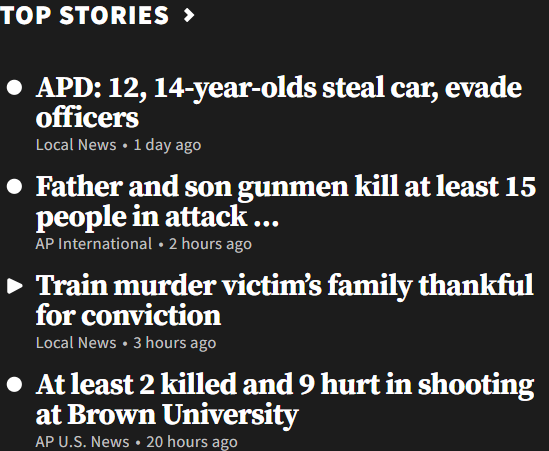
After hearing about the mass murder in Australia. The Brown University killings and the murders of Rob Reiner and wife. One wonders, is evil winning?

All you see on the news is hate, anger, and disagreements about everything. Peace-loving people must be wondering, “what is happening in this world?” I know I am. Being over eighty, I have never seen so much violence and useless attacks on the innocent. It has never been this bad, and the questions linger in our minds: how did we arrive at this point of such discontent? Communities that once thrived on cooperation now seem divided by strife, and everyday interactions are tainted by fear and suspicion. It’s a troubling environment that breeds hopelessness, leaving many to ask themselves if there’s a path toward healing. What is it going to take to turn this around? Perhaps it starts with each individual choosing kindness over hostility, fostering empathy, and making a conscious effort to unite rather than divide.

IS EVIL WINNING ?

The Day That Changed America

December 7, 1941 was the day of the Japanese attack on Pearl Harbor, a surprise strike that killed over 2,400 Americans and propelled the United States into World War II. It is remembered as “a date which will live in infamy,” marking a turning point in global history.

December 7, 1941 remains etched in American memory not only as a devastating military defeat but also as the moment the nation united against a global threat that would require the collective effort of its citizens. The attack, which came without warning, claimed the lives of thousands and left a deep scar on the American psyche, leading to an outpouring of patriotism and resolve. This pivotal event transformed the U.S. into a central force in World War II, catalyzing a military buildup and a surge of enlistment that would see millions of Americans take up arms. The impact of this day reshaped the course of the 20th century, not only solidifying the United States’ role on the world stage but also serving as a catalyst for significant social changes, including shifts in gender roles as women entered the workforce in unprecedented numbers in support of the war effort. The legacy of December 7th is thus not only a somber reminder of loss but also a testament to resilience and unity in the face of adversity.

The Attack on Pearl Harbor

  • Date & Location: Sunday morning, December 7, 1941, at Pearl Harbor, Hawaii.
  • Attackers: The Imperial Japanese Navy launched 353 aircraft from six carriers in two waves.
  • Targets: U.S. battleships, cruisers, destroyers, and airfields.
  • Damage:
    • 8 battleships were damaged, with the USS Arizona and USS Oklahoma destroyed.
    • Nearly 20 naval vessels were sunk or heavily damaged.
    • Over 300 aircraft were destroyed or disabled.
  • Casualties: More than 2,400 Americans killed and about 1,000 wounded.

Immediate Consequences

  • President Franklin D. Roosevelt addressed Congress the next day, calling December 7 “a date which will live in infamy.”
  • The U.S. declared war on Japan on December 8, 1941, officially entering World War II.
  • Germany and Italy soon declared war on the U.S., expanding the conflict into a truly global war.

Historical Significance

  • Turning Point: The attack ended American isolationism and mobilized the nation for total war.
  • Symbol of Sacrifice: The wreck of the USS Arizona remains a memorial site, honoring those who died.
  • Legacy: Pearl Harbor is remembered annually, with ceremonies across the U.S. to honor the fallen.

We can never forget Pearl Harbor on December 7, 1941

How Lanterns Bring Community Together

On December 4th, the town of Lamar woke to a strange sight: lanterns hanging from every tree, fence, and lamppost, transforming the quiet streets into a whimsical wonderland. No one knew who had placed them there, and the air buzzed with excitement and curiosity as neighbors stepped outside to take in the surreal scene. They weren’t ordinary lanterns either; each one glowed with a soft golden light, as if the sun itself had been captured inside, casting a warm and inviting glow that chased away the early morning chill. Young children giggled and pointed, while older residents shared theories about the mysterious decorator, invoking stories of holiday magic and community spirit. The entire town felt more alive, united in this unexpected celebration of light amid the brisk December air, creating an enchanting atmosphere that encouraged everyone to take a moment to appreciate the beauty surrounding them.

Children ran through the streets pointing them out, their laughter ringing in the air like sweet music, and elders paused in their errands to marvel at the enchanting scene unfolding before them. The lanterns didn’t flicker or fade, even as the day wore on, their steady glow casting a magical light that seemed to dance across the cobblestones. By evening, as the sun dipped below the horizon, the whole town gathered in the square, bathed in their warm glow, exchanging stories and laughter, creating bonds that felt as timeless as the lanterns themselves, illuminating not just the night but the very essence of community.

That’s when the mayor noticed something remarkable: each lantern bore a name. Not famous names, not saints or heroes, but the names of ordinary townsfolk, the baker, known for his warm bread that filled the air with delightful aromas each morning; the schoolteacher, who dedicated her life to nurturing young minds and fostering a love for learning; the quiet man who swept the sidewalks, tirelessly keeping the town clean and inviting with a gentle smile. Every person found their name shining on a lantern, illuminating the essence of the community, reminding all who passed by of the heart and soul that resided within their small town, where each individual played an important role in the tapestry of their shared lives.

The mystery deepened, but so did the joy as it interwove into the fabric of their lives. People began to see themselves differently, uncovering layers of potential they never knew existed. The baker realized his bread had been feeding more than stomachs it had been feeding hope, fueling dreams that spread like wildfire in the hearts of the community. The schoolteacher saw that her lessons had planted seeds that grew into courage, blossoming into unyielding determination that inspired her students to reach for the stars. Even the quiet man, often overlooked, discovered that his small kindnesses had lit paths for others, illuminating the darkness for those who felt lost and alone, and empowering them to forge their own journeys toward a brighter future.

No one ever discovered who hung the lanterns. Some said it was magic, others whispered it was the work of angels. But the truth didn’t matter. What mattered was the reminder: every life, no matter how ordinary, carries light.

From that day forward, December 4th became Lamar’s “Lantern Day,” a deeply cherished annual tradition that brought the community together in a heartfelt celebration of gratitude and acknowledgment. Each year, the townsfolk hung lanterns for one another, thoughtfully choosing names and stories that shed light on the quiet contributions often overlooked. The streets came alive with laughter and the warm, flickering glow of countless lanterns, each carrying its own special tale of kindness and support. As they gathered in the square, sharing memories and heartfelt messages, the atmosphere transformed into a beautiful tapestry of vibrant colors and shared joy. And with each passing year, the square shone even brighter, not only from the brilliance of the lanterns themselves but from the profound realization that, in their own unique ways, everyone is a bearer of light, contributing to the warmth and spirit of their beloved community.

Thanksgiving Day

Thanksgiving is more than turkey and pie—it’s a day rooted in gratitude, history, and togetherness.

Every year on the fourth Thursday of November, families across the United States gather to celebrate Thanksgiving. While many picture the famous 1621 feast between the Pilgrims and the Wampanoag tribe, historians remind us that thanksgiving observances existed long before and after that moment. Early colonists, Indigenous peoples, and even communities in Europe held harvest festivals to honor abundance and survival. Over time, these traditions evolved into the national holiday we know today.

The modern Thanksgiving was officially proclaimed by President Abraham Lincoln in 1863, during the Civil War, as a way to unite a divided nation. Since then, it has grown into a holiday that blends solemn reflection with joyful celebration.

The centerpiece of Thanksgiving is the meal: roast turkey, stuffing, cranberry sauce, and pumpkin pie. Yet food is only part of the story. Families often watch football, volunteer at shelters, or tune in to the Macy’s Thanksgiving Day Parade, a tradition that began in 1924 with costumed employees and live animals, later evolving into the iconic balloon-filled spectacle.

At its heart, Thanksgiving is about gratitude—pausing to appreciate blessings, both big and small. It’s also a time to acknowledge the complex history behind the holiday. While the Plymouth story is often romanticized, it’s important to remember the diverse communities and traditions that shaped this day.

Today, Thanksgiving invites us to slow down, share a meal, and reflect on what truly matters: family, community, and thankfulness. Whether through laughter around the table, a quiet moment of prayer, or acts of kindness, the spirit of Thanksgiving continues to remind us that gratitude is timeless.

Navigating Thanksgiving Eve Safety First

Move over, Turkey Day. The night before Thanksgiving (infamously dubbed Drinksgiving, Blackout Wednesday, or simply “the busiest bar night of the year”) is when America truly lets loose, reveling in a unique blend of nostalgia and celebration. For anyone in their twenties or thirties who’s headed home for the holiday, Wednesday night is sacred, a ritual steeped in years of cherished memories. College friends flood back into town, high-school group chats explode with excitement, and suddenly everyone you’ve ever known is at the same sticky-floored bar you swore you’d never return to, drawn by the magnetic pull of shared histories and familiar faces. It’s a hometown reunion disguised as a bar crawl, filled with laughter that echoes off the walls, stories that rekindle old bonds, and the thrill of reliving youthful escapades. As the night unfolds, there’s an unmistakable electricity in the air, a sense of community that reminds us all why we ventured out in the first place: to reconnect, reminisce, and make new memories before diving into the family festivities of Thanksgiving Day.

While the bars overflow, grocery stores hit peak chaos (people sprinting for cranberry sauce and extra wine like it’s the apocalypse), and airports groan under the weight of the year’s heaviest travel day, the atmosphere is electric with a mix of excitement and anxiety. Friends gather in dimly lit corners of crowded pubs, swapping holiday plans and reminiscing about the good old days, all while keeping a watchful eye on the clock as they know they have to be up early for family gatherings. In the end, Thanksgiving Eve isn’t about gratitude; it’s about one glorious, slightly reckless night with the friends who knew you before you had a “real job” (right before you have to sit across from your aunt and explain, yes, you’re still single) and navigate the sometimes awkward, yet endearing family dynamics that come with the holiday season. As laughter fills the air and memories are shared over clinking glasses, there’s a sense of warmth in the chaos, making this night a cherished tradition worth every frantic moment.

No wonder the police forces are ramping up their relentless hunt for reckless drivers who have no business being behind the wheel, especially given the shocking surge in traffic accidents driven by their absurdly negligent behavior. With each year that goes by, the chaos on our roads escalates, fueled by impaired or distracted drivers who seem to disregard the safety of others. In response, law enforcement is not just cranking up their vigilance; they’re deploying harsher measures and leveraging cutting-edge technology to root out those who threaten public safety, determined to reclaim our roads and make them safer for everyone else. Therefore, do not drink and get behind that steering wheel.

So, raise a glass to Blackout Wednesday: the unofficial start of the holiday season, and the reason half the country needs three plates of stuffing just to recover.

The Beauty of a Quiet Morning

Audio Podcast 4 1/2 minutes

As I sat on my front porch, the morning air crisp and the coffee steaming in my mug, I watched the world wake up, relishing the tranquility of this serene moment. The street was quiet, save for the soft chirping of sparrows flitting between the trees, their lively songs weaving a soft symphony that filled the stillness. Dew glistened on the grass, catching the first rays of sunlight like scattered diamonds, creating a shimmering carpet that invited the day to unfold. In the distance, the faint rustling of leaves hinted at the gentle breeze, carrying with it the aromatic scent of blooming flowers and freshly cut grass, making each breath a reminder of nature’s rejuvenation. I felt a sense of peace wash over me as I took a sip from my mug, savoring the warmth that matched the gentle glow of dawn, and in that moment, I understood the beauty of simply being present.

Across the road, old Mr. Roberts shuffled out in his plaid slippers, retrieving his newspaper with a habitual grunt that echoed softly in the morning air. He paused for a moment, squinting at something in his garden, his brow furrowing in curiosity. I followed his gaze and saw it—a small, scruffy fox, its russet fur damp from the night’s dew, nosing cautiously around his rosebushes, clearly searching for something to eat. The creature seemed oblivious to the world around it, its attention wholly absorbed in its task. Suddenly, it froze, locking eyes with Mr. Roberts, who had been tending to his own garden nearby, the sunlight reflecting off his watering can. The fox stood still, tense and alert, before it made a split-second decision and darted off, a streak of fire vanishing into the hedge, leaving only the faint rustle of leaves and a lingering sense of wonder in the crisp morning air.

Moments later, a delivery van rumbled by its tires humming on the asphalt as if eager to explore the winding streets of our neighborhood. The driver, a young woman with a bright pink cap that seemed to glow under the afternoon sun, hopped out with a sense of urgency, dropping a package—carefully wrapped in cheerful brown paper—at the neighbor’s door. She waved at me with a friendly gesture, her smile quick but warm, before hastily getting back into her vehicle and speeding off, disappearing around the corner. A gentle breeze stirred, carrying the enchanting scent of blooming lilacs from Mrs. Pomeranian yard next door, where her tabby cat, Whiskers, prowled the porch railing with an air of feline authority, eyeing the sparrows with lazy menace, as if plotting a playful ambush while soaking up the golden rays of sunlight pouring down.

Then, something peculiar caught my attention. At the end of the street, where the pavement met the woods, a solitary figure stood—a child, perhaps ten years old, clad in a bright red hoodie that starkly contrasted with the muted hues of twilight. Clutched tightly in their small hand was a single blue balloon, vibrant and buoyant, swaying gently in the evening breeze. The balloon appeared almost luminescent against the backdrop of the encroaching darkness, an ethereal symbol of childhood joy and innocence. They remained motionless, their gaze fixed intently down the road, as if anticipating something or someone, an unwritten story unfolding in their young mind. The air was thick with the scent of damp earth and fallen leaves, and the sounds of the evening—a distant rustle of branches, the soft chirping of crickets—seemed to fade into a hush around this moment. The balloon bobbed softly, reflecting the waning sunlight and drawing my gaze like a signal, as though it held secrets waiting to be discovered. I blinked, and in that brief moment of darkness, they were gone, as though they had slipped into the mist that clung to the trees, disappearing into the encroaching shadows. I sipped my coffee, its warmth anchoring me amidst the surreal nature of the scene, contemplating whether I had conjured the vision or if the child had indeed existed, a fleeting specter lingering at the edge of my awareness, a haunting reminder of the fragile line between reality and the ethereal whispers of a fading day.

The morning rolled on, ordinary yet alive with small mysteries, each moment a thread in the tapestry of the day, weaving together the subtle scents of dew-kissed grass and the gentle rustle of leaves as the breeze danced through the trees. The sun, cautiously peeking above the horizon, painted the sky in hues of orange and pink, inviting the world to awaken from its slumber, while birds serenaded the dawn with their cheerful melodies, hinting at the adventures that lay ahead. Each tick of the clock echoed like a heartbeat, amplifying the feeling that life was teeming with possibilities, as the coffee brewed its rich aroma in the background, inviting those willing to savor the fleeting beauty of the morning.

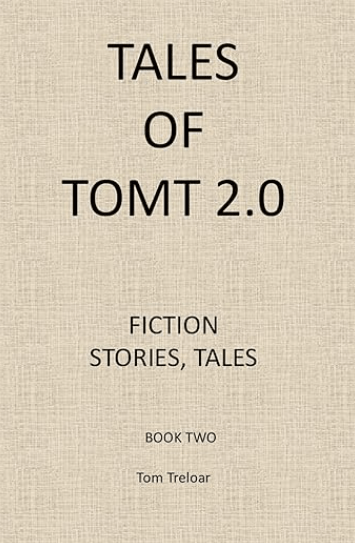
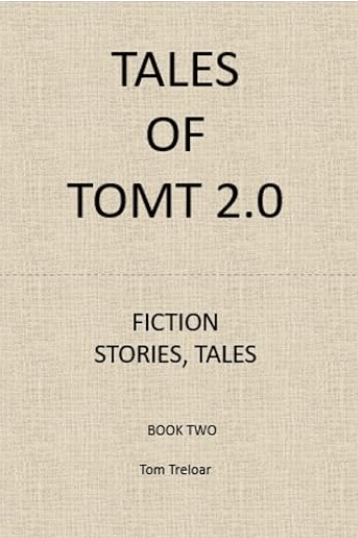
This is a short story from Tales of TOMT 2.0 Book Two Can be purchased at Amazon. Link

Who Is TomT2.0? Discover His Journey

Just a refresher of who is TomT2.0?

https://tomt2.com/about-tom-t2-0/

Some may ask, who is Tom T 2.0? I was 2tts and I am sure not very many know the story behind Tom T 2.0. Therefore, I will give you a brief biography.

Born and raised in Denver Colorado, a long time ago. I was in my mother’s womb when Pearl Harbor was attacked by the Japanese. I lived in the same home until after high school. Grandma, my mother’s mother lived with us and a brother. It was a small house, 864 sq ft. But it was home, and we all loved the home.

After high school I got a job with the company who was building the Titan ICBM missile for the government. There was the military draft during that time and was drafted maybe three or four years later. I then became a Viet Nam era veteran. I don’t know how this happened but the seven men I was drafted with went to Viet Nam and I was sent to Germany. I’m still proud that I served the country during that time.

After my military service I started working for a large television and electronics manufacturing company in their distribution of the products arm. I met my future wife, got married and have two sons with this relationship. Life was what every normal healthy male dream of. Unfortunately, this dream only lasts about eleven years. I became divorced and my job disappeared because the company was sold and closed thirteen distributing warehouses across the nation. Here I was mid-life, divorced and out of work.

For about five years I had many jobs, mostly temporary employment mainly because the unemployment rate was around seven percent. My parents also passed away during that time also. First, my mother with cancer and two years later my father from a heart attack. This was a tough period in my life.

Finally, I found permanent work in a high-tech environment where they used lasers to cut micro components used in the electronic industry. This was a very interesting position and I enjoyed working there. During that time, I also met my future wife and have been happily married for over thirty years now. We met after childbearing years, but she blessed me with two stepdaughters and two stepsons. I love them as much as my biological sons.

Around thirteen years later it was time to retire. That was seventeen years ago. Since my parents both passed away in their mid-seventies, I thought I would follow the legacy. I have passed this legacy by over five years, and I predict I will have many more years now since I experienced a near death experience around six months ago and survived. The doctors and lab tests all say there appears to be no long-term damage and the chances look good for many more years.

For many years I have been 2tts. After my near-death experience I feel that there is a purpose for this opportunity. Now I am Tom T 2.0. It has been close to eight months since the near-death experience, and I am still searching for the reason. Maybe this site is the opportunity I am looking for.

In conclusion, life has been good. I do not regret any part of my life, even the tough times. In the good times and the bad times, I always think, what did I learn from this experience and how will it make me be a better person?

Podcast of TomT 2.0

Video of TomT 2.0

My Surgery Tales

Me and Spirituality

I Will Never Forget

Peace

My Legacy

Just Be Myself

February 7, 2023

Cars in My Life

Cars in My Life video

My Blood Clot podcast

Veterans Day.

Audio Podcast 3 minutes.

Celebrated this year on Tuesday, November 11, this holiday honors the significant contributions and sacrifices made by veterans. It is a full holiday for federal offices, banks, and many businesses, resulting in closures that allow individuals to reflect on the importance of service and sacrifice. On this day, no mail delivery occurs, providing a moment of pause for the nation to appreciate the freedoms we enjoy, and various events may be held throughout communities to commemorate and celebrate the bravery of those who have served in the armed forces.

Originally called Armistice Day, proclaimed in 1919 by President Woodrow Wilson to mark the end of World War I on the 11th hour of the 11th day of the 11th month, this significant day was intended to honor the bravery and sacrifices of those who fought in this monumental conflict. Over the years, as the nation recognized the myriad contributions of all its military veterans, it became clear that a broader celebration was necessary to reflect the valor demonstrated throughout various conflicts. This led to its renaming to Veterans Day in 1954 by President Dwight D. Eisenhower, aimed at honoring veterans of all wars, allowing Americans to pay tribute not only to those who served in World War I but also to honor the service and sacrifices of past and current military personnel from every branch of the armed forces. This day serves as a poignant reminder of the cost of freedom and the importance of expressing gratitude to those who have dedicated their lives to serving the nation.

Veterans Day honors all veterans who have served in the military, recognizing their sacrifices and commitment to defending our freedoms; in contrast, Memorial Day, celebrated on the last Monday in May, specifically honors those brave men and women who gave their lives in service to our country, remembering their ultimate sacrifice and the impact they made on our nation’s history, as families and communities gather to pay their respects and express gratitude for the freedoms we enjoy today.

Thank a veteran personally. Being a veteran, I know how much a personal interaction means, as it fosters a sense of connection and appreciation that can sometimes feel absent in the hustle and bustle of everyday life. Taking the time to express gratitude through a simple thank-you or engaging in a heartfelt conversation can have a profound impact. It not only honors their sacrifices but also reinforces their sense of belonging to a community that values their service. Your acknowledgment can uplift their spirits and show them that their contributions are recognized and valued.

Fly the U.S. flag proudly, representing the values and ideals that our nation stands for. It serves as a symbol of the sacrifices made by countless individuals who fought for our freedom and democracy. Whether displayed at homes, schools, or public buildings, the flag reminds us of our responsibility to uphold the principles of liberty and justice for all, uniting us in our shared identity as Americans.

Why Fridays Feel So Special

Audio Podcast 3 minutes

Fridays have a special charm. They mark not just the end of the workweek, but the start of new possibilities. There’s a buzz of excitement in the air as people feel relieved and eager for the weekend. With each passing hour, the mood lifts, as thoughts turn to weekend plans, hanging out with friends, or enjoying some relaxation. This change in energy fosters connections, with shared smiles among strangers and renewed teamwork among coworkers, all ready to embrace the joy the weekend brings. Ultimately, Fridays offer a reminder of hope and the chance to unwind and discover what truly makes us happy.

From the moment we wake up, Friday feels special. The coffee tastes better, filling the air with warmth, while the commute seems easier, as if the world is inviting us to celebrate the weekend. Even the inbox feels less stressful, as we look forward to a break from work. Why? Because Friday represents freedom. It’s a promise of rest, fun, connection, and creativity—a reminder that the week’s stresses are fading away. Plans start to take shape as we think of friends and family, and every conversation shines with excitement for what’s to come. Whether it’s a cozy night in or an impromptu outing, Friday opens the door to new possibilities, allowing our dreams and aspirations to grow.

Friday allows us to relax and get excited for the weekend. It’s a day when we start thinking about our plans, whether that’s taking spontaneous road trips, enjoying cozy movie nights, or simply sleeping in to catch up on rest. As 5 PM approaches, we dream of the adventures ahead, the fun times with friends at happy hour, or the peaceful moments with a good book. It’s a chance to unwind and appreciate the simple pleasures of Fridays, reminding us of the work-life balance we seek.

Fridays remind us that life is not only about work but also about finding balance. They prompt us to reflect on our week, appreciate our progress, and look ahead with hope. It’s a chance to celebrate small achievements, nurture relationships, reconnect with ourselves, practice self-care, and recharge for upcoming challenges with renewed energy and enthusiasm.

Even if the week was tough, Friday offers a reset. It’s proof that time moves forward, and so do we.

Fridays are not just any day—they’re like the grand finale of a week-long soap opera where the coffee is finally strong enough to fry an egg! They come waving a flag that reads, “Joy is just around the corner, folks!” As we throw our calendars in the air, excitement bubbles like a shaken soda can, transforming the mundane into a party. It’s the day where we bench-press our plans and share a feast of laughs over questionable takeout or wild adventures that may or may not involve getting lost. So here’s to the glorious chaos of Fridays: a day that turns our ‘meh’ into ‘heck yeah,’ reminding us to embrace life with open arms, celebrate every tiny win like we just discovered a new pizza topping, and create legendary memories that we’ll forget by Monday!

Autumn’s Call to Reflect and Grow

Audio Podcast 3 1/2 minutes

Autumn is not just about colorful leaves and warm clothes — it’s a time for change that encourages us to welcome new beginnings. As nature shifts from bright summer colors to softer tones, it invites us to reflect on our own lives. November 6th, sitting between Halloween and Thanksgiving, is a great moment to pause and appreciate the beauty around us. This season promotes introspection and encourages us to think about our journeys and the changes we go through. The air becomes cooler, signaling a transition not just in seasons but also a reminder to be mindful as we look toward winter. It’s a time to value small moments, connect with loved ones, and possibly set goals for the new year, finding joy in both endings and fresh starts.

Just as trees shed their leaves to prepare for winter, we too can release what no longer serves us. This might mean decluttering your physical space, reevaluating commitments, or simply letting go of outdated beliefs that no longer resonate with our true selves. It could involve assessing friendships and relationships that drain our energy and considering whether they uplift us or hold us back. Ask yourself: What am I holding onto that’s weighing me down? Reflecting on these aspects can lead to powerful realizations and the opportunity to create a more meaningful existence. Letting go isn’t about loss — it’s about making room for growth, allowing new opportunities and experiences to enter, fostering personal development and rejuvenation as we embrace the changes ahead.

The slower pace of fall encourages reflection. With shorter days and cooler weather, we naturally look inward, making it a good time for personal growth. This season allows us to embrace change and adapt our thoughts and feelings. Use this time to reconnect with your values and goals, letting autumn’s stillness help you understand yourself better. Activities like journaling, meditation, or quiet walks through fallen leaves can help you focus on what matters while enjoying the beauty around you. As the landscape changes, let your thoughts evolve, guiding you toward intentional actions in the future.

While spring symbolizes rebirth, autumn serves as a quieter time of preparation, where nature slows down and reflects. It’s an opportunity to plant seeds in your mind and spirit for future growth. As days shorten and the air cools, take a moment to set intentions for the person you wish to become in the new year. Consider the habits you want to develop, like reading, exercising, or practicing mindfulness. Think about the relationships you want to nurture and those you may need to strengthen or let go. This autumn, take the chance to prepare for the growth that spring will bring and build a solid foundation for your goals.

There’s something wonderfully comforting about fall rituals — lighting candles (without setting anything on fire), enjoying warm drinks topped with whipped cream, and gathering with loved ones to share laughter and stories that are probably exaggerated, all while staying cozy under blankets as the chill in the air drives us indoors. These simple pleasures, like indulging in a homemade pie that seems to call your name or taking a leisurely stroll through the colorful leaves, can be surprisingly uplifting for your mind and soul. Embrace them; appreciate the warmth (both literal and from the oversized sweater you call “vintage”) that these rituals bring during this changing season. Let November 6th be a day to appreciate slowing down, lament the impending disappearance of pumpkin spice lattes, and enjoy the moment as you cherish simple joys (like finishing the last piece of pie) with those around you, fully engaging in the delightful chaos of the season.

The Night Airwaves Changed Forever

AUDIO PODCAST 4 1/2 minutes

November 3, 1956. 7:30 p.m. Eastern Time. A smooth, velvet voice glides through millions of living rooms across America. A Black man in a sharp suit, seated at a grand piano, smiles into the camera and says, “Good evening, ladies and gentlemen. Welcome to The Nat King Cole Show.”

For fifteen minutes every week, the world paused. It wasn’t just a variety show. It was a revolution in prime time. A Voice That Crossed Color Lines. By 1956, Nat King Cole was already a household name. His 1940s hits “Straighten Up and Fly Right”,” The Christmas Song”, “Mona Lisa” had sold millions. He was the first African American artist to top the Billboard charts. His voice was in jukeboxes, on radios, in living rooms from Harlem to Hollywood. But television? That was white space. No Black performer had ever hosted a national network TV series. The closest had been guest spots brief, polite, and always on someone else’s show.

Then came NBC. The Show That Shouldn’t Have Worked. The Nat King Cole Show was simple: Nat at the piano. Guest stars. A small orchestra. No laugh track. No gimmicks. Just music. Just class. The guests were legendary: Ella Fitzgerald trading scat lines with Nat Tony Bennett and Pearl Bailey, Harry Belafonte. Even Frank Sinatra dropped by. White stars, black stars together, on equal footing. And America watched. The Ratings Were Great. The Sponsors Were Not. Here’s the cruel twist. The show was a hit. Critics loved it. Viewers tuned in. But no national sponsor would touch it. Ad agencies feared backlash from Southern affiliates. One executive reportedly said: “We can’t sell toothpaste with a Negro on the screen.” Local sponsors in the North supported it. But without national backing, NBC couldn’t afford to keep it. The End Came Quietly After 64 episodes, Nat King Cole canceled his own show on July 27, 1957. He didn’t rage. He didn’t protest. He just said: “Madison Avenue is afraid of the dark.” That line became legend.

 A Door Cracked Open the Nat King Cole Show lasted only nine months. But it broke the seal. Within a decade: Diahann Carroll starred in Julia (1968) first Black woman in a lead TV role. Bill Cosby co-starred in I Spy (1965) — first Black actor in a dramatic lead. Flip Wilson got his own variety show (1970) and it topped the ratings. None of that would have happened without Nat.  

The Man Behind the Milestone Nat King Cole wasn’t an activist. He didn’t march. He didn’t shout. He just showed up. Sang beautifully. Smiled warmly. And let excellence do the talking. In 1956, that was radical. Today Clips survive on YouTube. Search: Nat King Cole Show 1956” You’ll see him sing “When I Fall in Love” with a smile that could melt ice. You’ll see Ella and Nat riff like old friends. You’ll see America before it was ready.  Legacy in One Line. He didn’t demand a seat at the table. He built the table. And then he sang at it. November 3, 1956, wasn’t just a premiere. It was a declaration. And now, the music still plays. Listen to “Unforgettable” tonight. Thank Nat King Cole. He opened the door and left it wide open.

Contrary to what some say, this country has come a long way in racial acceptance, showcasing significant progress in various aspects of society, including education, employment opportunities, and representation in politics. Over recent decades, we have witnessed a growing acknowledgment of diversity as a strength, leading to more inclusive policies and initiatives that promote understanding among different cultural groups. This evolution reflects a collective effort to confront and dismantle systemic racism, encouraging dialogue and fostering community engagements that embrace the rich variety of backgrounds that define our nation. Despite ongoing challenges, these strides toward acceptance signal a hopeful journey toward unity and equality for all.

One of my favorite songs is “Unforgettable” with Nat and Natalie. They made a terrific song into a priceless rendition. Click for the song

The Stairway in a Dream

AUDIO PODCAST 5 minutes

Tom was exhausted, his days tangled in the grind of hospital shifts and the quiet ache of loneliness since his grandmother passed. Each shift felt like an eternity, filled with the rhythmic sounds of medical machinery and the soft murmur of conversations that seldom reached his heart. One night, after collapsing into bed, he slipped into a dream unlike any he’d had before. In this vivid realm, colors danced around him, and comforting voices echoed, bringing with them the warmth he had longed for amidst the cold sterility of his waking life. As he wandered through this enchanting landscape, he felt a glimmer of hope, as though the essence of his grandmother was guiding her toward healing and connection.

He stood in a field, golden grass swaying under a sky that shimmered like stained glass, hues of blue and violet dancing together in a serene harmony. Ahead, a stairway spiraled upward, its steps carved from light, pulsing softly like the heartbeat of the world around him. Tom felt no fear—only a pull, like a melody calling him forward, a tune that resonated deeply within his soul, filling him with an inexplicable warmth. Each step he took felt deliberate, as if the very air whispered secrets of the universe, guiding his ascent into the unknown. He began to climb, his heart racing with anticipation, eager to uncover what awaited him at the top of this ethereal staircase.

Each step hummed with warmth, and as he ascended, memories flickered around him like fireflies in the dusk: his grandmother’s laughter as they baked bread, the sweet aroma of yeast rising in the air, his own childhood voice singing off-key to the tunes of faded melodies, moments of kindness he’d forgotten, like small treasures hidden in the corners of his heart. The higher he climbed, the lighter he felt, as if the weight of his regrets—snapped words, missed chances, and the lingering guilt of unanswered apologies—dissolved into the glowing air, replaced by an overwhelming sense of acceptance and serenity. With each ascent, he embraced the warmth of those cherished recollections, allowing them to envelop him, illuminating the path ahead with a radiant glow that filled him with hope and renewed purpose.

At the top, the stairs opened to a vast garden, blooming with colors he couldn’t name, each flower adding its unique hue to the tapestry of nature. Figures moved among the flowers, their faces familiar yet radiant—his grandmother, younger than Tom remembered, her eyes bright and sparkling like stars in the evening sky. The air was thick with the sweet fragrance of blossoms, and the gentle hum of bees flitting from petal to petal created a serene melody. “You’re not staying yet,” his grandmother said, her voice a warm embrace that wrapped around Tom like a soft blanket on a chilly day. “But see how loved you are, surrounded by the beauty of your memories, waiting for you to return and cherish them once more.”

Others appeared—patients Tom had comforted, friends he’d lost touch with, even strangers he’d smiled at in passing. They didn’t speak, but their presence wove a quiet truth: every small act of him had rippled through the tapestry of life, touching lives he’d never traced or even considered. Each smile exchanged on a crowded street, every word of encouragement spoken in the hushed tones of a hospital room, had forged unseen connections that now filled the air around his. In this moment, Tom realized the profound impact of kindness, the way it spread like a warm breeze, gently nudging hearts toward hope and understanding. Tom’s chest ached with joy, not pain, as she embraced this realization, feeling an overwhelming sense of gratitude for the unseen threads that intertwined his with those who had crossed his path.

His grandmother took his hand, leading him to a pool of light that shimmered like a thousand stars brought to life. In its reflection, Tom saw himself—not the tired nurse who often felt overwhelmed by the weight of his responsibilities, but a woman woven from courage and care, radiating strength and grace. The warmth of the light washed over him, illuminating the dreams he had long forgotten and the aspirations that still flickered within his heart. “You’re still needed below,” his grandmother whispered gently, his voice echoing with the wisdom of ages. “But you’ll carry this now, this newfound sense of purpose and love, as you return. Let it guide you whenever the path seems dark, for you are never alone in your journey.”

Tom woke with tears on his cheeks, the hospital’s sterile hum distant, a haunting reminder of his fragile reality. The dream’s glow lingered in his bones, a certainty that heaven wasn’t just a place but a truth: his life mattered, and he wasn’t alone in this vast universe full of connection and love. The comforting warmth of that revelation wrapped around him like a soft blanket, easing the tightness in his chest. He took a deep breath, filling his lungs with the scent of antiseptic air, and rose from the sheets, lighter than before, ready to face the day with renewed hope and determination, knowing that each moment was a gift waiting to be embraced.

Midnight Spooky Tale

It’s 11:57 PM on April 4, 2025, and the air feels thick with something unspoken. Shadows stretch long and jagged across the floor, like fingers clawing at the edges of reality. The clock ticks louder than it should, each second a hammer against the silence. Outside, the wind howls low, a mournful sound that rattles the windows—like something’s trying to get in.

You’re alone, or at least you think you are. The room’s dim, lit only by the sickly glow of your screen, and every creak of the house feels like a whisper you can’t quite catch. Did you lock the door? You’re pretty sure you did, but the thought gnaws at you. There’s a chill creeping up your spine, slow and deliberate, like icy fingertips tracing their way to your neck.

Somewhere in the distance, a dog barks—sharp, frantic—then stops abruptly. Too abruptly. The silence that follows is heavier than before, pressing down on your chest. You glance at the clock: 11:58. Time’s slipping away, but it feels wrong, like it’s stalling just to mess with you.

There’s a story they tell around here, about nights like this. They say the veil thins out close to midnight, when the world holds its breath. Things slip through—things that don’t belong. You’ve heard the tales: footsteps where no one’s walking, shadows that don’t match their owners, voices calling your name from rooms you swore were empty. Old folks swear they’ve seen it, eyes wide and hands trembling as they recount it over flickering candles.

11:59. The screen flickers, just for a second, and you blink. Did you see something in the reflection? A shape behind you, too vague to be sure, too real to ignore? You turn, heart thudding, but there’s nothing. Just the room, still and dark. The wind picks up again, and this time it carries something—a low, guttural hum that doesn’t sound like wind at all.

Midnight hits. The clock chimes, but it’s off, warped, like it’s underwater. The lights dim, then surge, casting the room in a strobe of light and shadow. And then you hear it: a soft tap-tap-tap, slow and deliberate, coming from the window. You don’t want to look. Every nerve screams not to. But your eyes betray you, sliding toward the glass.

There’s nothing there. Just darkness. Except… is that a smudge on the pane? A handprint, faint and streaked, like someone—or something—pressed against it from the outside. It wasn’t there before. You’re sure of it.

The tapping stops. The silence is worse. And then, from somewhere deep in the house, a floorboard groans. Not near you. Not upstairs. Somewhere else. Somewhere it shouldn’t.

Happy almost-midnight. Sleep tight—if you can.

DREAM OR REAL

AUDIO PODCAST 8 minutes

Lila woke to the sound of rustling leaves, her breath fogging in the crisp morning air. She blinked, and the world shimmered—golden oaks and crimson maples stretched endlessly before her, their branches swaying in a breeze that smelled of earth and cider. She was in the forest again, the one she’d walked through last night. Or was it last week? Her fingers brushed the rough bark of a tree, solid and real, and she smiled, feeling the familiar connection to nature that always brought her peace. Sunlight filtered through the vibrant canopy, dappling the ground with patches of warmth that felt inviting against the coolness of the morning. A small bird chirped cheerfully in the distance, and she paused to listen, allowing the harmonious sounds of the forest to envelop her like a cozy blanket. Fall had arrived, her favorite season, painting the world in hues that felt like home, where every rustling leaf and fluttering wing told a story of transformation and comfort as if inviting her to discover the secrets hidden within this enchanting landscape. 

She wandered deeper, the crunch of leaves underfoot a steady rhythm that accompanied her thoughts like a familiar song. A deer darted past, its antlers catching the low sunlight, and she laughed—hadn’t she fed it apples yesterday? Or had that been a dream? The thought slipped away as she reached a clearing where a wooden bench sat, weathered but familiar, a silent witness to the passage of time and countless fleeting moments. She settled onto it, pulling her sweater tight against the chill that seemed to seep through the air, and watched the sky shift from amber to violet, painting a masterpiece that only nature could create. A gentle breeze rustled the branches above, carrying with it the scent of pine and damp earth, while distant birds sang their evening songs. Time didn’t matter here; it was just her and the season, entwined in a tranquil embrace that felt both timeless and fleeting. 

“Lila,” a voice called, soft but insistent. She turned, but no one was there—only the wind, whispering through the branches, carrying with it a symphony of rustling leaves that seemed to echo her confusion. She frowned. That voice… it had been in her room this morning, hadn’t it? The memory lingered in her mind like a haunting melody, before the leaves. Before the forest. Her head ached, and the scene flickered before her eyes, blurring reality with a dreamlike haze. Suddenly, the trees were bare, then budding—pink blossoms unfurling like delicate fans, the air warming with the sweet scent of rain and new grass. Spring now, not fall. The world transformed, vibrant colors awakening all around her. She stood, confused, as petals drifted around her like snowflakes caught in a gentle breeze, each one a reminder of the fleeting passage of time. The bench was gone, replaced by a patch of wildflowers that danced joyfully in the wind. Hadn’t she planted those? Doubt crept in as she examined the landscape, the familiar now tinged with surreal beauty, blurring the lines between her memories and the enchanting present. 

She knelt, touching the soft petals, and memories—or dreams—rushed in like a tide pulling her under. She’d danced here under a pastel sky, her hands stained with soil as she twirled freely, feeling the warmth of the sun on her face and the whisper of leaves in the gentle breeze. Or had she watched it from her window, longing to join the magic outside? The forest blurred, and suddenly, she was in her bedroom, staring at a cracked ceiling that seemed to close in on her as the moments faded. A woman leaned over her, her face lined with worry, shadows playing across her features as if reflecting the depth of her concern. “Lila, you’re awake. You were talking about leaves again,” the woman said softly, her voice the one from the wind, but sharper now, tethering her spirit to the present. It was a voice that carried the weight of love and grounding, pulling Lila back to reality, bringing forth a sense of safety amidst the swirling chaos of her thoughts. 

Lila blinked, trying to shake off the lingering fog in her mind. The room smelled stale, not like rain or earth, but rather like an unforgiving emptiness that gnawed at her senses. A tray of pills sat on the nightstand, each one a bright reminder of her reality, and a calendar read March 21, 2025. Spring, she thought wistfully, but where were the blossoms? The vibrant colors and lively scents that usually filled the air seemed painfully absent. She looked down at her hands—clean, glaringly so, devoid of any trace of soil or the sticky sweetness of apple juice from feeding the deer with her own hands. “I was there,” she murmured softly to herself, feeling a deep yearning wash over her. “The forest. It’s fall there now. Or spring. I can’t…” Her voice trailed off, swallowed by the silence of the room, and the woman sighed, feeling a profound disconnect between the vivid memories of her time in the forest and the dull, clinical environment surrounding her now. The weight of absence settled heavily upon her chest, making it hard to breathe as she longed for the embrace of nature’s cycle, for the chirping of birds and the rustling of leaves—simple pleasures that now felt like distant echoes. 

“You’ve been here all night,” the woman said gently, her voice soothing like a soft breeze. “Dreaming again, just as you often do. The doctor says it’s getting harder for you to come back, as if each journey to that other realm pulls you further away from us. I can see the worry etched on your face even in your slumber, the way your brow furrows and your lip’s part slightly, as though you’re lost in something profoundly beautiful yet terrifying. I wish I could follow you into those dreams, to understand what captivates you so deeply and to bring you back safely when the time comes.” 

Lila shook her head, her mind racing with disbelief. “No, I walked there. I felt it.” She closed her eyes tightly, and the room around her dissolved into a haze of color and light. Suddenly, she found herself back in the forest, where leaves were falling in slow spirals, the golden hues painting a serene picture of autumn. With each leaf that touched the ground, she felt seasons transform like a carousel spinning endlessly in the sky. The gentle rustle of branches accompanied the soothing sounds of nature, as the deer returned, their soft noses nudging her hand. Lila laughed, the sound bursting forth like music, and tears streaked her face, a blend of joy and nostalgia overwhelming her senses. “This is real,” she whispered breathlessly into the crisp air, though the woman’s voice echoed faintly in the background, calling her name with urgency, as if trying to tether her to the present even as she reveled in the beauty of the moment. 

Days passed—or didn’t. Lila roamed her forest, seasons blending into a tapestry she couldn’t untangle. Fall’s golden decay gave way to spring’s tender green, then back again, a loop of beauty she couldn’t escape. Each step brought the rustle of leaves beneath her feet and the whispers of the wind, wrapping around her like a familiar embrace. Sometimes she heard the woman, saw the room, felt the pills pressed to her lips, the cold, clinical atmosphere of the space stifling her spirit. But the forest always reclaimed her, pulling her back into its embrace, its colors brighter than the gray walls surrounding her, its air sweeter than the sterile tang of reality, infusing her with a sense of freedom she thought she had lost forever. The vibrant hues of wildflowers danced along the path, and the melody of birdsong filled her ears, a reminder that life thrived beyond the confines of her mind. 

One evening—or morning—she sat on the bench again, watching the sky burn orange, then soften to pink, painting a canvas of warmth that enveloped her. The voice called, fainter now, and she didn’t turn, for she was lost in the beauty surrounding her. “I’ll stay,” she said to the deer, to the trees, to the seasons that held her gently in their embrace. “This is where I belong.” The forest hummed in agreement, a symphony of rustling leaves and distant bird calls, and Lila let go, sinking into a world where dreams and reality were one, forever spring, forever fall, where the colors danced vibrantly in the air, wrapping her in a tapestry woven from the very essence of nature. She felt the soft touch of the breeze as it whispered secrets of the earth, and in that moment, she knew she was a part of something greater, something eternal. 

More creepy, scary tales link

Tales of TomT 2.0 Book Five

Video file about this book

Just in time for Halloween. Ideal for the commuter or the casual reader.

Link to Amazon for purchasing

This is the fifth book in the Series of Tales of TomT 2.0 Link

This has been an exciting endeavor.

October 11 and Christopher Columbus

October 11 sometimes coincides with Columbus Day, a U.S. federal holiday marking Christopher Columbus’s arrival in the Americas in 1492. Although his landing is traditionally dated October 12, the holiday is observed on the second Monday of October, which occasionally falls on the 11th or days around it, like this year is the 13th.

Columbus Day started as a way to celebrate exploration and discovery, but its significance has changed over time. In the 19th century, Italian American communities introduced the holiday to honor their heritage and combat xenophobia, leading to its federal recognition in 1937. Columbus, an Italian navigator under the Spanish flag, arrived in the Bahamas, marking the start of European colonization in the Americas.

October 11 also encourages reflection, as many in recent years have questioned Columbus’s legacy and highlighted the effects of colonization on Indigenous peoples. This has brought about the emergence of Indigenous Peoples’ Day, celebrated in various states and cities as an alternative or addition to Columbus Day.

The Day Columbus discovered America, it marked not only the beginning of the history of America over 500 years ago, but also a pivotal moment that would forever change the course of global exploration and settlement. This discovery initiated a complex tapestry of cultural exchanges, conflicts, and alliances, laying the groundwork for what would eventually become a diverse nation. Since that monumental beginning, this country has come a long way, evolving through trials and tribulations, from the establishment of colonies and the struggle for independence to the growth of a powerful democracy that champions freedom and innovation.

The Quiet Power of Friendship

Audio Podcast 1 1/2 minutes

Friendship isn’t always loud. Sometimes, it’s a quiet presence—a text that says, “thinking of you,” a shared laugh over something silly, or just sitting together in comfortable silence.

True friends are the ones who see you at your worst and still choose to stay. They celebrate your wins like they’re their own and remind you of your worth when you forget. They’re the people who make ordinary days feel special, just by being in them.

It’s easy to take friendship for granted in the rush of life. But when we pause and reflect, we realize how deeply these connections shape us. They teach us empathy, resilience, and joy. They remind us of we’re not alone.

So today, reach out to a friend. Send a message. Share a memory. Say thank you.

Because in a world that often feels chaotic, friendship is a steady light. It’s the laughter that echoes long after the joke. The hug that lingers. The comfort of knowing someone’s got your back.

And that’s something worth celebrating.

The biggest regret I have in my life is I did not continue friendship as my life continued. I lost track of school friends, army friends, work friends and family. Once an era of my life was over, I moved on without making any attempt to continue the friendships I earned. I wish I would have valued the friendships more than I did and made an attempt to keep in touch with them.

If you are young, do not make the same mistake I made.

Fall: Transitioning into Cozy Days

Today is the first day of fall. The ninety-degree days are over, and with the arrival of this new season, we can finally embrace the cool, crisp air that fills our lungs. Cooler days and nights are ahead, providing the perfect backdrop for cozy sweaters and warm drinks. The leaves are starting to change to their golden color, painting landscapes in hues of orange, red, and yellow, and gracefully falling to the ground like nature’s confetti. As we walk beneath the trees, we might hear the satisfying crunch of leaves underfoot. It’s time to start thinking about the season’s preparations, including the moments when the furnace will go on to take away the morning chill in the home, wrapping us in warmth as we enjoy the comforting aroma of pumpkin spice and freshly baked pies wafting through the air.

The word “fall” derives from Old English “feallan,” meaning to fall, and it specifically refers to the beautiful and colorful phenomenon of falling leaves, which marks the transition from summer to winter. This term is preferred in American English over the more traditional “autumn,” which stems from the Latin word “augustus.” The choice of “fall” not only encapsulates the essence of the season but also highlights the picturesque scenery of trees shedding their foliage, creating a vibrant tapestry of colors on the ground. This season is often associated with harvest celebrations, cooler temperatures, and a sense of change, making it a time for reflection and preparation for the upcoming winter months.

Fall allergies spike due to ragweed pollen, affecting ~23 million Americans annually.
As the leaves begin to change color and the air turns crisp, countless individuals experience the relentless onslaught of allergy symptoms. My eyes have the traditional itch and redness, which often leads to a frustrating cycle of rubbing and swelling that makes it difficult to focus on daily activities. In addition to these uncomfortable symptoms, the sneezing, runny nose, and overall fatigue that accompany fall allergies can diminish one’s quality of life, making autumn feel less like a season of beauty and more like a season of struggle.

It’s the second most popular wedding season globally, after summer, with countless couples choosing this time to tie the knot due to the beautiful fall foliage and moderate weather. This enchanting season not only provides a picturesque backdrop for outdoor ceremonies but also offers a rich palette of colors that inspire everything from floral arrangements to wedding attire. As autumn ushers in cozy atmospheres and seasonal celebrations, many couples see it as the perfect opportunity to share their love in a unique and heartfelt way.

Time marches on, and in three months, we will be talking about the next season of the year, winter. As the days grow shorter and the crispness of the air becomes more pronounced, we can already feel the anticipation building for the beauty that winter brings. The first snowfall will blanket the earth in a serene white, transforming familiar landscapes into a magical wonderland. Families will gather around warm fires, sharing stories and laughter, while festive decorations will begin to adorn homes, creating a sense of warmth and joy during the cold months ahead.

My wife’s fall visitors.

Have a nice fall day.

I Am Not Who I Am

Around the first of this year I discovered AI, (artificial intelligence) and found out that it became very easy for me to assemble an article. I could come up with a few ideas and then consult AI and ask to expand on those ideas. In a matter of seconds, Boom! An instant article that was always near twice the length I ever came up with…… AI would really fluff up an idea.

Couldn’t think of something to write about? Just ask AI and poof! There are twenty or more writing prompts for you. Pick a prompt and AI easily creates a story for you. Wow! This is really becoming simple.

Unfortunately, I now feel that this is not me. I now feel that I am just an outlet for some unnamed artificial intelligence. AI has made me lazy. It has become difficult for me to get the creative juices flowing without AI. The above is me without AI.


This is the same with AI

Around the first of this year I discovered AI, (artificial intelligence) and found out that it became very easy for me to assemble an article. I could come up with a few ideas and then consult AI and ask to expand on those ideas, which opened up a whole new realm of creativity. With just a simple prompt, I could engage the AI in a dialogue, exploring different angles and perspectives that I might not have considered on my own. In a matter of seconds, Boom! An instant article that was always near twice the length I ever came up with. This technology was not just about word count; it was about the depth and breadth of information that it could provide, transforming a mere concept into a comprehensive piece of writing. AI would really fluff up an idea, adding layers of detail and nuance, turning my initial thoughts into a well-rounded discussion that was informative and engaging for readers.

Couldn’t think of something to write about? Just ask AI and poof! There are twenty or more writing prompts for you, carefully designed to spark your creativity and help you break through writer’s block. Pick a prompt, and AI easily creates a story for you, crafting engaging plots and dynamic characters that come to life right before your eyes. Whether you’re looking for inspiration for a novel, a short story, or even just a whimsical tale, the possibilities are endless. Wow! This is really becoming simple, as technology transforms the writing process into an effortless and enjoyable adventure, allowing you to explore new ideas and perspectives in no time.

Unfortunately, I now feel that this is not me. I now feel that I am just an outlet for some unnamed artificial intelligence, a mere vessel through which its ideas flow. AI has made me lazy, almost reliant on its algorithms to spark my imagination. It has become difficult for me to get the creative juices flowing without AI, leaving me frustrated and yearning for the days when I could generate ideas and express myself freely without assistance. The more I depend on this technology, the more I sense a disconnect from my authentic self and inner creativity, which feels stifled and overshadowed by an ever-present digital influence. I find myself questioning whether I can truly think independently or if I am simply echoing what has been fed to me.


I really don’t know what direction this will lead to. I may decide to just write without AI assistance or retire from blogging. Or I may accept the fact that artificial intelligence is the future and go with it.

This is the same paragraph with AI assistance. I really don’t know what direction this will lead to. At this point, I feel quite torn; I may decide to just write without AI assistance, embracing the raw authenticity of my thoughts, or I might even consider retiring from blogging altogether if I feel too overwhelmed by the rapid changes in technology. On the other hand, I am also considering whether I should accept the fact that artificial intelligence is undeniably the future. It could offer new opportunities and perspectives, so perhaps I should adapt and go with it, using AI as a tool to enhance my creativity rather than replace it, finding a balance that respects both traditional writing and innovative tech.

Never Forget September 11, 2001

Four commercial airplanes were hijacked by 19 terrorists. Two planes, American Airlines Flight 11 and United Airlines Flight 175, crashed into the North and South Towers of the World Trade Center in New York City, respectively. The South Tower collapsed at 9:59 AM, and the North Tower at 10:28 AM.

American Airlines Flight 77 crashed into the Pentagon in Arlington, Virginia, at 9:37 AM, causing partial structural damage.

United Airlines Flight 93 crashed into a field near Shanksville, Pennsylvania, at 10:03 AM after passengers and crew attempted to regain control from the hijackers. It is believed the target was either the U.S. Capitol or the White House.

Nearly 3,000 people were killed, including 2,753 at the World Trade Center, 184 at the Pentagon, and 40 on Flight 93. Victims included civilians, first responders, and military personnel. Thousands more were injured.

This was a major event in the history of the United States and must never be forgotten, as it significantly shaped the nation’s identity and future trajectory. The repercussions of this event resonated deeply within society, influencing political landscapes and cultural dynamics for generations to come. It serves as a reminder of the struggles faced by those who fought for justice and equality, highlighting the importance of collective memory in preserving the lessons learned through hardship and triumph. Understanding this pivotal moment encourages reflection on the ongoing journey toward unity and progress in our society.

The Multifaceted Concept of God in Human History

Audio Podcast Link


Many people believe in a god, a supreme being, or a deity. This belief shows our need to understand existence, the universe, and our role in it. To learn more, I asked AI for a definition of God, interested in its insights shaped by diverse cultural views. The response was intriguing, as it summarized not only the qualities of divinity but also how different societies think about this idea, showing both shared beliefs and differences through time and cultures.

The idea of God has shaped human history, culture, and individual lives for millennia, serving as a cornerstone of meaning, morality, and mystery. Across civilizations, God is understood in diverse ways—as a singular omnipotent being, a collection of deities, or an impersonal cosmic force that binds the universe together. This multifaceted concept transcends mere religion, influencing philosophy, art, science, and ethics, while remaining deeply personal and often divisive. The varying interpretations of God reflect the unique values and beliefs of different societies, illustrating how this divine notion fosters both unity and conflict among peoples. From the ancient rituals of worship to contemporary discussions on the nature of existence, the concept of God challenges individuals and communities to grapple with profound questions about life, purpose, and the moral framework that governs human behavior. The pursuit of understanding God can lead to a deeper exploration of spirituality, prompting many to seek connections with something greater than themselves, ultimately shaping the profound narratives that define cultures across the globe.

In monotheistic traditions like Christianity, Islam, and Judaism, God is typically envisioned as a singular, all-powerful creator who is deeply involved in the cosmos and human lives. In Christianity, God is the loving father, omnipresent and omniscient, guiding humanity through divine will and grace while embodying the principles of love, forgiveness, and redemption. The Bible portrays God as both transcendent and immanent, a being who not only crafted the universe yet remains intimately involved with creation, listening to prayers and responding to the cries of the faithful. Islam’s Allah, similarly, is the sole deity, merciful and just, whose will is absolute, as described in the Quran, which emphasizes His attributes of compassion, power, and wisdom. Additionally, Allah is seen as the ultimate judge, ensuring that justice prevails while offering repentance and mercy to those who seek it sincerely. Judaism’s Yahweh, revealed through the Torah, emphasizes a covenantal relationship with the chosen people, blending justice with compassion, guiding them throughout their history while encouraging ethical living and adherence to His laws. These faiths share a view of God as eternal, unchanging, and deeply concerned with human affairs, fostering a sense of purpose and direction in the lives of believers, reinforcing the importance of faith and community in the journey towards spiritual fulfillment.

Polytheistic traditions, such as Hinduism and ancient Greek religion, offer a different lens through which to examine the complexity of spirituality and divine representation. Hinduism’s vast pantheon includes deities like Brahma, Vishnu, and Shiva, each embodying unique aspects of the divine spectrum while ultimately pointing to Brahman, the infinite reality underlying existence. This intricate framework suggests a fluidity between the one and the many, where God is both plural and singular, allowing for a rich tapestry of worship and personal interpretation. Furthermore, the interplay between these deities illustrates the idea that the divine can manifest in numerous forms, each serving as a guide for followers on their spiritual journeys. Ancient Greeks, on the other hand, worshipped gods like Zeus and Athena, anthropomorphic figures imbued with distinct personalities and domains, reflecting a worldview where divinity mirrors human complexity. The myths surrounding these gods often detailed their interactions and conflicts, emphasizing the intricacies of ethical dilemmas and the human condition. In this way, both traditions highlight the multifaceted nature of the divine, as well as the varied ways in which cultures have sought to understand and relate to a higher power, demonstrating that the quest for meaning transcends time and geography.

Beyond organized religion, philosophical and spiritual perspectives broaden the concept further, inviting deeper exploration into the nature of existence and our understanding of the divine. Deism posits a God who creates but does not intervene, presenting a rational force behind the universe’s order, suggesting a clockmaker who sets the machinery of the cosmos in motion yet remains distant from its operations. Pantheism, as articulated by thinkers like Spinoza, equates God with nature itself, ultimately dissolving the boundary between creator and creation and encouraging a profound reverence for the natural world that surrounds us. This perspective fosters a sense of unity and interconnectedness amongst all living things, urging individuals to recognize the divine immanence present in every element of life. Meanwhile, agnosticism and atheism challenge traditional notions, questioning God’s existence or relevance while still engaging with the void such questions leave, prompting critical thinking and intellectual discourse on morality, purpose, and the human experience in a seemingly indifferent universe. These varied views illustrate the rich tapestry of beliefs that confront our quest for meaning beyond institutional dogma.

God’s role in human life extends beyond theology. Art—from Michelangelo’s Sistine Chapel to Sufi poetry—captures divine awe and intimacy, revealing the profound connection between spirituality and creativity that transcends cultural boundaries. The aesthetic expressions of faith often serve as a bridge, inviting individuals to explore the depths of their beliefs and the mysteries of existence. Moral systems, even in secular contexts, often trace their roots to divine commandments or cosmic principles, reflecting the innate human desire for order, justice, and meaning in a chaotic world. These ethical frameworks guide personal conduct and societal norms, showcasing how spirituality can influence our understanding of right and wrong. Yet, the concept of God also sparks conflict, from historical crusades to modern debates over faith’s place in public life, exposing the fragility of belief systems when challenged. These tensions highlight humanity’s struggle to reconcile the infinite with the finite, the known with the unknowable, prompting a continuous journey of exploration and dialogue that shapes both individual identities and the collective human experience.

Ultimately, God remains a mirror of human aspiration and fear—a symbol of hope, order, and purpose, but also of mystery and unanswerable questions. Whether seen as a personal savior, a cosmic force, or a human construct, God reflects our deepest desires to understand existence and navigate the complexities of our lives. Across cultures and eras, the quest to define God reveals as much about humanity as it does about divinity, inviting each generation to wrestle with the eternal, confront its own uncertainties, and seek meaning in a world that often feels chaotic. This exploration of the divine not only shapes individual belief systems but also weaves the intricate tapestry of society, influencing art, philosophy, and moral values. Consequently, the concept of God remains not just a theological inquiry, but a profound journey into the human condition itself, challenging us to ponder our place in the universe and our connection to one another.

Lights Out in the Shower 

Audio Podcast, 3 minutes

The old cabin creaked under the weight of the storm outside, wind howling through the pines like a chorus of restless spirits. I’d rented the place for a quiet weekend, a chance to unplug and clear my head. The bathroom was small, with chipped tiles and a shower that sputtered before spitting out lukewarm water. I stepped in, letting the spray wash away the day’s hike, steam curling around me like a shroud.  

The bulb overhead flickered once, twice, then held steady. I ignored it—old wiring, probably. The water felt good, soothing my aching muscles. I closed my eyes, humming softly, the sound muffled by the patter of droplets. Then, a sharp *click*. The light went out, plunging the room into pitch black. 

 I froze, water still streaming down my face. “Great,” I muttered, reaching for the faucet. My fingers fumbled in the dark, slipping on the wet knob. The shower kept running, but the air felt heavier now, like someone had stepped into the room. I strained to listen over the water’s drone. Nothing. Just my imagination, right?  

I turned off the shower, the sudden silence deafening. My hand groped for the towel hanging nearby, but it brushed something else—cold, slick, like damp skin. I yanked my hand back, heart hammering. “Who’s there?” I called, voice trembling. No answer, but the darkness seemed to pulse, alive with something I couldn’t see.  

I stumbled out of the shower, feet slipping on the tiles. The bathroom door was somewhere to my left—I hoped. My hands found the wall, guiding me forward, but the surface felt wrong, spongy, like it was breathing under my touch. I yanked my hand away, suppressing a scream. The air grew colder, thicker, pressing against my bare skin. A faint whisper slithered through the dark, not words, just a low, guttural hum that made my stomach twist.  

I lunged for where I thought the door was, fingers scrabbling until they hit the knob. It turned, but the door wouldn’t budge, like something was holding it shut. Panic clawed at me. I pounded on the wood, shouting, my voice echoing in the tiny space. The whisper grew louder, closer, curling around my ears like icy fingers. I swear I felt breath on my neck, damp and sour.  

Desperate, I threw my weight against the door. It gave way, spilling me into the cabin’s main room. The lights there were still on, warm and steady. I spun around, expecting to see someone—or something—in the bathroom. Nothing. Just darkness beyond the doorway, thicker than it should’ve been.  

I didn’t sleep that night. The storm raged on, and every creak of the cabin felt like a warning. I left at dawn, never looking back. But even now, weeks later, I feel it sometimes—a cold breath on my neck when I shower, a whisper in the dark when the lights flicker. It followed me. And it’s waiting. 

The Sad Reality of City Life

AUDIO PODCAST

It’s sad that we do not feel safe in large cities. 

In the heart of bustling metropolises, where skyscrapers pierce the sky and the hum of life never ceases, a troubling sentiment has taken root: we no longer feel safe. Large cities, once celebrated as vibrant hubs of opportunity, culture, and connection, are increasingly shadowed by fear. This pervasive unease reflects deeper societal challenges that demand our attention and action. 

The sense of insecurity in urban centers stems from multiple sources. Rising crime rates, often sensationalized by media, paint cities as battlegrounds. According to recent data, violent crime in major U.S. cities like Chicago and New York has seen upticks in specific areas, with robbery and assault rates climbing in 2024. Though overall crime trends vary, high-profile incidents—shootings, subway attacks, or public theft—dominate headlines, amplifying public anxiety. These stories linger, shaping perceptions that every corner holds danger, even when statistics suggest otherwise. 

Beyond crime, the urban environment itself can feel hostile. Overcrowded streets, aggressive traffic, and the constant churn of strangers create a sense of anonymity that erodes trust. In smaller towns, familiarity breeds community; in cities, the sheer scale of human interaction can feel isolating. A 2023 survey by the Pew Research Center found that 60% of urban residents feel less connected to their neighbors than they did a decade ago. This disconnection fuels vulnerability—when no one knows your name, who will notice if something goes wrong? 

Economic disparity also plays a role. Cities showcase stark contrasts between wealth and poverty, with homelessness surging in places like Los Angeles and San Francisco. Encountering visible desperation daily can unsettle residents, fostering guilt, fear, or resentment. For many, the sight of encampments or panhandlers becomes a reminder of societal failures, making public spaces feel unpredictable and unsafe. 

Yet, this sadness over lost safety isn’t just about physical threats. It’s about the erosion of a social contract. Cities thrive when people trust the systems around them—police, transit, local government. But distrust in institutions is growing. Scandals, underfunded services, and polarized politics leave residents feeling unprotected. For instance, debates over policing—whether overfunded or underfunded—have left communities caught between calls for reform and demands for stronger enforcement, with no clear resolution. 

So, what can be done? Rebuilding safety requires a multifaceted approach. Community policing, focused on trust rather than confrontation, has shown promise in cities like Camden, New Jersey, where violent crime dropped 20% after reforms. Investing in mental health services and housing can address root causes of crime and homelessness. Urban design also matters—well-lit streets, green spaces, and community centers can foster connection and deter crime. Most importantly, residents must engage with one another. Neighborhood initiatives, like block parties or mutual aid groups, can rebuild the social fabric that makes cities feel like home. 

It’s heartbreaking that the very places designed for human connection now breed fear. Yet, cities remain humanity’s greatest experiment in coexistence. By addressing crime, inequality, and disconnection head-on, we can reclaim the safety and vibrancy that define urban life. The path forward lies in collective effort—because no city thrives when its people are afraid. 

I Do Other Things Than Just Blog

Yes, I do more than just blog. I have a life outside the laptop, filled with activities that enhance my daily existence. In retirement, I spend my days trying new hobbies that I didn’t have time for during my working years. This phase of life lets me enjoy quality time with my wonderful wife, sharing joyful moments and appreciating the little things. We’ve made our home a cozy place to host friends and family, creating lasting memories. My workshop is a space for creativity, where I work on woodworking projects that show my personality. I enjoy all the benefits of retirement, relishing the freedom to choose how I spend my time without job constraints or the need for consistent income, allowing me to focus on what I truly love.

Sometime in the first part of this year we were visiting some friends and during that time I had to use the facilities. I noticed that he had a small collection of small paperbacks on a shelf in the restroom. I said to him that I noticed that there was a collection of small books and I asked him what kind of books he uses for the short time of personal business. He replied. “I like a collection of short stories. Just enough to pass the time and nothing deep and long.” I then had the thought, “I can do that!”

Since that time, I have been creating small paperbacks of around 100 pages and a variety of different topics by keeping with my blogging agenda, “Comments About Anything“. I also discovered about Amazon’s Kindle Direct Publishing. This works perfectly for me. The only investment I have is my time. No financial investment whatsoever. If they don’t sell, no loss whatsoever.

I just finished book four and really enjoying this new challenge. They are only $4.75 for paperback, free thru the 24th and then $2.99 for Kindle and $0.00 if a Kindle Unlimited subscriber.

Click on graphics for links.

The Decline of a Two-Party System: Power, Politics, and Unelected Influence

Audio Podcast

This is an opinion piece. For a long time I have felt this disgust from what I have seen from politicians, the news media and individual comments. Therefore, I felt it is time for me to vent and get it off my chest.

The United States has long prided itself on its two-party political system, a structure that has defined its democracy for over a century. The Democratic and Republican parties have historically served as the primary vehicles for political discourse, policy-making, and governance. However, the dynamics of this system have shifted dramatically in recent years, leading to a growing sentiment that the U.S. is no longer a true two-party country. Instead, the political landscape is increasingly characterized by one party acting with unchecked authority while the other postures without delivering meaningful opposition. Even more concerning is the rise of powerful unelected officials who appear to wield disproportionate control over the nation’s direction, undermining the democratic process.

The notion of a two-party system implies a balance of power, where competing ideologies engage in robust debate, compromise, and accountability to the electorate. Yet, this balance has eroded. One party—whether Democratic or Republican, depending on the context—often pushes its agenda with little regard for opposition or public sentiment. This is facilitated by a combination of political dominance in key institutions, media alignment, and strategic maneuvering that sidelines dissenting voices. Policies are enacted, executive actions are taken, and cultural shifts are engineered, often with minimal resistance. The opposing party, meanwhile, frequently engages in performative gestures—grand speeches, symbolic votes, or social media campaigns—that create the illusion of action without producing tangible results. This dynamic leaves voters frustrated, feeling that their concerns are ignored or that the system is rigged against them.

The root of this dysfunction lies not only with elected officials but also with the growing influence of unelected power structures. Bureaucrats, corporate leaders, tech moguls, and other non-elected figures have amassed significant control over policy and public life. Within the federal government, career officials in agencies like the Department of Justice, the FBI, or the CDC often shape policy outcomes through regulatory decisions, selective enforcement, or public health mandates that bypass the legislative process. These unelected actors operate with little accountability, insulated from the democratic mechanisms that govern elected representatives. For example, regulatory agencies can issue rules with the force of law, yet these decisions are often made by individuals who face no electoral consequences.

The corporate and tech sectors further exacerbate this trend. Tech giants, for instance, influence public discourse by controlling information flow, censoring content, or amplifying certain narratives, effectively shaping political outcomes without ever appearing on a ballot. Similarly, corporate lobbying ensures that economic policies often prioritize private interests over the public good. These unelected forces—whether in government, media, or industry—create a shadow governance structure that operates beyond the reach of voters, eroding the democratic foundation of the two-party system.

This imbalance has profound implications. When one party acts unilaterally and the other fails to mount effective opposition, the checks and balances inherent in a two-party system collapse. When unelected officials hold sway, the will of the people is sidelined. The result is a growing distrust in institutions, as citizens feel increasingly powerless to influence their government. Restoring a functional two-party system requires not only reinvigorating political competition but also addressing the unchecked power of unelected elites. Without such reforms, the U.S. risks drifting further from its democratic ideals, leaving its citizens with a government that serves the few rather than the many.

Writers Block

Audio Podcast

Writer’s block is a condition where a writer struggles to produce new work, often feeling stuck, uninspired, or unable to generate ideas. It can manifest as difficulty starting, completing, or finding the right words for a piece, and may be caused by various factors like stress, self-doubt, perfectionism, lack of inspiration, or external pressures.

This is my current situation. After nearly twenty years of blogging, I find it increasingly challenging to discover new topics to explore. I have chronicled numerous events from my life, and I am exhausting compelling subjects. I am an ordinary individual, not someone who accomplishes extraordinary feats. I do not leap tall buildings or halt speeding bullets. I am simply who I am.

I have tried searching many writing prompts, and unfortunately, many do not motivate me to write about the topics presented. Often, I find that the themes are either too narrow, lacking in depth, or simply do not resonate with my personal interests and experiences. I’ve explored various sources hoping to discover something that sparks my creativity and ignites a passion for writing. However, it seems like a never-ending quest to find the right prompt that can truly inspire me and lead to a fulfilling writing experience.

Maybe it is the introduction of AI in my writings that has led to this unsettling feeling. Recently, I have used AI many times lately, experimenting with various tools and techniques to enhance my creative process. However, I am beginning to feel that it is not me who is truly writing anymore; instead, it seems as though my authentic voice is being overshadowed by algorithms and machine-generated suggestions. This has raised questions in my mind about the essence of creativity and individuality in an age where technology can mimic human thought. I find myself longing for the raw, organic flow of ideas that used to come so naturally, all while wondering if I can reclaim my unique perspective amid the growing influence of artificial intelligence.

Maybe it is the discomfort I am experiencing in my right hip for over two months, a persistent ache that has begun to affect my daily activities and overall quality of life. The doctors say it is arthritic degeneration, a term that feels daunting when I consider what it implies for my future. Examination showed that my hip joints are ok, which is a relief, yet the source of my discomfort remains elusive. Despite my efforts with exercises and physical therapy, which I approach with hope and determination, there has not been much change; the stiffness and discomfort linger, casting a shadow over my optimism. I am beginning to think my age is catching up with me and this is something I will have to accept, yet I refuse to let it define me completely. I find myself reflecting on the importance of staying active and engaging in life, even as I navigate the reality of this new limitation.

Maybe I just need to take a break for a while and see if that helps. Writing is becoming more like a job than a task that I have enjoyed throughout the last 20 years. Is burnout raising its ugly head like it did 20 years ago when I retired from the working world? I find myself struggling to put words on the page, feeling pressured by deadlines and expectations rather than inspired by creative impulses. Perhaps stepping away for a bit will allow me to rediscover that initial passion and joy I once felt, helping me to break free from this cycle of stress and regain my enthusiasm. It’s important to remember that creativity often flourishes in moments of rest and reflection, and I hope that this time away will renew my spirit and reignite my love for the craft.

Therefore, that is where I am at the moment. I am just going to wait and see what direction I end up going. Life has a way of taking unexpected turns, and sometimes I find myself pondering what the future holds for me. Oh, I wrote this at 4 in the morning, a time when the world is still and my thoughts seem to flow more freely. I do not have any problem going to sleep; however, my problem is staying asleep after 3 or 4 hours of sleep, then I often wake up feeling restless and unable to return to sleep. Perhaps I need to explore some methods to calm my mind and body, to create a more restful atmosphere that will allow me to drift into a deeper sleep without interruption. Only time will tell the direction I end up going.

Reflecting on 500 Posts

Audio PODCAST

This is my 500th post on WordPress. I do not know whether that number is a major accomplishment or not, but it certainly feels significant to me. It is exciting to reflect on this journey and all the experiences I’ve gained along the way. Ten years ago, I never imagined that I would have 500 posts published, each one capturing moment of inspiration, learning, and growth. Every word I’ve shared has been a piece of my story, creating a tapestry of thoughts that I’ve woven together over the years. The challenges I faced and the triumphs I’ve celebrated through this platform have shaped not just my writing skills, but my understanding of myself and the world around me.

I have had this site since 2009, a 16 year-long journey that has seen significant changes and growth. I started this site after the local newspaper, Rocky Mountain News, shuttered their doors, leaving a void in the community for local voices to be heard. In 2002, I began blogging on their website, yourhub.com, where I found a platform to share my thoughts and experiences with others. However, when their blog site became unusable, I sought out new opportunities and enrolled in WordPress, which has provided me with the versatility and reach I needed to continue my passion for writing. After my near-death experience in February 2023, I gained a renewed perspective on life, and this profound event has driven me to become even more active in blogging here, sharing not just my experiences, but also inspiration and insights for others who may be navigating their own challenges.

This has been an exciting experience for me, and I hope I will be able to continue this adventure for many more years.

LINK TO MY FIRST WORDPRESS BLOG

The First Cup: A Morning Ritual

Audio Podcast

July 31, 2025, this morning started, like most, with the gentle sound of my coffee maker, my reliable friend in the quiet. Outside, the world was slowly waking up, with the sky showing soft peach and gray hues, but in my kitchen, the day had already begun with the promise of that first cup. There’s something special about it—a simple ritual that feels important.

I added the coffee grounds, to the filter. The smell filled the air even before brewing began, waking up my senses. As the machine made noise, I leaned on the counter, still half-asleep, feeling the excitement build. That first sip? It’s more than coffee. It’s a comforting moment, a warm hug in a mug, steadying me before the day begins.

Today, the coffee was perfect—not too bitter, not too weak. I took it black, savoring the way it coated my tongue with a subtle, earthy warmth. I stood by the window, mug in hand, watching a neighbor walk their dog. The world felt small and manageable in that moment, as if the steam rising from my cup carried away any lingering grogginess or doubt.

Social media buzzed with the usual mix of news and memes, but I barely glanced at my phone. The coffee demanded my full attention, a rare moment of mindfulness in a world that’s always shouting. I thought about how this simple act—brewing, pouring, sipping—connects me to millions of others who start their day the same way. It’s a universal language, a shared heartbeat of mornings everywhere.

The defining moment today was the quiet. No emails, no notifications, just me and the mug. I noticed the faint ring of coffee stains inside it, a testament to countless mornings before this one. It felt like a badge of consistency, proof that some things stay steady even as the world shifts.

As I drained the last drop, I felt ready—not just awake, but ready. The first cup isn’t just fuel; it’s a signal that I’m here, present, and capable of taking on whatever July 31, 2025, has in store. Tomorrow, I’ll do it again, chasing that same fleeting magic. Maybe I’ll try a new blend or add a splash of cream, but the ritual will hold steady—a small anchor in the ebb and flow of life. *

What’s your morning ritual? Does coffee start your day, or is there another moment that sets the tone?

Understanding the Essence of Love

Audio Podcast

This is one of the many thoughts that enters my mind, and I wonder “what is love?” Yes, I am happily married and have spent over 40 years with my wife Dee, sharing countless memories, laughter, and even challenges that have strengthened our bond. However, I wonder, just what exactly is love? Is it merely a word we use, or is it something deeper, an emotion that weaves through the fabric of our lives, connecting us in ways we often take for granted? As I reflect on the little moments, from our quiet evenings together to the adventures we’ve embarked on, I find myself contemplating the ever-evolving nature of love, the way it grows and transforms as we journey through life together.

The idea that you need to love yourself before you can love others suggests that self-love is a foundation for healthy relationships. This concept emphasizes that cultivating a positive relationship with yourself can significantly influence your interactions with others. It’s rooted in the belief that your relationship with yourself sets the tone for how you connect with others, shaping the way you express affection, set boundaries, and engage in communication. When you value and accept yourself, you are more likely to offer genuine kindness to those around you, fostering deeper emotional connections. Consequently, self-love not only enhances your well-being but also enables you to create nurturing environments where reciprocity thrives, ultimately leading to more fulfilling and harmonious relationships in your life.

The phrase “you need to love yourself before you can love others” highlights the importance of self-acceptance as a cornerstone for healthy, fulfilling relationships. While it’s not an absolute rule—since love is complex and can manifest in many ways—it underscores that self-love enhances your ability to give and receive love authentically. By valuing yourself, you create a stable foundation for empathy, respect, and mutual growth in relationships. However, self-love and love for others often develop together, each reinforcing the other in a dynamic cycle.

Religious groups say you should love your enemies, emphasizing the belief that love is a powerful force capable of transforming relationships and healing wounds. This teaching challenges individuals to rise above hatred and resentment, encouraging them to see the humanity in those who oppose or harm them. The act of loving one’s enemies not only fosters forgiveness but also promotes peace within communities, as it breaks the cycle of hatred and retaliation. By embracing this principle, believers can cultivate compassion, understanding, and respect, ultimately contributing to a more harmonious society.

This brings up another question. The definition of love. I asked the AI in my toolbox and this the definition.

Love is a complex, multifaceted emotion involving deep affection, attachment, or care for someone or something. It can manifest as romantic passion, familial bond, platonic friendship, or self-love, often accompanied by feelings of warmth, comfort, and commitment. Philosophically, love might be seen as an act of will, choosing to prioritize another’s well-being, while biologically, it’s tied to chemical processes like oxytocin release. Context shapes its expression—cultural norms, personal experiences, and intent all influence its meaning. No single definition captures it fully; it’s both universal and deeply subjective.

With all this information, I find myself still confused by the concept of love. Nevertheless, I have faith that my heart will lead me through each circumstance, determining whether what I feel qualifies as love or not. Love is a deep feeling of affection, care, or connection that varies by person and situation, guiding your heart to know what’s true in each moment.

Why I Love Blogging

Audio PODCAST

Here are some reasons why I enjoy blogging.

Blogging lets me expand my thoughts, ideas, and personality into words, giving me a creative outlet to share stories or perspectives in my unique voice. This platform serves not only as a medium for self-expression but also as a canvas where I can explore new concepts, engage with diverse topics, and connect with others who resonate with my experiences. Through the written word, I am able to reflect on my journey, articulate my passion, and inspire readers by weaving narratives that encapsulate both my struggles and triumphs. By sharing these reflections, I foster a sense of community, inviting others to join in the conversation and contribute their own insights, ultimately enriching the dialogue and broadening the perspectives presented.

Blogging allows me to inspire or inform others about a wide range of subjects. My theme is “Comments About Anything,” which gives me the freedom to explore diverse topics without restriction. You never know what area I will focus on in my blogging, whether it be insightful commentary on current events, tips for personal growth, or reflections on everyday life. This unpredictability keeps both me and my readers engaged, as each post presents a new opportunity for discovery and discussion. I aim to spark curiosity and provoke thought, connecting with my audience through my unique perspective on various issues and experiences that resonate with us all.

Writing regularly helps me reflect on my experiences, which can be deeply satisfying. Each time my fingers to the keyboard, I am reminded of the lessons I’ve learned and the emotions I’ve felt. What I have experienced may help someone in the future to make a wise decision, providing them with insights to navigate their own journey. These reflections not only offer clarity to my thoughts but also create a record of my growth and understanding over time. By sharing my stories and insights, I hope to inspire others, allowing them to glean wisdom from my challenges and triumphs, and encouraging them to embrace their own unique paths with confidence.
Blogging can be a therapeutic way for me to process emotions, vent frustrations, and document my life’s journey. Through writing, I can articulate my thoughts and feelings that often feel overwhelming when kept inside. Each post becomes not just a reflection of my current state but also a means of exploring the complexities of my experiences and the lessons I’ve learned along the way. In sharing my stories, I foster a sense of connection with others who may resonate with my struggles or triumphs, and this sense of community further enhances the healing process. It allows me to look back and see how far I’ve come, reminding me of the resilience I possess and the beauty that exists even in challenging times.

Blogging often inspires me to research new topics, or experiment with tools like SEO or design, which can be intellectually stimulating. Each post can open up a world of new ideas and insights, pushing me to delve deeper into various subjects. I am very interested in artificial intelligence (AI) and yes, AI is now in my toolbox. This technology fascinates me with its potential to revolutionize industries, streamline processes, and enhance creativity in ways we are just beginning to explore. The more I learn about AI, the more I am eager to integrate it into my blogging practice, using it to optimize content and engage my audience in innovative ways.

Finally, it keeps my mind active, and I find myself spending many hours blogging in my retirement years, which has become one of my greatest passions. I enjoy exploring various topics, sharing my thoughts and experiences, and connecting with others through the written word. Each post is a chance to dive deep into subjects I love, allowing me to express my creativity and indulge in my love for storytelling. I just love blogging, as it not only offers me a platform to reflect on my life but also fosters a sense of community and belonging with fellow writers and readers.

Selfishness and Self-Care

Audio PODCAST

Selfishness is like that friend who always insists on sitting in the front seat without considering who else is in the car; it’s all about prioritizing your own needs and wants as if you’re the star of a one-person show. Sure, self-preservation is a human instinct, but sometimes it goes overboard, like wearing sunglasses at night and completely ignoring the people around you. From friendships to the office, selfishness sneaks in like a cat on a countertop, leading to a dramatic decrease in empathy. When everyone is busy chasing their own fun, it’s like accidentally stepping on each other’s toes while doing the cha-cha, resulting in a chaotic dance of tension and conflict. It’s great to treat yourself like a VIP, but getting too caught up in your own circus can really turn the whole community into a three-ring disaster!
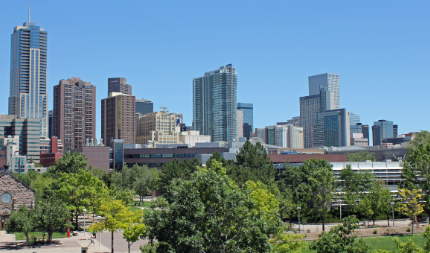
Selfishness is like that pesky cousin of self-interest that we all invite to the survival party, right? Sure, it keeps us mentally and physically sprightly, but when it starts hoarding snacks or pulling mind tricks like a magician gone rogue, it can really throw a wrench in relationships and teamwork—trust and good communication start to vanish faster than free pizza! Honestly, this kind of behavior doesn’t just ruin the fun for the people involved; it’s like a bad movie that’s creating a sequel of societal chaos, where competition smothers cooperation. Usually, fear, insecurity, or that moment when you realize you’ve run out of snacks pushes folks to act all selfish y, trying to shield their precious little selves. Some folks think it’s a smart move in competitive games, but spoiler alert—it can leave you feeling like a lone wolf who forgot to pack a picnic! That’s why we really need to strike a humorous balance between looking out for number one and spreading a little love to the rest of the pack.

Altruism is like that friend who always insists on paying for dinner but secretly hopes you’ll offer dessert in return – it’s all about putting others first, but let’s be honest, it feels pretty good to feel like a superhero, right? While most of us have the best intentions (like Mother Teresa on a sugar high), it’s tough to sort out the genuine selflessness from the warm fuzzy feelings that come with it. Philosophers like Ayn Rand argued that rational selfishness is basically a cheat sheet for success and progress, suggesting that pursuing our own bliss while helping others is the ultimate life hack. She believed that doing what benefits us could actually spark more innovation than a caffeine-fueled brainstorming session. Of course, some critics think that this whole individualism gig could turn us into hermits more concerned about our Netflix queues than our neighbors, warning that we might trade community hugs for personal trophies. The real challenge here? Finding that sweet spot where our dreams can coexist with the warm and fuzzy connections that keep us from turning into a society of self-absorbed cats.

Context is key—being a bit selfish in a crisis (like diving for the last lifeboat) is a whole different ball game compared to your average day when you might just ignore a friend’s plaintive cries for help with their math homework. When survival is on the line, it’s like your inner caveman takes over, and you might just tackle someone for that last slice of pizza. These situations highlight the wild rollercoaster of human behavior and that pesky survival instinct, which can sometimes kick social norms right in the shins. Most folks’ juggle self-interest and altruism like a circus act, influenced by everything from their upbringing to the latest trends on social media. Our backgrounds shape our crisis-mode responses versus our everyday antics; for instance, someone raised in a collectivist culture might prioritize the group’s well-being over their own, even if it means giving up dessert. Individual experiences also play a starring role in our decision-making, proving that selfishness and selflessness are basically dancing a tango, always dependent on the situation.

A reader may wonder how I came up with this topic. Recently a friend of mine said, “don’t be so selfish,” which struck a chord and made me reflect deeply on the nature of my actions. This made me think, “what is selfishness?” I went to my AI assistant and asked it to explain selfishness. After carefully analyzing the response and considering various perspectives on egoism and altruism, I realized there are many shades to this concept that I hadn’t fully appreciated before. I thought I would share these insights with others who might benefit from them. In conclusion, I am just going to continue being myself, embracing my uniqueness and flaws. I am not going to try to change but rather remain open to growth while accepting who I am at my core.

Time and Civilization Beyond Earth

Audio PODCAST

I have many hours of thinking about many things, often losing track of time as my mind wanders through endless possibilities and questions. I forget when this thought first came to me, but it has lingered like a whisper in the back of my mind, urging me to explore its depths. I thought, “In this gigantic universe, with its countless stars and swirling galaxies, there might be an advanced civilization existing somewhere among the vastness, capable of feats beyond our imagination. Earth, in all its beauty and complexity, is just a tiny speck in this gigantic universe, a fragile oasis in a world that may be teeming with life, intelligence, and cultures we’ve yet to comprehend.” The enormity of this idea fills me with both awe and a sense of wonder, making me think about the nature of existence and our place within such an unfathomable expanse.

What if time on this earth is just penance or punishment from this advanced civilization for doing something that has long been a topic of discussion in their sophisticated circles? Perhaps the notion of mortality is simply a veil placed over individuals who have transgressed deeply ingrained laws. “You are sentenced to 85 years on planet earth for disobeying regulations against the civilization of Eternity,” might echo through the minds of those who question their existence, a haunting reminder of a destiny shaped by the decisions of a society much more advanced than our own. In a realm where time is seen as both a gift and a curse, could it be that our very lives are crafted experiences, meticulously designed to elicit growth and understanding? Instead of mere punishment, is it possible that this designed life serves as a transformative journey, compelling us to confront our faults and aspire to enlightenment, ultimately striving to earn our way back to that higher civilization?

One must admit that this planet is not a friendly place. There is bad weather, disease, and illness that seem to plague various regions, impacting lives and livelihoods. Since the beginning of time, humans have been at war with each other, leading to suffering and loss that echo through generations. It appears that war and death are embedded deep within our DNA, almost as if they are integral parts of the human experience. Hatred and anger permeate societies and cultures around the globe, reflecting a profound discord among people. This pervasive animosity is often spurred by various factors, including but not limited to, religious differences, racial tensions, economic disparities, and a multitude of other reasons that foster division and hate. In a world where empathy and understanding often take a backseat, it becomes increasingly challenging to envision a future where peace prevails over conflict.

I think many times about time on this earth. I was born and raised in a Christian environment and still practice this faith, which has been a cornerstone of my identity. This upbringing instilled in me the belief that the teachings of my faith hold all the answers and provide a solid reason for our existence and the very concept of time on this earth. However, as I delve deeper into the complexities of life and observe the diverse perspectives around me, I find that these answers often feel insufficient. Despite the comfort that my faith provides, I am left with lingering questions that echo in my mind, and I am still left wondering about the true nature of time here—its purpose and how it intertwines with our lives, our choices, and our destinies.

Will I ever find or feel comfortable with the facts before I report to the civilization of Eternity? I kind of doubt it, as the unknown seems to shroud my existence like a thick fog that never lifts. The time of not knowing is just part of the time on earth, a mundane phase I must navigate amidst the chaos of life. Each unanswered question lingers in my mind, creating a tapestry of uncertainty that weaves itself into my daily routine. Perhaps this discomfort is a necessary precursor to a deeper understanding of the universe and my place within it, a reminder that not all truths are meant to be grasped readily. As I ponder these thoughts, I realize that the search for clarity may be as essential as the clarity itself, shaping my journey in ways I have yet to comprehend.

Nikola Tesla: The Pioneer of AC Electrical Systems

Audio PODCAST

Nikola Tesla July 10 (1856–1943) was a Serbian American inventor, electrical engineer, and futurist, best known for his pioneering work in developing alternating current (AC) electrical systems, which became the standard for modern electricity transmission and distribution. His innovative contributions laid the groundwork for numerous technological advancements, shaping the way we harness and utilize electrical energy today. Tesla reportedly had an eidetic memory and spoke eight languages fluently, showcasing his exceptional intellectual capabilities and linguistic skills that allowed him to communicate and collaborate with a diverse range of people worldwide. Often seen as a visionary, Tesla was known for eccentric habits, like his aversion to touching hair and obsession with the number three, habits that highlighted his unique personality and unconventional thinking. He would often go to great lengths to avoid certain stimuli, believing that these quirks were essential to his creative process, further establishing his reputation as a brilliant yet enigmatic figure in the annals of science and technology.

Born on July 10, 1856, in Smiljan, Croatia. Died January 7, 1943, in New York City, USA. –

Studied engineering at the Austrian Polytechnic in Graz and briefly at the University of Prague, though he did not complete a degree. During his time at these esteemed institutions, he was exposed to a variety of innovative concepts and technologies that piqued his interest in the field. He engaged in numerous projects and collaborative efforts with fellow students, which helped him develop a strong foundational knowledge despite not finishing his formal education. His experiences in Graz and Prague allowed him to cultivate valuable skills and connections that would later influence his career trajectory, ultimately shaping his approach to engineering challenges throughout his life.

Tesla’s development of alternating current technology, including the AC motor and transformer, not only revolutionized electrical power systems but also paved the way for modern electrical engineering. His innovative work significantly enhanced the efficiency of power distribution, leading to the widespread adoption of AC over Thomas Edison’s direct current (DC) for power systems across cities and industries. Tesla initially worked briefly for Thomas Edison, where he was exposed to the nascent field of electrical energy, but parted ways due to fundamental disagreements regarding the advantages and viability of AC versus DC systems. Their rivalry, famously known as the “War of the Currents,” became a defining moment in the history of electricity, culminating in the eventual dominance of AC after its successful implementation at the 1893 World’s Columbian Exposition, where a spectacular display of electric lighting showcased the potential of Tesla’s inventions to a captivated audience, forever changing the way electricity would be harnessed and utilized around the globe.

Tesla explored wireless communication and power transmission, envisioning a groundbreaking global system for transmitting electricity without wires that would revolutionize the way energy is distributed and consumed. His ambitious Wardenclyffe Tower project aimed to achieve this transformative vision by utilizing the Earth’s natural conductive properties, allowing for the seamless transfer of electricity across vast distances. However, despite the immense potential of his ideas and the initial excitement surrounding the project, it was ultimately never completed due to various financial issues and challenges in securing the necessary funding. The dream of a world interconnected by wireless energy remains a testament to Tesla’s innovative spirit and unyielding quest to push the boundaries of science and technology, leaving a lasting legacy that continues to inspire future generations.

Tesla held over 300 patents, including innovative designs for turbines, fluorescent lighting, remote control, and early X-ray imaging, showcasing his remarkable versatility and creativity as an inventor. His groundbreaking work laid the foundation for modern electrical engineering and significantly advanced various fields of technology, influencing countless inventions and applications that we rely on today. The principles he developed have paved the way for the efficient generation and transmission of electricity, as well as revolutionizing how we utilize energy in our daily lives. Tesla’s legacy as a scientific pioneer continues to inspire future generations of engineers and inventors dedicated to exploring and expanding the horizons of technology.

Tesla lived modestly in his later years, often in hotels, and struggled financially despite his genius. His extraordinary intellect and pioneering contributions to electrical engineering, however, did not translate into financial success, as he frequently found himself at odds with the commercial aspects of his inventions. He focused on ambitious but unrealized projects, such as wireless energy transmission and the development of a global communication system, which captivated his imagination but remained incomplete due to a lack of funding and support. In addition to these challenges, Tesla suffered from mental health challenges that complicated his ability to connect with others and secure partnerships. He often battled feelings of isolation, as his visionary ideas were frequently regarded as eccentric or impractical by his contemporaries. These factors combined to overshadow his remarkable legacy, leaving him to navigate a world that failed to recognize his revolutionary contributions during his lifetime.

He is celebrated as a visionary and is not given enough credit for the development of electric products we so enjoy today, including the intricate devices that have revolutionized our daily lives, such as smartphones, laptops, and smart home technology. His innovative ideas and groundbreaking contributions have paved the way for modern conveniences that enhance communication, entertainment, and productivity. Moreover, his relentless pursuit of excellence and commitment to advancing electric innovation have sparked an entire industry focused on creating sustainable and efficient energy solutions, ultimately benefiting future generations.

Immigration Policies Across the World

Paperback link to Amazon

Kindle link to Amazon

The U.S. immigration situation in 2025 is complicated and divisive, influenced by changing policies, border issues, and economic factors. Many were allowed to stay in the country while they wait for immigration hearings, which can take years because of court backlogs.
The immigration issue prompted me to take the problem seriously and explore it thoroughly by turning to various AI tools in my toolbox. I utilized Grok, Copilot, and Gemini for this purpose, each offering unique insights. I asked a common but crucial question across these platforms: “If I permanently wanted to immigrate to (country), what would I have to do? Additionally, do they have any assistance programs available for newcomers?” It’s important to note that there have been comments in various forums suggesting that different AI platforms may present biased perspectives and generate answers based on the leanings of the platform originators. This potential bias is precisely why I opted to consult multiple platforms; by doing so, I aimed to gather a more comprehensive view and ensure that I wasn’t missing out on any vital information that could facilitate my immigration journey.


Paperback USD $6.99

Kindle edition, Thru July 11 $0.00, $2.99 after

How Do You Want to Die?

Audio PODCAST

When you are young, you don’t think much of dying; in fact, you tend to think of yourself as immortal, viewing death as a distant concept, almost like something that happens only to others. As you become older, however, the perception shifts dramatically. You start to grapple with the reality of mortality, reflecting on loved ones who have passed and the inevitability of your own departure. This shift in thinking can be unsettling, prompting deeper contemplation about life itself, the choices you’ve made, and the legacy you wish to leave behind. The once distant specter of death gradually becomes a more immediate concern, shaping not just your fears, but also your aspirations and values in profound ways.

I am over eighty, and I am thinking more about death than when I was younger. My parents passed away when they were both seventy-five, a stark reminder of the fragility of life, and their health problems started to appear in their late sixties, foreshadowing an inevitable decline that I have witnessed. Close to three years ago, I had a near-death experience, which profoundly changed my perspective on life and mortality; it was a moment that forced me to confront my fears and contemplate what it means to truly live. Now, I am savoring every precious moment of this bonus time on this earth, appreciating the beauty of each sunrise, the laughter shared with loved ones, and the simple joys that life offers. I find myself reflecting on the memories of those I have lost; while also embracing the new relationships I have forged along the way, understanding that life is a precious gift that should never be taken for granted.

My mother was afflicted with bone cancer and bravely battled this disease for more than five years, demonstrating a strength that inspired everyone around her. After extensive treatments, which included the removal of the cancer alongside many difficult sessions of chemotherapy and radiation, we were overjoyed when the demon went into remission. For a period of four to five years, we held onto hope, cherishing every day as a blessing and celebrating the moments when she seemed to regain her health. However, the shadow of the illness returned with a vengeance, as the demon came back very aggressively, catching us off guard. It migrated to other parts of her body, relentlessly spreading and undermining her strength until it finally took her from us. Her death was slow and very painful, a heartbreaking process that left a profound mark on our family and a reminder of the cruel nature of illness.

My father was visiting California and he was scheduled to start driving home in the morning, excited to return to his familiar surroundings. He called me the next morning, his voice tinged with discomfort as he said he had an upset stomach and was going to wait another day before he started to drive home. Concerned, I suggested he take it easy and perhaps see a doctor if he didn’t feel better soon. That evening, his niece called, sharing the news that she had gone to get some take out for dinner. When she returned, my father was found on the floor, lifeless and still. It turned out he was having a heart attack and didn’t even know it – a silent, deadly intruder that took him without warning. That major mistake of ignoring his discomfort and not seeking help cost him his life, leaving a void in our hearts that would be felt for years to come.

Recently, my friend had multiple heart bypass surgery, a significant procedure that can have a profound impact on one’s life. He is in his mid-seventies, a time when health becomes increasingly fragile and precious. How long will this surgery extend his life? Only time will tell, and the uncertainty of that answer weighs heavily on both his mind and the hearts of those who care for him. Will this life-saving surgery expose him to a more painful and slow death, potentially leading him down a path filled with complications? This surgery may save him from heart failure, allowing him to experience more time with loved ones, yet it brings with it concerns about the possibility of battling another illness, such as cancer. The reality is sobering: cancer and heart disease are the biggest killers in the US, creating an overwhelming sense of vulnerability. Each day post-surgery is a delicate balance between hope and worry, as we eagerly anticipated his recovery while grappling with the harsh realities of health in our later years.

A couple of years ago, another friend of mine was out in the brisk winter air, running his snow-blower to clear the driveway and make way for vehicles. He was a hardworking individual, dedicated to ensuring everything was in order, but tragically, he suddenly fell over dead from an aortic aneurysm. The shock came swiftly, as it happened without any warning. His wife, who had been inside the warm house preparing a hot drink, grew concerned when she didn’t see him come in after some time. She then ventured outside, only to discover him laying motionless on the ground in the snow, a scene that would forever haunt her. It was a heartbreaking moment, filled with disbelief and sorrow, reminding us all of life’s fragile nature.

My wife’s mother was in her nineties, a remarkable age for anyone to reach, yet in her last year, her health had deteriorated significantly to the point that she could no longer walk and had lost all control of her bodily functions, which was deeply distressing for the entire family. Despite this decline, medical authorities reassured us that her heart and lungs sounded good, indicating that there were still vital signs of life, but it left us wondering about the quality of her existence. Why did she have to experience that sorry state of being? It was heart-wrenching to see a once vibrant individual reduced to such a condition, and the quality of life had taken a bad turn for her, leaving us to grapple with feelings of helplessness as we navigated through the complexities of aging and the eventual fragility of life.

These are just a few examples of death and suffering that I have experienced in my life. Death is a part of life, a natural cycle that eventually claims us all. All of us must someday face the inevitability of this event, each in our own way and at our own time. The experiences I have witnessed have shaped my understanding of mortality and the fleeting nature of existence. Even now that I am closer to the event, I still can’t answer the question, How do I want to die? This uncertainty prompts me to reflect deeply on my life and the legacy I wish to leave behind, worrying about the impact of my departure on those I love and how they will carry on without me. It is a thought-provoking and haunting consideration that lingers in my mind, intertwining with the hopes and fears I have for the future.


This blog was originally posted on WordPress January 28, 2011. Out of curiosity, I thought to take the same story and have AI enhance it. Here is the link to the original post. https://tomt2.com/2011/01/28/how-do-you-want-to-die/

What are your thoughts on the old post versus the new post?

Independence Day

Independence Day: Celebrating the Fourth of July** Every July 4th, Americans celebrate Independence Day, a federal holiday that marks the adoption of the Declaration of Independence in 1776. This important document, mainly written by Thomas Jefferson, declared the 13 American colonies’ break from British rule, establishing the United States as an independent nation. The Fourth of July is a lively celebration of freedom, unity, and national pride.

The holiday is marked by festive traditions. Fireworks light up the night sky, representing the “bombs bursting in air” from the national anthem, “The Star-Spangled Banner.” Communities across the country host parades with marching bands, floats, and patriotic displays. Backyard barbecues and picnics bring families and friends together with classic American food like burgers, hot dogs, and apple pie. Red, white, and blue decorations decorate homes, streets, and public places, showing the nation’s colors.

Independence Day also invites reflection on the values of liberty and equality enshrined in the Declaration. While the holiday celebrates the birth of a nation, it’s essential to recognize that it is also a moment to honor the sacrifices of those who fought for freedom, justice, and the rights we often take for granted. This includes the brave men and women who sacrificed their lives on the battlefield and those who used their voices and actions to advocate for equality and human rights. As we gather with friends and family to enjoy the festivities, let us not only partake in the celebrations but also take time to consider the ongoing journey toward a more inclusive society where every individual, regardless of their background, can experience the true meaning of freedom. All Americans should remember this day, reflect on the lessons of our past, and acknowledge the freedoms and privileges we enjoy from this great country, striving to ensure that future generations inherit a nation that continues to uphold and expand these cherished ideals for all.

From Secrets to Cosmic Truths

The sun set over Lake Granby, turning the water golden. Barb was swimming when she touched something smooth underwater. She dove down and found a corked glass bottle, old and worn. Inside was a rolled-up piece of paper. On the shore, she opened it and read: “Barb, your mother’s secret is in the Hollow Oak, three nights from now. Trust the raven.”

The words hit her hard. Her mother, gone for ten years, had left behind mysterious stories that Barb never grasped. It scared her to think that no one knew she was here today. The Hollow Oak, an old tree in the nearby forest, was somewhere she’d steered clear of since she was a child, its shadow making her uneasy. A raven cawed above, its dark eyes shining.

Determined, Barb set out at dusk three nights later, following the raven’s shadow through the woods. She arrived at the Hollow Oak, where a carved box contained her mother’s locket with an engraved map. The raven landed and pointed her to a path that led to an old cabin. There, journals showed her mother was a cryptographer hiding a key to a lost artifact that could reveal universal truths.

Barb felt nervous. The journals suggested a secret society was searching for the artifact. With the raven guiding her, she set out to find it first and uncover her mother’s past. Each step took her further into a world of puzzles and threats, with her mother’s locket as a protective charm. The lake’s message had started an adventure that would change her past and future.

The secret society searching for the artifact that Barb’s mother hid, called the Order of the Saffron Veil, was a mysterious group with roots stretching back centuries. Barb’s mother’s journals, discovered in the cabin, showed that the Order was made up of scholars, mystics, and powerful elites eager to control knowledge about the universe. The artifact, known as the Oculus Veritas, was said to provide its owner with understanding of cosmic truths, including the nature of existence and time manipulation. The Order thought it was their right to possess it.

Barb discovered that the Order worked in groups, each led by a “Veiled Warden” wearing saffron cloaks and a sigil of a raven with an eye. The journals talked about their strange rituals held under dark skies, where members chanted in an old language, hoping to see visions of the Oculus. Her mother, who had once been part of the Order, betrayed them by stealing the map to the relic’s location, which led to her death, disguised as an accident.

As Barb followed the map, she felt the Order’s presence growing. A cloaked figure watched her in a market, quietly calling her name. A raven—her guide—scattered them, but not before she saw their symbol. The journals warned of their reach: informants everywhere, secret messages, and good surveillance. Barb’s journey became a game of strategy. She used her mother’s codes to stay ahead, finding safehouses and rogue ex-members who taught her how to avoid the Order’s traps.

The trail led to a forgotten temple, where the Oculus lay hidden. Barb faced a choice: destroy it or wield its power, knowing the Order closed in, their saffron banners flickering in the night.

What choice would you make?

Beat the Summer Heat

Audio PODCAST

Summer’s scorching heat is like that overly enthusiastic relative who shows up uninvited—joyful yet challenging! While the sun’s golden rays are begging you to hit the beach, fire up the barbecue, and lounge like a professional napper, you must remember that staying cool and safe is essential to fully enjoy this sizzling season. So, how do you navigate this sauna we call summer without melting? First and foremost, hydration should be your new best friend. Chug that H2O like it’s a marathon! Aim for eight glasses a day but bump it up if you’re sweating like a popsicle in a heatwave. Sprinkle in some electrolyte-rich drinks, like coconut water, for that refreshing “I’m on a tropical vacation” vibe. And seriously, ditch the sugary sodas and heavy caffeine—they’re basically the party crashers of your hydration game. Always tote around a reusable water bottle, preferably decked out with a zesty slice of lemon, because who said staying hydrated can’t be gourmet?

Dress like you’re ready for a sizzling summer showdown! Opt for lightweight, breathable fabrics like cotton or linen; think of loose cuts that let air flow and keep you cooler than a popsicle at a beach party. Go for light colors to reflect sunlight – after all, who wants to be a walking sun magnet? Complete your look with a wide-brimmed hat that makes you look like you’re about to announce the weather, paired with UV-blocking sunglasses that scream, “I’m too cool for sunburns!” And please, don’t skimp on sunscreen—smother on that broad-spectrum SPF 30 or higher like it’s frosting on a cake, and remember to reapply every two hours, or risk turning into a lobster!

Beat the heat with a splash of creativity! When the sun is acting like it’s auditioning for a villain role from a superhero movie (2-4 p.m., we’re looking at you), hightail it to air-conditioned cafes where the coffee is hot, but the air is cool! At home, shut those blinds like you’re hiding from an ex and let the fans do their thing to stir up a breeze. If things get too toasty, a cold foot soak or a damp towel on your neck can feel like a spa day gone right. Plan your outdoor shenanigans for early morning or late evening when the sun is too sleepy to bother you. Remember to eat light and fresh—salads, grilled veggies, or water-rich fruits like watermelon and oranges! Grilling not only keeps the kitchen cool but also adds a deliciously smoky flavor that screams summer without so much as raising a sweat!

Be vigilant for signs of heat exhaustion—dizziness, nausea, or excessive sweating. Should these symptoms manifest, it is imperative to relocate to a cool environment immediately, and to hydrate with water or an electrolyte-replenishing beverage while taking sufficient time to rest. Prolonged exposure to elevated temperatures can result in severe health complications; thus, maintaining vigilance and taking proactive measures is critical. Furthermore, wearing lightweight, breathable fabrics and taking regular breaks in shaded locations can substantially mitigate your risk. By adhering to these guidelines, you will not only endure the summer heat but also engage safely in various outdoor pursuits, fostering memorable experiences with friends and family while prioritizing health and safety.

Remember, summer is like a good hair day—fleeting and full of sunshine, and before you know it, you’ll be swearing at your thermostat while your snow boots stage a dramatic comeback!

The Vanishing Blend

Audio PODCAST

In the sleepy town of Meeker, The Great Bean was a cozy haven, its air thick with the scent of roasted coffee, where the warmth of the wooden decor and the gentle hum of muted conversations offered refuge from the world outside. Helen had worked there for years, her hands deftly crafting lattes and cappuccinos, her smile a familiar comfort to regulars who visited each morning. But recently, something unsettling had begun to unfold. Customers who ordered the shop’s new “Midnight Ember” blend—a dark, smoky roast with an almost unnatural allure—disappeared the next day, leaving behind only whispers of their presence. No trace, no explanation. Helen noticed it first with Mr. Harrow, the librarian, who had always raved about the blend’s rich, bittersweet kick. The next morning, his library was empty, his car untouched in the parking lot, and a sense of foreboding crept over the once-vibrant streets of Meeker. Then it was Mrs. Tate, the florist, who had enjoyed her daily ritual of coffee and flowers, gone after sipping the same brew that had entranced Mr. Harrow. By the fifth customer, who vanished without a word, Helen’s curiosity turned to dread, as she began to wonder if the alluring blend was drawing them into a shadowy realm from which no one could return. The cozy haven felt charged with an unease that entwined itself with the fragrant aroma of coffee, and Helen couldn’t shake the feeling that the comforting atmosphere was hiding something sinister just beneath the surface.

She confided in her coworker, Sam, who scoffed dismissively, crossing his arms and leaning back in his chair. “People move, Helen. It’s just a coincidence, nothing more.” But Helen wasn’t convinced; a shiver ran down her spine at the thought of such strange occurrences surrounding the Midnight Ember. She delved deep into the coffee shop’s mysterious origin: a cryptic supplier with no physical address, just a handwritten note that accompanied each shipment, promising “a taste beyond time.” Intrigued and somewhat unnerved, she noted the peculiar charm of the beans, which were jet-black and shimmering faintly under the soft glow of light, almost as if they held secrets of their own. Helen decided that she couldn’t let this mystery go unsolved; her curiosity ignited a fire within her, compelling her to investigate further, to uncover the truth hidden behind each mysterious shipment.

Late one night, after closing, she brewed a pot of Midnight Ember. The aroma was intoxicating, like burnt caramel and starlit air, wrapping around her like a warm embrace that stirred something deep within her. She hesitated, her hand hovering above the steaming mug, then poured a cup, the rich liquid swirling like a dark tempest. One sip burned her throat, not with heat but with a strange, electric pull that sent shivers down her spine. Her vision blurred, and the shop dissolved into darkness, slipping away like a forgotten dream. When her eyes adjusted, she stood in a vast, shadowy forest, the air humming with whispers that danced just beyond her comprehension. Figures moved among the trees—Harrow, Tate, the others—wandering, dazed, but alive, their expressions a mix of confusion and longing. They didn’t see her, as if trapped in their own realities, each lost in a personal maze of thoughts and memories, intertwined in an unseen web that connected them all yet kept them apart. Shadows flickered around her, mingling with the echoes of laughter and cries, hinting at stories left untold, while she felt the weight of their presence, both haunting and familiar, urging her to step deeper into the enigma that enveloped them all.

A voice, low and ancient, echoed with a resonant depth: “The blend binds you here, to the place between.” Helen’s heart raced in response to the urgency of the words reverberating in her mind. She saw a glowing rift ahead, pulsing like a heartbeat, a mesmerizing sight that drew her in with an almost magnetic force. Instinct screamed to run toward it, to reach out and touch whatever lay beyond the shimmering veil. With her breath quickening, she stumbled through the rift, gasping as the air shifted around her, feeling a rush of energy envelop her. Suddenly, she found herself back in the shop, the familiar surroundings grounding her once more, the cup still warm in her hand, as if it were a tangible reminder of her fleeting journey. Only minutes had passed, yet it felt as if lifetimes had unfolded in that brief moment, leaving her with questions that hung heavy in the air.

Helen dumped the coffee and locked the Midnight Ember beans in the storage room, a sense of foreboding settling over her as she did so. The next day, with anxiety gnawing at her stomach, she called the supplier’s number, only to find it disconnected. Panic rose within her as she recounted the troubling events to Sam, but he laughed, dismissing her worries and refusing to believe the bizarre happenings surrounding the coffee. Desperate and feeling increasingly isolated, Helen made the difficult decision to destroy the beans that had become a source of such distress. She burned the bags in a metal bin behind the shop, the flames flaring an eerie blue that danced and flickered like spirits in the night. The whispers from the forest surrounded her, lingering in her mind, their cryptic warnings echoing as if to tell her that she would never return unscathed.

The disappearances stopped, leaving the townsfolk to breathe a collective sigh of relief. Meeker moved on, chalking up the vanishings to small-town mysteries that often faded into folklore, tales told with a shiver among those gathered around the fire. Helen quit the shop soon after, unable to shake the lingering unease that the rift wasn’t truly gone, just waiting in the shadows, biding its time like a predator. Sometimes, at night, she would walk through the quiet streets, and a familiar scent would waft towards her—a caramel-starlit fragrance that felt both nostalgic and eerie, faint but undeniably present, as if the essence of the vanished was still lingering. She never drank coffee again, associating the bitter brew with the long nights filled with anxiety and the unanswered questions that haunted her thoughts. Instead, she found solace in herbal teas, hoping to soothe her restless mind while she grappled with the feeling that, despite the calm facade, something darker still lurked just beneath the surface of their small town.

Years later, a new worker at The Meeker Bean found an old, unmarked bag of beans tucked away in the dusty shadows of the storage room. Curiosity piqued, he decided to brew a pot, intrigued by the mysterious provenance of the beans. As the rich aroma filled the air, he couldn’t help but wonder about their origin and what stories they might hold. The next day, however, he was gone, leaving behind a lingering sense of unease and unanswered questions that enveloped the café in an eerie silence. Whispers of his sudden disappearance began to circulate among the regulars, and the once-cozy atmosphere turned heavy with speculation and concern.

Guilt and using AI

Audio PODCAST

No, you shouldn’t feel guilty for using AI in your blogs, as long as you’re using it ethically and transparently. AI can be a tool like any other—think of it as a supercharged notepad or research assistant. It can help brainstorm ideas, refine drafts, or analyze data, saving you time and boosting creativity. The key is maintaining authenticity: ensure the final work reflects your voice, ideas, and values. If you’re just copying AI output without adding your own insight or passing it off as entirely your own, that’s where ethical lines blur—readers value genuineness, and misrepresenting your process could erode trust.

Some bloggers disclose AI use to their audience, which can build transparency and avoid any sense of deception. It depends on your niche and readers’ expectations—tech-savvy audiences might not care, while others might prefer a “human touch.” If you’re using AI to enhance your work while still pouring in your own effort, guilt shouldn’t be on the table. It’s about creating value, not about the tools you use to get there.

Yes, I use AI just like another tool in my toolbox. I have no guilt because I let it be known for that fact. AI is here and, in many features, greatly enhancing our productivity and creativity. This reminds me of when pocket calculators came into existence. There was resistance for this tool in the beginning; many feared that it would diminish human capability, yet civilization survived and adapted, just like it will with AI. Instead of resisting change, we should learn to harness AI’s capabilities to augment our skills and explore new possibilities, integrating it seamlessly into our daily lives and workflows. Embracing AI can lead to innovative solutions and greater efficiency, proving that technology can work in harmony with human intelligence.

From Blogging to Fiction

Audio PODCAST

I have been blogging on various platforms since around 2006, and it has been a remarkable journey of sharing my thoughts and experiences with a diverse audience. On WordPress alone, I am close to having 500 posts on the platform, each one capturing a snapshot of my life and interests. I also have a site on Substack. They are basically the same blogs, just a different audience. I have learned that podcasts are the large item these days. So, I also include an audio podcast on my blogs. I have self-published travel books and a biography on Blurb.com, showcasing my fascination with different cultures and the stories of extraordinary people. Additionally, on that platform, I have a magazine series with fifteen issues, which allows me to delve deeper into topics I am passionate about, from travel and adventure to personal growth and storytelling. Most of my blogging has revolved around personal experiences or activities, offering readers a glimpse into my everyday life and the lessons I’ve learned along the way. However, after close to 25 years of documenting my journey, you start to run out of events and personal experiences to write about, leading to a creative plateau. Therefore, I started to search for a new challenge, eagerly looking for fresh perspectives and untold stories that will inspire both myself and my readers in this ever-evolving landscape of digital communication.

I forget how I stumbled across that Amazon has a Kindle Direct Publishing feature. It allows mere mortals like me to compose and publish eBooks to be added to their Kindle platform, offering an incredible opportunity for authors to share their voice with the world. The investment is mostly time and the desire to try something different, an exciting venture that has the potential to transform ideas into tangible works. I cannot imagine a book publishing company to be interested in my ramblings, considering the competitive landscape filled with seasoned writers, and I don’t have a clue how to even locate a publisher that may be interested in my unconventional stories. During that time, I had the thought, “why don’t I try some fiction writing?” It struck me as a way to creatively express myself and escape the mundane routines of daily life. Many times, in my life, it has been said that I am a dreamer and have crazy thoughts and ideas, often weaving elaborate tales in my mind that yearn to be told. With the help of AI, my dreams and thoughts are coming alive. I believe that through fiction, I might not only entertain others but also find a deeper connection to my own aspirations and experiences, allowing my imagination to soar like never before.

Since this thought, I have just completed my third book of “Tales of TomT 2.0”. You can just do an eBook or also offer a paperback copy or hard cover copy to complete the different options available. Each publishing is around 100 pages. I will never make the best seller list, but I am enjoying this journey and learning from the journey.

Book Three Link

Book Two Link

Book One Link

Rita’s Bold Leap

Audio PODCAST

The air in the office was thick with the hum of fluorescent lights and the clatter of keyboards, creating a constant backdrop of activity that felt almost oppressive. Rita, perched at her desk like a weary soldier, stared at the spreadsheet that had haunted her for weeks, its cells filled with figures that felt more like chains than data. Numbers blurred into meaningless shapes, each cell a tiny cage of expectation that whispered unrelenting demands for perfection. She’d been at RCA for five years, gradually climbing from intern to analyst, but the relentless grind had worn her down, leaving her feeling as if she were merely a cog in a vast machine. Deadlines loomed like dark clouds, emails flooded her inbox like an unstoppable tide, and meetings that could’ve easily been memos disrupted her already fragmented concentration—it was a treadmill set to sprint, draining her energy and enthusiasm with every frantic step.

“You know what? I quit,” she said, her voice cutting through the cubicle’s quiet like a knife. Her coworker, Ray, froze mid-sip of his coffee, eyes wide as if he had just seen a ghost. The words weren’t planned; they just spilled out, raw and final, escaping from a place of pent-up frustration and resolve. The dim fluorescent lights flickered overhead, casting a harsh glow on the stack of papers on her desk, the evidence of countless late nights and unrecognized efforts. She could feel the weight of her decision hanging in the air, a mix of fear and exhilaration surging through her veins as she took a deep breath, knowing that she was finally choosing her own path.

“Rita, what?” Ray whispered, glancing around as if expecting a manager to swoop in at any moment, ready to question their every move. But Rita was already standing, her chair scraping against the linoleum with an unsettling screech that caught the attention of a few nearby colleagues. She grabbed her mug—World’s Okayest Analyst—proudly displaying her modesty in a place filled with corporate bravado, and her worn-out tote bag that had seen better days, a testament to countless coffee runs and late nights spent poring over data. As she dashed out of the room, she abruptly left the spreadsheet unsaved behind, the data lingering on the screen like an unfinished thought, a reminder of the work that still lay ahead in the chaotic world of analytics.

The elevator ride down felt like shedding a skin. Each floor that passed was a layer of stress peeling away, liberating her from the suffocating weight of her daily grind. She thought of the late nights spent hunched over her laptop, the weekends lost to “urgent” reports that were often nothing more than busywork, and the boss who’d once said, “You’re lucky to have this job.” Lucky? No. Trapped. Trapped in a cycle of endless deadlines, hollow praise, and a relentless pursuit of perfection that left her drained. As she descended, she visualized each task she was leaving behind—a mountain of expectations, the constant hum of office chatter, and the air thick with unspoken tension. With each passing floor, the lightness of freedom grew, igniting a spark of hope that perhaps, just perhaps, there was a life waiting for her beyond these walls.

Outside, the city buzzed with life, a vibrant tapestry of sounds and sights weaving together in a chaotic yet harmonious dance. Rita walked with purpose, no destination in mind, her sneakers pounding the pavement with a rhythmic beat that matched her racing heart. The sun hung high in the sky, casting playful shadows on the bustling streets as she passed a street musician strumming a guitar, the notes bright and free, floating through the air like a gentle breeze. The melodies seemed to wrap around her, inviting her to pause and immerse herself in the moment. She tossed a crumpled five into his case, and he winked, his eyes glinting with a shared understanding of spontaneity. “Live a little, yeah?” he called, his voice carrying over the city’s din. She couldn’t help but laugh, the sound foreign yet welcome, as it mingled with the laughter of children playing nearby and the chatter of passersby, each one contributing to the urban symphony that surrounded her. Feeling a spark of joy, she continued on her journey, a slight bounce in her step as the city unfolded before her like a vibrant story waiting to be told.

Her phone buzzed—Ray, texting: You serious? What’s the plan? She didn’t reply. For once, there was no plan, no checklist to adhere to, just a sense of freedom she hadn’t experienced in a long time. She wandered into a park, where kids chased pigeons, their laughter ringing through the air, and an old man fed ducks, his joy infectious. The sun filtered through the leaves, casting a warm glow on the vibrant greens of the grass. Sitting on a bench, she pulled out a notebook she hadn’t touched in years, its pages filled with half-sketched dreams: a bakery on a bustling street corner, a novel waiting to be written that danced in her imagination, a trip to Iceland to witness the northern lights. Rita had buried those aspirations under piles of memos and KPIs, conforming to the grind of daily responsibilities that had dulled her spirit. But now, with the weight of expectations lifted, she felt a spark of inspiration ignite within her, urging her to reclaim those forgotten dreams and explore the possibilities that lay ahead.

The sun dipped low, painting the sky in reckless pinks and oranges. Rita scribbled: What if I opened that bakery? The idea felt absurd, then thrilling. She’d always loved baking—sourdough at 2 a.m., cupcakes for coworkers’ birthdays, and the occasional batch of cookies that she’d surprise her neighbors with, leaving them in their mailboxes with a little note: “Enjoy!” Why not? She had savings, enough to start small. A food truck, maybe, with a vibrant paint job and the tantalizing smell of fresh pastries wafting through the air. No corporate nonsense, just flour and sugar and her hands transforming simple ingredients into warm, delightful treats. The thought of sharing her creations with others sent a rush of excitement through her. What if she hosted pop-up events at local markets? The image of happy customers savoring her pies sparked a dream that felt just within reach.

Her phone buzzed again—her boss, probably furious, as usual. She silenced it, dismissing the relentless grip of her former life. For the first time in years, Rita felt light, like she could breathe without a deadline choking her. The oppressive weight of expectations had begun to lift, replaced by a sense of exhilarating freedom that filled her heart with hope. Quitting wasn’t just leaving a job; it was reclaiming herself and rediscovering passions long forgotten amidst the chaos of corporate life. The future was uncertain, a blank page, but that was the point. She’d write it herself, penning the story of her own adventures, crafting a narrative infused with joy, exploration, and the thrill of new beginnings. With each step forward, she felt more connected to her true self, ready to embrace whatever came next.

As dusk settled, Rita stood, her notebook clutched tight against her chest, a sanctuary for her swirling thoughts. The musician’s tune lingered in her head, its melodic notes weaving dreams of creativity and warmth through her mind. Tomorrow, she’d bake her first loaf, a decision that filled her with both excitement and trepidation, just to see how it felt and if she could capture the essence of home in its golden crust. “Live a little,” she murmured softly to herself, reminding her inner self of the importance of embracing new experiences, and with a renewed sense of purpose, she headed home, her steps sure and steadfast, each footfall echoing her determination to embrace change.

For the first time in many years, Rita felt free, as if a heavy weight had been lifted from her shoulders, allowing her to breathe deeply and joyfully embrace the vibrant world around her with open arms. The sunlight streamed through the leaves, casting cheerful shadows on the ground, while the gentle breeze whispered promises of exciting new beginnings.

Ten years later Rita had a successful bakery and more money than when she said, “I QUIT!”

The Emotional Role of Dreams

Audio PODCAST

In many parts of my life, I had terrific dreams that painted the night with vivid colors and extraordinary stories, making it feel like I was living two lives simultaneously. The dreams were colorful and vibrant, filled with an array of subjects that ranged from whimsical adventures in fantastical realms to profound encounters that shifted my perspective on reality. The nice part was I could remember the dreams when waking up, and each recollection felt like a precious gift, allowing me to hold onto those enchanting moments from my subconscious. Unfortunately, everything changed when I had a kidney stone when I was seventy-five and was put under anesthesia to remove the stone. Since that time, I do not remember my dreams at all; they seem to slip away into oblivion as I awaken, leaving behind only an elusive echo of their existence. I experience them when asleep, but now when I wake up, they are gone, like whispers lost in the wind. I miss my dreams dearly, as they were a source of inspiration and joy. I really enjoy recalling my dreams in my conscious time, as they opened up new avenues of creativity and allowed me to explore parts of my mind that felt unexplored. Now, I long for the return of those magical nights where my imagination could run wild and the boundaries of reality seemed to fade away. I do not believe that ability will ever return.

The purpose of dreams isn’t fully understood, but research suggests they serve multiple functions. Neurologically, dreams may help process emotions, consolidate memories, and integrate new information, with the brain’s amygdala and hippocampus playing key roles during REM sleep. Studies, like those from the University of California (2019), indicate dreaming aids in emotional regulation, reducing stress by reprocessing challenging experiences. Cognitively, dreams might enhance problem-solving and creativity by allowing the brain to form novel connections—evidenced by historical anecdotes like Kekulé’s benzene ring dream. Some evolutionary theories propose dreams simulate threats, preparing us for real-world challenges, though this is debated.

Psychologically, dreams could reflect subconscious thoughts, as Freud suggested, or serve as a “virtual reality” for testing scenarios, per Antti Revonsuo’s threat simulation theory. However, the random activation synthesis model (Hobson & McCarley, 1977) argues dreams are the brain’s attempt to make sense of random neural firing, not always purposeful. Cultural and personal beliefs also shape dream interpretation, but no single purpose is universally agreed upon. Ongoing research continues to explore these angles.

I have always wondered if not going under anesthesia would allow me to keep my dreams, those fleeting images and feelings that often fade upon waking. It intrigues me how dreams can be vivid and meaningful yet easily forgotten. What in the anesthesia removed my ability to remember my dreams? I will never know.

High Heels Through History: From Status to Style

Audio PODCAST

I have wondered about high heels for a long time. They look uncomfortable and didn’t know why women go through the discomfort. I went to AI and accumulated some history on the high heel.

High-heeled shoes for women have a rich history that spans centuries, evolving from practical footwear to a symbol of fashion, status, and femininity. Originally designed for functionality in the 16th century, they were embraced by aristocrats to elevate their height and showcase their wealth. As time progressed, high heels became a canvas for artistic expression, with styles ranging from elegant court shoes to flamboyant platforms that dominated the catwalks. The shift in their connotation reflects broader societal changes, as they went from being associated with the male aristocracy to becoming a staple in women’s fashion culture. Today, high-heeled shoes are celebrated for their ability to transform an outfit, empowering women while also sparking debates around comfort, health, and gender norms. Below is a concise overview of their development:

Origins (9th–16th Century)

  • Early Predecessors: Elevated footwear existed in ancient cultures, like the Greek kothorni (platform shoes for actors) and Persian riding boots with heels for men to stabilize in stirrups (10th century). These were not women’s high heels but set a precedent for raised footwear.
  • 15th Century Europe: Women wore chopines, platform shoes popular in Venice, often 7–30 cm high. These protected dresses from muddy streets, signified wealth (due to the need for servants to balance), and were worn by elite women. They weren’t true heels but influenced later designs.
  • Late 16th Century: Catherine de Medici, a trendsetter, is credited with popularizing heeled shoes in France around the 1560s. She wore 2-inch heels to appear taller and more authoritative, sparking interest in heels as fashionable women’s footwear.

17th–18th Century: Rise of the High Heel

  • 1600s: Heels became unisex in European aristocracy. Women’s heels, often 2–3 inches, were made of wood or leather, covered in silk or velvet, and adorned with embroidery. They symbolized status, as only the wealthy could afford impractical shoes.
  • 1660s–1700s: Louis XIV of France popularized red-heeled shoes for both genders, with women’s heels becoming slimmer and more curved. The “Louis heel” (a stacked, slightly curved heel) emerged, emphasizing elegance and femininity.
  • Late 18th Century: Post-French Revolution, heels fell out of favor due to associations with aristocracy. Flat shoes and simpler styles dominated as democratic ideals took hold.

19th Century: Revival and Refinement

  • Early 1800s: Heels remained low or absent, with ballet-style slippers in vogue. However, by the 1850s, heels re-emerged as women’s fashion embraced ornate styles.
  • 1860s: The invention of the sewing machine enabled mass production, making heels more accessible. Women’s heels, typically 1–2 inches, were blocky or slightly curved, paired with ankle boots or pumps.
  • Late 19th Century: The “spool heel” (narrow at the base, wider at the top) became popular, and heels grew to 3–4 inches. Victorian ideals of femininity tied heels to allure, though they were still modest compared to later designs.

20th Century: High Heels as Fashion Icons

  • 1900s–1920s: Heels became a staple of women’s fashion. The stiletto’s precursor, a slender 2–3-inch heel, appeared with pointed-toe pumps. Designers like André Perugia experimented with heel shapes, emphasizing elegance.
  • 1930s–1940s: Hollywood glamour boosted heels’ popularity. Platforms returned, and wedge heels (invented by Salvatore Ferragamo) offered stability. Wartime shortages led to creative materials like cork and wood. Heels ranged from 2–5 inches.
  • 1950s: The stiletto heel, a thin, 4–8-inch heel reinforced with metal, was perfected by Roger Vivier and popularized by stars like Marilyn Monroe. It became a symbol of femininity and sexuality, though it sparked debates about health and practicality.
  • 1960s–1970s: Fashion diversified. The 1960s saw chunky heels and platforms (up to 6 inches) alongside stilettos, reflecting youth culture. The 1970s embraced platforms and block heels, with disco culture amplifying bold, high styles.
  • 1980s–1990s: Power dressing brought back stilettos for professional women, often 3–5 inches, paired with sharp suits. Designers like Manolo Blahnik and Christian Louboutin (with his iconic red soles in 1992) elevated heels as luxury items. Platforms also resurged in the 1990s with “Spice Girls” chunky heels.

21st Century: Versatility and Debate

  • 2000s–2010s: Heels remained central to fashion, with stilettos, kitten heels (1–2 inches), and platforms all popular. Designers pushed extremes, like Alexander McQueen’s 10-inch “Armadillo” heels (2010). Comfort became a focus, with brands like Cole Haan integrating cushioning.
  • 2010s–2020s: Feminist critiques questioned heels as symbols of oppression, citing health issues (back pain, bunions) and workplace mandates. Some women embraced flats or sneakers, but heels persisted, with “block heels” and lower styles offering comfort. Sustainable materials and inclusive sizing also emerged.
  • Cultural Shifts: Red carpet events and influencers kept stilettos iconic, but casual fashion normalized mixing heels with jeans or athleisure. By 2025, heels are both celebrated for self-expression and scrutinized for practicality, with hybrid designs (e.g., sneaker-heels) gaining traction.

Key Themes

  • Status and Power: Heels historically signaled wealth and authority, later shifting to feminine allure.
  • Technology: Advances like metal-reinforced stilettos and mass production shaped accessibility and design.
  • Cultural Debates: Heels have been both empowering (enhancing confidence) and controversial (health concerns, gendered expectations).
  • Fashion Cycles: Heels oscillate between high and low, slender and chunky, reflecting broader trends.

I must admit artificial intelligence did the research on this topic, utilizing advanced algorithms and vast datasets to analyze and synthesize information efficiently and effectively, thereby producing insights that might have taken humans considerably more time to uncover, leading to a more thorough understanding of the subject matter at hand.

National Flip Flop Day June 20th

Audio PODCAST

National Flip Flop Day is celebrated annually in the United States to embrace the carefree spirit of summer and the iconic footwear known as flip-flops. Originally observed on the third Friday in June, the date was changed in 2023 to the Wednesday after Memorial Day to better align with the onset of warmer weather and the bustling activities of the summer season. This shift reflects a growing awareness of consumer habits, as many individuals eagerly anticipate the warmer days of summer, looking forward to beach outings, barbecues, and leisurely strolls. The date for 2025 was set for Wednesday, May 28, as it falls on the Wednesday after Memorial Day, following the updated schedule established by Tropical Smoothie Cafe in 2023 that encourages everyone to celebrate the joys of summer. The day serves not only as a reminder to don your favorite flip-flops but also as an occasion to gather with friends and family, sharing laughter and creating lasting memories. The AI I used did not know about the update, highlighting the fact that technology, while incredibly advanced, is not infallible and is continually evolving to keep up with the changes in our world.

Founded in 2007 by Tropical Smoothie Cafe to mark their 10th anniversary, celebrate summer, and show appreciation for their customers.

The term “flip-flop” comes from the slapping sound the sandals make when walking, an onomatopoeia used in American and British English since the 1960s. Flip-flops have ancient origins, with evidence of similar footwear in Ancient Egypt around 4,000 BC, made from materials like papyrus and palm leaves. They were also worn in ancient Greece, Rome, and Mesopotamia, showcasing their enduring nature across cultures and epochs. It is interesting to note that these early variants were often adorned with decorative elements, reflecting the wearer’s status and style. The design and function of flip-flops evolved over centuries, influenced by both social changes and advancements in materials. In addition, Japanese zori sandals, traditionally crafted from rice straw and tatami mats, influenced modern flip-flops in the U.S. after World War II, as returning soldiers brought back these unique styles, leading to their widespread popularity in American beach culture. Today, flip-flops are not only a staple of casual summer wear but also a symbol of relaxed, carefree living, enjoyed by people of all ages around the world.

Wear your favorite flip-flops and share photos on social media with #NationalFlipFlopDay to celebrate this fun and relaxed occasion. Take the time to shop for new flip-flops, including eco-friendly options from reputable brands like Rainbow or Hari Mari, which prioritize sustainability and style. To really embrace the spirit of the day, consider hosting flip-flop-themed events like lively beach parties, friendly flip-flop races, or engaging craft activities using old flip-flops for art projects that can be both fun and eco-conscious. If you find yourself far from a Tropical Smoothie Cafe, you can still indulge your taste buds by making or enjoying delicious smoothies at home using fresh fruits and ingredients, allowing everyone to gather and celebrate in comfort and relaxation.

I may be late, but I enjoyed learning about Flip Flop Day.

Why Are We Here? Exploring Our Purpose

Audio PODCAST

Have you ever thought about why you are spending time on this earth?

The world is not a friendly place. There is bad weather, disease, and pain, all of which contribute to a pervasive sense of distress. It seems that there is constant war somewhere on the earth, threatening lives and displacing countless individuals from their homes. In some parts of the world, starvation is a serious problem, with entire communities struggling to find enough food to survive each day. The anguish of those suffering from hunger is compounded by a lack of access to medical care and basic sanitation, leading to a cycle of despair and hopelessness. I could go on and on about how this earth is not a friendly place for millions who have spent time on this planet, enduring hardships that often seem insurmountable, leaving them to wonder if there is any reprieve in sight.

How many faiths and religions have been or are currently attempting to explain the profound question of your presence on this earth? Each belief system, whether ancient or modern, carries unique stories and teachings that reflect humanity’s quest for understanding its place in the universe. From the monotheistic teachings of major world religions to the polytheistic perspectives found in various traditions, countless voices have sought to articulate the meaning of life and existence. Through rituals, sacred texts, and communal practices, these faiths aim to provide answers to our deepest yearnings and questions about purpose, identity, and the ultimate nature of reality.

The earth is just a small speck in this gigantic universe, a tiny oasis amidst the vastness of space that stretches infinitely in all directions. I do not know how many planets have been discovered that may be suitable for forms of life to survive, but scientists tirelessly search for those celestial bodies that might harbor the conditions necessary for life, such as the right temperature, atmosphere, and presence of water. Each new discovery ignites the imagination, prompting wild speculations about the myriad possibilities for life beyond our own world, raising questions about our place in the cosmos and whether we are truly alone in this grand expanse.

What if your time is a form of penance or punishment from another civilization located in the gigantic universe, a celestial courtroom beyond our comprehension? Are we paying for something that we did in another planet, shackled by the weight of our past mistakes, and time on earth was the sentence imposed upon us? Perhaps the very fabric of our existence is governed by unseen forces, orchestrating our lives in a manner we cannot fully understand. I often find myself pondering these perplexing ideas, questioning whether the mundane trials we endure are mere trivialities or echoes of a cosmic judgment. I don’t know where these crazy thoughts come from, but they linger like shadows in my mind, provoking a sense of wonder and questions about the true nature of our reality and our place within this vast, enigmatic universe.

Is this just me, or do you ever wonder about your purpose and time on this earth?
It seems that, at various points in our lives, we find ourselves pondering the deeper meanings of our existence, searching for answers to questions that often feel too complex to grasp.
We reflect on the choices we’ve made, the experiences we’ve had, and the dreams we once chased, all while considering how they shape our identity and future.
In a world that is constantly changing, it’s natural to seek clarity about our roles and the impact we leave behind, as we navigate the delicate balance between fulfilling personal aspirations and contributing to the greater good.

This question will remain unanswered until after our time on earth; it lingers like a whisper in the wind, provoking thought and curiosity in those who consider its meaning. As we navigate life’s complexities and mysteries, we often struggle with the uncertainties that shape our human experience. Whether through philosophy, spirituality, or science, the answers we seek may be out of reach, prompting us to reflect on our beliefs and values as we move through life. Ultimately, we may only discover the truths that have been hidden from us once we rise beyond our earthly limits.