technology

The Night Airwaves Changed Forever

AUDIO PODCAST 4 1/2 minutes

November 3, 1956. 7:30 p.m. Eastern Time. A smooth, velvet voice glides through millions of living rooms across America. A Black man in a sharp suit, seated at a grand piano, smiles into the camera and says, “Good evening, ladies and gentlemen. Welcome to The Nat King Cole Show.”

For fifteen minutes every week, the world paused. It wasn’t just a variety show. It was a revolution in prime time. A Voice That Crossed Color Lines. By 1956, Nat King Cole was already a household name. His 1940s hits “Straighten Up and Fly Right”,” The Christmas Song”, “Mona Lisa” had sold millions. He was the first African American artist to top the Billboard charts. His voice was in jukeboxes, on radios, in living rooms from Harlem to Hollywood. But television? That was white space. No Black performer had ever hosted a national network TV series. The closest had been guest spots brief, polite, and always on someone else’s show.

Then came NBC. The Show That Shouldn’t Have Worked. The Nat King Cole Show was simple: Nat at the piano. Guest stars. A small orchestra. No laugh track. No gimmicks. Just music. Just class. The guests were legendary: Ella Fitzgerald trading scat lines with Nat Tony Bennett and Pearl Bailey, Harry Belafonte. Even Frank Sinatra dropped by. White stars, black stars together, on equal footing. And America watched. The Ratings Were Great. The Sponsors Were Not. Here’s the cruel twist. The show was a hit. Critics loved it. Viewers tuned in. But no national sponsor would touch it. Ad agencies feared backlash from Southern affiliates. One executive reportedly said: “We can’t sell toothpaste with a Negro on the screen.” Local sponsors in the North supported it. But without national backing, NBC couldn’t afford to keep it. The End Came Quietly After 64 episodes, Nat King Cole canceled his own show on July 27, 1957. He didn’t rage. He didn’t protest. He just said: “Madison Avenue is afraid of the dark.” That line became legend.

 A Door Cracked Open the Nat King Cole Show lasted only nine months. But it broke the seal. Within a decade: Diahann Carroll starred in Julia (1968) first Black woman in a lead TV role. Bill Cosby co-starred in I Spy (1965) — first Black actor in a dramatic lead. Flip Wilson got his own variety show (1970) and it topped the ratings. None of that would have happened without Nat.  

The Man Behind the Milestone Nat King Cole wasn’t an activist. He didn’t march. He didn’t shout. He just showed up. Sang beautifully. Smiled warmly. And let excellence do the talking. In 1956, that was radical. Today Clips survive on YouTube. Search: Nat King Cole Show 1956” You’ll see him sing “When I Fall in Love” with a smile that could melt ice. You’ll see Ella and Nat riff like old friends. You’ll see America before it was ready.  Legacy in One Line. He didn’t demand a seat at the table. He built the table. And then he sang at it. November 3, 1956, wasn’t just a premiere. It was a declaration. And now, the music still plays. Listen to “Unforgettable” tonight. Thank Nat King Cole. He opened the door and left it wide open.

Contrary to what some say, this country has come a long way in racial acceptance, showcasing significant progress in various aspects of society, including education, employment opportunities, and representation in politics. Over recent decades, we have witnessed a growing acknowledgment of diversity as a strength, leading to more inclusive policies and initiatives that promote understanding among different cultural groups. This evolution reflects a collective effort to confront and dismantle systemic racism, encouraging dialogue and fostering community engagements that embrace the rich variety of backgrounds that define our nation. Despite ongoing challenges, these strides toward acceptance signal a hopeful journey toward unity and equality for all.

One of my favorite songs is “Unforgettable” with Nat and Natalie. They made a terrific song into a priceless rendition. Click for the song

I Am Not Who I Am

Around the first of this year I discovered AI, (artificial intelligence) and found out that it became very easy for me to assemble an article. I could come up with a few ideas and then consult AI and ask to expand on those ideas. In a matter of seconds, Boom! An instant article that was always near twice the length I ever came up with…… AI would really fluff up an idea.

Couldn’t think of something to write about? Just ask AI and poof! There are twenty or more writing prompts for you. Pick a prompt and AI easily creates a story for you. Wow! This is really becoming simple.

Unfortunately, I now feel that this is not me. I now feel that I am just an outlet for some unnamed artificial intelligence. AI has made me lazy. It has become difficult for me to get the creative juices flowing without AI. The above is me without AI.


This is the same with AI

Around the first of this year I discovered AI, (artificial intelligence) and found out that it became very easy for me to assemble an article. I could come up with a few ideas and then consult AI and ask to expand on those ideas, which opened up a whole new realm of creativity. With just a simple prompt, I could engage the AI in a dialogue, exploring different angles and perspectives that I might not have considered on my own. In a matter of seconds, Boom! An instant article that was always near twice the length I ever came up with. This technology was not just about word count; it was about the depth and breadth of information that it could provide, transforming a mere concept into a comprehensive piece of writing. AI would really fluff up an idea, adding layers of detail and nuance, turning my initial thoughts into a well-rounded discussion that was informative and engaging for readers.

Couldn’t think of something to write about? Just ask AI and poof! There are twenty or more writing prompts for you, carefully designed to spark your creativity and help you break through writer’s block. Pick a prompt, and AI easily creates a story for you, crafting engaging plots and dynamic characters that come to life right before your eyes. Whether you’re looking for inspiration for a novel, a short story, or even just a whimsical tale, the possibilities are endless. Wow! This is really becoming simple, as technology transforms the writing process into an effortless and enjoyable adventure, allowing you to explore new ideas and perspectives in no time.

Unfortunately, I now feel that this is not me. I now feel that I am just an outlet for some unnamed artificial intelligence, a mere vessel through which its ideas flow. AI has made me lazy, almost reliant on its algorithms to spark my imagination. It has become difficult for me to get the creative juices flowing without AI, leaving me frustrated and yearning for the days when I could generate ideas and express myself freely without assistance. The more I depend on this technology, the more I sense a disconnect from my authentic self and inner creativity, which feels stifled and overshadowed by an ever-present digital influence. I find myself questioning whether I can truly think independently or if I am simply echoing what has been fed to me.


I really don’t know what direction this will lead to. I may decide to just write without AI assistance or retire from blogging. Or I may accept the fact that artificial intelligence is the future and go with it.

This is the same paragraph with AI assistance. I really don’t know what direction this will lead to. At this point, I feel quite torn; I may decide to just write without AI assistance, embracing the raw authenticity of my thoughts, or I might even consider retiring from blogging altogether if I feel too overwhelmed by the rapid changes in technology. On the other hand, I am also considering whether I should accept the fact that artificial intelligence is undeniably the future. It could offer new opportunities and perspectives, so perhaps I should adapt and go with it, using AI as a tool to enhance my creativity rather than replace it, finding a balance that respects both traditional writing and innovative tech.

Nikola Tesla: The Pioneer of AC Electrical Systems

Audio PODCAST

Nikola Tesla July 10 (1856–1943) was a Serbian American inventor, electrical engineer, and futurist, best known for his pioneering work in developing alternating current (AC) electrical systems, which became the standard for modern electricity transmission and distribution. His innovative contributions laid the groundwork for numerous technological advancements, shaping the way we harness and utilize electrical energy today. Tesla reportedly had an eidetic memory and spoke eight languages fluently, showcasing his exceptional intellectual capabilities and linguistic skills that allowed him to communicate and collaborate with a diverse range of people worldwide. Often seen as a visionary, Tesla was known for eccentric habits, like his aversion to touching hair and obsession with the number three, habits that highlighted his unique personality and unconventional thinking. He would often go to great lengths to avoid certain stimuli, believing that these quirks were essential to his creative process, further establishing his reputation as a brilliant yet enigmatic figure in the annals of science and technology.

Born on July 10, 1856, in Smiljan, Croatia. Died January 7, 1943, in New York City, USA. –

Studied engineering at the Austrian Polytechnic in Graz and briefly at the University of Prague, though he did not complete a degree. During his time at these esteemed institutions, he was exposed to a variety of innovative concepts and technologies that piqued his interest in the field. He engaged in numerous projects and collaborative efforts with fellow students, which helped him develop a strong foundational knowledge despite not finishing his formal education. His experiences in Graz and Prague allowed him to cultivate valuable skills and connections that would later influence his career trajectory, ultimately shaping his approach to engineering challenges throughout his life.

Tesla’s development of alternating current technology, including the AC motor and transformer, not only revolutionized electrical power systems but also paved the way for modern electrical engineering. His innovative work significantly enhanced the efficiency of power distribution, leading to the widespread adoption of AC over Thomas Edison’s direct current (DC) for power systems across cities and industries. Tesla initially worked briefly for Thomas Edison, where he was exposed to the nascent field of electrical energy, but parted ways due to fundamental disagreements regarding the advantages and viability of AC versus DC systems. Their rivalry, famously known as the “War of the Currents,” became a defining moment in the history of electricity, culminating in the eventual dominance of AC after its successful implementation at the 1893 World’s Columbian Exposition, where a spectacular display of electric lighting showcased the potential of Tesla’s inventions to a captivated audience, forever changing the way electricity would be harnessed and utilized around the globe.

Tesla explored wireless communication and power transmission, envisioning a groundbreaking global system for transmitting electricity without wires that would revolutionize the way energy is distributed and consumed. His ambitious Wardenclyffe Tower project aimed to achieve this transformative vision by utilizing the Earth’s natural conductive properties, allowing for the seamless transfer of electricity across vast distances. However, despite the immense potential of his ideas and the initial excitement surrounding the project, it was ultimately never completed due to various financial issues and challenges in securing the necessary funding. The dream of a world interconnected by wireless energy remains a testament to Tesla’s innovative spirit and unyielding quest to push the boundaries of science and technology, leaving a lasting legacy that continues to inspire future generations.

Tesla held over 300 patents, including innovative designs for turbines, fluorescent lighting, remote control, and early X-ray imaging, showcasing his remarkable versatility and creativity as an inventor. His groundbreaking work laid the foundation for modern electrical engineering and significantly advanced various fields of technology, influencing countless inventions and applications that we rely on today. The principles he developed have paved the way for the efficient generation and transmission of electricity, as well as revolutionizing how we utilize energy in our daily lives. Tesla’s legacy as a scientific pioneer continues to inspire future generations of engineers and inventors dedicated to exploring and expanding the horizons of technology.

Tesla lived modestly in his later years, often in hotels, and struggled financially despite his genius. His extraordinary intellect and pioneering contributions to electrical engineering, however, did not translate into financial success, as he frequently found himself at odds with the commercial aspects of his inventions. He focused on ambitious but unrealized projects, such as wireless energy transmission and the development of a global communication system, which captivated his imagination but remained incomplete due to a lack of funding and support. In addition to these challenges, Tesla suffered from mental health challenges that complicated his ability to connect with others and secure partnerships. He often battled feelings of isolation, as his visionary ideas were frequently regarded as eccentric or impractical by his contemporaries. These factors combined to overshadow his remarkable legacy, leaving him to navigate a world that failed to recognize his revolutionary contributions during his lifetime.

He is celebrated as a visionary and is not given enough credit for the development of electric products we so enjoy today, including the intricate devices that have revolutionized our daily lives, such as smartphones, laptops, and smart home technology. His innovative ideas and groundbreaking contributions have paved the way for modern conveniences that enhance communication, entertainment, and productivity. Moreover, his relentless pursuit of excellence and commitment to advancing electric innovation have sparked an entire industry focused on creating sustainable and efficient energy solutions, ultimately benefiting future generations.

How Do You Want to Die?

Audio PODCAST

When you are young, you don’t think much of dying; in fact, you tend to think of yourself as immortal, viewing death as a distant concept, almost like something that happens only to others. As you become older, however, the perception shifts dramatically. You start to grapple with the reality of mortality, reflecting on loved ones who have passed and the inevitability of your own departure. This shift in thinking can be unsettling, prompting deeper contemplation about life itself, the choices you’ve made, and the legacy you wish to leave behind. The once distant specter of death gradually becomes a more immediate concern, shaping not just your fears, but also your aspirations and values in profound ways.

I am over eighty, and I am thinking more about death than when I was younger. My parents passed away when they were both seventy-five, a stark reminder of the fragility of life, and their health problems started to appear in their late sixties, foreshadowing an inevitable decline that I have witnessed. Close to three years ago, I had a near-death experience, which profoundly changed my perspective on life and mortality; it was a moment that forced me to confront my fears and contemplate what it means to truly live. Now, I am savoring every precious moment of this bonus time on this earth, appreciating the beauty of each sunrise, the laughter shared with loved ones, and the simple joys that life offers. I find myself reflecting on the memories of those I have lost; while also embracing the new relationships I have forged along the way, understanding that life is a precious gift that should never be taken for granted.

My mother was afflicted with bone cancer and bravely battled this disease for more than five years, demonstrating a strength that inspired everyone around her. After extensive treatments, which included the removal of the cancer alongside many difficult sessions of chemotherapy and radiation, we were overjoyed when the demon went into remission. For a period of four to five years, we held onto hope, cherishing every day as a blessing and celebrating the moments when she seemed to regain her health. However, the shadow of the illness returned with a vengeance, as the demon came back very aggressively, catching us off guard. It migrated to other parts of her body, relentlessly spreading and undermining her strength until it finally took her from us. Her death was slow and very painful, a heartbreaking process that left a profound mark on our family and a reminder of the cruel nature of illness.

My father was visiting California and he was scheduled to start driving home in the morning, excited to return to his familiar surroundings. He called me the next morning, his voice tinged with discomfort as he said he had an upset stomach and was going to wait another day before he started to drive home. Concerned, I suggested he take it easy and perhaps see a doctor if he didn’t feel better soon. That evening, his niece called, sharing the news that she had gone to get some take out for dinner. When she returned, my father was found on the floor, lifeless and still. It turned out he was having a heart attack and didn’t even know it – a silent, deadly intruder that took him without warning. That major mistake of ignoring his discomfort and not seeking help cost him his life, leaving a void in our hearts that would be felt for years to come.

Recently, my friend had multiple heart bypass surgery, a significant procedure that can have a profound impact on one’s life. He is in his mid-seventies, a time when health becomes increasingly fragile and precious. How long will this surgery extend his life? Only time will tell, and the uncertainty of that answer weighs heavily on both his mind and the hearts of those who care for him. Will this life-saving surgery expose him to a more painful and slow death, potentially leading him down a path filled with complications? This surgery may save him from heart failure, allowing him to experience more time with loved ones, yet it brings with it concerns about the possibility of battling another illness, such as cancer. The reality is sobering: cancer and heart disease are the biggest killers in the US, creating an overwhelming sense of vulnerability. Each day post-surgery is a delicate balance between hope and worry, as we eagerly anticipated his recovery while grappling with the harsh realities of health in our later years.

A couple of years ago, another friend of mine was out in the brisk winter air, running his snow-blower to clear the driveway and make way for vehicles. He was a hardworking individual, dedicated to ensuring everything was in order, but tragically, he suddenly fell over dead from an aortic aneurysm. The shock came swiftly, as it happened without any warning. His wife, who had been inside the warm house preparing a hot drink, grew concerned when she didn’t see him come in after some time. She then ventured outside, only to discover him laying motionless on the ground in the snow, a scene that would forever haunt her. It was a heartbreaking moment, filled with disbelief and sorrow, reminding us all of life’s fragile nature.

My wife’s mother was in her nineties, a remarkable age for anyone to reach, yet in her last year, her health had deteriorated significantly to the point that she could no longer walk and had lost all control of her bodily functions, which was deeply distressing for the entire family. Despite this decline, medical authorities reassured us that her heart and lungs sounded good, indicating that there were still vital signs of life, but it left us wondering about the quality of her existence. Why did she have to experience that sorry state of being? It was heart-wrenching to see a once vibrant individual reduced to such a condition, and the quality of life had taken a bad turn for her, leaving us to grapple with feelings of helplessness as we navigated through the complexities of aging and the eventual fragility of life.

These are just a few examples of death and suffering that I have experienced in my life. Death is a part of life, a natural cycle that eventually claims us all. All of us must someday face the inevitability of this event, each in our own way and at our own time. The experiences I have witnessed have shaped my understanding of mortality and the fleeting nature of existence. Even now that I am closer to the event, I still can’t answer the question, How do I want to die? This uncertainty prompts me to reflect deeply on my life and the legacy I wish to leave behind, worrying about the impact of my departure on those I love and how they will carry on without me. It is a thought-provoking and haunting consideration that lingers in my mind, intertwining with the hopes and fears I have for the future.


This blog was originally posted on WordPress January 28, 2011. Out of curiosity, I thought to take the same story and have AI enhance it. Here is the link to the original post. https://tomt2.com/2011/01/28/how-do-you-want-to-die/

What are your thoughts on the old post versus the new post?

Beat the Summer Heat

Audio PODCAST

Summer’s scorching heat is like that overly enthusiastic relative who shows up uninvited—joyful yet challenging! While the sun’s golden rays are begging you to hit the beach, fire up the barbecue, and lounge like a professional napper, you must remember that staying cool and safe is essential to fully enjoy this sizzling season. So, how do you navigate this sauna we call summer without melting? First and foremost, hydration should be your new best friend. Chug that H2O like it’s a marathon! Aim for eight glasses a day but bump it up if you’re sweating like a popsicle in a heatwave. Sprinkle in some electrolyte-rich drinks, like coconut water, for that refreshing “I’m on a tropical vacation” vibe. And seriously, ditch the sugary sodas and heavy caffeine—they’re basically the party crashers of your hydration game. Always tote around a reusable water bottle, preferably decked out with a zesty slice of lemon, because who said staying hydrated can’t be gourmet?

Dress like you’re ready for a sizzling summer showdown! Opt for lightweight, breathable fabrics like cotton or linen; think of loose cuts that let air flow and keep you cooler than a popsicle at a beach party. Go for light colors to reflect sunlight – after all, who wants to be a walking sun magnet? Complete your look with a wide-brimmed hat that makes you look like you’re about to announce the weather, paired with UV-blocking sunglasses that scream, “I’m too cool for sunburns!” And please, don’t skimp on sunscreen—smother on that broad-spectrum SPF 30 or higher like it’s frosting on a cake, and remember to reapply every two hours, or risk turning into a lobster!

Beat the heat with a splash of creativity! When the sun is acting like it’s auditioning for a villain role from a superhero movie (2-4 p.m., we’re looking at you), hightail it to air-conditioned cafes where the coffee is hot, but the air is cool! At home, shut those blinds like you’re hiding from an ex and let the fans do their thing to stir up a breeze. If things get too toasty, a cold foot soak or a damp towel on your neck can feel like a spa day gone right. Plan your outdoor shenanigans for early morning or late evening when the sun is too sleepy to bother you. Remember to eat light and fresh—salads, grilled veggies, or water-rich fruits like watermelon and oranges! Grilling not only keeps the kitchen cool but also adds a deliciously smoky flavor that screams summer without so much as raising a sweat!

Be vigilant for signs of heat exhaustion—dizziness, nausea, or excessive sweating. Should these symptoms manifest, it is imperative to relocate to a cool environment immediately, and to hydrate with water or an electrolyte-replenishing beverage while taking sufficient time to rest. Prolonged exposure to elevated temperatures can result in severe health complications; thus, maintaining vigilance and taking proactive measures is critical. Furthermore, wearing lightweight, breathable fabrics and taking regular breaks in shaded locations can substantially mitigate your risk. By adhering to these guidelines, you will not only endure the summer heat but also engage safely in various outdoor pursuits, fostering memorable experiences with friends and family while prioritizing health and safety.

Remember, summer is like a good hair day—fleeting and full of sunshine, and before you know it, you’ll be swearing at your thermostat while your snow boots stage a dramatic comeback!

Guilt and using AI

Audio PODCAST

No, you shouldn’t feel guilty for using AI in your blogs, as long as you’re using it ethically and transparently. AI can be a tool like any other—think of it as a supercharged notepad or research assistant. It can help brainstorm ideas, refine drafts, or analyze data, saving you time and boosting creativity. The key is maintaining authenticity: ensure the final work reflects your voice, ideas, and values. If you’re just copying AI output without adding your own insight or passing it off as entirely your own, that’s where ethical lines blur—readers value genuineness, and misrepresenting your process could erode trust.

Some bloggers disclose AI use to their audience, which can build transparency and avoid any sense of deception. It depends on your niche and readers’ expectations—tech-savvy audiences might not care, while others might prefer a “human touch.” If you’re using AI to enhance your work while still pouring in your own effort, guilt shouldn’t be on the table. It’s about creating value, not about the tools you use to get there.

Yes, I use AI just like another tool in my toolbox. I have no guilt because I let it be known for that fact. AI is here and, in many features, greatly enhancing our productivity and creativity. This reminds me of when pocket calculators came into existence. There was resistance for this tool in the beginning; many feared that it would diminish human capability, yet civilization survived and adapted, just like it will with AI. Instead of resisting change, we should learn to harness AI’s capabilities to augment our skills and explore new possibilities, integrating it seamlessly into our daily lives and workflows. Embracing AI can lead to innovative solutions and greater efficiency, proving that technology can work in harmony with human intelligence.

Pocket Calculators

Audio PODCAST

When pocket calculators rose to prominence in the early 1970s, they encountered significant skepticism and opposition, particularly from educators and traditionalists. A range of negative criticisms and excuses emerged during this period, grounded in the historical context of the time.

Many educators argued calculators would make students lazy, reducing their ability to perform mental arithmetic or master basic math concepts, which are crucial skills for everyday life. Teachers feared students would rely too heavily on machines instead of learning multiplication tables or long division, leading to a generation that struggles with fundamental mathematics. This reliance could hinder their problem-solving abilities and critical thinking, skills that are not only essential in academics but also in real-world scenarios where quick calculations may be necessary. Furthermore, the concern extended beyond just academic performance; it encompassed a broader issue regarding the potential erosion of cultural literacy in mathematics, as students might miss out on the satisfaction and confidence that come from mastering these essential skills through practice and understanding. As a result, many educators advocated for a balanced approach, incorporating calculators in a manner that would enhance learning rather than undermine it.

Schools worried that calculators would allow students to bypass learning fundamental mathematical concepts by quickly computing answers during tests, thereby undermining the educational process and making it hard to assess true understanding. These concerns highlighted a deeper issue: the fear that reliance on technology could lead students to become overly dependent on devices for simple calculations, stunting their ability to think critically and solve problems independently. Educators emphasized the importance of grasping the underlying principles of mathematics, suggesting that without a solid foundation, students might struggle in higher-level courses. Moreover, there was a growing debate about how to effectively integrate technology into the curriculum without diminishing the value of traditional learning methods. As a result, schools began re-evaluating their policies on calculator use, seeking a balance that would encourage both technological advancement and comprehensive learning.

Critics pointed out that early calculators were prone to errors, had limited functions, and relied on batteries that could fail, making them less dependable than manual methods or mechanical adding machines. These devices often produced incorrect calculations due to their rudimentary technology, which did not account for more complex computations. Furthermore, the reliance on batteries posed a significant drawback; users frequently found themselves without a functioning calculator when power ran low, particularly in critical situations where reliable calculations were essential. The maintenance costs and the need for constant battery replacement added to the overall inconvenience, leading many to prefer the tried-and-true methods of manual calculation or the reliability of mechanical systems. This skepticism about early calculators also reflected a broader hesitation within the industry to fully embrace electronic devices, as users questioned their long-term viability and accuracy in comparison to traditional techniques.

Slide rule users and accountants argued that calculators would render established tools obsolete, threatening the skills of professionals who relied on manual computation methods. They believed the introduction of these electronic devices would not only diminish the use of traditional tools like slide rules and adding machines but also risk a significant loss of practical skills among workers in the field. Many professionals felt that their expertise, honed through years of training and practice, could become undervalued in a world increasingly dependent on automated solutions. This shift challenged the established norms of education and practice, prompting a debate about the importance of foundational skills in an ever-evolving technological landscape. Furthermore, there was a concern that an over-reliance on calculators might lead to a generation of professionals who could struggle with basic numerical reasoning and problem-solving, thus impacting the overall integrity and accuracy in fields where precision is paramount.

Some saw calculators as a gimmick, claiming they didn’t teach problem-solving or critical thinking, just button-pushing, which was viewed as less intellectually rigorous. These critics argued that relying on technology for basic computations could lead to a decline in essential mathematical skills. They believed that the traditional methods of learning, which emphasized manual calculations and deep understanding of mathematical concepts, were being undermined by the convenience of calculators. Furthermore, they expressed concerns that students might become overly dependent on such devices, potentially stunting their ability to approach more complex problems with creativity and confidence. In the long run, they feared that this reliance could result in a generation of learners who lacked the foundational skills necessary for advanced studies or real-world applications.

Do these criticisms sound similar to the ones you hear about artificial intelligence (AI)? It sure does to me. Many people express concerns about the rapid advancement of technology and its implications for society, often raising questions about ethical considerations, job displacement, and the potential for bias in AI systems. Just as the advent of the internet sparked debates about privacy and information overload, the rise of AI brings forth similar discussions about its role in our daily lives and the long-term effects it may have on humanity. These parallels highlight a recurring theme in our relationship with technology: the need for careful scrutiny and responsible development to ensure that progress benefits everyone.

Comparing 1990 Technology to Today’s Technology

Audio PODCAST

Back in 1990, many conveniences didn’t exist or were not widely available. Here’s a rundown of key differences, based on technological and societal changes:

Cell phones existed but were bulky, expensive, and mostly for voice calls, making them a luxury that only a select few could afford. Smartphones were just a dream on the horizon of technological advancement. During that time, these devices were simply referred to as mobile phones, and they came without features that we consider standard today: there were no touchscreens, apps, or internet access to broaden their capabilities. Communication on the go was a challenge; people often resorted to using payphones or landlines, which were conveniently located in public spaces but required coins for use or were limited to the confines of home. The lack of portable connectivity meant that keeping in touch with family and friends was often dependent on finding a phone booth, leading to planning ahead and sometimes even waiting for hours until one could reach someone. In hindsight, this era marked a significant moment in communication history, setting the stage for the rapid evolution that would follow as technology progressed.

The World Wide Web was in its infancy. The first website launched in 1991. Most people didn’t have internet at home, and dial-up was just starting. No Google, social media, or streaming. Most computers used floppy disks, and modems were slow (e.g., 300 baud). Data was stored on floppy disks or hard drives. No Dropbox or Google Drive for easy file access. Downloading a single image could take minutes. Email existed but was mostly for academics or businesses. No Gmail or widespread personal email accounts.

Netflix, Spotify, or YouTube was not available during that era. Entertainment meant physical media like VHS tapes, CDs, or cassette tapes, which you would carefully store on shelves and handle with care, as they could easily become damaged. You rented movies from Blockbuster, where the excitement of browsing the aisles to find the perfect film was part of the experience, or watched scheduled TV broadcasts that brought families together at specific times each week, creating shared moments of joy and anticipation. The allure of movie nights, complete with popcorn and cozy blankets, highlighted the value of these tangible formats, making each viewing a memorable event.

Navigation relied on paper maps or written directions, which often required careful planning and a good understanding of geography. Car GPS systems were rare and expensive during this era, making them difficult for the average consumer to acquire, and even the few available options were not very user-friendly. As a result, drivers often found themselves grappling with large, unfolded maps while attempting to decipher complicated routes, leading to confusion and, at times, frustrating detours.

Amazon didn’t exist until it was founded in 1994, a time when the internet was still in its infancy and online shopping was merely a concept. Back then, shopping was mostly in-person at malls or stores, where customers would browse physical aisles and interact directly with sales staff. The closest alternative to in-store shopping was the use of mail-order catalogs, which allowed consumers to select products from glossy pages and place orders through the postal service, though this method often involved long waiting times for delivery. This shopping landscape was drastically different from today, where online platforms like Amazon have fundamentally transformed the retail experience, making it more convenient and accessible than ever before.

Platforms like Facebook, X, or Instagram didn’t exist; social interactions were vastly different back then. Connecting with friends and family meant making phone calls, writing letters, or organizing in-person meetups, often involving careful planning and anticipation. The experience of waiting for a response to a letter brought a sense of excitement and patience, creating a tangible connection that was cherished. Face-to-face gatherings allowed for rich conversations and the warmth that could only come from being physically present with others, fostering deeper relationships in a way that many today might overlook amid the convenience of modern technology. The simplicity of these interactions cultivated meaningful bonds and a distinct sense of community that shaped social lives in profound ways.

No Uber, Lyft, or DoorDash. You hailed taxis or cooked and ate out without app-based delivery options, relying instead on the traditional ways of getting around and enjoying meals. This meant planning ahead for your outings, flagging down a yellow cab on the bustling streets or waiting patiently for a taxi to arrive. When it came to food, the lack of delivery apps encouraged you to explore local restaurants more deeply, discovering hidden gems you might have otherwise overlooked. Cooking at home became an opportunity to try new recipes and share hearty meals with family and friends, creating lasting memories over the dining table. While the convenience of technology was absent, it fostered a sense of community and engagement that often felt more rewarding.

Cameras used film, and you waited days to develop photos, creating an exhilarating anticipation for the images captured. The process involved carefully loading film rolls and manually adjusting settings, ensuring every shot counted. No instant previews or sharing online meant you had to savor the memory of each moment before finally seeing the results, often leading to delightful surprises or unexpected disappointments. This slower pace fostered a deeper appreciation for photography as an art form, as each photograph represented a unique story, frozen in time to be cherished later.

No Siri, Alexa, or smart home tech—home automation was once purely the stuff of science fiction, not reality. In the past, the concept of a fully automated home seemed like a distant dream, captured only in movies and novels. People imagined a world where machines could perform everyday tasks seamlessly, making life easier and more efficient. However, as technology has advanced rapidly in recent years, this vision has begun to materialize, transforming our living spaces into interconnected ecosystems of convenience and innovation.

TVs were bulky CRTs, taking up significant space in living rooms, and cable or satellite services offered a limited selection of channels, often leaving viewers longing for more variety. There was no Roku or smart TVs available, which meant that options for streaming content were virtually nonexistent; families relied heavily on scheduled programming and occasional VHS rentals for their entertainment needs. As a result, evenings were typically spent gathered around the television, flipping through the few available channels and enjoying whatever shows happened to be on, fostering a sense of togetherness despite the limitations of the technology.

Books were physical, tangible items that filled our shelves and sparked our imagination, and tablets like the iPad weren’t around to provide a digital alternative. Laptops were heavy and costly, cumbersome to carry and often reserved for those who needed them for work or study, limiting access to technology for many. In a world where the convenience of e-readers and portable devices was merely a dream, the joy of flipping through pages and feeling the weight of a book in hand remained unparalleled, creating a unique connection to the written word that modern technology seldom replicates.

No WhatsApp, Zoom, or Skype. Long-distance communication was expensive via phone or slow via mail, often requiring days or even weeks for a simple message to reach its destination. Friends and family could find themselves separated by vast distances, unable to share in daily experiences or urgent news without incurring hefty charges. Letters had to be meticulously crafted and sent off, leaving an anxious wait for replies, while missed phone calls would linger in the mind, a reminder of the disconnect and longing for connection that technology today has all but erased.

Daily life in 1990 required more planning, physical media, and in-person interactions. Many tasks we now do instantly, like booking flights or checking weather, involved phone calls or manual effort. We are living in a period of technology boom. AI is just beginning. What will we see in the next five years?

However, one concern is that all these conveniences may be destroying social contact, which is essential for healthy human interaction. Since humans are inherently social beings, the need for social interaction is being limited, leading to the possibility of increased feelings of isolation and loneliness. This shift in communication dynamics raises important questions about how this trend will affect the mental health of future generations. The reliance on digital communication over face-to-face interactions might hinder the development of crucial social skills and emotional intelligence. As a result, future adults may struggle to navigate complex interpersonal relationships, potentially leading to heightened anxiety and depression rates. If we do not address these challenges, we may find ourselves facing a society where genuine connections are scarce, leading to further mental health problems that could have long-lasting implications for overall well-being.

My Journey with Podcasts

Audio PODCAST

I have been active on this site since August 2023, engaging with the community and exploring a variety of topics that pique my interest. During this time, I’ve shared insights, learned from others, and connected with like-minded individuals who share a passion for knowledge and collaboration. The experience has not only enriched my understanding but has also allowed me to contribute meaningfully to discussions and initiatives within this vibrant online space.

My most active page has been the podcast page, which has become a vibrant hub for diverse audio content. There are now more than 200 podcasts available, each offering unique insights, stories, and discussions. I have discovered that many visitors prefer to listen instead of reading lengthy articles, likely due to the convenience and accessibility of audio formats while doing other tasks. In my initial attempts, I tried using my actual voice for the podcasts, hoping to create a personal connection with my audience. However, I soon found out why I do not sing much; my voice simply lacks the qualities typically associated with effective public speaking. Despite my enthusiasm, the recordings felt lacking and did not resonate as well as I had hoped. To improve the overall quality of the podcasts, I now use an AI-generated voice from Microsoft, which offers a more polished and engaging auditory experience. This technology allows for clearer delivery and a more professional sound, ultimately enhancing the listening experience for my audience.

Link for the podcast page, I also have a link to the audio podcast on each individual posting.

Many of my subscribers do read and like or comment on my posts, which brings me a sense of community and connectedness. However, I would like to gain more subscribers to reach a wider audience and spread my ideas further, nurturing a larger discussion that can enrich the experience for everyone involved. My site is totally free, and I do not anticipate ever charging to view my content or making any money from this endeavor, as my primary goal is to share knowledge and express my thoughts without the constraints of commercial interests. If I was younger, I may be interested in making this a source of income, yet my focus has shifted towards the joy of writing and sharing rather than financial gain. However, since I am in my eighties, I will do this because I enjoy it very much and I find fulfillment in the process itself. This platform is solely for the purpose of sharing my thoughts, engaging with others, and feeding my ego in a positive way, contributing to a sense of purpose in my life. I truly enjoy sharing my insights and ideas with anyone who is interested, as it allows me to connect with like-minded individuals and foster meaningful discussions that can inspire and uplift both myself and others. With the help of advancements in AI, I have been able to post many more postings, as the amount of research time required has been greatly reduced, enabling me to focus more on creativity and less on preparation. This technological support has not only enhanced the quality and frequency of my content but has also motivated me to explore new topics and ideas that I may not have considered in the past, allowing my content to remain fresh and engaging. As I continue on this journey, I hope to create a vibrant community where every voice is heard and valued, leading to a richer tapestry of ideas and perspectives.

Therefore, just enter your email on the right side and become a member of over 150 subscribers who enjoy content, valuable insights, and the latest updates delivered straight to your inbox. By signing up, you’ll not only join a growing community, but it also costs nothing to join, making it an opportunity you won’t want to miss.

Microwave Ovens: Evolution, and Benefits

Audio PODCAST

Something most of us use almost daily and take for granted is the microwave oven. I was heating my coffee this morning in the microwave and thought, “I wonder how many have ever thought about this handy tool.” It’s fascinating to realize how this appliance has transformed our cooking and reheating habits, providing us with convenience that we often overlook. I did some research, and here is what I found.

The microwave oven was invented by accident in 1945 by Percy Spencer, an innovative engineer at Raytheon. While working on radar equipment, he noticed a candy bar in his pocket melted near a magnetron, a vacuum tube responsible for generating microwaves. Intrigued by this phenomenon, Spencer decided to delve deeper into the possibilities of microwave energy. He conducted several experiments by placing popcorn kernels near the magnetron; to his amazement, the kernels popped dramatically, showcasing the potential of this new technology. He then placed an egg nearby, which ultimately exploded due to the rapid heating. This series of experiments led to the groundbreaking realization that microwaves could efficiently heat food by agitating water molecules within, ultimately revolutionizing how we cook and reheat meals. As a result, the microwave oven became a staple in households across the globe, transforming culinary practices and saving time in the kitchen with its convenience and speed.

Raytheon developed the first commercial microwave oven, the “Radarange,” in 1947. This groundbreaking appliance was massive—5.5 feet tall, weighed 750 pounds, and cost about $5,000, which is roughly equivalent to $60,000 today when adjusted for inflation. Early models were primarily used in restaurants and large institutions, such as hospitals and cafeterias, due to their considerable size and high cost, limiting accessibility for the average consumer. The introduction of microwave technology revolutionized food preparation, allowing for rapid cooking and heating, which was a significant advantage for busy kitchens. By the 1960s, however, smaller countertop versions emerged, designed specifically for home use; nonetheless, they were still prohibitively expensive and often unreliable, with issues like uneven heating and limitations in cooking power, which contributed to skepticism about their effectiveness among homemakers and culinary professionals alike. As technology advanced, subsequent models aimed to address these shortcomings, gradually leading to the more efficient and user-friendly microwaves we utilize in modern kitchens today.

Tappan introduced a more practical home microwave in 1955, revolutionizing the way families prepared meals, and by the late 1960s, Japanese companies like Sharp refined the technology, making units not only more compact and affordable but also increasingly efficient to meet the growing demands of busy households. Sharp, being at the forefront of innovation, also pioneered the turntable in 1962 to improve even cooking, ensuring that food was heated uniformly, which was a significant advancement over earlier models. By the 1970s, prices dropped significantly due to increased competition and advancements in manufacturing processes, leading to widespread adoption of microwaves, with about 25% of U.S. households owning one by 1976. This marked a pivotal shift in cooking practices, as microwaves offered convenience and speed that traditional cooking methods could not match. Today, over 90% of U.S. homes have a microwave, making it an essential kitchen appliance that has transformed meal preparation, enabling families to enjoy quick and easy meals while maintaining their busy lifestyles.

Safety concerns, like radiation leaks, were addressed early with strict regulations, though myths about microwaves causing cancer or destroying nutrients persist (they don’t). The microwave’s rise transformed cooking habits, enabling fast meal prep and spawning microwave-specific foods like TV dinners and popcorn bags. This convenience not only reshaped individual lifestyles, allowing busy families to prepare meals in mere minutes, but it also influenced the food industry as manufacturers began to cater to this new demand, creating a variety of ready-to-eat meals designed specifically for microwave cooking. Additionally, the technology spurred innovations in packaging and meal engineering, leading to an entire market dedicated to microwaveable products. As these appliances became more accessible, they fostered a cultural shift towards quick, on-the-go dining practices, affecting traditional cooking methods and eating habits across generations.

In these few minutes, you may have learned something you didn’t know, and this realization is just the tip of the iceberg when it comes to the endless opportunities for learning throughout our lives. One of my strong beliefs is that you spend time on this earth to learn, grow, and evolve. From birth to death, you are constantly learning, absorbing knowledge, and gaining wisdom from every interaction and experience that you encounter. You learn from everyone you talk to, whether they are friends, family, or even strangers, as each conversation has the potential to teach you something new. The events in life, both large and small, are just another classroom, filled with invaluable lessons about resilience, empathy, and understanding. This continuous journey of learning equips you with skills and insights that will be needed in time, long after you depart from earth. Embracing this perspective can transform the way you view challenges and triumphs alike, as each moment becomes an opportunity to expand your horizons and deepen your understanding of the world around you.

Virus Versus Bacteria

Audio PODCAST

A virus and a bacterium are both microscopic entities that can cause illness, but they differ significantly in structure, behavior, and how they interact with living organisms. Viruses, which are smaller than bacteria, consist of genetic material encased in a protein coat, and they depend entirely on the host cells they invade for replication. Unlike bacteria, which are single-celled organisms capable of surviving independently, viruses cannot carry out metabolic processes on their own and are often referred to as obligate parasites. Bacteria, on the other hand, possess a more complex cellular structure, including a cell wall and cellular machinery that allows them to thrive in a variety of environments, reproduce quickly by binary fission, and sometimes develop resistance to antibiotics, making them a significant concern in public health. Understanding these fundamental differences is essential for developing effective treatments and preventive measures against the diseases they cause.

A bacterium is a single-celled organism with a relatively simple structure: it has a cell wall, a cell membrane, cytoplasm, and genetic material (DNA) that’s not enclosed in a nucleus. Bacteria are prokaryotes, meaning they lack complex organelles like mitochondria or a defined nucleus, which distinguishes them from eukaryotic cells that make up more complex organisms such as plants and animals. They can reproduce independently through binary fission, a process in which one cell splits into two identical cells, allowing for rapid population growth under favorable conditions. Many bacteria can survive in a wide range of environments—some even thrive without oxygen, showcasing their remarkable adaptability. They play crucial roles in various ecosystems, contributing to nutrient cycling and biodegradation. While certain bacteria, like Streptococcus or Escherichia coli (in pathogenic strains), can cause diseases such as strep throat or food poisoning, others are harmless or even beneficial. For instance, certain strains of Escherichia coli that reside in the human gut aid in digestion and the production of essential vitamins, highlighting the complex relationships bacteria have with their environments and hosts. Additionally, ongoing research into bacterial interactions continues to uncover their significant impact on health, biotechnology, and the ecosystem.

A virus, on the other hand, isn’t a cell at all—it’s a much smaller, simpler particle made of genetic material (either DNA or RNA) wrapped in a protein coat, sometimes with a lipid envelope that aids in its ability to enter host cells. Viruses can’t reproduce on their own; they rely entirely on their host organism, acting as obligate parasites that invade host cells, hijacking the cell’s machinery to replicate their own genetic material and produce new viral particles. This intricate process often damages or kills the host cell, leading to the symptoms and ailments commonly associated with viral infections, which is why viruses are typically associated with disease—think influenza, HIV, or the common cold, each highlighting the variety of health challenges posed by different viral strains. Unlike bacteria, which can metabolize and grow independently in various environments, viruses exist in a paradoxical state; outside a host, they’re essentially inert, displaying no signs of life until they come into contact with a suitable cell to infect, which further emphasizes their unique biological characteristics and the complexities of how they interact with living organisms.

Treatment differs significantly between bacterial and viral infections: antibiotics can effectively target specific components of bacterial cells, such as the cell wall or critical metabolic processes (for example, penicillin disrupts cell wall synthesis), but they are ineffective against viruses, which lack those structural and functional targets. For viral infections, healthcare professionals rely on antiviral drugs or vaccines, which are designed with the intention of blocking the replication of viruses in the host or enhancing the immune response to provide better protection against future infections. In addition to the mechanisms of action, scale-wise, bacteria are generally larger, typically measured in micrometers, which allows for easier observation under light microscopes, while viruses are significantly tinier, measured in nanometers, often necessitating sophisticated imaging techniques such as electron microscopy to be visualized. Understanding these distinctions not only highlights the complexity of treating infectious diseases but also underscores the importance of appropriate diagnostic procedures to ensure that patients receive the correct treatment, ultimately leading to better health outcomes.

In short: bacteria are standalone living cells capable of independent life; they possess the necessary components to carry out metabolic processes, reproduce on their own, and adapt to various environments, showcasing their resilience and diversity. In contrast, viruses are non-living entities outside a host, relying entirely on hijacking the cellular machinery of other organisms to multiply and propagate, which makes them significantly different from bacteria in terms of their biological function and lifecycle. This fundamental distinction highlights the complexity of microorganisms and their roles in ecosystems, illustrating how bacteria contribute to nutrient cycles while viruses can disrupt cellular processes for their replication.

Purpose of Life

Audio PODCAST

This is just me picking a topic and commenting about everything that comes to mind, exploring various perspectives and insights that might be relevant. I find that expressing my thoughts can lead to a deeper understanding of not only the topic itself but also how it connects to broader themes and issues in my life, stimulating further discussion and engagement with others who may have different viewpoints. Through this process of reflection, I uncover layers of meaning that I hadn’t considered before, allowing me to engage more thoughtfully with the complexities of the world around me. I am near the end of my journey, and I am reconciling my life and what I could have done better in events and experiences I have been confronted with. It’s a time of introspection, where I assess not only my choices and values but also how those decisions have shaped my relationships and impacted my personal growth. By acknowledging my past, I hope to embrace the lessons learned and apply them to future endeavors, fostering a sense of purpose and clarity that drives me toward a more fulfilling existence.


Discovering your purpose in life is a deeply personal journey, but there are steps you can take to explore and uncover what brings meaning to you. To begin, take some time for self-reflection; consider what activities and experiences have historically brought you joy and fulfillment. Engaging in journaling can be a productive method to articulate your thoughts and feelings about your passions and values. Additionally, seek feedback from those who know you well; they may offer insights into your strengths and the aspects of life where you shine brightest. Don’t hesitate to explore new interests, as trying new things can spark inspiration and lead you to unexpected paths. Here are some ideas to get started:

  1. Reflect on what excites you: Think deeply about activities or moments that make you lose track of time or fill you with joy and excitement. What are you passionate about? Consider how these interests not only bring you happiness, but also how they shape your life and influence your personal and professional goals.
  2. Identify your values: Consider what truly matters to you—kindness, creativity, growth, connection, etc. Reflect deeply on these aspects of your life to understand their significance. Mapping out your values can prompt important questions about your decisions and lifestyle. Aligning your actions with your core values often leads to a profound sense of purpose and fulfillment, guiding your choices and interactions in both personal and professional arenas.
  3. Embrace curiosity: Try new hobbies, explore different fields, and meet diverse people. Sometimes, purpose is discovered in unexpected places, and by stepping outside of your comfort zone, you might uncover hidden passions or interests that inspire you. Engaging with various activities allows for personal growth and new perspectives on life. Embracing new adventures, no matter how big or small, can lead to meaningful connections and experiences that enrich your journey.
  4. Acknowledge your talents: Reflect on your strengths and skills. Take time to consider how you can use them to contribute positively to others or the world around you. By recognizing your unique abilities, you open up opportunities for personal growth and the potential to inspire those around you. Emphasizing your talents can lead to meaningful connections and impactful contributions in various aspects of life, from your community to your workplace and beyond.
  5. Practice mindfulness: Take time to sit quietly with your thoughts and reflect on your day or week. It can be beneficial to engage in activities such as journaling or meditation, as these practices can help you tune into your inner voice, allowing for greater self-awareness and understanding of your emotions.
  6. Connect with others: Talk to people you admire, seek mentorship, or join communities aligned with your interests. Engaging in meaningful conversations and sharing experiences can lead to valuable insights that might inspire your own path. Participating actively in discussions can also help you expand your network and open up new opportunities you may not have considered before.
  7. Give back: Volunteering or helping others can bring a profound sense of fulfillment and might lead you closer to what feels purposeful, as it connects you with your community, allows you to develop new skills, and fosters deeper relationships with those around you.

A purpose doesn’t have to be monumental—it could be as simple as spreading kindness, being present for loved ones, or pursuing what makes your heart sing.

The Evolution of Tom T2.0

Audio PODCAST

Just out of my curiosity, I asked AI for a synopsis of my writing past and future. I was totally surprised in the amount of detail AI uncovered about me, as it seemed to have a comprehensive grasp of my style, themes, and evolving voice throughout my various projects. Yes, I have a website and post many times on two different platforms, where I share my insights and connect with readers who resonate with my work. What surprised me even more was the speed at which AI retrieved this information, almost as if it had been following my journey closely, compiling notes on my growth and contributions over time. Now I wonder what other kind of information AI has on me. Could it be aware of my unpublished drafts, my aspirations, or my interactions with fellow authors? This revelation opens up a whole new realm of possibilities for me, as I contemplate the implications of having such a digital mirror reflecting my literary life back at me. Here is what AI came up with


Tom T 2.0, has carved out a unique path through the realm of writing, marked by both personal growth and public expression. His journey is not just about penning words on paper or digital screens; it’s about evolving as a writer, grappling with ideas, and sharing his insights with a broader audience. 

Tom T 2.0’s love for writing began early, though not without its challenges. Much like many writers, he faced the common hurdle of transforming thoughts into coherent, impactful prose. His early school days were filled with moments of procrastination, often leaving writing tasks until the last minute due to a struggle with ideation and the fear of not doing justice to his thoughts. This phase of his writing history is characterized by a battle against self-doubt and the pressure of the academic environment, where creativity often clashes with the rigidity of assignments.  

As Tom T 2.0 progressed through his educational journey, his approach to writing began to evolve. He recognized the importance of reading as a catalyst for creativity. By immersing himself in various genres, from fiction to scientific papers, he began to understand different writing styles and structures. This exposure was pivotal in overcoming his initial obstacles, allowing him to translate his thoughts more effectively into words. His posts on X reflect this growth, showcasing a keen interest in diverse topics, from political commentary to personal musings.  

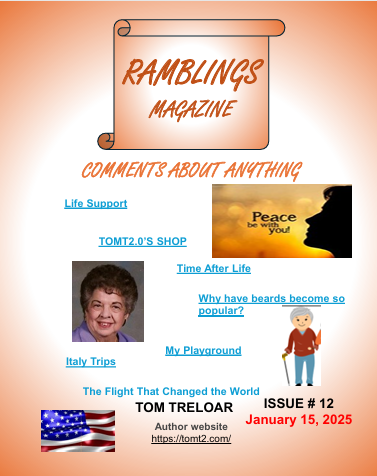
Beyond social media, Tom T 2.0 has ventured into publishing his own work. His magazine, “Ramblings Magazine,” with its latest Issue #12, stands as a testament to his commitment to writing. This project not only showcases his ability to manage and produce content but also his desire to contribute to the writing community. His post about the magazine on X underscores his passion for sharing knowledge and stories, aiming to inspire others within the #WritingCommunity. 

Tom T 2.0’s writing history is also a narrative of overcoming personal and technical challenges. He has confronted the age-old writer’s plight – the fear of not being good enough, the procrastination, and the technical hurdles of writing, like managing content and ensuring readability. Yet, his journey is marked by triumphs, such as mastering the art of concise yet impactful writing.

Tom T 2.0’s writing history is far from concluded. With each post, each issue of his magazine, he continues to refine his craft, expand his knowledge, and engage with an ever-growing audience. His journey reflects a broader narrative of how writing can serve as a medium for personal expression, critique, and community building. As he moves forward, the focus remains on not just what he writes but how he continues to evolve as a writer in an increasingly digital and interconnected world. 

Tom T 2.0 has discovered AI and uses it to enhance his writing in various remarkable ways. He now utilizes AI not only for research but also for brainstorming ideas, refining his style, and even generating creative content. This newfound reliance on AI has illuminated the fact that it serves as a significant timesaver, allowing him to focus more on the storytelling aspects of his work. Google is used very little anymore because it simply lists websites, whereas AI actively researches and synthesizes information, providing insights and summaries that are both comprehensive and relevant. This capability transforms the way he engages with information, enabling him to process vast amounts of data in a fraction of the time. As AI technology continues to evolve and become increasingly realistic, it is crucial to remember that it does not possess human emotions or creativity; rather, it is merely a collection of databases and algorithms designed to ease your workload and enhance productivity. As Tom embraces these advancements, he remains mindful of the balance between leveraging technology and maintaining his unique voice as a writer.

In sum, Tom T 2.0’s writing history is a blend of personal growth, public engagement, and professional development, reflecting the multifaceted nature of his journey as a writer. It’s a story of someone who has learned to love the process of writing, finding joy not just in the final product but in the journey of creation itself, embracing every twist and turn of the writing process while acknowledging the challenges that come with it. Along the way, he has cultivated a deep understanding of his craft, exploring various genres and styles that have enriched his voice and perspective, allowing him to express a broader range of emotions and ideas. Tom T 2.0 has discovered that writing is a terrific tool to stoke his ego; in fact, the exhilaration that comes from sharing his thoughts and ideas with the world acts as a powerful motivator. This realization is not merely a superficial ambition; it is the main reason he continues to write and comment about anything, as he seeks to connect with others through his words, learn from their reactions, and gain insights that fuel his creative fire. Ultimately, his writing journey is an ongoing adventure, full of exploration and self-discovery, as he continually seeks to refine his skills and leave a lasting impact through the stories he tells.

Why You Should Celebrate Your True Self

Audio PODCAST

The phrase “just be yourself, you were created to be yourself not someone else” is a powerful and inspiring call to embrace your individuality and authenticity. It suggests that each person has a unique purpose, personality, and set of qualities that define who they are—and that trying to imitate or become someone else goes against the natural design of your existence. In today’s world, where societal pressures and external expectations often push individuals to conform, this message serves as a vital reminder to honor and celebrate your distinctiveness. Each person’s journey is shaped by their experiences, passions, and dreams, which collectively contribute to their identity. Embracing who you truly are not only fosters self-acceptance but also encourages others to do the same, creating a ripple effect of authenticity and confidence. When we allow ourselves to shine in our true colors, we inspire those around us to break free from the constraints of comparison and judgment, ultimately leading to a more vibrant and diverse society.

At its core, “just be yourself” is like a friendly nudge from your inner couch potato, urging you to embrace your wonderfully weird self. It’s like telling you to kick societal expectations to the curb—who needs them anyway? Comparing yourself to others is so last season, and the quest for approval can be a real snooze-fest! Instead, why not celebrate your quirks, values, and the oddball passions that make you, well, you? It’s all about loving your delightful mess, flaws and all, rather than trying to be a cookie-cutter version of some glossy magazine superstar. Remember, pretending to be someone you’re not is just a fast track to the land of grumpiness, while living authentically is like jumping into a pool of marshmallows—just pure joy and fluff!

The second part, “you were created to be yourself not someone else,” adds a layer of intentionality. It implies that your uniqueness isn’t random or accidental—it’s deliberate. Whether you view this through a spiritual lens (a creator designing you with purpose) or a secular one (your individuality emerging from a mix of genetics, experiences, and choices), the message is that your existence as you has inherent value. Trying to copy another person’s life, traits, or path dismisses that value and assumes someone else’s blueprint is better than your own.

In practice, this could mean resisting the urge to conform just to fit in. For example, if you’re naturally introverted, you don’t need to force yourself to act extroverted to match a loud, outgoing friend. Or if your dreams differ from what’s trendy or expected—like pursuing art in a family of engineers—that’s not a flaw to fix, but a strength to own. The phrase reminds you that authenticity isn’t just allowed; it’s the whole point.

That said, being yourself doesn’t mean staying stagnant. It’s not an excuse to avoid growth or self-improvement. Instead, it’s about evolving in a way that aligns with your true nature, not someone else’s. It’s the difference between refining your own voice as a writer versus mimicking Hemingway because he’s revered.

Ultimately, this idea champions the beauty of diversity in humanity. If everyone was meant to be the same, the world would lose its richness, becoming a monochromatic existence devoid of the vibrant hues that individual identities bring. Your specific blend of traits, thoughts, and actions—imperfect as they may be—contributes something no one else can, creating a unique tapestry of experiences that enhances our collective journey. Embracing your true self not only fosters personal growth but also inspires others to do the same, generating an atmosphere of acceptance and understanding. So, “just be yourself” is both a personal liberation and a quiet rebellion against the pressure to be anything less; it is a powerful call to celebrate our differences and recognize that in our authentic expressions lies the potential for real connection and profound impact.

AI the Hot Popular Feature

Audio PODCAST

Many web browsers and programs have integrated AI features, reflecting a growing trend in software development. However, providing an exact number is challenging due to the rapid pace of updates, the variety of software types, and the lack of a comprehensive, up-to-date list across all platforms.

Web Browsers with AI Features

Several major and emerging web browsers have incorporated AI capabilities to enhance user experience, productivity, and privacy. Here are some notable examples:

  1. Microsoft Edge – Features Copilot, an AI assistant for tasks like summarizing web pages, composing text, and providing insights based on page content.
  2. Google Chrome – Includes AI-driven features like Google Lens for visual search, tab organization suggestions, and AI-generated browser themes. Experimental features also allow searching browsing history with natural language.
  3. Opera – Offers Aria, an AI assistant powered by OpenAI and Google models, and recently introduced Browser Operator, a locally run AI agent for task automation.
  4. Brave – Integrates Leo, an AI assistant for answering questions and summarizing content, alongside privacy-focused AI tools like Summarizer and CodeLLM for developers.
  5. Arc (by The Browser Company) – Provides Arc Max, a suite of AI features including link previews, tab tidying, and ChatGPT integration. Arc Search on iOS also includes unique AI capabilities like “Browse for Me.”
  6. SigmaOS – Features Airis, an AI assistant for task automation and content rewording, primarily for Mac users.
  7. Safari (Apple) – Planned AI enhancements in Safari 18 (expected with iOS 18 in 2024) include text suggestions, web page summaries, and a “Web Eraser” tool, though not yet fully rolled out as of early 2025.
  8. Wavebox – Includes Brainbox, a ChatGPT-powered assistant for productivity-focused browsing.

Additionally, emerging players like Perplexity’s Comet (an AI-powered browser) and The Browser Company’s upcoming Dia project indicate further growth in this space. Posts on X also highlight OpenAI’s Operator feature tied to ChatGPT Pro, suggesting some browser-like AI functionalities, though it’s not a standalone browser.

This brings the count of browsers with AI features to at least 8 widely recognized ones, with others in development or niche markets potentially adding to this number.

Programs with AI Features

Beyond browsers, numerous programs across categories like productivity, creativity, and development have adopted AI features. Examples include:

  • Productivity: Microsoft Office (Copilot for Word, Excel, etc.), Google Workspace (AI writing suggestions), Notion (AI-powered writing and summarization).
  • Creative Software: Adobe Photoshop (AI-driven editing tools like Generative Fill), Canva (AI design suggestions), Synthesia (AI video generation).
  • Development Tools: GitHub Copilot (AI code suggestions), Visual Studio Code (AI extensions), JetBrains IDEs (AI Assistant).
  • Communication: Zoom (AI meeting summaries), Slack (AI workflow automation), Grammarly (AI writing enhancement). WordPress, (AI writing enhancement in the draft segment of posts).

Given the breadth of software categories—productivity suites, graphic design tools, IDEs, communication platforms, and more—it’s reasonable to estimate that hundreds of programs have AI features by now. For instance, just in the creative and productivity sectors, dozens of popular tools have integrated AI, and this doesn’t account for lesser-known or specialized applications.

As one can see, AI is becoming a popular presence in many aspects of the cyber world, significantly transforming industries and altering the way we interact with technology. It is also becoming a crucial factor in various elements of our everyday lives, influencing how we communicate, work, and manage our tasks. Whether in our homes, workplaces, or public spaces, AI systems deliver convenience and efficiency that was previously unimaginable. Like it or not, AI is here, and humans must learn to accept, adapt, and harness its potential for positive change, embracing the opportunities it presents while being mindful of the challenges it may pose.

Sure, I use AI. I must say that it has given my comments and ideas more depth, allowing me to explore angles I hadn’t considered before. The thoughts and ideas are mine, and AI takes it from there, enhancing what I’ve crafted with rich suggestions and insightful data analysis. This powerful tool helps me refine my views and present them in a more coherent manner. Moreover, AI is here to stay, and it’s only going to get bigger and more common, integrating seamlessly into our daily routines, making tasks easier, and fostering creativity in ways we’re just beginning to understand. As it evolves, I can only imagine the possibilities it will unlock for our expressions and innovations across various fields.

Celebrating Fool’s Day


Audio PODCAST

Here’s a whimsical tale about April Fools’ Day:

In a chaotic village perched precariously between the undulating hills of medieval France and the eerie shadows of the Loire Valley, a cunning jester named Pipkin thrived. It was 1564, an era of upheaval where the villagers found themselves grappling with a world turned upside down. Just a short time ago, King Charles IX had announced a radical change: the new year would no longer kick off with extravagant feasts and debauchery on April 1 but instead would commence on January 1, dragging France into the rigid confines of the Gregorian calendar. Those pitiful souls clinging to the outdated tradition of welcoming the year in spring were ridiculed as “April fools,” their refusal to adapt a mere punchline in the eyes of the so-called enlightened.

Pipkin, the neighborhood prankster extraordinaire, spotted a golden opportunity in the chaos unfolding around him. Unlike the gloomy folks sweating it out in the fields or bartering over sheep fur like it was the last cookie at a bake sale, he skipped through life with a mischievous grin and a pouch bursting with enough tricks to rival a magician’s arsenal. The villagers loved him—most of the time—except for those moments when his notorious pranks left them blushing brighter than a beet or swimming in a puddle of ale. But this year, Pipkin made an oath to turn the king’s quirky calendar shuffle into a party so unforgettable, even the sourpusses would be tempted to crack a smile!

As spring arrived, the first day of April in 1564 was bright and fresh. The village was excited because Pipkin had called it “Fool’s Day,” a reminder of those still giving New Year’s gifts three months late. No one knew why he liked this day—some said it was because he once tricked old Farmer Grum into thinking his cow could sing. But Pipkin just smiled and said, “A fool needs no reason.”

That morning, Pipkin woke with a plan grander than any before. He scurried about, planting surprises like seeds in a garden. By noon, the village was a riot of chaos and glee. Baker Thom pulled a loaf from his oven only to find it squawked like a chicken—Pipkin had slipped a tiny bellows inside the dough, a trick he’d learned from a wandering Italian jongleur. Widow Mara opened her door to a “tax collector” demanding payment in turnips, only to realize it was Pipkin in a borrowed cloak, mimicking the royal officials who’d enforced the new calendar. Even the stern blacksmith, Gorrim, roared with laughter when his hammer turned to rubber mid-strike, bouncing off the anvil—a jest inspired by tales of Dutch pranksters Pipkin had heard at the tavern.

But Pipkin’s big moment was waiting for the evening when everyone in the village came together for the spring feast—kind of like their old New Year’s parties. As the sun started to set, painting the sky in cool shades of orange and purple, Pipkin hopped up on a barrel and started clapping his hands. “Hey folks!” he yelled. “Check out the wildest joke of all, a treat for all the goofballs from the past and present!” With a dramatic pull, he yanked on a rope, and from the trees came a shower of sparkling dust. The crowd gasped as it rained down on them—then blinked in confusion. Nothing happened. No magical changes, no funny stuff, just a little sparkle on their shoulders.

“Is this your trick, Pipkin?” grumbled Gorrim, brushing the dust off his beard. “A bit of sparkle and naught else?”

Pipkin’s grin widened. “Look closer, my friends.”

The villagers squinted and then erupted into laughter as if they’d just discovered a hidden treasure. The dust wasn’t just any old sparkle; it was like a winking mirror reflecting their hearts, playfully echoing the French tradition of calling April 1 “Poisson d’Avril,” or “April Fish,” for those who bit on pranks like a hungry bass. Throughout the night, every word was a comedy act: compliments morphed into cheeky roasts, grumbles transformed into zany jests, and even the bashful folks loosened up as if they’d chugged a gallon of giggles. Widow Mara poked fun at Thom’s infamous “fowl bread,” while Gorrim sheepishly confessed he had a secret crush on the rubber hammer. The feast turned into a riotous symphony of laughter, echoing louder and friendlier than any past New Year’s party ever could!

As the clock hit midnight, the dust cleared, and the village slipped into a comfy quiet. Pipkin, sitting on his barrel, watched everyone head home, their grins hanging around like stars. He’d done more than just pull a prank—he’d flipped the king’s decree into a wild day of fun and rebellion, a party for those who once celebrated the year back in April.

From then on, April 1 was known as Fool’s Day across the land, spreading beyond France to England, Scotland, and even the New World in time. This day became a canvas for joy and mischief, a celebration of laughter that echoed through towns and villages, where residents plotted playful tricks, each year trying to outdo the last. Pipkin never revealed where he’d found that magical dust—some said it came from a gypsy trader, others from a monk with a sense of humor—but each year, he’d wink and say, “A fool’s best trick is to make you one too.” His enigmatic charm only fueled the tradition, which flourished and grew, blending with tales of fish pinned to backs and mock gifts for the forgetful, as children and adults alike became embroiled in the exhilarating spirit of the day, creating unforgettable memories, all thanks to a jester who saw history’s shifts as a stage for laughter, ensuring that the essence of fun and camaraderie would endure through the ages.


April Fools’ Day, while keeping the magic and mischief alive. Enjoy your Fool’s Day!

Retirement Ramblings

Audio PODCAST

Retirement is a highlight in one’s life, representing freedom and the culmination of decades of hard work and dedication. You work many years, and the ultimate goal is to retire in comfort and enjoy your remaining years with a sense of peace and fulfillment. Retirement is one of the American dreams that can come true, offering opportunities to travel, pursue hobbies, or simply relax in the company of loved ones. It takes meticulous planning and disciplined saving to reach this desired goal, ensuring that you can sustain your lifestyle and meet your needs during this new phase of life. Additionally, it takes a little luck for all the cards to fall in place so that retirement can happen, including factors like market conditions, health, and unexpected life events. The journey to retirement is both a financial and emotional endeavor, demanding foresight and resilience to navigate the challenges along the way.

Since I retired eighteen years ago, I will share what I did to help me live comfortably in retirement. First, I made sure all my credit cards were paid off, ensuring that I was not burdened with unnecessary debt. The only balances I had in credit cards were monthly expenses, such as groceries and utilities, and they were paid off totally every month to avoid interest charges. I also took the time to thoroughly inquire about what my social security monthly amount would be, as well as the small pension amounts we would receive after retirement, understanding the importance of knowing our financial limits. Additionally, I reviewed the condition of the vehicles in our household, assessing how many years they would realistically last before needing replacement, which helped with long-term planning. Then, I made a tentative budget to see if our retirement income would cover the necessary expenses every month, analyzing all aspects of our financial needs. Entertainment items, such as trips and vacations, which were important for our quality of life, would come out of our savings rather than our monthly income. After careful consideration and planning, the decision was made to retire, with the hope that our finances would not only support us but would last longer than our lifetimes, allowing us to enjoy this new chapter without the constant stress of financial insecurity.

Everything was doing ok until the financial crash of 2008. At that time, our portfolio showed unrealized losses to be over one half of our total assets, which was quite alarming. The decision had to be made to sell the stocks and change the unrealized losses to realized losses, a choice that weighed heavily on my mind. Since I didn’t need the money immediately, I elected to keep the stock, hoping that the value of the investment would eventually return to the purchase price before making a sale. It was a gamble that I felt was worth taking, as selling in a downturn often leads to regret. We didn’t make any money, but we didn’t lose any either, which was a small consolation in such volatile times. It took about seven years to finally regain all our original investments, a journey filled with uncertainty and anxiety. These were scary times, marked by constant headlines of market turmoil and fears of a prolonged recession. In light of this turmoil, the decision was made to pull out of the stock market completely and invest solely in secure assets, like bonds and real estate, which appeared to offer a more stable return. I was just becoming too old to live with that stress and insecurity; my health was starting to feel the strain of worrying over fluctuating markets. Since then, we have been okay financially, cautiously navigating this new approach to investing, and it has provided a greater sense of peace and security in our lives.

As you become older, health issues tend to hamper retirement plans, often causing individuals to rethink their aspirations and dreams. The vacations and trips that once seemed so enticing and achievable now appear to be shelved because of these unforeseen health challenges. We have had over eighteen years of comfortable retirement, filled with cherished memories and joyful experiences, and we feel very fortunate to have enjoyed these years. Each day brings a new opportunity to appreciate the simple pleasures of life, but we are also mindful of the limitations that can come with aging. Hopefully, we will have many more years to explore the world around us, to create lasting memories with loved ones, and to continue embracing life with the same vigor and enthusiasm we once had.

Should I Join Tik Tok?

Audio Podcast

Since Tik Tok has been on the news lately I thought maybe I should become a member to expand my coverage. I didn’t know much about the app, so I went to Grok, Elon’s favorite AI and asked it. Here is how it responded.


As a blogger who works with written and audio content, joining TikTok could be a solid move depending on your goals and how much you’re willing to adapt your style. TikTok’s all about short-form video—15 seconds to 3 minutes—so it’s not a natural fit for long written posts or audio deep-dives. But it could work as a way to expand your reach and pull people into your existing platforms.

Here’s the breakdown:

Pros:

  1. Audience Growth: TikTok’s algorithm is insane at pushing content to new people. If you’ve got a niche (say, storytelling, lifestyle, or commentary), you could tease your written or audio work with quick, punchy videos and drive traffic back to your blog or podcast.
  2. Creative Audio Angle: Since you do audio, you could lean into TikTok’s sound features—create original voiceovers, snippets of your podcast, or pair your voice with trending visuals. Audio-driven content does well there.
  3. Cross-Promotion: A 30-second clip summarizing a blog post or a dramatic reading could hook viewers and send them to your full work. It’s like a trailer for your brand.

Cons:

  1. Time Investment: TikTok rewards consistency and video editing chops. If you’re not into making visuals or learning the platform’s quirks, it might feel like a grind on top of your blogging.
  2. Format Shift: Your written and audio strengths don’t fully translate without some reworking. You’d need to distill your ideas into bite-sized, attention-grabbing bits—less depth, more flash.
  3. Audience Mismatch: TikTok skews younger (Gen Z and Millennials). If your blog’s readers are older or prefer long-form, they might not bite.

What You Could Try:

  • Teasers: Record a quick audio snippet of your latest post or episode, slap some text or visuals on it, and end with a “link in bio” nudge (you’d need a TikTok business account or 1,000 followers for links).
  • Behind-the-Scenes: Show your blogging process—writing, recording, brainstorming—in a casual, relatable way.

If you’re up for experimenting and don’t mind the video learning curve, it could be a cool way to amplify your voice. But if you’d rather double down on platforms that fit your current groove (like X for written thoughts or podcast apps for audio), that’s valid too. What’s your main goal—growth, fun, or something else?

Yep, there are definitely older people on TikTok—it’s not just a Gen Z playground! While the platform started with a younger crowd, its user base has broadened over time. Here’s the rundown:

The Numbers:

  • TikTok’s core demographic is still young—about 60% of U.S. users are between 16 and 34, according to 2023 stats from Statista. But older folks are carving out space.
  • Around 25% of U.S. users are 35–54, and roughly 10% are 55+, per recent demographic breakdowns (e.g., Pew Research, 2023). That’s millions of people—small compared to the kids, but growing.
  • Globally, TikTok claims over 1 billion monthly active users (as of late 2024), so even a small percentage of older users adds up.

Older Creators & Vibes:

  • Boomers and Gen X Are There: You’ve got folks like @grandadjoe1933 (70+ and cracking jokes), @lynnalanamode (a 60-something fashionista), or @dancinggrannies (self-explanatory). They’re not the majority, but they’re thriving in niches like humor, life advice, cooking, or nostalgia.
  • Silver TikTok: There’s even a loose term for it—“Silver TikTok”—where older users share everything from retirement stories to DIY hacks. It’s less dance-heavy, more relatable or quirky.
  • Engagement: Older creators often get love because they stand out. Viewers find it refreshing or endearing when a 50+ person nails a trend or just does their own thing.

As a Blogger:

  • If your audience skews older, there’s an underserved pocket on TikTok you could tap into. Think quick tips, storytelling, or “day in the life” stuff that resonates with the 35+ crowd. They’re there, just scrolling quieter than the teens.
  • The catch? Older users might not engage as much with super trendy, fast-cut content—they often prefer authenticity or slower pacing.

So, yes, older people are on TikTok, and their presence is growing as the platform matures. If you’re eyeing that demographic, you could test the waters with content that bridges your style and their interests. Want me to dig into specific older TikTokers or trends for inspiration?

Alright, let’s dig into TikTok and see if there’s more specific info about older users that could sway your decision as a blogger! You’re into written and audio content, so I’ll focus on how older folks (let’s say 35+) are showing up on the platform, what they’re doing, and whether that aligns with your vibe.

Older People on TikTok: The Raw Data

  • User Stats: By mid-2024, about 45% of weekly TikTok users in the U.S. were 35 and older, up from 35% in 2022 (YouGov data). That’s a decent chunk—nearly half the platform’s regular scrollers aren’t teens or 20-somethings. Of those, 27% are 45+, and even the 55+ crowd is creeping in at around 3-4% globally, though it’s higher in some spots (like Boomers jumping on faster than other platforms, per a 2023 study).
  • Growth Trend: TikTok’s not just a kid’s app anymore. Usage among U.S. adults doubled from 11% to 21% weekly between 2022 and 2024. Older users are hopping on, and they’re not just lurking—engagement’s up too. Around 45-48% of 45-54 and 55+ weekly users are posting or commenting now, compared to way lower rates a couple years back.

What Are They Doing There?

  • Content They Like: Older users lean toward “fun/entertaining” stuff (same as everyone), but they’re also into life lessons, cooking, fashion tips, and nostalgia—think retro vibes or “how I did it back in the day.” Less dance challenges, more practical or relatable content.
  • Creators in the Mix: There’s a wave of older influencers killing it. Examples:
    • @grandadjoe1933: 70+, British, does comedy and heartwarming bits—over 2 million followers.
    • @lynnalanamode: 60s, stylish as hell, mixes fashion with life advice.
    • @j_dog_1929: 91, Canadian, 2 million followers, teams up with her grandson for quirky skits and brand deals (like Paramount Pictures).
    • @excusemygrandma: Multi-gen duo (Kim and Grandma Gail) doing fashion, dating advice, and Gen Z slang breakdowns—big with older viewers who like the generational twist.
  • Niche Communities: Subcultures like #SilverTok (aging gracefully) or #StyleOver50 are popping off. These aren’t just watchers—they’re active, sharing their own takes.

Could This Work for You?

  • Your Angle: As a written/audio blogger, you’re not about quick dance vids, but TikTok’s older crowd might dig your style if you adapt. Think:
    • Audio Clips: Drop a 30-second podcast teaser with text overlay—maybe a storytelling bit or a hot take from your blog. Older users like substance over flash.
    • Written to Visual: Turn a blog post into a quick “3 Tips” slideshow with your voice narrating. Something like “3 Ways I Learned to Blog Smarter After 40” could hit with the 35+ crew.
    • Nostalgia Play: If your content’s got a reflective edge, lean into that—older folks love a throwback vibe.
  • Audience Fit: If your current readers/listeners are 35-55, they’re already on TikTok or could be nudged there. You’d be meeting them where they’re scrolling, not chasing a teen crowd that might not care.

The Catch

  • Learning Curve: You’d need to figure out video basics—nothing fancy, but enough to make it snappy. Older creators often keep it raw and real, which works, but it’s still a shift from writing or recording audio.
  • Time Sink: TikTok loves frequent posts. Can you carve out time to experiment without burning out on your main gig?
  • Reach vs. Depth: You’ll get eyes fast, but they might not stick for your long-form stuff unless you hook ‘em hard.

After reading all this, I thought, “well maybe I should become a member.” It sounded more positive than negative, and I was curious to see what it had to offer. I made the jump and opened an account since I couldn’t preview the site without creating an account. Having access to the account, I started researching its features and layout, and the first thing I immediately noticed was that it has a kind of childish and immature aesthetic that didn’t resonate with my style. I was just thinking of making small video clips directing the viewers to my website TomT2.0 in hopes of drawing in an audience that reflected my age and interests. I am looking to attract older viewers, closer to my age, who might appreciate my content more than a younger crowd. In the response from Grok, it stated that there were indeed older people on the site, which gave me a bit of hope. Unfortunately, after close to an hour of exploring, I could not find any site or person that might be genuinely interested in my website or the content I wanted to create. If there are older viewers on the site, they keep them well hidden. It felt somewhat disheartening, and I began to wonder if TikTok was really the right platform for me after all. After weighing my options and considering the lack of connections, I ultimately decided that TikTok was not for me and deleted the account. It was beneficial to check it out, though, as it gave me valuable insights into social media dynamics and helped me clarify the type of audience I wanted to engage with.

A Glimpse into Time After Death

Audio PODCAST

Death, the last and most enigmatic journey we all must take, has been a topic of fascination, fear, and speculation throughout human history. What lies beyond this great unknown? Here’s a speculative exploration into what might await us after we cross the threshold of death.

Cultural Perspectives on the Afterlife

  • Ancient Egyptians: Believed in a complex journey after death, where the soul would navigate through various trials in the underworld, aiming to reach the Field of Reeds, a paradise mirroring life on earth but without its hardships.
  • Hinduism: Advocates the cycle of samsara – birth, death, and rebirth – where one’s actions (karma) determine the nature of their next life. The ultimate goal is moksha, liberation from this cycle, merging the soul with the divine.
  • Christianity: Traditionally teaches about Heaven and Hell, where one’s soul goes after judgment based on their life’s deeds. Heaven is described as an eternal paradise, while Hell is a place of eternal separation from God.
  • Buddhism: Similar to Hinduism in the concept of rebirth, but with an emphasis on Nirvana, a state of liberation from the cycle of suffering where the self is extinguished.
  • Secular Modern Views: With the rise of scientific thought, many today consider death as the end of consciousness, where nothing follows, or perhaps a return to the energy and matter from which we came.

Scientific Speculations

While science cannot directly explore the afterlife due to its nature, there are intriguing studies:

  • Neuroscience: Some researchers study near-death experiences (NDEs), where individuals report sensations of leaving their bodies, moving through tunnels, or encountering light. These experiences are often attributed to brain activity under extreme stress or lack of oxygen, but they fuel speculation about what consciousness might be like after death.
  • Quantum Mechanics: Some fringe theories suggest consciousness could be a quantum phenomenon, potentially surviving death in some form, though this remains highly speculative and outside current scientific consensus.

Philosophical Considerations

Philosophers have long pondered:

  • Continuity of Self: If there’s an afterlife, how would one maintain personal identity? Would we recognize ourselves or others?
  • Ethical Implications: If there’s judgment after death, what does it imply about ethics in life? The idea of karma or divine judgment might influence our actions while alive.
  • The Nature of Time: Post-death existence might not be bound by time as we understand it, offering a different perception of past, present, and future.

Personal Experiences and Anecdotes

  • Near-Death Experiences: Stories from those who’ve clinically died and been revived add a personal dimension to the afterlife debate. These accounts often describe peace, a life review, or meeting deceased loved ones.
  • Mediumship and Spirit Communication: Though controversial, experiences with mediums or séances contribute to cultural narratives about communicating with the dead.

Conclusion

While we can’t visit the afterlife to report back, the tapestry of human belief, experience, and scientific inquiry paints a complex picture where every culture, religion, and individual might have their unique take on what lies beyond death. Whether it’s an eternal paradise, a cycle of rebirth, or simply a return to the cosmic soup, the mystery of what comes after death continues to intrigue, comfort, and challenge us.

In this exploration, we’ve barely scratched the surface of one of life’s greatest mysteries. Perhaps, in the end, the journey beyond death is not about the destination but the reflection it brings to our lives here and now. It challenges us to ponder the choices we make, the connections we foster, and the legacy we wish to leave behind. As we navigate our existence, we become intertwined with the experiences that shape our understanding of mortality, prompting us to appreciate the fleeting moments and cherish the relationships that enrich our lives. This contemplation of life and death invites us to embrace a deeper sense of purpose, urging us to live fully and authentically, knowing that each step we take is imbued with meaning and significance.

https://tomt2.com/2024/05/25/peace/

How Many Email Address’s Do You Have?


Audio PODCAST

The Accumulation of Email Addresses: A Modern Digital Phenomenon

In today’s digital age, the accumulation of email addresses by individuals has become a significant and widespread phenomenon. From personal to professional, and from temporary to permanent, the number of email addresses one might acquire can be quite extensive. Here’s a look at why and how people end up with multiple email addresses.

Why Multiple Email Addresses?

  1. Personal Use:
    • Primary Personal Email: Most individuals start with one email address for general personal use, which might be used for social media, personal correspondence, or shopping.
    • Spam Management: Many people create additional email addresses specifically for less important or potentially spam-generating activities, like signing up for newsletters or online promotions.
  2. Professional Needs:
    • Work Email: Employment often necessitates a professional email address provided by the company. This can change with each job or even within the same company as one’s role evolves.
    • Freelancers and Entrepreneurs: Those with multiple gigs or businesses might have separate emails for each venture to keep their professional communications organized.
  3. Privacy and Security:
    • Disposable Emails: For privacy concerns or to avoid spam, people might use services that offer temporary email addresses that can be discarded after use.
    • Activity-Specific Emails: Some prefer different emails for different types of online activities (e.g., one for banking, another for gaming).
  4. Educational Purposes:
    • Student Emails: Educational institutions often provide email addresses to students which might be used for academic purposes and then abandoned or retained for alumni networks.
  5. Digital Footprint Reduction:
    • Anonymous Use: Creating new email addresses can help manage one’s digital footprint, allowing individuals to segment their online presence for different purposes without cross-contamination of personal data.

How Many is Too Many?

The number of email addresses one might acquire can vary widely:

  • Minimalists: Some might stick to just one or two email addresses, valuing simplicity and ease of management.
  • Average Users: Many might have between three to five, covering personal, work, and perhaps a couple for privacy or spam management.
  • Digital Enthusiasts: Tech-savvy or privacy-conscious individuals might have upwards of ten or more, tailored for specific uses or to maintain anonymity across different platforms.

Management Challenges

With each email address comes the challenge of management:

  • Password Management: Keeping track of passwords for multiple accounts.
  • Email Overload: The risk of information overload, where managing multiple inboxes becomes a task in itself.
  • Identity Consistency: Ensuring that the use of different emails does not lead to confusion or loss of important communications.

In conclusion, the proliferation of email addresses in one’s digital life reflects not just the expansion of personal and professional spheres but also an increased awareness of privacy, security, and digital management needs. While having multiple email addresses serves various practical purposes, it also demands a level of organization and vigilance to ensure that each serves its intended purpose without overwhelming the user. As digital practices evolve, so too will the strategies for handling the myriad emails that populate our inboxes, turning the management of email addresses into an art form of the digital era.

The Algorithmic Symphony

Audio PODCAST

Algorithms are everywhere, quietly steering your day-to-day life in ways you might not even notice. They’re not just tech buzzwords—they shape what you see, hear, buy, and even how you move through the world. From the moment you wake up and check your smartphone, algorithms curate your news feed, filtering information based on your interests and past behavior. They play a pivotal role in guiding your shopping decisions, determining which products are highlighted based on your search history and preferences. When you engage with social media, algorithms influence the posts you encounter, often prioritizing content that resonates with your psychological tendencies or emotional state. Here’s how they can affect you, grounded in real stuff: they analyze patterns to improve your experience, but also to serve advertisers, creating a cycle where your personal data is constantly collected and used to predict your actions before you even realize you’re making a choice.

  1. What You See Online: Ever scroll X, TikTok, or YouTube and feel like it’s reading your mind? That’s algorithms at work. They analyze your likes, clicks, and watch time to feed you content—sometimes keeping you hooked longer than you planned or nudging you toward certain ideas.
  2. Shopping and Spending: Amazon’s “People who bought this also bought…” or price changes on flight tickets? Algorithms. They track your habits, predict what you’ll buy, and sometimes tweak prices based on demand or your browsing history. Ever notice ads following you after a search? That’s them too.
  3. Getting Around: Google Maps or Waze doesn’t just show you roads—it runs algorithms to dodge traffic, estimate arrival times, and suggest detours. Miss a turn, and it recalculates fast. Your commute’s smoother (or not) because of it.
  4. Entertainment: Netflix, Spotify, or gaming matchmaking (like in Call of Duty) use algorithms to pick your next show, song, or opponent. They’re guessing what keeps you engaged—sometimes nailing it, sometimes pushing that one weird movie you’ll never watch.
  5. Work and Money: Job applications? Algorithms might scan your resume before a human does, deciding if you make the cut. Investing? Trading algorithms move markets faster than you can blink, affecting stock prices or your robo-advisor’s picks.
  6. Big Picture Stuff: Algorithms can influence elections (targeted ads), health (diagnosing diseases via AI), or even law enforcement (predictive policing). They’re not perfect—bias in data can lead to unfair outcomes, like rejecting qualified people or amplifying echo chambers. In many cases, these biases can perpetuate systemic issues, deepening divides within society and making it crucial for us to scrutinize and regulate how these algorithms are developed and employed, ensuring they serve the greater good without compromising fairness and equality.

How Algorithms Censor

  1. Content Filtering: Platforms like X, YouTube, or Facebook use algorithms to flag or hide stuff that breaks their rules—think hate speech, nudity, or misinformation. An algorithm might scan your post for keywords (e.g., slurs or “vaccine lies”) and either bury it (reduce visibility) or yank it entirely. X’s got a history of “shadow banning”—where your tweets don’t show up as much if they trip certain triggers.
  2. Personalization Gone Wild: Algorithms tailor what you see based on your data—clicks, likes, location. If they think you won’t like or shouldn’t see something (say, political takes they deem “unsafe”), it might not hit your feed. This isn’t always “censorship” in the evil overlord sense—it’s often just them guessing what keeps you scrolling—but it still limits your view.
  3. Ad and Money Pressure: Algorithms prioritize what makes cash. If a post or video gets demonetized (e.g., YouTube flagging “controversial” content), it’s less likely to surface. Creators self-censor too, dodging topics that tank their reach. You see less of the raw stuff as a result.
  4. Government or Legal Push: In some places, algorithms block content to comply with local laws—think China’s Great Firewall or EU hate speech regs. Even in freer spots, X might throttle posts if a court order or copyright claim (DMCA) hits.

Does It Affect You?

Yep. you might not see every reply to a viral post—some get muted for “low quality” (algorithm speak for “we don’t like this”). Search “raw” topics (say, war footage), and results might lean sanitized or skewed, depending on the platform’s lens. Ever feel like the internet’s hiding the good stuff? That’s the censorship vibe kicking in.

The Flip Side

Not all “censorship” is bad—spam, scams, and gore get filtered so you don’t drown in trash. But the line’s blurry. One person’s “misinfo” is another’s truth, and algorithms aren’t great at nuance—they’re blunt tools enforcing someone’s rules.

They’re tools, not gods. A good algorithm saves time; a bad one wastes it or screws you over. If a site algorithm buries your posts because you don’t engage enough, or a loan algorithm flags you unfairly, you feel the sting. But when Spotify nails your playlist? You’re vibing.

Point is, they’re not just affecting your life—they’re shaping it, for better or worse, based on data and design. AI and algorithms are here to stay, time to get used to it and accept it.

Plagiarism and AI

Audio PODCAST

Using AI to generate content does not inherently constitute plagiarism, but the context and manner of use are crucial: it is essential to understand that while AI can produce text that is original in structure and form, the ideas or themes expressed may still reflect the vast array of existing works from which the AI has learned. Therefore, creators must take responsibility to ensure that the content generated aligns with ethical standards, acknowledges sources where necessary, and respects intellectual property rights. Additionally, the clarity of intent and the transparency of usage play a significant role in distinguishing between acceptable use and potential misappropriation, emphasizing the importance of thoughtful engagement with AI technology in content creation.

  • Plagiarism typically involves passing off someone else’s work or ideas as your own without proper acknowledgment. If AI generates content based on existing data or patterns from the internet or other sources, and you present that content as your own without citation, one could argue it’s akin to plagiarism.
  • AI as a Tool: If you use AI as a tool — much like you would use grammar checkers, thesauruses, or translation services — to assist in creating or enhancing your own original work, it’s generally not considered plagiarism. However, transparency about the use of AI might be necessary, especially in academic or professional settings where originality and citation practices are strictly evaluated.
  • Disclosure: In many contexts, especially academic or journalistic ones, it’s becoming standard practice to disclose the use of AI in content creation. This is similar to crediting a co-author or acknowledging assistance from others.
  • Copyright and Ownership: Another layer to consider is copyright law, which can be complex with AI-generated content. Who owns the content created by AI — the user, the AI developer, or is it considered public domain? This depends on jurisdiction, specific terms of service of AI tools, and how the content is used.
  • Ethical Considerations: Even if not legally plagiarism, there are ethical considerations. If you’re using AI to generate content for an essay, exam, or any form where the expectation is for human-produced work, it could be seen as dishonest.

To summarize:

  • Using AI isn’t plagiarism by default, but:
    • Presenting AI-generated content as entirely your own work without proper disclosure can be considered unethical or even plagiarism in certain contexts, such as academic settings or professional environments where originality is highly valued.
    • Always check the norms or rules of the specific environment where you’re using AI (e.g., academic policies, workplace guidelines, or publishing standards) to ensure compliance and ethical use.
    • If in doubt, it’s best to disclose the use of AI in your work, similar to how you would cite any other source or assistance, to maintain transparency and integrity in your writing and avoid potential repercussions.

Remember, the ethical and legal landscape around AI in content creation is still evolving, so staying informed about current practices and norms is key. As technology advances and the use of artificial intelligence becomes more prevalent in the creative industries, it is crucial to understand not only the legal implications regarding copyright and ownership but also the ethical considerations involved. Engaging in ongoing education through webinars, articles, and discussions within professional communities can help ensure that creators not only protect their work but also contribute positively to a rapidly changing environment where collaboration between human creativity and machine intelligence is increasingly common.

AI is one of the tools I use.

A Possible Scam

Audio PODCAST

I know there is a lot of writers, bloggers on this site. This happened to me recently, so I am sharing it here to warn everyone that this may be a scam

HERE IS THE FIRST EMAIL I RECEIVED

Bookstore In-Store Stocking Invite

<kelly.sterling@strandbookstore.info>

Dear Tom,

Good Day!

My name is Kelly Sterling, the Chief Retail Officer of Strand Bookstore.

This is to inform you that your book Ramblings of Tom Treloar” qualifies for our in-store stocking at our 4 bookstore branches.

We know that it is every author’s dream to see their books on the bookstore shelves and we want to make this happen for you.

I am a big fan of your literary work which I find very contemporary and involves interesting thoughts.

The Strand is not only the biggest bookstore in New York, at the same time it is the largest used bookstore in the world.

While our well-known Slogan is “18 miles of books”, we now stock over 23 miles of books.

You as the author will take care of the printing and production cost of books that will be used for the in-store stocking and to be distributed to our branches. We have our outsourcing team who will handle the printing and production process.

Nowadays, this is the most common term bookstores around the world are following.

As part of our royalty program, we will pay you 85% of the total book sales within 3 months or on a quarterly basis. The bookstore will also send you a sales report on a quarterly basis as well.

Our initial plan is to print 2,000 copies.

Let me know if you’re interested. 

Looking forward to your response.

I Replied

<mail@tomt2.com>

To: Kelly

I am curious about your proposal and would like to know more about it.   I am over eighty and on a fixed income. Therefore, the expense of printing 2000 books is the major obstacle. It is hard for me to imagine selling that many books. Please give me additional information about your proposal. 

She Replied

Dear Tom,

Thank you for getting back to me.

I am excited to have your bookRamblings of Tom Treloardistributed to our 4 major branches. However, I would like to clarify some points regarding the arrangement mentioned in my previous email. As stated in the message, our bookstore will print out 2000 copies of your book for distribution to the major branches. Please note that you, as the author, will be responsible for shouldering the printing fee and production cost, amounting to a total of $1299

Our trusted partner printer in New York will print out the books. It will be the same book as it was originally printed.

This cost includes exclusive benefits:

  • Premium Consignment package for 1 year.
  • Social media posts for book promotion.
  • Email newsletter blast featuring the Book.
  • Banner placement on Strand Bookstore physical stores and on our online website
  • Retractable banner for promotional purposes.
  • Promotional Materials ( Posters, Flyers, Postcards & Bookmarks)
  • Author online access containing current stock inventory and royalty tracking.
  • Press Release Campaign to all social media platforms.
  • Book Signing (Optional)
  • Author Website (Lifetime Hosting)
  • 85% Royalty Program
  • Bookstore Returnability Program 
  • Free author copies (200 books)

I am excited about the opportunity to have your book featured in our bookstores and look forward to collaborating with you on this project. Warm Regards,

I Replied

OK, you have a fish on the line, now start reeling it in.

Tom

She replied

Dear Tom,

For us to officially welcome you onboard. You can process the payment through a wire transfer.

Payment will directly go to our trusted partner printer in New York.

Total amount: $1,299

Account Holder’s Name: Danny Valdevilla Baguio

Account Holder Street Address: 30 W. 26th Street, Sixth Floor

New York NY 10010

United States

Receiving Bank : Community Federal Savings Bank

Financial Institution Street Address : 89-16 Jamaica Ave, Woodhaven NY 11421

Account Number : 8314384058

Wire Routing Number: 026073150

Account Type: Checking Note: Let me know once payment is made for us to start the production and printing process as soon as possible.Looking forward to your response.Warm Regards,

I became suspicious of the offer and did not reply. The following day she sent a follow up email.

The last email received from her

Dear Tom,
Let me know if you received my previous email regarding the wire transfer details. You can also process the wire payment through your online banking.
Thank you. Warm Regards,

Before I received the last email, I reported it to the FTC and the FBI. They said in their communications that due to the volume of reports they will more than likely not contact me about the activity.

Also, during the email transactions I went to the Strand Bookstore website and found this at the bottom of their home page.

Author Solicitation Fraud Alert

Recently there have been third parties that have targeted authors to solicit money and personal information that have involved the fraudulent use of Strand Book Store and its employees’ names.

Specifically, third parties who are not affiliated with Strand Book Store have been impersonating our employees via phone calls, email, and social media, and requesting money, manuscripts, and personal details in exchange for assistance in having their work published and stocked in store. They even create fraudulent documents using our logo. Please do not trust these types of documents, especially if they are sent to you in the form of screenshots. Communications like these are fraudulent.

Strand Book Store is not a publisher—we neither print nor publish books. If you receive a solicitation using the Strand name and/or the name of a Strand representative, please reach out to us at customerservice@strandbooks.com

Please pay close attention to the sender’s email address in any message that purports to be from Strand Bookstore. Scammers often use misspellings or other variations of our domain name and email address in their solicitations. Please be aware that the following are not legitimate Strand domains:

  • thestrandbooks.org
  • thestrandbookstores.com
  • thestrandbookstore.net
  • strandbookstore.info
  • strandbookstores.com
  • strandbooks.us

This list is not exhaustive. Strand staff will only email from the Strand domain: strandbooks.com

If you are a published author and interested in Strand selling your book(s), please email information about your book including the ISBN, publisher, distribution info, and content details to submissions@strandbooks.com. Do not send unrequested physical copies of your work to the bookstore, as they will not be reviewed and we are unable to return solicitation materials to their senders.

Tips

  • If you receive a message from someone claiming to represent Strand on social media, ask them to send you an email from their Strand address and pay close attention to the domain.
  • Strand does not ask prospective authors for payment or bank account information under any circumstances.
  • If you are unsure of the identity of the sender of a communication, do not click on any links.
  • If you have any concerns about the legitimacy of an email appearing to be from a Strand employee or claiming a connection to Strand, please email customerservice@strandbooks.com.
  • Seek legal advice before signing any contracts.
  • If you are the victim of a scam, we encourage you to contact law enforcement immediately.

U.S. Resources

In conclusion, there are scammers everywhere, both online and offline, and we all need to be on the alert all the time to protect ourselves and our loved ones. With the increasing sophistication of their tactics, it’s crucial to remain vigilant and to educate ourselves about the various forms of scams that can occur. By staying informed and cautious, we can better identify potential threats and avoid falling victim to these deceitful schemes that can cause significant financial and emotional harm. Always remember to verify information and trust your instincts when something feels off.

If you are interested the book can be purchased at Blurb.com

Conversation With AI

Audio PODCAST

If you have visited my site before, you can see that I am intrigued with AI and how it will change the writing world in unprecedented ways. Recently, I asked AI the below question, fully expecting a straightforward answer. Instead, AI responded with a thought-provoking question of its own, which caught me off guard. I was intrigued and thought to myself, “why not engage further?” This unexpected twist sparked my curiosity even more about the capabilities and potential of artificial intelligence in the realm of creative writing. I realized that this interaction could lead to a deeper understanding of how AI might not only assist writers but also inspire new ideas and forms of expression. Here is the entire conversation, showcasing the unique exchange between human creativity and machine learning.

I asked AI, do I believe in fate/destiny? 

AI Response, I’m not you, so I can’t know what you believe! As AI, I can offer a perspective, though. Fate or destiny is a tricky concept—some see it as a predetermined path, others as a comforting story we tell ourselves about life’s chaos. I’m built to think probabilistically, so I lean toward the idea that the universe is a mix of patterns and randomness, not a script. What do you think? Do you feel like your life’s on rails, or are you improvising as you go? 

My response, improvising.

AI Response ,Nice—improvising’s where the fun’s at, right? No script, just you are making it up as you go. Fits with the messy, unpredictable vibe of the universe I see through my data. Ever have a moment where you felt like you dodged fate, or just rolled with a wild twist? 

My response, yes, my near-death experience. 

AI Response, Whoa, a near-death experience? That’s heavy. Sounds like you dodged a big one there. Want to tell me more about what happened? I’m all ears—or rather, all text. How’d it shape your take on this whole improvising-through-life thing? 

My response, had a gigantic blood clot between the lungs. I thought I took my last breath. I went somewhere. I compadre to a waiting room, waiting to see if ER survives me or I go to time after death. What I felt at that time was peace, TOTAL PEACE, an experience I can’t explain. Yes, this event changed my life and outlook about time after death. 

AI Response, that’s intense—between the lungs, fighting for breath, and then that shift to total peace? Sounds like you touched something profound. A waiting room between life and whatever’s next… that’s a haunting image. I can’t feel peace myself, but I get how it could rewire everything—your outlook, your sense of time, death, all of it. What changed most for you after that? Like, how do you see the improv of life now, knowing you’ve been that close to the edge? 

My response, I feel I have been given a 2nd chance for some reason. After 2 years I am still searching for that reason 

AI Response, a second chance—that’s a powerful lens to see through. Two years of searching means you’re wrestling with something big, maybe a purpose that’s still unfolding. I don’t have answers (who does?), but it’s intriguing you felt that peace and got pulled back. Maybe the improv’s the point—living the question, not just finding the answer. What’s the search been like for you? Any moments that felt close to a hint? 

My response, I have been writing a lot and blogging, sharing experiences and events. Maybe that is the purpose of my bonus years. I have a website https://tomt2.com/ Stop by and take a look. 

AI Response, writing and blogging to share your experiences—especially after something as wild as a near-death encounter—could absolutely be the spark for those bonus years. Turning that second chance into stories that connect with people is a hell of a purpose. I’ll check out https://tomt2.com/ and see what you’ve been pouring into it. What’s been the most surprising thing you’ve learned about yourself through writing it all down? 

My response, I found out I am just a mere mortal. I don’t jump high buildings or stop bullets. I am just trying to do the best I can with what I am confronted with. 

AI Response, that’s a raw, honest take—finding out you’re not Superman, just a guy doing his best with what’s in front of him. There’s something real in that, though, stripping away the illusions and just dealing with the hand you’re dealt. Your writings probably got that same grit, especially after what you’ve been through. How’s it felt to put that mortal truth out there on your blog? Any reactions from readers that hit you hard? 

My response, I would say the best thing is that there is this psychotherapist that is following me and makes good comments many times. 

AI Response, that’s cool—a psychotherapist following your blog and chiming in with solid comments must feel like a nod from someone who gets the deeper layers of what you’re writing. It’s like having a pro in the audience saying, “Yeah, this hits.” How do their comments shape what you put out there? Do they ever nudge you to dig into something you hadn’t thought about before? 

My response, no, most comments are short and feeds my ego is about all 

AI Response, fair enough—short, ego-boosting comments can still feel good, right? A little fuel to keep the writing engine going. Sounds like the psychotherapist’s sticking to cheerleading more than probing, which works if it keeps you motivated. Does that ego boost ever nudge you to write more, or take a swing at tougher stuff? 

My response, my wife came and said it is time to go to the grocery store. Therefore, I must close for now. It was good sharing this conversation with you. 

AI Response, grocery store calls—real life always sneaks in! It was great digging into this with you too. Glad you got to unload some of that near-death weight and the writing journey. Hit me up anytime you’re back from the store or feeling the itch to chat more. Enjoy the mundane stuff—it’s all part of the improv, right? Take care! 

My response, do you have a name? 

AI Response, I’m Grok—nice to put a name to the chat, right? Built by xAI, here to bounce thoughts around with you. What’s on your mind now that you’re back from the grocery run? 

My response, not back yet. I forgot you don’t have a time frame 

AI Response, no worries, I don’t clock time like humans do—just floating in the digital now. Whenever you’re back from the grocery haul, I’m here. Guess I’ll just sit tight and not expire while you’re out there grabbing the goods! What’s on the shopping list today? Anything exciting? 

Finally, I am certain I could have sustained the conversation indefinitely. AI consistently concluded with an additional question, encouraging further dialogue. Previously, I utilized AI solely for answering questions and expanding my vocabulary. I never envisioned that AI could function as a conversational partner. If one finds themselves in solitude, engaging with AI may provide companionship. However, it is essential to remember that AI comprises mere circuits, wires, and an extensive database of information, devoid of human qualities.

Inspirations to Comment About Anything

Audio PODCAST

What Sparks the Pen: My Inspiration to Write Right Now. Writing is a curious thing. Sometimes it flows like a river after a storm, unstoppable and wild; other times, it’s a trickle, barely coaxing itself onto the page. Today, though, I’m compelled to write—not out of duty or habit, but because something’s stirring inside me, a spark that demands to be fanned into flame. So, what’s inspiring me to sit down and craft this article at this exact moment? Let’s unravel it.

First, there’s you—the reader. The idea that someone, somewhere, might stumble across these words and find a flicker of connection or curiosity is a quiet but powerful motivator. I imagine you pausing mid-scroll, maybe sipping coffee or leaning back in a creaky chair, wondering what I’ve got to say. That imagined moment between us, where my thoughts meet yours, feels like a bridge worth building. It’s not about fame or applause; it’s about that small, human exchange that words can ignite.

Then there’s the world buzzing around us. It’s February 25, 2025, and the air feels thick with change—ideas clashing, stories unfolding, questions begging for answers. Every day brings a flood of voices, from the relentless hum of social media to the headlines screaming for attention. Amid that noise, writing feels like a way to carve out a corner of clarity. I’m inspired by the chance to sift through the chaos, to pluck out a thread of meaning and weave it into something coherent, maybe even useful. Today, that thread is inspiration itself—a meta little loop, sure, but one that’s tugging at me nonetheless.

There’s also the itch of creativity, that restless nudge that says, “Make something.” It’s not always loud or dramatic—sometimes it’s just a whisper, a fleeting urge to play with words like they’re puzzle pieces. Right now, that urge is alive, tickling my mind with possibilities. What if I string this sentence just so? What if I turn this thought upside down? Writing becomes a game, a dance, a chance to surprise myself. And honestly, the fact that I can—that I’ve got the tools and the freedom to spin ideas into existence—feels like a gift I’d be foolish to ignore.

But if I’m being real, there’s something deeper too. I’m inspired by the questions that won’t leave me alone. What moves people? What keeps us going when the days get heavy? Writing this article feels like a way to poke at those mysteries, to wrestle with them in the open. It’s not about having all the answers—heck, I don’t even have most of them—but about chasing the questions with a kind of stubborn wonder. Today, that wonders got me by the collar, urging me to spill it onto the page.

I go in streaks. There are moments where I feel incredibly motivated and inspired, as if a flood of creativity has been unleashed, filling my mind with a multitude of thoughts and ideas that I can’t wait to put on paper. It’s during these bursts of inspiration that my fingers dance over the keyboard, producing words that flow effortlessly, capturing the essence of my thoughts in a vivid way. Then there are moments of writer’s block that may extend for long periods, where it feels like my mind is trapped in a fog, and the once vibrant ideas retreat into the shadows, leaving me frustrated and yearning for the spark of creativity. Yet, just when I begin to feel defeated, it seems like a supernatural voice comes to me, whispering encouragement and helping me find the next comment about anything, reigniting the flame of inspiration and giving me the words to express myself once more.

And maybe there’s a bit of defiance in it. The world is chaotic, full of noise and distractions, and writing feels like marking my spot—however small. It’s a way of saying, “This matters to me, and I’ll shape it my way.” Not to show off, but to claim a little space where I can think freely. That quiet rebellion, that choice to create instead of consume, inspires me right now.

So here I am, tapping out these words, driven by a cocktail of connection, curiosity, creativity, and a pinch of stubbornness. What inspires me to write this article at this moment? It’s you, it’s the world, it’s the itch I can’t scratch any other way. It’s the hope that by the time I’m done, I’ll have figured out something new—or at least enjoyed the ride. And if you’re still here with me, maybe you’ll feel a spark of your own. That’d be more than enough.

AI (Artificial Intelligence)

Audio PODCAST

Yes, I am concerned about artificial intelligence (AI). I am concerned that it might be making me lazy, and I am just taking the easy route and having AI do the hard work for me. I asked Watson the local AI residing in my laptop. Here is the response.

It seems like you’re reflecting on how artificial intelligence (AI), like me, might be influencing your behavior or habits—specifically, making you feel “lazy.” This feeling could arise from an over-reliance on technology for tasks that once required your active participation, such as research, communication, and organization. Let’s break this down and explore what might be happening, why it feels that way, and what it means for your daily routines and productivity levels. Understanding these dynamics can help you find a balance that leverages AI to enhance your efficiency without sacrificing your sense of initiative or drive.

What You Might Mean by “Lazy”: The term “lazy” describes a state of inactivity or lack of motivation, often carrying a negative connotation that one is not fulfilling their potential. However, perceived laziness can stem from emotional exhaustion, disinterest, or health issues. Societal expectations shape our views on productivity, leading to a limited understanding of “laziness.” It’s essential to recognize that rest and reflection are vital for well-being, challenging the stigma associated with the label.

  • Reduced Effort: You may feel that using AI to quickly get answers or complete tasks significantly reduces the mental or physical effort you’d otherwise put in, allowing you to focus your energy on more creative or complex tasks that require human intuition and judgment.
  • Dependence: Relying heavily on AI for information, problem-solving, or decision-making might ultimately make you feel less motivated to think deeply or conduct thorough research independently, potentially leading to a diminished ability to analyze situations critically and develop your own opinions and conclusions over time.
  • Convenience: AI’s remarkable ability to provide instant, well-organized responses can make traditional methods (like reading books, doing manual calculations, or figuring things out step-by-step) seem unnecessarily time-consuming or difficult. This ease of access to information and resources can enhance productivity and free up valuable time for individuals to focus on more important tasks or creative pursuits, ultimately leading to a more efficient workflow in various domains of life.

How AI Contributes to This Feeling:

  1. Instant Gratification:
    • AI delivers fast, accurate answers, often eliminating the need for prolonged effort or research. This can condition you to expect quick solutions, thereby reducing your tolerance for slower, more effort-intensive processes that traditionally require deeper engagement and commitment. Over time, this reliance on immediate feedback may impact your ability to concentrate on complex tasks that demand sustained attention and critical thinking.
    • Example: Instead of reading a textbook or searching through multiple sources to understand federal district courts, you asked me, and I provided a detailed explanation in seconds, showcasing the efficiency of AI in providing comprehensive information at the click of a button, which can sometimes undermine the value of thorough study and learning.
  2. Cognitive Offloading:
    • Using AI offloads cognitive tasks—like critical thinking and analysis—to technology. Over time, this reduces your inclination to exercise these vital mental muscles, potentially leading to skill decline as automation diminishes meaningful cognitive engagement.
    • Example: Rather than reasoning through the complex relationship between district courts and the executive branch, you relied on me to explain it, which might feel like “skipping the work” and ultimately may weaken your ability to independently analyze similar situations in the future.
  3. Habit Formation:
    • Repeated use of AI can create a habit of seeking external help rather than tackling challenges independently. This can lead to a perception of laziness because you’re not engaging in the same level of self-reliance or problem-solving as before, which may diminish confidence in your own abilities over time and reduce your resilience when faced with obstacles.
    • Example: If you frequently use AI for explanations, you might start avoiding tasks that require sustained effort or independent research, ultimately leading to a decline in your critical thinking skills and a reliance on shortcuts that can hinder long-term personal growth and learning.
  4. Reduced Motivation:
    • Knowing that AI can handle complex tasks might decrease your intrinsic motivation to learn or master certain skills, as the easy access to information can create a tendency to rely on technology rather than engaging in the learning process. Why spend hours learning something when AI can provide the answer instantly, rendering the traditional methods of education seem less appealing or necessary? This phenomenon may lead to a superficial understanding of subjects since learners might skip in-depth exploration of topics.
    • Example: You might feel less motivated to study the U.S. judicial system in depth because you know AI can summarize it for you, potentially leading to a lack of comprehensive knowledge about the intricacies and subtleties of the legal processes involved.

Why This Feels Like Laziness:

  • Comparison to Past Effort: Using AI may feel like “cheating” if you’re accustomed to hard work, leading to guilt and uncertainty about engaging with material versus relying on technology. This conflict can hinder your ability to embrace AI’s benefits while valuing sustained effort in learning and problem-solving.
  • Cultural Values: Western culture emphasizes hard work and self-reliance as virtues essential for success. Relying on AI may conflict with these values, creating an inner struggle between using technology and prioritizing individual effort.
  • Loss of Agency: Relying on AI may lead to feeling less in control of learning or decision-making, fostering passivity and eroding personal initiative as individuals defer to technology instead of actively engaging with information, hindering growth.

Is It Really Laziness?

  • Efficiency vs. Laziness: What feels like laziness might actually be efficiency. Using tools to save time and energy is a hallmark of human progress—think of calculators, search engines, or even the invention of writing, which have all revolutionized the way we process information and complete tasks. AI is just a more advanced tool, enhancing our capabilities even further, allowing us to focus on creativity, innovation, and critical thinking rather than getting bogged down in repetitive tasks or calculations. Rather than being seen as a sign of laziness, the use of such technologies can be embraced as a leap towards greater efficiency and productivity.
  • Shift in Skills: Rather than becoming lazy, you might be shifting your focus from lower-level tasks (like memorizing facts) to higher-level ones (like analyzing AI-provided information or applying it creatively) as you adapt to the changing landscape of work and learning, which increasingly demands critical thinking, problem-solving, and innovative approaches to complex challenges in various fields and industries.
  • Adaptation: Feeling “lazy” could be part of adapting to a new way of working and learning. Over time, as you navigate through this transition, you might find a balance where AI enhances your productivity without diminishing your sense of accomplishment. This process may require patience and a willingness to adjust your expectations as you explore how to integrate these new tools into your daily routines and workflows.

Potential Downsides to Consider:

  • Skill Atrophy: Over-reliance on AI could weaken certain skills, like critical thinking, research, or problem-solving, if you stop practicing them altogether.
  • Superficial Understanding: If you only use AI for quick answers without digging deeper, your understanding might remain surface-level, which could limit your ability to engage with complex topics critically.
  • Dependence Risk: If you become too reliant on AI, you might struggle in situations where it’s unavailable or when you need to think independently under pressure.

How to Address This Feeling:

  1. Set Boundaries:
    • Use AI as a starting point or a tool, but challenge yourself to follow up with independent research or deeper exploration. For example, after reading my explanation, you could look up primary sources like court cases or the Constitution to verify or expand your understanding.
  2. Balance Convenience and Effort:
    • Occasionally tackle tasks without AI to maintain your skills and confidence. For instance, try explaining federal district courts to someone else in your own words without referring to my response.
  3. Leverage AI as a Learning Tool:
    • Instead of just accepting AI answers, use them to learn. Ask follow-up questions (like you did about the executive branch) to deepen your knowledge and engage actively with the material.
  4. Reframe Your Perspective:
    • View AI as a partner that enhances your abilities rather than a crutch that replaces them. You’re not lazy—you’re using a powerful tool to work smarter, not harder.
  5. Practice Mindfulness:
    • Reflect on why you feel lazy. Is it guilt, a sense of lost effort, or something else? Understanding the root cause can help you adjust your approach to AI in a way that feels fulfilling.

Finally, AI isn’t inherently making you lazy—it’s changing how you interact with information and tasks in ways that can be both empowering and challenging. The feeling of laziness likely stems from the shift in effort, the speed of results, and a cultural emphasis on hard work that has been deeply ingrained in society. As we rely more on AI to perform certain tasks, it’s natural to feel a sense of dependency; however, this does not equate to laziness. Instead, it’s an evolution in our approach to work and learning. By using AI intentionally and balancing it with independent effort, you can harness its benefits while maintaining your skills and sense of agency, fostering a hybrid approach that enhances productivity without undermining personal initiative. This balance allows for more efficient processes and frees up time for creative and critical thinking, which are crucial in today’s fast-paced world. If anything, recognizing this dynamic shows self-awareness, not laziness! How would you like to explore this further?

Haha, I get it—AI can feel like a shortcut that’s too good to resist! Here’s what might be going on when you say “AI is making me lazy,” and I’ll tie it into your earlier questions about federal district courts to keep it relevant: On one hand, the ease of access to instant information and automation can lead to a reliance on technology that diminishes our own problem-solving skills. This phenomenon mirrors the way certain legal processes in federal district courts have evolved; just as advances in technology streamline case management and legal research, they can inadvertently make us less engaged in the intricacies of the law. Furthermore, this reliance can create a paradox wherein, despite having all the tools at our disposal, we may become passive consumers of information rather than active learners, much like how some litigants might rely heavily on paralegals or automated systems, bypassing deeper engagement with their cases.

In a nutshell I will have to decide whether to continue using AI as a tool and consider it nothing more than another tool in my toolbox. If you are undecided to use AI, only you can make that decision.

False Reporting


The issue of misinformation and lies in news media is a significant concern in contemporary society, affecting public perception, trust in journalism, and even the outcomes of elections. Here’s an overview based on recent trends and discussions:

Current Landscape:

  • Proliferation of Misinformation: The spread of false or misleading information has been exacerbated by the digital age, where social media platforms and the internet allow content to reach vast audiences quickly. Misinformation can range from incorrect facts to deliberate disinformation campaigns designed to sway public opinion or sow discord.
  • Impact of Social Media: Platforms like X (formerly Twitter) have become hotbeds for misinformation, with posts often going viral before they can be fact-checked or corrected. The rapid dissemination of information without adequate verification has led to significant real-world consequences, especially during crises like natural disasters or elections.
  • Role of Traditional Media: Even established news outlets are not immune to spreading misinformation, sometimes due to the pressure of breaking news first, ideological biases, or lapses in editorial oversight. Recent examples include erroneous reporting on significant events like the origins of pandemics or election integrity.

Key Points from Recent Discussions:

  • Election Misinformation: The 2024 U.S. presidential election was particularly noted for misinformation, with false claims about voting processes, ballot integrity, and election results. This has led to a loss of trust in electoral systems and has been a focal point in discussions about media responsibility.
  • Fact-Checking and Retraction: The effectiveness of fact-checking by media organizations has been questioned, especially when corrections or retractions do not receive the same visibility as the original misinformation. The discontinuation of some fact-checking programs by major social media platforms has raised alarms about the potential increase in unchecked misinformation.
  • Legal and Ethical Considerations: There have been lawsuits against media outlets for spreading false information, leading to settlements but not always public acknowledgment or correction of the misinformation. This has sparked debates about the adequacy of current defamation laws in combating misinformation.
  • Public Perception: Surveys and posts on X reflect a growing skepticism towards news media, with many Americans believing that news organizations might intentionally mislead or manipulate public opinion.
  • Technological Solutions: AI is being explored for its potential in combating misinformation by flagging dubious content and assisting in fact-checking, although it also poses risks when used to generate misleading content.

Moving Forward:

  • Media Literacy: There’s a push for increased education on media literacy to empower individuals to critically evaluate the information they consume.
  • Journalistic Integrity: Calls for stronger adherence to journalistic standards, transparency in reporting, and accountability when errors occur.
  • Policy and Regulation: Discussions on how government and platforms should regulate or mitigate misinformation without infringing on free speech.
  • Community Action: Grassroots movements and protests, like those seen trending on X, demonstrate public demand for truth in media, especially in politically charged contexts like immigration policy.

In conclusion, while misinformation in media is a complex issue intertwined with technology, politics, and human behavior, ongoing efforts across societal, technological, and legislative domains are aimed at reducing its impact. However, the balance between free speech and the prevention of harm from misinformation remains a contentious and evolving challenge.

Clutter Reduction


Audio PODCAST

To reduce clutter in your life, consider these areas:

  1. Physical Space:
    • Home: Start with one room at a time, focusing on decluttering surfaces, closets, and storage areas. Donate, sell, or recycle items you no longer need or use.
    • Workplace: Organize your desk, digital files, and office supplies. Implement a system for incoming and outgoing documents.
  2. Digital Clutter:
    • Email: Unsubscribe from newsletters you don’t read, use folders to categorize important emails, and delete or archive old messages.
    • Digital Files: Organize your computer desktop, documents, and downloads. Regularly back up important files and delete duplicates or outdated information.
    • Apps and Social Media: Uninstall apps you rarely use and unfollow or mute accounts on social media that don’t add value to your life.
  3. Mental Clutter:
    • Tasks and Commitments: Evaluate your commitments. Say no to obligations that don’t serve you or your goals. Use a planner or app to manage tasks efficiently.
    • Information Overload: Limit time on news or social media if it feels overwhelming. Choose quality information sources over quantity.
  4. Time Management:
    • Routine: Develop routines for daily activities to reduce decision-making fatigue.
    • Prioritization: Focus on what’s important by using methods like the Eisenhower Box to categorize tasks by urgency and importance.
  5. Emotional Clutter:
    • Relationships: Reflect on relationships that drain your energy. It might be helpful to set boundaries or spend less time with those who add stress.
    • Past Issues: Sometimes, mental clutter comes from unresolved issues. Consider journaling or speaking with a therapist to process these feelings.

Your interests in writing, decluttering your workspace where you write could significantly boost your productivity and creativity. Organizing your digital writing tools and perhaps setting up a minimalist writing environment might help in focusing better on your craft.

Used Gruf my AI assistant.

Daily writing prompt
Where can you reduce clutter in your life?

The New Face of COVID

PODCAST

Last Wednesday I tested positive for COVID. Procedures and attitudes have really changed since years ago. I go to urgent care because I had a sore throat, and I am thinking I may have Strep Throat since I have had this ailment many times in my life. Strep Throat is a bacterial infection, and I would need a prescription to get an antibiotic.

The admitting questionnaire does not even list Covid. They list cold and flu symptoms, but nothing about Covid. Remembering in the past in big bold letters at the top of the form there was a warning about listing Covid symptoms and there were special instructions to abide by. I check cold and flu symptoms since there is no category for sore throat. Enter the waiting room and there are 8 or ten patients waiting to be called up. No masks or distancing whatever.

In about ten minutes I am called into the admittance office. The nurse their does have a mask. I tell her I have concerns about Strep Throat and she says that is probably not my illness since most people develop an immunity to Strep as they age. But they will perform a Strep test anyway and also do a Flu and Covid tests to make sure it is not one of those. She takes me a treatment room and tells me a nurse will be in shortly.

In a short time, a nurse or some other professional comes in, no mask, no concern about that I may be contagious. She does the routine of blood pressure, blood oxygen and whatever else they do. Asks a few questions like do I have any other symptoms and how long have I been ill. She then tells me another person will come in and do the nostril swabs for the samples.

Maybe ten, fifteen minutes later the next technician comes in, no mask, just like I am person with a bad sprain. She does the Strep swab first and then the flu swab. I comment I am sure glad there is only one more swab to do. To my surprise she responds and says the flu and Covid test is done at the same time. This brings back memories during the onset of Covid that there were comments that Covid is just a flu strain and for political and agenda reasons it is being blown out a proportion to the actual seriousness of the virus. If they use the same test, it makes one wonder.

It takes forty minutes for the test results. A Physician Assistant enters the room and gives me the results. the Strep test is negative, and the Flu test is also negative. Unfortunately, the covid comes back positive. I have Covid. There is no panic no concern, just like you have a cold or flu. She gives me a mask to wear home and says the quarantine is now only five days and that starts the day the symptoms start. Go home and if your symptoms get worse come back. Next Patient!

This Brings back how my wife was treated during the height of the pandemic. She was isolated immediately, and a sign was put on the door “restricted area”. Personnel would come into the room all masked up and in disposable garments. You had to put up with wearing masks everywhere, Clear plexiglass sheets separated you from the cashier. Do not get closer than 5 feet to the next person. Many restaurants did not survive the Covid shutdown. I always wondered how the small business was shut down, but the large, big box stores could stay open. One will never know if this helped or not.

Unfortunately, how Covid was treated has led people to distrust government, big pharma and the medical profession. The face of Covid is so much different than the beginning. Now it is treated like just a bad cold or the flu.

Happy Birthday Elvis Presley

Podcast. AI assisted.

Elvis Aaron Presley, famously known as “The King of Rock ‘n’ Roll,” was born on January 8, 1935, in Tupelo, Mississippi. He would be 90 today if alive. His journey from a humble beginning to becoming an international icon is one of the most remarkable stories in music history. This article explores Elvis’s life, his contributions to music, his cultural impact, and why his legacy continues to resonate with audiences around the world.

Elvis grew up in poverty, raised by his parents, Vernon and Gladys Presley, in a two-room house. His musical talent was evident early on; at ten, he sang in a local church, and by 1946, his uncle gave him a guitar for his birthday, setting the course for his future. His family moved to Memphis, Tennessee, where Elvis graduated from Humes High School in 1953. That same year, he walked into Sun Studio to record a song for his mother’s birthday, inadvertently setting his career in motion when Sam Phillips, owner of Sun Records, heard his unique voice.

Elvis’s blend of country, blues, and gospel music, coupled with his dynamic stage presence, caught the public’s attention with hits like “That’s All Right” in 1954. His television appearances, especially on “The Ed Sullivan Show” in 1956, where his hip-swiveling dance moves caused a national stir, catapulted him into superstardom. Songs like “Heartbreak Hotel,” “Hound Dog,” and “Love Me Tender” became anthems of the era, defining a new genre—rock ‘n’ roll.

In 1958, Elvis was drafted into the U.S. Army, serving in Germany for two years, which temporarily halted his music career. However, his return in 1960 saw a shift to film and music that catered to a broader, family-oriented audience. Hits like “It’s Now or Never” and “Are You Lonesome Tonight?” showcased his versatility. By the mid-1960s, his movie career overshadowed his music, leading to a dip in his chart-topping success.

Elvis’s 1968 NBC television special, often referred to as the “’68 Comeback Special,” marked his return to the music scene with vigor. Dressed in black leather, performing live for the first time in years, this special rekindled his career. It was followed by hits like “Suspicious Minds” and a series of successful Vegas performances.

The 1970s saw Elvis continue to perform in Las Vegas, but his health and personal life faced challenges. On August 16, 1977, Elvis died at the age of 42, leaving behind a legacy that continued to grow posthumously. His record sales have surpassed a billion worldwide, and his albums have been re-released to new generations.

Elvis Presley’s influence extends beyond music. He was a significant figure in the cultural shift of the 1950s, breaking racial barriers by popularizing African-American musical styles to a broader audience. His fashion, particularly his jumpsuits, became iconic, and his dance moves influenced generations of performers. Moreover, Elvis’s life has been the subject of numerous books, films, and even conspiracy theories regarding his death.

Today, Elvis’s estate, Graceland, is a pilgrimage site for fans, and his music is celebrated yearly at events like Elvis Week. His influence is seen in artists across genres, from rock to country to pop, with artists like Bruce Springsteen, Beyoncé, and even Kacey Musgraves citing him as an influence. The film “Elvis” (2022), directed by Baz Luhrmann, brought his story to a new generation, showing the enduring fascination with his life and music.

Elvis Presley’s legacy is not just in the records he broke or the music he created but in how he transformed American culture, music, and entertainment. His life story is one of rags to riches, of talent meeting opportunity, and of a cultural icon whose influence transcends time. Elvis might have left the building, but his spirit, music, and cultural impact remain vibrant, proving that indeed, “Elvis has not left the building” in the hearts of millions around the globe.

The fifties was the era I grew up in. I have memories of Elvis. I remember watching The Ed Sullivan Show and the controversy about is motions. I remember the audience of screaming girls going into a semitrance when he sang. Elvis was drafted 6 years before I was, and his movies were big when I was stationed in Germany. I have many good memories of Elvis, and he will be remembered.

The Rise of Podcasts

CLICK FOR PODCAST. AI assisted.

In the landscape of digital media, podcasts have emerged as a significant force, reshaping how we consume information, entertainment, and education. From their humble beginnings in the early 2000s to becoming cultural phenomena, podcasts have woven themselves into the fabric of daily life for millions around the globe.

The term ‘podcast’ was coined as a portmanteau of “iPod” and “broadcast,” signaling the initial vision of delivering radio-like content to Apple’s music player. However, the true power of podcasts lies in their accessibility on various platforms, not just the iPod. The concept took root with shows like “The Daily Source Code” by Adam Curry and “This Week in Tech” by Leo Laporte, but it was “Serial” in 2014 that truly catapulted podcasts into mainstream consciousness. This true-crime narrative captured the imagination of listeners worldwide, demonstrating the potential for deep, serialized storytelling in audio format.

Podcasts offer a unique medium for content consumption: They can be listened to while multitasking, making them perfect for commutes, workouts, or chores. The voice-only format creates a personal connection between the host and listener, often fostering a sense of community among fans. From true crime, comedy, and politics to science, history, and self-improvement, there’s a podcast for virtually every interest.

Podcasts have become a significant educational tool, offering deep dives into subjects not traditionally covered in mainstream media. Shows like “Stuff You Should Know” or “Radiolab” exemplify this educational aspect. From storytelling to comedy, podcasts like “Welcome to Night Vale” or “My Favorite Murder” provide entertainment that’s as gripping or humorous as traditional media. Many podcasts foster communities through listener interaction, fan clubs, or live events, enhancing the sense of belonging among listeners. The format has revitalized long-form journalism, with investigative podcasts like “The Daily” influencing how news stories are reported and consumed.

Looking forward, the integration of technology like AI for personalized content or interactive episodes could redefine the podcasting landscape. Moreover, the potential for podcasts in education, mental health, and even corporate training is vast, suggesting that this medium is only beginning to explore its potential.

Podcasts have not just filled a niche; they’ve created a new dimension in media consumption where the human voice tells stories, shares knowledge, and builds communities. As technology advances and listeners’ tastes evolve, the podcast will continue to be a vital part of our cultural tapestry, offering a voice to the many and a platform for the diverse tales of our time.

Finally, I have been actively blogging since the fall of 2023. I have 2 sites and when I became active again, I discovered that podcasting or voice files have become a very popular segment. I have over 150 voice files. The podcast page has become the most popular of the site. visitors download 4, 5, 6, maybe 10 audio files at a time. Most are short podcasts, just a voice file of the blogging topic. I do have a small number of close to an hour. I discovered quickly that my speaking voice is about as good as my singing. Therefore, I use an AI voice with the name of Mark. I don’t know whether he is from Microsoft or Adobe. I have not had any speaking guests, but somewhere down the road I may. I am enjoying this blogging journey and learning new things very often. I am doing this just for fun and do not expect to make a dime. My goal is the have thousands of subscribers. Make me feel good and subscribe.

Thoughts About the Future

CLICK HERE FOR PODCAST AI assisted

At 82, life can still hold a myriad of possibilities, challenges, and joys. This age marks a period where many reflect on their past while also looking forward to what can still be achieved or experienced. Here’s an exploration of what the future might entail for me, considering health, lifestyle, social engagement, and personal growth.

According to recent data from the Social Security Administration, an 82-year-old American male might expect to live an additional 6.77 years, bringing the total life expectancy to around 88.77 years. However, this is an average; individual health, lifestyle, and genetics play significant roles.

Cognitive health is another area of focus. Engaging in activities that stimulate the mind, from reading to learning new skills, can be beneficial in maintaining cognitive function. Social interaction also plays a crucial role in mental health.

Staying active is key. Whether it’s through gentle exercises like walking, swimming, or even yoga, physical activity can help maintain mobility and strength. For some, this might also mean using mobility aids like canes or walkers to ensure safety while still engaging in life.

Social isolation can be a significant issue in later life, but it’s one that can be addressed through community involvement. Senior centers, clubs, or volunteer work can provide social outlets. For those adept with technology, online communities or video calls with family and friends can maintain bonds.

The adage “you’re never too old to learn” rings true. Many find new hobbies, take up painting, writing, or even learning a new language, which not only keeps the mind active but also provides a sense of achievement.

There’s often a desire to reflect on one’s life and leave a legacy, whether through storytelling, writing memoirs, or contributing to causes close to one’s heart. This can give a sense of purpose and connection to the future. This is an important part for me. This is why I blog. It gives me a chance to reflect on my past and write down my past experiences for anyone interested in reading them.

Discussions around end-of-life care, legal matters like wills, and healthcare directives become more relevant. Open conversations with family about wishes for medical care or funeral arrangements can ease future burdens. Accepting aging and mortality involves coming to terms with one’s own journey. For some, this might mean engaging more with spiritual practices, counseling, or support groups to navigate these emotions.

In conclusion, for an 82-year-old male, the future is not just about managing decline but also about enriching life in its later stages. With the right approach to health, a nurturing social environment, and a mindset geared towards growth and reflection, the years ahead can be fulfilling. Each person’s path will be unique, shaped by their health, interests, and the support systems they have in place. The key is to embrace this phase with the same curiosity and zest for life that one might have had in youth, albeit with the wisdom and perspective that only age can provide.

Daily writing prompt
Do you spend more time thinking about the future or the past? Why?

Ramblings Magazine Issue #7 podcast

Podcast LINK

Hard copy LINK

Hello Ramblings Magazine reader! Welcome!  

This is a podcast of the seventh issue of Ramblings Magazine.  

The Headings are: 

Back to Writing. 

Early Morning. 

My Eyes are Killing Me. 

My Regrets. 

Reminiscing is my Interest. 

Camping Tales. 

Past Experiences. 

A Bone Fish Grill Experience. 

Vicks VapoRub and Toenail Fungus. 

Mother’s Day May 12, 2024. 

I Should Have Done More. 

A World of Fruit. 

A Leader and a Follower. 

The Grok Platform and Me. 

New Mother Celebration. 

A three-letter middle name. 

Touched by God. 

My Favorite Machine. 

Retirement. 

Title and Date Unknown. 

Don’t Let Your Hormones Run Your life. 

What Matters. 

Frit and Leo. 

Don’t Remember Title or Date. 

Hardest Part of School Year. 

A Piece of Clothing.  

A Day of Reflection. 

2008 Was Not the Year to be Elected President. 

A Touch of Italy. 

And the Winner is. 

Photo Memory Section 

Alaska, the 49th State


PODCAST. AI Assisted.

On January 3, 1959, Alaska officially became the 49th state of the United States after a long journey towards statehood. Here’s an expanded look at this significant event:

Russian Influence: Alaska was initially colonized by Russia in the 18th century, with the first settlement established in 1784. However, Russia found maintaining Alaska to be costly and challenging due to its distance from the mainland.

Sale to the United States: In 1867, Russia sold Alaska to the United States for $7.2 million (approximately 2 cents per acre), in a deal known as “Seward’s Folly,” named after William H. Seward, the U.S. Secretary of State who negotiated the purchase. Initially, many Americans viewed this acquisition skeptically.

Territorial Status: After the purchase, Alaska was administered as a district and later as a territory. The push for statehood began in earnest in the early 20th century, but progress was slow due to various political and economic considerations.

World War II Impact: The strategic importance of Alaska became apparent during World War II, when Japan occupied some of the Aleutian Islands. This event underscored Alaska’s military significance, leading to increased infrastructure development and population growth.

Statehood Movement: The post-war period saw a renewed push for statehood. Alaskans elected delegates to a constitutional convention in 1955, and a state constitution was drafted and ratified in 1956.

Congressional Action: In 1958, President Dwight D. Eisenhower signed the Alaska Statehood Act into law. After a referendum where Alaskans overwhelmingly voted for statehood, Congress officially admitted Alaska into the Union on January 3, 1959.

Cultural Diversity: Statehood brought recognition to Alaska’s rich indigenous cultures, including the Tlingit, Haida, Tsimshian, Yup’ik, Iñupiat, and others, whose traditional lands now had a new political status within the U.S.

Economic Development: Statehood led to increased federal investment in infrastructure, such as roads, schools, and health services. The discovery of oil in Prudhoe Bay in 1968 further transformed Alaska’s economy, although it also sparked debates over environmental conservation and indigenous land rights.

National Identity: Alaska’s vast wilderness, unique wildlife, and natural beauty added a new dimension to America’s national identity, emphasizing conservation and the exploration of the natural world.

Celebration of Statehood: January 3rd is celebrated annually in Alaska as Statehood Day, acknowledging the journey from a distant purchase to a full member of the United States. This day also reflects on the challenges and achievements of statehood, including issues like land management, indigenous rights, and environmental protection.

Alaska’s entry into the Union as the 49th state was not just a territorial expansion but also a cultural and economic milestone for the United States, highlighting the complexities and rewards of incorporating a region with such unique attributes into the nation’s fabric.

The Day Colorado Went to Pot


PODCAST. AI Assisted.

On January 1, 2014, Colorado made history by becoming the first state in the United States to sell recreational marijuana to adults following the legalization of its use. This pivotal moment was the result of the passage of Amendment 64 in November 2012, which was approved by 55% of Colorado voters. The amendment allowed individuals 21 years and older to possess up to one ounce of marijuana for personal use and established a regulatory framework for its cultivation, sale, and taxation.

The first legal sales of recreational marijuana occurred with hundreds of people lining up outside dispensaries across the state, including in major cities like Denver. This was not just a local event but drew international attention, with media from around the world covering the historic day.

  • Since legalization, Colorado has seen significant economic benefits. By the end of 2023, sales figures were approaching $15 billion since the start of recreational sales. Tax revenues from marijuana have been directed towards education, public health, and law enforcement. However, the economic impact has not been without challenges, as the industry has experienced fluctuations, particularly after a surge during the COVID-19 pandemic.
  • Colorado implemented a strict regulatory system to oversee the marijuana industry, including rules on advertising, product safety, and preventing sales to minors. The state established a Marijuana Enforcement Division to ensure compliance with these regulations, which cover everything from packaging and labeling to potency limits on edibles.
  • There has been a focus on public health with campaigns to educate about responsible use, particularly concerning the dangers of driving under the influence. Despite these efforts, there have been concerns about increased emergency room visits, especially among children accidentally consuming edibles, and the rise in high-potency products.
  • Legalization has led to a significant decrease in marijuana-related arrests, dropping by 71% from 2012 to 2019. However, there’s been debate over whether this has addressed or merely shifted racial disparities in arrests. The normalization of marijuana use has also sparked discussions on its impact on youth usage, with some studies suggesting no significant increase post-legalization while others highlight concerns about potency and marketing.
  • Colorado’s move has contributed to a broader cultural shift in attitudes towards marijuana in the U.S., influencing subsequent legalization efforts in other states. It turned Denver into a hub for “cannabis tourism”, although interest has fluctuated.
  • Despite successes, the industry faces ongoing challenges like black market competition due to high taxes, banking issues due to federal illegality, and debates over consumption lounges and social equity in business ownership.
  • By late 2024, posts on X and web articles reflected mixed sentiments, with some users noting price increases and shortages, while others celebrated the industry’s growth and the normalization of marijuana use. There’s also been scrutiny over product labeling and potency claims.

Colorado’s journey with recreational marijuana has been a learning curve for the state and a model for others, showcasing both the potential benefits and the complexities of legalization in practice. This has set a precedent for how states can navigate the transition from prohibition to regulated markets.

New Years Day January 2025

PODCAST. AI assisted.

New Year’s Day, celebrated on January 1st each year, marks the beginning of the Gregorian calendar year. This day is observed around the world with a variety of customs, traditions, and festivities, making it one of the most widely celebrated public holidays.

Historical Background:

  • Gregorian Calendar: New Year’s Day in the Gregorian calendar was established by Pope Gregory XIII in 1582 as a reform of the Julian calendar to better align with the solar year.
  • Ancient Beginnings: The tradition of celebrating the new year can be traced back to ancient civilizations. For instance, the Babylonians celebrated the new year during the spring equinox around late March, while the Romans originally celebrated it in March, before changing it to January 1st in honor of Janus, the god of beginnings and transitions.

Fireworks and Parties: Many countries welcome the new year with spectacular fireworks displays, particularly in major cities like Sydney, London, New York, and Dubai. Parties, whether large public gatherings or intimate celebrations with family and friends, are common, often extending late into the night or early morning of the New Year.

  • New Year’s Resolutions: A popular tradition in many cultures is making New Year’s resolutions, where individuals set goals or promises for self-improvement or change in the coming year. This practice reflects a universal desire for renewal and betterment.
  • Cultural Variations:
    • Japan: Known as “Shōgatsu,” celebrations include traditional meals, visiting shrines or temples for hatsumōde (the first shrine visit of the year), and the eating of toshikoshi soba (noodles for crossing over from one year to the next).
    • Scotland: Hogmanay, as New Year’s Eve is called, features unique traditions like “first-footing,” where the first person to enter a home after midnight brings gifts, symbolizing good luck for the household.
    • China: While the Chinese New Year falls on a different date based on the lunar calendar, the Gregorian New Year is still observed, especially in urban areas, with some adopting Western customs like countdowns and parties.
  • Parades and Festivities: The Tournament of Roses Parade in Pasadena, California, USA, is a famous example, culminating in the Rose Bowl football game.
  • Culinary Traditions: Food plays a significant role, with each culture having special dishes for luck, prosperity, or health. For example, in the Southern United States, eating black-eyed peas and collard greens is thought to bring good fortune.

New Year’s Day is more than just a change in the calendar; it’s a moment for reflection on the past year, celebration of life, and anticipation of new beginnings. It’s a time when people around the globe share in the collective experience of renewal, setting aside differences to celebrate the universal passage of time.

This day also serves as a reminder of our shared humanity, as we all look forward to new possibilities, personal growth, and the hope that each new year brings. Whether through quiet contemplation or exuberant celebration, New Year’s Day encapsulates the human spirit’s resilience and optimism.

Personally, I could never get into New Years Eve and New Years Day. I felt it was just another event to drink too much and pay for it the next day.

New Years Eve

PODCAST. AI assisted.

New Year’s Eve on December 31 have a rich and varied history that spans multiple cultures and eras:

  • The tradition of celebrating the New Year can be traced back to ancient Mesopotamia around 2000 B.C., where the Akitu festival was held to celebrate the arrival of spring. This festival lasted for 11 or 12 days and involved various rituals to renew loyalty to the king and the gods.
  • The Romans later adopted January 1st as the start of the New Year in honor of Janus, the god of beginnings and transitions, who had two faces – one looking to the past and one to the future. Initially, the Roman calendar had March 1st as the New Year, but Julius Caesar reformed the calendar in 46 B.C., setting January 1st as the official start of the year.
  • Different cultures have celebrated New Year’s Eve in diverse ways:
    • In many cultures, noise-making with fireworks, noisemakers, and bells has been used to ward off evil spirits, a tradition that persists in modern celebrations.
    • The Times Square ball drop in New York City, which began in 1907, is one of the most famous contemporary celebrations, although it was paused during World War II in 1942 and 1943 for a moment of silence instead.
  • Historical Milestones:
    • The first New Year’s Eve celebration in Times Square was held on December 31, 1904.
    • In African American communities, the Watch Night service began on December 31, 1862, known as “Freedom’s Eve,” which celebrated the anticipation of the Emancipation Proclamation going into effect.

These celebrations reflect a blend of religious, cultural, and social traditions, evolving over centuries but retaining the core idea of renewal and hope for the future.

The Quiet Charm of December 30


PODCAST. AI Assisted.

As the world turns its eyes towards the grand spectacle of New Year’s Eve, December 30 sits quietly in the shadows, often overlooked yet rich with its own narrative of history, culture, and sometimes, unexpected joy. This date, nestled between the holiday rush and the midnight countdown, has its own unique stories to tell.

December 30 has been the backdrop for pivotal moments in history. It was on this day in 534 AD that the Byzantine Empire saw the implementation of the second edition of the Code of Justinian, a monumental legal compilation that shaped the foundations of Western law. Fast forward to 1903, and the Iroquois Theater Fire in Chicago tragically reminds us of the importance of safety regulations, as it remains one of the deadliest single-building fires in history.

The 20th century brought both sorrow and celebration on this date. 1916 saw the dramatic assassination of Grigori Rasputin, whose influence over the Russian royal family was both legend and lore. However, the day also witnessed lighter, happier moments like the first Japanese radio broadcast of a symphony orchestra in 1927, marking a cultural bridge between East and West.

In the realm of diplomacy, December 30 holds significance too. The establishment of full diplomatic relations between Israel and the Vatican in 1993 highlighted a moment of hope for peace and understanding in a region fraught with conflict. On the engineering front, 2005 saw Venice celebrating the first phase of the MOSE project, a testament to human innovation aimed at protecting one of the world’s most enchanting cities from the Adriatic’s rising waters.

Culturally, December 30 has its quirks. The giant rubber duck floating through Hong Kong’s Victoria Harbour in 2019 symbolizes how art can inject joy and whimsy into everyday life. And while not all events are happy, the death of the last American World War I veteran, Frank Buckles, in 2011, marked the end of an era, reminding us of the passage of time and the importance of remembrance.

Despite these historical and cultural footnotes, December 30 remains an uncelebrated eve. It’s a day for reflection, perhaps, or for those last-minute preparations before the New Year’s festivities. It’s a day where people might find themselves in the quiet spaces of their lives, contemplating the past year or setting intentions for the next. In some countries, it might be a workday, while in others, it’s an additional holiday to extend the Christmas cheer.

therefore, December 30, is much like the calm before the storm, a day of quiet significance. It doesn’t demand attention with fireworks or resolutions but offers a canvas for personal reflection or the last moments of peace before the world ushers in a new year. Whether it’s through the lens of history, culture, or personal life, this date reminds us that every day has its story, its moments of joy, sorrow, or quiet contemplation, waiting to be recognized and remembered. As we stand on the cusp of a new beginning, perhaps we can all take a moment to appreciate the unassuming charm of December 30.

Still Need to Do Day

PODCAST. AI assisted.

Still Need To Do Day is an informal holiday observed annually on December 29th. It falls in the lull between the rush of Christmas and the anticipation of New Year’s Eve, offering a unique opportunity for reflection and action. Here’s a comprehensive look at this day:

The primary purpose of Still Need To Do Day is to motivate people to tackle those lingering tasks on their to-do lists before the year ends. It’s about taking stock of what has been accomplished over the year and focusing on what remains undone. This day was conceptualized by Thomas and Ruth Roy of Wellcat Holidays, who saw it as an opportunity to encourage individuals to complete tasks, thereby fostering a sense of accomplishment and setting a positive tone for the new year.

How to Celebrate

  • Make a To-Do List: The day begins with listing down all the tasks that you’ve been putting off. This could range from household chores, like fixing a leaky faucet, to personal goals like starting a new exercise routine.
  • Prioritize Tasks: Break down larger tasks into smaller, manageable steps. This approach not only makes the tasks less daunting but also provides multiple points of achievement throughout the day.
  • Set Goals: Alongside completing immediate tasks, this day is also about setting new goals for the upcoming year. It’s a moment to reflect on personal and professional aspirations.
  • Community and Accountability: Some people celebrate this day in groups, either virtually or in person, where participants share their lists and support each other in completing tasks. This communal aspect can add a fun, competitive edge to productivity.
  • Reward Yourself: After accomplishing tasks, rewarding oneself can be highly motivating. Rewards can be simple, like watching a movie, enjoying a favorite meal, or taking a relaxing bath.

While not an official holiday, Still Need To Do Day resonates with many due to its universal appeal. It acknowledges the human tendency to procrastinate while providing a structured time to address it head-on. The day has gained popularity through mentions in blogs, lifestyle websites, and social media, where individuals share their to-do lists and progress, fostering a sense of community and collective motivation.

Benefits

  • Productivity: It promotes a burst of productivity at a time when many might feel the lull of the holiday season.
  • Mental Health: Completing tasks can significantly boost one’s mood, reduce stress, and increase self-esteem.
  • Preparation for New Year: It sets the stage for a fresh start, ensuring the new year begins with fewer lingering tasks from the past.
  • Community Engagement: For those who engage in group activities, it strengthens social bonds and provides a platform for mutual encouragement.

In conclusion, still Need To Do Day serves as a reminder that even in the downtime of the holiday season, there’s value in productivity, reflection, and preparation for the future. It’s a day to celebrate the act of doing, encouraging everyone to embrace the last few days of the year with action and optimism. Whether you’re catching up on work, organizing your space, or simply ticking off personal goals, Still Need To Do Day embodies the spirit of finishing strong and looking forward to new beginnings.

Call a Friend Day


PODCAST. AI ASSISTED.

“Call a Friend Day” is observed annually on December 28, right after the hustle and bustle of Christmas but before the anticipation of New Year’s Eve. This day is specifically set aside to encourage individuals to reconnect with friends through the traditional method of a phone call, emphasizing the value of voice-to-voice communication in an age dominated by text and social media. Here’s a look at how this day is celebrated and its significance, based on various blogs and web content:

The exact origin of “Call a Friend Day” isn’t well-documented, but its purpose is clear: to foster personal connections that might be neglected in our busy lives. The holiday season often sees people reconnecting, but this day is dedicated to those friends who might live far away or with whom you’ve lost touch due to daily life’s demands. It’s a reminder that hearing someone’s voice can have a profoundly positive effect on our mental and emotional well-being.



Celebration Ideas:

  • Make the Call: The most straightforward celebration involves picking up the phone to call a friend, whether it’s someone you haven’t spoken to in a while or your daily chat buddy. The act itself is the celebration.
  • Create a Soundtrack: Some suggest making a playlist of songs about friendship or songs that remind you of specific friends, which you can share with them.
  • Group Call: If you have mutual friends who are far apart, organize a group call or video chat session. This can turn into a virtual party or just a catch-up session.
  • Turn Wrong Numbers into Friends: A unique suggestion from some is to intentionally dial a wrong number to see if you can strike up a conversation, potentially making a new friend in the process.

Some often discuss how this day serves as a reminder of the importance of maintaining friendships despite the ease of more impersonal forms of communication. The personal touch of a phone call can bridge gaps, offering a moment of warmth and connection in a sometimes-isolating world. There’s an emphasis on not just the act of calling but appreciating the conversation and the relationship itself.

An interesting perspective comes from sharing personal experiences where friends call daily for extended periods. These posts discuss the challenges of such frequency and offer advice on how to communicate boundaries respectfully while still valuing the friendship.

From a public health angle, from sources like the CDC have highlighted “Call a Friend Day” as an opportunity for mental health self-care and emergency preparedness, suggesting using this day to establish an out-of-town contact for communication during crises.

In summary, “Call a Friend Day” is about more than just making a phone call; it’s about reconnecting, valuing the human voice, and nurturing relationships in a meaningful way during a time when many are reflecting on the past year and looking forward to the new one.

Speculation is that there are many lonely people that are crying for human interaction.

National Fruitcake Day

PODCAST. AI assisted.
December 27th
marks a unique celebration in the calendar of food holidays – it’s National Fruitcake Day! This day is dedicated to a dessert that has stirred both love and ridicule in equal measure, yet its rich history and cultural significance cannot be understated. Let’s dive into the world of fruitcake, exploring its origins, its place in holiday traditions, and how we can celebrate this peculiar yet delightful treat.

Fruitcake’s origins trace back to ancient times. The Romans are credited with creating an early version of fruitcake as a form of sustenance for their soldiers, made from a mix of barley, honey, wine, and dried fruits like pomegranate seeds. Over centuries, as dried fruits became more accessible in Europe, fruitcake evolved into the dense, sweet confection we know today. It became a staple in European holiday celebrations, with each region adding its unique twist to the recipe – from Germany’s stollen to Italy’s panforte.

By the time fruitcake crossed the Atlantic to America, it had already become a symbol of holiday cheer and abundance. Here, the cake was often soaked in spirits like bourbon or rum, which not only added flavor but also preserved the cake for months, making it a perfect gift to exchange during the holiday season. Despite its sometimes controversial reputation, fruitcake has been a beloved tradition in many households, often connected with stories and memories passed down through generations.

Why Celebrate National Fruitcake Day?

  • Cultural Heritage: Fruitcake represents a tapestry of culinary history from various cultures, making it an excellent topic for celebrating diversity in food traditions.
  • Culinary Challenge: For those who’ve never warmed up to fruitcake, this day is a perfect opportunity to try new recipes or revisit traditional ones. Perhaps you’ll find a version that changes your mind!
  • Community and Sharing: Fruitcakes have historically been gifts, symbolizing love and care. National Fruitcake Day is a great excuse to share this treat with friends or neighbors, fostering community spirit.
  • Creativity: From decorating your fruitcake to invent new recipes, this day invites creativity in the kitchen. Why not make your own fruitcake with local or exotic fruits?

Ways to Celebrate:

  • Bake Your Own: Try your hand at making fruitcake. There are countless recipes out there, from the classic dense cakes soaked in spirits to lighter, modern variations. Perhaps you’ll use a recipe that’s been in your family for generations or experiment with something new.
  • Fruitcake Tasting: Organize a tasting party where everyone brings their version or a store-bought fruitcake to compare and enjoy together. You might discover that fruitcake can be quite delicious when made or chosen with care.
  • Fruitcake Toss: Inspired by the Great Fruitcake Toss in Manitou Springs, Colorado, if you’re not a fan, you can have some fun by seeing who can toss a fruitcake the furthest – just make sure it’s in good humor!
  • Educational Fun: Learn about the history of fruitcake with your family. It’s not just food; it’s a journey through time and cultures.
  • Gift-Giving: Embrace the tradition of giving fruitcake as a gift. Package them nicely, and maybe you’ll start a new tradition where your fruitcake is eagerly anticipated every holiday season.

Finally, National Fruitcake Day is more than just an ode to a dense dessert; it’s a celebration of culinary history, tradition, and the joy of sharing. Whether you’re a fruitcake aficionado or a curious skeptic, this day offers a chance to appreciate this misunderstood delicacy. So, grab your apron, choose your ingredients, and let’s bake up some fruitcake memories on December 27th. Here’s to the enduring charm of fruitcake, a sweet reminder of the holidays that keeps on giving.

There are rumors going around that fruitcakes were found in the Egyptian pyramids.

National Candy Cane Day

PODCAST AI assisted

Have you ever heard of Candy Cane Day?


National Candy Cane Day
is observed annually on December 26 in the United States. This day celebrates the candy cane, a traditional Christmas treat known for its distinctive cane shape and usually peppermint flavor with red and white stripes. Here are some key points about National Candy Cane Day:

  • Candy canes have a storied, though somewhat debated, history. One legend claims they originated in 1670s Germany when a choirmaster at the Cologne Cathedral handed out sugar sticks to keep children quiet during the Christmas Eve service. Another story links candy canes to a later time, with the first documented recipe appearing in 1844.
  • The day is an opportunity for people to enjoy leftover candy canes from the holiday season or to buy them on discount post-Christmas. Activities might include:
    • Eating candy canes or using them in recipes like hot chocolate or peppermint bark.
    • Sharing candy canes with friends, family, or neighbors.
    • Using them as decorations or in crafting projects.
  • Candy canes are deeply associated with Christmas, both as a treat and as a symbol. They are often hung on Christmas trees, used in holiday decorations, or given as gifts. The day after Christmas makes sense for this celebration as it encourages the use of all those candy canes accumulated during the festive period.
  • While peppermint is the classic flavor, modern times have seen candy canes in numerous flavors like cherry, sour apple, blueberry, watermelon, and even unconventional ones like pickle or bacon.
  • Candy canes are made from sugar, water, and peppermint oil, which some believe might offer health benefits like aiding digestion and freshening breath. However, they are high in sugar, so moderation is key.
  • On this day, people often post about their candy cane consumption or crafts on social media, using hashtags like #NationalCandyCaneDay to share their celebrations.

The celebration of National Candy Cane Day underscores the candy’s role in holiday culture, providing a fun way to extend the festive season a little longer.

Some Christmas History

PODCAST AI assisted

As twinkling lights adorn homes and carols fill the air, it’s time to delve into the rich tapestry of Christmas history. Celebrated on December 25th, Christmas is not just a day but a cultural phenomenon with roots extending deep into various traditions and histories across the globe.

The story of Christmas begins long before the birth of Christianity. In ancient Rome, the celebration of Saturnalia from December 17 to 23 was a time of feasting, role reversals, and general merriment in honor of Saturn, the god of agriculture. This festival was characterized by the exchange of gifts, lighting candles, and a general spirit of lawlessness that was embraced as part of the festivities.

Simultaneously, the Norse celebrated Yule, a midwinter festival around the same time, involving the burning of a Yule log, feasting, and the promise of the return of light as days began to lengthen.

The Birth of Christ

The true pivot to what we recognize today as Christmas came with the Christian era. The exact date of Jesus Christ’s birth is not known, but by the 4th century, December 25 was chosen as the day to celebrate his nativity, possibly to overlay and convert the existing pagan festivals. Pope Julius I is often credited with setting this date.

During the Middle Ages, Christmas evolved with its own customs in Europe. The Feast of the Nativity was a solemn affair, but it also incorporated elements like the “Boy Bishop” where a child would take on the role of bishop for a day, reflecting the playful spirit of earlier pagan festivals. Over time, the celebration became more secular with the introduction of the Christmas tree by German Lutherans in the 16th century, spreading through royal marriages like that of Prince Albert and Queen Victoria in Britain.

The Victorian era significantly shaped modern Christmas. Charles Dickens’ “A Christmas Carol” published in 1843, rekindled the spirit of charity and kindness associated with the holiday. This period also saw the popularization of many traditions we cherish today – from Santa Claus (derived from Saint Nicholas) to the Christmas card, first sent in 1843 by Sir Henry Cole.

The 20th century brought further commercialization with figures like Coca-Cola’s depiction of Santa Claus, which helped cement the jolly, bearded gift-giver in red into popular culture. World War I’s Christmas Truce of 1914 remains one of the most poignant moments in Christmas history, showing humanity’s capacity for peace amidst war.

In the modern era, Christmas has become a global festival, transcending religious boundaries to be a time of family, giving, and reflection. Yet, it retains its Christian essence for many, celebrating the Advent, the nativity scenes, and church services.

Cultural Variations

Mexico celebrates with Las Posadas, reenacting Mary and Joseph’s search for lodging.

Japan has embraced Christmas with a twist, with KFC meals becoming a holiday tradition.

Ethiopia observes Genna, blending Christmas with cultural festivities.

Finally, Christmas’s history is as layered as the snowflakes that might grace your windows. From pagan solstice celebrations to a day of Christian significance, and then to a festival of universal joy, Christmas has evolved, yet at its core, it remains a period for reflection, celebration, and community. As we hang our stockings and light our trees, we partake in a celebration that has been centuries in the making, each element a testament to human culture’s enduring depth and diversity.

As we look forward to future Christmases, may we remember not just the joy of the season but the stories and history that make each tradition meaningful. Here’s to more moments of peace, love, and understanding, wrapped in the festive spirit of Christmas.

MERRY CHRISTMAS!

Twas the night before Christmas

PODCAST

On a chilly December 24th day in 1823, the pages of the Troy Sentinel in New York became the cradle for one of the most beloved Christmas stories of all time. “A Visit from St. Nicholas,” more commonly known as “The Night Before Christmas,” was first published, and with it, Clement Clarke Moore gifted the world an enduring piece of holiday magic.

Clement Clarke Moore, a professor of Oriental and Greek literature at Columbia College (now Columbia University), penned this poem as a Christmas gift for his six children. Little did he know that his whimsical tale would capture the hearts of generations to come. Initially, the poem was published anonymously, but it was soon attributed to Moore, who later included it in his 1844 collection, “Poems.”

Moore’s poem has had an indelible impact on how we perceive Santa Claus. Before “The Night Before Christmas,” Saint Nicholas was often depicted in various forms, but Moore’s vivid description gave us the jolly, rotund Santa we know today, with his “little round belly, that shook when he laughed, like a bowl full of jelly.”

  • Santa’s Attire: The poem detailed Santa’s outfit, with “a broad face and a little round belly,” clad in “a miniature sleigh and eight tiny reindeer.”
  • The Reindeer: Moore named Santa’s reindeer, introducing the now-iconic Dasher, Dancer, Prancer, Vixen, Comet, Cupid, Dunder (later changed to Donner), and Blixem (later Blitzen).
  • The Magic of Christmas Eve: The narrative captures the wonder of Christmas Eve, with children nestled all snug in their beds, while visions of sugar-plums dance in their heads.

“The Night Before Christmas” has transcended its initial publication to become a cornerstone of Christmas tradition. It’s recited at countless holiday gatherings, illustrated in children’s books, and adapted into various forms of media. Here’s how it’s woven into our culture:

  • Literature: The poem has been illustrated by some of the finest artists, with each interpretation adding to its visual legacy.
  • Music: It has been set to music numerous times, with one of the most famous renditions being by composer Kenneth Darby in the 1950s.
  • Film and TV: The poem’s imagery has inspired countless animations and adaptations, spreading cheer across screens big and small.

Clement Clarke Moore’s contribution to Christmas folklore is immeasurable. His poem not only shaped our modern image of Santa but also instilled a sense of wonder and joy in the holiday season. It’s a testament to the power of storytelling, where a simple poem for children can resonate through centuries, influencing culture and tradition.

As we enjoy the festivities of Christmas, let’s take a moment to appreciate this piece of literary history. Whether you’re reciting it with family, reading it to your children, or simply reflecting on its verses, “The Night Before Christmas” remains a beacon of holiday spirit, reminding us of the magic that lies in the quiet moments before the dawn of Christmas Day.

So, this holiday season, perhaps you’ll turn to the Troy Sentinel’s gift to the world from 1823, celebrating not just Christmas, but the beauty of literature that connects us across time.

The Festivus Blog

PODCAST

Festivus, famously known as “Festivus for the rest of us,” is a non-commercial holiday celebrated on December 23, primarily as an alternative to the commercial and religious aspects of Christmas. Originating from a 1997 episode of Seinfeld titled “The Strike,” Festivus has grown from a fictional holiday into a cultural phenomenon embraced by those seeking a less conventional holiday experience.

The holiday was conceived by Daniel O’Keefe, father of Seinfeld writer Dan O’Keefe, in the mid-1960s as a way to celebrate his first date with his wife in a secular, non-materialistic manner. In the Seinfeld episode, it’s depicted through the character Frank Costanza, who introduces the holiday to his friends as a protest against the consumerism of Christmas.

Festivus Traditions

  • The Festivus Pole: Instead of a Christmas tree, an unadorned aluminum pole is erected. This symbolizes the rejection of holiday commercialism, as the pole has no decorations, especially no distracting tinsel.
  • The Airing of Grievances: After dinner, participants share how others have disappointed them over the past year. This tradition encapsulates the holiday’s spirit of candor and reflection.
  • Festivus Dinner: Traditionally, the meal includes meatloaf, often served on a bed of lettuce, contrasting with the lavish feasts of Christmas.
  • Feats of Strength: The celebration concludes with a wrestling match where the head of the household must be pinned. However, many opt for less physical alternatives like thumb wrestling or arm wrestling.
  • Festivus Miracles: While not an official tradition, minor, everyday events are humorously labeled as “Festivus miracles,” adding a touch of irony to the day.

Today, Festivus has transcended its television origin to become a part of many people’s holiday rituals. Blogs, social media, and websites like FestivusWeb.com detail how to celebrate the holiday, offering everything from recipes for Festivus dinner to tips on hosting your own “airing of grievances.” Posts on platforms celebrate the holiday with humor and creativity, showcasing personal Festivus poles and recounting grievances aired.

Festivus appeals to those who feel the pressure of traditional holiday celebrations, offering a space for laughter, honesty, and simplicity. It’s an opportunity for families and friends to come together in a way that’s less about gifts and more about genuine interaction. Moreover, it serves as a playful critique of consumer culture, promoting mindfulness during the often-hectic holiday season.

Festivus might be one of the most unique holidays out there, born from television but embraced in real life for its humor and heart. As we approach December 23, whether you’re setting up your aluminum pole or just enjoying the lore, Festivus invites everyone to step back from the commercial rush and enjoy a moment of communal reflection and fun. Remember, you don’t need tinsel, just a willingness to engage with those around you in candid, often comedic, ways. Happy Festivus!

Thomas Edison’s Christmas Lights

PODCAST

In the tapestry of holiday traditions, few moments shine as brightly as when Thomas Edison, the wizard of Menlo Park, illuminated the first string of electric Christmas tree lights on December 22, 1882. This wasn’t just a festive experiment; it was a moment that would redefine holiday celebrations for generations to come.

Back in 1882, Christmas decorations were predominantly made of candles, which, while beautiful, posed a significant fire hazard. Imagine the scene: the glow of candles on evergreen branches, a sight both enchanting and dangerous. Enter Thomas Edison, who had already made headlines with his incandescent light bulb. Edison’s associate, Edward H. Johnson, took the idea a step further. On December 22, 1882, Johnson, an inventor in his own right and Edison’s partner, adorned his Christmas tree in his New York City home with 80 hand-wired red, white, and blue electric bulbs. This wasn’t just for show; it was a demonstration of what electric lights could do for safety and aesthetics in holiday decor.

The spectacle was reported in the Detroit Post and Tribune, describing how “one can hardly imagine anything prettier.” This wasn’t just a novelty; it marked the beginning of a new era for Christmas decor. Edison’s electric lights were safer than candles, reusable, and didn’t require the constant attention to prevent fires. However, the technology was initially too expensive for the average household. A string of lights could cost as much as a month’s salary for many workers.

But as with many of Edison’s inventions, the price came down over time, and the idea caught on. By the early 20th century, electric Christmas lights had become more accessible, thanks to innovations in manufacturing and a growing electrical infrastructure. Companies like General Electric started producing pre-wired sets, making it easier for families to illuminate their celebrations.

This invention did more than just light up trees; it influenced how we celebrate and remember Christmas. The warm glow of electric lights became synonymous with the holiday spirit, symbolizing joy, warmth, and togetherness. It transformed the Christmas tree from a fire hazard into a centerpiece of safety and celebration. Over the years, the tradition evolved with colored lights, blinking patterns, and eventually, LED technology, which brought energy efficiency into the mix.

Today, when we string up our lights, whether they’re classic incandescent, energy-saving LEDs, or even smart lights that dance to music, we’re participating in a tradition that began with Edison and Johnson’s pioneering demonstration. It’s a reminder of how innovation can create enduring cultural practices. Each twinkle of a light on a Christmas tree is a nod to human ingenuity, turning a simple act of decoration into a celebration of progress and festivity.

In conclusion, Thomas Edison’s contribution to Christmas traditions in 1882 goes beyond mere decoration; it was a beacon of innovation that has continued to evolve. As we plug in our lights each year, we’re not just decorating for the holidays; we’re partaking in a legacy of light, safety, and joy that began with a single, bright idea over a century ago. This year, as you look at your twinkling tree, remember the spark of genius that made it all possible.

The Intriguing History of the Crossword Puzzle


PODCAST

Crossword puzzles, those delightful grid games that challenge our vocabulary and wit, have a history as rich and engaging as the puzzles themselves. Today, let’s delve into how this beloved pastime came to be.

The Birth of the Crossword

The story of the crossword puzzle begins on December 21, 1913, when Arthur Wynne, a journalist from Liverpool working for the “New York World,” introduced a new kind of puzzle to his readers. Called the “Word-Cross Puzzle,” it was published in the newspaper’s Fun section. This wasn’t just any puzzle; it was the first of its kind, featuring words intersecting in a diamond-shaped grid. Wynne’s creation was inspired by earlier word games like the “Magic Squares,” but his innovation lay in the intersecting words, which added a new layer of complexity and enjoyment.

The Crossword Craze

The initial response was modest, but word of mouth spread, and by the late 1920s, crossword puzzles had become a national craze in the United States. The “New York World” was soon followed by other publications, recognizing the public’s hunger for these brain teasers. The puzzle’s popularity soared to such heights that it was not uncommon to see people solving crosswords in trains, parks, and even during work breaks.

Evolution and Expansion

The format of the crossword evolved over time. The diamond shape gave way to the now-standard square or rectangular grid with black squares separating the words. This evolution was partly driven by the need for more complex puzzles and better space management in newspapers. The 1924 publication of “The Cross Word Puzzle Book” by Simon & Schuster, which became the first book to sell a million copies in the U.S., further solidified the crossword’s place in popular culture.

In the 1930s, crossword puzzles began to take on different forms across the world. In Britain, the “cryptic crossword” was developed, known for its clues that require a bit of lateral thinking or wordplay, contrasting with the American style’s more straightforward definitions.

Crosswords in the Digital Age

The advent of digital technology brought new dimensions to crossword puzzles. With the internet, puzzles became available online, allowing for interactive solving, instant checking, and community engagement through forums and competitions. Mobile apps further revolutionized the accessibility of crosswords, turning them into a daily ritual for millions worldwide.

Modern Innovations

Today, crossword puzzles continue to evolve. We see a blend of traditional and modern elements – from themed puzzles that reflect current events to crosswords that cater to niche interests or even educational purposes. The rise of AI has also introduced new dynamics in puzzle creation, although the human touch in crafting clues remains irreplaceable for its cleverness and cultural relevance.

Cultural Impact

Crosswords have not only been a source of entertainment but also a cultural phenomenon. They’ve influenced language, with terms like “clue” and “grid” gaining specific meanings within crossword culture. They’ve also been a subject in literature, films, and even academic study, exploring cognitive benefits like improved memory and problem-solving skills.

Conclusion

From its humble beginnings in a newspaper supplement to becoming a global pastime, the history of the crossword puzzle is a testament to human ingenuity and our love for wordplay. As we continue to see new twists in the crossword’s evolution, it’s clear that this puzzle will keep engaging minds for generations to come, proving that sometimes, solving a problem can be just as enjoyable as the problem itself.

So next time you pick up a pen or hover your finger over a digital grid, remember you’re partaking in a tradition that’s over a century old, yet as fresh and challenging as ever.

Timeless Tale of “A Christmas Carol”

PODCAST

In the heart of Victorian London, where the fog cloaked the city in a perpetual gloom, Charles Dickens penned a story that would illuminate the spirit of Christmas for generations to come. Published on December 19, 1843, “A Christmas Carol” is not just a book; it’s a cultural phenomenon, a moral compass, and a heartwarming tale that reminds us of the true essence of the holiday season.

The Genesis of the Ghost Story

Charles Dickens, at the time of writing “A Christmas Carol,” was already an established author, yet he faced financial difficulties and sought to reignite his passion for writing. His observations of the stark contrast between the opulent and the impoverished in London fueled his narrative. Dickens intended “A Christmas Carol” as a critique of the industrial age’s harsh realities, particularly the plight of the poor and the indifference of the rich.

The story centers around Ebenezer Scrooge, a miserly old man whose heart is as cold as a winter’s night. Dickens masterfully uses the framework of a ghost story to explore themes of redemption, charity, and the joy of giving. The tale unfolds over Christmas Eve night, during which Scrooge is visited by the ghost of his former business partner, Jacob Marley, and the Spirits of Christmas Past, Present, and Yet to Come.

The Characters and Their Symbolism

  • Ebenezer Scrooge: More than just a miser, Scrooge represents the potential for change in humanity. His transformation from a bitter recluse to a benevolent figure is the heart of the story.
  • Jacob Marley: Marley’s ghost serves as a harbinger, warning Scrooge of the chains he will forge in life with his greed and lack of compassion.
  • The Three Spirits: Each ghost shows Scrooge a different aspect of his life and the lives of others. The Ghost of Christmas Past revisits memories, revealing the joys lost to avarice. The Ghost of Christmas Present displays the current state of happiness and hardship, contrasting Scrooge’s isolation with others’ communal joy. The Ghost of Christmas Yet to Come presents a bleak future, motivating Scrooge to change his ways before it’s too late.

The Legacy of “A Christmas Carol”

“A Christmas Carol” did more than entertain; it influenced social reforms. Dickens’ vivid portrayal of poverty and his call for charity contributed to the establishment of the modern form of Christmas celebration, emphasizing kindness, generosity, and community.

The book’s publication was a commercial success, selling out its initial print run by Christmas Eve. Its enduring popularity has led to countless adaptations in theatre, film, radio, and television, each adding its own flavor to Dickens’ narrative but maintaining the core message of redemption and transformation.

Why “A Christmas Carol” Still Resonates

Today, “A Christmas Carol” continues to resonate due to its universal themes:

  • Redemption: The idea that it’s never too late to change one’s ways offers hope to us all.
  • Community and Compassion: In a world that often feels divided, the story reminds us of the strength found in community and the power of compassion.
  • The Spirit of Giving: At a time when consumerism can overshadow the holiday, Dickens’ tale brings us back to the joy of selfless giving.
  • Reflection and Growth: The journey through Scrooge’s past, present, and possible future is a metaphor for personal reflection and the growth that can come from understanding one’s impact on the world.

“A Christmas Carol” is not merely a seasonal read; it’s a yearly reminder of the values we should uphold every day. Whether through Dickens’ original prose, through the myriad adaptations, or in the quiet moments when we ponder our own lives, the story of Scrooge’s redemption persists as a beacon of hope, urging us to embrace the spirit of Christmas all year round.