politics

Is Evil Winning?

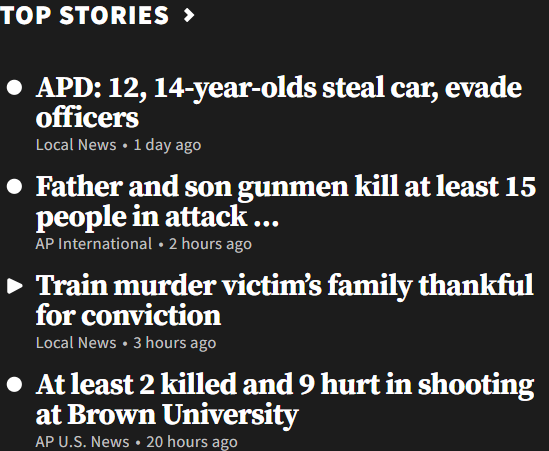
After hearing about the mass murder in Australia. The Brown University killings and the murders of Rob Reiner and wife. One wonders, is evil winning?

All you see on the news is hate, anger, and disagreements about everything. Peace-loving people must be wondering, “what is happening in this world?” I know I am. Being over eighty, I have never seen so much violence and useless attacks on the innocent. It has never been this bad, and the questions linger in our minds: how did we arrive at this point of such discontent? Communities that once thrived on cooperation now seem divided by strife, and everyday interactions are tainted by fear and suspicion. It’s a troubling environment that breeds hopelessness, leaving many to ask themselves if there’s a path toward healing. What is it going to take to turn this around? Perhaps it starts with each individual choosing kindness over hostility, fostering empathy, and making a conscious effort to unite rather than divide.

IS EVIL WINNING ?

The Decline of a Two-Party System: Power, Politics, and Unelected Influence

Audio Podcast

This is an opinion piece. For a long time I have felt this disgust from what I have seen from politicians, the news media and individual comments. Therefore, I felt it is time for me to vent and get it off my chest.

The United States has long prided itself on its two-party political system, a structure that has defined its democracy for over a century. The Democratic and Republican parties have historically served as the primary vehicles for political discourse, policy-making, and governance. However, the dynamics of this system have shifted dramatically in recent years, leading to a growing sentiment that the U.S. is no longer a true two-party country. Instead, the political landscape is increasingly characterized by one party acting with unchecked authority while the other postures without delivering meaningful opposition. Even more concerning is the rise of powerful unelected officials who appear to wield disproportionate control over the nation’s direction, undermining the democratic process.

The notion of a two-party system implies a balance of power, where competing ideologies engage in robust debate, compromise, and accountability to the electorate. Yet, this balance has eroded. One party—whether Democratic or Republican, depending on the context—often pushes its agenda with little regard for opposition or public sentiment. This is facilitated by a combination of political dominance in key institutions, media alignment, and strategic maneuvering that sidelines dissenting voices. Policies are enacted, executive actions are taken, and cultural shifts are engineered, often with minimal resistance. The opposing party, meanwhile, frequently engages in performative gestures—grand speeches, symbolic votes, or social media campaigns—that create the illusion of action without producing tangible results. This dynamic leaves voters frustrated, feeling that their concerns are ignored or that the system is rigged against them.

The root of this dysfunction lies not only with elected officials but also with the growing influence of unelected power structures. Bureaucrats, corporate leaders, tech moguls, and other non-elected figures have amassed significant control over policy and public life. Within the federal government, career officials in agencies like the Department of Justice, the FBI, or the CDC often shape policy outcomes through regulatory decisions, selective enforcement, or public health mandates that bypass the legislative process. These unelected actors operate with little accountability, insulated from the democratic mechanisms that govern elected representatives. For example, regulatory agencies can issue rules with the force of law, yet these decisions are often made by individuals who face no electoral consequences.

The corporate and tech sectors further exacerbate this trend. Tech giants, for instance, influence public discourse by controlling information flow, censoring content, or amplifying certain narratives, effectively shaping political outcomes without ever appearing on a ballot. Similarly, corporate lobbying ensures that economic policies often prioritize private interests over the public good. These unelected forces—whether in government, media, or industry—create a shadow governance structure that operates beyond the reach of voters, eroding the democratic foundation of the two-party system.

This imbalance has profound implications. When one party acts unilaterally and the other fails to mount effective opposition, the checks and balances inherent in a two-party system collapse. When unelected officials hold sway, the will of the people is sidelined. The result is a growing distrust in institutions, as citizens feel increasingly powerless to influence their government. Restoring a functional two-party system requires not only reinvigorating political competition but also addressing the unchecked power of unelected elites. Without such reforms, the U.S. risks drifting further from its democratic ideals, leaving its citizens with a government that serves the few rather than the many.

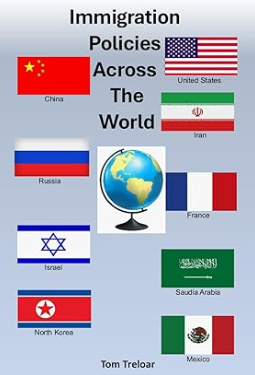
Immigration Policies Across the World

Paperback link to Amazon

Kindle link to Amazon

The U.S. immigration situation in 2025 is complicated and divisive, influenced by changing policies, border issues, and economic factors. Many were allowed to stay in the country while they wait for immigration hearings, which can take years because of court backlogs.
The immigration issue prompted me to take the problem seriously and explore it thoroughly by turning to various AI tools in my toolbox. I utilized Grok, Copilot, and Gemini for this purpose, each offering unique insights. I asked a common but crucial question across these platforms: “If I permanently wanted to immigrate to (country), what would I have to do? Additionally, do they have any assistance programs available for newcomers?” It’s important to note that there have been comments in various forums suggesting that different AI platforms may present biased perspectives and generate answers based on the leanings of the platform originators. This potential bias is precisely why I opted to consult multiple platforms; by doing so, I aimed to gather a more comprehensive view and ensure that I wasn’t missing out on any vital information that could facilitate my immigration journey.


Paperback USD $6.99

Kindle edition, Thru July 11 $0.00, $2.99 after

Watergate June 17, 1972: A Cautionary Tale of Political Corruption

Audio PODCAST

The Watergate scandal, a seismic debacle that shook the very foundations of American politics, erupted in the early 1970s, culminating in the disgraceful resignation of President Richard Nixon. It laid bare a shocking tapestry of power abuses, illegal machinations, and a brazen cover-up that utterly obliterated public trust in government. What follows is a daring exploration of this political theater, its explosive moments, and the indelible scars it left on the nation’s conscience.

On June 17, 1972, five men were arrested for breaking into the Democratic National Committee (DNC) headquarters at the Watergate office complex in Washington, D.C. The burglars, equipped with wiretapping devices and cameras, were caught attempting to bug the DNC offices. They were later linked to the Committee to Re-elect the President (CRP), Nixon’s campaign organization, raising suspicions of political espionage.

The break-in was not an isolated incident but part of a broader campaign of dirty tricks orchestrated by Nixon’s aides to undermine political opponents. This insidious strategy involved a series of coordinated efforts that extended far beyond the infamous Watergate Hotel break-in. It included wiretapping not only of the rival Democratic Party but also of journalists and activists who were critical of the administration. Harassment tactics were employed against prominent figures, intimidating them into silence or compliance. Furthermore, the campaign aimed to spread false information about Democratic candidates during the 1972 presidential election, which effectively sowed discord and mistrust among the electorate. These deceptive practices were designed to manipulate public perception and tilt the election outcome in favor of Nixon, showcasing a blatant disregard for democratic principles and the integrity of the electoral process.

The burglary initially received little attention, but investigative reporting by Washington Post journalists Bob Woodward and Carl Bernstein kept the story alive. Their work, aided by a confidential source known as “Deep Throat” (later revealed to be FBI Associate Director Mark Felt), uncovered connections between the burglars and high-ranking officials in the Nixon administration.

A Senate investigation, led by the Senate Watergate Committee in 1973, further exposed the scandal. Key revelations included The existence of a secret White House taping system that recorded Nixon’s conversations. Testimony from former Nixon aide John Dean, who detailed a cover-up orchestrated by the administration. Evidence of illegal campaign contributions, slush funds, and misuse of government agencies like the FBI, CIA, and IRS to target Nixon’s enemies.

The discovery of the White House tapes became pivotal. Nixon initially refused to release them, citing executive privilege, but the Supreme Court ruled unanimously in United States v. Nixon (1974) that he must comply. The tapes revealed Nixon’s direct involvement in obstructing justice, including discussions about halting the FBI’s investigation into the break-in.

On August 8, 1974, facing certain impeachment and conviction for his role in the Watergate scandal, President Richard Nixon announced his resignation in a televised address, becoming the first U.S. president in history to step down from office under such circumstances. This unprecedented event marked a significant moment in American political history, as it raised questions about ethics and accountability in government. Following Nixon’s resignation, Vice President Gerald Ford assumed the presidency, navigating a deeply divided nation grappling with the fallout of the scandal. In a highly controversial move that polarized the public, Ford pardoned Nixon just a month later, sparing him from any criminal prosecution. This decision sparked widespread outrage and debate, as many felt that it undermined the rule of law and set a troubling precedent for future administrations, leaving a lasting impact on public trust in government institutions.

The scandal led to the indictment of 69 people, with 48 convictions, including key Nixon aides like John Mitchell, H.R. Haldeman, and John Ehrlichman. It also spurred significant reforms, such as: The Federal Election Campaign Act Amendments (1974), tightening campaign finance laws. The Freedom of Information Act amendments, strengthening government transparency. Increased oversight of intelligence agencies.

Watergate profoundly eroded public trust in government, contributing to widespread cynicism about politics. The suffix “-gate” became synonymous with political scandals. The scandal also elevated the role of investigative journalism, with Woodward and Bernstein’s work inspiring future generations of reporters.

The Watergate scandal remains a cautionary tale about the dangers of unchecked power and the importance of accountability in democracy. Its legacy endures in ongoing debates about government transparency, executive authority, and the rule of law.

There has been speculation that events that have happened in the last few years, marked by political turmoil and increasing division, will make the Watergate scandal look like child’s play. This comparison stems from a series of unfolding controversies and allegations that have captured the public’s attention and raised serious concerns about the integrity of our institutions. Only time will tell whether these events will indeed reshape our understanding of political accountability and governance, or if they will fade into the annals of history as just another chapter of discord.

Why I Avoid Political Blogging

Audio PODCAST

In a world full of loud and divisive opinions, I choose not to blog about politics. This decision doesn’t mean I lack opinions or care about global issues; rather, it reflects my intention to create content that adds real value. I will explain why I avoid political topics and share what subjects I focus on instead.

Politics serves as a catalyst for intense debates, fostering echo chambers and perpetuating cycles of outrage. Digital platforms, including blogs, frequently transform into arenas where nuance is disregarded, and discussions regress into divisive confrontations. I have observed how political discourse can segregate audiences, marginalize thoughtful perspectives, and suppress substantive dialogue. My blog represents a dedicated space for the exchange of ideas, insights, and experiences—not an addition to the overwhelming din of partisanship.

Political blogging often requires choosing sides, but I don’t want to support one camp over another. We don’t need more voices adding to the conflict of red versus blue or left versus right. My goal is to promote connection, curiosity, and reflection—qualities that political discussions often lack. In today’s world, where debates can be intense, there’s a lot of anger coming from politicians and powerful individuals. This creates an environment that hampers real conversation, leaving many feeling disconnected. I believe it’s important to encourage discussions that go beyond simple oppositions, helping us understand the issues better. Through my writing, I want to provide spaces where different viewpoints can be thoughtfully considered, fostering understanding instead of hostility. By encouraging my readers to engage with various perspectives, I hope to inspire deeper thought and a kinder approach to complex issues. It’s about building empathy and seeing the humanity in others, even when we disagree. In moments of reflection and open dialogue, we can start to bridge divides and create a more inclusive conversation, ultimately leading to solutions that respect the diverse experiences and beliefs that shape our society.

Rather than diving into the divisive waters of politics, I choose to write about topics that bring people together and foster a sense of community. Whether it’s exploring personal growth, sharing practical advice, or diving into universal human experiences, my blog aims to resonate with readers regardless of their political leanings. I believe in creating content that sparks inspiration or offers value, whether someone votes differently, lives in another country, or holds opposing worldviews. Through storytelling, I hope to illustrate common threads in our lives, highlighting the shared joys and struggles that unite us all. By focusing on themes such as empathy, resilience, and collaboration, I strive to cultivate a space where diverse perspectives can coexist harmoniously, inviting dialogue and understanding rather than conflict. Ultimately, my goal is to uplift and empower readers from all walks of life to connect on deeper levels, conveying that our differences should be celebrated rather than used as barriers.

For example, a post about overcoming self-doubt or navigating actual challenges can speak to anyone, anywhere. These are the stories and ideas that transcend borders and ideologies. By focusing on shared human experiences, I hope to build a space where readers feel seen and understood, not judged or divided.

Political blogging can often feel like a performance, driven by the need to show virtue, fit in with a group, or produce trendy takes to remain relevant. I prefer not to engage in that. Writing about the latest political scandal or policy often becomes outdated quickly and can oversimplify complex issues into catchy phrases, missing the important details that matter. This approach weakens the quality of discussion and lessens the audience’s ability to think deeply about these topics. In an age where information is abundant yet often shallow, I aim to produce content that promotes a better understanding and meaningful conversations. My goal is for my content to provide lasting value, rather than chasing short-lived trends or views, emphasizing informed opinions and insights that help readers engage with important issues in a deeper way.

Moreover, political opinions online are often less about genuine dialogue and more about signaling loyalty to a group or ideology. I’d rather write from a place of authenticity, sharing what I know deeply or have experienced firsthand, than weigh in on issues where I’m just another voice in the crowd, lost in a sea of noise and partisan rhetoric. In a digital age brimming with misinformation, the challenge of fostering true discourse becomes even more daunting. News media can no longer be trusted as bastions of impartiality. They no longer report the news; instead, they select and curate the news to fit a specific narrative. If the news aligns with their agenda, they trumpet it from the rooftops; if not, the story is conveniently buried, hidden from the public eye, leaving us to question what truly lies beneath the surface of the headlines. This situation further complicates our understanding of the issues at hand, as discerning fact from opinion becomes an overwhelming task.

My readers come from diverse backgrounds, and I respect that they don’t all share the same views. If I started blogging about politics, I’d risk alienating some while preaching to others—a surefire way to erode trust. My goal is to create a space where everyone feels welcome, not just those who align with a particular stance. By steering clear of politics, I keep my blog inclusive and focused on ideas that invite rather than exclude.

So, what do I blog about? I focus on topics that inspire, inform, or uplift—things like personal development, creativity, productivity, or the small joys of everyday life. I might share a story about a lesson learned, a practical tip for solving a common problem, or a reflection on what it means to live well. These are the subjects that light me up and, I hope, resonate with my readers. Also, recently I have delved into fiction tales and stories, allowing my imagination to roam free and explore new worlds. They are just thoughts and ideas floating around in my brain, waiting to be transformed into something tangible. This newfound venture into fiction not only sparks my creativity but also provides a refreshing escape from reality. I find joy in crafting characters and settings that come alive on the page, and it’s becoming an enjoyable and interesting pursuit for me, as it deepens my understanding of storytelling and character development. Through these narratives, I can express emotions and explore human experiences in ways that are both relatable and enlightening.

Choosing not to blog about politics doesn’t mean I’m disengaged or apathetic. I vote, I stay informed, and I care deeply about the world. But my blog is not the place for those discussions. It’s a space for ideas that endure, that spark connection, and that leave readers feeling a little more empowered or inspired. In a world that’s often fractured, I want my words to be a small force for good—not another wedge driving people apart.

So, I’ll keep politics off my blog. Because I believe in creating something different: a space where we can meet as humans, not as opponents. If you’re looking for a break from the political noise, I hope you’ll find something here that speaks to you instead.

National Debt Information

Audio PODCAST

The U.S. National Debt is the total money the federal government owes to various creditors, including individuals, companies, foreign governments, and even parts of itself like Social Security trust funds. It results from the government spending more than it earns in taxes and borrowing to make up the difference.

The national debt is likely hovering around or exceeding $36 trillion, based on its trajectory in recent years—it crossed $34 trillion in early 2024. The exact figure fluctuates daily due to new borrowing, interest payments, and economic conditions, but you can think of it as a massive IOU that’s grown over decades.

The government borrows by issuing Treasury securities—bonds, bills, and notes—that investors, including banks, pension funds, and foreign countries like Japan and China, purchase. A significant portion (around $7-8 trillion) is “intragovernmental debt,” where one part of the government owes another, such as loans from Social Security surpluses.

The debt increases due to budget deficits: when yearly spending exceeds income. For instance, in fiscal year 2023, the deficit was about $1.7 trillion, mainly due to expenses for defense, healthcare (Medicare/Medicaid), and interest on existing debt, along with lower tax revenue. Deficits usually rise during crises—like wars, economic downturns, or pandemics—as seen with the over $3 trillion deficits for COVID-19 relief in 2020-2021.

Breaking It Down

  • Debt-to-GDP Ratio: A key metric. It’s over 120% of GDP (around $28 trillion), meaning the debt is greater than the economy’s annual output. For context, it was 35% in 1980, 60% in 2000, and increased after the 2008 financial crisis and the 2020 pandemic.
  • Interest Costs: The government pays interest on its debt, and rising rates have made this more expensive. In 2023, interest payments reached about $660 billion a year—more than the defense budget—and could exceed $1 trillion if rates remain high or debt increases.
  • Public vs. Total Debt: The “public debt” (owed to outside creditors) is about 75% of the total. The rest is that intragovernmental piece.

Pros: Borrowing allows the government to pay for essential projects—like roads and stimulus—without raising taxes right away. It has helped keep the U.S. economy stable, as the dollar’s status as a global reserve currency makes Treasuries a reliable investment.

Cons: Critics say it’s unsustainable. If interest costs eat up too much of the budget, it squeezes out other priorities. Plus, future generations inherit the tab. Some warn of a tipping point where creditors lose faith, though that’s debated since the U.S. can print dollars (unlike, say, Greece).

Hawks: “We’re drowning in debt! Cut spending or hike taxes now!”

Doves: “Relax, low rates and dollar dominance mean we can handle it. Focus on growth.”

Reality: Congress keeps kicking the can, raising the debt ceiling (119 times since 1944) rather than solving it. Last big standoff was 2023; next one’s brewing.

In short, the national debt is a giant, complex machine—part lifeline, part ticking clock. It’s not “good” or “bad” in isolation; it’s about how it’s managed. It must be dealt with sooner than later. What would happen to you if the country went bankrupt?

Ramblings Magazine Issue #10

Audio PODCAST

Readable PDF FILE LINK

Politics Today

Audio PODCAST

The political atmosphere in the United States is marked by deep polarization, widespread dissatisfaction, and heightened tension, creating an environment where constructive dialogue is increasingly rare. Many Americans feel exhausted and disillusioned with the political system, perceiving it as riddled with inefficiencies and corruption, with only a small minority believing it functions well. This sentiment has been exacerbated by the proliferation of partisan media that amplifies divisions rather than uniting perspectives. As a result, the electorate grapples with feelings of helplessness and frustration, leading to a pervasive sense of alienation from elected officials who seem disconnected from the everyday struggles of their constituents. Consequently, this growing discontent fuels calls for systemic change, as citizens increasingly demand political leaders who genuinely represent their interests and prioritize the common good over party allegiance.

Trust in government institutions, including the federal government and the Supreme Court, is at historic lows, driven by perceptions of dysfunction, partisan gridlock, and the influence of special interests. As citizens observe an increasing inability for lawmakers to reach consensus on critical issues, many feel disillusioned about the efficacy of these institutions meant to serve the public good. This skepticism is further compounded by the perception that decisions made by the Supreme Court are often swayed by political considerations rather than impartial justice, leading to a growing divide between the populace and the entities designed to protect their rights. Consequently, as trust erodes, civic engagement and participation in democratic processes also decline, creating a troubling cycle where the very foundations of governance are undermined, leaving citizens questioning the legitimacy and motives of those in power.

Political discourse is increasingly divisive, with both major parties—Democrats and Republicans—drifting further apart ideologically, fueled by extreme candidates and a lack of compromise in Congress. This polarization is not only evident in election campaigning but also in the way members of Congress interact and negotiate on key issues affecting the nation. As debates become more intense and bipartisan cooperation wanes, the ability to foster dialogue and achieve consensus diminishes, leading to legislative gridlock that frustrates citizens who seek meaningful change. Consequently, many voters feel disillusioned, as they witness the widening gap between party platforms, creating a political environment where moderates struggle to find common ground and alternative voices are often drowned out by the cacophony of partisanship.

Public sentiment reflects frustration with prolonged, uninformative election cycles and a growing sense that elected officials prioritize self-interest over problem-solving. Many citizens feel disconnected from the political process, as they witness endless debates that often lack substantial policy discussions. This disillusionment is compounded by a perception that campaign promises are routinely sidelined once candidates assume office. As a result, voters increasingly crave transparency and accountability, hoping for leaders who will genuinely listen to their concerns and take meaningful action to address pressing societal issues. It is this collective yearning for authentic engagement and change that fuels a deeper unrest among the electorate.

Despite high voter turnout in recent elections, this engagement appears driven more by fear and anger than optimism, with many viewing the stakes as existential for their side. The prevailing sentiment among voters suggests that they feel compelled to act in response to the perceived threats to their values, rights, and livelihoods, often fueled by divisive rhetoric and sensationalized media coverage. As a result, the political landscape has become increasingly polarized, with individuals rallying behind candidates and parties that resonate with their fears rather than a hopeful vision for the future. This environment not only diminishes the possibility of constructive dialogue but also fosters a reactive approach to governance, where decisions are made in the heat of emotional response rather than through thoughtful consideration of long-term impact.

Globally, similar trends of polarization and unease are evident, though specifics vary by region; in some areas, political divisions have intensified due to socio-economic factors, while in others, cultural clashes have emerged as primary drivers of tension. As communities grapple with differing ideologies and beliefs, the resulting discord often leads to a heightened sense of insecurity and conflict, further complicating efforts toward unity and understanding across diverse populations.

Overall, the atmosphere is one of unease, mistrust, and a struggle for political direction amidst competing visions for the future, as various factions grapple with divergent ideologies and varying priorities that clash with one another. This pervasive sense of uncertainty has led to a palpable tension within the community, further exacerbated by the ongoing debates regarding policies and leadership that seem to divide rather than unite the populace. As different groups advocate for their distinct perspectives, the public finds itself caught in a maze of conflicting narratives, creating a breeding ground for discontent and skepticism toward those in power. It is sad that a country that has so much is so divided.

End of the Line

Audio PODCAST

suspense story set on a train: 

The 11:47 p.m. express rattled through the night, its wheels screeching against the tracks as mist clung to the windows, blurring the patchy landscape beyond. I sat alone in the dimly lit car, the only passenger except for a man in a gray coat two rows ahead, shrouded in a shadow created by the flickering overhead lights. His head was bowed, hands folded in his lap, still as stone, a haunting figure amongst the empty seats. Outside, the rhythmic patter of rain began to fall, merging with the train’s incessant clattering—clack-clack, clack-clack—should’ve lulled me to sleep, but instead, a knot of unease tightened in my stomach. The air was thick with the scent of damp wood and metal, amplifying the isolation I felt in this moving coffin, and despite the familiarity of the sound, an instinctual dread settled over me, making it clear that something felt off.

I’d noticed him when I boarded, sitting in the corner shrouded in shadows. He hadn’t moved, hadn’t spoken, hadn’t even glanced at the conductor who’d passed through an hour ago, his feet firmly planted on the floor as if he were rooted there. The air grew colder, wrapping around me like an unwelcome blanket, and the lights flickered intermittently, casting eerie shadows that danced along the walls. I told myself it was nothing—just a late-night train rumbling through the darkness, an overactive imagination running wild after too many ghost stories—but then I saw it: a faint drip beneath his seat. Dark. Red. It pooled slowly, a sinister reminder that not everything is as it seems in the stillness of the night, and my heart raced as the weight of dread settled in my chest, urging me to look away, yet somehow compelling me to stay.

My stomach twisted with anxiety, an unsettling feeling that crept up as I stood, edging cautiously toward the aisle, when suddenly the train lurched violently, throwing me back into my seat with alarming force. The lights died completely, plunging us into an abyss of darkness, the only source of illumination being the ghostly moonlight that filtered through the fogged windows, casting jagged shadows that danced ominously across the carriage. Clack-clack, clack-clack. The rhythmic sound of the train’s wheels on the tracks echoed in the silence, heightening my tension. I held my breath, straining to peer at the figure of the man across the aisle, his face obscured by shadows. He hadn’t flinched, seemingly unfazed by the chaos surrounding us, and that unsettling calm only deepened my unease, making me wonder what secrets he held in the depths of the night.

Then, slowly, his head turned. Not his body—just his head, swiveling unnaturally until his pale face locked onto mine with a chilling intensity. His eyes were wide, unblinking, as if frozen in a moment of eternal dread, and his lips parted in a thin, crooked smile that sent a shiver down my spine. The dripping grew louder, a steady pat-pat-pat against the floor, echoing in the sudden silence that filled the air around us. I scrambled for my phone, hands shaking uncontrollably, heart racing as terror washed over me, but the screen wouldn’t light despite my frantic jabs. The train sped up, the clacking now a frantic roar that drowned out all rational thought, making it feel like my very sanity was being swept away with each relentless beat. I could feel the weight of his gaze piercing through me, and I could not escape the dreadful realization that I was utterly alone in this speeding metal cage.

“Next stop,” a voice crackled over the intercom, distorted and guttural, “is yours.” The words hung in the air, echoing through the dimly lit cabin as anticipation coursed through the passengers. Each traveler exchanged glances filled with curiosity and a hint of apprehension, their minds racing with thoughts of where this next destination might lead. The vehicle slowed, the faint rumble of the engine softening to a gentle hum, while outside the window, shadows loomed large, hinting at the unknown waiting just beyond the doors.

The man stood, his coat swaying as he stepped into the aisle, the fabric whispering secrets of the night. He didn’t walk—he glided, his feet hovering an inch above the floor, as if defying the very laws of gravity. The dripping followed him, a trail of red snaking toward me, pulsating with an unsettling rhythm that echoed the dread building within my chest. I pressed myself against the window, heart hammering like a frantic drum, as he stopped beside my seat, blocking the faint glimmer of streetlights outside. His head tilted, that smile widening until it seemed almost unnatural, stretching across his pale face, revealing an unsettling familiarity. As the air around us thickened with tension, he leaned in closer and whispered, “You shouldn’t have looked,” sending shivers racing down my spine, a warning laced with something far more sinister.

The lights snapped back on, bathing the compartment in a stark, fluorescent glow. He was gone, vanished as if he had been nothing more than a figment of my imagination. The seat ahead was empty, the floor spotless, echoing the absence of life that filled the carriage with an eerie stillness. My heart raced as the train slowed, brakes squealing like a distressed animal as it pulled into a station I didn’t recognize, a place that felt foreign and unsettling. The sign outside read: End of the Line. Confusion gnawed at me; my ticket said three more stops were still to come. I grabbed my bag and ran for the door, my breath quickening with each step, but as it slid open with a hesitant creak, I froze. Beyond the platform, there was nothing—just a void, black and endless, swallowing the tracks and suffusing the air with a sense of dread. The silence was oppressive, a heavy blanket weighing down my thoughts, as I stood on the brink of an unknown fate, my mind racing with questions and fears.

The doors sealed shut behind me, confining the turmoil I had narrowly escaped. The train surged forward like it was striving to breach the sound barrier, the wheels producing a steady, rhythmic sound that resonated throughout the car. As I settled into my seat, the flickering overhead lights cast an unsettling atmosphere reminiscent of a haunting film. From the dim recesses at the opposite end of the car, I heard it again: a soft pat-pat-pat, a sound that suggested an imminent threat. I found myself bracing for an unexpected encounter, imagining a figure emerging, perhaps with a sinister intent, to deliver a chilling message. “Your time on earth is over!”
False Reporting


The issue of misinformation and lies in news media is a significant concern in contemporary society, affecting public perception, trust in journalism, and even the outcomes of elections. Here’s an overview based on recent trends and discussions:

Current Landscape:

  • Proliferation of Misinformation: The spread of false or misleading information has been exacerbated by the digital age, where social media platforms and the internet allow content to reach vast audiences quickly. Misinformation can range from incorrect facts to deliberate disinformation campaigns designed to sway public opinion or sow discord.
  • Impact of Social Media: Platforms like X (formerly Twitter) have become hotbeds for misinformation, with posts often going viral before they can be fact-checked or corrected. The rapid dissemination of information without adequate verification has led to significant real-world consequences, especially during crises like natural disasters or elections.
  • Role of Traditional Media: Even established news outlets are not immune to spreading misinformation, sometimes due to the pressure of breaking news first, ideological biases, or lapses in editorial oversight. Recent examples include erroneous reporting on significant events like the origins of pandemics or election integrity.

Key Points from Recent Discussions:

  • Election Misinformation: The 2024 U.S. presidential election was particularly noted for misinformation, with false claims about voting processes, ballot integrity, and election results. This has led to a loss of trust in electoral systems and has been a focal point in discussions about media responsibility.
  • Fact-Checking and Retraction: The effectiveness of fact-checking by media organizations has been questioned, especially when corrections or retractions do not receive the same visibility as the original misinformation. The discontinuation of some fact-checking programs by major social media platforms has raised alarms about the potential increase in unchecked misinformation.
  • Legal and Ethical Considerations: There have been lawsuits against media outlets for spreading false information, leading to settlements but not always public acknowledgment or correction of the misinformation. This has sparked debates about the adequacy of current defamation laws in combating misinformation.
  • Public Perception: Surveys and posts on X reflect a growing skepticism towards news media, with many Americans believing that news organizations might intentionally mislead or manipulate public opinion.
  • Technological Solutions: AI is being explored for its potential in combating misinformation by flagging dubious content and assisting in fact-checking, although it also poses risks when used to generate misleading content.

Moving Forward:

  • Media Literacy: There’s a push for increased education on media literacy to empower individuals to critically evaluate the information they consume.
  • Journalistic Integrity: Calls for stronger adherence to journalistic standards, transparency in reporting, and accountability when errors occur.
  • Policy and Regulation: Discussions on how government and platforms should regulate or mitigate misinformation without infringing on free speech.
  • Community Action: Grassroots movements and protests, like those seen trending on X, demonstrate public demand for truth in media, especially in politically charged contexts like immigration policy.

In conclusion, while misinformation in media is a complex issue intertwined with technology, politics, and human behavior, ongoing efforts across societal, technological, and legislative domains are aimed at reducing its impact. However, the balance between free speech and the prevention of harm from misinformation remains a contentious and evolving challenge.

The New Face of COVID

PODCAST

Last Wednesday I tested positive for COVID. Procedures and attitudes have really changed since years ago. I go to urgent care because I had a sore throat, and I am thinking I may have Strep Throat since I have had this ailment many times in my life. Strep Throat is a bacterial infection, and I would need a prescription to get an antibiotic.

The admitting questionnaire does not even list Covid. They list cold and flu symptoms, but nothing about Covid. Remembering in the past in big bold letters at the top of the form there was a warning about listing Covid symptoms and there were special instructions to abide by. I check cold and flu symptoms since there is no category for sore throat. Enter the waiting room and there are 8 or ten patients waiting to be called up. No masks or distancing whatever.

In about ten minutes I am called into the admittance office. The nurse their does have a mask. I tell her I have concerns about Strep Throat and she says that is probably not my illness since most people develop an immunity to Strep as they age. But they will perform a Strep test anyway and also do a Flu and Covid tests to make sure it is not one of those. She takes me a treatment room and tells me a nurse will be in shortly.

In a short time, a nurse or some other professional comes in, no mask, no concern about that I may be contagious. She does the routine of blood pressure, blood oxygen and whatever else they do. Asks a few questions like do I have any other symptoms and how long have I been ill. She then tells me another person will come in and do the nostril swabs for the samples.

Maybe ten, fifteen minutes later the next technician comes in, no mask, just like I am person with a bad sprain. She does the Strep swab first and then the flu swab. I comment I am sure glad there is only one more swab to do. To my surprise she responds and says the flu and Covid test is done at the same time. This brings back memories during the onset of Covid that there were comments that Covid is just a flu strain and for political and agenda reasons it is being blown out a proportion to the actual seriousness of the virus. If they use the same test, it makes one wonder.

It takes forty minutes for the test results. A Physician Assistant enters the room and gives me the results. the Strep test is negative, and the Flu test is also negative. Unfortunately, the covid comes back positive. I have Covid. There is no panic no concern, just like you have a cold or flu. She gives me a mask to wear home and says the quarantine is now only five days and that starts the day the symptoms start. Go home and if your symptoms get worse come back. Next Patient!

This Brings back how my wife was treated during the height of the pandemic. She was isolated immediately, and a sign was put on the door “restricted area”. Personnel would come into the room all masked up and in disposable garments. You had to put up with wearing masks everywhere, Clear plexiglass sheets separated you from the cashier. Do not get closer than 5 feet to the next person. Many restaurants did not survive the Covid shutdown. I always wondered how the small business was shut down, but the large, big box stores could stay open. One will never know if this helped or not.

Unfortunately, how Covid was treated has led people to distrust government, big pharma and the medical profession. The face of Covid is so much different than the beginning. Now it is treated like just a bad cold or the flu.

January 6, 2021

CLICK HERE FOR PODCAST AI Assisted

The January 6, 2021, Capitol attack has had profound and multifaceted impacts on the United States, affecting various aspects of national life:

Political Impact:

  • Polarization: The event has deepened political divides, with differing interpretations of the riot’s significance and causes. Some view it as an attack on democracy itself, while others see it as an overblown response to a protest or characterize the participants as tourists or victims of political persecution.
  • Election Integrity: It has fueled discussions and actions around election integrity, leading to new voting laws in several states, some of which aim to restrict voting access under the guise of preventing fraud, while others seek to expand voting rights.
  • Accountability and Impeachment: Donald Trump was impeached by the House for “incitement of insurrection” but was acquitted by the Senate. This has led to debates about accountability for political leaders and their influence on violent actions.

Legal and Security Implications:

  • Criminal Prosecutions: Over 1,500 individuals have faced criminal charges related to the riot, making it one of the largest criminal investigations in U.S. history. This has set legal precedents regarding seditious conspiracy, obstruction of an official proceeding, and the use of social media in criminal investigations.
  • Security Measures: The attack led to immediate and long-lasting changes in Capitol security, including increased fencing, more robust law enforcement presence, and a reevaluation of intelligence and response strategies.

Cultural and Social Effects:

  • Public Trust: There’s been a significant impact on public trust in institutions, particularly in law enforcement, the electoral process, and the legitimacy of political discourse. Trust varies widely along party lines, with many seeing the event either as a wake-up call for democracy or as an example of political overreach.
  • Media and Misinformation: The event has highlighted the role of media in shaping public perception, with misinformation playing a significant role both in the lead-up to and the aftermath of January 6. This has prompted discussions on media responsibility, the spread of conspiracy theories, and the need for media literacy.

Legislative and Policy Changes:

  • Capitol Security: New laws and bills have been proposed to enhance Capitol security, though progress is slow due to political disagreements.
  • Election Laws: The riot has influenced policy discussions on voting rights, with some states passing laws seen as either protecting or restricting voting access in response to claims of election fraud.

Ongoing Investigations and Commemoration:

  • Congressional Investigations: The bipartisan House Select Committee’s investigation has produced a detailed report on the events, although its findings and recommendations continue to be politically divisive.
  • National Reflection: January 6th has become a day of reflection for many, with memorials, speeches, and educational initiatives aimed at ensuring such an event does not happen again, while for others, it’s a point of contention or denial regarding the severity or nature of the incident.

The effects of January 6, 2021, continue to evolve, influencing American politics, society, and policy in ways that are still unfolding, often highlighting the challenges of national unity, governance, and the health of democratic institutions.

The above was from AI information gleaned from the internet. Right or wrong this information is plastered all over the internet. Again, it comes down to the individual whether they want to believe it or not. The past events have divided this country more than any other time I remember.

Ramblings Magazine Issue #7 podcast

Podcast LINK

Hard copy LINK

Hello Ramblings Magazine reader! Welcome!  

This is a podcast of the seventh issue of Ramblings Magazine.  

The Headings are: 

Back to Writing. 

Early Morning. 

My Eyes are Killing Me. 

My Regrets. 

Reminiscing is my Interest. 

Camping Tales. 

Past Experiences. 

A Bone Fish Grill Experience. 

Vicks VapoRub and Toenail Fungus. 

Mother’s Day May 12, 2024. 

I Should Have Done More. 

A World of Fruit. 

A Leader and a Follower. 

The Grok Platform and Me. 

New Mother Celebration. 

A three-letter middle name. 

Touched by God. 

My Favorite Machine. 

Retirement. 

Title and Date Unknown. 

Don’t Let Your Hormones Run Your life. 

What Matters. 

Frit and Leo. 

Don’t Remember Title or Date. 

Hardest Part of School Year. 

A Piece of Clothing.  

A Day of Reflection. 

2008 Was Not the Year to be Elected President. 

A Touch of Italy. 

And the Winner is. 

Photo Memory Section 

Patriotism

A patriot is a person who loves their country. It is generally seen as a positive. Many have ancestry from a foreign country. They have seen or heard how their life has improved in this country compared to where their ancestors came from. They have realized they can believe a religion they may have been restricted from. The world is full of controlling countries and that may be the reason they immigrated. Whatever the reason, a love for a country is starting to materialize when they come to this country and feel the opportunities. Have you ever heard of anyone immigrating to Russia, North Korea for the opportunities?

Defending a country against its enemies, and a desire to see it succeed is very important. There are national cemeteries across the nation that are full of patriots that stepped up and fought and defended the country. Millions are in these cemeteries that made the supreme sacrifice in battle defending this love of country.

Most countries aim to instill patriotism in their youths from a young age, often through education and exposure to patriotic symbols and events. I remember in grade school they would raise the flag when the students were entering. When they were raising the flag, you would stop and wait until the flag was raised. We were taught about the many symbols and history of this country. Unfortunately, I have heard that this has diminished in the last years. If this is true, I am afraid that this will affect this country in the future.

Patriots believe it’s their duty to vote in elections. This is based on their sincere desire for their country to succeed. Patriots pay attention to the events that are happening in the country and vote accordingly. Way too many do not vote and do not have a clue what is going on in the country. I am concerned that this lack of interest could affect the future of this country.

Yes, I consider myself to be a patriot. I vote consistently and follow local and national news and events. I served in the military and was willing to give my life for this country. I respect the flag and symbols of the country. I love this country and have no desire to go to any other country. This country has been very good to me, and I have lived the American Dream.

Daily writing prompt
Are you patriotic? What does being patriotic mean to you?

King For a Day

If I had the power to change one law, it would be to enforce the laws now on the books. It can be seen everywhere that current laws are not being enforced. For example, thousands are coming across the border every day. All of a sudden, the immigration laws are not being enforced. Crime is rampant in major cities. If by chance they are arrested, then the DA then releases them with no bail. Just to be released to commit their next crime. Shop lifting must be legal these days. A new phrase emerges, “smash and grab” where large numbers enter a store and take whatever they want. You never hear of any arrests and prosecutions for these crimes. When was the last time you saw a police officer writing a ticket for a traffic offense? How many expired license plates have you seen lately? Because of the political atmosphere it has made it appear that there is a double standard in the prosecuting procedure. Any law that is not enforced, the law becomes useless.

Daily writing prompt
If you had the power to change one law, what would it be and why?

Too cute to not pass it on

Bud the Cowboy

cowboy named Bud was overseeing his herd in a remote mountainous pasture in Montana when suddenly a brand-new BMW advanced toward him out of a cloud of dust.

The driver, a young man in a Brioni® suit, Gucci® shoes, RayBan® sunglasses and YSL® tie, leaned out the window and asked the cowboy, “If I tell you exactly how many cows and calves you have in your herd, will you give me a calf?”
Bud looks at the man, who obviously is a yuppie, then looks at his peacefully grazing herd and calmly answers, “Sure, why not?”
The yuppie parks his car, whips out his Dell® notebook computer, connects it to his Cingular RAZR V3® cell phone, and surfs to a NASA page on the Internet, where he calls up a GPS satellite to get an exact fix on his location which he then feeds to another NASA satellite that scans the area in an ultra-high-resolution photo.
The young man then opens the digital photo in Adobe Photoshop® and exports it to an image processing facility in Hamburg, Germany …
Within seconds, he receives an email on his Palm Pilot® that the image has been processed and the data stored. He then accesses an MS-SQL® database through an ODBC connected Excel® spreadsheet with email on his Blackberry® and, after a few minutes, receives a response.
Finally, he prints out a full-color, 150-page report on his hi-tech, miniaturized HP LaserJet® printer, turns to the cowboy and says, “You have exactly 1,586 cows and calves.” 
“That’s right. Well, I guess you can take one of my calves,” says Bud.  He watches the young man select one of the animals and looks on with amusement as the young man stuffs it into the trunk of his car. Then Bud says to the young man, “Hey, if I can tell you exactly what your business is, will you give me back my calf?”

The young man thinks about it for a second and then says, “Okay, why not?”

“You’re a Congressman for the U.S. Government”, says Bud.

“Wow! That’s correct,” says the yuppie, “but how did you guess that?”  “No guessing required.” answered the cowboy. “You showed up here even though nobody called you; you want to get paid for an answer I already knew, to a question I never asked. You used millions of dollars worth of equipment trying to show me how much smarter than me you are; and you don’t know a thing about how working people make a living – or about cows, for that matter. This is a herd of sheep.” “Now give me back my dog!”

How to fix Congress

*The 26th amendment (granting the right to vote for

18 year-olds) took only 3 months & 8 days to be

ratified!  Why?  Simple!  The people demanded it.  That

was in 1971… before computers, before e-mail, before

cell phones, etc.

Of  the 27 amendments to the Constitution, seven (7)

took 1 year or less to become the law of the  land…

all because of public pressure.*

*I’m asking each addressee to forward this email to a

minimum of twenty people on their address list;  in

turn ask each of those to do likewise.

In three days, most people in The United States of

America will have the message.  This is one idea that

really should be passed around.

Congressional Reform Act of  2011

1.  No Tenure / No Pension. A  Congressman collects a

salary while in office and receives no pay when they

are out of office.

2..  Congress (past, present & future) participates in

Social Security. All funds in the Congressional retirement

fund move to the Social Security system immediately.

All  future funds flow into the Social Security system,

and Congress participates with the American people. 

It may not be used for any other purpose.*

*3. Congress can purchase their own retirement plan,

just as all Americans
do.*

*4. Congress will no longer vote themselves a pay raise.

Congressional pay will rise by the lower of CPI or 3%.*

*5. Congress loses their current health care system and

participates
in the same health care system as the American people.*

*6. Congress must equally abide by all laws they impose

on the American
people.*

*7. All contracts with past and present Congressmen

are void effective1/1/12. ****The American people did

not make this contract with Congressmen.  Congressmen

made all these contracts for themselves.
Serving in Congress is an honor, not a career.  The 

Founding Fathers envisioned citizen legislators, so ours

should serve their term(s), then go home and back to work.
*
*If each person contacts a minimum of twenty people

then it will only take three days for most people

(in the  U.S. ) to receive the message.  Maybe it is time.
*
*THIS IS HOW YOU FIX CONGRESS!!!!!*

*If  you agree with the above, pass it on. 

Social Security information

History Lesson on Your Social Security Card
  
Social Security Cards up until the 1980s expressly stated the number and
card were not to be used for identification purposes.
Since nearly everyone in the
United States now has a number, it became convenient to use it anyway and the
message, NOT FOR IDENTIFICATION,was removed.


An old Social Security card with the “NOT FOR IDENTIFICATION”message.

Our Social Security

Franklin Roosevelt, a Democrat, introduced the Social
Security (FICA) Program. He promised:

1.) That participation in the Program would be
Completely voluntary,

No longer Voluntary

2.) That the participants would only have to pay
1% of the first $1,400 of their annual
Incomes into the Program
,

Now 7.65%
on the first $90,000

3.) That the money the participants elected to put
into the Program would be deductible from
their income for tax purposes each year,

No longer tax deductible

4.) That the money the participants put into the
independent ‘Trust Fund’
rather than into the
general operating fund, and therefore, would
only be used to fund the Social Security
Retirement Program, and no other
Government program, and,

Under Johnson the money was moved to
The General Fund and Spent

5.) That the annuity payments to the retirees would never be taxed
as income.

Under Clinton & Gore
Up to 85% of your Social Security can be Taxed

Since many of us have paid into FICA for years and are
now receiving a Social Security check every month —
and then finding that we are getting taxed on 85% of
the money we paidto the Federal government to ‘put
away’ — you may be interested in the following:

———— ——— ——— ——— ——— ——— —-

Q: Which Political Party took Social Security from the
independent ‘Trust Fund’ and put it into the
general fund so that Congress could spend it?

A: It was Lyndon Johnson and the democratically
controlled House and Senate.

———— ——— ——— ——— ——— ——— ——— —

Q: Which Political Party eliminated the income tax
deduction for Social Security (FICA) withholding?

A: The Democratic Party.

———— ——— ——— ——— ——— ——— ——— —–

Q: Which Political Party started taxing Social
Security annuities?

A: The Democratic Party, with Al Gorecasting the
‘tie-breaking’ deciding vote
as President of the
Senate, while he was Vice President of the  US

———— ——— ——— ——— ——— ——— ——— –

Q: Which Political Party decided to start
giving annuity payments to immigrants?

AND MY FAVORITE:

A: That’s right!

Jimmy Carter and the Democratic Party.  
Immigrants moved into this country, and at age 65,
began to receive Social Security payments! The
Democratic Party gave these payments to them,
even though they never paid a dime into it!

———— — ———— ——— —– ———— ——— ———

Then, after violating the original contract (FICA),
the Democrats turn around and tell you that the Republicans want
to take your Social Security away!

And the worst part about it is uninformed citizens believe it!
If enough people receive this, maybe a seed of
awareness will be planted and maybe changes will
evolve.

But it’s worth a try.

How many people can YOU send this to?

Actions speak louder than bumper stickers


Lets withhold elected officials pay

PLEASE read and forward to all your e-mail contacts, and post on your Face-book page if you have one… This is getting serious

 
Dear Mr. President, I heard you say you will not guarantee SS checks if the debt ceiling isn’t raised.
 
Why is it the threat always has to do with SS, Medicare, & our Soldiers pay? …trying to scare those who’s needs are greatest?
 
Why not stop YOUR pay, your staff, or Congress and the Senate to save more money for our country?
 
If that isn’t enough, how about withholding foreign aid?
  
Why use Seniors, Soldiers, & our Needy as examples?
 
Take the money from those who take no risks and reap the benefits!!   
 
Instead of threatening to withhold Social Security, VA and disability payments of people who really need the money….
 
Lets hold the paychecks of all house & senate members, then see how fast they resolve the debt ceiling crisis !!!!!
 
If you agree, repost this & keep it going across the whole USA.

    
Thank you

A new tax on home sales

Received this in an e-mail and just passing it on!

Did you know that if you sell your house after 2012 you will pay

a 3.8% sales tax on it?  That’s $3,800 on a $100,000 home etc. 

When did this happen?  It’s in the health care bill.  Just thought

you should know.


SALES TAX TO GO INTO EFFECT 2013 (Part of HC Bill)  Why

2013?  Could it be to come to light AFTER the 2012 elections?


REAL ESTATE SALES TAX


So, this is “change you can believe in”?  Under the new health

care bill – did you know that all real estate transactions will be

subject to a 3.8% Sales Tax?  The bulk of these new taxes don’t

kick in until 2013 If you sell your $400,000 home, there will be

a $15,200 tax.  This bill is set to screw the retiring generation

who often downsize their homes.  Does this stuff make your

November and 2012 vote more important? 


Oh, you weren’t aware this was in the obamacare bill?  Guess

what, you aren’t alone.  There are more than a few members of

Congress that aren’t aware of it either.


I hope you forward this to every single person in your address

book.  VOTERS NEED TO KNOW.


So much for the promise that “we are not going to raise taxes,

not one thin dime, for anyone making under $250,000 per year.”

IF this is incorrect, someone please enlighten me!

1% tax on all bank transactions HR4646

1% tax on all bank transactions HR4646

Watch for this AFTER November elections; remember this BEFORE you VOTE in case you think Obama’s looking out for your best interest.

1% tax on all bank transactions HR 4646

This government just cannot think of enough ways to hurt the American people! I sure hope this dies!!!!!

FORWARD THIS TO EVERYONE YOU KNOW!

1% tax on all bank transactions HR 4646 – ANOTHER NEW OBAMA TAX SLIPPED IN WHILE WE WERE ASLEEP. Checked this on snopes, it’s true! Check out HR 4646.


Check it out on Snope: http://www.snopes.com/politics/taxes/debtfree.asp

President Obama’s finance team is recommending a one percent (1%) transaction fee (TAX). Obama’s plan is to sneak it in after the November elections to keep it under the radar.

This is a 1% tax on all transactions at any financial institution – banks, credit unions, savings and loans, etc. Any deposit you make, or even a transfer within your account, will have a 1% tax charged. ~If your paycheck or your social security or whatever is direct deposit, it will get a 1% tax charged for the transaction. ~If your paycheck is $1000, then you will pay Obama $10 just for the privilege of depositing your paycheck in your bank. Even if you hand carry your paycheck or any check into your bank for a deposit, 1% tax will be charged. ~You receive a $5,000 stock dividend from your broker, Obama takes $50 just to allow you to deposit that check in the bank.. ~If you take $1,000 cash to deposit at your bank, 1% tax will be charged.

Mind you, this is from the man who promised that, if you make under $250,000 per year, you will not see one penny of new tax. Keep your eyes and ears open, you will be amazed at what you learn about this guy’s under-the-table moves to increase the number of ways you are taxed.

~Oh, and by the way,if you receive a refund from the IRS next year and you have it direct deposited or you walk in to deposit that check, you guessed it. You will pay a 1% charge of that money just for putting it in your bank. Remember, any money, cash, check or whatever, no matter where it came from, you will pay a 1% fee if you put it in the bank.

Some will say, oh well, it’s just 1%. Are you kidding me? It’s a 1% tax increase across the board. Remember, once the tax is there, they can also raise it at will. And if anyone protests, they will just say, “oh,that’s not really a tax, it’s a user fee”! Think this is no big deal? Go back and look at the transactions you made from last year’s banking statements. Then add the total of all those transactions and deduct 1%. Still think it’s no big deal?

 
Check it out on Snope: http://www.snopes.com/politics/taxes/debtfree.asp