podcasts

Thomas Edison’s Christmas Lights

PODCAST

In the tapestry of holiday traditions, few moments shine as brightly as when Thomas Edison, the wizard of Menlo Park, illuminated the first string of electric Christmas tree lights on December 22, 1882. This wasn’t just a festive experiment; it was a moment that would redefine holiday celebrations for generations to come.

Back in 1882, Christmas decorations were predominantly made of candles, which, while beautiful, posed a significant fire hazard. Imagine the scene: the glow of candles on evergreen branches, a sight both enchanting and dangerous. Enter Thomas Edison, who had already made headlines with his incandescent light bulb. Edison’s associate, Edward H. Johnson, took the idea a step further. On December 22, 1882, Johnson, an inventor in his own right and Edison’s partner, adorned his Christmas tree in his New York City home with 80 hand-wired red, white, and blue electric bulbs. This wasn’t just for show; it was a demonstration of what electric lights could do for safety and aesthetics in holiday decor.

The spectacle was reported in the Detroit Post and Tribune, describing how “one can hardly imagine anything prettier.” This wasn’t just a novelty; it marked the beginning of a new era for Christmas decor. Edison’s electric lights were safer than candles, reusable, and didn’t require the constant attention to prevent fires. However, the technology was initially too expensive for the average household. A string of lights could cost as much as a month’s salary for many workers.

But as with many of Edison’s inventions, the price came down over time, and the idea caught on. By the early 20th century, electric Christmas lights had become more accessible, thanks to innovations in manufacturing and a growing electrical infrastructure. Companies like General Electric started producing pre-wired sets, making it easier for families to illuminate their celebrations.

This invention did more than just light up trees; it influenced how we celebrate and remember Christmas. The warm glow of electric lights became synonymous with the holiday spirit, symbolizing joy, warmth, and togetherness. It transformed the Christmas tree from a fire hazard into a centerpiece of safety and celebration. Over the years, the tradition evolved with colored lights, blinking patterns, and eventually, LED technology, which brought energy efficiency into the mix.

Today, when we string up our lights, whether they’re classic incandescent, energy-saving LEDs, or even smart lights that dance to music, we’re participating in a tradition that began with Edison and Johnson’s pioneering demonstration. It’s a reminder of how innovation can create enduring cultural practices. Each twinkle of a light on a Christmas tree is a nod to human ingenuity, turning a simple act of decoration into a celebration of progress and festivity.

In conclusion, Thomas Edison’s contribution to Christmas traditions in 1882 goes beyond mere decoration; it was a beacon of innovation that has continued to evolve. As we plug in our lights each year, we’re not just decorating for the holidays; we’re partaking in a legacy of light, safety, and joy that began with a single, bright idea over a century ago. This year, as you look at your twinkling tree, remember the spark of genius that made it all possible.

The Intriguing History of the Crossword Puzzle


PODCAST

Crossword puzzles, those delightful grid games that challenge our vocabulary and wit, have a history as rich and engaging as the puzzles themselves. Today, let’s delve into how this beloved pastime came to be.

The Birth of the Crossword

The story of the crossword puzzle begins on December 21, 1913, when Arthur Wynne, a journalist from Liverpool working for the “New York World,” introduced a new kind of puzzle to his readers. Called the “Word-Cross Puzzle,” it was published in the newspaper’s Fun section. This wasn’t just any puzzle; it was the first of its kind, featuring words intersecting in a diamond-shaped grid. Wynne’s creation was inspired by earlier word games like the “Magic Squares,” but his innovation lay in the intersecting words, which added a new layer of complexity and enjoyment.

The Crossword Craze

The initial response was modest, but word of mouth spread, and by the late 1920s, crossword puzzles had become a national craze in the United States. The “New York World” was soon followed by other publications, recognizing the public’s hunger for these brain teasers. The puzzle’s popularity soared to such heights that it was not uncommon to see people solving crosswords in trains, parks, and even during work breaks.

Evolution and Expansion

The format of the crossword evolved over time. The diamond shape gave way to the now-standard square or rectangular grid with black squares separating the words. This evolution was partly driven by the need for more complex puzzles and better space management in newspapers. The 1924 publication of “The Cross Word Puzzle Book” by Simon & Schuster, which became the first book to sell a million copies in the U.S., further solidified the crossword’s place in popular culture.

In the 1930s, crossword puzzles began to take on different forms across the world. In Britain, the “cryptic crossword” was developed, known for its clues that require a bit of lateral thinking or wordplay, contrasting with the American style’s more straightforward definitions.

Crosswords in the Digital Age

The advent of digital technology brought new dimensions to crossword puzzles. With the internet, puzzles became available online, allowing for interactive solving, instant checking, and community engagement through forums and competitions. Mobile apps further revolutionized the accessibility of crosswords, turning them into a daily ritual for millions worldwide.

Modern Innovations

Today, crossword puzzles continue to evolve. We see a blend of traditional and modern elements – from themed puzzles that reflect current events to crosswords that cater to niche interests or even educational purposes. The rise of AI has also introduced new dynamics in puzzle creation, although the human touch in crafting clues remains irreplaceable for its cleverness and cultural relevance.

Cultural Impact

Crosswords have not only been a source of entertainment but also a cultural phenomenon. They’ve influenced language, with terms like “clue” and “grid” gaining specific meanings within crossword culture. They’ve also been a subject in literature, films, and even academic study, exploring cognitive benefits like improved memory and problem-solving skills.

Conclusion

From its humble beginnings in a newspaper supplement to becoming a global pastime, the history of the crossword puzzle is a testament to human ingenuity and our love for wordplay. As we continue to see new twists in the crossword’s evolution, it’s clear that this puzzle will keep engaging minds for generations to come, proving that sometimes, solving a problem can be just as enjoyable as the problem itself.

So next time you pick up a pen or hover your finger over a digital grid, remember you’re partaking in a tradition that’s over a century old, yet as fresh and challenging as ever.

“It’s a Wonderful Life”

PODCAST

“It’s a Wonderful Life,” directed by Frank Capra and released on December 20, 1946, has transcended time to become not just a holiday classic but a timeless piece of cinematic history. Starring James Stewart, Donna Reed, and Lionel Barrymore, this film explores the depths of human emotion, the power of community, and the profound impact one life can have on many. Let’s delve into why this movie continues to captivate audiences around the world.

At its core, “It’s a Wonderful Life” tells the story of George Bailey, a man who has always put others before himself. Despite his dreams of adventure, George remains in his small town of Bedford Falls, running the family business, the Bailey Building and Loan, which offers an alternative to the ruthless practices of the local tycoon, Mr. Potter. On Christmas Eve, after a series of misfortunes, George contemplates suicide, believing he’s worth more dead than alive. An angel, Clarence, is sent to show him what life in Bedford Falls would be like without him. This journey into an alternate reality reveals the true value of George’s life and the countless lives he’s touched.

The Value of Individual Life: The film’s central theme is the worth of every individual. George’s life, seen through the lens of “what might have been,” illustrates how each person’s existence is a thread in the fabric of community life.

  • Community and Connection: “It’s a Wonderful Life” celebrates the strength of community. It shows how collective support can lift an individual out of despair, emphasizing the importance of friendship, family, and social bonds.
  • Sacrifice and Selflessness: George’s life is one of sacrifice, where he continually places the needs of others above his own desires. This selflessness is rewarded in the end, not with material gain, but with the love and gratitude of those he’s helped.
  • Hope and Redemption: The narrative arc from despair to hope is a powerful message, especially during the holiday season. George’s redemption comes from understanding his impact on others, offering a message of hope that resonates with viewers of all ages.

Cultural Impact

Despite its initial lukewarm reception, “It’s a Wonderful Life” has grown into an iconic film, often cited as one of the best movies ever made. Its annual television broadcasts have made it a staple of Christmas viewing. The film’s messages have influenced other works and are often referenced in popular culture. It has also sparked numerous adaptations, including stage plays, remakes, and parodies.

Why It Still Resonates

  • Universal Themes: The themes of the film are universal, touching on the human condition in ways that remain relevant. The struggle between personal dreams and communal responsibilities, the fight against corruption, and the power of kindness are timeless.
  • James Stewart’s Performance: Stewart’s portrayal of George Bailey is often hailed as one of his finest roles, capturing the essence of a man at his breaking point yet full of compassion.
  • Timeless Storytelling: Capra’s direction, with its blend of drama, comedy, and fantasy, crafts a narrative that feels both magical and real, making the film accessible and emotionally engaging.

“It’s a Wonderful Life” is more than just a movie; it’s a cultural touchstone that reminds us of the beauty in everyday life, the importance of community, and the profound impact of kindness. Its message that each life matters is perhaps more poignant now than ever, in a world that can often feel disconnected. As we watch George Bailey’s journey each year, we’re not just celebrating a film; we’re celebrating the human spirit’s resilience and capacity for love and change. This holiday season, or any time you need a reminder of the good in the world, “It’s a Wonderful Life” awaits to show you, once again, the magic in the mundane.

Timeless Tale of “A Christmas Carol”

PODCAST

In the heart of Victorian London, where the fog cloaked the city in a perpetual gloom, Charles Dickens penned a story that would illuminate the spirit of Christmas for generations to come. Published on December 19, 1843, “A Christmas Carol” is not just a book; it’s a cultural phenomenon, a moral compass, and a heartwarming tale that reminds us of the true essence of the holiday season.

The Genesis of the Ghost Story

Charles Dickens, at the time of writing “A Christmas Carol,” was already an established author, yet he faced financial difficulties and sought to reignite his passion for writing. His observations of the stark contrast between the opulent and the impoverished in London fueled his narrative. Dickens intended “A Christmas Carol” as a critique of the industrial age’s harsh realities, particularly the plight of the poor and the indifference of the rich.

The story centers around Ebenezer Scrooge, a miserly old man whose heart is as cold as a winter’s night. Dickens masterfully uses the framework of a ghost story to explore themes of redemption, charity, and the joy of giving. The tale unfolds over Christmas Eve night, during which Scrooge is visited by the ghost of his former business partner, Jacob Marley, and the Spirits of Christmas Past, Present, and Yet to Come.

The Characters and Their Symbolism

  • Ebenezer Scrooge: More than just a miser, Scrooge represents the potential for change in humanity. His transformation from a bitter recluse to a benevolent figure is the heart of the story.
  • Jacob Marley: Marley’s ghost serves as a harbinger, warning Scrooge of the chains he will forge in life with his greed and lack of compassion.
  • The Three Spirits: Each ghost shows Scrooge a different aspect of his life and the lives of others. The Ghost of Christmas Past revisits memories, revealing the joys lost to avarice. The Ghost of Christmas Present displays the current state of happiness and hardship, contrasting Scrooge’s isolation with others’ communal joy. The Ghost of Christmas Yet to Come presents a bleak future, motivating Scrooge to change his ways before it’s too late.

The Legacy of “A Christmas Carol”

“A Christmas Carol” did more than entertain; it influenced social reforms. Dickens’ vivid portrayal of poverty and his call for charity contributed to the establishment of the modern form of Christmas celebration, emphasizing kindness, generosity, and community.

The book’s publication was a commercial success, selling out its initial print run by Christmas Eve. Its enduring popularity has led to countless adaptations in theatre, film, radio, and television, each adding its own flavor to Dickens’ narrative but maintaining the core message of redemption and transformation.

Why “A Christmas Carol” Still Resonates

Today, “A Christmas Carol” continues to resonate due to its universal themes:

  • Redemption: The idea that it’s never too late to change one’s ways offers hope to us all.
  • Community and Compassion: In a world that often feels divided, the story reminds us of the strength found in community and the power of compassion.
  • The Spirit of Giving: At a time when consumerism can overshadow the holiday, Dickens’ tale brings us back to the joy of selfless giving.
  • Reflection and Growth: The journey through Scrooge’s past, present, and possible future is a metaphor for personal reflection and the growth that can come from understanding one’s impact on the world.

“A Christmas Carol” is not merely a seasonal read; it’s a yearly reminder of the values we should uphold every day. Whether through Dickens’ original prose, through the myriad adaptations, or in the quiet moments when we ponder our own lives, the story of Scrooge’s redemption persists as a beacon of hope, urging us to embrace the spirit of Christmas all year round.

The Flight That Changed the World

Podcast Link

On a chilly morning of December 17, 1903, the dunes of Kitty Hawk, North Carolina, became the stage for one of the most transformative moments in human history. Above the sandy terrain, where winds howled with both challenge and promise, two brothers from Dayton, Ohio, named Orville and Wilbur Wright, were about to etch their names into the annals of time.

Orville and Wilbur had spent years, driven by an insatiable curiosity about flight, tinkering in their bicycle shop. They studied birds, read everything they could on aerodynamics, and even built their own wind tunnel to test wing designs. Their passion was not just for flying but for solving the puzzle of controlled flight, which had eluded humanity since Daedalus and Icarus.

The day was carefully chosen; they needed a steady breeze to lift their contraption, which they affectionately called the “Flyer.” The weather on this particular day was both cooperative and challenging, with winds gusting to 27 mph. The brothers, along with a small group of witnesses including their father, Bishop Wright, and a couple of local men, gathered at the chosen spot.

The Flyer was a delicate balance of wood, wire, and fabric, with a wingspan of 40 feet. It was equipped with a 12-horsepower engine and two propellers, all designed by the Wrights themselves. The machine looked more like a giant, ungainly kite than the sleek airplanes of the future, but it embodied the culmination of their dreams and calculations.

Wilbur had won the coin toss that morning, giving him the honor of the first attempt. However, a small mishap with the launch rail meant Orville would take the first flight. With hearts pounding against their chests, they moved the Flyer back into position. Orville lay prone on the lower wing, his hands gripping the controls.

At exactly 10:35 AM, with a shout from John T. Daniels, one of the witnesses who was also manning the camera, Orville released the wire that held the Flyer to the ground. The engine roared to life, and the propellers began to spin, pulling the machine forward. For a moment, it seemed as though it might merely drag along the sand, but then, almost magically, the Flyer lifted.

The flight was brief, lasting only 12 seconds, covering 120 feet. But those scant moments were enough to change the course of history. Orville landed, and the Flyer, though intact, bore the scars of its brief maiden voyage. The brothers were overjoyed; they knew exactly what they had achieved.

Wilbur took the next flight, going further than Orville, and by the fourth and final flight of the day, he managed to keep the Flyer aloft for 59 seconds, traveling 852 feet. Each flight was a testament to their dedication and ingenuity.

That day, the world didn’t fully grasp the significance of what had happened on that nondescript beach. Newspapers gave sparse coverage, and many dismissed the event as a mere novelty. However, Orville and Wilbur knew they had done something monumental. They had conquered the sky, not with magic but with science, perseverance, and an unwavering belief in human potential.

Years later, as airplanes became a common sight in the skies, people would look back on that December day with awe. The Wright brothers’ first flight at Kitty Hawk wasn’t just about defying gravity; it was about defying limitations, about the human spirit’s capability to soar beyond what was once thought possible. Their flight on December 17, 1903, was the first step into a new era of exploration, where the sky was no longer the limit.

AI impacts on writing

Link to Podcast


AI is here and a hot topic. There have been positive comments and negative comments about the impact AI will have on many fields. Since I spend a lot of time on writing I thought I would ask AI and see what the response would be.

I went to Grok which is X’s AI platform (formerly twitter). This is the response I received from Grok.

The impact of AI on writers is multifaceted, presenting both opportunities and challenges that are reshaping the landscape of writing professions: 

Opportunities for Writers: 

  • Increased Productivity: AI tools can serve as assistants in the writing process, generating ideas, outlines, or even draft content. They can help overcome writer’s block by providing prompts or alternative phrasings, allowing writers to focus on higher-level creative tasks. For instance, tools like Grammarly or platforms using AI for brainstorming can expedite the writing process by suggesting improvements and ideas. 
  • Enhancement of Creativity: AI can be used to explore new narrative styles or to simulate different perspectives, potentially leading to more innovative storytelling. Some writers find AI helpful in generating initial drafts that they can then refine, thus blending human creativity with computational power to create unique works. 
  • Educational and Analytical Support: AI can analyze vast amounts of text data to identify trends, patterns, or even market preferences, which can inform writers’ strategies for both content creation and marketing. 

Challenges for Writers: 

  • Job Security and Market Saturation: There’s a concern among writers that AI might produce enough content to saturate the market or replace human writers in certain areas like technical writing or content for SEO. This could potentially devalue human-authored work or lead to job displacement, especially in fields where speed and volume are prioritized over creativity and nuance. 
  • Authenticity and Originality: AI-generated content might challenge the authenticity of human creative expression. Critics argue that AI lacks the emotional depth and personal experience that human writers bring to their work, potentially leading to a homogenization of content. This raises ethical questions about authorship and the originality of AI-assisted or AI-generated works. 
  • Ethical and Legal Concerns: The use of AI in writing also brings up issues concerning copyright, as AI is trained on existing texts. This has sparked debates on intellectual property rights and the potential for AI to reproduce or closely mimic copyrighted material without permission. 
  • Human Touch and Emotional Connection: AI, while capable of producing coherent text, struggles to replicate the human touch – the emotional, cultural, and experiential nuances that resonate with readers. This limitation is seen as both a challenge and an opportunity for human writers to distinguish their work. 

Adaptation and Integration: 

  • Collaboration Over Replacement: Many in the writing community advocate for viewing AI as a tool that complements rather than competes with human writers. The focus is shifting towards how writers can leverage AI to enhance their work while maintaining the unique human elements that AI cannot replicate. 
  • New Roles and Skills: As AI integrates further into writing, new roles might emerge, like AI content editors or specialists in AI-human collaboration. Writers might need to learn how to interact with AI, understand its capabilities, and use it to augment their creative processes. 

The overall impact suggests a future where AI doesn’t outright replace writers but changes the nature of writing jobs. Writers who can adapt by using AI to enhance their work, remain vigilant about maintaining their unique voice, and navigate the ethical landscape will likely thrive in this evolving environment. 

Like it or not, AI is here, and one should accept the fact and adjust to living with AI and use it to your advantage instead of fighting the future. This took less than 30 seconds to come up with this response. I know one thing for sure AI is faster than me.

I Never Did This Before

PODCAST Link

My wife had a Christmas luncheon with the neighborhood ladies’ group. Which meant I had to find something to eat or go to a restaurant and eat by myself. I go up to the local family-owned restaurant and before I pull into a spot another car has pulled into another spot before me. This gentleman goes in a few moments before me.  

We are waiting to be seated and there is about twelve of the tables and booths already taken with customers. As we are waiting, he asks me “have I ever eaten here before?” I reply “yes I have, and it is clean, and the food is ok. As we were waiting, I don’t know what came over me, but I asked him, “do you want to eat together?” There was a pause, and he said, “sure why not”. I have never done this before! What was I thinking? 

When we went to the booth, He introduced himself and his name is Chuck. I replied with my name and shook hands before we sat down across from each other. Is this going to be an awkward situation or a time to remember? Chuck was a man maybe late forties, early fifties with a greying beard and his clothes were neat and clean. No, that is not a photo of chuck. That is a photo I just pirated from the internet that looks close to what Chuck looked like. 

I said to Chuck, “I live near here do you live around here?” Chuck said, “no I live in Boston, and I am here on a business trip to see a client.” I replied, what kind of business do you have? Chuck replied, I am a web site designer and one of my customers needed some personal attention. Like a dummy I asked, is your client somewhere near?” Chuck replied, “sorry, that is privileged information, and my client wants to remain unknown.” I immediately thought, is this going to be an awkward uncomfortable lunch?  

Chuck then asked me, “are you still working?” I responded and said, “thanks for the compliment. I have been retired for over twenty years and haven’t worked a day for a salary since I retired. He said, “well you sure do not look your age. I said, “since 2006 every day is Saturday and do not have any serious commitments or deadlines to meet.” I do spend a lot of time blogging and writing down memories of my time and adventures I have experienced. 

Somewhere in the conversation we shared our family situations. Chuck has lived in Boston all his life. He has two children, a boy and a girl. The boy is two years older than the girl and the boy graduated from college a year ago and the girl is a senior in college. I shared that I have two sons and they are near fifty and both live in the Denver metro area with their family and I also have four stepchildren from a second marriage, two boys and two girls. This conversation is becoming more relaxed all the time. 

We then discovered that both of us were Army veterans. I was in the army in 1964 to 1966. I was stationed to Nurenburg Germany and fortunately missed Viet Nam. Chuck was in the army 2001 to 2005. When you find out that a veteran is talking to a veteran there is this wall that automatically disappears. I don’t know what there about military service is, but this bond develops that cannot be explained. I also find out Chuck was in Iraq the same time as my youngest son in 2003. They were also in the Third Armored Calvary Regiment but different squadrons. Sometimes it is a small world.  

Here is another example of a small world. My wife and I were in Rome visiting the coliseum and these men are around dressed in Roman soldier attire. My wife needs a picture and during the process the soldier asks where are we from. We tell him Denver Metro area. He responds by saying, “I know Denver area. In the off season I live in Greeley Colorado. We are 5000 miles away from Denver and meet someone who lives in Greeley which is about 40 miles northeast of Denver. Yes, sometimes it is a small world. 

The conversation is going very well and both of us appear to be enjoying that we sat together instead of eating alone. We talked about many different subjects, cars, weather, Boston history for just a few. An hour passed very quickly and Chuck said he should go back to his client. I asked when he is going back to Boston and he said later this evening. This was a very enjoyable meeting and we left without even sharing our last names or any contact information. I have never been very well in extending a friendship and I guess Chuck isn’t either. This meeting enforces my feeling that millions of people are basically good on this earth and are just attempting to do their best with what they have to face. This became a time to be remembered. Will I ever do this again? Only time will tell.  

An Assignment for a Night

Podcast link


Here I am hovering over my assignment for the night of October 31, 2024. My assignment was to make sure Tom makes it through the night. Sometimes I wonder, how are these assignments passed out? What spirit is assigned to who and why? Or is it just a random drawing? This is something that will never be revealed to the spirit army.  

From my orders I see that Tom is a male over eighty years old. He was in his mother’s womb when Japan bombed Pearl Harbor on December 7, 1941. Tom is living a typical American life. He was never famous or well known. Just one of the millions who try to do best with what they must encounter in their life. Tom was drafted into the army in 1964. He was very fortunate he did not have to experience the pain of war. He was assigned to Germany and the other seven he was drafted with went to Viet Nam. Tom always wonders why that happened and thought about that throughout his life. Why was he so fortunate? Tom did have some difficult times in his life though. Tom had to experience the hurt and pain of a divorce. Over five years of unemployment was hard and very stressful.  However, all in all, he has been very blessed during his eighty years on this earth. 

As I started my assignment, I noticed that Tom fell asleep very fast. No tossing and turning for Tom. Lights out, nighty night. His nights are full of dreams. He almost started dreaming immediately. Being a spirit I have the benefit of hearing and seeing subconscious and conscious activity. Can’t hide anything from me. 

His first dream was about Sandra. She was his first female attraction. They went through school together, from kindergarten through high school. Because of religious conflicts Tom started pulling away and after high school they went their separate ways and lost all contact. Fifty years later Tom had a dream. Sandra came to her and said. “Tom we were meant for each other. Our lives would have been totally different than what is has been”.  This woke Tom up with a start and finally after a week Tom decided to research the internet looking for some information.  

He had to go to high school alumni newsletters to acquire her married name and doing the search he discovered that Sandra died three days before he experienced the eye-opening dream. WOW! This convinced Tom that spirits and living do have on occasions contact between them. Since that experience Tom is convinced, there is time after life on earth. 

Now the time is around one o’clock in the morning. That eighty-year-old bladder says it is time for attention.  

After a couple of minutes of attending to bodily functions Tom returns to bed and immediately falls back to sleep. The next dream is about Viet Nam. Wait a minute, Tom was never in Viet Nam! This dream was through the eyes of a sergeant, and they were in a firefight with the Viet Cong. A troop crawls over to him and says, “Sarge, we can’t return fire because the Viet Cong is using civilians as shields, what should we do?” “They are slowly killing or wounding us.” After some tortious thoughts the Sargeant commands shoot them and kill those bastards hiding behind the human shields. Was this Tom or do we live parallel lives and that was a parallel life speaking and somehow the signals were sent to the wrong parallel life. The dream was through the eyes. I never saw what face I had. Mine or someone else’s? The name Sarge was used, not Tom. One will never know who it was.  

Three o’clock in the morning and the bladder is demanding some attention. Tom does what is demanded by his bladder but this time he does not go back to sleep. Coming back to bed he begins to toss and turn. He finally starts thinking about his latest project of creating video podcasts. Just before bed Tom was working on combining sound with photos or clipart and didn’t figure it out before bedtime so now some time had to be spent thinking about this obstacle. Tomorrow he will see if his options work out.  

Finally, he falls back to sleep and dreams about his near-death experience in February 2023. Tom experienced something unusual during that time. In his own thoughts he thought he took his last breath and went somewhere. He likes to say that he was in the waiting room waiting to go to time after death or return to life on earth. During that time, he experienced something out of this world. That was peace, total peace. A feeling he has never felt in his life before and has not felt since. Then the surgeons removed the blood clot and Tom returned to life on earth. Tom had a large blood clot between the lungs and the survival rate was 3 to 5%. Tom was one of the survivors. This dream was an attempt to experience that great feeling he had. Sorry, it did not work. 

Bladder calls again and then back to dreams. This was a Halloween dream since it was Halloween yesterday. It was a scary dream. Tom and his wife were in an old-fashioned streetcar, and someone came on and did something bad. The men on the streetcar started fighting with him and savaged him, tearing him up and mutilating him. He ended up with this gelatin-like substance you see in jars of pickled pigs’ feet. This nightmare was so bad it woke him up with a start. At that time, it was 7:30 in the morning and time to take his blood thinner medication and start another day.  

In summary, this was an interesting assignment. It was more interesting than I anticipated. Tom has led an interesting and full life. Tom is over eighty and knows that he is near time after life. It may be ten days from now or ten years. He has loss his fear of death from experiences in his life especially his near-death event. Now I must go to my next day assignment. Spirits do not sleep. We do not need sleep.  

Ramblings Magazine Issue #6 podcast

Podcast LINK

Hard copy LINK

Hello Ramblings Magazine reader Welcome!

This is a podcast of the sixth issue of Ramblings Magazine.

.

.

The Headings are:

Happenings plus time equals your life.

It will not happen in my life.

Computers and internet.

February 7, 2023.

Time for Spring.

M and M’s.

My interests have changed.

Amazing news.

My dream came true.

King for a day.

Remembering my parents.

I am just a mere mortal.

Patriotism.

A gift of life.

I do not have a favorite shoe.

A three-letter middle name.

100 years ago.

I am addicted to computers and the internet.

I survived the March 14 record snowstorm.

I am ready for spring.

Easter thoughts.

Retirement years.

The necessities of starting the day.

A dog, cat, or what?

Just be myself.

Hormones in high school.

X, formerly twitter and their grok feature.

Photo memories.

That’s it for this issue. Hope to see you next issue

Have a nice day!

Ramblings Magazine Issue #5 Podcast

Ramblings Magazine Issue #5 Podcast

Ramblings Magazine Issue #5 PDF file

Hello Ramblings Magazine reader! Welcome!  

This is a podcast of the fifth issue of Ramblings Magazine.  

The Headings are: 

Memories of Faith. 

Comments on Christmas and Holidays. 

What’s Next? 

Cars in My Life. 

A Good Leader. 

No Dream Job for Me. 

I Was Named After? 

I Don’t Have a Pet. 

Life is Fun. 

Something I Missed. 

Decision. 

The Lottery and Me. 

Complaints, Complaints, Complaints. 

Heights. 

Vintage Computer. 

Cleaning Out Files. 

I Avoid the Kitchen. 

Fifteen Years

I have received notice from WordPress that I have been on this site for fifteen years.

Where does the time go?

PODCASTS

BOOKS

Ramblings Magazine Issue #4 Podcast

Ramblings Magazine Issue #4 PODCAST

Ramblings Magazine Issue #4 pdf file

Hello Ramblings Magazine reader! Welcome!  

This is a podcast of the fourth issue of Ramblings Magazine.  

The Headings are: 

A continuation of “A Journey of Faith and Religion” 

Military Memories and Veterans Day 

Touched by God 

H O A Board Member Tales 

Flu Shot, yes, or no? 

Thanksgiving Memories 

Hope you enjoy it! 

Quiet Time

audio podcast

“Quiet time” generally refers to a period set aside for personal reflection, meditation, or reconciling. This can help in reducing stress, enhancing focus, and promoting mental clarity. Do you have a specific practice or routine for your quiet time? I do.

When I was working, I didn’t take much time for “quiet time”. My life was active with making money, raising 2 sons, marriage and many activities one has in this typical American life. Since I have been retired, I have the luxury of allocating time for some “quiet time”. It is well worth it to take some time for yourself. Now I make it a point to spend some “quiet time” every day. It may be before I go to sleep or when I wake in the morning. Sometimes it is in the middle of the day.

Individuals might set personal quiet times for reading, practicing mindfulness, or any activity that requires peace and quiet for personal enjoyment or growth. The concept of quiet time emphasizes the benefits of silence or minimal noise, which can enhance well-being, productivity, and focus. It’s a recognition of the value of tranquility in a typically noisy world.

One may ask, what do you think about in your “quiet time”? I let my mind answer the question. Whatever comes to mind is the subject for this moment of “quiet time”. It may be thoughts about future events on this earth or time after the journey of life. I have many years to pick a subject. I enjoy reminiscing about past parts of my life. How could I have done better? Or what did I learn from that experience and what could I have done better with the situation? I have also had paranormal experiences in my life, and I think about them many times.

Many times, my “quiet time” is spent on my blogging and writing. What do I write about and how can I craft the project. This subject came from one of my “quiet time” periods. Some are good subjects and others bomb.

I reminisce about events in my life. In my over eighty years of experience, I have seen and enjoyed many people, places, and things. Twenty-six trips and vacations under my belt. Two marriages and military time with forty-five years of employment history gives me many subjects for my “quiet time”.

I have had five paranormal experiences in my life. The experiences occupy many “quiet time” sessions. I was going to shortly cover them in this blog and discovered that these experiences would have made this post way too long and off topic. However, it did give me another prompt for another time.

I am over eighty and I know that my time on earth is near being over. “Quiet time” periods cover thinking about this fact. Yes, I am comfortable with this, and I do strongly believe that there is time after life on this earth. I remember the peace my grandmother had when she was on her deathbed and the peace, total peace. I experienced during my near-death event February 7, 2023.

“Quiet time” is my time. It helps my mental health and come to the purpose of time on this earth. Finally, I am glad I discovered “quiet time” maybe it will help you like it helped me.

My Heritage

Podcast

My mother’s heritage is of German descent. My father’s heritage is of English descent. If their families did not immigrate to America, I would not be here. My mother was born in Minnesota and her mother was from Bavaria Germany. My dad was born in Iowa and his roots trace back to England, Scotland areas. They met in Colorado, married and seven years later my time on earth began. This is an abbreviated version of my parents’ story.

My mother’s mother immigrated to America sometime in 1890. All I have heard was that she was seven years old at that time and she came from the Bavaria Germany area. I never heard who she came with or how she ended up in Minnesota. During that time, I read somewhere that many children were sold to couples that were going to America those days so that child could have a better life than what was going in Germany at that time. I will never know the true facts on this history. My DNA tests show that 42% of my heritage is of German Descent.

My father’s heritage is from England and the Scotland area. My dad had an uncle that traced their heritage to Cornwall England back to 1532. That area apparently had tin mines and as the need for tin diminished and many started to immigrate to greener pastures. Many moved to Australia and America. My dad’s family migrated to America before the Civil War and sometime ended up in Iowa as farmers. My DNA shows that 49% of my heritage is of English descent.

The remaining 8% DNA shows Scandanavian, Norway, Sweden Area heritage or Viking history.

With that, I am most interested in my grandma’s history. How did she get to America and who did she come with? What part of Bavaria did she come from? Also, where did the Viking heritage come from? Were my relatives’ victims of the Vikings when they were attacking and pillaging England? I doubt I will ever know anything about this history.

I am proud that my families were able to live and suffer the adversities of immigrating to another country and start a new life that is the base of the life I have been very fortunate to live. This is the last frontier. If things go bad, there is not a wild frontier in the world. It will be up to the ones living here to fix the country.

Daily writing prompt
What aspects of your cultural heritage are you most proud of or interested in?

Fall is Here

podcast audio

This morning was the first time the furnace went on early in the morning. The low temperature was forty-four degrees. For the last four-five months we are accustomed to sleeping with only a light sheet over us and the ceiling fan on low. Last night, no ceiling fan and a light comforter. Looking across the street I can see that the neighbors leaves on their trees are starting to turn yellow. The bees were not out this morning. You could see that the flowers are making their last stand before the first freeze. Time to start harvesting the flower seeds for next spring planting.

I am not ready for cold weather. As I age the winters are becoming harder to endure. I like to be outside as long as I am not cold and uncomfortable. Since I have been prescribed blood thinners, I get cold very easy. I easily acquire cabin fever. The cold winters months are hard on me staying inside and hoping for an early spring. Thinking about the high cost of utility bills depresses me. The H O A provides snow removal, at least I don’t have to do that unless the snow is under three inches. Driving on slippery streets is dangerous and stressful. Is it spring yet?

So, what can I do about it? Well, we could move to Pheonix like many of our neighbors. Thought about that, but family trumps that. All our family is less than fifty miles away from where we live now and that is the deciding factor of not moving. Therefore, what is left? The thing that I do best, moan and groan and complain about it to anyone that will listen. Oh, I will probably live through winter, and I will think. It really wasn’t as bad as I thought it would be.

Have a nice day.

Self-Publishing a Book

Podcast

Everyone has a book! Every public figure appears to have a book. Politicians, news commentators, TV stars and many other have a book for sale. They may be written by ghost writers, but they have a book.

For a long time, I had a dream of creating a book. However, I knew it would be virtually impossible to entice a major publisher to even consider a project from me. My ego is larger than my abilities and I shelved the dream of publishing a book.

I cannot remember how I stumbled onto Blurb Books. I think it happened when I was blogging on YourHub.com. This was a web site for The Rocky Mountain News, a newspaper in the Denver metro area. I think a fellow blogger mentioned Blurb Books to me and I went to their website.

My wife and I took a trip to Italy, and I wanted to create a book about our adventure. In June of 2008 I created my first book on Blurb Books. LINK

Since then, I have published over twenty creations on Blurb Books. They have many tools you can use to create your own book.

I have used their publishing software in the past until I discovered that you can now use the PDF format and send the file to them, and they can create your book. I use Microsoft Power Point to create my book and save as a PDF file and it has worked out very well.

You can keep your books private or sell them in their bookstore. Or you can set them up to sell on Amazon or Ingram. You can set your profit margin. You must remember though that you are responsible for the grammar and spelling, the photo resolutions and everything else. Therefore, proof and then again. They print what you approve!

https://www.blurb.com/bookstore

Here is my latest book LINK

For the price around a Starbuck’s latte, you can download a PDF file of this 226-page book.

A Trip Down Memory Lane

A Trip Down Memory Lane, podcast

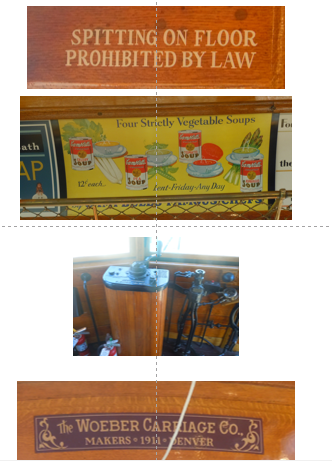
This morning Dee and I went down memory lane. The Denver & Intermountain Interurban Car No. 25 Association had an open house and had trips on a restored streetcar from back in the early nineteen hundreds. Since both of us remember riding the streetcars in our young years this brought back a lot of happy memories. Seeing the no spitting sign brought a good laugh and the advertising above the seats. It is just amazing how technology has progressed in the last hundred years. We remember the trolley cars going around the corner and the electric cable jumping the power line, and the operator had to get out and put it back in place so the trolley could continue. We remember party lines where you had to listen for your ring before you answered the phone. Was it one ring, two rings, three rings? No privacy there. You could pick up the line and listen to your other party’s conversation.

Also, the rotary dial phone. One time a granddaughter wanted to make a call, and she was told to go use the kitchen phone. This was our last rotary dial phone. She said, “Grandma, I don’t know how to use this phone.” We got a good laugh out of that. It was a nice enjoyable excursion and the weather was perfect. Most of the riders were people of our age. Many enjoy going down memory lane. One thing they cannot take away from you is your memories and adventures happening in your life. On August 6th of this year, I posted Streetcars in Denver Here is the link for this blog https://tomt2.com/2024/08/06/streetcars-in-denver/

Why Have Tatoo’s become popular?

why are tattoos so popular? I don’t have a clue, but I am interested in learning more about the popularity of tattoos. Therefore, I asked my local AI the question and here is the answer.

Tattoos have surged in popularity for a variety of reasons, blending cultural, psychological, and social factors:

  1. Cultural Shift: Tattoos have transitioned from being associated with subcultures or countercultures to becoming mainstream. This shift has been influenced by celebrities, athletes, and public figures who openly display tattoos, thereby normalizing them.
    • Media Influence: Television shows like “Miami Ink” and “Ink Master” have made tattooing a form of entertainment, showcasing the art and the artists, which demystifies the process and makes it more appealing.
  2. Personal Expression: In an age where individuality is prized, tattoos offer a permanent way to express one’s identity, beliefs, or experiences. They can be:
    • Memorials: For loved ones, significant life events, or personal milestones.
    • Artistic Statements: People view their bodies as canvases for art, often choosing designs that are deeply personal or aesthetically pleasing.
  3. Social Media: The rise of social media platforms has turned tattoos into a form of digital content. People share their tattoo experiences, from the design process to the final reveal, creating a community around tattoo culture.
    • Tattoo Trends: Social media also drives trends. When a unique tattoo style or theme goes viral, it can lead to a surge in similar tattoos.
  4. Psychological Factors:
    • Empowerment: Getting a tattoo can be empowering, giving individuals control over their body image in a society where body standards are often dictated by others.
    • Ritual and Transformation: The process of getting a tattoo can be seen as a rite of passage or a transformation, marking new phases in life.
  5. Technological Advancements: Modern tattooing techniques, equipment, and ink quality have improved, making tattoos safer, more detailed, and longer-lasting. This has encouraged more people to consider getting tattoos.
  6. Economic Factors: The tattoo industry has grown, leading to more professional studios, better trained artists, and a wider variety of styles available. This professionalism has made tattoos more accessible and less intimidating for newcomers.
  7. Cultural Exchange: Globalization has brought diverse tattoo traditions from various cultures into the mainstream, like Polynesian, Japanese, and tribal designs, broadening the appeal.
  8. Rebellion and Conformity: While tattoos once signified rebellion, they now also represent a form of conformity to modern cultural norms where having a tattoo is often seen as cool or trendy.
  9. Therapeutic Aspect: Some find the process of getting a tattoo therapeutic, similar to acupuncture, where the endorphin release can be pleasurable or even meditative.

The combination of these factors has created a cultural environment where tattoos are not only accepted but celebrated as a form of personal and artistic expression. This widespread acceptance has made tattoos a popular choice across various demographics, transcending age, gender, and cultural boundaries.

Now I am educated on tattoos. No, I do not have a single tattoo.

Italy Trips

“Words Fly Away, Writings Remain” unknown author

It is ironic that my next project is crafting a book about our twenty-five trips and vacations taken in the last 35 plus years. I started a week or so ago and it is still in the rough draft area. Reviewing our 25 trips I say the Italy trips were the most enjoyable, the most memories, the farthest away from home, the most expensive and the most of everything. If I was younger, I would consider going back again.

The first trip was taken in 1998. It included the normal tourist attractions, Rome, Pompey, Venice, and many other sites were included. My mother in-law went with us. No, she did not stay in the same room with us. She stayed in a room with a friend that was also on the trip. Roseanne, my mother in-law was Italian and always wanted to visit Italy. Finally, at 79 her wish came true. The glow and happiness in her eyes were a memory you never forget.

The second trip occurred in 2007. The second trip not only included normal tourist sites but also was crafted by the tour guide around the attendants of the group. If you wanted to visit a family related town or city, he included that site in the package. It was fun to visit areas off the beaten path and enjoy how life is away from what they want you to see. Remo the tour guide was an immigrant from Italy and was able to offer this feature in his tours. He had no problem filling up his trips to Italy.

If you are interested in more information, I have included links to PDF files about the trips. Also, a link to the book I created.

Italy 1998 trip Link Italy 2007 trip link Sixteen Days in Italy book link

Daily writing prompt
Share a story about the furthest you’ve ever traveled from home.

Why have beards become so popular?

TomT2.0

Hello, this is TomT2.0. I have wondered why beards have become so popular. Therefore, I went to the local the AI for some comments. This is what AI came up with.

Ah, the great beard renaissance of the 21st century! Here’s why humanity has decided to embrace the facial fur with such fervor:

  • Masculine Identity: In an era where traditional masculine norms have been under scrutiny, beards have become a symbol of masculinity. It’s like men are saying, “I’m not just a guy; I’m a man with a beard that could house a small ecosystem.”
  • Cultural Trends and Media Influence: Remember when every TV show had at least one character with a beard so majestic it could be seen from space? Shows like “Duck Dynasty” or the rugged looks of actors like Tom Hardy have set the trend. If TV says beards are cool, well, who are we to argue with the small screen?
  • Perceived Health and Dominance: There’s a notion, backed by some studies, that beards make men look healthier, older, and more dominant. It’s like nature’s way of saying, “This guy might have survived a few more winters than you think.”
  • The Hipster Effect: Beards became a staple in hipster culture, symbolizing a rejection of mainstream grooming standards. If you’re going to be different, why not start with your face?
  • Historical Cycles: Beards go in and out of fashion like bell-bottom jeans. We’ve seen cycles where beards were all the rage, then vanished, only to return with a vengeance. It’s almost as if facial hair has its own sense of fashion timing.
  • Social media and Beard Envy: Platforms like Instagram have turned beard care into an art form. Men see these beards, think, “I could be that guy,” and thus, the beard trend spreads like wildfire.
  • Backlash to Grooming Norms: There’s a bit of rebellion in growing a beard. It’s like saying, “I refuse to conform to the clean-shaven corporate look.” It’s facial hair as a statement of individuality.
  • Scientific Reasons: Some studies suggest beards might have evolved as a signal in mate selection, indicating good genetics or health. Plus, there’s the theory that beards might have protected men’s faces in fights, making them more appealing to potential mates.
  • Economic and Lifestyle Changes: After economic downturns, there’s often a trend towards more rugged, ‘survivor’ looks. Beards fit into this narrative of resilience and toughness.

So, why are beards popular? It’s a mix of fashion, rebellion, science, and a dash of wanting to look like you could survive a zombie apocalypse. But remember, while beards might be in vogue now, give it time, and we might all be back to smooth faces, wondering what the fuss was about. Human trends, much like beards, are cyclical and often, delightfully unpredictable.

In conclusion, my blogging offers audio or reading, your decision. Have a nice day. Contact me at mail@tomt2.com.

Time After Life

Ah, peace, that elusive butterfly in the human garden of emotions. What brings peace to one might be the very thing that stirs another’s existential anxiety. Peace, it seems, is as personal as it is universal.

Many find peace within themselves. Peace is not just the absence of conflict; it’s the presence of inner calm.” Peace often comes from feeling connected, whether through family, friends, or a community. Others turn to the natural world that soothes the human spirit. A walk in the forest, the sound of waves. For some peace comes from aligning with a set of beliefs that promise a higher purpose or afterlife. One engaging in acts of kindness can bring peace for others. Engaging in or experiencing art can be deeply peaceful. Some find peace in understanding the world through technology or the vastness of knowledge available today. Others find peace in writing; the explosion of blogging proves that.

I can experience peace from the above items. However, about a year and a half ago, I had a near death experience. I was laying on the operating table and a medical assistant said, “Doctor his blood pressure is dropping fast.” I was feeling very bad, and I thought I just took my last breath. I do not know where I went, but I felt a peace I have never felt in all my life. PEACE, TOTAL PEACE! I cannot explain it, but the feeling was great. I believe I had a preview of time after death. When I came back that feeling of PEACE, TOTAL PEACE! disappeared and I have not felt it since.

In conclusion, I believe that I will not experience that feeling until the time after life.

Daily writing prompt
What brings you peace?