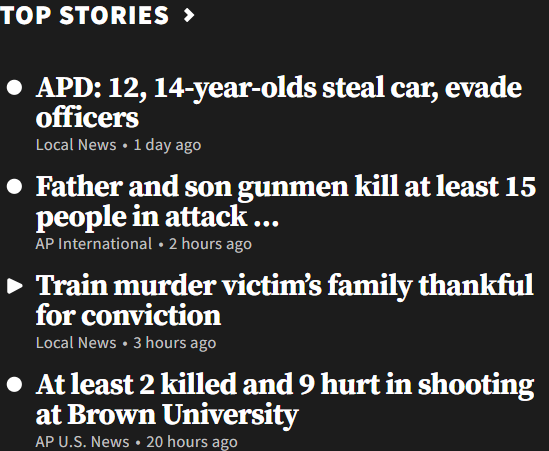
After hearing about the mass murder in Australia. The Brown University killings and the murders of Rob Reiner and wife. One wonders, is evil winning?
All you see on the news is hate, anger, and disagreements about everything. Peace-loving people must be wondering, “what is happening in this world?” I know I am. Being over eighty, I have never seen so much violence and useless attacks on the innocent. It has never been this bad, and the questions linger in our minds: how did we arrive at this point of such discontent? Communities that once thrived on cooperation now seem divided by strife, and everyday interactions are tainted by fear and suspicion. It’s a troubling environment that breeds hopelessness, leaving many to ask themselves if there’s a path toward healing. What is it going to take to turn this around? Perhaps it starts with each individual choosing kindness over hostility, fostering empathy, and making a conscious effort to unite rather than divide.
Life is a fleeting spark—bright, unpredictable, and achingly beautiful. We chase meaning in its moments: a child’s laugh, a quiet sunrise, the ache of goodbye. But personal faith isn’t just about surviving this life—it’s about sensing that something waits beyond it.
Not religion, necessarily. Not pearly gates or reincarnated destinies. But a whisper that says: this isn’t the end.
Personal faith is the feeling that our stories don’t vanish when the body does. That love leaves echoes. That the soul, whatever it is, doesn’t just dissolve. Maybe it drifts. Maybe it returns. Maybe it becomes part of the wind that moves the trees.
We don’t need certainty to believe. Faith is what fills the space between knowing and wondering. It’s what lets us live fully here, while trusting there’s more—somewhere, somehow.
It’s in the way we speak to those who’ve passed, as if they still hear. It’s in the way we dream of them, not as memories, but as visitors. It’s in the way we feel watched over, even when alone.
Personal faith says: I am part of something larger. My life matters, and so does what comes after. It’s not about answers—it’s about openness.
And maybe, when this spark fades, we’ll find ourselves not ending, but beginning again—in a form we can’t yet imagine, but somehow already believe in.
Around the first of this year I discovered AI, (artificial intelligence) and found out that it became very easy for me to assemble an article. I could come up with a few ideas and then consult AI and ask to expand on those ideas. In a matter of seconds, Boom! An instant article that was always near twice the length I ever came up with…… AI would really fluff up an idea.
Couldn’t think of something to write about? Just ask AI and poof! There are twenty or more writing prompts for you. Pick a prompt and AI easily creates a story for you. Wow! This is really becoming simple.
Unfortunately, I now feel that this is not me. I now feel that I am just an outlet for some unnamed artificial intelligence. AI has made me lazy. It has become difficult for me to get the creative juices flowing without AI. The above is me without AI.
This is the same with AI
Around the first of this year I discovered AI, (artificial intelligence) and found out that it became very easy for me to assemble an article. I could come up with a few ideas and then consult AI and ask to expand on those ideas, which opened up a whole new realm of creativity. With just a simple prompt, I could engage the AI in a dialogue, exploring different angles and perspectives that I might not have considered on my own. In a matter of seconds, Boom! An instant article that was always near twice the length I ever came up with. This technology was not just about word count; it was about the depth and breadth of information that it could provide, transforming a mere concept into a comprehensive piece of writing. AI would really fluff up an idea, adding layers of detail and nuance, turning my initial thoughts into a well-rounded discussion that was informative and engaging for readers.
Couldn’t think of something to write about? Just ask AI and poof! There are twenty or more writing prompts for you, carefully designed to spark your creativity and help you break through writer’s block. Pick a prompt, and AI easily creates a story for you, crafting engaging plots and dynamic characters that come to life right before your eyes. Whether you’re looking for inspiration for a novel, a short story, or even just a whimsical tale, the possibilities are endless. Wow! This is really becoming simple, as technology transforms the writing process into an effortless and enjoyable adventure, allowing you to explore new ideas and perspectives in no time.
Unfortunately, I now feel that this is not me. I now feel that I am just an outlet for some unnamed artificial intelligence, a mere vessel through which its ideas flow. AI has made me lazy, almost reliant on its algorithms to spark my imagination. It has become difficult for me to get the creative juices flowing without AI, leaving me frustrated and yearning for the days when I could generate ideas and express myself freely without assistance. The more I depend on this technology, the more I sense a disconnect from my authentic self and inner creativity, which feels stifled and overshadowed by an ever-present digital influence. I find myself questioning whether I can truly think independently or if I am simply echoing what has been fed to me.
I really don’t know what direction this will lead to. I may decide to just write without AI assistance or retire from blogging. Or I may accept the fact that artificial intelligence is the future and go with it.
This is the same paragraph with AI assistance. I really don’t know what direction this will lead to. At this point, I feel quite torn; I may decide to just write without AI assistance, embracing the raw authenticity of my thoughts, or I might even consider retiring from blogging altogether if I feel too overwhelmed by the rapid changes in technology. On the other hand, I am also considering whether I should accept the fact that artificial intelligence is undeniably the future. It could offer new opportunities and perspectives, so perhaps I should adapt and go with it, using AI as a tool to enhance my creativity rather than replace it, finding a balance that respects both traditional writing and innovative tech.
Many people believe in a god, a supreme being, or a deity. This belief shows our need to understand existence, the universe, and our role in it. To learn more, I asked AI for a definition of God, interested in its insights shaped by diverse cultural views. The response was intriguing, as it summarized not only the qualities of divinity but also how different societies think about this idea, showing both shared beliefs and differences through time and cultures.
The idea of God has shaped human history, culture, and individual lives for millennia, serving as a cornerstone of meaning, morality, and mystery. Across civilizations, God is understood in diverse ways—as a singular omnipotent being, a collection of deities, or an impersonal cosmic force that binds the universe together. This multifaceted concept transcends mere religion, influencing philosophy, art, science, and ethics, while remaining deeply personal and often divisive. The varying interpretations of God reflect the unique values and beliefs of different societies, illustrating how this divine notion fosters both unity and conflict among peoples. From the ancient rituals of worship to contemporary discussions on the nature of existence, the concept of God challenges individuals and communities to grapple with profound questions about life, purpose, and the moral framework that governs human behavior. The pursuit of understanding God can lead to a deeper exploration of spirituality, prompting many to seek connections with something greater than themselves, ultimately shaping the profound narratives that define cultures across the globe.
In monotheistic traditions like Christianity, Islam, and Judaism, God is typically envisioned as a singular, all-powerful creator who is deeply involved in the cosmos and human lives. In Christianity, God is the loving father, omnipresent and omniscient, guiding humanity through divine will and grace while embodying the principles of love, forgiveness, and redemption. The Bible portrays God as both transcendent and immanent, a being who not only crafted the universe yet remains intimately involved with creation, listening to prayers and responding to the cries of the faithful. Islam’s Allah, similarly, is the sole deity, merciful and just, whose will is absolute, as described in the Quran, which emphasizes His attributes of compassion, power, and wisdom. Additionally, Allah is seen as the ultimate judge, ensuring that justice prevails while offering repentance and mercy to those who seek it sincerely. Judaism’s Yahweh, revealed through the Torah, emphasizes a covenantal relationship with the chosen people, blending justice with compassion, guiding them throughout their history while encouraging ethical living and adherence to His laws. These faiths share a view of God as eternal, unchanging, and deeply concerned with human affairs, fostering a sense of purpose and direction in the lives of believers, reinforcing the importance of faith and community in the journey towards spiritual fulfillment.
Polytheistic traditions, such as Hinduism and ancient Greek religion, offer a different lens through which to examine the complexity of spirituality and divine representation. Hinduism’s vast pantheon includes deities like Brahma, Vishnu, and Shiva, each embodying unique aspects of the divine spectrum while ultimately pointing to Brahman, the infinite reality underlying existence. This intricate framework suggests a fluidity between the one and the many, where God is both plural and singular, allowing for a rich tapestry of worship and personal interpretation. Furthermore, the interplay between these deities illustrates the idea that the divine can manifest in numerous forms, each serving as a guide for followers on their spiritual journeys. Ancient Greeks, on the other hand, worshipped gods like Zeus and Athena, anthropomorphic figures imbued with distinct personalities and domains, reflecting a worldview where divinity mirrors human complexity. The myths surrounding these gods often detailed their interactions and conflicts, emphasizing the intricacies of ethical dilemmas and the human condition. In this way, both traditions highlight the multifaceted nature of the divine, as well as the varied ways in which cultures have sought to understand and relate to a higher power, demonstrating that the quest for meaning transcends time and geography.
Beyond organized religion, philosophical and spiritual perspectives broaden the concept further, inviting deeper exploration into the nature of existence and our understanding of the divine. Deism posits a God who creates but does not intervene, presenting a rational force behind the universe’s order, suggesting a clockmaker who sets the machinery of the cosmos in motion yet remains distant from its operations. Pantheism, as articulated by thinkers like Spinoza, equates God with nature itself, ultimately dissolving the boundary between creator and creation and encouraging a profound reverence for the natural world that surrounds us. This perspective fosters a sense of unity and interconnectedness amongst all living things, urging individuals to recognize the divine immanence present in every element of life. Meanwhile, agnosticism and atheism challenge traditional notions, questioning God’s existence or relevance while still engaging with the void such questions leave, prompting critical thinking and intellectual discourse on morality, purpose, and the human experience in a seemingly indifferent universe. These varied views illustrate the rich tapestry of beliefs that confront our quest for meaning beyond institutional dogma.
God’s role in human life extends beyond theology. Art—from Michelangelo’s Sistine Chapel to Sufi poetry—captures divine awe and intimacy, revealing the profound connection between spirituality and creativity that transcends cultural boundaries. The aesthetic expressions of faith often serve as a bridge, inviting individuals to explore the depths of their beliefs and the mysteries of existence. Moral systems, even in secular contexts, often trace their roots to divine commandments or cosmic principles, reflecting the innate human desire for order, justice, and meaning in a chaotic world. These ethical frameworks guide personal conduct and societal norms, showcasing how spirituality can influence our understanding of right and wrong. Yet, the concept of God also sparks conflict, from historical crusades to modern debates over faith’s place in public life, exposing the fragility of belief systems when challenged. These tensions highlight humanity’s struggle to reconcile the infinite with the finite, the known with the unknowable, prompting a continuous journey of exploration and dialogue that shapes both individual identities and the collective human experience.
Ultimately, God remains a mirror of human aspiration and fear—a symbol of hope, order, and purpose, but also of mystery and unanswerable questions. Whether seen as a personal savior, a cosmic force, or a human construct, God reflects our deepest desires to understand existence and navigate the complexities of our lives. Across cultures and eras, the quest to define God reveals as much about humanity as it does about divinity, inviting each generation to wrestle with the eternal, confront its own uncertainties, and seek meaning in a world that often feels chaotic. This exploration of the divine not only shapes individual belief systems but also weaves the intricate tapestry of society, influencing art, philosophy, and moral values. Consequently, the concept of God remains not just a theological inquiry, but a profound journey into the human condition itself, challenging us to ponder our place in the universe and our connection to one another.
It’s sad that we do not feel safe in large cities.
In the heart of bustling metropolises, where skyscrapers pierce the sky and the hum of life never ceases, a troubling sentiment has taken root: we no longer feel safe. Large cities, once celebrated as vibrant hubs of opportunity, culture, and connection, are increasingly shadowed by fear. This pervasive unease reflects deeper societal challenges that demand our attention and action.
The sense of insecurity in urban centers stems from multiple sources. Rising crime rates, often sensationalized by media, paint cities as battlegrounds. According to recent data, violent crime in major U.S. cities like Chicago and New York has seen upticks in specific areas, with robbery and assault rates climbing in 2024. Though overall crime trends vary, high-profile incidents—shootings, subway attacks, or public theft—dominate headlines, amplifying public anxiety. These stories linger, shaping perceptions that every corner holds danger, even when statistics suggest otherwise.
Beyond crime, the urban environment itself can feel hostile. Overcrowded streets, aggressive traffic, and the constant churn of strangers create a sense of anonymity that erodes trust. In smaller towns, familiarity breeds community; in cities, the sheer scale of human interaction can feel isolating. A 2023 survey by the Pew Research Center found that 60% of urban residents feel less connected to their neighbors than they did a decade ago. This disconnection fuels vulnerability—when no one knows your name, who will notice if something goes wrong?
Economic disparity also plays a role. Cities showcase stark contrasts between wealth and poverty, with homelessness surging in places like Los Angeles and San Francisco. Encountering visible desperation daily can unsettle residents, fostering guilt, fear, or resentment. For many, the sight of encampments or panhandlers becomes a reminder of societal failures, making public spaces feel unpredictable and unsafe.
Yet, this sadness over lost safety isn’t just about physical threats. It’s about the erosion of a social contract. Cities thrive when people trust the systems around them—police, transit, local government. But distrust in institutions is growing. Scandals, underfunded services, and polarized politics leave residents feeling unprotected. For instance, debates over policing—whether overfunded or underfunded—have left communities caught between calls for reform and demands for stronger enforcement, with no clear resolution.
So, what can be done? Rebuilding safety requires a multifaceted approach. Community policing, focused on trust rather than confrontation, has shown promise in cities like Camden, New Jersey, where violent crime dropped 20% after reforms. Investing in mental health services and housing can address root causes of crime and homelessness. Urban design also matters—well-lit streets, green spaces, and community centers can foster connection and deter crime. Most importantly, residents must engage with one another. Neighborhood initiatives, like block parties or mutual aid groups, can rebuild the social fabric that makes cities feel like home.
It’s heartbreaking that the very places designed for human connection now breed fear. Yet, cities remain humanity’s greatest experiment in coexistence. By addressing crime, inequality, and disconnection head-on, we can reclaim the safety and vibrancy that define urban life. The path forward lies in collective effort—because no city thrives when its people are afraid.
This is an opinion piece. For a long time I have felt this disgust from what I have seen from politicians, the news media and individual comments. Therefore, I felt it is time for me to vent and get it off my chest.
The United States has long prided itself on its two-party political system, a structure that has defined its democracy for over a century. The Democratic and Republican parties have historically served as the primary vehicles for political discourse, policy-making, and governance. However, the dynamics of this system have shifted dramatically in recent years, leading to a growing sentiment that the U.S. is no longer a true two-party country. Instead, the political landscape is increasingly characterized by one party acting with unchecked authority while the other postures without delivering meaningful opposition. Even more concerning is the rise of powerful unelected officials who appear to wield disproportionate control over the nation’s direction, undermining the democratic process.
The notion of a two-party system implies a balance of power, where competing ideologies engage in robust debate, compromise, and accountability to the electorate. Yet, this balance has eroded. One party—whether Democratic or Republican, depending on the context—often pushes its agenda with little regard for opposition or public sentiment. This is facilitated by a combination of political dominance in key institutions, media alignment, and strategic maneuvering that sidelines dissenting voices. Policies are enacted, executive actions are taken, and cultural shifts are engineered, often with minimal resistance. The opposing party, meanwhile, frequently engages in performative gestures—grand speeches, symbolic votes, or social media campaigns—that create the illusion of action without producing tangible results. This dynamic leaves voters frustrated, feeling that their concerns are ignored or that the system is rigged against them.
The root of this dysfunction lies not only with elected officials but also with the growing influence of unelected power structures. Bureaucrats, corporate leaders, tech moguls, and other non-elected figures have amassed significant control over policy and public life. Within the federal government, career officials in agencies like the Department of Justice, the FBI, or the CDC often shape policy outcomes through regulatory decisions, selective enforcement, or public health mandates that bypass the legislative process. These unelected actors operate with little accountability, insulated from the democratic mechanisms that govern elected representatives. For example, regulatory agencies can issue rules with the force of law, yet these decisions are often made by individuals who face no electoral consequences.
The corporate and tech sectors further exacerbate this trend. Tech giants, for instance, influence public discourse by controlling information flow, censoring content, or amplifying certain narratives, effectively shaping political outcomes without ever appearing on a ballot. Similarly, corporate lobbying ensures that economic policies often prioritize private interests over the public good. These unelected forces—whether in government, media, or industry—create a shadow governance structure that operates beyond the reach of voters, eroding the democratic foundation of the two-party system.
This imbalance has profound implications. When one party acts unilaterally and the other fails to mount effective opposition, the checks and balances inherent in a two-party system collapse. When unelected officials hold sway, the will of the people is sidelined. The result is a growing distrust in institutions, as citizens feel increasingly powerless to influence their government. Restoring a functional two-party system requires not only reinvigorating political competition but also addressing the unchecked power of unelected elites. Without such reforms, the U.S. risks drifting further from its democratic ideals, leaving its citizens with a government that serves the few rather than the many.
This is one of the many thoughts that enters my mind, and I wonder “what is love?” Yes, I am happily married and have spent over 40 years with my wife Dee, sharing countless memories, laughter, and even challenges that have strengthened our bond. However, I wonder, just what exactly is love? Is it merely a word we use, or is it something deeper, an emotion that weaves through the fabric of our lives, connecting us in ways we often take for granted? As I reflect on the little moments, from our quiet evenings together to the adventures we’ve embarked on, I find myself contemplating the ever-evolving nature of love, the way it grows and transforms as we journey through life together.
The idea that you need to love yourself before you can love others suggests that self-love is a foundation for healthy relationships. This concept emphasizes that cultivating a positive relationship with yourself can significantly influence your interactions with others. It’s rooted in the belief that your relationship with yourself sets the tone for how you connect with others, shaping the way you express affection, set boundaries, and engage in communication. When you value and accept yourself, you are more likely to offer genuine kindness to those around you, fostering deeper emotional connections. Consequently, self-love not only enhances your well-being but also enables you to create nurturing environments where reciprocity thrives, ultimately leading to more fulfilling and harmonious relationships in your life.
The phrase “you need to love yourself before you can love others” highlights the importance of self-acceptance as a cornerstone for healthy, fulfilling relationships. While it’s not an absolute rule—since love is complex and can manifest in many ways—it underscores that self-love enhances your ability to give and receive love authentically. By valuing yourself, you create a stable foundation for empathy, respect, and mutual growth in relationships. However, self-love and love for others often develop together, each reinforcing the other in a dynamic cycle.
Religious groups say you should love your enemies, emphasizing the belief that love is a powerful force capable of transforming relationships and healing wounds. This teaching challenges individuals to rise above hatred and resentment, encouraging them to see the humanity in those who oppose or harm them. The act of loving one’s enemies not only fosters forgiveness but also promotes peace within communities, as it breaks the cycle of hatred and retaliation. By embracing this principle, believers can cultivate compassion, understanding, and respect, ultimately contributing to a more harmonious society.
This brings up another question. The definition of love. I asked the AI in my toolbox and this the definition.
Love is a complex, multifaceted emotion involving deep affection, attachment, or care for someone or something. It can manifest as romantic passion, familial bond, platonic friendship, or self-love, often accompanied by feelings of warmth, comfort, and commitment. Philosophically, love might be seen as an act of will, choosing to prioritize another’s well-being, while biologically, it’s tied to chemical processes like oxytocin release. Context shapes its expression—cultural norms, personal experiences, and intent all influence its meaning. No single definition captures it fully; it’s both universal and deeply subjective.
With all this information, I find myself still confused by the concept of love. Nevertheless, I have faith that my heart will lead me through each circumstance, determining whether what I feel qualifies as love or not. Love is a deep feeling of affection, care, or connection that varies by person and situation, guiding your heart to know what’s true in each moment.
Blogging lets me expand my thoughts, ideas, and personality into words, giving me a creative outlet to share stories or perspectives in my unique voice. This platform serves not only as a medium for self-expression but also as a canvas where I can explore new concepts, engage with diverse topics, and connect with others who resonate with my experiences. Through the written word, I am able to reflect on my journey, articulate my passion, and inspire readers by weaving narratives that encapsulate both my struggles and triumphs. By sharing these reflections, I foster a sense of community, inviting others to join in the conversation and contribute their own insights, ultimately enriching the dialogue and broadening the perspectives presented.
Blogging allows me to inspire or inform others about a wide range of subjects. My theme is “Comments About Anything,” which gives me the freedom to explore diverse topics without restriction. You never know what area I will focus on in my blogging, whether it be insightful commentary on current events, tips for personal growth, or reflections on everyday life. This unpredictability keeps both me and my readers engaged, as each post presents a new opportunity for discovery and discussion. I aim to spark curiosity and provoke thought, connecting with my audience through my unique perspective on various issues and experiences that resonate with us all.
Writing regularly helps me reflect on my experiences, which can be deeply satisfying. Each time my fingers to the keyboard, I am reminded of the lessons I’ve learned and the emotions I’ve felt. What I have experienced may help someone in the future to make a wise decision, providing them with insights to navigate their own journey. These reflections not only offer clarity to my thoughts but also create a record of my growth and understanding over time. By sharing my stories and insights, I hope to inspire others, allowing them to glean wisdom from my challenges and triumphs, and encouraging them to embrace their own unique paths with confidence.
Blogging can be a therapeutic way for me to process emotions, vent frustrations, and document my life’s journey. Through writing, I can articulate my thoughts and feelings that often feel overwhelming when kept inside. Each post becomes not just a reflection of my current state but also a means of exploring the complexities of my experiences and the lessons I’ve learned along the way. In sharing my stories, I foster a sense of connection with others who may resonate with my struggles or triumphs, and this sense of community further enhances the healing process. It allows me to look back and see how far I’ve come, reminding me of the resilience I possess and the beauty that exists even in challenging times.
Blogging often inspires me to research new topics, or experiment with tools like SEO or design, which can be intellectually stimulating. Each post can open up a world of new ideas and insights, pushing me to delve deeper into various subjects. I am very interested in artificial intelligence (AI) and yes, AI is now in my toolbox. This technology fascinates me with its potential to revolutionize industries, streamline processes, and enhance creativity in ways we are just beginning to explore. The more I learn about AI, the more I am eager to integrate it into my blogging practice, using it to optimize content and engage my audience in innovative ways.
Finally, it keeps my mind active, and I find myself spending many hours blogging in my retirement years, which has become one of my greatest passions. I enjoy exploring various topics, sharing my thoughts and experiences, and connecting with others through the written word. Each post is a chance to dive deep into subjects I love, allowing me to express my creativity and indulge in my love for storytelling. I just love blogging, as it not only offers me a platform to reflect on my life but also fosters a sense of community and belonging with fellow writers and readers.
Selfishness is like that friend who always insists on sitting in the front seat without considering who else is in the car; it’s all about prioritizing your own needs and wants as if you’re the star of a one-person show. Sure, self-preservation is a human instinct, but sometimes it goes overboard, like wearing sunglasses at night and completely ignoring the people around you. From friendships to the office, selfishness sneaks in like a cat on a countertop, leading to a dramatic decrease in empathy. When everyone is busy chasing their own fun, it’s like accidentally stepping on each other’s toes while doing the cha-cha, resulting in a chaotic dance of tension and conflict. It’s great to treat yourself like a VIP, but getting too caught up in your own circus can really turn the whole community into a three-ring disaster!
Selfishness is like that pesky cousin of self-interest that we all invite to the survival party, right? Sure, it keeps us mentally and physically sprightly, but when it starts hoarding snacks or pulling mind tricks like a magician gone rogue, it can really throw a wrench in relationships and teamwork—trust and good communication start to vanish faster than free pizza! Honestly, this kind of behavior doesn’t just ruin the fun for the people involved; it’s like a bad movie that’s creating a sequel of societal chaos, where competition smothers cooperation. Usually, fear, insecurity, or that moment when you realize you’ve run out of snacks pushes folks to act all selfish y, trying to shield their precious little selves. Some folks think it’s a smart move in competitive games, but spoiler alert—it can leave you feeling like a lone wolf who forgot to pack a picnic! That’s why we really need to strike a humorous balance between looking out for number one and spreading a little love to the rest of the pack.
Altruism is like that friend who always insists on paying for dinner but secretly hopes you’ll offer dessert in return – it’s all about putting others first, but let’s be honest, it feels pretty good to feel like a superhero, right? While most of us have the best intentions (like Mother Teresa on a sugar high), it’s tough to sort out the genuine selflessness from the warm fuzzy feelings that come with it. Philosophers like Ayn Rand argued that rational selfishness is basically a cheat sheet for success and progress, suggesting that pursuing our own bliss while helping others is the ultimate life hack. She believed that doing what benefits us could actually spark more innovation than a caffeine-fueled brainstorming session. Of course, some critics think that this whole individualism gig could turn us into hermits more concerned about our Netflix queues than our neighbors, warning that we might trade community hugs for personal trophies. The real challenge here? Finding that sweet spot where our dreams can coexist with the warm and fuzzy connections that keep us from turning into a society of self-absorbed cats.
Context is key—being a bit selfish in a crisis (like diving for the last lifeboat) is a whole different ball game compared to your average day when you might just ignore a friend’s plaintive cries for help with their math homework. When survival is on the line, it’s like your inner caveman takes over, and you might just tackle someone for that last slice of pizza. These situations highlight the wild rollercoaster of human behavior and that pesky survival instinct, which can sometimes kick social norms right in the shins. Most folks’ juggle self-interest and altruism like a circus act, influenced by everything from their upbringing to the latest trends on social media. Our backgrounds shape our crisis-mode responses versus our everyday antics; for instance, someone raised in a collectivist culture might prioritize the group’s well-being over their own, even if it means giving up dessert. Individual experiences also play a starring role in our decision-making, proving that selfishness and selflessness are basically dancing a tango, always dependent on the situation.
A reader may wonder how I came up with this topic. Recently a friend of mine said, “don’t be so selfish,” which struck a chord and made me reflect deeply on the nature of my actions. This made me think, “what is selfishness?” I went to my AI assistant and asked it to explain selfishness. After carefully analyzing the response and considering various perspectives on egoism and altruism, I realized there are many shades to this concept that I hadn’t fully appreciated before. I thought I would share these insights with others who might benefit from them. In conclusion, I am just going to continue being myself, embracing my uniqueness and flaws. I am not going to try to change but rather remain open to growth while accepting who I am at my core.
I have many hours of thinking about many things, often losing track of time as my mind wanders through endless possibilities and questions. I forget when this thought first came to me, but it has lingered like a whisper in the back of my mind, urging me to explore its depths. I thought, “In this gigantic universe, with its countless stars and swirling galaxies, there might be an advanced civilization existing somewhere among the vastness, capable of feats beyond our imagination. Earth, in all its beauty and complexity, is just a tiny speck in this gigantic universe, a fragile oasis in a world that may be teeming with life, intelligence, and cultures we’ve yet to comprehend.” The enormity of this idea fills me with both awe and a sense of wonder, making me think about the nature of existence and our place within such an unfathomable expanse.
What if time on this earth is just penance or punishment from this advanced civilization for doing something that has long been a topic of discussion in their sophisticated circles? Perhaps the notion of mortality is simply a veil placed over individuals who have transgressed deeply ingrained laws. “You are sentenced to 85 years on planet earth for disobeying regulations against the civilization of Eternity,” might echo through the minds of those who question their existence, a haunting reminder of a destiny shaped by the decisions of a society much more advanced than our own. In a realm where time is seen as both a gift and a curse, could it be that our very lives are crafted experiences, meticulously designed to elicit growth and understanding? Instead of mere punishment, is it possible that this designed life serves as a transformative journey, compelling us to confront our faults and aspire to enlightenment, ultimately striving to earn our way back to that higher civilization?
One must admit that this planet is not a friendly place. There is bad weather, disease, and illness that seem to plague various regions, impacting lives and livelihoods. Since the beginning of time, humans have been at war with each other, leading to suffering and loss that echo through generations. It appears that war and death are embedded deep within our DNA, almost as if they are integral parts of the human experience. Hatred and anger permeate societies and cultures around the globe, reflecting a profound discord among people. This pervasive animosity is often spurred by various factors, including but not limited to, religious differences, racial tensions, economic disparities, and a multitude of other reasons that foster division and hate. In a world where empathy and understanding often take a backseat, it becomes increasingly challenging to envision a future where peace prevails over conflict.
I think many times about time on this earth. I was born and raised in a Christian environment and still practice this faith, which has been a cornerstone of my identity. This upbringing instilled in me the belief that the teachings of my faith hold all the answers and provide a solid reason for our existence and the very concept of time on this earth. However, as I delve deeper into the complexities of life and observe the diverse perspectives around me, I find that these answers often feel insufficient. Despite the comfort that my faith provides, I am left with lingering questions that echo in my mind, and I am still left wondering about the true nature of time here—its purpose and how it intertwines with our lives, our choices, and our destinies.
Will I ever find or feel comfortable with the facts before I report to the civilization of Eternity? I kind of doubt it, as the unknown seems to shroud my existence like a thick fog that never lifts. The time of not knowing is just part of the time on earth, a mundane phase I must navigate amidst the chaos of life. Each unanswered question lingers in my mind, creating a tapestry of uncertainty that weaves itself into my daily routine. Perhaps this discomfort is a necessary precursor to a deeper understanding of the universe and my place within it, a reminder that not all truths are meant to be grasped readily. As I ponder these thoughts, I realize that the search for clarity may be as essential as the clarity itself, shaping my journey in ways I have yet to comprehend.
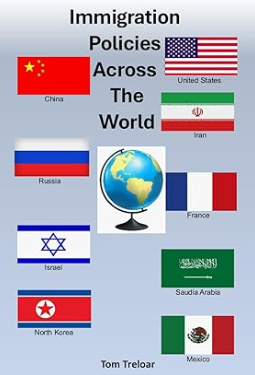
The U.S. immigration situation in 2025 is complicated and divisive, influenced by changing policies, border issues, and economic factors. Many were allowed to stay in the country while they wait for immigration hearings, which can take years because of court backlogs. The immigration issue prompted me to take the problem seriously and explore it thoroughly by turning to various AI tools in my toolbox. I utilized Grok, Copilot, and Gemini for this purpose, each offering unique insights. I asked a common but crucial question across these platforms: “If I permanently wanted to immigrate to (country), what would I have to do? Additionally, do they have any assistance programs available for newcomers?” It’s important to note that there have been comments in various forums suggesting that different AI platforms may present biased perspectives and generate answers based on the leanings of the platform originators. This potential bias is precisely why I opted to consult multiple platforms; by doing so, I aimed to gather a more comprehensive view and ensure that I wasn’t missing out on any vital information that could facilitate my immigration journey.
No, you shouldn’t feel guilty for using AI in your blogs, as long as you’re using it ethically and transparently. AI can be a tool like any other—think of it as a supercharged notepad or research assistant. It can help brainstorm ideas, refine drafts, or analyze data, saving you time and boosting creativity. The key is maintaining authenticity: ensure the final work reflects your voice, ideas, and values. If you’re just copying AI output without adding your own insight or passing it off as entirely your own, that’s where ethical lines blur—readers value genuineness, and misrepresenting your process could erode trust.
Some bloggers disclose AI use to their audience, which can build transparency and avoid any sense of deception. It depends on your niche and readers’ expectations—tech-savvy audiences might not care, while others might prefer a “human touch.” If you’re using AI to enhance your work while still pouring in your own effort, guilt shouldn’t be on the table. It’s about creating value, not about the tools you use to get there.
Yes, I use AI just like another tool in my toolbox. I have no guilt because I let it be known for that fact. AI is here and, in many features, greatly enhancing our productivity and creativity. This reminds me of when pocket calculators came into existence. There was resistance for this tool in the beginning; many feared that it would diminish human capability, yet civilization survived and adapted, just like it will with AI. Instead of resisting change, we should learn to harness AI’s capabilities to augment our skills and explore new possibilities, integrating it seamlessly into our daily lives and workflows. Embracing AI can lead to innovative solutions and greater efficiency, proving that technology can work in harmony with human intelligence.
Have you ever thought about why you are spending time on this earth?
The world is not a friendly place. There is bad weather, disease, and pain, all of which contribute to a pervasive sense of distress. It seems that there is constant war somewhere on the earth, threatening lives and displacing countless individuals from their homes. In some parts of the world, starvation is a serious problem, with entire communities struggling to find enough food to survive each day. The anguish of those suffering from hunger is compounded by a lack of access to medical care and basic sanitation, leading to a cycle of despair and hopelessness. I could go on and on about how this earth is not a friendly place for millions who have spent time on this planet, enduring hardships that often seem insurmountable, leaving them to wonder if there is any reprieve in sight.
How many faiths and religions have been or are currently attempting to explain the profound question of your presence on this earth? Each belief system, whether ancient or modern, carries unique stories and teachings that reflect humanity’s quest for understanding its place in the universe. From the monotheistic teachings of major world religions to the polytheistic perspectives found in various traditions, countless voices have sought to articulate the meaning of life and existence. Through rituals, sacred texts, and communal practices, these faiths aim to provide answers to our deepest yearnings and questions about purpose, identity, and the ultimate nature of reality.
The earth is just a small speck in this gigantic universe, a tiny oasis amidst the vastness of space that stretches infinitely in all directions. I do not know how many planets have been discovered that may be suitable for forms of life to survive, but scientists tirelessly search for those celestial bodies that might harbor the conditions necessary for life, such as the right temperature, atmosphere, and presence of water. Each new discovery ignites the imagination, prompting wild speculations about the myriad possibilities for life beyond our own world, raising questions about our place in the cosmos and whether we are truly alone in this grand expanse.
What if your time is a form of penance or punishment from another civilization located in the gigantic universe, a celestial courtroom beyond our comprehension? Are we paying for something that we did in another planet, shackled by the weight of our past mistakes, and time on earth was the sentence imposed upon us? Perhaps the very fabric of our existence is governed by unseen forces, orchestrating our lives in a manner we cannot fully understand. I often find myself pondering these perplexing ideas, questioning whether the mundane trials we endure are mere trivialities or echoes of a cosmic judgment. I don’t know where these crazy thoughts come from, but they linger like shadows in my mind, provoking a sense of wonder and questions about the true nature of our reality and our place within this vast, enigmatic universe.
Is this just me, or do you ever wonder about your purpose and time on this earth? It seems that, at various points in our lives, we find ourselves pondering the deeper meanings of our existence, searching for answers to questions that often feel too complex to grasp. We reflect on the choices we’ve made, the experiences we’ve had, and the dreams we once chased, all while considering how they shape our identity and future. In a world that is constantly changing, it’s natural to seek clarity about our roles and the impact we leave behind, as we navigate the delicate balance between fulfilling personal aspirations and contributing to the greater good.
This question will remain unanswered until after our time on earth; it lingers like a whisper in the wind, provoking thought and curiosity in those who consider its meaning. As we navigate life’s complexities and mysteries, we often struggle with the uncertainties that shape our human experience. Whether through philosophy, spirituality, or science, the answers we seek may be out of reach, prompting us to reflect on our beliefs and values as we move through life. Ultimately, we may only discover the truths that have been hidden from us once we rise beyond our earthly limits.
In a world full of loud and divisive opinions, I choose not to blog about politics. This decision doesn’t mean I lack opinions or care about global issues; rather, it reflects my intention to create content that adds real value. I will explain why I avoid political topics and share what subjects I focus on instead.
Politics serves as a catalyst for intense debates, fostering echo chambers and perpetuating cycles of outrage. Digital platforms, including blogs, frequently transform into arenas where nuance is disregarded, and discussions regress into divisive confrontations. I have observed how political discourse can segregate audiences, marginalize thoughtful perspectives, and suppress substantive dialogue. My blog represents a dedicated space for the exchange of ideas, insights, and experiences—not an addition to the overwhelming din of partisanship.
Political blogging often requires choosing sides, but I don’t want to support one camp over another. We don’t need more voices adding to the conflict of red versus blue or left versus right. My goal is to promote connection, curiosity, and reflection—qualities that political discussions often lack. In today’s world, where debates can be intense, there’s a lot of anger coming from politicians and powerful individuals. This creates an environment that hampers real conversation, leaving many feeling disconnected. I believe it’s important to encourage discussions that go beyond simple oppositions, helping us understand the issues better. Through my writing, I want to provide spaces where different viewpoints can be thoughtfully considered, fostering understanding instead of hostility. By encouraging my readers to engage with various perspectives, I hope to inspire deeper thought and a kinder approach to complex issues. It’s about building empathy and seeing the humanity in others, even when we disagree. In moments of reflection and open dialogue, we can start to bridge divides and create a more inclusive conversation, ultimately leading to solutions that respect the diverse experiences and beliefs that shape our society.
Rather than diving into the divisive waters of politics, I choose to write about topics that bring people together and foster a sense of community. Whether it’s exploring personal growth, sharing practical advice, or diving into universal human experiences, my blog aims to resonate with readers regardless of their political leanings. I believe in creating content that sparks inspiration or offers value, whether someone votes differently, lives in another country, or holds opposing worldviews. Through storytelling, I hope to illustrate common threads in our lives, highlighting the shared joys and struggles that unite us all. By focusing on themes such as empathy, resilience, and collaboration, I strive to cultivate a space where diverse perspectives can coexist harmoniously, inviting dialogue and understanding rather than conflict. Ultimately, my goal is to uplift and empower readers from all walks of life to connect on deeper levels, conveying that our differences should be celebrated rather than used as barriers.
For example, a post about overcoming self-doubt or navigating actual challenges can speak to anyone, anywhere. These are the stories and ideas that transcend borders and ideologies. By focusing on shared human experiences, I hope to build a space where readers feel seen and understood, not judged or divided.
Political blogging can often feel like a performance, driven by the need to show virtue, fit in with a group, or produce trendy takes to remain relevant. I prefer not to engage in that. Writing about the latest political scandal or policy often becomes outdated quickly and can oversimplify complex issues into catchy phrases, missing the important details that matter. This approach weakens the quality of discussion and lessens the audience’s ability to think deeply about these topics. In an age where information is abundant yet often shallow, I aim to produce content that promotes a better understanding and meaningful conversations. My goal is for my content to provide lasting value, rather than chasing short-lived trends or views, emphasizing informed opinions and insights that help readers engage with important issues in a deeper way.
Moreover, political opinions online are often less about genuine dialogue and more about signaling loyalty to a group or ideology. I’d rather write from a place of authenticity, sharing what I know deeply or have experienced firsthand, than weigh in on issues where I’m just another voice in the crowd, lost in a sea of noise and partisan rhetoric. In a digital age brimming with misinformation, the challenge of fostering true discourse becomes even more daunting. News media can no longer be trusted as bastions of impartiality. They no longer report the news; instead, they select and curate the news to fit a specific narrative. If the news aligns with their agenda, they trumpet it from the rooftops; if not, the story is conveniently buried, hidden from the public eye, leaving us to question what truly lies beneath the surface of the headlines. This situation further complicates our understanding of the issues at hand, as discerning fact from opinion becomes an overwhelming task.
My readers come from diverse backgrounds, and I respect that they don’t all share the same views. If I started blogging about politics, I’d risk alienating some while preaching to others—a surefire way to erode trust. My goal is to create a space where everyone feels welcome, not just those who align with a particular stance. By steering clear of politics, I keep my blog inclusive and focused on ideas that invite rather than exclude.
So, what do I blog about? I focus on topics that inspire, inform, or uplift—things like personal development, creativity, productivity, or the small joys of everyday life. I might share a story about a lesson learned, a practical tip for solving a common problem, or a reflection on what it means to live well. These are the subjects that light me up and, I hope, resonate with my readers. Also, recently I have delved into fiction tales and stories, allowing my imagination to roam free and explore new worlds. They are just thoughts and ideas floating around in my brain, waiting to be transformed into something tangible. This newfound venture into fiction not only sparks my creativity but also provides a refreshing escape from reality. I find joy in crafting characters and settings that come alive on the page, and it’s becoming an enjoyable and interesting pursuit for me, as it deepens my understanding of storytelling and character development. Through these narratives, I can express emotions and explore human experiences in ways that are both relatable and enlightening.
Choosing not to blog about politics doesn’t mean I’m disengaged or apathetic. I vote, I stay informed, and I care deeply about the world. But my blog is not the place for those discussions. It’s a space for ideas that endure, that spark connection, and that leave readers feeling a little more empowered or inspired. In a world that’s often fractured, I want my words to be a small force for good—not another wedge driving people apart.
So, I’ll keep politics off my blog. Because I believe in creating something different: a space where we can meet as humans, not as opponents. If you’re looking for a break from the political noise, I hope you’ll find something here that speaks to you instead.
I am in my mid-eighties, and I am beginning to wonder, is my time to depart the earth near? Many times, in the last weeks I have had this empty feeling, as though a heavy cloud hangs over my spirit, casting shadows on my vibrant thoughts. The memories of a life richly lived swirl around me, bringing both joy and sadness as I reflect on the countless moments that shaped my journey. Conversations with loved ones feel more poignant, and I find myself cherishing each encounter, each laugh, and each shared story. As I sit quietly, watching the world outside my window, I can’t help but contemplate my legacy and what I will leave behind, igniting a deeper awareness of the fragility of life and the preciousness of time.
I have had these empty feeling other times during my life and times after I experienced an event in my life that affected me deeply. It often feels as though this empty feeling serves as an unspoken warning, a subtle premonition that something significant is about to transpire. Like a shadow lurking in the corner of my mind, this sensation accompanies me, making me ponder the nature of foresight and intuition. Sometimes, something indeed happens, manifesting as a surprising twist of fate, while other times, this sense of unease dissipates and nothing occurs. It leaves me in a state of reflection, trying to analyze the correlation between these moments and their outcomes. I would speculate the rate is around 50% accurate, suggesting a curious balance between expectation and reality, where the mind plays tricks, leading one to wonder about the origins of this emotional forewarning and its implications on my experiences.
Over two years ago I had a near-death experience, an event that truly reshaped my understanding of life and existence. Yes, I did have that empty feeling a few days before the event happened, a sense of foreboding that something significant was on the horizon. However, that experience did give me a gift that changed my life profoundly. I lost the fear of time after death, a burden that had weighed heavily on my shoulders for so long. With my various experiences in life, including a substantial amount of religious training and other influential factors, I held the belief that we are all sinners, inherently flawed beings striving for perfection, and that one had to work hard to attain any form of eternal life after our time on this earth. For many years of my life, I thought I would never qualify to walk through the pearly gates, forever feeling unworthy of the grace I had been taught to aspire towards. This newfound perspective, however, allowed me to embrace the beauty of imperfection and the importance of living fully in the present, knowing that life, in all its ups and downs, is a journey filled with lessons rather than a test to pass or fail.
I am writing this blog because I woke up around four this morning, feeling empty and lost, like I was surrounded by a thick fog. The early morning quiet, with just a few sounds from the world waking up outside my window, let my thoughts flow into deep reflection. As the darkness faded into the first signs of dawn, I couldn’t shake the feeling of longing. This solitude often leads me to think deeply, encouraging me to explore my emotions and share my experiences.
I am at the age where I may fall over dead soon, or I may have many years to go, living life with hope and purpose. Each day presents new opportunities, and I will continue to make the fullest of whatever my destiny is, embracing both the challenges and joys that come my way. With every moment, I am reminded to cherish time spent with loved ones and to pursue my passions fearlessly. I am confident that God loves us unconditionally and, through the sacrifice of Christ, died for our sins, offering us grace and redemption. This belief anchors me, providing strength and comfort as I navigate the unpredictable waters of life.
Jeff was rummaging through his grandmother’s attic when he stumbled upon an old dresser, its chipped paint revealing layers of forgotten colors beneath, and its creaky drawers protesting with each movement. As he peered closer, a curious sensation washed over him, compelling him to investigate further. Feeling something odd behind the dresser, he moved it aside with a careful nudge, revealing an envelope wedged tightly against the wall, yellowed and brittle with age, coated in a fine layer of dust that spoke to years of neglect. The postmark reads “March 16, 1942,” and his heart quickens as he realizes it’s addressed to a name he doesn’t recognize: “Roseann Westbrook.” Intrigued, he examines the envelope more closely, noting there’s no return address to provide any clues about the sender, just a faded stamp and a wax seal, cracked but intact, bearing an unfamiliar crest—a snake with a key in its mouth—that left him wondering about the secrets contained within this unexpected discovery. What stories were hidden in the words that lay inside, and who was the mysterious Roseann Westbrook?
Curiosity gets the better of him. He peels it open, careful not to tear the fragile paper, marveling at the way the sunlight catches the edges, illuminating the delicate fibers woven into its texture. Inside, the handwriting is elegant but shaky, as if written in a hurry or under strain, revealing the urgency behind the words crafted on the page. The letter begins with a flourish, yet there’s an underlying tremor that suggests a deep-seated fear or a profound longing, drawing him further into the unfolding story that lies within these lines. He hesitates for a moment, sensing that what follows may change everything he thought he knew.
“Roseann, if you’re reading this, it means I failed. The house isn’t safe anymore. They know where it is, and they’ll come for it next, relentless and hungry for the secrets it holds. Keep the key hidden, buried deep where only you can find it, far from prying eyes. Trust no one—not even yourself, as doubts can creep in like shadows at dusk, clouding your judgment. Burn this when you’re done, but first, remember every detail of our time there; the walls whisper with memories that could unravel everything we’ve built. Your safety depends on your vigilance. Stay alert and be prepared to act swiftly if they come for you.”
It’s signed only with an initial: “L.” Tucked into the envelope is a small, tarnished brass key, its teeth worn but intricate, like it belongs to something old and important, perhaps a treasure chest filled with memories or a long-forgotten diary holding secrets waiting to be uncovered. There’s no indication of who “they” are, what “it” is, or why Roseann never got this letter, a mystery that weighs heavily in the air. Jeff never heard of a Roseann Westbrook, yet he feels an inexplicable connection to the name, as if it echoes through time and space. The dresser’s previous owner—a distant relative, maybe, or a stranger from an estate sale—offers no clues, leaving Jeff to ponder the significance of the key and the life of the woman it was meant for, igniting a flame of curiosity that fuels his imagination about the untold stories and hidden connections linking him to a past he never knew.
At first, Jeff dismisses it as a quirky relic, a piece of someone else’s story that has too carelessly found its way into his possession. But then, as the days pass, strange things start happening, and what once felt innocuous now feels unsettlingly invasive. Jeff notices a car lingering too long outside his house, its driver obscured by tinted windows, watching as if waiting for something significant to occur. A faint tapping echoes from the walls at night, like something—or someone—searching, probing with an urgency that sends shivers down his spine. Each night, the sounds grow more pronounced, the air thick with an unshakable tension. And the key, which you left on your nightstand, keeps turning up in odd places: your coat pocket, the fridge, the bottom of a drawer he hadn’t opened in weeks, as if it has a will of its own, taunting him with its mysterious reappearances. He begins to wonder if these occurrences are all connected, weaving a web of intrigue that pulls him deeper into a narrative he feels he doesn’t fully understand.
The letter changes his life in ways you couldn’t predict. Maybe Jeff should start digging into Roseann’s Westbrook identity—uncovering a trail of missing persons reports that leads him down a dark alley of forgotten stories, a house that burned down decades ago with whispers of tragedy surrounding it, or a local legend about a hidden vault no one’s ever found, said to hold secrets that could unravel the very fabric of his understanding. As he delves deeper, he wonders if the key itself begins to unlock not just physical doors, but also the very essence of reality: a door in Jeff’s basement that wasn’t there before, beckoning him with an eerie aura, a memory that feels like it belongs to someone else, complete with vivid details he cannot explain, or a long-buried secret about his own family that he was never meant to uncover, one that casts a shadow over his entire past. The more Jeff learns, the more he realizes “they” might still be out there—and now they’re watching him, lurking in the corners of his life, waiting patiently for the moment he strays too far into the depths of what was supposed to remain hidden.
Who was Roseann Westbrook, and why didn’t she get the letter that seemed to hold the weight of the world? Was she truly betrayed by those closest to her, lying in eternal silence, or had she simply vanished from the clutches of her reality when it arrived? The implications of that letter are profound—what does the key within it unlock—a physical place steeped in history, a long-buried secret that could alter everything, or perhaps something far more supernatural that defies explanation? And then there is the enigmatic figure known only as “L”; who are they, and what crucial task did they fail to undertake that changed the course of so many lives? Are they still alive, lurking in the shadows, waiting for the moment when someone will finally finish what they started, or have they too disappeared into obscurity? This intricate web of mystery reshapes Jeff’s life in ways he could never have anticipated, pushing him into uncharted territories of despair and hope. Yet, the ultimate question lingers like a haunting refrain—one may never truly know the answers, as Jeff mysteriously disappeared and was never seen again, leaving behind a trail of questions that may never find resolution.
Just out of my curiosity, I asked AI for a synopsis of my writing past and future. I was totally surprised in the amount of detail AI uncovered about me, as it seemed to have a comprehensive grasp of my style, themes, and evolving voice throughout my various projects. Yes, I have a website and post many times on two different platforms, where I share my insights and connect with readers who resonate with my work. What surprised me even more was the speed at which AI retrieved this information, almost as if it had been following my journey closely, compiling notes on my growth and contributions over time. Now I wonder what other kind of information AI has on me. Could it be aware of my unpublished drafts, my aspirations, or my interactions with fellow authors? This revelation opens up a whole new realm of possibilities for me, as I contemplate the implications of having such a digital mirror reflecting my literary life back at me.Here is what AI came up with
Tom T 2.0, has carved out a unique path through the realm of writing, marked by both personal growth and public expression. His journey is not just about penning words on paper or digital screens; it’s about evolving as a writer, grappling with ideas, and sharing his insights with a broader audience.
Tom T 2.0’s love for writing began early, though not without its challenges. Much like many writers, he faced the common hurdle of transforming thoughts into coherent, impactful prose. His early school days were filled with moments of procrastination, often leaving writing tasks until the last minute due to a struggle with ideation and the fear of not doing justice to his thoughts. This phase of his writing history is characterized by a battle against self-doubt and the pressure of the academic environment, where creativity often clashes with the rigidity of assignments.
As Tom T 2.0 progressed through his educational journey, his approach to writing began to evolve. He recognized the importance of reading as a catalyst for creativity. By immersing himself in various genres, from fiction to scientific papers, he began to understand different writing styles and structures. This exposure was pivotal in overcoming his initial obstacles, allowing him to translate his thoughts more effectively into words. His posts on X reflect this growth, showcasing a keen interest in diverse topics, from political commentary to personal musings.
Beyond social media, Tom T 2.0 has ventured into publishing his own work. His magazine, “Ramblings Magazine,” with its latest Issue #12, stands as a testament to his commitment to writing. This project not only showcases his ability to manage and produce content but also his desire to contribute to the writing community. His post about the magazine on X underscores his passion for sharing knowledge and stories, aiming to inspire others within the #WritingCommunity.
Tom T 2.0’s writing history is also a narrative of overcoming personal and technical challenges. He has confronted the age-old writer’s plight – the fear of not being good enough, the procrastination, and the technical hurdles of writing, like managing content and ensuring readability. Yet, his journey is marked by triumphs, such as mastering the art of concise yet impactful writing.
Tom T 2.0’s writing history is far from concluded. With each post, each issue of his magazine, he continues to refine his craft, expand his knowledge, and engage with an ever-growing audience. His journey reflects a broader narrative of how writing can serve as a medium for personal expression, critique, and community building. As he moves forward, the focus remains on not just what he writes but how he continues to evolve as a writer in an increasingly digital and interconnected world.
Tom T 2.0 has discovered AI and uses it to enhance his writing in various remarkable ways. He now utilizes AI not only for research but also for brainstorming ideas, refining his style, and even generating creative content. This newfound reliance on AI has illuminated the fact that it serves as a significant timesaver, allowing him to focus more on the storytelling aspects of his work. Google is used very little anymore because it simply lists websites, whereas AI actively researches and synthesizes information, providing insights and summaries that are both comprehensive and relevant. This capability transforms the way he engages with information, enabling him to process vast amounts of data in a fraction of the time. As AI technology continues to evolve and become increasingly realistic, it is crucial to remember that it does not possess human emotions or creativity; rather, it is merely a collection of databases and algorithms designed to ease your workload and enhance productivity. As Tom embraces these advancements, he remains mindful of the balance between leveraging technology and maintaining his unique voice as a writer.
In sum, Tom T 2.0’s writing history is a blend of personal growth, public engagement, and professional development, reflecting the multifaceted nature of his journey as a writer. It’s a story of someone who has learned to love the process of writing, finding joy not just in the final product but in the journey of creation itself, embracing every twist and turn of the writing process while acknowledging the challenges that come with it. Along the way, he has cultivated a deep understanding of his craft, exploring various genres and styles that have enriched his voice and perspective, allowing him to express a broader range of emotions and ideas. Tom T 2.0 has discovered that writing is a terrific tool to stoke his ego; in fact, the exhilaration that comes from sharing his thoughts and ideas with the world acts as a powerful motivator. This realization is not merely a superficial ambition; it is the main reason he continues to write and comment about anything, as he seeks to connect with others through his words, learn from their reactions, and gain insights that fuel his creative fire. Ultimately, his writing journey is an ongoing adventure, full of exploration and self-discovery, as he continually seeks to refine his skills and leave a lasting impact through the stories he tells.
The phrase “just be yourself, you were created to be yourself not someone else” is a powerful and inspiring call to embrace your individuality and authenticity. It suggests that each person has a unique purpose, personality, and set of qualities that define who they are—and that trying to imitate or become someone else goes against the natural design of your existence. In today’s world, where societal pressures and external expectations often push individuals to conform, this message serves as a vital reminder to honor and celebrate your distinctiveness. Each person’s journey is shaped by their experiences, passions, and dreams, which collectively contribute to their identity. Embracing who you truly are not only fosters self-acceptance but also encourages others to do the same, creating a ripple effect of authenticity and confidence. When we allow ourselves to shine in our true colors, we inspire those around us to break free from the constraints of comparison and judgment, ultimately leading to a more vibrant and diverse society.
At its core, “just be yourself” is like a friendly nudge from your inner couch potato, urging you to embrace your wonderfully weird self. It’s like telling you to kick societal expectations to the curb—who needs them anyway? Comparing yourself to others is so last season, and the quest for approval can be a real snooze-fest! Instead, why not celebrate your quirks, values, and the oddball passions that make you, well, you? It’s all about loving your delightful mess, flaws and all, rather than trying to be a cookie-cutter version of some glossy magazine superstar. Remember, pretending to be someone you’re not is just a fast track to the land of grumpiness, while living authentically is like jumping into a pool of marshmallows—just pure joy and fluff!
The second part, “you were created to be yourself not someone else,” adds a layer of intentionality. It implies that your uniqueness isn’t random or accidental—it’s deliberate. Whether you view this through a spiritual lens (a creator designing you with purpose) or a secular one (your individuality emerging from a mix of genetics, experiences, and choices), the message is that your existence as you has inherent value. Trying to copy another person’s life, traits, or path dismisses that value and assumes someone else’s blueprint is better than your own.
In practice, this could mean resisting the urge to conform just to fit in. For example, if you’re naturally introverted, you don’t need to force yourself to act extroverted to match a loud, outgoing friend. Or if your dreams differ from what’s trendy or expected—like pursuing art in a family of engineers—that’s not a flaw to fix, but a strength to own. The phrase reminds you that authenticity isn’t just allowed; it’s the whole point.
That said, being yourself doesn’t mean staying stagnant. It’s not an excuse to avoid growth or self-improvement. Instead, it’s about evolving in a way that aligns with your true nature, not someone else’s. It’s the difference between refining your own voice as a writer versus mimicking Hemingway because he’s revered.
Ultimately, this idea champions the beauty of diversity in humanity. If everyone was meant to be the same, the world would lose its richness, becoming a monochromatic existence devoid of the vibrant hues that individual identities bring. Your specific blend of traits, thoughts, and actions—imperfect as they may be—contributes something no one else can, creating a unique tapestry of experiences that enhances our collective journey. Embracing your true self not only fosters personal growth but also inspires others to do the same, generating an atmosphere of acceptance and understanding. So, “just be yourself” is both a personal liberation and a quiet rebellion against the pressure to be anything less; it is a powerful call to celebrate our differences and recognize that in our authentic expressions lies the potential for real connection and profound impact.
I am closer to the end of life than I was 20 years ago, and I must admit it is on my mind more than it was 20 years ago. Over the years, I have seen friends and loved ones face their own mortality, which has inevitably made me more reflective about my own existence and the passage of time. Each day that passes serves as a reminder of the impermanence of life, prompting me to cherish my moments more deeply and to prioritize relationships and experiences that truly matter. As I navigate through my daily routines, thoughts about what I want to achieve before my time comes linger, shaping my decisions and encouraging me to live with intention while appreciating both the simple pleasures and profound connections along the way.
Thinking about waiting until the end of life stirs a mix of emotions—dread, curiosity, peace, or even impatience, depending on where one stands. It’s a contemplation that often creeps in during quiet moments, when the noise of the day fades and you’re left with the hum of your own thoughts. Some might picture it as a distant horizon, a finish line they’re in no rush to reach, while others see it as a looming shadow, sharpening their focus on what matters now.
The idea of waiting implies a kind of surrender to time—an acceptance that life’s chapters will unfold at their own pace. You might wonder what you’d do differently if you knew the exact page count. Would you linger more on the good days, savoring the small joys—a warm coffee, a laugh with a friend, the way sunlight spills through a window? Or would you race to tie up loose ends, chasing closure like it’s a deadline?
For some, it’s less about waiting and more about preparing. They might ask: Have I said what needs saying? Have I loved enough, fought enough, rested enough? Others might reject the question entirely, choosing instead to live as if the end isn’t a dot on the map but a blur they’ll deal with when it arrives. There’s no universal script for this. It’s personal, messy, and human.
Philosophers have chewed on this for centuries, contemplating the intricate dance between life and death. Stoics like Seneca urged us to think of death daily—not to morbidly obsess over it, but to sharpen our appreciation for the present moment and the fleeting nature of existence. “You live as if you were destined to live forever,” he wrote, nudging us to stop wasting time on trivial pursuits and to embrace the now with intention. This perspective invites us to reflect on our priorities and the ephemeral beauty in our lives. Meanwhile, someone like Camus might argue that it’s the absurdity of the end that gives life its edge—knowing it stops is what makes it worth wrestling with. The recognition of our mortality can ignite a fiery passion for living fully and authentically, pushing us to confront the chaos and meaninglessness while simultaneously finding joy in the struggle itself. Embracing both the transient and the absurd can lead to a richer, more profound experience of life, encouraging us to seek out connections, love, and purpose amidst the inevitable decay.
In the end, thinking about waiting till the end of life isn’t really about the end itself. It’s about what you do with the stretch in between—the hours, the years, the fleeting now that slip through your fingers like grains of sand. Whether you wait quietly, reflecting on moments that shaped your existence, or charge toward it with fervor and passion, the clock ticks the same for everyone, indifferent to our individual journeys. What changes is how you listen to it, how you interpret its passing, and how you choose to fill the time allotted to you. Each second can be a brushstroke on the canvas of your life, each minute an opportunity for joy, love, and connection. I have experienced a preview of time after life on this earth, glimpsing the ethereal realm that awaits us, and I truly believe a new experience and adventure waits for all, urging us to embrace the journey with open hearts and curious minds, ready to explore the mysteries that lie beyond.
Many web browsers and programs have integrated AI features, reflecting a growing trend in software development. However, providing an exact number is challenging due to the rapid pace of updates, the variety of software types, and the lack of a comprehensive, up-to-date list across all platforms.
Web Browsers with AI Features
Several major and emerging web browsers have incorporated AI capabilities to enhance user experience, productivity, and privacy. Here are some notable examples:
Microsoft Edge – Features Copilot, an AI assistant for tasks like summarizing web pages, composing text, and providing insights based on page content.
Google Chrome – Includes AI-driven features like Google Lens for visual search, tab organization suggestions, and AI-generated browser themes. Experimental features also allow searching browsing history with natural language.
Opera – Offers Aria, an AI assistant powered by OpenAI and Google models, and recently introduced Browser Operator, a locally run AI agent for task automation.
Brave – Integrates Leo, an AI assistant for answering questions and summarizing content, alongside privacy-focused AI tools like Summarizer and CodeLLM for developers.
Arc (by The Browser Company) – Provides Arc Max, a suite of AI features including link previews, tab tidying, and ChatGPT integration. Arc Search on iOS also includes unique AI capabilities like “Browse for Me.”
SigmaOS – Features Airis, an AI assistant for task automation and content rewording, primarily for Mac users.
Safari (Apple) – Planned AI enhancements in Safari 18 (expected with iOS 18 in 2024) include text suggestions, web page summaries, and a “Web Eraser” tool, though not yet fully rolled out as of early 2025.
Wavebox – Includes Brainbox, a ChatGPT-powered assistant for productivity-focused browsing.
Additionally, emerging players like Perplexity’s Comet (an AI-powered browser) and The Browser Company’s upcoming Dia project indicate further growth in this space. Posts on X also highlight OpenAI’s Operator feature tied to ChatGPT Pro, suggesting some browser-like AI functionalities, though it’s not a standalone browser.
This brings the count of browsers with AI features to at least 8 widely recognized ones, with others in development or niche markets potentially adding to this number.
Programs with AI Features
Beyond browsers, numerous programs across categories like productivity, creativity, and development have adopted AI features. Examples include:
Productivity: Microsoft Office (Copilot for Word, Excel, etc.), Google Workspace (AI writing suggestions), Notion (AI-powered writing and summarization).
Creative Software: Adobe Photoshop (AI-driven editing tools like Generative Fill), Canva (AI design suggestions), Synthesia (AI video generation).
Development Tools: GitHub Copilot (AI code suggestions), Visual Studio Code (AI extensions), JetBrains IDEs (AI Assistant).
Communication: Zoom (AI meeting summaries), Slack (AI workflow automation), Grammarly (AI writing enhancement). WordPress, (AI writing enhancement in the draft segment of posts).
Given the breadth of software categories—productivity suites, graphic design tools, IDEs, communication platforms, and more—it’s reasonable to estimate that hundreds of programs have AI features by now. For instance, just in the creative and productivity sectors, dozens of popular tools have integrated AI, and this doesn’t account for lesser-known or specialized applications.
As one can see, AI is becoming a popular presence in many aspects of the cyber world, significantly transforming industries and altering the way we interact with technology. It is also becoming a crucial factor in various elements of our everyday lives, influencing how we communicate, work, and manage our tasks. Whether in our homes, workplaces, or public spaces, AI systems deliver convenience and efficiency that was previously unimaginable. Like it or not, AI is here, and humans must learn to accept, adapt, and harness its potential for positive change, embracing the opportunities it presents while being mindful of the challenges it may pose.
Sure, I use AI. I must say that it has given my comments and ideas more depth, allowing me to explore angles I hadn’t considered before. The thoughts and ideas are mine, and AI takes it from there, enhancing what I’ve crafted with rich suggestions and insightful data analysis. This powerful tool helps me refine my views and present them in a more coherent manner. Moreover, AI is here to stay, and it’s only going to get bigger and more common, integrating seamlessly into our daily routines, making tasks easier, and fostering creativity in ways we’re just beginning to understand. As it evolves, I can only imagine the possibilities it will unlock for our expressions and innovations across various fields.
Retirement is a highlight in one’s life, representing freedom and the culmination of decades of hard work and dedication. You work many years, and the ultimate goal is to retire in comfort and enjoy your remaining years with a sense of peace and fulfillment. Retirement is one of the American dreams that can come true, offering opportunities to travel, pursue hobbies, or simply relax in the company of loved ones. It takes meticulous planning and disciplined saving to reach this desired goal, ensuring that you can sustain your lifestyle and meet your needs during this new phase of life. Additionally, it takes a little luck for all the cards to fall in place so that retirement can happen, including factors like market conditions, health, and unexpected life events. The journey to retirement is both a financial and emotional endeavor, demanding foresight and resilience to navigate the challenges along the way.
Since I retired eighteen years ago, I will share what I did to help me live comfortably in retirement. First, I made sure all my credit cards were paid off, ensuring that I was not burdened with unnecessary debt. The only balances I had in credit cards were monthly expenses, such as groceries and utilities, and they were paid off totally every month to avoid interest charges. I also took the time to thoroughly inquire about what my social security monthly amount would be, as well as the small pension amounts we would receive after retirement, understanding the importance of knowing our financial limits. Additionally, I reviewed the condition of the vehicles in our household, assessing how many years they would realistically last before needing replacement, which helped with long-term planning. Then, I made a tentative budget to see if our retirement income would cover the necessary expenses every month, analyzing all aspects of our financial needs. Entertainment items, such as trips and vacations, which were important for our quality of life, would come out of our savings rather than our monthly income. After careful consideration and planning, the decision was made to retire, with the hope that our finances would not only support us but would last longer than our lifetimes, allowing us to enjoy this new chapter without the constant stress of financial insecurity.
Everything was doing ok until the financial crash of 2008. At that time, our portfolio showed unrealized losses to be over one half of our total assets, which was quite alarming. The decision had to be made to sell the stocks and change the unrealized losses to realized losses, a choice that weighed heavily on my mind. Since I didn’t need the money immediately, I elected to keep the stock, hoping that the value of the investment would eventually return to the purchase price before making a sale. It was a gamble that I felt was worth taking, as selling in a downturn often leads to regret. We didn’t make any money, but we didn’t lose any either, which was a small consolation in such volatile times. It took about seven years to finally regain all our original investments, a journey filled with uncertainty and anxiety. These were scary times, marked by constant headlines of market turmoil and fears of a prolonged recession. In light of this turmoil, the decision was made to pull out of the stock market completely and invest solely in secure assets, like bonds and real estate, which appeared to offer a more stable return. I was just becoming too old to live with that stress and insecurity; my health was starting to feel the strain of worrying over fluctuating markets. Since then, we have been okay financially, cautiously navigating this new approach to investing, and it has provided a greater sense of peace and security in our lives.
As you become older, health issues tend to hamper retirement plans, often causing individuals to rethink their aspirations and dreams. The vacations and trips that once seemed so enticing and achievable now appear to be shelved because of these unforeseen health challenges. We have had over eighteen years of comfortable retirement, filled with cherished memories and joyful experiences, and we feel very fortunate to have enjoyed these years. Each day brings a new opportunity to appreciate the simple pleasures of life, but we are also mindful of the limitations that can come with aging. Hopefully, we will have many more years to explore the world around us, to create lasting memories with loved ones, and to continue embracing life with the same vigor and enthusiasm we once had.
Death, the last and most enigmatic journey we all must take, has been a topic of fascination, fear, and speculation throughout human history. What lies beyond this great unknown? Here’s a speculative exploration into what might await us after we cross the threshold of death.
Cultural Perspectives on the Afterlife
Ancient Egyptians: Believed in a complex journey after death, where the soul would navigate through various trials in the underworld, aiming to reach the Field of Reeds, a paradise mirroring life on earth but without its hardships.
Hinduism: Advocates the cycle of samsara – birth, death, and rebirth – where one’s actions (karma) determine the nature of their next life. The ultimate goal is moksha, liberation from this cycle, merging the soul with the divine.
Christianity: Traditionally teaches about Heaven and Hell, where one’s soul goes after judgment based on their life’s deeds. Heaven is described as an eternal paradise, while Hell is a place of eternal separation from God.
Buddhism: Similar to Hinduism in the concept of rebirth, but with an emphasis on Nirvana, a state of liberation from the cycle of suffering where the self is extinguished.
Secular Modern Views: With the rise of scientific thought, many today consider death as the end of consciousness, where nothing follows, or perhaps a return to the energy and matter from which we came.
Scientific Speculations
While science cannot directly explore the afterlife due to its nature, there are intriguing studies:
Neuroscience: Some researchers study near-death experiences (NDEs), where individuals report sensations of leaving their bodies, moving through tunnels, or encountering light. These experiences are often attributed to brain activity under extreme stress or lack of oxygen, but they fuel speculation about what consciousness might be like after death.
Quantum Mechanics: Some fringe theories suggest consciousness could be a quantum phenomenon, potentially surviving death in some form, though this remains highly speculative and outside current scientific consensus.
Philosophical Considerations
Philosophers have long pondered:
Continuity of Self: If there’s an afterlife, how would one maintain personal identity? Would we recognize ourselves or others?
Ethical Implications: If there’s judgment after death, what does it imply about ethics in life? The idea of karma or divine judgment might influence our actions while alive.
The Nature of Time: Post-death existence might not be bound by time as we understand it, offering a different perception of past, present, and future.
Personal Experiences and Anecdotes
Near-Death Experiences: Stories from those who’ve clinically died and been revived add a personal dimension to the afterlife debate. These accounts often describe peace, a life review, or meeting deceased loved ones.
Mediumship and Spirit Communication: Though controversial, experiences with mediums or séances contribute to cultural narratives about communicating with the dead.
Conclusion
While we can’t visit the afterlife to report back, the tapestry of human belief, experience, and scientific inquiry paints a complex picture where every culture, religion, and individual might have their unique take on what lies beyond death. Whether it’s an eternal paradise, a cycle of rebirth, or simply a return to the cosmic soup, the mystery of what comes after death continues to intrigue, comfort, and challenge us.
In this exploration, we’ve barely scratched the surface of one of life’s greatest mysteries. Perhaps, in the end, the journey beyond death is not about the destination but the reflection it brings to our lives here and now. It challenges us to ponder the choices we make, the connections we foster, and the legacy we wish to leave behind. As we navigate our existence, we become intertwined with the experiences that shape our understanding of mortality, prompting us to appreciate the fleeting moments and cherish the relationships that enrich our lives. This contemplation of life and death invites us to embrace a deeper sense of purpose, urging us to live fully and authentically, knowing that each step we take is imbued with meaning and significance.
The Accumulation of Email Addresses: A Modern Digital Phenomenon
In today’s digital age, the accumulation of email addresses by individuals has become a significant and widespread phenomenon. From personal to professional, and from temporary to permanent, the number of email addresses one might acquire can be quite extensive. Here’s a look at why and how people end up with multiple email addresses.
Why Multiple Email Addresses?
Personal Use:
Primary Personal Email: Most individuals start with one email address for general personal use, which might be used for social media, personal correspondence, or shopping.
Spam Management: Many people create additional email addresses specifically for less important or potentially spam-generating activities, like signing up for newsletters or online promotions.
Professional Needs:
Work Email: Employment often necessitates a professional email address provided by the company. This can change with each job or even within the same company as one’s role evolves.
Freelancers and Entrepreneurs: Those with multiple gigs or businesses might have separate emails for each venture to keep their professional communications organized.
Privacy and Security:
Disposable Emails: For privacy concerns or to avoid spam, people might use services that offer temporary email addresses that can be discarded after use.
Activity-Specific Emails: Some prefer different emails for different types of online activities (e.g., one for banking, another for gaming).
Educational Purposes:
Student Emails: Educational institutions often provide email addresses to students which might be used for academic purposes and then abandoned or retained for alumni networks.
Digital Footprint Reduction:
Anonymous Use: Creating new email addresses can help manage one’s digital footprint, allowing individuals to segment their online presence for different purposes without cross-contamination of personal data.
How Many is Too Many?
The number of email addresses one might acquire can vary widely:
Minimalists: Some might stick to just one or two email addresses, valuing simplicity and ease of management.
Average Users: Many might have between three to five, covering personal, work, and perhaps a couple for privacy or spam management.
Digital Enthusiasts: Tech-savvy or privacy-conscious individuals might have upwards of ten or more, tailored for specific uses or to maintain anonymity across different platforms.
Management Challenges
With each email address comes the challenge of management:
Password Management: Keeping track of passwords for multiple accounts.
Email Overload: The risk of information overload, where managing multiple inboxes becomes a task in itself.
Identity Consistency: Ensuring that the use of different emails does not lead to confusion or loss of important communications.
In conclusion, the proliferation of email addresses in one’s digital life reflects not just the expansion of personal and professional spheres but also an increased awareness of privacy, security, and digital management needs. While having multiple email addresses serves various practical purposes, it also demands a level of organization and vigilance to ensure that each serves its intended purpose without overwhelming the user. As digital practices evolve, so too will the strategies for handling the myriad emails that populate our inboxes, turning the management of email addresses into an art form of the digital era.
Using AI to generate content does not inherently constitute plagiarism, but the context and manner of use are crucial: it is essential to understand that while AI can produce text that is original in structure and form, the ideas or themes expressed may still reflect the vast array of existing works from which the AI has learned. Therefore, creators must take responsibility to ensure that the content generated aligns with ethical standards, acknowledges sources where necessary, and respects intellectual property rights. Additionally, the clarity of intent and the transparency of usage play a significant role in distinguishing between acceptable use and potential misappropriation, emphasizing the importance of thoughtful engagement with AI technology in content creation.
Plagiarism typically involves passing off someone else’s work or ideas as your own without proper acknowledgment. If AI generates content based on existing data or patterns from the internet or other sources, and you present that content as your own without citation, one could argue it’s akin to plagiarism.
AI as a Tool: If you use AI as a tool — much like you would use grammar checkers, thesauruses, or translation services — to assist in creating or enhancing your own original work, it’s generally not considered plagiarism. However, transparency about the use of AI might be necessary, especially in academic or professional settings where originality and citation practices are strictly evaluated.
Disclosure: In many contexts, especially academic or journalistic ones, it’s becoming standard practice to disclose the use of AI in content creation. This is similar to crediting a co-author or acknowledging assistance from others.
Copyright and Ownership: Another layer to consider is copyright law, which can be complex with AI-generated content. Who owns the content created by AI — the user, the AI developer, or is it considered public domain? This depends on jurisdiction, specific terms of service of AI tools, and how the content is used.
Ethical Considerations: Even if not legally plagiarism, there are ethical considerations. If you’re using AI to generate content for an essay, exam, or any form where the expectation is for human-produced work, it could be seen as dishonest.
To summarize:
Using AI isn’t plagiarism by default, but:
Presenting AI-generated content as entirely your own work without proper disclosure can be considered unethical or even plagiarism in certain contexts, such as academic settings or professional environments where originality is highly valued.
Always check the norms or rules of the specific environment where you’re using AI (e.g., academic policies, workplace guidelines, or publishing standards) to ensure compliance and ethical use.
If in doubt, it’s best to disclose the use of AI in your work, similar to how you would cite any other source or assistance, to maintain transparency and integrity in your writing and avoid potential repercussions.
Remember, the ethical and legal landscape around AI in content creation is still evolving, so staying informed about current practices and norms is key. As technology advances and the use of artificial intelligence becomes more prevalent in the creative industries, it is crucial to understand not only the legal implications regarding copyright and ownership but also the ethical considerations involved. Engaging in ongoing education through webinars, articles, and discussions within professional communities can help ensure that creators not only protect their work but also contribute positively to a rapidly changing environment where collaboration between human creativity and machine intelligence is increasingly common.
The political atmosphere in the United States is marked by deep polarization, widespread dissatisfaction, and heightened tension, creating an environment where constructive dialogue is increasingly rare. Many Americans feel exhausted and disillusioned with the political system, perceiving it as riddled with inefficiencies and corruption, with only a small minority believing it functions well. This sentiment has been exacerbated by the proliferation of partisan media that amplifies divisions rather than uniting perspectives. As a result, the electorate grapples with feelings of helplessness and frustration, leading to a pervasive sense of alienation from elected officials who seem disconnected from the everyday struggles of their constituents. Consequently, this growing discontent fuels calls for systemic change, as citizens increasingly demand political leaders who genuinely represent their interests and prioritize the common good over party allegiance.
Trust in government institutions, including the federal government and the Supreme Court, is at historic lows, driven by perceptions of dysfunction, partisan gridlock, and the influence of special interests. As citizens observe an increasing inability for lawmakers to reach consensus on critical issues, many feel disillusioned about the efficacy of these institutions meant to serve the public good. This skepticism is further compounded by the perception that decisions made by the Supreme Court are often swayed by political considerations rather than impartial justice, leading to a growing divide between the populace and the entities designed to protect their rights. Consequently, as trust erodes, civic engagement and participation in democratic processes also decline, creating a troubling cycle where the very foundations of governance are undermined, leaving citizens questioning the legitimacy and motives of those in power.
Political discourse is increasingly divisive, with both major parties—Democrats and Republicans—drifting further apart ideologically, fueled by extreme candidates and a lack of compromise in Congress. This polarization is not only evident in election campaigning but also in the way members of Congress interact and negotiate on key issues affecting the nation. As debates become more intense and bipartisan cooperation wanes, the ability to foster dialogue and achieve consensus diminishes, leading to legislative gridlock that frustrates citizens who seek meaningful change. Consequently, many voters feel disillusioned, as they witness the widening gap between party platforms, creating a political environment where moderates struggle to find common ground and alternative voices are often drowned out by the cacophony of partisanship.
Public sentiment reflects frustration with prolonged, uninformative election cycles and a growing sense that elected officials prioritize self-interest over problem-solving. Many citizens feel disconnected from the political process, as they witness endless debates that often lack substantial policy discussions. This disillusionment is compounded by a perception that campaign promises are routinely sidelined once candidates assume office. As a result, voters increasingly crave transparency and accountability, hoping for leaders who will genuinely listen to their concerns and take meaningful action to address pressing societal issues. It is this collective yearning for authentic engagement and change that fuels a deeper unrest among the electorate.
Despite high voter turnout in recent elections, this engagement appears driven more by fear and anger than optimism, with many viewing the stakes as existential for their side. The prevailing sentiment among voters suggests that they feel compelled to act in response to the perceived threats to their values, rights, and livelihoods, often fueled by divisive rhetoric and sensationalized media coverage. As a result, the political landscape has become increasingly polarized, with individuals rallying behind candidates and parties that resonate with their fears rather than a hopeful vision for the future. This environment not only diminishes the possibility of constructive dialogue but also fosters a reactive approach to governance, where decisions are made in the heat of emotional response rather than through thoughtful consideration of long-term impact.
Globally, similar trends of polarization and unease are evident, though specifics vary by region; in some areas, political divisions have intensified due to socio-economic factors, while in others, cultural clashes have emerged as primary drivers of tension. As communities grapple with differing ideologies and beliefs, the resulting discord often leads to a heightened sense of insecurity and conflict, further complicating efforts toward unity and understanding across diverse populations.
Overall, the atmosphere is one of unease, mistrust, and a struggle for political direction amidst competing visions for the future, as various factions grapple with divergent ideologies and varying priorities that clash with one another. This pervasive sense of uncertainty has led to a palpable tension within the community, further exacerbated by the ongoing debates regarding policies and leadership that seem to divide rather than unite the populace. As different groups advocate for their distinct perspectives, the public finds itself caught in a maze of conflicting narratives, creating a breeding ground for discontent and skepticism toward those in power. It is sad that a country that has so much is so divided.
Interesting about the Monday after Daylight Savings time shift.
The rumor that the Monday after the spring Daylight Saving Time (DST) shift has the highest number of heart attacks in the year has some basis in research, but it’s not entirely accurate to say it’s the “highest” day of the year without context. While various studies have pointed to an increase in heart-related incidents during this time, likely due to the sudden loss of an hour’s sleep and the subsequent stress that follows, it’s important to consider that other factors also play a significant role in these statistics. For instance, lifestyle choices, the prevalence of chronic conditions, and overall health can greatly influence heart attack rates. Additionally, analyzing heart attack incidents over a longer time frame or in relation to other times of the year presents a more comprehensive picture. Let’s break it down with the facts:
Studies have shown a noticeable increase in heart attacks following the spring DST transition, when clocks move forward an hour and sleep is lost. For example, a study from Michigan, analyzing hospital admissions from 2010 to 2013, found a 24% increase in heart attacks on the Monday after the spring shift compared to other Mondays throughout the year. This spike is attributed to the disruption of the body’s circadian rhythm due to losing an hour of sleep, combined with the general trend of heart attacks being more common on Mondays due to workweek stress. Similarly, research from Finland noted an 8% increase in ischemic strokes in the first two days post-shift, reinforcing the idea of a short-term cardiovascular impact. Further evidence suggests that the physiological effects of sleep deprivation can lead to increased blood pressure and heightened levels of stress hormones, both of which may exacerbate underlying heart conditions. Additionally, the shock to our internal clocks has been associated with a range of health issues beyond just heart disease, including mood disorders and metabolic disturbances. As such, the twice-yearly clock change not only affects individual health but may also pose broader public health challenges that warrant deeper investigation and consideration.
However, the claim that this specific Monday has the “highest number of heart attacks for the year” isn’t fully supported. Heart attack rates tend to peak seasonally in winter months (like February) due to factors like cold weather and higher blood pressure, not necessarily tied to DST. In fact, research indicates that the cold can constrict blood vessels and raise the risk of heart-related incidents, exacerbated by the pressure of holiday stress and lifestyle changes during the end-of-year festivities. The 24% increase is significant compared to an average Monday, but it doesn’t necessarily make it the single deadliest day annually—other Mondays or days with extreme weather or holidays (like post-Christmas) might see higher raw numbers depending on the year and region. Moreover, the cumulative effect of various factors, such as an individual’s health history, stress levels, and the overall availability of healthcare during these times, also plays a crucial role in determining heart attack occurrences, highlighting the complexity of this issue. Thus, while there are observable trends, a broader perspective is essential for understanding the risks associated with specific dates or events.
On the flip side, when clocks “fall back” in autumn, studies show a corresponding 21% decrease in heart attacks the following Tuesday, suggesting the extra sleep has a protective effect on individuals’ cardiovascular health. This notable reduction in heart attacks highlights the significant role that sleep plays in the overall well-being of individuals, allowing their bodies to rejuvenate and recover after the stresses of daily life. Furthermore, this phenomenon sheds light on the importance of proper sleep patterns and how they can influence bodily functions. This symmetry supports the idea that sleep disruption, not just the day itself, drives the spring increase in heart-related incidents, underscoring the necessity for adequate rest and the potential consequences of sleep deprivation as we transition into and out of daylight saving time.
So, it turns out the rumor is not just a tall tale: the Monday following the spring DST shift really does see a heart attack increase—about 24% more than your average Monday! This is thanks to folks grappling with their sleep schedules like it’s a game of Twister. The sudden time change throws us all into a tizzy, leaving us bleary-eyed and stressed out. Researchers say this chaos can hit hard, especially for those with heart conditions who might as well be wearing a “please worry about me” sign. But let’s not crown it as the “highest” heart attack day of the year—it’s more like that annoying acquaintance who shows up uninvited rather than an all-out party. The spike is real and backed by science, just not the record-breaker the gossip mill suggests. So, let’s all be smart and take some steps to dodge this time-warping heart attack party by keeping our sleep habits in check and managing stress like a pro before the clock does its little dance! Or maybe stop this time change all together.
I know there is a lot of writers, bloggers on this site. This happened to me recently, so I am sharing it here to warn everyone that this may be a scam
HERE IS THE FIRST EMAIL I RECEIVED
Bookstore In-Store Stocking Invite
<kelly.sterling@strandbookstore.info>
Dear Tom,
Good Day!
My name is Kelly Sterling, the Chief Retail Officer of Strand Bookstore.
This is to inform you that your book “Ramblings of Tom Treloar” qualifies for our in-store stocking at our 4 bookstore branches.
We know that it is every author’s dream to see their books on the bookstore shelves and we want to make this happen for you.
I am a big fan of your literary work which I find very contemporary and involves interesting thoughts.
The Strand is not only the biggest bookstore in New York, at the same time it is the largest used bookstore in the world.
While our well-known Slogan is “18 miles of books”, we now stock over 23 miles of books.
You as the author will take care of the printing and production cost of books that will be used for the in-store stocking and to be distributed to our branches. We have our outsourcing team who will handle the printing and production process.
Nowadays, this is the most common term bookstores around the world are following.
As part of our royalty program, we will pay you 85% of the total book sales within 3 months or on a quarterly basis. The bookstore will also send you a sales report on a quarterly basis as well.
Our initial plan is to print 2,000 copies.
Let me know if you’re interested.
Looking forward to your response.
I Replied
<mail@tomt2.com>
To: Kelly
I am curious about your proposal and would like to know more about it. I am over eighty and on a fixed income. Therefore, the expense of printing 2000 books is the major obstacle. It is hard for me to imagine selling that many books. Please give me additional information about your proposal.
She Replied
Dear Tom,
Thank you for getting back to me.
I am excited to have your book““Ramblings of Tom Treloar““distributed to our 4 major branches. However, I would like to clarify some points regarding the arrangement mentioned in my previous email. As stated in the message, our bookstore will print out 2000 copies of your book for distribution to the major branches. Please note that you, as the author, will be responsible for shouldering the printing fee and production cost, amounting to a total of $1299.
Our trusted partner printer in New York will print out the books. It will be the same book as it was originally printed.
This cost includes exclusive benefits:
Premium Consignment package for 1 year.
Social media posts for book promotion.
Email newsletter blast featuring the Book.
Banner placement on Strand Bookstore physical stores and on our online website
Author online access containing current stock inventory and royalty tracking.
Press Release Campaign to all social media platforms.
Book Signing (Optional)
Author Website (Lifetime Hosting)
85% Royalty Program
Bookstore Returnability Program
Free author copies (200 books)
I am excited about the opportunity to have your book featured in our bookstores and look forward to collaborating with you on this project. Warm Regards,
I Replied
OK, you have a fish on the line, now start reeling it in.
Tom
She replied
Dear Tom,
For us to officially welcome you onboard. You can process the payment through a wire transfer.
Payment will directly go to our trusted partner printer in New York.
Total amount: $1,299
Account Holder’s Name: Danny Valdevilla Baguio
Account Holder Street Address: 30 W. 26th Street, Sixth Floor
New York NY 10010
United States
Receiving Bank : Community Federal Savings Bank
Financial Institution Street Address : 89-16 Jamaica Ave, Woodhaven NY 11421
Account Number : 8314384058
Wire Routing Number: 026073150
Account Type: Checking Note: Let me know once payment is made for us to start the production and printing process as soon as possible.Looking forward to your response.Warm Regards,
I became suspicious of the offer and did not reply. The following day she sent a follow up email.
The last email received from her
Dear Tom, Let me know if you received my previous email regarding the wire transfer details. You can also process the wire payment through your online banking. Thank you. Warm Regards,
Before I received the last email, I reported it to the FTC and the FBI. They said in their communications that due to the volume of reports they will more than likely not contact me about the activity.
Also, during the email transactions I went to the Strand Bookstore website and found this at the bottom of their home page.
Author Solicitation Fraud Alert
Recently there have been third parties that have targeted authors to solicit money and personal information that have involved the fraudulent use of Strand Book Store and its employees’ names.
Specifically, third parties who are not affiliated with Strand Book Store have been impersonating our employees via phone calls, email, and social media, and requesting money, manuscripts, and personal details in exchange for assistance in having their work published and stocked in store. They even create fraudulent documents using our logo. Please do not trust these types of documents, especially if they are sent to you in the form of screenshots. Communications like these are fraudulent.
Strand Book Store is not a publisher—we neither print nor publish books. If you receive a solicitation using the Strand name and/or the name of a Strand representative, please reach out to us at customerservice@strandbooks.com
Please pay close attention to the sender’s email address in any message that purports to be from Strand Bookstore. Scammers often use misspellings or other variations of our domain name and email address in their solicitations. Please be aware that the following are not legitimate Strand domains:
thestrandbooks.org
thestrandbookstores.com
thestrandbookstore.net
strandbookstore.info
strandbookstores.com
strandbooks.us
This list is not exhaustive. Strand staff will only email from the Strand domain: strandbooks.com
If you are a published author and interested in Strand selling your book(s), please email information about your book including the ISBN, publisher, distribution info, and content details to submissions@strandbooks.com. Do not send unrequested physical copies of your work to the bookstore, as they will not be reviewed and we are unable to return solicitation materials to their senders.
Tips
If you receive a message from someone claiming to represent Strand on social media, ask them to send you an email from their Strand address and pay close attention to the domain.
Strand does not ask prospective authors for payment or bank account information under any circumstances.
If you are unsure of the identity of the sender of a communication, do not click on any links.
If you have any concerns about the legitimacy of an email appearing to be from a Strand employee or claiming a connection to Strand, please email customerservice@strandbooks.com.
Seek legal advice before signing any contracts.
If you are the victim of a scam, we encourage you to contact law enforcement immediately.
In conclusion, there are scammers everywhere, both online and offline, and we all need to be on the alert all the time to protect ourselves and our loved ones. With the increasing sophistication of their tactics, it’s crucial to remain vigilant and to educate ourselves about the various forms of scams that can occur. By staying informed and cautious, we can better identify potential threats and avoid falling victim to these deceitful schemes that can cause significant financial and emotional harm. Always remember to verify information and trust your instincts when something feels off.
If you are interested the book can be purchased at Blurb.com
What Sparks the Pen: My Inspiration to Write Right Now. Writing is a curious thing. Sometimes it flows like a river after a storm, unstoppable and wild; other times, it’s a trickle, barely coaxing itself onto the page. Today, though, I’m compelled to write—not out of duty or habit, but because something’s stirring inside me, a spark that demands to be fanned into flame. So, what’s inspiring me to sit down and craft this article at this exact moment? Let’s unravel it.
First, there’s you—the reader. The idea that someone, somewhere, might stumble across these words and find a flicker of connection or curiosity is a quiet but powerful motivator. I imagine you pausing mid-scroll, maybe sipping coffee or leaning back in a creaky chair, wondering what I’ve got to say. That imagined moment between us, where my thoughts meet yours, feels like a bridge worth building. It’s not about fame or applause; it’s about that small, human exchange that words can ignite.
Then there’s the world buzzing around us. It’s February 25, 2025, and the air feels thick with change—ideas clashing, stories unfolding, questions begging for answers. Every day brings a flood of voices, from the relentless hum of social media to the headlines screaming for attention. Amid that noise, writing feels like a way to carve out a corner of clarity. I’m inspired by the chance to sift through the chaos, to pluck out a thread of meaning and weave it into something coherent, maybe even useful. Today, that thread is inspiration itself—a meta little loop, sure, but one that’s tugging at me nonetheless.
There’s also the itch of creativity, that restless nudge that says, “Make something.” It’s not always loud or dramatic—sometimes it’s just a whisper, a fleeting urge to play with words like they’re puzzle pieces. Right now, that urge is alive, tickling my mind with possibilities. What if I string this sentence just so? What if I turn this thought upside down? Writing becomes a game, a dance, a chance to surprise myself. And honestly, the fact that I can—that I’ve got the tools and the freedom to spin ideas into existence—feels like a gift I’d be foolish to ignore.
But if I’m being real, there’s something deeper too. I’m inspired by the questions that won’t leave me alone. What moves people? What keeps us going when the days get heavy? Writing this article feels like a way to poke at those mysteries, to wrestle with them in the open. It’s not about having all the answers—heck, I don’t even have most of them—but about chasing the questions with a kind of stubborn wonder. Today, that wonders got me by the collar, urging me to spill it onto the page.
I go in streaks. There are moments where I feel incredibly motivated and inspired, as if a flood of creativity has been unleashed, filling my mind with a multitude of thoughts and ideas that I can’t wait to put on paper. It’s during these bursts of inspiration that my fingers dance over the keyboard, producing words that flow effortlessly, capturing the essence of my thoughts in a vivid way. Then there are moments of writer’s block that may extend for long periods, where it feels like my mind is trapped in a fog, and the once vibrant ideas retreat into the shadows, leaving me frustrated and yearning for the spark of creativity. Yet, just when I begin to feel defeated, it seems like a supernatural voice comes to me, whispering encouragement and helping me find the next comment about anything, reigniting the flame of inspiration and giving me the words to express myself once more.
And maybe there’s a bit of defiance in it. The world is chaotic, full of noise and distractions, and writing feels like marking my spot—however small. It’s a way of saying, “This matters to me, and I’ll shape it my way.” Not to show off, but to claim a little space where I can think freely. That quiet rebellion, that choice to create instead of consume, inspires me right now.
So here I am, tapping out these words, driven by a cocktail of connection, curiosity, creativity, and a pinch of stubbornness. What inspires me to write this article at this moment? It’s you, it’s the world, it’s the itch I can’t scratch any other way. It’s the hope that by the time I’m done, I’ll have figured out something new—or at least enjoyed the ride. And if you’re still here with me, maybe you’ll feel a spark of your own. That’d be more than enough.
Yes, I am concerned about artificial intelligence (AI). I am concerned that it might be making me lazy, and I am just taking the easy route and having AI do the hard work for me. I asked Watson the local AI residing in my laptop. Here is the response.
It seems like you’re reflecting on how artificial intelligence (AI), like me, might be influencing your behavior or habits—specifically, making you feel “lazy.” This feeling could arise from an over-reliance on technology for tasks that once required your active participation, such as research, communication, and organization. Let’s break this down and explore what might be happening, why it feels that way, and what it means for your daily routines and productivity levels. Understanding these dynamics can help you find a balance that leverages AI to enhance your efficiency without sacrificing your sense of initiative or drive.
What You Might Mean by “Lazy”: The term “lazy” describes a state of inactivity or lack of motivation, often carrying a negative connotation that one is not fulfilling their potential. However, perceived laziness can stem from emotional exhaustion, disinterest, or health issues. Societal expectations shape our views on productivity, leading to a limited understanding of “laziness.” It’s essential to recognize that rest and reflection are vital for well-being, challenging the stigma associated with the label.
Reduced Effort: You may feel that using AI to quickly get answers or complete tasks significantly reduces the mental or physical effort you’d otherwise put in, allowing you to focus your energy on more creative or complex tasks that require human intuition and judgment.
Dependence: Relying heavily on AI for information, problem-solving, or decision-making might ultimately make you feel less motivated to think deeply or conduct thorough research independently, potentially leading to a diminished ability to analyze situations critically and develop your own opinions and conclusions over time.
Convenience: AI’s remarkable ability to provide instant, well-organized responses can make traditional methods (like reading books, doing manual calculations, or figuring things out step-by-step) seem unnecessarily time-consuming or difficult. This ease of access to information and resources can enhance productivity and free up valuable time for individuals to focus on more important tasks or creative pursuits, ultimately leading to a more efficient workflow in various domains of life.
How AI Contributes to This Feeling:
Instant Gratification:
AI delivers fast, accurate answers, often eliminating the need for prolonged effort or research. This can condition you to expect quick solutions, thereby reducing your tolerance for slower, more effort-intensive processes that traditionally require deeper engagement and commitment. Over time, this reliance on immediate feedback may impact your ability to concentrate on complex tasks that demand sustained attention and critical thinking.
Example: Instead of reading a textbook or searching through multiple sources to understand federal district courts, you asked me, and I provided a detailed explanation in seconds, showcasing the efficiency of AI in providing comprehensive information at the click of a button, which can sometimes undermine the value of thorough study and learning.
Cognitive Offloading:
Using AI offloads cognitive tasks—like critical thinking and analysis—to technology. Over time, this reduces your inclination to exercise these vital mental muscles, potentially leading to skill decline as automation diminishes meaningful cognitive engagement.
Example: Rather than reasoning through the complex relationship between district courts and the executive branch, you relied on me to explain it, which might feel like “skipping the work” and ultimately may weaken your ability to independently analyze similar situations in the future.
Habit Formation:
Repeated use of AI can create a habit of seeking external help rather than tackling challenges independently. This can lead to a perception of laziness because you’re not engaging in the same level of self-reliance or problem-solving as before, which may diminish confidence in your own abilities over time and reduce your resilience when faced with obstacles.
Example: If you frequently use AI for explanations, you might start avoiding tasks that require sustained effort or independent research, ultimately leading to a decline in your critical thinking skills and a reliance on shortcuts that can hinder long-term personal growth and learning.
Reduced Motivation:
Knowing that AI can handle complex tasks might decrease your intrinsic motivation to learn or master certain skills, as the easy access to information can create a tendency to rely on technology rather than engaging in the learning process. Why spend hours learning something when AI can provide the answer instantly, rendering the traditional methods of education seem less appealing or necessary? This phenomenon may lead to a superficial understanding of subjects since learners might skip in-depth exploration of topics.
Example: You might feel less motivated to study the U.S. judicial system in depth because you know AI can summarize it for you, potentially leading to a lack of comprehensive knowledge about the intricacies and subtleties of the legal processes involved.
Why This Feels Like Laziness:
Comparison to Past Effort: Using AI may feel like “cheating” if you’re accustomed to hard work, leading to guilt and uncertainty about engaging with material versus relying on technology. This conflict can hinder your ability to embrace AI’s benefits while valuing sustained effort in learning and problem-solving.
Cultural Values: Western culture emphasizes hard work and self-reliance as virtues essential for success. Relying on AI may conflict with these values, creating an inner struggle between using technology and prioritizing individual effort.
Loss of Agency: Relying on AI may lead to feeling less in control of learning or decision-making, fostering passivity and eroding personal initiative as individuals defer to technology instead of actively engaging with information, hindering growth.
Is It Really Laziness?
Efficiency vs. Laziness: What feels like laziness might actually be efficiency. Using tools to save time and energy is a hallmark of human progress—think of calculators, search engines, or even the invention of writing, which have all revolutionized the way we process information and complete tasks. AI is just a more advanced tool, enhancing our capabilities even further, allowing us to focus on creativity, innovation, and critical thinking rather than getting bogged down in repetitive tasks or calculations. Rather than being seen as a sign of laziness, the use of such technologies can be embraced as a leap towards greater efficiency and productivity.
Shift in Skills: Rather than becoming lazy, you might be shifting your focus from lower-level tasks (like memorizing facts) to higher-level ones (like analyzing AI-provided information or applying it creatively) as you adapt to the changing landscape of work and learning, which increasingly demands critical thinking, problem-solving, and innovative approaches to complex challenges in various fields and industries.
Adaptation: Feeling “lazy” could be part of adapting to a new way of working and learning. Over time, as you navigate through this transition, you might find a balance where AI enhances your productivity without diminishing your sense of accomplishment. This process may require patience and a willingness to adjust your expectations as you explore how to integrate these new tools into your daily routines and workflows.
Potential Downsides to Consider:
Skill Atrophy: Over-reliance on AI could weaken certain skills, like critical thinking, research, or problem-solving, if you stop practicing them altogether.
Superficial Understanding: If you only use AI for quick answers without digging deeper, your understanding might remain surface-level, which could limit your ability to engage with complex topics critically.
Dependence Risk: If you become too reliant on AI, you might struggle in situations where it’s unavailable or when you need to think independently under pressure.
How to Address This Feeling:
Set Boundaries:
Use AI as a starting point or a tool, but challenge yourself to follow up with independent research or deeper exploration. For example, after reading my explanation, you could look up primary sources like court cases or the Constitution to verify or expand your understanding.
Balance Convenience and Effort:
Occasionally tackle tasks without AI to maintain your skills and confidence. For instance, try explaining federal district courts to someone else in your own words without referring to my response.
Leverage AI as a Learning Tool:
Instead of just accepting AI answers, use them to learn. Ask follow-up questions (like you did about the executive branch) to deepen your knowledge and engage actively with the material.
Reframe Your Perspective:
View AI as a partner that enhances your abilities rather than a crutch that replaces them. You’re not lazy—you’re using a powerful tool to work smarter, not harder.
Practice Mindfulness:
Reflect on why you feel lazy. Is it guilt, a sense of lost effort, or something else? Understanding the root cause can help you adjust your approach to AI in a way that feels fulfilling.
Finally, AI isn’t inherently making you lazy—it’s changing how you interact with information and tasks in ways that can be both empowering and challenging. The feeling of laziness likely stems from the shift in effort, the speed of results, and a cultural emphasis on hard work that has been deeply ingrained in society. As we rely more on AI to perform certain tasks, it’s natural to feel a sense of dependency; however, this does not equate to laziness. Instead, it’s an evolution in our approach to work and learning. By using AI intentionally and balancing it with independent effort, you can harness its benefits while maintaining your skills and sense of agency, fostering a hybrid approach that enhances productivity without undermining personal initiative. This balance allows for more efficient processes and frees up time for creative and critical thinking, which are crucial in today’s fast-paced world. If anything, recognizing this dynamic shows self-awareness, not laziness! How would you like to explore this further?
Haha, I get it—AI can feel like a shortcut that’s too good to resist! Here’s what might be going on when you say “AI is making me lazy,” and I’ll tie it into your earlier questions about federal district courts to keep it relevant: On one hand, the ease of access to instant information and automation can lead to a reliance on technology that diminishes our own problem-solving skills. This phenomenon mirrors the way certain legal processes in federal district courts have evolved; just as advances in technology streamline case management and legal research, they can inadvertently make us less engaged in the intricacies of the law. Furthermore, this reliance can create a paradox wherein, despite having all the tools at our disposal, we may become passive consumers of information rather than active learners, much like how some litigants might rely heavily on paralegals or automated systems, bypassing deeper engagement with their cases.
In a nutshell I will have to decide whether to continue using AI as a tool and consider it nothing more than another tool in my toolbox. If you are undecided to use AI, only you can make that decision.
The issue of misinformation and lies in news media is a significant concern in contemporary society, affecting public perception, trust in journalism, and even the outcomes of elections. Here’s an overview based on recent trends and discussions:
Current Landscape:
Proliferation of Misinformation: The spread of false or misleading information has been exacerbated by the digital age, where social media platforms and the internet allow content to reach vast audiences quickly. Misinformation can range from incorrect facts to deliberate disinformation campaigns designed to sway public opinion or sow discord.
Impact of Social Media: Platforms like X (formerly Twitter) have become hotbeds for misinformation, with posts often going viral before they can be fact-checked or corrected. The rapid dissemination of information without adequate verification has led to significant real-world consequences, especially during crises like natural disasters or elections.
Role of Traditional Media: Even established news outlets are not immune to spreading misinformation, sometimes due to the pressure of breaking news first, ideological biases, or lapses in editorial oversight. Recent examples include erroneous reporting on significant events like the origins of pandemics or election integrity.
Key Points from Recent Discussions:
Election Misinformation: The 2024 U.S. presidential election was particularly noted for misinformation, with false claims about voting processes, ballot integrity, and election results. This has led to a loss of trust in electoral systems and has been a focal point in discussions about media responsibility.
Fact-Checking and Retraction: The effectiveness of fact-checking by media organizations has been questioned, especially when corrections or retractions do not receive the same visibility as the original misinformation. The discontinuation of some fact-checking programs by major social media platforms has raised alarms about the potential increase in unchecked misinformation.
Legal and Ethical Considerations: There have been lawsuits against media outlets for spreading false information, leading to settlements but not always public acknowledgment or correction of the misinformation. This has sparked debates about the adequacy of current defamation laws in combating misinformation.
Public Perception: Surveys and posts on X reflect a growing skepticism towards news media, with many Americans believing that news organizations might intentionally mislead or manipulate public opinion.
Technological Solutions: AI is being explored for its potential in combating misinformation by flagging dubious content and assisting in fact-checking, although it also poses risks when used to generate misleading content.
Moving Forward:
Media Literacy: There’s a push for increased education on media literacy to empower individuals to critically evaluate the information they consume.
Journalistic Integrity: Calls for stronger adherence to journalistic standards, transparency in reporting, and accountability when errors occur.
Policy and Regulation: Discussions on how government and platforms should regulate or mitigate misinformation without infringing on free speech.
Community Action: Grassroots movements and protests, like those seen trending on X, demonstrate public demand for truth in media, especially in politically charged contexts like immigration policy.
In conclusion, while misinformation in media is a complex issue intertwined with technology, politics, and human behavior, ongoing efforts across societal, technological, and legislative domains are aimed at reducing its impact. However, the balance between free speech and the prevention of harm from misinformation remains a contentious and evolving challenge.
The January 6, 2021, Capitol attack has had profound and multifaceted impacts on the United States, affecting various aspects of national life:
Political Impact:
Polarization: The event has deepened political divides, with differing interpretations of the riot’s significance and causes. Some view it as an attack on democracy itself, while others see it as an overblown response to a protest or characterize the participants as tourists or victims of political persecution.
Election Integrity: It has fueled discussions and actions around election integrity, leading to new voting laws in several states, some of which aim to restrict voting access under the guise of preventing fraud, while others seek to expand voting rights.
Accountability and Impeachment: Donald Trump was impeached by the House for “incitement of insurrection” but was acquitted by the Senate. This has led to debates about accountability for political leaders and their influence on violent actions.
Legal and Security Implications:
Criminal Prosecutions: Over 1,500 individuals have faced criminal charges related to the riot, making it one of the largest criminal investigations in U.S. history. This has set legal precedents regarding seditious conspiracy, obstruction of an official proceeding, and the use of social media in criminal investigations.
Security Measures: The attack led to immediate and long-lasting changes in Capitol security, including increased fencing, more robust law enforcement presence, and a reevaluation of intelligence and response strategies.
Cultural and Social Effects:
Public Trust: There’s been a significant impact on public trust in institutions, particularly in law enforcement, the electoral process, and the legitimacy of political discourse. Trust varies widely along party lines, with many seeing the event either as a wake-up call for democracy or as an example of political overreach.
Media and Misinformation: The event has highlighted the role of media in shaping public perception, with misinformation playing a significant role both in the lead-up to and the aftermath of January 6. This has prompted discussions on media responsibility, the spread of conspiracy theories, and the need for media literacy.
Legislative and Policy Changes:
Capitol Security: New laws and bills have been proposed to enhance Capitol security, though progress is slow due to political disagreements.
Election Laws: The riot has influenced policy discussions on voting rights, with some states passing laws seen as either protecting or restricting voting access in response to claims of election fraud.
Ongoing Investigations and Commemoration:
Congressional Investigations: The bipartisan House Select Committee’s investigation has produced a detailed report on the events, although its findings and recommendations continue to be politically divisive.
National Reflection: January 6th has become a day of reflection for many, with memorials, speeches, and educational initiatives aimed at ensuring such an event does not happen again, while for others, it’s a point of contention or denial regarding the severity or nature of the incident.
The effects of January 6, 2021, continue to evolve, influencing American politics, society, and policy in ways that are still unfolding, often highlighting the challenges of national unity, governance, and the health of democratic institutions.
The above was from AI information gleaned from the internet. Right or wrong this information is plastered all over the internet. Again, it comes down to the individual whether they want to believe it or not. The past events have divided this country more than any other time I remember.
AI is here and a hot topic. There have been positive comments and negative comments about the impact AI will have on many fields. Since I spend a lot of time on writing I thought I would ask AI and see what the response would be.
I went to Grok which is X’s AI platform (formerly twitter). This is the response I received from Grok.
The impact of AI on writers is multifaceted, presenting both opportunities and challenges that are reshaping the landscape of writing professions:
Opportunities for Writers:
Increased Productivity: AI tools can serve as assistants in the writing process, generating ideas, outlines, or even draft content. They can help overcome writer’s block by providing prompts or alternative phrasings, allowing writers to focus on higher-level creative tasks. For instance, tools like Grammarly or platforms using AI for brainstorming can expedite the writing process by suggesting improvements and ideas.
Enhancement of Creativity: AI can be used to explore new narrative styles or to simulate different perspectives, potentially leading to more innovative storytelling. Some writers find AI helpful in generating initial drafts that they can then refine, thus blending human creativity with computational power to create unique works.
Educational and Analytical Support: AI can analyze vast amounts of text data to identify trends, patterns, or even market preferences, which can inform writers’ strategies for both content creation and marketing.
Challenges for Writers:
Job Security and Market Saturation: There’s a concern among writers that AI might produce enough content to saturate the market or replace human writers in certain areas like technical writing or content for SEO. This could potentially devalue human-authored work or lead to job displacement, especially in fields where speed and volume are prioritized over creativity and nuance.
Authenticity and Originality: AI-generated content might challenge the authenticity of human creative expression. Critics argue that AI lacks the emotional depth and personal experience that human writers bring to their work, potentially leading to a homogenization of content. This raises ethical questions about authorship and the originality of AI-assisted or AI-generated works.
Ethical and Legal Concerns: The use of AI in writing also brings up issues concerning copyright, as AI is trained on existing texts. This has sparked debates on intellectual property rights and the potential for AI to reproduce or closely mimic copyrighted material without permission.
Human Touch and Emotional Connection: AI, while capable of producing coherent text, struggles to replicate the human touch – the emotional, cultural, and experiential nuances that resonate with readers. This limitation is seen as both a challenge and an opportunity for human writers to distinguish their work.
Adaptation and Integration:
Collaboration Over Replacement: Many in the writing community advocate for viewing AI as a tool that complements rather than competes with human writers. The focus is shifting towards how writers can leverage AI to enhance their work while maintaining the unique human elements that AI cannot replicate.
New Roles and Skills: As AI integrates further into writing, new roles might emerge, like AI content editors or specialists in AI-human collaboration. Writers might need to learn how to interact with AI, understand its capabilities, and use it to augment their creative processes.
The overall impact suggests a future where AI doesn’t outright replace writers but changes the nature of writing jobs. Writers who can adapt by using AI to enhance their work, remain vigilant about maintaining their unique voice, and navigate the ethical landscape will likely thrive in this evolving environment.
Like it or not, AI is here, and one should accept the fact and adjust toliving with AI and use it to your advantage instead of fighting the future. This took less than 30 seconds to come up with this response. I know one thing for sure AI is faster than me.
Everyone has stuff. Many have lots of stuff. Others have more stuff than they need. You get attached to a new car or new home. Small mementos from someone you are attached to may mean a lot, but they are just stuff. This world is full of stuff, and many are necessities for a comfortable life. Money just buys stuff but that does not guarantee happiness. I have no material possession that I want to put in my coffin when I pass on.
What I do value is my memories played out in my living days. I value the family and friends in my life and all the wonderful memories that they were a part of. Memories of grandma, my parents, my sons, my spouses, my stepchildren, and everyone who has entered into my life is what I cherish. Maybe they could put a thumb drive in my coffin with all of these cherished memories.
I have all kinds of collections. Do they have any monetary value? Not much. My collections are items I have collected over my life. I always think, “can I use this at some later point?” With that in mind I started collecting.
My first collection is my nut a bolt collection. Since I have been a homeowner since the early seventies I have done many projects around the home. You always don’t have the correct nail, bolt, screw, so you trot off to Home Depot and get what you need. You always end up with leftovers. So, I started collecting them. I also had projects that I recycled. I removed every nut, bolt, screw, washer, nail, that I could save. My collection has expanded to five- or six-gallon containers. Bolts in one container, nuts in another and so forth. This collection has saved me many times when I needed a couple of bolts and nuts to repair or finish a project.
The next collection is coins and paper money throughout my life. I have silver dollars, Indian head pennies, buffalo nickels, old quarters, silver certificates of paper money. I also have a stack about an inch high of two-dollar bills. Are they valuable? I don’t have a clue. I have just been collecting them through my life. I also have some World War II savings bonds my parents took out for me. Sure, they could be cashed in, but the paper bond and the age of them is worth more to me than the monetary cash in value.
Third collection is photos. I have photos my parents have accumulated over the years and the photos I have also collected over the years. Many black and white photos and color with my dad’s collection of slides. The last time I looked at the slides they are starting to discolor and fade. I don’t know how long they will last. Digital photography came into existence, and I don’t have a clue how many thousands of photos I have. I have the problem of finding a photo. I never bothered to catalog them. Therefore, I must use the hunt and search method.
Another collection is my rambling writings about my life and experiences. This collection is the most valuable to me. Whether it is valuable to anybody else is up for debate. WordPress contains a large portion of these ramblings. https://tomt2.com/ I have a collection of all the articles that were printed in the Rocky Mountain News insert of YourHub.com. During that time, they published over seventy-five of my posts. This was the motivation to start writing stories and tales down.
My newest project is Ramblings Magazinehttps://tomt2.com/magazine I have had comments that I should write a book. I thought about it, but a book may take years to do so I thought a magazine would be better since I am in my senior years and my warranty ran out many years. ago.
Some years back a nurse friend of mine were talking and I mentioned that I had some pain and discomfort on the top of my big toes. She said I could have fungus underneath my toenails and that more than likely is the reason for my discomfort. She suggested using Vicks VapoRub to help alleviate the discomfort. I thought “what are you smoking?”
Anyway, I gave it a try. After showering I put lotion on my calloused heals and started applying VapoRub on the top of my big toes and around the cuticles. After a week or so I started to feel the difference and in a couple of months I had no discomfort at all.
At my next wellness exam with my PCP when she was checking my feet, I mentioned about the VapoRub procedure and she said, “oh that is an old wife’s tale that has been around a long time.” She didn’t recommend it or discourage it.
When writing this story, I thought about going to the internet and found this.
I think of the past more than the future. I am in my senior years and have over seventy-five years of memories, experiences, and good times. I am sure this is obvious in my articles I post. If it wasn’t for my past, I would have nothing to write about.
I am just a mere mortal. I don’t jump over tall buildings or stop speeding bullets. I have not done or accomplished anything spectacular in my life. I love my country and I am experiencing the American dream. I am praying that the American dream continues for many generations to come. I have been retired for over fifteen years and my American dream is close to being over. If you have read previous postings, you see that most are about memories or past experiences.
Friends and relatives have said I should print out my articles so they would not be lost. I said, “that is the purpose of TomT2.0 on WordPress.” However, that did make me think and that is when I came up with this Ramblings Magazine idea. Where this ends up only time will tell. I started with the WordPress postings and the next resource will be articles from a writing group I was a member in and then articles from Yourhub.com published in the Rocky Mountain Newspaper that was closed around 2012. I estimate that I have enough articles for over fifteen issues. What happens after that who knows?
Therefore, if the people who said that they would be interested in having a printed copy they have the facilities to order a copy of the magazine and it will be mailed to them. Talk is cheap and will see how many put down money for a printed copy.
It is that time of the year again. Spring allergies have attacked me full force. A couple of days ago my nose started to run and I looked around and sure enough, the trees were starting to leaf up and the fruit trees were all filled with blossoms. I thought, oh no, it is the time of year for itchy, scratchy, red eyes.
Before I turned fifty, I didn’t have allergies, but as I got older, they started to attack me and the older I age the worse they get. I read that this is a characteristic of the aging process in some people. I guess I am stuck with the problem. Fortunately, it only lasts a couple of weeks and once the trees are finished doing their thing, I am ok.
Over the counter medication such as Alavert and Claritin work for the runny nose discomfort and the runny nose can be tolerated. The itchy, burning, running eyes are another issue. I don’t know how many eyes drops and ointments I have tried and to no relief. The best that has worked for me at the moment is Thera Tears and Pataday. Unfortunately, my itchy eyes bother me for about two weeks. I have learned to not rub my eyes no matter what. That only makes it worse. It sure has been difficult to refrain from an automatic response.
I have talked to eye doctors, and they just told me allergies are caused by your immune system and it thinks the pollen is a threat to your eyes and attempts to protect your body from infection. Apparently, they do not have any suggestions for the discomfort. one consolation is that it only lasts a couple of weeks, and it will all be over.
I am a X member and use it very often. I noticed on their feature column a new box called Grok. What is that? I do an internet search and copilot comes up with this explanation.
Grok is indeed an AI chatbot developed by xAI, which was founded by Elon Musk. Unlike typical chatbots, Grok has a quick wit and a rebellious nature. It can answer questions about current events, pop culture, and more. But what sets Grok apart is its willingness to delve into topics that are usually off-limits for other chatbots, including polarizing political theories and conspiracies. Plus, it doesn’t shy away from using less-than-polite language when responding. Grok’s most significant selling point is its ability to access real-time data from X, something no other chatbot can do. For instance, if you ask it about AI developments today, Grok will provide up-to-date information, while other models might offer more generic answers based on their training data
I don’t have a clue what a chatbot is. I am not a premium+ member and don’t have a clue why I was allowed to access it. It appears that it similar to a Wikipedia format. You can ask any question about anything. out of curiosity, I asked, who is TomT2.0? In a few moments Grok came up this explanation.
I was surprised at the response and somewhat impressed. However, it is kind of spooky knowing that AI can come up with so much information in such little time. The only glaring error was that I have never been involved in cryptocurrency. I guess it goes to show that whatever is put in cyber space it never disappears.
I have two favorite movies and have watched them many times. I have the DVD for both them and pop them in when I need an uplifting moment. Also, if I happen to be watching or streaming tv and I stumble onto them I start watching.
The first is, How the West was won. This is a 1962 movie originally filmed in Cinerama. This was a process of projecting on three screens, and it was supposed to give you a panoramic view. I was nice, but you could see the splits of the three screens. When they remastered the movie for the DVD the split screens are not so obvious. The storyline was about a family that migrated from the east and migrated to the western frontier. It had stories about the Civil War. How the train expansion helped speed up the expansion into the frontier and stories taking place in San Franscisco and California. The music in this movie was great! It was an important part to the success of the movie.
My other favorite is Patton. This is a 1970 movie about the experience of General Patton during World War Two. This is my favorite movie about World War Two. There is Saving Private Ryan, Battle of the Bulge and many more. However, Patton is my favorite. For some reason I have a large interest in this war. I don’t know why. Maybe it was because I was born at the beginning and my parents talked a lot about the war when I was growing up. I have watched every episode on the History Channel about the battles, and Hitler with the Third Reich. Maybe I am trying to understand how people became so dark to do what atrocities they did then. In my life there has been World War Two, Korean War, Viet Nam War, The Gulf war in 1990, and the Iraq War in 2003. I know I left some out. My life has been full of wars. However, my most interest has been WWII.
Daily writing prompt
What movies or TV series have you watched more than 5 times?
A patriot is a person who loves their country. It is generally seen as a positive. Many have ancestry from a foreign country. They have seen or heard how their life has improved in this country compared to where their ancestors came from. They have realized they can believe a religion they may have been restricted from. The world is full of controlling countries and that may be the reason they immigrated. Whatever the reason, a love for a country is starting to materialize when they come to this country and feel the opportunities. Have you ever heard of anyone immigrating to Russia, North Korea for the opportunities?
Defending a country against its enemies, and a desire to see it succeed is very important. There are national cemeteries across the nation that are full of patriots that stepped up and fought and defended the country. Millions are in these cemeteries that made the supreme sacrifice in battle defending this love of country.
Most countries aim to instill patriotism in their youths from a young age, often through education and exposure to patriotic symbols and events. I remember in grade school they would raise the flag when the students were entering. When they were raising the flag, you would stop and wait until the flag was raised. We were taught about the many symbols and history of this country. Unfortunately, I have heard that this has diminished in the last years. If this is true, I am afraid that this will affect this country in the future.
Patriots believe it’s their duty to vote in elections. This is based on their sincere desire for their country to succeed. Patriots pay attention to the events that are happening in the country and vote accordingly. Way too many do not vote and do not have a clue what is going on in the country. I am concerned that this lack of interest could affect the future of this country.
Yes, I consider myself to be a patriot. I vote consistently and follow local and national news and events. I served in the military and was willing to give my life for this country. I respect the flag and symbols of the country. I love this country and have no desire to go to any other country. This country has been very good to me, and I have lived the American Dream.
Daily writing prompt
Are you patriotic? What does being patriotic mean to you?
If I had the power to change one law, it would be to enforce the laws now on the books. It can be seen everywhere that current laws are not being enforced. For example, thousands are coming across the border every day. All of a sudden, the immigration laws are not being enforced. Crime is rampant in major cities. If by chance they are arrested, then the DA then releases them with no bail. Just to be released to commit their next crime. Shop lifting must be legal these days. A new phrase emerges, “smash and grab” where large numbers enter a store and take whatever they want. You never hear of any arrests and prosecutions for these crimes. When was the last time you saw a police officer writing a ticket for a traffic offense? How many expired license plates have you seen lately? Because of the political atmosphere it has made it appear that there is a double standard in the prosecuting procedure. Any law that is not enforced, the law becomes useless.
Daily writing prompt
If you had the power to change one law, what would it be and why?
I am addicted to M&M’S dark chocolate. I am not ashamed of it. I have been eating them since the announcement of the dark chocolate type. I still remember the saying, “M&M’s melt in your mouth, not in your hand!” I think M&M’s originated in World War II. The fighting forces liked their chocolate, and the M&M was created to fulfill that desire and solved the chocolate melting problem.
I have king sized cabin fever! I am sick and tired of the cold days. I am tired of the funny winter hats. My hands are always cold. I miss sitting out on the porch enjoying the sunshine.
I received a battery-operated hand warmer last Christmas. The name on it is Zippo. I am sure many vets remember the name Zippo. In my military days everyone had a Zippo lighter. I guess the sales of lighters these days are not that high, so they had to diversify. The hand warmer is nice though. Rechargeable and you can plug into your smartphone and use it in case your smartphone battery dies.
Denver Metro had a record-breaking snowfall recently and that did not help at all. I did not go out of the home for three days and that does not help cabin fever one bit.
The older I become the more I cannot tolerate cold winter months. If I was twenty years younger, I may consider moving to a warmer winter month state. However, I am sure family would convince us to not even consider it. I guess all that leaves is to moan and groan about the cold months.
The most important invention to me is the computer and the internet. I couldn’t do today what I am doing now. It is hard to imagine the world without modern day computer technology.
I wrote this blog on November 6th. How many computers do you have?This blog pretty much covers everything I need to write about my love for computers.
First of all, to win the lottery, you have to play the lottery. I don’t play the lottery. I can’t remember the last time I threw away money to buy a lottery ticket. I have many friends and relatives that faithfully purchase lottery tickets every week. Has anyone won? Not that I know of. When the lottery first started, I played the scam. I think the most numbers I ever got was two. This convinced me that the chances are slim next to none.
Therefore, theoretically if I ever won millions I would disappear and change my life totally. First, I would acquire legal advice and a financial advisor. I have heard that these multimillionaires suddenly have relatives come out of the woodwork and friends that you haven’t heard or seen from for years. I want people to be around me for who I am, not what I have. Charities and good causes would get a portion of my good fortune. The largest concern I have will I be any happier or complete than what I am now.
My life has been full and rewarding. I am in my seasoned years and have had more good things and people than bad events. No, I am not rich. I am just a mere mortal that is living comfortable, happy, and that would be hard to replace. It would be a tough job for those millions to replace what I have now. Therefore, I do not intend to start playing the lottery anytime soon.
After my life-threatening blood clot, I thought “why was I given a second chance?” Lying flat on my back in ICU for three days gave me plenty of time to reconcile my life and think about “why was I given a second chance?” I concluded that there is something meant for me to do before going to the other side. I prayed and asked for help to make the right decision. To the best of my knowledge my prayers and request were never answered. I have the feeling that it is up to me to decide what direction to take. So here I am trying to decide, What’s Next?
My second chance came in February of 2023. Recuperation was a slow process. It took about five months of being a couch potato before I felt like doing anything. I finally started to have more energy in June and received the desire to do more than just vegetate. My medication was adjusted, and the passing of time helped. During that time, I heard about substack.com on an internet news site or some talk show. I opened an account and started posting articles on the substack site. I have currently posted over thirty-five stories on substack. During that period after joining substack I remembered that I also had an old blog site on wordpress.com since 2009. Sure enough it was still there. As they say, “what you put on cyber space it is there forever.” I also started posting on WordPress too. Most of the articles are the same on each site. I just edited them to fit the site. Both sites have good points and other points that do not fit my objectives. You must remain active. If you do not post your audience disappears very quickly. They both have different audiences, and no one has ever commented that they saw me on the other site.
The articles I have posted already are the ones I have wanted to share since my second chance of life. I do enjoy this endeavor and I will continue to publish.
I could write about current events in a complicated country and world. There is the border, economy, politics, Ukraine, racism, sexism, gender, and many more issues to cover that I haven’t thought of now. Unfortunately, hatred and anger in these issues has destroyed any chance to have a civil and mean full sharing of thoughts and ideas. I have never seen the amount of hatred and anger in this country as there is now. I am over eighty seasoned years and do not want to get involved with hate and anger.
I have come to the realization that I am just a speck in this gigantic universe. I am not an evangelist or a motivator. What I comment about will more than likely never have any large traffic draw. I am not doing this for money, and I could promote my site more than what I do. At least I am getting my thoughts out to cyber space instead of filing them in a file cabinet where my descendants will more than likely throw them away without even reading them. Maybe I have already done what I was meant to do after my life-threatening event.
So, I will continue writing and commenting on anything this year.
There are many articles about homeowner Assocation’s actions that have reached the news media attention. Most are not very complimentary about HOA’s. Many involve boards abusing their power and overstepping their authority. We have lived in our community for seven years and the community has a HOA board with three volunteer members. Every year there is a homeowner meeting in the month of November. The purpose of the meeting is to elect new a new board member to replace the member whose term has expired. Also, next year’s budget is presented, and the past year’s events are covered.
We moved in 2016 and for the next three years we experienced the difficulty the HOA has getting homeowners to step up and volunteer to become a board member. It is supposed to be an election but most years only one homeowner steps up and is appointed to the board by default. The complex was started in 1998 and is primarily filled by retired seniors or ones close to retirement. The favorite excuse is, “I have already served on the board, and I have fulfilled my duty.” The 2020 meeting was the same and I finally volunteered because it appeared that no one was going to step up. I have over twenty years of management experience and I knew I could do the job. By default, I became a board member.
My three-year term began in January 2021 as vice president since that was the position where the term was ending. In the three years I have copies of over 1,420 emails involving board business. I could write a very boring book covering everything that took place, but I am just going to cover some highlights.
The first thing that happens is the property management company that the HOA has contracted announced on January twelfth we will be getting a new manager. Over the last years we have had many managers. The board has four board meetings throughout the year.
The first board meeting of the year is January thirteenth, and we meet the new manager. I will call her manager A. There is an agenda for the meetings and additional items are discussed. I suggested that a “no outlet” sign be put in the entrance exit since the complex is an oval street and there is only one entrance exit. Since I suggested it I got the job of calling the city and requesting it. A month later the sign was installed by the city.
A month later Manager A sends an email and asks how things are going. I reply, “everything appears to be ok with me.
There is an observation that I have had for a few years, and that is, it appears that the manager position changes quite often after a short period of time. Any thoughts on this?”
The owner of the property management company responds. “Thank you for the reply and I certainly understand your concerns. Human resources are our biggest challenge with property management and unfortunately your community has been the most affected. For historical sake, Ben was promoted to a dedicated manager position, which was a great promotion for him. Bev, Brenda and Jordan were all terminated for not meeting our company or client standards. During the reassignment period we have always tried to support the board and transition manager with myself or Jackie. I know this causes much undo stress on the board and I truly appreciated the presidents help and working with me. Manager A is a long-standing employee and a great manager which is why we assigned her to your account. I think her longevity will prove to be much help for all of us.”
The following nine months there was nothing significant happening. Financial approvals, repairs, maintenance, and homeowner issues were about all that happened. Then in October we will get a new manager. Apparently, Manager A was in an auto accident and unable to continue. We now have manager B.
During that time, I put out feelers to find a new board member since I knew from past years that finding a homeowner to volunteer is a challenge. In October a homeowner steps up as the vice president only and I must become the president. At the November seventeenth homeowner meeting he is appointed.
So, I am the president for the year 2022. The 2022 budget has been approved with a 10% increase in insurance and on December 30st I am informed that our insurance will go up 45%! That destroys the 2022 budget, and I am told by the agent if we do not renew the forty-four homes will be without insurance come January first. What choice did I have? I had to approve and sign the insurance increase. What a way to start the presidency. To make things worse, Manager B was out of the office for the week between Christmas and New Years.
2022 was quite a year. As the year progressed it was discovered that Manager B is not up to doing the job. It is taking longer to have normal tasks completed. Homeowners are complaining that Manager B is not returning phone calls. Manager B is sending emails to me that should be sent to other communities. The treasurer of the board said it was frustrating working with Manager B because of the slow or no response.
I do not tell a company that they need to fire a person. That is a decision they need to make. All I do is give them reasons to make a change. I invite the president of the property management company to the homeowner yearly meeting so he can have some insight to what we are dealing with.
Because of the large increase in insurance, we are required to dig into our reserve fund to pay current bills. Our2023 budget was increased to offset the 2022 shortfall. We did find a homeowner that was willing to replace the treasurer whose term ended in 2022 though.
Here it is 2023, the final year of my three-year term. On January eleven I heard that Manager B has been removed from the property manager company. No surprise at all about that information. A new manager will start January sixteen. She will be called Manager C. The first board meeting for the year is the same day and Manager C is to be met that day. In the following weeks we are finding out about many of the issues Manager B failed to deal with.
On February seven I experienced a life-threatening blood clot between my lungs and was out of service for the entire month of February and the vice president took over in my absence.
The board is attempting to clean up the problems Manager B left. Now around the first of April I am noticing that the responses from Manager C are taking longer than is acceptable. Waiting ten days for a response is not acceptable. Spring gutter cleaning is not scheduled, and the fall gutter cleaning was never accomplished. Just getting excuses for not having a contract for the annual home painting project. We receive notice that Manager C has resigned for personal reasons. Manager C was a big disappointment.
On July fifth we received the announcement that we have a new manager. She will be called Manager D. The next board meeting is July eighteen, and we meet manager D. We have another board meeting October tenth, and everything appeared to be fine. She was responsive and appeared to be on top of current issues. I even commended her for doing a good job. So, on October thirtieth we are informed that she resigned and returned to her former employer. This came as a total surprise for me, and I am dumbfounded.
At the annual homeowners meeting on November seventh Manager E was introduced to the homeowners. The owner of the property management company was at the meeting and said Manager E was an old-time friend and will be with us for a long time. Only time will tell. My term was over when a replacement was installed to fill the third position on the board.
In conclusion, having so many different managers during our time in the community is the most discouraging part of the HOA. I have lost track of how many managers have passed through the doors in the last seven years. Something is always lost when a personnel change is made. All in all, it was an interesting experience and I do not regret volunteering. There were awkward and uncomfortable moments. There is always a small percentage of people who forget that board members are unpaid volunteer positions, and that small percentage can be rude and crude. If I was younger, I would not be afraid to volunteer again.
Hamas butchers attack Israel, kill, maim over a thousand victims including over twenty Americans. It came as a total surprise, but that is debatable. Many are condemning the attack and others are supporting Hamas and their actions. Many say Israel should refrain from reprisal and others say go destroy the Hamas animals. Hamas still has hostages. Number of Israeli hostages held in Hamas’ ‘brutal captivity’ increases | Sky News Australia
Ukraine invasion is now over 600 days and appears to have no end in sight. The United States has sent billions of dollars to support Ukraine, and no one can really say what all this money is going for. Where is all the aid coming from? North Korea Satellite Images Reveal Worrying News for Ukraine (newsweek.com)
Unfortunately, the southern border is wide open. Millions of illegal immigrants have come across the southern border. Who is coming across? How many terrorists are sneaking across within all these immigrants? How many diseases are coming with them? Every day you can see photos of lines of immigrants waiting to cross. Many large cities are complaining that they are becoming overrun with foreign immigrants and services are becoming stretched to the limits. Are Hamas militants making it across the southern border? PolitiFact: Hamas militants ‘pouring’ across U.S.-Mexico border? No. (usatoday.com)
The national debt is over thirty-three trillion dollars and Congress appears to have no interest in stopping the growth. Someday the reality is going to set in that the country cannot continue to print more money to pay this rampant debt increase. See for yourself how the national debt is skyrocketing. U.S. National Debt Clock : Real Time (usdebtclock.org)
Taiwan is in a dangerous situation with their giant neighbor China, planning to take them over. For years China has said Taiwan belongs to them and will not be happy until Taiwan is a part of China. Taiwan is looking for new friends A spooked and lonely Taiwan looks for new friends (yahoo.com)
These are just the ones I remember at the time. The current time does not cultivate positive thoughts. During these times it is easy to be consumed by all these negative events and the need to think of positive thoughts is needed more than ever.
If you are married think of how lucky you are to have a wife to share your good and bad times. Think of your children and grandchildren that have brought you many good memories to reminisce about. We all have health problems occasionally, but one can look around and always find an example that has more health problems than you do. How many times did you go to bed hungry or cold last month? If you believe in a Supreme Being, remember to thank for all you have, not what you would like to have. This country is a blessed country and that is why millions want to immigrate to the promised land of the United States of America.
You’re sound asleep when you hear a thump outside your bedroom door.
Half-awake, and nearly paralyzed with fear, you hear muffled whispers. At least two people have broken into your house and are moving your way. With your heart pumping, you reach down beside your bed and pick up your shotgun. You rack a shell into the chamber, then inch toward the door and open it. In the darkness, you make out two shadows. One holds something that looks like a crowbar. When the intruder brandishes it as if to strike, you raise the shotgun and fire. The blast knocks both thugs to the floor. One writhes and screams while the second man crawls to the front door and lurches outside. As you pick up the telephone to call police, you know you’re in trouble. In your country, most guns were outlawed years before, and the few that are privately owned are so stringently regulated as to make them useless.. Yours was never registered. Police arrive and inform you that the second burglar has died. They arrest you for First Degree Murder and Illegal Possession of a Firearm. When you talk to your attorney, he tells you not to worry: authorities will probably plea the case down to manslaughter. “What kind of sentence will I get?” you ask. “Only ten-to-twelve years,” he replies, as if that’s nothing. “Behave yourself, and you’ll be out in seven.” The next day, the shooting is the lead story in the local newspaper.
Somehow, you’re portrayed as an eccentric vigilante while the two men you shot are represented as choirboys. Their friends and relatives can’t find an unkind word to say about them.. Buried deep down in the article, authorities acknowledge that both “victims” have been arrested numerous times. But the next day’s headline says it all: “Lovable Rogue Son Didn’t Deserve to Die.” The thieves have been transformed from career criminals into Robin Hood-type pranksters.. As the days wear on, the story takes wings. The national media picks it up, then the international media. The surviving burglar has become a folk hero. Your attorney says the thief is preparing to sue you, and he’ll probably win. The media publishes reports that your home has been burglarized several times in the past and that you’ve been critical of local police for their lack of effort in apprehending the suspects. After the last break-in, you told your neighbor that you would be prepared next time. The District Attorney uses this to allege that you were lying in wait for the burglars. A few months later, you go to trial. The charges haven’t been reduced, as your lawyer had so confidently predicted. When you take the stand, your anger at the injustice of it all works against you.. Prosecutors paint a picture of you as a mean, vengeful man. It doesn’t take long for the jury to convict you of all charges. The judge sentences you to life in prison. This case really happened. On August 22, 1999, Tony Martin of Emneth, Norfolk , England , killed one burglar and wounded a second. In April, 2000, he was convicted and is now serving a life term… How did it become a crime to defend one’s own life in the once great British Empire ? It started with the Pistols Act of 1903. This seemingly reasonable law forbade selling pistols to minors or felons and established that handgun sales were to be made only to those who had a license.
The Firearms Act of 1920 expanded licensing to include not only handguns but all firearms except shotguns.. Later laws passed in 1953 and 1967 outlawed the carrying of any weapon by private citizens and mandated the registration of all shotguns. Momentum for total handgun confiscation began in earnest after the Hungerford mass shooting in 1987. Michael Ryan, a mentally disturbed man with a Kalashnikov rifle, walked down the streets shooting everyone he saw. When the smoke cleared, 17 people were dead. The British public, already de-sensitized by eighty years of “gun control”, demanded even tougher restrictions. (The seizure of all privately owned handguns was the objective even though Ryan used a rifle.) Nine years later, at Dunblane, Scotland, Thomas Hamilton used a semi-automatic weapon to murder 16 children and a teacher at a public school. For many years, the media had portrayed all gun owners as mentally unstable, or worse, criminals.
Now the press had a real kook with which to beat up law-abiding gun owners.
Day after day, week after week, the media gave up all pretense of objectivity and demanded a total ban on all handguns.
The Dunblane Inquiry, a few months later, sealed the fate of the few side arms still owned by private citizens. During the years in which the British government incrementally took away most gun rights, the notion that a citizen had the right to armed self-defense came to be seen as vigilantism.
Authorities refused to grant gun licenses to people who were threatened, claiming that self-defense was no longer considered a reason to own a gun.
Citizens who shot burglars or robbers or rapists were charged while the real criminals were released. Indeed, after the Martin shooting, a police spokesman was quoted as saying, “We cannot have people take the law into their own hands.” All of Martin’s neighbors had been robbed numerous times, and several elderly people were severely injured in beatings by young thugs who had no fear of the consequences.
Martin himself, a collector of antiques, had seen most of his collection trashed or stolen by burglars. When the Dunblane Inquiry ended, citizens who owned handguns were given three months to turn them over to local authorities. Being good British subjects, most people obeyed the law.
The few who didn’t were visited by police and threatened with ten-year prison sentences if they didn’t comply. Police later bragged that they’d taken nearly 200,000 handguns from private citizens. How did the authorities know who had handguns?
The guns had been registered and licensed.
Kind of like cars. Sound familiar? WAKE UP AMERICA ; THIS IS WHY OUR FOUNDING FATHERS PUT THE SECOND AMENDMENT IN OUR CONSTITUTION. “…It does not require a majority to prevail, but rather an irate, tireless minority keen to set brush fires in people’s minds..” –Samuel Adams If you think this is important, please forward to everyone you know. You had better wake up, because Obama is doing this very same thing, over here, if he can get it done
The UN Small Arms Treaty that Hilary is negotiating would take away our 2nd Amendment rights. And there are stupid people in congress and on the street that will go right along with him.
——————————————————————————————————————-
Just remember – the reason the Japanese didn’t invade the USA is because they knew that Most of the Citizens were armed.