Day: April 4, 2025

No Olympics

The Olympics used to be my jam, the Super Bowl of my childhood! Picture this: I’d plop myself in front of the TV, utterly captivated by athletes defying gravity, heartwarming underdog tales, and epic human victories that made my daily life feel like a lukewarm cup of coffee. It was like the world threw a giant party, showcasing how we all could transform into superheroes—at least until my couch became my permanent throne! But then, like a magician that vanished into thin air, that sparkle fizzled out for me. Now, I don’t watch the Olympics at all—and let me tell you, it’s one less reason to workout, because the only gold I’m chasing is the one in my pantry!

First off, the whole thing resembles more of a corporate circus than an authentic sporting event. Every four years (or two, if you consider the Winter Games), the International Olympic Committee (IOC) unveils a multi-billion-dollar spectacle, inundating us with a barrage of sponsorships, ads, and branding. Sure, the athletes might be breaking records, but the real winners appear to be the corporations profiting from every fleeting moment of airtime. Coca-Cola, Visa, Airbnb—you name it, their logos are plastered everywhere. It’s challenging to feel invested in a runner’s personal best when the screen is overwhelmed by a fast-food chain cashing in on their success for profit.

Then there’s the politics—ah yes, the never-ending circus! I get it—sports and geopolitics have been best buddies since forever. Who could forget those Cold War medal counts? It’s like an Olympic edition of “Survivor,” complete with boycotts and flag-waving drama. But these days, it’s like every Olympics comes with a side of propaganda fries! You’ve got the host country bulging its muscles for the cameras while athletes are dodging cultural landmines left and right. Honestly, I didn’t sign up for debates about doping scandals, national anthems, or who’s kneeling for what. I just wanted to watch someone sprint like the wind or defy gravity—not find myself in the front row of an international soap opera!

The financial implications are significant and troubling. Host cities invest billions in the construction of stadiums and related infrastructure, only for a substantial portion of that investment to deteriorate following the closing ceremony. The situation in Rio 2016 serves as a stark example—venues now lie in disrepair and the local economy is in a worse position than it was prior to the Games. Similarly, Athens 2004 continues to display abandoned facilities that detract from the urban landscape. Meanwhile, the International Olympic Committee enjoys substantial revenue while taxpayers bear the financial burden, all for what ultimately amounts to two weeks of entertainment. It is difficult to support an athlete when the event appears to be primarily a financial drain that benefits a select few at the top.

And don’t get me started on the coverage! It’s like a never-ending soap opera about an athlete’s sick grandma or their childhood pet hamster that somehow took center stage. Seriously, folks, I don’t need a 10-minute tearjerker about a swimmer’s pet turtle to care about the 100-meter freestyle—just let me see the splashy action! The commentators dissect every single move like they’re analyzing a Shakespearean play, and the replays are so slow that I forget if I’m watching a race or a slow-mo audition for a dramatic documentary. It’s like trying to enjoy a roller coaster while someone keeps hitting the pause button—exhausting!

Finally, there exists a profound hypocrisy. The Olympics proclaim values of “unity” and “peace,” yet the reality is far more complex. Persistent doping violations, corruption scandals within the IOC, and athletes from economically disadvantaged nations who receive little opportunity due to insufficient funding—all contribute to a system that is fundamentally inequitable, masquerading as a meritocracy. I find greater value in observing a local track meet, where the stakes are tangible and the competition is less compromised.

So yeah, I’m outta here! I’ll just grab the highlights on my burner phone if something crazy goes down, but plopping myself in front of the overcooked, flashy Olympic circus? No thanks! I’d rather spend my precious time watching classic movies that don’t feel like a constant sales pitch for a one-hit-wonder or a glittery new toaster.

Daily writing prompt
What Olympic sports do you enjoy watching the most?

The Wind and the House

Audio PODCAST

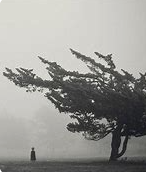
The wind howled through the empty house, whispering “Tom” in the dark. I stood at the threshold of the old Schueller estate, my breath fogging in the frigid night air, my flashlight trembling in my hand. It was a dare from my friends—Jack, Mike, and Florence—because they knew I couldn’t resist proving them wrong. They’d spent weeks spinning tales about this place: how the Schueller family vanished in ’73, how neighbors swore they heard screams years after, how the house sat untouched, rotting on the edge of town like a festering wound. “It’s just a creepy old dump,” I’d said, smirking, but now, with the warped door creaking open under my push, my bravado felt thin as the mist curling around my ankles.

Inside, the air was stale, heavy with dust and something sour I couldn’t place. My flashlight beam swept over peeling wallpaper, furniture draped in moldy sheets, and a grandfather clock frozen at 3:17, its pendulum dangling like a broken limb. The silence was oppressive, but then the floorboards groaned behind me, a slow, deliberate creak, as if someone had shifted their weight. I spun around, heart hammering, but there was nothing—just the gaping doorway and the night beyond. “Hello?” I called, my voice swallowed by the house. No answer, only the wind rattling the shutters like a caged animal desperate to get in—or out.

I pressed deeper, past a dining room where plates sat untouched, crusted with decades-old food, and up a staircase that sagged under my steps. Each creak felt like a warning, but I told myself it was just the house settling, not the presence I swore I felt watching me. A cold draft brushed the back of my neck, prickling my skin, and I turned again—nothing but shadows. Except now the shadows seemed wrong, elongated and twisting, like fingers reaching from the walls. My flashlight flickered, and in that stuttering light, I glimpsed something—a shape darting across the hall, too fast to be real, too human to be imagination.

The attic door was at the end of the corridor, its paint chipped into a jagged grin. I don’t know why I climbed those final stairs; maybe it was the dare, maybe it was the pull of something I couldn’t name. The attic smelled of mildew and rust, cluttered with boxes spilling yellowed letters and faded photographs of the Schueller’s—smiling faces that didn’t match the stories. In the corner stood a cracked mirror, its frame warped and blackened, and when I looked into it, my breath caught. My reflection wasn’t mine. It was hers—Eleanor Schueller, the woman who’d disappeared last, her portrait still hanging in the town hall. Her eyes were pits of ink, her mouth a crooked gash stretching wider than any humans should, and she stared back at me, unblinking.

I stumbled back, the flashlight dropping with a clatter, plunging me into darkness. The air thickened, pressing against my chest, and the walls began to throb—a slow, rhythmic pulse like a heartbeat echoing through the house. Footsteps thudded below, heavy and deliberate, climbing the stairs. I grabbed the flashlight, its beam weak now, and ran, the attic door slamming shut behind me with a force that shook the frame. The stairs twisted under my feet, the wood bending as if trying to trap me, and I half-fell, half-leaped down, my hands scraping against splinters and something wet that smelled of copper.

The hallway stretched longer than before, the front door a distant speck. Behind me, the footsteps grew louder, joined by a low, guttural hum that vibrated in my bones. I didn’t dare look back—I couldn’t. When I reached the door, it wouldn’t budge, the knob icy and slick under my palms, but with a desperate shove, it gave way, and I spilled onto the porch, gulping the night air. The house loomed behind me, its windows dark and accusing, and I ran—down the overgrown path, past the rusted gate, not stopping until I hit the road where my car waited.

I fumbled with the keys, my hands shaking so badly I dropped them twice, and when I finally looked up, the house was still there, silhouetted against the moon. Safe, I thought, leaning back in the driver’s seat, my pulse slowing. But then the wind picked up, slicing through the trees with a sound too sharp, too alive. It wasn’t just wind—it was her voice, Eleanor’s, low and insistent, threading through the noise, calling my name “Tom”. I froze, staring at the house, and in the upstairs window, a figure stood, its head tilted, its smile too wide. The car wouldn’t start. The air grew colder. And I knew, with a sinking dread, that I hadn’t escaped at all—she’d let me think I had, just to pull me back. The wind howled through the empty house, whispering “Tom” in the dark.