.
Audio PODCAST
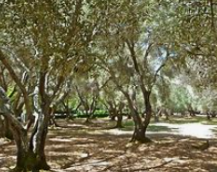
Tom was eating lunch with his wife Dee, the scent of green olives lingering in the air from the jar he’d cracked open. Their briny tang wasn’t just a snack—it was a tether, a pull to a life he swore he’d lived before, a vivid kaleidoscope of recollections intertwining with the present. In his mind’s eye, he wasn’t Tom the retired, but Lucius, a weathered centurion of the Roman Tenth Legion, marching under a merciless sun toward some forgotten battlefield that lay shrouded in the mists of time. Each olive he savored seemed to grow larger in significance, unlocking ancient memories buried deep within his soul, where glory and grit once thrived. The olives, he claimed, were his anchor to that past, their sharp bite conjuring memories of dusty roads, clinking armor, and the camaraderie of warriors who fought side by side. As he closed his eyes briefly, he could almost hear the echoes of battle cries, the rhythm of marching feet, and the distant clash of swords, blending seamlessly with the quiet sounds of his modern life—Dawn’s laughter, the jingle of utensils, and the humming of their old fan.
Lucius’ life, as Tom recounted it, wasn’t glorious. He was no hero of epic poems, just a grunt with a short sword and a heavy shield, trudging through Gaul in 50 BCE. The legion was a machine, and Lucius was a cog, his sandals slapping against endless stone paths that seemed to stretch on forever, each step a reminder of the unyielding discipline expected of them. They’d march for days, rations sparse—hard bread, dried meat, and always, always, a pouch of green olives that became a lifeline of flavor amidst the drudgery. The soldiers would pop them between orders, their salty sting a brief reprieve from the monotony of war, a momentary escape that brought forth memories of home and laughter. Tom could almost feel the weight of the leather satchel at his hip, hear the low banter of his comrades as they shared the olives under a twilight sky that slowly transformed from vibrant hues of orange and pink to a deep indigo blanket dotted with shimmering stars, each flicker a distant reminder of what lay beyond the chaos of their march. That camaraderie, mingled with the scent of earth and impending rain, was a solace, a brief reminder that even in the harshest of landscapes, bonds could be forged, laughter shared, and humanity preserved, if only for a fleeting moment.
Tom’s obsession began with a dream so vivid he woke gasping, the taste of olives on his tongue, an unexpected flavor that lingered, urging him to understand its significance. In it, he saw Lucius kneeling by a stream, his lorica segmentata glinting in the dappled sunlight as he rinsed blood from his hands, a stark juxtaposition of violence and serenity. A battle had ended—against whom, Tom couldn’t say, the details lost in the haze of memory. The enemy was a blur, their faces obscured by time and imagination, but the olives remained distinct and poignant. Lucius ate them methodically, spitting pits into the dirt, each one a small ritual to ground him before the next clash, a moment of calm before the storm of warfare returned once more. He savored the fruit with a mixture of reverence and urgency as if it held the key to his survival. The dream recurred, night after night, an intricate dance of history and yearning, and Tom, captivated by the allure of this vision, started buying jars of green olives, filling his kitchen with their glossy surfaces, chasing that fleeting connection to a life he couldn’t prove but felt deeply woven into the fabric of his existence. Each olive represented a thread that linked him to Lucius, an unbreakable bond that transcended time and space.
In his tale, Lucius wasn’t fearless. He was tired, his knees aching from years of relentless campaigns and battles fought far from his homeland. He’d joined the legion young, lured by promises of glory and the allure of heroism, only to find himself entrenched in mud and staring into the face of death. Yet the olives were a constant in his turbulent life. They stood resilient in the backdrop of blood-soaked fields and haunting memories; they were there when he survived a skirmish in the dense forests, arrows whistling past him like fatal whispers. They were there when he lost Gaius, his closest friend and brother-in-arms, to a spear in the suffocating darkness; that moment etched in his memory like a cruel tattoo. Tom would recount these moments to anyone who’d listen, his voice low and heavy with the weight of nostalgia, as if confessing the sins of a past he could never fully escape. “Lucius didn’t love war,” he’d say, shaking his head at the absurdity of it all, “but the olives? They were home, a reminder of simpler times, of laughter shared under a Mediterranean sun, far removed from the horrors of battle.”
One evening, Tom sat cross-legged on his floor, a map of ancient Rome spread before him. He traced the Appian Way with a finger, imagining Lucius’ legion marching south, their footsteps a rhythmic echo on the ancient stones. The air was heavy with the scent of history, and he could almost hear the clinking of armor and the spirited shouts of soldiers rallying together. He popped an olive in his mouth, the flavor sharp and grounding, a tangy reminder of the past. In his mind, Lucius paused on that road, sharing a handful with a young recruit, both laughing despite the specter of battle that loomed ahead like a distant storm cloud. Tom pictured the warmth of the late afternoon sun casting golden hues over the dusty path, the sounds of camaraderie mixing with the rustling leaves of nearby trees. He smiled, feeling the echo of that bond—those moments of levity in a world filled with tension. Whether Lucius was real or not, the olives tied Tom to something larger—a life of struggle, yes, but also of fleeting joys, each one preserved in brine and memory, connecting him to the timeless stories of those who had walked before him, embodying the spirit of resilience and hope amidst the chaos of war.
Believe it or not, but Tom feels olives are an important part of his current life and the myriads of life experiences he has encountered through various spiritual journeys in the past. These small fruits, with their rich flavors and deep cultural significance, have come to symbolize more than just a culinary delight for him; they represent a connection to tradition, a bridge between generations, and a reminder of the moments when he felt most at peace during his spiritual explorations. Each olive, whether enjoyed in a savory dish or savored on its own, carries a story that resonates with the lessons learned on his path to self-discovery and enlightenment, illuminating his present while honoring the past.
Discover more from TomT2.0
Subscribe to get the latest posts sent to your email.
 TomT2.0